<TEI xmlns="http://www.tei-c.org/ns/1.0" xml:id="M0012611">
   <teiHeader>
      <fileDesc>
         <titleStmt>
            <title type="main">Heft 1882</title>
            <author>
               <persName ref="http://d-nb.info/gnd/118578537">
                  <surname>Marx</surname>
                  <forename>Karl</forename>
               </persName>
            </author>
            <editor>
               <persName>
                  <forename>Jürgen</forename>
                  <surname>Rojahn</surname>
               </persName>
            </editor>
            <editor>
               <persName ref="https://d-nb.info/gnd/1234155346">
                  <forename>Emanuela</forename>
                  <surname>Conversano</surname>
               </persName>
            </editor>
            
         </titleStmt><editionStmt><p/></editionStmt>
         
         <publicationStmt><publisher><ref target="https://www.bbaw.de">Berlin-Brandenburgische Akademie der Wissenschaften</ref></publisher><pubPlace ref="https://www.geonames.org/2950159">Berlin</pubPlace><availability><licence target="https://creativecommons.org/licenses/by-sa/4.0/">Creative Commons Attribution-ShareAlike 4.0 International (CC BY-SA 4.0)</licence></availability><idno type="URLWeb">https://megadigital.bbaw.de/</idno><idno type="URLXML">https://megadigital.bbaw.de/.xml</idno></publicationStmt>
         <seriesStmt>
            <title>Exzerpte und Notizen</title>
            <biblScope unit="section" n="IV"/>
            <biblScope unit="volume" n="27"/>
            <biblScope unit="chapter" n="4" select="main" next="M0012612" prev="M5176449"/>
         </seriesStmt>
         <notesStmt>
            <relatedItem type="introduction">
               <bibl>
                  <ref target="https://megadigital.bbaw.de/M7404965"/>
               </bibl>
            </relatedItem>
            <relatedItem type="cover_image">
               <ref target="https://digilib.bbaw.de/digitallibrary/servlet/Scaler/IIIF/silo10!mega!exzerptstart!Deckblatt_B_168_004_Heft_1882.jpg/full/!190,400/0/default.jpg"/>
            </relatedItem>
         </notesStmt>
         <sourceDesc>
            <msDesc>
               <msIdentifier>
                  <institution>IISH (International Institute of Social History)</institution>
                  <repository>ARCH00860</repository>
                  <collection>Karl Marx and Friedrich Engels Papers</collection>
                  <idno>
                     <idno type="shelfmark">B_168 [B 150]</idno>
                     <idno type="uri">https://search.iisg.amsterdam/Record/ARCH00860</idno>
                     <idno type="URLCatalogue">https://search.iisg.amsterdam/Record/ARCH00860/ArchiveContentList#B_168</idno>
                     <idno type="URLImages">https://access.iisg.amsterdam/universalviewer/#?manifest=https://hdl.handle.net/10622/ARCH00860.B_168?locatt=view:manifest</idno>
                  </idno>
               </msIdentifier>
               <physDesc>
                  <p>
                     <list>
                        <item>H Originalhandschrift: IISG, Marx-Engels-Nachlass, Sign.
                                    B 168/B 150.</item>
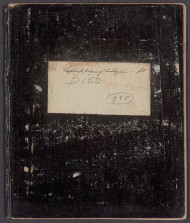
                        <item>Beschreibstoff: Notizheft, kartoniert. Außenseiten des
                                    Einbands und Rücken mit schwarzem Wachstuch bezogen, Innenseiten
                                    mit hellbraunem Papier beklebt. Format: 184 × 225 mm. Auf
                                    vorderem Einbanddeckel von Engels Etikett von vergilbtem weißem
                                    Papier im Format 108 × 55 mm aufgeklebt. Vorsatzblätter aus
                                    gleichem Papier wie das, mit dem die Innenseiten der
                                    Einbanddeckel beklebt sind; innen mit gleichem Papier beklebt,
                                    wie für die Blätter benutzt wurde. Eingeheftet 12 Blatt (= 24
                                    Seiten) mittelstarken, gerippten, linierten weißen Papiers im
                                    Format des Einbands. Wasserzeichen: Helle Linien im Abstand von
                                    26 mm. Einband und Blätter an den Außenkanten abgerundet.</item>
                        <item>Zustand: Gut erhalten, Papier leicht vergilbt, hinterer
                                    Einbanddeckel samt Vorsatzblatt lose. Keine Textverluste.</item>
                        <item>Schreiber: Karl Marx, Etikett Friedrich Engels.</item>
                        <item>Schreibmaterial: Schwarze Tinte, leicht bräunlich verfärbt.
                                    Eine Anstreichung mit Bleistift (S. 8).</item>
                        <item>Beschriftung: Außenseite des vorderen Einbanddeckels,
                                    Innenseite des vorderen Vorsatzblattes, S. 1–19 (Innenseite des
                                    vorderen Vorsatzblattes, S. 8 und S. 19 nur teilweise
                                    beschrieben, S. 9–11 nur paginiert). Lateinische Schrift</item>
                        <item>Paginierung: Marx paginierte die S. 1–19 mit Tinte 1–19.
                                    Einige Seitenzahlen später von fremder Hand mit Bleistift
                                    verdeutlicht.</item>
                        <item>Vermerke fremder Hand: Archivstempel IISG; Sign. B 150 (auf
                                    Etikett und S. 1). Fotosign., mit Bleistift, auf dem Etikett: GE
                                    0, auf der Innenseite des vorderen Vorsatzblattes: GE 1a, auf
                                    S. 1–5 und S. 12–19: GE (jeweils bei Marx’ Seitenzahl), auf
                                    S. 6–8: GE 6–GE 8.</item>
                     </list>
                  </p>
               </physDesc>
            </msDesc>
         </sourceDesc>
      </fileDesc>
      <profileDesc><textClass><keywords><term>excerpts</term></keywords></textClass>
         <creation>
            <persName ref="https://megadigital.bbaw.de/M0001374 http://d-nb.info/gnd/118578537">Marx, Karl (1818-1883)</persName>
            <placeName ref="https://megadigital.bbaw.de/M0004412 http://www.geonames.org/2643743">London</placeName>
            <date from="1882-10-01" to="1882-10-31" cert="high"/>
         </creation>
         <langUsage>
            <language ident="en">English</language>
         </langUsage>
         <langUsage>
            <language ident="de">German</language>
         </langUsage>
         <abstract>
            <p>17
                    Seiten</p>
            <p>Exzerpte von wahrscheinlich Oktober 1882 aus:</p>
            <p>– John Lubbock: The Origin of Civilisation and the Primitive Condition of Man.
                    London 1870</p>
            <p>– Michael George Mulhall: Egyptian Finance (aus: „The Contemporary Review“,
                    Oktober 1882)</p>
            <p>– Sheldon Amos: “Spoiling the Egyptians:” revised version (aus: „The Contemporary
                    Review“, Oktober 1882)</p>
         </abstract>
      </profileDesc>
   </teiHeader>
   <text><body>
         <pb n="[Umschlag]"/>
         <div n="1">
            <head type="toc">
               <supplied reason="editorialOutline">Inhaltsverzeichnis von
                        Engels</supplied>
            </head>
            <p>
               <persName ref="https://megadigital.bbaw.de/Lubbock">Lubbock</persName>, <bibl type="primary" corresp="https://megadigital.bbaw.de/SDEM7SHS">Origin of Civilization</bibl> – p. 1 </p>
         </div>
         <pb n="[0]"/>
         <div n="1" xml:id="na1j_ljx_gtb">
            <note type="excerpt_source" resp="editor" corresp="#na1j_ljx_gtb">
               <persName ref="https://megadigital.bbaw.de/M0008079 http://d-nb.info/gnd/118780662"/>
               <bibl type="primary" corresp="https://megadigital.bbaw.de/SDEM7SHS">John Lubbock: The origin
                            of civilisation and the primitive condition of man. Mental and social
                            condition of savages. London 1870.</bibl>
            </note>
            <head type="toc">
               <supplied reason="editorialOutline">Bibliographische Notizen aus
                        dem Buch von John Lubbock: The Origin of Civilisation</supplied>
            </head>
            <p>
               <bibl type="primary" corresp="https://megadigital.bbaw.de/LBQZJEAE">
                  <hi rendition="#u">The
                            People of India</hi>, <hi rendition="#u">by J. F. Watson</hi>, and <hi rendition="#u">J. W. Kaye, published by the Indian Gvt. v<ex>o</ex>l. II
                                (p<ex>late</ex> 85<supplied cert="high">)</supplied>
                  </hi>
               </bibl>.</p>
            <p>
               <bibl type="primary" corresp="https://megadigital.bbaw.de/CKSP8CZ3">
                  <hi rendition="#u">Tomkin
                            and Lemon: „Commentaries of Gajus.“</hi>
               </bibl>
            </p>
         </div>
         <pb n="1"/>
         <div n="1" xml:id="nzsg_4jx_gtb">
            <note type="excerpt_source" resp="editor" corresp="#nzsg_4jx_gtb">
               <persName ref="https://megadigital.bbaw.de/M0008079 http://d-nb.info/gnd/118780662"/>
               <bibl type="primary" corresp="https://megadigital.bbaw.de/SDEM7SHS">John
                        Lubbock: The origin of civilisation and the primitive condition of man.
                        Mental and social condition of savages. London 1870.</bibl>
            </note>
            <head type="toc">
               <bibl type="primary" corresp="https://megadigital.bbaw.de/SDEM7SHS">Sir John Lubbock: „The Origin of Civilisation and the
                            Primitive Condition of Man.“ London, 1870</bibl>
            </head>
            <p>
               <persName ref="https://megadigital.bbaw.de/M0008079 http://d-nb.info/gnd/118780662">
                  <hi rendition="#u">Lubbock</hi>
               </persName> citirt in
                    Vorrede <bibl type="primary" corresp="https://megadigital.bbaw.de/VMWTRWKY">
                  <hi rendition="#u">Müller</hi> (<choice>
                     <sic>F.</sic>
                     <corr cert="high">J.</corr>
                  </choice> G.) <hi rendition="#u">„Geschichte der Amerikan.
                            Urreligionen“</hi>
               </bibl>, <bibl type="primary" corresp="https://megadigital.bbaw.de/LIDQ7VFN">
                  <hi rendition="#u">McLennan: „Primitive
                    Marriage“</hi>
               </bibl>, <hi rendition="#u">
                  <bibl type="primary" corresp="https://megadigital.bbaw.de/QPZGNHUK">Bachofen: „Das Mutterrecht“</bibl>
               </hi>. <bibl type="primary" corresp="https://megadigital.bbaw.de/23DXW3MV">Lord
                            <hi rendition="#u">Kames</hi>
               </bibl>
               <hi rendition="#u">
                  <bibl type="primary" corresp="https://megadigital.bbaw.de/23DXW3MV"> „History of
                        Man“</bibl>.</hi>
               
               
               <supplied>p. VII</supplied>
            </p>
            <p>Er sagt in <hi rendition="#u">ch. I.</hi>
               
               <hi rendition="#u">(Introduction)</hi> mit Bezug auf <hi rendition="#u">
                  <persName ref="https://megadigital.bbaw.de/M0008146 http://d-nb.info/gnd/118781316">Maine</persName>’s</hi>
               <bibl type="primary" corresp="https://megadigital.bbaw.de/HBN4WB9P">„<hi rendition="#u">Ancient
                            Law“</hi>
               </bibl>, dass <ref xml:id="c0419671-feca-4bf9-8196-71feca1bf9ee" corresp="#d4ff306d-a4c4-4327-bf30-6da4c49327fc" type="editorialNote">dieser
                            Bursch</ref><note xml:id="d4ff306d-a4c4-4327-bf30-6da4c49327fc" corresp="#c0419671-feca-4bf9-8196-71feca1bf9ee" type="editorial">Ausdruck von
                    Marx.</note>, wenn er sich bekannter gemacht hätte mit Reisebeschreibungen
                    etc u.a. nicht als »an obvious proposition« aufgestellt haben würde that:
                        »<supplied cert="high">„</supplied>the organisation of primitive societies
                    would have been confounded, if <hi rendition="#u">men had called themselves
                        relatives of their</hi> mother’s relatives“, while I <ref xml:id="cdd6e587-5b0d-4090-96e5-875b0d709000" corresp="#c665a102-4766-4e18-a5a1-0247669e18e2" type="editorialNote">(viz. Lubbock)</ref><note xml:id="c665a102-4766-4e18-a5a1-0247669e18e2" corresp="#cdd6e587-5b0d-4090-96e5-875b0d709000" type="editorial">Zusatz von
                            Marx.</note> shall presently show that, as indeed Mr. <persName ref="https://megadigital.bbaw.de/M0008133 http://d-nb.info/gnd/118729969">McLennan</persName> has already pointed out, relationship
                    through females is a common custom of savage communities all over the world.«
                    (p. 2, 3)</p>
            <p>
               <ref xml:id="cec1958e-0e7c-4e86-8195-8e0e7c1e86d8" corresp="#acb65bf1-ecc1-4cad-b65b-f1ecc14cad7a" type="editorialNote">Heisst in the <bibl type="primary" corresp="https://megadigital.bbaw.de/LBQZJEAE">
                        <hi rendition="#u">People of India</hi> (by
                                J. F. Watson u. J. W. Kaye)</bibl> von den <hi rendition="#u">Teehurs</hi> of Oude, dass they „<hi rendition="#u">live together
                                almost</hi> indiscriminately in large communities, and even <hi rendition="#u">when two people are regarded as married the tie is
                                but nominal</hi>.“ (cit. bei L. p. 60)</ref><note xml:id="acb65bf1-ecc1-4cad-b65b-f1ecc14cad7a" corresp="#cec1958e-0e7c-4e86-8195-8e0e7c1e86d8" type="editorial">Engels zitiert die Passage nach diesem Exzerpt von
                            Marx in „Der Ursprung der Familie, des Privateigentums und des Staats“
                                (<bibl type="primary" corresp="https://megadigital.bbaw.de/JLP3XM8F">MEGA
                                I/29</bibl>. S. 26.6–10). Lubbock zitiert: The people of India. A
                            series of photographic illustrations, with descriptive letterpress, of
                            the races and tribes of Hindustan … Ed. by John Forbes Watson and John
                            William Kaye. Vol. 2. London 1868. S. 85.</note>
            </p>
            <p>
               <persName ref="https://megadigital.bbaw.de/M0008133 http://d-nb.info/gnd/118729969">McLennan</persName>, like <persName ref="https://megadigital.bbaw.de/M4446014 https://d-nb.info/gnd/118505645">Bachofen</persName>, starts with a <hi rendition="#u">stage of
                        hetairism</hi>
               <hi rendition="#uu">or</hi>
               <hi rendition="#u">communal marriage</hi>
               <ref xml:id="c3e081b4-bc67-4e8e-a081-b4bc67be8ea2" corresp="#f39f6cb2-2218-441c-9f6c-b22218341c0a" type="editorialNote">⦗u. <persName ref="https://megadigital.bbaw.de/M0008079 http://d-nb.info/gnd/118780662">
                        <hi rendition="#u">Lubb.</hi>
                     </persName> sagt p. 70, dass er diesen Blödsinn
                            glaubt, i.e. also <hi rendition="#u">communal marriage</hi> u. <hi rendition="#u">hetairism</hi> identificirt;
                            w<ex>ä</ex>h<ex>ren</ex>d offenbar <hi rendition="#u">hetairism</hi>
                            eine Form ist, welche <hi rendition="#u">Prostitution</hi> (u. diese
                            existirt nur <hi rendition="#u">im Gegensatz</hi> zu <hi rendition="#u">marriage</hi>, whether communal etc or monogamic) voraussetzt. Dies
                            also Hysteron Proteron.⦘</ref><note xml:id="f39f6cb2-2218-441c-9f6c-b22218341c0a" corresp="#c3e081b4-bc67-4e8e-a081-b4bc67be8ea2" type="editorial">Bemerkung von
                            Marx.<lb/>
                     <lb/>Hysteron Proteron: das Spätere zuerst (gr.). Verkehrung
                            von Ursache und Wirkung.</note> The next stage was, in his <ref xml:id="d438a9cb-3fe9-4651-b8a9-cb3fe9f651c7" corresp="#a0e5e928-7323-4fd9-a5e9-2873239fd942" type="editorialNote">(McLennan’s)</ref><note xml:id="a0e5e928-7323-4fd9-a5e9-2873239fd942" corresp="#d438a9cb-3fe9-4651-b8a9-cb3fe9f651c7" type="editorial">Zusatz
                            von Marx.</note> opinion, that form of polyandry in which <hi rendition="#u">brothers had their wives in common</hi>; afterwards came that
                    of the <hi rendition="#u">levirate</hi>, i.e. the system under which, when an
                    elder brother died, his second brother married the widow, and so on with the
                    others in succession. Thence he considers that some tribes branched off into <hi rendition="#u">endogamy</hi>, others into <hi rendition="#u">exogamy</hi>;
                    that is to say, some forbade marriage out of, others within, the tribe. If
                    either of these two systems was older than the other, he considers that exogamy
                    must have been the most ancient. Exogamy was based upon infanticide, and led to
                    the practice of marriage by capture. In a further stage the <hi rendition="#u">idea of female descent</hi>, <hi rendition="#u">producing as it would a division in the tribe</hi>,
                    obviated the necessity of capture as a reality and reduced it to a symbol. (69,
                    70)</p>
            <p>
               <persName ref="https://megadigital.bbaw.de/M0008079 http://d-nb.info/gnd/118780662">Lubb.</persName> admits the <hi rendition="#u">prevalence of infanticide</hi> among savages, aber »among the lowest
                        <supplied>races</supplied> boys were killed as frequently as girls«, wie
                        <persName ref="https://megadigital.bbaw.de/M0006617 http://d-nb.info/gnd/117516031">
                  <hi rendition="#u">Eyre</hi>
               </persName>
               <ref xml:id="ccbff578-4d64-4657-bff5-784d64b657e6" corresp="#cb7ef8e2-c19a-434c-bef8-e2c19a134c50" type="editorialNote">(d<ex>er</ex> Berüchtigte!)</ref><note xml:id="cb7ef8e2-c19a-434c-bef8-e2c19a134c50" corresp="#ccbff578-4d64-4657-bff5-784d64b657e6" type="editorial">Bemerkung von Marx.</note> („<bibl type="primary" corresp="https://megadigital.bbaw.de/S7Y83PRN">
                  <hi rendition="#u">Discoveries in Central Australia</hi>
               </bibl>“) dies z.B. express
                    statuire in Australien. (70) <ref xml:id="aa832faf-ec36-4365-832f-afec36e36549" corresp="#bff8447e-769b-4b8b-b844-7e769b8b8b20" type="editorialNote">Schlagendes Beispiel der
                            Kritik des <hi rendition="#u">Lubb.</hi>, dass er <hi rendition="#u">McLennan’s</hi> Blödsinn mit <hi rendition="#u">„Exogamie“ u.
                                „endogamy“ annimmt</hi>, aber dann als Pfifficus sich d<ex>ie</ex>
                            Sache so <hi rendition="#u">„pragmatisirt“</hi>:</ref><note xml:id="bff8447e-769b-4b8b-b844-7e769b8b8b20" corresp="#aa832faf-ec36-4365-832f-afec36e36549" type="editorial">Kommentar von Marx.</note>
            </p>
            <p>»<hi rendition="#u">Communal marriage</hi> was gradually superseded by <hi rendition="#u">individual marriage founded on capture</hi>, and that this
                    first led to exogamy <hi rendition="#u">and then</hi> to female infanticide;
                    thus reversing <persName ref="https://megadigital.bbaw.de/M0008133 http://d-nb.info/gnd/118729969">McLennan</persName>’s order of sequence.
                    Endogamy and regulated polyandry, though frequent, I regard as exceptional, and
                    as not entering into the normal progress of development. (p. 70) Even under
                    communal marriage, a warrior who had captured a beautiful girl in some marauding
                    expedition would claim a peculiar right to her, and, when possible, would set
                    custom at defiance <ref xml:id="dd78df0b-373d-4d64-b8df-0b373d4d641a" corresp="#dea49bec-a9ef-4ba6-a49b-eca9ef8ba638" type="editorialNote">(!)</ref><note xml:id="dea49bec-a9ef-4ba6-a49b-eca9ef8ba638" corresp="#dd78df0b-373d-4d64-b8df-0b373d4d641a" type="editorial">Zusatz von Marx.</note> … there are other
                    cases of the existence of marriage under two forms; and there is, therefore, no
                    real difficulty in assuming the co-existence of communal marriage and individual
                    marriage. … A war captive … was in a peculiar position: the tribe had no right
                    to her; her capturer might have killed her if he chose; if he preferred to keep
                    her alive he was at liberty to do so; he did as he liked, and the tribe was no
                    sufferer.« (70, 71)</p>
            <p>
               <supplied cert="high">»</supplied>He <ref xml:id="f105e6ed-5e01-4c13-85e6-ed5e01ec13cc" corresp="#bf1742c0-f83a-403d-9742-c0f83a003d3d" type="editorialNote">(<persName ref="https://megadigital.bbaw.de/M0008133 http://d-nb.info/gnd/118729969">McLennan</persName>)</ref><note xml:id="bf1742c0-f83a-403d-9742-c0f83a003d3d" corresp="#f105e6ed-5e01-4c13-85e6-ed5e01ec13cc" type="editorial">Zusatz von Marx.</note> also considers that
                    marriage by capture followed, and arose <hi rendition="#u">from that remarkable
                        custom, namely, of marrying always
                    <hi rendition="#uu">out</hi>
                    of the tribe</hi>, for which he has proposed the appropriate
                    name of exogamy. I believe that exogamy arose from marriage by capture etc.«
                    (72) <ref xml:id="d80e33b8-c9ba-4ee4-8e33-b8c9badee4d6" corresp="#e1bbd7b7-b636-43ae-bbd7-b7b63613ae8f" type="editorialNote">Lubb. weiss also nichts v. d<ex>er</ex> Basis –
                            der gens<choice>
                        <sic>.</sic>
                        <corr cert="high">,</corr>
                     </choice>
                     <pb n="2"/> die <hi rendition="#u">innerhalb d<ex>es</ex> tribe</hi> existirt, so
                            wenig wie <hi rendition="#u">McLennan</hi>, obgleich er einige facts
                            citirt, die ihm d<ex>ie</ex> Sache unter d<ex>ie</ex> Nase reiben, u.
                            sie in d<ex>er</ex> That etwas kitzelten.</ref><note xml:id="e1bbd7b7-b636-43ae-bbd7-b7b63613ae8f" corresp="#d80e33b8-c9ba-4ee4-8e33-b8c9badee4d6" type="editorial">Kommentar von Marx.</note>
            </p>
            <p>
               <ref xml:id="c5547d76-df5a-4dfa-947d-76df5a7dfa97" corresp="#b4f9f61c-d8f8-4aec-b9f6-1cd8f84aec53" type="editorialNote">Lubb. schreibt nun d<ex>en</ex>
                     <persName ref="https://megadigital.bbaw.de/M0008133 http://d-nb.info/gnd/118729969">McLennan</persName> ab, um zu
                            zeigen</ref><note xml:id="b4f9f61c-d8f8-4aec-b9f6-1cd8f84aec53" corresp="#c5547d76-df5a-4dfa-947d-76df5a7dfa97" type="editorial"> Zusatz von Marx.</note>
                    »how widely „capture“, either actual or symbolical, enters into the idea of
                    marriage. Mr McLennan was, I believe, the first to appreciate its importance. I
                        <ref xml:id="d34ec6dc-e2fe-40dc-8ec6-dce2fec0dc3e" corresp="#b44635bc-cf5a-480a-8635-bccf5a380a7a" type="editorialNote">(Lubb.)</ref><note xml:id="b44635bc-cf5a-480a-8635-bccf5a380a7a" corresp="#d34ec6dc-e2fe-40dc-8ec6-dce2fec0dc3e" type="editorial">Zusatz
                            von Marx.</note> have taken some of the following evidence from
                    his valuable work, <hi rendition="#u">adding</hi>, <hi rendition="#u">however</hi>
               <ref xml:id="fcde4803-9973-4573-9e48-039973f573cf" corresp="#e6328402-00f9-4f65-b284-0200f9df65d3" type="editorialNote">(!)</ref><note xml:id="e6328402-00f9-4f65-b284-0200f9df65d3" corresp="#fcde4803-9973-4573-9e48-039973f573cf" type="editorial">Zusatz von
                            Marx.</note>, <hi rendition="#u">several additional cases</hi>.«
                        (<hi rendition="#u">73</hi>. <ref xml:id="b6c841e0-3690-4312-8841-e03690b3128a" corresp="#c69e2ab8-e983-472a-9e2a-b8e983b72ad2" type="editorialNote">Great, greatest
                            Lubb!</ref><note xml:id="c69e2ab8-e983-472a-9e2a-b8e983b72ad2" corresp="#b6c841e0-3690-4312-8841-e03690b3128a" type="editorial">Bemerkung von Marx. Anspielung
                            auf die Komödie „<bibl type="primary" corresp="https://megadigital.bbaw.de/496UE756">Love’s labour’s lost</bibl>“ von <persName ref="https://megadigital.bbaw.de/M0011955 http://d-nb.info/gnd/118613723">William
                                Shakespeare</persName>, wo der von dem Clown Costard gespielte
                            Pompejus,
                            der wiederum in Anspielung auf den historischen <persName ref="https://megadigital.bbaw.de/M0011803 http://d-nb.info/gnd/118595636">Pompejus</persName>, der von manchen Autoren „magnus“ (der große)
                            genannt wurde, in einer Szene (V, 2) „great Pompey“ bzw. „Greater than
                            great, great, great, great Pompey! Huge Pompey!“ tituliert wird. Marx
                            hat diese Anspielung auch sonst gerne verwendet, so 1842 in „Debatten
                            über Preßfreiheit“ (<bibl type="primary" corresp="https://megadigital.bbaw.de/F8ZIQSVP">MEGA I/1</bibl>. S. 124.16–17) und in seinem Brief an <persName ref="https://megadigital.bbaw.de/M0006098 http://d-nb.info/gnd/130256919">Adolf Cluß</persName> vom 14. Juni 1853 (<bibl type="primary" corresp="https://megadigital.bbaw.de/P9GP87SQ">MEGA III/6</bibl>.
                            S. 195). Siehe auch <ref target="https://megadigital.bbaw.de/M5176449/hz59_8g5_5wb">Heft 1880/1881,
                                die Sachanmerkung zu „(Austin, the great Pompejus!)“</ref>.
                            Bezüglich des historischen Pompejus und Shakespeares Kömodie vgl. auch
                            seinen Brief an Engels vom 27. Februar 1861 (<bibl type="primary" corresp="https://megadigital.bbaw.de/G5HZXQML">MEGA III/11</bibl>.
                            Br. 243.54–64). Laut seinem 1844 angefertigten Verzeichnis seiner Bücher
                            besaß Marx damals eine englische Ausgabe der Werke Shakespeares (<bibl type="primary" corresp="https://megadigital.bbaw.de/MS7R5UHZ">MEGA IV/3</bibl>.
                            S. 7.32). Wohl erst danach erwarb er auch zumindest einzelne Bände einer
                            deutschen Ausgabe. Beide sind in dem von <persName ref="https://megadigital.bbaw.de/M0006250 http://d-nb.info/gnd/118848321">Roland
                                Daniels</persName> im Dezember 1850 angefertigten Verzeichnis der
                            von Marx 1849 in Köln zurückgelassenen Bücher aufgeführt (<bibl type="primary" corresp="https://megadigital.bbaw.de/FJR8E8YQ">MEGA IV/5</bibl>.
                            S. 302.10 und 302.30). Sie dürften zu den Büchern gehört haben, die Marx
                            Anfang 1861 zurückerhielt (siehe <bibl type="primary" corresp="https://megadigital.bbaw.de/G5HZXQML">MEGA III/11</bibl>. Nr. 96.8 und die Verweise in der
                            entsprechenden Sacherläuterung).</note>)</p>
            <p>If we assume the case of a country in which there are <hi rendition="#u">four
                        certain neighbouring tribes</hi>, who have the custom of exogamy, and who
                    trace pedigrees through the mother, and not through the father – … after a
                    certain time the result would be that each tribe would consist of four septs or
                    clans, representing the 4 original tribes, and hence we should find communities
                    in which each tribe is divided into clans, and a man must always marry a woman
                    of a different clan. (75)</p>
            <p>Among agricultural tribes, and under settled forms of government, the chiefs
                    often have very large harems, and their importance even is measured by the
                    number of their wives, as in other cases by that of their cows or horses.
                    (104)</p>
            <p>
               <supplied cert="high">»</supplied>… among many of the lower races <hi rendition="#u">relationship through females is the prevalent custom</hi>«,
                    daher »the curious <ref xml:id="d1437299-c4a6-4059-8372-99c4a6505900" corresp="#f3a0fafa-5b20-42f5-a0fa-fa5b2032f5c6" type="editorialNote">(!)</ref><note xml:id="f3a0fafa-5b20-42f5-a0fa-fa5b2032f5c6" corresp="#d1437299-c4a6-4059-8372-99c4a6505900" type="editorial">Zusatz von Marx.</note> practice that <hi rendition="#u">a man’s heirs</hi>
               <ref xml:id="e0bc8578-2f3c-4e4d-bc85-782f3c7e4d93" corresp="#e6f79230-600d-462f-b792-30600d262fa1" type="editorialNote">⦗aber sie sind ja dann nicht the <hi rendition="#u">man’s heirs</hi>; diese civilisirten Esel können ihre eignen
                            conventionalities nicht los werden⦘</ref><note xml:id="e6f79230-600d-462f-b792-30600d262fa1" corresp="#e0bc8578-2f3c-4e4d-bc85-782f3c7e4d93" type="editorial">
                            Kommentar von Marx.</note> are not his own, but <hi rendition="#u">his sister’s children</hi>.« <hi rendition="#u">(105)</hi>
               <supplied cert="high">»</supplied>Thus when a rich man dies in Guinea, his
                    property, excepting the armour, descended to the <hi rendition="#u">sister’s
                        son</hi>, expressly, according to <persName ref="https://megadigital.bbaw.de/M5870775 https://d-nb.info/gnd/1037334183">Smith</persName>
                        (<bibl type="primary" corresp="https://megadigital.bbaw.de/KGYZ4EHM">
                  <hi rendition="#u">Smith’s „Voyage to Guinea“</hi>
               </bibl> p. 143. See also <bibl type="primary" corresp="https://megadigital.bbaw.de/MQ85B2XC">
                  <hi rendition="#u">Pinkerton’s Voyages</hi>
                  
               </bibl>
               <ref xml:id="e0922225-5455-47ed-9222-25545527ed8d" corresp="#b8eb2d5d-9308-46f0-ab2d-5d930846f009" type="editorialNote">v. XV</ref><note xml:id="b8eb2d5d-9308-46f0-ab2d-5d930846f009" corresp="#e0922225-5455-47ed-9222-25545527ed8d" type="editorial">Bei der Angabe
                            des Bands ist Lubbock offenbar ein Fehler unterlaufen. Soll sein: v.
                            XVI.</note>, p. <choice>
                  <sic>147</sic>
                  <corr cert="high">417</corr>
               </choice>, 421, 528<choice>
                  <sic>)</sic>
                  <corr type="deleted"/>
               </choice>; <bibl type="primary" corresp="https://megadigital.bbaw.de/B6A2UMFQ">
                  <hi rendition="#u">Astley’s Collection of Voyages</hi>, v. II</bibl>, p. 63, <choice>
                  <sic>265</sic>
                  <corr cert="high">256</corr>
               </choice>), on the <hi rendition="#u">ground</hi>
               <ref xml:id="e445c187-7f64-4893-85c1-877f64c893b7" corresp="#f67708e2-0e11-4763-b708-e20e11676374" type="editorialNote">(Pragmatisirung!)</ref><note xml:id="f67708e2-0e11-4763-b708-e20e11676374" corresp="#e445c187-7f64-4893-85c1-877f64c893b7" type="editorial">
                            Zusatz von Marx.</note> that he must certainly be a relative.«
                    (105) <bibl type="primary" corresp="https://megadigital.bbaw.de/S6AMBZUU">
                  <hi rendition="#u">Battel</hi> (<hi rendition="#u">in Pinkerton’s Voyages</hi>, v. XVI</bibl>, p. 331) mentions that the
                    town of Longo (Loango) <supplied cert="high">„</supplied>is governed by
                    4 chiefs, which are sons of the king’s sisters; for the king’s sons never come
                    to be kings.“ <bibl type="primary" corresp="https://megadigital.bbaw.de/C7ITVXPT">Quatremère
                            („<hi rendition="#u">Mém. géogr.</hi> sur l’Egypte et sur quelques
                        contrées voisines“. Paris, 1811</bibl> , quoted by <bibl type="primary" corresp="https://megadigital.bbaw.de/QPZGNHUK">
                  <hi rendition="#u">Bachofen</hi> (p. 108)</bibl>) mentions that: „Chez les <hi rendition="#u">Noubiens</hi>, dit Abou Selah, lorsqu’un roi vient à mourir
                    et qu’il laisse un fils et un neveu du côté de sa sœur, celui-ci monte sur le
                    trône de préférence à l’héritier <hi rendition="#u">naturel</hi>
               <ref xml:id="ec899781-6abb-463c-8997-816abbd63cd3" corresp="#ce04f526-d1bc-4336-84f5-26d1bcc336c6" type="editorialNote">(!)</ref><note xml:id="ce04f526-d1bc-4336-84f5-26d1bcc336c6" corresp="#ec899781-6abb-463c-8997-816abbd63cd3" type="editorial">Zusatz von
                            Marx.</note>“ <bibl type="primary" corresp="https://megadigital.bbaw.de/XSJZEMNF">
                  <hi rendition="#u">Caillié’s Travels</hi>, v. I.</bibl> p. 153, dieser
                    sagt: von <hi rendition="#u">Central Africa</hi>: „the sovereignty remains
                    always in the same family, but the <hi rendition="#u">son never succeeds his
                        father</hi>; they choose in preference a son of the king’s sister,
                    conceiving that <hi rendition="#u">by this method the sovereign power is more
                        sure to be transmitted to one of the blood royal</hi>“ (p. 105. <ref xml:id="cf074790-d830-4df7-8747-90d8309df713" corresp="#f707d479-4da7-49a1-87d4-794da7b9a129" type="editorialNote">Wenn nicht <persName ref="https://megadigital.bbaw.de/M1614989 https://d-nb.info/gnd/118666541">Caillié</persName>,
                            sondern die Afrikaner selbst dort d<ex>as</ex> sagten, beweists, dass
                                d<ex>ie</ex> weibliche Nachfolge sich nur noch für d<ex>ie</ex>
                            höchsten Funktionäre (chiefs) erhalten u. sie selbst d<ex>en</ex> Grund
                            nicht mehr wussten</ref><note xml:id="f707d479-4da7-49a1-87d4-794da7b9a129" corresp="#cf074790-d830-4df7-8747-90d8309df713" type="editorial">Bemerkung von
                            Marx.</note>). In <hi rendition="#u">Northern Africa</hi> we find
                    the same custom among the Berbers; and <persName ref="https://megadigital.bbaw.de/M0005871 http://d-nb.info/gnd/118517848">
                  <hi rendition="#u">Burton</hi>
               </persName> mentions it as existing in <hi rendition="#u">the East</hi>. (105) <persName ref="https://megadigital.bbaw.de/M0011801 http://d-nb.info/gnd/118595571">
                  <hi rendition="#u">Polybius</hi>
               </persName>
                    (maternal ancestry in the female line) bemerkt dies mit Bezug auf <hi rendition="#u">Locrier</hi>; u. on <hi rendition="#u">Etruscan tombs</hi>
                    descent is stated in the female line. (106)</p>
            <p>
               <hi rendition="#u">
                  <supplied cert="high">»</supplied>In India</hi> the <hi rendition="#u">Kasias</hi>, the <hi rendition="#u">Kocch</hi>, and the <hi rendition="#u">Nairs</hi> have the <hi rendition="#u">system of female
                        kinship</hi>. Nach <bibl type="primary" corresp="https://megadigital.bbaw.de/7UB4CV7I">
                  <hi rendition="#u">Buchanan</hi>
               </bibl>, among the Buntar in Tulava a man’s
                    property does <hi rendition="#u">not descend to his own children</hi>, but to
                        <hi rendition="#u">those of his sister</hi>.« Nach <bibl type="primary" corresp="https://megadigital.bbaw.de/32ZU4UQR">
                  <hi rendition="#u">Sir
                            W. Elliot</hi>
               </bibl> the <hi rendition="#u">people</hi> of <hi rendition="#u">Malabar</hi>, „notwithstanding the same diversity of caste as
                    in other provinces, <hi rendition="#u">all agree</hi> in one remarkable usage –
                        <hi rendition="#u">that of transmitting property through
                        females only</hi>.“ He adds on the authority of Lieutenant <choice>
                  <sic>Conmer</sic>
                  <corr> Conner</corr>
               </choice>, that the same is the case in <hi rendition="#u">Travancore</hi>,
                    among all the castes except the Ponans and the Namburi Brahmans. <hi rendition="#u">
                  <persName ref="https://megadigital.bbaw.de/M6516680 https://d-nb.info/gnd/117605840">Latham</persName>
                    states</hi> (<bibl type="primary" corresp="https://megadigital.bbaw.de/2L4BUF7U">
                  <hi rendition="#u">Descriptive Ethnology</hi> v. II</bibl>,
                    p. 463) „no Nair son <choice>
                  <sic>known</sic>
                  <corr> knows</corr>
               </choice> his own father, and <hi rendition="#u">vice versâ</hi>, no Nair father
                    knows his own son. What becomes of the property of the husband? It descends to
                    the children of his sisters.“ (106)</p>
            <p>Among the <hi rendition="#u">Limboos</hi> (India), a tribe near Darjeeling, the
                    boys become the property of the father on his paying the mother a small sum of
                    money, <hi rendition="#u">when the child is named</hi>, and <hi rendition="#u">enters his father’s tribe</hi>; girls remain with the <hi rendition="#u">mother, and belong to her tribe<choice>
                     <sic>“</sic>
                     <corr type="deleted"/>
                  </choice>
               </hi>. <hi rendition="#u">(<bibl type="primary" corresp="https://megadigital.bbaw.de/9ZX3U333">Campbell, Trans. Ethn. Soc.</bibl>)</hi>
               <bibl type="primary" corresp="https://megadigital.bbaw.de/JM4DYEMF">
                  <hi rendition="#u">Marsden</hi> (<hi rendition="#u">History of Sumatra</hi>
               </bibl> p. 376)
                    tells: dass among the <hi rendition="#u">Battas of Sumatra</hi>, „the succession
                    to the <hi rendition="#u">chiefships does not go, in the first instance</hi>, to
                    the <hi rendition="#u">son of the deceased</hi>, but to the nephew by a sister;
                    and that the same extraordinary <ref xml:id="fb1096e5-66c3-4515-9096-e566c3451590" corresp="#b1d686c0-f5e9-430f-9686-c0f5e9a30fe6" type="editorialNote">(!)</ref><note xml:id="b1d686c0-f5e9-430f-9686-c0f5e9a30fe6" corresp="#fb1096e5-66c3-4515-9096-e566c3451590" type="editorial">Zusatz von Marx.</note> rule, with <hi rendition="#u">respect to the property in general</hi>, prevails also among
                    the <hi rendition="#u">Malays</hi> of that part of the island, and even in the
                    neighbourhood of <hi rendition="#u">Padang</hi>.“ (106, 107)</p>
            <p>
               <bibl type="primary" corresp="https://megadigital.bbaw.de/L43TR3UL">
                  <hi rendition="#u">Sir John
                            Richardson</hi> (<hi rendition="#u">Boat Journey</hi>, v. I</bibl>,
                    p. 406) tells dass unter den <hi rendition="#u">Kenaiyers</hi> of <hi rendition="#u">Cook’s Inlet</hi> a man’s property descend<ex>s</ex> not to
                    his own children, but to those of his sister. Selbes d<ex>er</ex> Fall mit
                        d<ex>en</ex>
               <hi rendition="#u">Kutchin</hi>. (<bibl type="primary" corresp="https://megadigital.bbaw.de/WM7S8Y7D">
                  <hi rendition="#u">Smithsonian Report</hi>, 1866</bibl>, p. 326)
                    p. 107.
                        <bibl type="primary" corresp="https://megadigital.bbaw.de/BR5CS4CT">
                  <hi rendition="#u">Carver (Travel in North America)</hi>
               </bibl> mentions dass unter den
                    Hudson’s Bay <pb n="3"/> Indians the children „are always distinguished by the
                    name of the mother; and if a woman marries several husbands, and has issue <choice>
                  <sic>of</sic>
                  <corr cert="high">by</corr>
               </choice> each of them, they <hi rendition="#u">all are called after her</hi>.“
                    (107) Similar rule prevailed in <hi rendition="#u">Haiti</hi> u. <hi rendition="#u">Mexico</hi>. ⦗<bibl type="primary" corresp="https://megadigital.bbaw.de/VMWTRWKY">
                  <hi rendition="#u">
                     <choice>
                        <sic>F</sic>
                        <corr cert="high">J</corr>
                     </choice>. G. Müller</hi>, Amerikan. Urreligionen</bibl>, p. 167, 539⦘
                    (p. 107)</p>
            <p>
               <hi rendition="#u">Mit Bezug auf Polynesia <persName ref="https://megadigital.bbaw.de/M6790141 https://d-nb.info/gnd/172249147">Mariner</persName>
               </hi> states dass in d<ex>en</ex>
               <hi rendition="#u">Friendly or Tonga Islands</hi> (in his <bibl type="primary" corresp="https://megadigital.bbaw.de/MW3WREE6">
                  <hi rendition="#u">„Tonga
                            Islands“</hi>, v. II</bibl>, p. 89, 91) „<hi rendition="#u">nobility
                        descends by the female line</hi>, for when the mother is not a noble, the
                    children are not nobles.“ (p. 107) (Nach einem andern passage bei <choice>
                  <sic>Marsden</sic>
                  <corr>Mariner</corr>
               </choice> scheint’s dass these islanders were passing the stage of relationship
                    through females to that through males.) D<ex>ie</ex> existence of inheritance
                    through females is clearly indicated in the <hi rendition="#u">Fijian</hi>
                    custom known as Vasu. (107, 108) So auch in <hi rendition="#u">Western
                        Australia</hi> „children, of either sex, always take the family name of
                    their mother“ (<bibl type="primary" corresp="https://megadigital.bbaw.de/S7Y83PRN">Eyre</bibl>)
                    (p. 108)</p>
            <p>
               <ref xml:id="a9696fec-59aa-495c-a96f-ec59aa695caa" corresp="#fde5bc05-9592-47f8-a5bc-05959287f8a1" type="editorialNote">Nach Herrn Lubbock, stages in religions:</ref><note xml:id="fde5bc05-9592-47f8-a5bc-05959287f8a1" corresp="#a9696fec-59aa-495c-a96f-ec59aa695caa" type="editorial">Zusammenfassende Bemerkung von Marx. Siehe
                            Lubbock, S. 117.</note>
            </p>
            <p>
               <ref xml:id="af312390-2b9e-4008-b123-902b9e900811" corresp="#c2be41a7-a0d2-442a-be41-a7a0d2442aa1" type="editorialNote">1)</ref><note xml:id="c2be41a7-a0d2-442a-be41-a7a0d2442aa1" corresp="#af312390-2b9e-4008-b123-902b9e900811" type="editorial">Nummerierung von
                            Marx.</note> <hi rendition="#u">Atheism:</hi> in sense, that
                    absence of any definite idea on the subject; <ref xml:id="d1ec4905-bf09-418e-ac49-05bf09518e58" corresp="#ef9b47fa-ec10-4325-9b47-faec10c325b6" type="editorialNote">2)</ref><note xml:id="ef9b47fa-ec10-4325-9b47-faec10c325b6" corresp="#d1ec4905-bf09-418e-ac49-05bf09518e58" type="editorial">Nummerierung von
                        Marx.</note> <hi rendition="#u">Fetichism</hi>; wo man supposes he can
                    force Deity <ref xml:id="a2f7ae7d-e176-41cb-b7ae-7de176f1cb58" corresp="#b7c6e04f-8f8c-4e64-86e0-4f8f8c4e64d7" type="editorialNote">(the gods immer bösartiger
                            Natur)</ref><note xml:id="b7c6e04f-8f8c-4e64-86e0-4f8f8c4e64d7" corresp="#a2f7ae7d-e176-41cb-b7ae-7de176f1cb58" type="editorial">Zusatz von Marx. Siehe Lubbock,
                            S. 116.</note> to comply with his desires; <ref xml:id="e988fc94-2948-49b2-88fc-94294899b27f" corresp="#f36bb25f-fb05-4255-abb2-5ffb055255a4" type="editorialNote">3)</ref><note xml:id="f36bb25f-fb05-4255-abb2-5ffb055255a4" corresp="#e988fc94-2948-49b2-88fc-94294899b27f" type="editorial">Nummerierung von
                        Marx.</note> <hi rendition="#u">Nature-worship, or Totemism</hi>, wo
                    natural objects, trees, lakes, stones, animals etc <ref xml:id="c3fe3099-bb2d-4082-be30-99bb2d30826e" corresp="#d084eb36-af7e-4c49-84eb-36af7e9c4952" type="editorialNote">(celestial bodies etc)</ref><note xml:id="d084eb36-af7e-4c49-84eb-36af7e9c4952" corresp="#c3fe3099-bb2d-4082-be30-99bb2d30826e" type="editorial">Marx
                            übernimmt den Ausdruck aus dem Inhaltsverzeichnis einer
                            späteren
                            Ausgabe von Lubbocks Buch.
                            Siehe
                                <ref target="https://megadigital.bbaw.de/M7404965">Entstehung und Überlieferung zu Heft
                                1882</ref>.</note> worshipped. <ref xml:id="aa2d6853-e188-463f-ad68-53e188e63ffa" corresp="#c4c6ad3c-05e7-4710-86ad-3c05e7f710c4" type="editorialNote">4)</ref><note xml:id="c4c6ad3c-05e7-4710-86ad-3c05e7f710c4" corresp="#aa2d6853-e188-463f-ad68-53e188e63ffa" type="editorial">Nummerierung von
                            Marx.</note> <hi rendition="#u">Shamanism</hi>; wo d<ex>ie</ex>
                    superior deities are far more powerful than man, and of a different nature.
                    Their place of abode also far away, u. accessible only to the Shamans. <ref xml:id="b5ef177b-b508-47b7-af17-7bb508d7b7b9" corresp="#ad92ccf1-71cd-42c4-92cc-f171cd52c4cc" type="editorialNote">5)</ref><note xml:id="ad92ccf1-71cd-42c4-92cc-f171cd52c4cc" corresp="#b5ef177b-b508-47b7-af17-7bb508d7b7b9" type="editorial">Nummerierung von
                            Marx.</note> <hi rendition="#u">Idolatry or Anthropomorphism</hi>;
                    gods still more completely take the nature of men – more powerful; still
                    amenable to persuasion; they are a part of nature, and not creators; are
                    represented by images or idols. <ref xml:id="e5e85b3a-d606-4fdb-a85b-3ad606ffdbe2" corresp="#ee079f2e-6428-43d5-879f-2e642883d548" type="editorialNote">6)</ref><note xml:id="ee079f2e-6428-43d5-879f-2e642883d548" corresp="#e5e85b3a-d606-4fdb-a85b-3ad606ffdbe2" type="editorial">Nummerierung von Marx.</note> Deity
                        w<ex>ir</ex>d Author, not merely a part, of nature; w<ex>ir</ex>d for <hi rendition="#u">the first time a supernatural being</hi>. <ref xml:id="b9739d8c-ed9f-48e1-b39d-8ced9f08e157" corresp="#b77c09df-4e4d-4365-bc09-df4e4d2365dc" type="editorialNote">⦗Dies meinte Herr Lubbock: w<ex>ir</ex>d ein
                            Verstandesgespinnst⦘</ref><note xml:id="b77c09df-4e4d-4365-bc09-df4e4d2365dc" corresp="#b9739d8c-ed9f-48e1-b39d-8ced9f08e157" type="editorial">Bemerkung von
                            Marx.</note>
               <ref xml:id="dfac0310-5010-4cbf-ac03-105010ccbf4b" corresp="#b1fab56d-3892-4b2d-bab5-6d38921b2dbd" type="editorialNote">7)</ref><note xml:id="b1fab56d-3892-4b2d-bab5-6d38921b2dbd" corresp="#dfac0310-5010-4cbf-ac03-105010ccbf4b" type="editorial">Nummerierung von
                            Marx.</note> Morality w<ex>ir</ex>d associated mit religion.
                    (119)</p>
            <p>The savages almost always regard spirits as <hi rendition="#u">evil beings</hi> …
                    a member of an invisible tribe. (129).</p>
            <p>
               <ref xml:id="f33692fc-066c-4e79-b692-fc066c2e79e6" corresp="#acaaa761-9c29-432f-aaa7-619c29632fa9" type="editorialNote">Vgl. über die dem Lubbock unbewusste
                                Ueberleg<ex>en</ex>heit d<ex>es</ex> „raisonnements“ d<ex>er</ex>
                            Wilden über das d<ex>er</ex> gottesgläubigen Europäer. Lubb. p. 128
                            sqq.</ref><note xml:id="acaaa761-9c29-432f-aaa7-619c29632fa9" corresp="#f33692fc-066c-4e79-b692-fc066c2e79e6" type="editorial">Bemerkung von Marx.
                    </note>
            </p>
            <p>The <hi rendition="#u">Sumatrans</hi> tell of a man in the moon <hi rendition="#u">who is continually spinning cotton</hi>, but that every night
                    a rat gnaws his thread, and obliges him to begin his work afresh. (138)</p>
            <p>Sacred dance der natives of Virginia zwischen <hi rendition="#u">
                  <choice>
                     <sic>cercle</sic>
                     <corr>circle</corr>
                  </choice> of upright stones</hi>, die, except that they are rudely carved at
                    the upper end into the form of a head, exactly resemble our so-called Druidical
                    temples. <supplied>157</supplied>
               <ref xml:id="a6b14c5d-fde6-4814-b14c-5dfde6e8141b" corresp="#af6be8f8-746b-4252-abe8-f8746bc252a6" type="editorialNote">(See Lubb. p. <hi rendition="#u">156</hi> fig., taken
                            from <bibl type="primary" corresp="https://megadigital.bbaw.de/ZK7WACW9">
                        <hi rendition="#u">Lafitau’s „Mœurs des
                            Sauvages“</hi>
                     </bibl>)</ref><note xml:id="af6be8f8-746b-4252-abe8-f8746bc252a6" corresp="#a6b14c5d-fde6-4814-b14c-5dfde6e8141b" type="editorial">Zusatz von
                            Marx. Verweis auf die Abb. (Fig. 18) bei Lubbock, S. 156, und deren
                            Quelle.</note>
            </p>
            <p>
               <ref xml:id="a9870b5e-dd5e-461c-870b-5edd5eb61c2b" corresp="#af7f1b00-5946-41bb-bf1b-00594601bbf3" type="editorialNote">Interessant über d<ex>ie</ex>
                     <hi rendition="#u">Indians in California</hi> u. ihren Urglauben u.
                            equality etc (v. Father <persName ref="https://megadigital.bbaw.de/M7908237 https://d-nb.info/gnd/119167662">
                        <hi rendition="#u">Baegert</hi>
                     </persName>
                     ,
                            a Jesuit Missionary: <bibl type="primary" corresp="https://megadigital.bbaw.de/G7YAI5U3">
                        <hi rendition="#u">„Nachrichten von der Amerik.
                                    Halbinsel California“. 1773.</hi>
                     </bibl> transl. in <hi rendition="#u">
                        <bibl type="primary" corresp="https://megadigital.bbaw.de/6N8RZ9CZ">Smithsonian Reports 1863</bibl>
                        <bibl type="primary" corresp="https://megadigital.bbaw.de/SHTTML9P">–4</bibl>
                     </hi>).</ref><note xml:id="af7f1b00-5946-41bb-bf1b-00594601bbf3" corresp="#a9870b5e-dd5e-461c-870b-5edd5eb61c2b" type="editorial">Bemerkung von Marx.
                            Bei Lubbock, S. 160/161: The Indians of California have been well
                            described by Father Baegert […] As to government or religion, he says,
                            “neither the one nor the other existed among them. They had no
                            magistrates, no police, and no laws; idols, temples, religious worship
                            or ceremonies were unknown to them, and they neither believed in the
                            true and only God, nor adored false deities. They were all equals, and
                            everyone did as he pleased, without asking his neighbour or caring for
                            his opinion […] The different tribes represented by no means communities
                            of rational beings, who submit to laws and regulations and obey their
                            superiors […] In one word, the Californians lived, <hi rendition="#i">salva venia</hi>, as though they had been freethinkers and
                            materialists. I made diligent enquiries, among those with whom I lived,
                            to ascertain whether they had any conception of God, a future life, and
                            their own souls, but I never could discover the slightest trace of such
                            a knowledge […]”</note>
               <supplied>160</supplied>
            </p>
            <p>Den <hi rendition="#u">Zulus</hi>
               <ref xml:id="f5fa4ce9-9126-4486-ba4c-e991262486f8" corresp="#c78b86ad-8603-46ae-8b86-ad8603e6aef7" type="editorialNote">– die Unglücklichen! –</ref><note xml:id="c78b86ad-8603-46ae-8b86-ad8603e6aef7" corresp="#f5fa4ce9-9126-4486-ba4c-e991262486f8" type="editorial">Bemerkung von Marx.</note> „it never
                    entered“ sagt <bibl type="primary" corresp="https://megadigital.bbaw.de/XTC6PFG5">Callaway</bibl> „their heads that the earth and sky might be the work of an
                    invisible Being“ (162, 163), aber sie haben a belief in <hi rendition="#u">invisible beings</hi>, founded partly on the <hi rendition="#u">shadow</hi>, but principally on the <hi rendition="#u">dream</hi>. They regard
                    the <hi rendition="#u">shadow</hi> as in some way the spirit which accompanies
                    the body (ähnliche idea unter d<ex>en</ex> Greeks). Glauben an d<ex>ie</ex>
                    Reality d<ex>er</ex> fathers or brothers (als still living), die ihnen im Traum
                    erscheinen, <hi rendition="#u">grandfathers</hi> dagegen regarded as generally
                    dead. (163)</p>
            <p>
               <hi rendition="#u">Worship of Idols</hi> characterises a somewhat higher stage of
                    human development; no traces of it among the lowest races of men u. <hi rendition="#u">
                  <persName ref="https://megadigital.bbaw.de/M6476651 https://d-nb.info/gnd/104173068">Lafitau</persName>
               </hi> (<bibl type="primary" corresp="https://megadigital.bbaw.de/ZK7WACW9">
                  <hi rendition="#u">„Mœurs des Sauvages
                            Américains“.</hi> v. I</bibl>, p. 151) sagt mit Recht: „On peut dire en
                    général que le grand nombre des peuples sauvages n’a point d’idoles“, sind nicht
                    zu verwechseln mit Fetich; <hi rendition="#u">fetichism</hi> is an attack on the
                    Deity, Idolatry an act of submission to him. (225)</p>
            <p>The <hi rendition="#u">idol</hi> usually assumes the <hi rendition="#u">human
                        form</hi>, and idolatry is closely connected with that form of religion
                    which consists in the worship of ancestors. (p. 228) The worship of ancestors …
                    more or less prevalent among <hi rendition="#u">all the aboriginal tribes of
                        Central India</hi>. (229) The <hi rendition="#u">Kaffirs</hi> sacrifice and
                    pray to their deceased relatives. (l.c.) Other races endeavour to preserve the
                    memory of the dead by <hi rendition="#u">rude statues</hi>. <bibl type="primary" corresp="https://megadigital.bbaw.de/MIB3SDSC">
                  <hi rendition="#u">Pallas</hi> (<hi rendition="#u">Voyages, v. IV</hi>
               </bibl>, p. 79)
                    mentions that the <hi rendition="#u">Ostyaks of Siberia</hi> „rendent un culte à
                    leurs morts<supplied cert="high">.</supplied> Ils <hi rendition="#u">sculptent
                        des figures de bois</hi> pour représenter les <hi rendition="#u">Ostiaks
                        célèbres</hi>. Dans les <hi rendition="#u">repas de commémoration on place
                        devant ces figures une partie des mets</hi>. Les femmes qui ont chéri leurs
                    maris ont de <hi rendition="#u">pareilles figures</hi>, les <hi rendition="#u">couchent avec elles</hi>, les parent, et ne mangent point sans leur
                    présenter une partie de leur portion.“ <bibl type="primary" corresp="https://megadigital.bbaw.de/6CYZX8Q2">
                  <hi rendition="#u">Erman</hi> (<hi rendition="#u">„Travels in
                            Siberia“</hi>, v. II</bibl> p. 51) also mentions that when a man dies
                    „the relatives form a rude wooden image <hi rendition="#u">representing</hi>,
                    and in honour of, the deceased, which is set up in their <hi rendition="#u">yurt</hi>, and receives <hi rendition="#u">divine honours</hi>“ for a
                    certain time. „At every meal they set an offering <pb n="4"/> of food before the
                    image etc.“ (l.c.) In ordinary cases this <hi rendition="#u">semi-worship</hi>
                    only lasts a few years, after which <hi rendition="#u">the image is buried</hi>.
                    „But when a Shaman dies, this custom changes in his favour, <hi rendition="#u">into a complete and decided canonisation</hi>“; <ref xml:id="e8ce73c0-1573-4543-8e73-c01573f54324" corresp="#cb76f2ae-3427-4288-b6f2-ae3427a288a3" type="editorialNote">dann (fährt <persName ref="https://megadigital.bbaw.de/M0006569 http://d-nb.info/gnd/100123848">Erman</persName> fort)
                            erhält</ref><note xml:id="cb76f2ae-3427-4288-b6f2-ae3427a288a3" corresp="#e8ce73c0-1573-4543-8e73-c01573f54324" type="editorial">Zusatz von Marx.</note>
                    „the <hi rendition="#u">dressed block of wood which represents the
                    deceased</hi>“ nicht nur „homage for a limited period“, sondern „the priest’s
                    descendants do their best to keep him in vogue from generation to generation;
                        <ref xml:id="f9e007e7-2077-4ac9-a007-e72077aac98c" corresp="#b9f55657-2d04-4b2e-b556-572d045b2e3f" type="editorialNote">⦗see den <persName ref="https://megadigital.bbaw.de/M0008867 http://d-nb.info/gnd/1055395547">
                        <hi rendition="#u">Phear</hi>
                     </persName>, The Aryan Commune, wo ganz
                            dasselbe noch heute in Bengal für Aristokraten etc⦘</ref><note xml:id="b9f55657-2d04-4b2e-b556-572d045b2e3f" corresp="#f9e007e7-2077-4ac9-a007-e72077aac98c" type="editorial">Bemerkung von Marx. Marx verweist auf <bibl type="primary" corresp="https://megadigital.bbaw.de/YPNKZFS4">John B[udd] Phear:
                                The Aryan village in India and Ceylon. London 1880.</bibl> S. 84–86.
                                <ref target="https://megadigital.bbaw.de/M5176449/p_fbh_c5t_1tb">Er hatte die betreffenden
                                Passagen in Heft 1880/1881 exzerpiert.</ref>
                  </note> and by
                    well-contrived oracles and other arts, they manage to procure <hi rendition="#u">offerings for these their families’ penates</hi>, as abundant as those laid
                    on the altars of the universally <hi rendition="#u">acknowledged gods</hi>. But
                    that these latter <ref xml:id="c24c8c80-6105-46d6-8c8c-806105b6d6ee" corresp="#b13042eb-4ecf-4a6a-b042-eb4ecf7a6a75" type="editorialNote">(sagt <persName ref="https://megadigital.bbaw.de/M0006569 http://d-nb.info/gnd/100123848">
                        <hi rendition="#u">Erman</hi>
                     </persName>)</ref><note xml:id="b13042eb-4ecf-4a6a-b042-eb4ecf7a6a75" corresp="#c24c8c80-6105-46d6-8c8c-806105b6d6ee" type="editorial">Zusatz von Marx.</note> also have an <hi rendition="#u">historical origin</hi>, that they were originally monuments
                    of distinguished men, to which prescription and the <hi rendition="#u">interest
                        of the Shamans</hi> gave by degrees an arbitrary meaning and importance, <choice>
                  <sic>sems</sic>
                  <corr cert="high">seems</corr>
               </choice> to me not liable to doubt; and this is, furthermore, corroborated by
                    the circumstance <supplied cert="high">that</supplied> of <hi rendition="#u">all
                        the sacred yurts</hi> dedicated to these saints, which have been numerous
                    from the earliest times in the vicinity of the river, <hi rendition="#u">only
                        one has been seen</hi> (near Samarovo) containing the <hi rendition="#u">image of a woman</hi>.“ (p. 230<choice>
                  <sic>.</sic>
                  <corr cert="high">)</corr>
               </choice>
               
            </p>
            
            <p>
               <ref xml:id="d15ac829-091c-4567-9ac8-29091c05674a" corresp="#b53bf0d9-28ed-406b-bbf0-d928ed006baa" type="editorialNote">⦗Lubb. citirt den <persName ref="https://megadigital.bbaw.de/M0011914 http://d-nb.info/gnd/118605100">Salomon
                                    d<ex>en</ex> Weisen</persName>
                     <hi rendition="#u">(Wisdom, ch. XIV p. 12)</hi> wo dieser wiseacre
                                f<ex>o</ex>lg<ex>en</ex>des orakelt über d<ex>en</ex> origin des
                            worship of statues as of deities.</ref><note xml:id="b53bf0d9-28ed-406b-bbf0-d928ed006baa" corresp="#d15ac829-091c-4567-9ac8-29091c05674a" type="editorial">Zusammenfassende Bemerkung von Marx bis auf die Angabe in Klammern. Bei
                            Lubbock, S. 230: It seems to me that in other countries also, statues
                            have in this manner come to be worshipped as Deities. Solomon, long ago,
                            observed truly of idols that</note>
            </p>
            <p>13.) „Neither were they from the beginning, neither shall they be for ever.“</p>
            <p>14) „For by the <hi rendition="#u">vain glory of men they entered into the
                        world</hi>, and therefore shall they come shortly to an end.“</p>
            <p>15) „For a father afflicted with untimely mourning, when he has made an image of
                    his child soon taken away, now honoured him as a god, which was then a dead man,
                    and delivered to those that were under him ceremonies and sacrifices.“</p>
            <p>16) „Thus, in process of time, an ungodly custom grown strong was kept as a law,
                    and <hi rendition="#u">graven images were worshipped by the commandments of
                        kings</hi>“:</p>
            <p>17) „Whom men <hi rendition="#u">could not honour in presence</hi>, because they
                    dwelt far off, they took <hi rendition="#u">the counterfeit of the visage from
                        far</hi>, and made an express image of a king whom they honoured, to the end
                    that by this their forwardness, <hi rendition="#u">they might flatter him that
                        was absent, as if he were present</hi>.</p>
            <p>18) „Also the <hi rendition="#u">singular diligence of the artificer</hi> did
                    help to set forward the ignorant to more superstition.</p>
            <p>19) „For he <ref xml:id="e5c48101-7450-46b0-8481-01745096b057" corresp="#afb5112e-1bf5-4302-b511-2e1bf52302c8" type="editorialNote">(viz: the artificer)</ref><note xml:id="afb5112e-1bf5-4302-b511-2e1bf52302c8" corresp="#e5c48101-7450-46b0-8481-01745096b057" type="editorial">Zusatz von Marx.</note>, peradventure <hi rendition="#u">willing to please one in authority</hi>, forced all his skill
                    to make the resemblance of the best fashion.</p>
            <p>20) „And so <supplied>the</supplied> multitude, <hi rendition="#u">allured by the
                        grace of the work</hi>, took him now for a god, which a little before was
                    but honoured as a man.“⦘</p>
            <p xml:id="p_fdd_hww_m1c">The idol is by no means regarded as a mere emblem. In
                    India
                        (<bibl type="primary" corresp="https://megadigital.bbaw.de/KNPIU9QZ">
                  <hi rendition="#u">Dubois</hi>, p. 407</bibl>), when the offerings of
                    the people have been less profuse than usual, the Brahmans sometimes „<hi rendition="#u">put the idols in irons</hi>, chaining their hands and feet.
                    They exhibit them to the people in this humiliating state, into which they tell
                    them they have been brought by <hi rendition="#u">rigorous creditors, from whom
                        their gods had been obliged, in times of trouble, to borrow money to supply
                        their wants</hi>. They declare that <hi rendition="#u">the inexorable
                        creditors refuse to set the god at liberty, until the whole sum, with
                        interest, shall have been paid</hi>. The people come forward, alarmed at the
                    sight of their divinity in irons; and thinking it the most meritorious of all
                    good works to contribute to his deliverance, they raise the sum required by the
                    Brahmans for that purpose.“ (p. <supplied>230,</supplied> 231)</p>
            <p>(<ref xml:id="db12c3f8-7167-45b9-92c3-f8716755b9c2" corresp="#a7b50802-4f6c-46c6-b508-024f6c66c6f9" type="editorialNote">Vgl. hierzu
                            <hi rendition="#u">
                        <bibl type="primary" corresp="https://megadigital.bbaw.de/CPUNY5ZM">Don Quixote</bibl>
                     </hi>, 2 Theil, ch. XXIII,
                            wo der Brave in d<ex>er</ex> Höhle des <hi rendition="#u">Montesinos</hi>
                     .
                            Während er mit letzterem sich unterhält, sieht er <supplied cert="high">»</supplied>una de las dos compañeras de la sin ventura Dulcinea zu
                            ihm kommen, y llenos los ojos de lágrimas, con turbada y baxa voz me
                            dixo: mi señora Dulcinea del Toboso besa á vuesa merced las manos, y
                            suplica á vuesa merced se la haga de hacerla saber cómo está, <hi rendition="#u">y que por estar en una gran necesidad, asimismo
                                suplica á vuesa merced quan encarecidamente puede, sea servido de
                                prestarle sobre este faldellin que aquí traygo de cotonía nuevo,
                                media docena de reales, ó los que vuesa merced tuviere, que ella da
                                su palabra de volvérselos con mucha brevedad.</hi> Suspendióme (<hi rendition="#u">erzählt</hi>
                     <persName ref="https://megadigital.bbaw.de/M0010872 https://d-nb.info/gnd/118680315">Don
                                Quixote</persName> dem <persName ref="https://megadigital.bbaw.de/M0012019 http://d-nb.info/gnd/129940518">Sancho
                                Panza</persName> u. dem Studiosus) y admiróme el tal recado, y
                            volviéndome al señor Montesínos, le pregunté: <hi rendition="#u">es
                                possible</hi>, señor Montesínos, <hi rendition="#u">que los
                                encantados principales, padecen necesidad?</hi> A lo que él me
                            respondió: <hi rendition="#u">créame vuesa merced</hi>, señor Don
                            Quixote de la Mancha, <hi rendition="#u">que esta que llaman necesidad,
                                adonde quiera se usa y por todo se extiende y á todos alcanza, y aun
                                hasta los encantados no perdona</hi>: y pues la señora Dulcinea del
                            Toboso envía á pedir <hi rendition="#u">esos seis reales, y la prenda es
                                buena, segun parece</hi>, no hay sino dárselos, que sin duda debe de
                            estar puesta en algun grande aprieto. <hi rendition="#u">Prenda no la
                                tomaré yo</hi> (sagt Don Quixote), le respondí, ni ménos le daré lo
                            que pide, porque no tengo sino <hi rendition="#u">solos quatro
                                reales</hi>, los quales le dí … y le dixe: decid, amiga mia, á vuesa
                            señora, que á mí me pesa en el alma de sus trabajos, <hi rendition="#u">y que quisiera ser un Fúcar</hi> (Fugger) para remediarlos
                            etc.«)</ref><note xml:id="a7b50802-4f6c-46c6-b508-024f6c66c6f9" corresp="#db12c3f8-7167-45b9-92c3-f8716755b9c2" type="editorial">Zusatz von Marx aus <bibl type="primary" corresp="https://megadigital.bbaw.de/CPUNY5ZM">Cervantes: Don
                                Quixote</bibl>.</note>
            </p>
            <p>D<ex>ie</ex> von <hi rendition="#u">Tyrus</hi> worshipped <hi rendition="#u">Statue des <persName ref="https://megadigital.bbaw.de/M0011201 http://d-nb.info/gnd/118639552">Herkules</persName>
               </hi>
                        selbst<supplied cert="high">,</supplied> die als Gottheit betrachtet; daher
                    während der Belagerung durch <persName ref="https://megadigital.bbaw.de/M0010469 http://d-nb.info/gnd/118501828">Alexander
                        Magnus</persName> fast bound in chains <hi rendition="#u">to prevent him
                        from deserting to the enemy</hi>. (p. 231, 32)</p>
            <p>As civilisation advances u. die <hi rendition="#u">chiefs mehr despotisch</hi>
                    werdend, exact more and more respect, the <hi rendition="#u">people are
                        introduced to conceptions of power and magnificence higher</hi> than any
                    which they had previously entertained (232) u. diese dann auch auf d<ex>ie</ex>
                    Götter übertragen. </p>
            <pb n="5"/>
            <p> Idolworship zeigt higher mental condition als worship of animals or even the
                    heavenly bodies. Selbst <hi rendition="#u">sun-worship</hi> generally, though
                    not invariably, associated with <hi rendition="#u">a lower idea of the Deity
                        than is the case with Idolatry.</hi>
               <ref xml:id="c0a13b3b-a909-4be4-a13b-3ba909cbe46f" corresp="#cb945653-7066-46b5-9456-537066c6b520" type="editorialNote">⦗D.h. der <hi rendition="#u">Hofdienst</hi> gegen die
                            Götter „lower“ als unter idolworship⦘</ref><note xml:id="cb945653-7066-46b5-9456-537066c6b520" corresp="#c0a13b3b-a909-4be4-a13b-3ba909cbe46f" type="editorial">
                            Bemerkung von Marx.</note>. This arises partly from the fact that
                    the <hi rendition="#u">gradually increasing power of chiefs and kings</hi> has
                    familiarised the mind with the existence of a power greater than any which had
                    been previously conceived. (l.c.) So, in <hi rendition="#u">Westafrika, the
                        slave trade</hi> having added considerably to <hi rendition="#u">the
                        wealth</hi> and consequently to <hi rendition="#u">the power of the chiefs
                        or kings</hi>, they maintained much state, and insisted upon being treated
                        <hi rendition="#u">with servile homage</hi>. No man was allowed to eat with
                    them, nor to approach them <hi rendition="#u">excepting on his knees with an
                        appearance of fear</hi>, which no doubt was in many cases sufficiently
                    well-founded. (233) These marks of respect so much <hi rendition="#u">resembled
                        adoration</hi>, that „the individuals of the lower classes are persuaded
                    that the king’s power is not confined to the earth, and that he has credit
                    enough to make rain fall from heaven etc.“ (233, citirt aus: <hi rendition="#u">„<bibl type="primary" corresp="https://megadigital.bbaw.de/IF7ZMHBV">Proyart’s History of Loango</bibl>
                        etc“</hi>) The <hi rendition="#u">tyrants of Natal</hi>, says <bibl type="primary" corresp="https://megadigital.bbaw.de/8V2XADW6">Casalis</bibl>, „exacted
                    almost divine homage.“ (233) The king and queen of Tahiti were regarded as so
                    sacred that nothing once used by them, not even the sounds forming their names,
                    could be used for any ordinary purpose. The <hi rendition="#u">language of the
                        court</hi> was characterised by the most ridiculous adulation. The king’s
                    „houses were called the aarai, the clouds of heaven etc.“ (l.c.)</p>
            <p>
               <hi rendition="#u">Man<supplied cert="high">-</supplied>worship</hi> would not
                    long be confined to the dead. In many cases it extends to the <hi rendition="#u">living</hi> also. Indeed, the savage who worship an animal or a tree, would
                    see no absurdity in worshipping a man. <ref xml:id="b1e8c26e-548a-4bfd-a8c2-6e548a9bfd91" corresp="#c25fc14f-c13e-4fa8-9fc1-4fc13e4fa8fb" type="editorialNote">⦗As if the
                            civilised Englishman did not „worship“ the Queen or Mr. <persName ref="https://megadigital.bbaw.de/M0006962 http://d-nb.info/gnd/118695207">Gladstone</persName>!⦘</ref><note xml:id="c25fc14f-c13e-4fa8-9fc1-4fc13e4fa8fb" corresp="#b1e8c26e-548a-4bfd-a8c2-6e548a9bfd91" type="editorial">Kommentar von Marx.</note>
               <hi rendition="#u">His chief</hi> is, in his eyes, <hi rendition="#u">almost as
                        powerful, if not more so, than his Deity</hi>. Yet <hi rendition="#u">man-worship</hi> does not prevail in <hi rendition="#u">altogether
                        uncivilised communities</hi>, because the chiefs <ref xml:id="fb492f5e-acfb-43ca-892f-5eacfb63ca85" corresp="#b96ff26a-945b-4f71-aff2-6a945b9f71eb" type="editorialNote">(flacher Hund!)</ref><note xml:id="b96ff26a-945b-4f71-aff2-6a945b9f71eb" corresp="#fb492f5e-acfb-43ca-892f-5eacfb63ca85" type="editorial">Bemerkung von
                            Marx.</note>, associating constantly with <choice>
                  <sic>his</sic>
                  <corr cert="high">their</corr>
               </choice> followers, <hi rendition="#u">lack that mystery</hi> which religion
                    requires, and which <hi rendition="#u">nocturnal animals</hi> so eminently
                    possess. As however, civilisation progresses, <hi rendition="#u">and</hi> the
                        <hi rendition="#u">chiefs separate themselves more and more</hi> from their
                        <hi rendition="#u">subjects</hi>
               <ref xml:id="b5c9df69-0bff-4d3c-89df-690bffdd3cc7" corresp="#d06d0a96-f161-4021-ad0a-96f16130214c" type="editorialNote">(!)</ref><note xml:id="d06d0a96-f161-4021-ad0a-96f16130214c" corresp="#b5c9df69-0bff-4d3c-89df-690bffdd3cc7" type="editorial">Zusatz von
                            Marx.</note>, this ceases to be the case and <hi rendition="#u">man-worship becomes an important element of religion</hi>. (<choice>
                  <sic>235</sic>
                  <corr>234</corr>
               </choice>) The <hi rendition="#u">worship of a great chief</hi> seems quite as
                    natural as that of an idol. „Why, said a Mongol to Friar <persName ref="https://megadigital.bbaw.de/M6632064 https://d-nb.info/gnd/1013264649">Ascelin</persName>, (<bibl type="primary" corresp="https://megadigital.bbaw.de/8JJRDE5J">
                  <hi rendition="#u">Astley, Collection of Voyages</hi>,
                        v. IV</bibl>, p. 551) since <hi rendition="#u">you Christians</hi> make no
                    scruple to adore sticks and stones, why do you refuse to do the same honour to
                        <persName ref="https://megadigital.bbaw.de/M5439146">Bayoth Noy</persName>, whom the Khan has ordered to
                    be adored in the same manner as he is himself?“ This worship fast immer
                    begleitet mit a belief in higher beings. (234)</p>
            <p>Wo Shamanism noch nicht ganz replaced Totemism, the <hi rendition="#u">establishment of monarchical government</hi> with its usual pomp and
                    ceremonial led to <hi rendition="#u">a much more organised worship of the old <choice>
                     <sic>gold</sic>
                     <corr>gods</corr>
                  </choice>
               </hi>. Of this the <hi rendition="#u">serpent-worship</hi> in <hi rendition="#u">Western Africa</hi>, and the <hi rendition="#u">sun-worship
                        in Peru</hi>, are striking examples. (<supplied>234,</supplied> 235) White
                    men often taken for deities, so <hi rendition="#u">Captain <persName ref="https://megadigital.bbaw.de/M1813537 https://d-nb.info/gnd/118522027">Cook</persName>
               </hi> in the Pacific etc. „<hi rendition="#u">
                  <persName ref="https://megadigital.bbaw.de/M7028100">Tuikilakila</persName>
               </hi>, the
                    chief of Somosomo, sagte zu Mr. <persName ref="https://megadigital.bbaw.de/M4166553 https://d-nb.info/gnd/135748283">Hunt</persName>: ‚If
                    you die first, I shall make you my god‘. … No certain line of demarcation
                    between departed spirits and gods, nor between gods and living men, for <hi rendition="#u">many of the priests and old chiefs are considered as sacred
                        persons</hi>, and not a few of them will also claim to themselves the right
                    of divinity. <hi rendition="#u">‚I am a god‘</hi>,
                    Tuikilakila would sometimes say; and he believed it too.“ <hi rendition="#u">(<bibl type="primary" corresp="https://megadigital.bbaw.de/MCXC8UFH">Erskine, „Western Pacific“.</bibl> p. 246)</hi>
            </p>
            <p>
               <ref xml:id="d1ddc032-125c-4981-9dc0-32125c29817b" corresp="#cf48c557-f9ed-4c77-88c5-57f9edcc77aa" type="editorialNote">Lubb. sagt:</ref><note xml:id="cf48c557-f9ed-4c77-88c5-57f9edcc77aa" corresp="#d1ddc032-125c-4981-9dc0-32125c29817b" type="editorial">Zusatz
                            von Marx.</note> »It seems at first sight <hi rendition="#u">hard
                        to understand how men can be regarded immortal</hi>
               <ref xml:id="b543ae42-2961-47be-83ae-422961e7be9a" corresp="#fbb59125-ae05-47d5-b591-25ae05f7d5ea" type="editorialNote">⦗meint hier: not capable of suffering a natural death;
                            Lubbock spottet seiner selbst u. weiss doch nicht wie; er findet es
                            quite natural, that they are ›capable‹ of an ›unnatural death‹, d.h.
                            dass sie fortleben, obgleich eines natürlichen Todes
                            verstorben⦘</ref><note xml:id="fbb59125-ae05-47d5-b591-25ae05f7d5ea" corresp="#b543ae42-2961-47be-83ae-422961e7be9a" type="editorial">Zusammenfassender
                            Kommentar von Marx.</note>. <hi rendition="#u">Yet even this
                        belief</hi> has been entertained in various countries.« (235).</p>
            <p>
               <persName ref="https://megadigital.bbaw.de/M2234213">Merolla</persName> tells (in <bibl type="primary" corresp="https://megadigital.bbaw.de/G3WQ9EZA">
                  <hi rendition="#u">Pinkerton’s „Voyages“</hi> v. XVI</bibl>,
                    p. 226 sq.), that in his time the <hi rendition="#u">wizards of Congo</hi> were
                    called <hi rendition="#u">Scinghili</hi>, that is to say Gods of the Earth. The
                    head of them is styled „Ganga Chitorne, being reputed God of all the Earth. … He
                    further asserts that his body is not capable of suffering a natural death; and,
                    … to confirm his adorers in this opinion, whenever he finds his end approaching,
                    either through age or disease, he calls for such a one of his disciples as he
                        <ref xml:id="e2de2c5f-2371-4b30-9e2c-5f23712b3022" corresp="#aec5fc45-6d4a-428a-85fc-456d4a728ad6" type="editorialNote">intends</ref><note xml:id="aec5fc45-6d4a-428a-85fc-456d4a728ad6" corresp="#e2de2c5f-2371-4b30-9e2c-5f23712b3022" type="editorial">Bei
                            Lubbock: designs</note> to succeed him, and pretends to
                    communicate to him his great powers“; <ref xml:id="a4f66b19-58e2-4f2a-b66b-1958e25f2ab2" corresp="#ffc0bb69-1bd0-4712-80bb-691bd0871202" type="editorialNote">lässt sich von
                            dem hängen od. todtschlagen coram publico</ref><note xml:id="ffc0bb69-1bd0-4712-80bb-691bd0871202" corresp="#a4f66b19-58e2-4f2a-b66b-1958e25f2ab2" type="editorial">Zusammenfassung von Marx in eigenen
                        Worten.</note> etc<choice>
                  <sic>“</sic>
                  <corr cert="high">.</corr>
               </choice> (p. 235, 36) So d<ex>er</ex> Great Lama of Thibet.
                        <supplied>236</supplied>
            </p>
            <p>
               <hi rendition="#u">Sacrifices</hi>, to propi<ex>ti</ex>ate the Spiritual Beings
                    for good or evil. (237) Erst supposed that the Spirits actually eat the food
                    offered to them; aber observed that animals sacrificed did not disappear; hence
                    geschlossen that the Spirit ate the <hi rendition="#u">spiritual part</hi> of
                    the victim, leaving the grosser part to his devout worshipper. Thus the Limboos
                    near Darjeeling <ref xml:id="c1a43c8d-e8c5-4af6-a43c-8de8c59af69b" corresp="#ada18ca5-572c-43ae-a18c-a5572cc3ae13" type="editorialNote">(Indien)</ref><note xml:id="ada18ca5-572c-43ae-a18c-a5572cc3ae13" corresp="#c1a43c8d-e8c5-4af6-a43c-8de8c59af69b" type="editorial">Zusatz von Marx.</note> eat their
                    sacrifices, dedicating as they forcibly express it, „the <hi rendition="#u">life-breath</hi> to the gods, the flesh to ourselves.“ (p. 237).</p>
            <p>In <hi rendition="#u">New Zealand</hi> die fairies, when <persName ref="https://megadigital.bbaw.de/M8730706">Te Kanawa</persName> gave them his jewels, <hi rendition="#u">carried off
                        the shadows only</hi>, not caring for the earthly substance. (<bibl type="primary" corresp="https://megadigital.bbaw.de/P9FDY89A">
                  <hi rendition="#u">Sir
                            G. Grey:</hi> Polynesian Mythologie</bibl>) In
                    Guinea, nach <bibl type="primary" corresp="https://megadigital.bbaw.de/MQ85B2XC">Bosman</bibl>,
                    „the idol has only the blood, <pb n="6"/> because they like the flesh very well
                        themselves.<supplied cert="high">“</supplied> Anderswo Fleisch von
                        d<ex>en</ex> Devotees gefressen, wie bei d<ex>en</ex> Ostyaks, aber the
                    idols <hi rendition="#u">smeared mit d<ex>em</ex> blood</hi>, on <hi rendition="#u">their
                        mouths</hi> (in case d<ex>er</ex> Ostyaks). Even this seems at length to be
                    replaced in some cases by – <hi rendition="#u">red paint</hi>; so oft (<bibl type="primary" corresp="https://megadigital.bbaw.de/5WRDR5UZ">Col. Forbes Leslie</bibl>)
                        d<ex>ie</ex> sacred stones in India; so in Congo d<ex>ie</ex> fetiches
                    daubed mit red every new moon etc. (237, 38)</p>
            <p>Bei d<ex>en</ex> great offerings of food unter den Fijians „native belief
                    apportions <hi rendition="#u">merely the soul thereof to the gods</hi>, who are
                    described as being enormous eaters; the substance is consumed by the
                    worshippers.“ <ref xml:id="ded05115-609d-46f6-9051-15609d66f647" corresp="#a7b139af-aefb-4ab5-b139-afaefb3ab5d6" type="editorialNote">
                     <hi rendition="#u">(<bibl type="primary" corresp="https://megadigital.bbaw.de/FQSDPWIN">Williams: <choice>
                              <sic>Polynesian Researches</sic>
                              <corr cert="high">Fiji and the Fijians</corr>
                           </choice>
                        </bibl>)</hi>
                  </ref><note xml:id="a7b139af-aefb-4ab5-b139-afaefb3ab5d6" corresp="#ded05115-609d-46f6-9051-15609d66f647" type="editorial">Marx
                            hat versehentlich den Titel des Buchs vermerkt, auf das Lubbock (S. 238)
                            in der folgenden Fußnote verweist: <bibl type="primary" corresp="https://megadigital.bbaw.de/GBR7SMFI">William Ellis: Polynesian
                        researches …</bibl>
                  </note>
               <supplied>238</supplied>
            </p>
            <p>
               <ref xml:id="ab6afa93-ff3b-4117-aafa-93ff3b81174b" corresp="#e1c910a5-9841-4780-8910-a5984127809b" type="editorialNote">
                     <hi rendition="#u">Abendmal</hi>
                            vorgedeutet:</ref><note xml:id="e1c910a5-9841-4780-8910-a5984127809b" corresp="#ab6afa93-ff3b-4117-aafa-93ff3b81174b" type="editorial"> Bemerkung von
                            Marx.</note> In many cases it seems to be a <hi rendition="#u">necessary portion</hi>
               <hi rendition="#u">of the ceremony</hi> that <hi rendition="#u">the victim
                        should be eaten</hi> by those present. Thus in India (<bibl type="primary" corresp="https://megadigital.bbaw.de/KNPIU9QZ">
                  <hi rendition="#u">Dubois</hi>
                  
               </bibl>,
                        <bibl type="primary" corresp="https://megadigital.bbaw.de/KNPIU9QZ">p. 401</bibl>) when the
                    sacrifice „is over, the <hi rendition="#u">priest</hi> comes out, and <hi rendition="#u">distributes part of the articles</hi> which had been offered
                    to the idols. This is received <hi rendition="#u">as holy, and is eaten
                        immediately</hi>.“ Among <hi rendition="#u">the Redskins</hi>, (<hi rendition="#u">
                  <persName ref="https://megadigital.bbaw.de/M9730560 https://d-nb.info/gnd/118901605">Schoolcraft</persName>:</hi>
               <bibl type="primary" corresp="https://megadigital.bbaw.de/KTQNQY5F">
                  <hi rendition="#u">„Indian
                            Tribes“</hi>
               </bibl>
                v. III, p. 61, <bibl type="primary" corresp="https://megadigital.bbaw.de/H2WGMWA3">
                  <hi rendition="#u">Tanner:</hi>
                  <hi rendition="#u">„narrative“</hi>
               </bibl> p. 287) at the feast held when
                    the hunting season begins, the victim „must be all eaten and nothing left.“
                    »Among the Algonquins … at the same feast … <hi rendition="#u">not a bone of the
                        victim</hi> must be broken.« (239)</p>
            <p>
               <ref xml:id="da2e275d-39e7-4ff7-ae27-5d39e76ff7b7" corresp="#f8d063ac-5449-4148-9063-ac5449014842" type="editorialNote">Oft curious <hi rendition="#u">Identification</hi> (er
                            sagt »Confusion«)</ref><note xml:id="f8d063ac-5449-4148-9063-ac5449014842" corresp="#da2e275d-39e7-4ff7-ae27-5d39e76ff7b7" type="editorial">Bei Lubbock, S. 239:
                            In many cases a curious confusion</note> arises between the victim
                    and the Deity, and the former is worshipped before it is sacrificed and eaten.
                    So in <hi rendition="#u">ancient Egypt, <persName ref="https://megadigital.bbaw.de/M4384393 http://viaf.org/viaf/208002579">Apis</persName>
                        the victim was also regarded as the God</hi> (<bibl type="primary" corresp="https://megadigital.bbaw.de/Q8HCYN3X">
                  <hi rendition="#u">Cox:</hi>
                  <hi rendition="#u">Manual of Mythology</hi>
               </bibl>, p. 213) u. <hi rendition="#u">
                  <persName ref="https://megadigital.bbaw.de/M0011315 http://d-nb.info/gnd/118555723">Iphigenia</persName>
               </hi> was
                    supposed by some to be <supplied>the</supplied> same as <hi rendition="#u">
                  <persName ref="https://megadigital.bbaw.de/M5420733 https://d-nb.info/gnd/118504509">Artemis</persName>
               </hi>. <ref xml:id="abcbb0ba-f2aa-4ccb-8bb0-baf2aa2ccbfc" corresp="#dbc2cf17-1efe-4a5c-82cf-171efe2a5ccf" type="editorialNote">(Nicht nur d<ex>er</ex> Ox <hi rendition="#u">Apis</hi>, das
                            victim, sondern auch das <hi rendition="#u">Opferlamm</hi>
                     <persName ref="https://megadigital.bbaw.de/M0011262 http://d-nb.info/gnd/118557513">Christus</persName> the same as the God, his
                            inborn son)</ref><note xml:id="dbc2cf17-1efe-4a5c-82cf-171efe2a5ccf" corresp="#abcbb0ba-f2aa-4ccb-8bb0-baf2aa2ccbfc" type="editorial">Bemerkung von
                        Marx.</note>
               <bibl type="primary" corresp="https://megadigital.bbaw.de/VMWTRWKY">
                  <hi rendition="#u">
                     <choice>
                        <sic>F.</sic>
                        <corr cert="high">J.</corr>
                     </choice> G. Müller</hi>
               </bibl> sagt von <hi rendition="#u">Mexico</hi>,
                    dass in gewisser Zeit des Jahrs: „Die Priester verfertigen nämlich <ref xml:id="fa6e6933-2e79-4e2f-ae69-332e79ce2f07" corresp="#e5208e0a-fa44-4d28-a08e-0afa444d28e5" type="editorialNote">ein Bild</ref><note xml:id="e5208e0a-fa44-4d28-a08e-0afa444d28e5" corresp="#fa6e6933-2e79-4e2f-ae69-332e79ce2f07" type="editorial">Bei Lubbock
                            wie bei Müller: sein Bild<lb/>
                     <lb/>Gemeint ist das Bild des Gottes <persName ref="https://megadigital.bbaw.de/M1275969 https://d-nb.info/gnd/136243533">Huitzilopochtli</persName>s.</note> von allerlei Samen, die
                        <hi rendition="#u">mit dem Blute geopferter Kinder</hi> zusammengebacken
                    wurden. Mancherlei religiöse Reinigungen und Sühnungen, Waschungen mit Wasser,
                    Aderlassen, Fasten, Prozessionen, Räucherungen, Wachtelopfer, Menschenopfer
                    bereiteten zur Feier vor. Alsdann schoss ein <hi rendition="#u">Priester
                            <persName ref="https://megadigital.bbaw.de/M2855135 https://d-nb.info/gnd/118787497">Quetzalcoatl</persName>s</hi> einen Pfeil gegen
                    jenes Bild <persName ref="https://megadigital.bbaw.de/M1275969 https://d-nb.info/gnd/136243533">Huitzilopochtli</persName>s, und durchschoss
                    den Gott. <hi rendition="#u">So galt dieser nun für todt</hi>, es wurde ihm wie
                    den Menschenopfern vom Priester das <hi rendition="#u">Herz ausgeschnitten</hi>,
                    u. vom Könige, dem Stellvertreter des Gottes auf Erden, <hi rendition="#u">gegessen</hi>. <hi rendition="#u">Den Leib aber vertheilten</hi> sie für
                    die verschiednen Quartiere der Stadt so, dass jeder Mann ein Stückchen erhielt.“
                    (p. 239, 40)</p>
            <p>Ebenso in Mexico jährlich grosses Opfer zu Ehren von <persName ref="https://megadigital.bbaw.de/M7271830 https://d-nb.info/gnd/118756621">Tezcatlipoca</persName>; a beautiful youth, meist a war captive, chosen as
                    the victim; for a <hi rendition="#u">whole year treated and worshipped as a
                        god</hi> etc. Anfang d<ex>es</ex> letzten Monats erhielt er 4 schöne girls
                    als wives; schliesslich am fatal day, placed at the head of a solemn procession,
                    taken to the temple, dann sacrificed with much ceremony and every token of
                    respect, dann <hi rendition="#u">eaten by the priests and chiefs</hi>. – Unter
                        d<ex>en</ex>
               <hi rendition="#u">Khonds of Central India</hi> ebenfalls solch
                    Menschenopfermal. A stout stake is driven into the soil, and to it the victim is
                    fastened, seated, and <hi rendition="#u">anointed</hi> with ghee, oil, and
                    turmeric, decorated with flowers, and <hi rendition="#u">worshipped</hi> during
                    the day by the assembly. Abends ist diese revelry <choice>
                  <sic>is</sic>
                  <corr type="deleted"/>
               </choice> resumed; am 3<hi rendition="#sup">t</hi> Morgen erhält d<ex>as</ex>
                    victim some milk to drink, when the presiding priest implores the goddess to
                    shower her blessings on the people etc etc. The priest recounts the origin and
                    advantage of the rite … and concludes by stating that the goddess has been
                    obeyed and the people assembled etc. After the mock ceremony, nevertheless, the
                    victim is taken to the grove where the sacrifice is to be carried out; and, to
                    prevent resistance, the <hi rendition="#u">bones of the arms and legs are
                        broken</hi>, or the <hi rendition="#u">victim drugged with opium or
                        datura</hi>, when the janni wounds his victim with his axe … the crowd now
                    press forward to <hi rendition="#u">obtain a piece of his flesh</hi>, and <hi rendition="#u">in a moment he is stripped to the bones</hi>. (240, 241)</p>
            <p>So in some parts of Africa <hi rendition="#u">„eating the fetish“</hi>
               <ref xml:id="c89c70a8-174e-4933-9c70-a8174ef93329" corresp="#d71c3001-7d01-4cd0-9c30-017d01ccd0ff" type="editorialNote">⦗was auch so far bei Eidnehmen z.B. symbolisch
                            geschieht, by „rasping or grating a little of the fetish in water or <choice>
                        <sic>of an</sic>
                        <corr cert="high">on any</corr>
                     </choice> edible, and so put it in their mouth without swallowing
                            it“⦘</ref><note xml:id="d71c3001-7d01-4cd0-9c30-017d01ccd0ff" corresp="#c89c70a8-174e-4933-9c70-a8174ef93329" type="editorial">Zusammenfassung von Marx in
                            eigenen Worten. Bei Lubbock, S. 241: In taking an oath also the same
                            ceremony is observed. To know, says Loyer, “the truth from any negro,
                            you need only mix something in a little water, and steeping a bit of
                            bread, bid him eat or drink that fetish as a sign of the truth. If the
                            thing be so, he will do it freely; but if otherwise, he will not touch
                            it, believing he should die on the spot if he swore falsely. Their way
                            is to rasp or grate a little of their fetish in water, or on any edible,
                            and so put it in their mouth without swallowing it.”<lb/>
                     <lb/>
                     Siehe
                            Godefroy Loyer: Abstract of a voyage to Issini on the Gold Coast, in
                            1701. With a description of the country and its inhabitants. (Done from
                            the French.) In: <bibl type="primary" corresp="https://megadigital.bbaw.de/B6A2UMFQ">A
                                new general collection of voyages and travels … [Astley collection.]
                                Vol. 2</bibl>. S. 436 und 441. <lb/>
                     <lb/>Die erste Ausgabe des Werks von Loyer war 1714 in Paris erschienen
                                (<bibl type="primary" corresp="https://megadigital.bbaw.de/K5E8F6IZ">Godefroy
                                Loyer: Relation du voyage du royaume d’Issyny, Côte d’Or, païs de
                                Guinée, en Afrique. La description du païs, les inclinations, les
                                mœurs, &amp; la religion des habitans: avec ce qui s’y est passé de
                                plus remarquable dans l’établissement que les François y ont fait.
                                Paris 1714</bibl>). Marx zitierte es bereits nach dem Buch von
                            Charles
                            de Brosses in einem Bonner Heft von 1842 (<bibl type="primary" corresp="https://megadigital.bbaw.de/HFAAA2I6">MEGA IV/1</bibl>.
                            S. 321).</note> is a solemn ceremony, by which women swear
                    fidelity to their husbands, men to their friends. (241)</p>
            <p>The <hi rendition="#u">sacrifices</hi> as a general rule not eaten by all
                    indiscriminately; in Fe<ex>e</ex>jee confined to the old men u. priests; women
                    and young men being excluded from any share. Gradually <hi rendition="#u">the
                        priests establish their claim to the whole</hi>; dies <hi rendition="#u">stimulirt</hi> d<ex>ie</ex>
               <hi rendition="#u">practice of sacrifice</hi>. Affects auch the character of the
                    worship. Thus, as <hi rendition="#u">
                  <bibl type="primary" corresp="https://megadigital.bbaw.de/MQ85B2XC">Bosman</bibl>
               </hi> tells, the priests encouraged <choice>
                  <sic>encouraged</sic>
                  <corr type="deleted"/>
               </choice> offerings to the Serpent rather than to the Sea, weil im letztren
                    Fall, wie er sagt, „there happens no remainder to be left <choice>
                  <sic>to</sic>
                  <corr cert="high">for</corr>
               </choice> them.“ (241, 242)</p>
            <p>D<ex>as</ex> feeling, das led to the <hi rendition="#u">sacrifice of animals</hi>
                    culminated naturally in <hi rendition="#u">that of men</hi>, in Guinea, Pacific
                    Islands, war captives in <hi rendition="#u">Brazil</hi>; various nations in <hi rendition="#u">India</hi>, ausser d<ex>en</ex> Khonds, die bereits erwähnt;
                    noch jetzt dort in einigen Plätzen, wo <hi rendition="#u">human sacrifices</hi>
                    nicht mehr erlaubt, machen sie <hi rendition="#u">human figures of flour, paste,
                        or clay</hi>, and then cut off their heads in honour of their gods. (242)
                        Eb<ex>en</ex>so in ancient history <hi rendition="#u">bei Carthagern,
                        Assyrians, Greeks</hi>; <ref xml:id="c331694c-e45c-49f1-b169-4ce45c29f1ae" corresp="#e6908dbe-75e7-47d4-908d-be75e737d4ab" type="editorialNote">bei d<ex>en</ex> Römern
                            bis zum 2 od. 3 Jhdt nach Christ</ref><note xml:id="e6908dbe-75e7-47d4-908d-be75e737d4ab" corresp="#c331694c-e45c-49f1-b169-4ce45c29f1ae" type="editorial">Bei
                            Lubbock, S. 242: In Rome a statue of <persName ref="https://megadigital.bbaw.de/M0011231 http://d-nb.info/gnd/118558897">Jupiter</persName> was sprinkled every year with human blood, down
                            to the second or third century after Christ</note>, <pb n="7"/>
               <hi rendition="#u">Peru, Mexico</hi>. In letztrem nach <bibl type="primary" corresp="https://megadigital.bbaw.de/VMWTRWKY">
                  <choice>
                     <sic>F.</sic>
                     <corr cert="high">J.</corr>
                  </choice> G. Müller</bibl> jährlich in d<ex>en</ex> Tempeln geopfert 2500 (a
                    moderate estimate) but in one year über 100 000. Bei <hi rendition="#u">Juden</hi> system of <hi rendition="#u">animal sacrifices</hi> on a grand
                    scale and <hi rendition="#u">symbols of human sacrifices</hi>, die hindeuten
                    that they were once usual.</p>
            <p>
               <ref xml:id="b481fc50-2d56-4bf0-81fc-502d56cbf06b" corresp="#d8ff4980-c870-4970-bf49-80c870197042" type="editorialNote">(<hi rendition="#u">
                        <choice>
                           <sic>Japhet</sic>
                           <corr cert="high">Jephta</corr>
                        </choice>’s daughter:</hi> see <hi rendition="#u">
                        <choice>
                           <sic>7<hi rendition="#sup">th</hi>
                           </sic>
                           <corr cert="high">27<hi rendition="#sup">th</hi>
                           </corr>
                        </choice> chapter of Leviticus.</hi>
                  </ref><note xml:id="d8ff4980-c870-4970-bf49-80c870197042" corresp="#b481fc50-2d56-4bf0-81fc-502d56cbf06b" type="editorial">Bei Lubbock, S. 243: The case of <persName ref="https://megadigital.bbaw.de/M2166035 https://d-nb.info/gnd/118834339">Jephta</persName>’s daughter is generally looked upon
                            as quite exceptional, but the twenty-eighth and twenty-ninth verses of
                            the twenty-seventh chapter of Leviticus appear to indicate that human
                            sacrifices were at one time habitual among the Jews.<lb/>
                     <lb/>Siehe: <bibl type="primary" corresp="https://megadigital.bbaw.de/5SGCID3X">Die
                                Bibel</bibl>. Das Alte Testament. 3. Buch Mose (Leviticus), 27.<lb/>
                     <lb/>Marx verwechselt <persName ref="https://megadigital.bbaw.de/M2166035 https://d-nb.info/gnd/118834339">Jephta</persName> mit
                                <persName ref="https://megadigital.bbaw.de/M0003410">Japhet</persName>, einem der Söhne
                                <persName ref="https://megadigital.bbaw.de/M0011684 https://d-nb.info/gnd/118641328">Noah</persName>s. – Der Richter Jephta
                            hatte vor einer Schlacht gegen die Ammoniter gelobt, er werde Gott im
                            Fall des Siegs das erste opfern, das ihm bei seiner Rückkehr aus seinem
                            Haus entgegenkäme. Als er siegreich heimkehrte, kam seine Tochter, sein
                            einziges Kind, aus dem Haus, um ihn zu begrüßen. Er war zutiefst
                            betroffen, tat jedoch, was er gelobt hatte. Siehe: Die Bibel. Das Alte
                            Testament. Richter, 11.</note>) <choice>
                  <sic>(241–43)</sic>
                  <corr>(242–43)</corr>
               </choice>
            </p>
            <p>Ursprünglich <hi rendition="#u">keine Tempel or sacred buildings</hi>; in <hi rendition="#u">New World</hi> nur in <hi rendition="#u">Central America u.
                        Peru</hi>. (<choice>
                  <sic>244</sic>
                  <corr>243</corr>
               </choice>) In India the <hi rendition="#u">tumulus</hi> has developed <hi rendition="#u">into the temple</hi>. <hi rendition="#u">(<bibl type="primary" corresp="https://megadigital.bbaw.de/RD4NKT2N">Fergusson
                        „</bibl>
               </hi>
               <bibl type="primary" corresp="https://megadigital.bbaw.de/RD4NKT2N">
                  <hi rendition="#u">Tree</hi>
               </bibl>
               <hi rendition="#u">
                  <bibl type="primary" corresp="https://megadigital.bbaw.de/RD4NKT2N"> and Serpent
                            Worship“</bibl>.)</hi>
            </p>
            <p>The <hi rendition="#u">Lower Races of mankind have no priests</hi>, properly so
                    called. (244) In Greece <hi rendition="#u">priests, but no priesthood</hi>.
                    (245)</p>
            <p>In the <hi rendition="#u">Tonga Islands</hi> the chiefs regarded as immortal, the <choice>
                  <sic>
                     <hi rendition="#u">Toas</hi>
                  </sic>
                  <corr cert="high">Tooas</corr>
               </choice> or common people as mortal; as to the <hi rendition="#u">intermediate
                        class</hi> or <hi rendition="#u">
                  <choice>
                     <sic>Moas</sic>
                     <corr cert="high">Mooas</corr>
                  </choice>
               </hi> there is a difference of opinion. (l.c.)</p>
            <p>The <hi rendition="#u">belief</hi> in the <hi rendition="#u">soul</hi> (not
                    identical with ghosts) <hi rendition="#u">in an universal, independent and
                        endless existence</hi> is <hi rendition="#u">confined</hi> to the <hi rendition="#u">highest</hi>
               <ref xml:id="e2a8476f-a469-49ee-a847-6fa46979ee24" corresp="#bfeb49dd-3f25-4d25-ab49-dd3f254d25b4" type="editorialNote">(?)</ref><note xml:id="bfeb49dd-3f25-4d25-ab49-dd3f254d25b4" corresp="#e2a8476f-a469-49ee-a847-6fa46979ee24" type="editorial">Zusatz von
                            Marx.</note> races of <hi rendition="#u">mankind</hi>. (l.c.)</p>
            <p>D<ex>er</ex>
               <persName ref="https://megadigital.bbaw.de/M4401637 http://viaf.org/viaf/91899883">Reverend <choice>
                     <sic>Lange</sic>
                     <corr cert="high">Lang</corr>
                  </choice>
               </persName> in his
                        <hi rendition="#u">
                  <bibl type="primary" corresp="https://megadigital.bbaw.de/BH8MH7HH">„The
                            Aborigines of Australia“</bibl>
               </hi> had a friend, the which friend
                    „tried long and patiently to make a very intelligent Australian <hi rendition="#u">understand</hi>
               <ref xml:id="db36e643-b69e-4aff-b6e6-43b69eaaff7f" corresp="#f3886bad-58fa-4686-886b-ad58fa06868c" type="editorialNote">(sollte heissen make him believe)</ref><note xml:id="f3886bad-58fa-4686-886b-ad58fa06868c" corresp="#db36e643-b69e-4aff-b6e6-43b69eaaff7f" type="editorial">Zusatz von Marx.</note>
               <hi rendition="#u">his existence without a body</hi>, but the black never could
                    keep his countenance … for a long time he could not believe <ref xml:id="ae6ed44c-4f48-47a9-aed4-4c4f4877a934" corresp="#e6d26c8a-904e-437e-926c-8a904ef37e09" type="editorialNote">(„he“ is the intelligent black)</ref><note xml:id="e6d26c8a-904e-437e-926c-8a904ef37e09" corresp="#ae6ed44c-4f48-47a9-aed4-4c4f4877a934" type="editorial">Zusatz von Marx.</note> that the »gentleman« <ref xml:id="bcdbd008-cbdc-416d-9bd0-08cbdca16d1c" corresp="#a1085660-1dba-4dcf-8856-601dba6dcf08" type="editorialNote">(i.e. d<ex>es</ex> Pfaffen <choice>
                        <sic>Lange</sic>
                        <corr>Lang</corr>
                     </choice> silly friend)</ref><note xml:id="a1085660-1dba-4dcf-8856-601dba6dcf08" corresp="#bcdbd008-cbdc-416d-9bd0-08cbdca16d1c" type="editorial">Zusatz von
                            Marx.</note>
               <hi rendition="#u">was serious</hi>, and when he did realise it <ref xml:id="e4f867d6-cd83-48e5-b867-d6cd8348e5c3" corresp="#b2b89d42-42e5-4dc3-b89d-4242e50dc3ce" type="editorialNote">(that the gentleman was an ass in good
                            earnest)</ref><note xml:id="b2b89d42-42e5-4dc3-b89d-4242e50dc3ce" corresp="#e4f867d6-cd83-48e5-b867-d6cd8348e5c3" type="editorial">Zusatz von
                    Marx.</note>, the more serious the teacher was the more ludicrous the
                    whole affair <ref xml:id="d05bb5ce-1920-4c86-9bb5-ce19209c86b5" corresp="#dd8e7a6c-34d3-498e-8e7a-6c34d3d98e6c" type="editorialNote">appeared to be</ref><note xml:id="dd8e7a6c-34d3-498e-8e7a-6c34d3d98e6c" corresp="#d05bb5ce-1920-4c86-9bb5-ce19209c86b5" type="editorial">Bei Lubbock wie bei Lang: appeared to the
                            black</note>.“ (245, 246) <ref xml:id="fd7082ec-c65e-42cb-b082-ecc65ec2cbc2" corresp="#c7b6bbb2-bd02-4f30-b6bb-b2bd020f3059" type="editorialNote">(Spottet
                            Lubbock seiner selbst u. weiss doch nicht wie.)</ref><note xml:id="c7b6bbb2-bd02-4f30-b6bb-b2bd020f3059" corresp="#fd7082ec-c65e-42cb-b082-ecc65ec2cbc2" type="editorial">Kommentar von Marx.</note>
            </p>
            <p>
               <persName ref="https://megadigital.bbaw.de/M0010694 http://d-nb.info/gnd/118518275">Caesar</persName> assures us that among <hi rendition="#u">the ancient Britons money was habitually lent</hi> on <hi rendition="#u">postobits</hi> – promises to pay in another world. (248)</p>
            <p>
               <ref xml:id="e5ddaa0e-2b53-474d-9daa-0e2b53274d9d" corresp="#d9528c8c-f332-4ef9-928c-8cf3328ef9af" type="editorialNote">Says Viech Lubbock:</ref><note xml:id="d9528c8c-f332-4ef9-928c-8cf3328ef9af" corresp="#e5ddaa0e-2b53-474d-9daa-0e2b53274d9d" type="editorial">
                            Zusatz von Marx.</note>
            </p>
            <p>»The immense service which <hi rendition="#u">Science</hi> has … rendered to the
                        <hi rendition="#u">cause of religion</hi> … has not hitherto received the
                    recognition which it deserves. Science is still regarded by many excellent, but
                    narrow-minded <ref xml:id="f946640c-9731-4baa-8664-0c9731bbaab1" corresp="#dce819bc-55c3-46d6-a819-bc55c306d676" type="editorialNote">(large minded philistine!)</ref><note xml:id="dce819bc-55c3-46d6-a819-bc55c306d676" corresp="#f946640c-9731-4baa-8664-0c9731bbaab1" type="editorial">Kommentar von Marx.</note>, persons as
                    hostile to <hi rendition="#u">religious</hi> truth, while in fact she is only
                    opposed to <hi rendition="#u">religious error</hi>.« (256)</p>
            <p>Remarkable custom in <hi rendition="#u">Tahiti</hi> that the <hi rendition="#u">king abdicated</hi> as soon as a son was born to him; and the <hi rendition="#u">landowners</hi> under similar circumstances lost the
                    fee-simple of their land, and became mere trustees for the infant possessors.
                    (See <bibl type="primary" corresp="https://megadigital.bbaw.de/GBR7SMFI">
                  <hi rendition="#u">Ellis:</hi>
                  <hi rendition="#u">Polynesian Researches</hi> v. II</bibl>, p. 346, 47) The
                        <hi rendition="#u">Basutos</hi> have a <hi rendition="#u">strict system of
                        primogeniture</hi>, and, even during the father’s life, the eldest son has
                    considerable power both over the property and the younger children. (<bibl type="primary" corresp="https://megadigital.bbaw.de/8V2XADW6">
                  <choice>
                     <sic>
                        <hi rendition="#u">Cassalis</hi>
                     </sic>
                     <corr cert="high">
                        <hi rendition="#u">Casalis</hi>
                     </corr>
                  </choice>: <choice>
                     <sic>
                        <hi rendition="#u">Bassutos</hi>
                     </sic>
                     <corr>
                        <hi rendition="#u">Basutos</hi>
                     </corr>
                  </choice>
               </bibl>) <hi rendition="#u">
                  <anchor type="target" xml:id="start_ltw_4dd_jsb"/>
                  <ref target="https://megadigital.bbaw.de/M0012611/start_atw_4dd_jsb">xxx</ref>
                  <anchor type="target" xml:id="stop_ltw_4dd_jsb"/>
               </hi>
               <supplied>315</supplied>
            </p>
            <p>Among the <hi rendition="#u">Australians</hi>
               <ref xml:id="a904b571-32c6-48db-84b5-7132c628db84" corresp="#ae9b56d2-374c-464e-9b56-d2374cf64e53" type="editorialNote">(not like the American <hi rendition="#u">
                        <choice>
                           <sic>Redkins</sic>
                           <corr cert="high">Redskins</corr>
                        </choice>
                     </hi>
                     <supplied cert="high">depending</supplied> on the larger game, with only
                                <hi rendition="#u">tribal property</hi> in land, common to hunting
                            communities) feeding on <hi rendition="#u">opossums, reptiles, insects,
                                roots</hi> etc, generally only able to obtain food each on his own
                            property –</ref><note xml:id="ae9b56d2-374c-464e-9b56-d2374cf64e53" corresp="#a904b571-32c6-48db-84b5-7132c628db84" type="editorial">Zusammenfassung von Marx.
                            Bei Lubbock, S. 309/310: It does not […] appear that property in land
                            implies, or necessarily arose from, agriculture. On the contrary, it
                            exists even in hunting communities. […] the Redskins depended mainly on
                            the larger game, while the Australian fed on opossums, reptiles,
                            insects, roots, &amp;c. The Redskin, therefore, if land had been divided
                            into individual allotments, might have been starved in the vicinity of
                            abundance; while the Australian could generally obtain food on his own
                            property.</note> „<hi rendition="#u">every male has some portion
                        of land</hi>, of which he can always point out the exact boundaries. <hi rendition="#u">These properties are subdivided</hi> by a father among his
                    sons during his own lifetime, and descend in almost hereditary succession. A man
                    can dispose of or barter his lands to others, but a female never inherits, nor
                    has primogeniture among the sons any peculiar rights nor advantages.“ Some
                    tracts of land peculiarly rich in gum etc, over which, at the period when the
                    gum is in season, numerous families have an acknowledged right, although they
                    are not allowed to come there at other times. (<bibl type="primary" corresp="https://megadigital.bbaw.de/S7Y83PRN">
                  <hi rendition="#u">Eyre:
                            Discoveries in Australia</hi>, v. II</bibl>, p. 297; <bibl type="primary" corresp="https://megadigital.bbaw.de/PG5EDUTK">
                  <choice>
                     <sic>
                        <hi rendition="#u">Gray’s</hi>
                     </sic>
                     <corr>
                        <hi rendition="#u">Grey’s</hi>
                     </corr>
                  </choice>
                  <hi rendition="#u">Australia</hi> vol. II</bibl>, 232, 298, 236,
                    wo
                    u.a.: <ref xml:id="bdd23373-46d6-48bc-9233-7346d6e8bc40" corresp="#b0efe5f0-2ac9-4910-afe5-f02ac99910c5" type="editorialNote">»Even the <hi rendition="#u">water of the rivers is</hi> claimed <supplied cert="high">as
                                property</supplied> by some Australian tribes … <hi rendition="#u">Trespass for the purpose of hunting</hi> is in Australia considered
                            as a capital offence.«</ref><note xml:id="b0efe5f0-2ac9-4910-afe5-f02ac99910c5" corresp="#bdd23373-46d6-48bc-9233-7346d6e8bc40" type="editorial">Lubbock
                            zitierte nur den zweiten Satz, und den nicht wörtlich, aus Grey,
                            S. 236.</note>
               <supplied cert="high">)</supplied>
               <supplied>309, 310</supplied>
            </p>
            <p>In <hi rendition="#u">Polynesia</hi>, where cultivation was carefully attended
                    to, as in <hi rendition="#u">Tahiti</hi>, <supplied cert="high">„</supplied>
               <hi rendition="#u">every portion of land has its respective owner</hi>; and even
                    the <hi rendition="#u">distinct trees</hi> on <hi rendition="#u">the land had
                        sometimes different proprietors</hi>, and <hi rendition="#u">
                  <choice>
                     <sic>the</sic>
                     <corr cert="high">a</corr>
                  </choice> tree</hi>, and <hi rendition="#u">the land it grew on,
                        different</hi> owners.“ (<bibl type="primary" corresp="https://megadigital.bbaw.de/GBR7SMFI">
                  <hi rendition="#u">Ellis: Polynesian Researches</hi>
                        v. II</bibl>, p. 362) In <hi rendition="#u">New Zealand</hi> there were <hi rendition="#u">3 distinct tenures of land, viz. by the tribe, by the family,
                        and by the individual</hi>. The <hi rendition="#u">common rights of a
                        tribe</hi> were often very extensive, and complicated by intermarriages …
                        <hi rendition="#u">Children, as soon as they were born, had a right to a
                        share of the family property.</hi>
               <ref xml:id="fab38b45-3085-4b1e-b38b-4530850b1e54" corresp="#bd474a95-603c-4c65-874a-95603c9c6567" type="editorialNote">(<bibl type="primary" corresp="https://megadigital.bbaw.de/M4QUYGT7">
                        <hi rendition="#u">Taylor:</hi>
                        <hi rendition="#u">New Zealand and its Inhabitants</hi>
                     </bibl>
                            p. 384)</ref><note xml:id="bd474a95-603c-4c65-874a-95603c9c6567" corresp="#fab38b45-3085-4b1e-b38b-4530850b1e54" type="editorial">Der Verweis bezieht sich nur
                            auf den ersten Teil bis: intermarriages</note>
               <supplied>310, 311</supplied>
            </p>
            <p>
               <hi rendition="#u">
                  <anchor type="target" xml:id="start_atw_4dd_jsb"/>
                  <ref target="https://megadigital.bbaw.de/M0012611/start_ltw_4dd_jsb">xxx</ref>
               </hi>
               <anchor type="target" xml:id="stop_atw_4dd_jsb"/>
               <del rendition="#s">Ebenso bei <hi rendition="#u">Basutos a strict system of
                            primogeniture.</hi>
               </del> Selbe System of <hi rendition="#u">Primogeniture</hi>, in <hi rendition="#u">combination</hi> with <hi rendition="#u">inheritance through females</hi>, is also in full force in
                        <hi rendition="#u">Feejee</hi>, where it is known as <hi rendition="#u">Vasu</hi>; which <pb n="8"/> means a <hi rendition="#u">nephew or
                        niece</hi>, „but <hi rendition="#u">becomes a title of office in the case of
                        the male</hi>, who, in some localities, has the extraordinary privilege of
                    appropriating whatever he chooses belonging to his uncle, or those under his
                    uncle’s power … However high a <ref xml:id="af4eb0a0-51ba-4018-8eb0-a051ba701876" corresp="#be79273f-3c64-4782-b927-3f3c64778213" type="editorialNote">Feejee</ref><note xml:id="be79273f-3c64-4782-b927-3f3c64778213" corresp="#af4eb0a0-51ba-4018-8eb0-a051ba701876" type="editorial">Zusatz von Marx.</note> chief may be, if he
                    has a <hi rendition="#u">nephew, he has a master</hi>.“ (315) </p>
            <p>Vielleicht mit ähnlichem zusammenhängend »the curious custom of naming the father
                    after the child. In <hi rendition="#u">Australien</hi> sehr allgemein, when a
                        <hi rendition="#u">man’s eldest child is named</hi>, the father takes „the
                    name of the child, Kadlitpinna, the father of Kadli; the mother is called
                    Kadlingangki, or mother of Kadli, from ngangki, a female or woman“.« In <hi rendition="#u">America</hi> the same habit. <hi rendition="#u">(<bibl type="primary" corresp="https://megadigital.bbaw.de/WM7S8Y7D">Smithsonian Report.
                            1866</bibl>)</hi>
                Thus with the „Kutchin the <hi rendition="#u">father takes his name from his son or daughter</hi>; des
                    Vater’s Name gebildet d<ex>ur</ex>ch addition d<ex>es</ex> Worts <hi rendition="#u">tee</hi> to the end of the son’s name; z.B. Que-ech-et may
                    have a son and call him Sah-neu. The father is now called Sah-neu-tee u. his
                    former name Que-ech-et is forgotten.“ <supplied>315, 316</supplied>
            </p>
            <p>In Sumatra (<bibl type="primary" corresp="https://megadigital.bbaw.de/JM4DYEMF">
                  <hi rendition="#u">Marsden</hi>, <hi rendition="#u">„History of
                            Sumatra“</hi>
               </bibl>, p. 286) <supplied cert="high">„</supplied>the
                    father, in many parts of the country is distinguished by the name of his first
                    child, as ‚Pa-Ladin‘ or ‚Pa-Rindu‘ (Pa for bapa, signifying ‚the father of‘) and
                    loses, in this acquired, his own proper name … The women never change the name
                    given them at their birth; yet frequently they are called through courtesy from
                    their eldest child: ‚Ma si ano‘, the mother of such an one; but rather as a
                    polite description than a name.“ <supplied>316</supplied>
            </p>
            <p>Bei lower races of men, the chiefs scarcely take any cognisance of offences,
                    unless they relate to things directly concerning, or supposed to concern, the
                    interests of the community generally. As to <hi rendition="#u">private
                        injuries</hi>, every one must protect or avenge himself. <ref xml:id="d3347911-5a5e-492e-b479-115a5ee92e5d" corresp="#cfc924b2-bb76-43e5-8924-b2bb7683e5b4" type="editorialNote">
                     <hi rendition="#u">Du Tertre</hi>
                  </ref><note xml:id="cfc924b2-bb76-43e5-8924-b2bb7683e5b4" corresp="#d3347911-5a5e-492e-b479-115a5ee92e5d" type="editorial">Lubbock irrte hinsichtlich des Autors des
                            (zunächst 1658 in Paris) anonym veröffentlichten Werks. Es handelte sich
                            nicht um Jean Baptiste du Tertre, der zu jener Zeit ebenfalls Werke über
                            die karibischen Inseln publiziert hatte (Histoire générale des isles de
                            S. Christophe, de la Guadeloupe, de la Martinique, et autres dans
                            l’Amérique … Paris 1654; Histoire générale des Antilles habitées par les
                            françois. T. 1.2. Paris 1667), sondern um Charles de
                        Rochefort.</note> (<hi rendition="#u">
                  <bibl type="primary" corresp="https://megadigital.bbaw.de/W2V2CAXN">History of the Caribby
                            Islands</bibl>
               </hi>, p. 316; see also <bibl type="primary" corresp="https://megadigital.bbaw.de/4ZV9XK8G">
                  <hi rendition="#u">Labat</hi>
               </bibl>
               
               <hi rendition="#u">
                  <bibl type="primary" corresp="https://megadigital.bbaw.de/4ZV9XK8G">: Voyage aux Isles d’Amérique, v. II</bibl>, p. 83)</hi>
                    sagt: Die administration der <hi rendition="#u">Justice</hi> „among the <hi rendition="#u">Caribbians</hi>, is not exercised by the <hi rendition="#u">Captain, nor by any magistrate</hi>; but, as it is among the <hi rendition="#u">Tapinambous</hi>, he who thinks himself injured gets such
                    satisfaction of his adversary as he thinks fit, according as his passion
                    dictates to him, or his strength permits him; the public does not concern itself
                    at all in the punishment of criminals, and if any one among them suffers an
                    injury or affront without endeavouring to <ref xml:id="bb14fe44-454b-4533-94fe-44454bd5334b" corresp="#a1889b2a-e76e-4b0a-889b-2ae76e0b0ac3" type="editorialNote">avenge</ref><note xml:id="a1889b2a-e76e-4b0a-889b-2ae76e0b0ac3" corresp="#bb14fe44-454b-4533-94fe-44454bd5334b" type="editorial">Bei Lubbock:
                            revenge</note> himself, he is slighted by all the rest, and
                    accounted a coward, and a person of no esteem.“</p>
            <p>Among the North American Indians, if a man was murdered, „the <hi rendition="#u">family of the deceased</hi> only have the right of taking satisfaction;
                    they collect, consult, and decree. The rulers of a town or of the nation have
                    nothing to do or say in the business.“ (<bibl type="primary" corresp="https://megadigital.bbaw.de/36789WUT">Trans.
                        Americ. Antiq. Society</bibl>) Indeed, it would seem that
                    the object of legal regulations was at first not so much to punish the offender,
                        <anchor type="marginal_start" xml:id="start_ibxs_qyg_psb" corresp="#end_ibxs_qyg_psb" rendition="#marginal-grey_solid"/>as to restrain
                    and mitigate the vengeance inflicted by the aggrieved party.<anchor type="marginal_end" corresp="#start_ibxs_qyg_psb" xml:id="end_ibxs_qyg_psb"/> (317)</p>
            <p>
               <hi rendition="#u">The amount of legal revenge often strictly regulated.</hi>
                    Z.B. in <hi rendition="#u">Australien</hi>: „crimes may be compounded for by the
                    criminal appearing and submitting himself to the ordeal of having <hi rendition="#u">spears thrown at him</hi> by all such persons as <ref xml:id="e7f82519-a757-4ffa-b825-19a757cffabe" corresp="#e91cd8f9-b1ec-4960-9cd8-f9b1ec39606b" type="editorialNote">perceive</ref><note xml:id="e91cd8f9-b1ec-4960-9cd8-f9b1ec39606b" corresp="#e7f82519-a757-4ffa-b825-19a757cffabe" type="editorial">Bei Lubbock
                            wie bei Grey: conceive</note> themselves to have been aggrieved,
                    or by permitting spears to be thrust through certain parts of his body; such as
                    through the <hi rendition="#u">thigh, or the calf of the leg</hi>, or <hi rendition="#u">under the arm</hi>. The <hi rendition="#u">part which is to
                        be pierced by a spear</hi>, is fixed for all common crimes, and a native who
                    has incurred this penalty sometimes quietly holds out his leg for the injured
                    party to thrust his spear through.“ So <hi rendition="#u">strictly is the amount
                        of punishment limited</hi>, that if in inflicting such spear wounds, a man,
                    either <hi rendition="#u">through carelessness or from any other cause</hi>,
                    exceeded the recognised limits – if, for instance, <choice>
                  <sic>if, for instance,</sic>
                  <corr type="deleted"/>
               </choice> he wounded the femoral artery – he would in his turn become liable for
                    punishment. <ref xml:id="e2212cc7-79fa-4019-a12c-c779faf01906" corresp="#b254b592-70ef-4b1a-94b5-9270ef2b1a3b" type="editorialNote">⦗<persName ref="https://megadigital.bbaw.de/M5420605 https://d-nb.info/gnd/118890867">Shylock</persName> Affaire!⦘</ref><note xml:id="b254b592-70ef-4b1a-94b5-9270ef2b1a3b" corresp="#e2212cc7-79fa-4019-a12c-c779faf01906" type="editorial">Kommentar von Marx. Anspielung auf <persName ref="https://megadigital.bbaw.de/M0011955 http://d-nb.info/gnd/118613723">Shakespeare</persName>s Theaterstück „<bibl type="primary" corresp="https://megadigital.bbaw.de/P2AE62J9">The Merchant of
                                Venice</bibl>“.</note> (<bibl type="primary" corresp="https://megadigital.bbaw.de/PG5EDUTK">
                  <hi rendition="#u">G. </hi>
                  <choice>
                     <sic>
                        <hi rendition="#u">Gray</hi>
                     </sic>
                     <corr>
                        <hi rendition="#u">Grey</hi>
                     </corr>
                  </choice>
                  <hi rendition="#u">, Australia</hi>, v. II</bibl>, p. 243)
                        <supplied>318</supplied>
            </p>
         </div>
         <pb n="12" xml:id="pb_v5q_mdy_fzb"/>
         <div n="1">
            <head type="toc">Egypt.</head>
            <div n="2" xml:id="nktm_nhx_gtb">
               <note type="excerpt_source" resp="editor" corresp="#nktm_nhx_gtb">
                  <persName ref="https://megadigital.bbaw.de/M0006122 http://d-nb.info/gnd/17850260X"/>
                  <bibl type="primary" corresp="https://megadigital.bbaw.de/GPM7KZM8">[Collet Dobson Collet:] (From VANITY
                                FAIR, September 9.) A witness to the truth as it is in Egypt. In:
                                Diplomatic fly-sheets. London. Vol. 3. Nr. 150, 12. September 1882.
                                S. 326/327.</bibl>
               </note>
               <head type="toc">1) <ref xml:id="acb44b1e-68d3-47f7-b44b-1e68d3f7f7c0" corresp="#a1369f4f-2994-4d28-b69f-4f29943d2892" type="editorialNote">Mr. <persName ref="https://megadigital.bbaw.de/M3651031 https://d-nb.info/gnd/11865912X">Wilfrid Scawen Blunt</persName>, a member of the Diplomatic
                                Service, not very long ago a British Consul in Egypt. See <bibl type="primary" corresp="https://megadigital.bbaw.de/YB3K7KIH">his paper in
                                    September 1882 number of the „Nineteenth
                                Century“</bibl>.</ref><note xml:id="a1369f4f-2994-4d28-b69f-4f29943d2892" corresp="#acb44b1e-68d3-47f7-b44b-1e68d3f7f7c0" type="editorial">Marx muss die
                                vermutlich von <persName ref="https://megadigital.bbaw.de/M0006122 http://d-nb.info/gnd/17850260X">Collet Dobson
                                    Collet</persName> verfasste Besprechung des Artikels von
                                    <persName ref="https://megadigital.bbaw.de/M3651031 https://d-nb.info/gnd/11865912X">Wilfrid Scawen Blunt</persName>, „A
                                witness to the truth as it is in Egypt“, in den „Diplomatic
                                fly-sheets“ (London. Vol. 3. Nr. 150, 12. September 1882.
                                S. 326/327) gelesen haben, und nicht in der Nummer vom 9. September
                                von „Vanity Fair“, wo sie ürsprunglich erschien, da er in dem
                                vorliegenden Exzerpt eine andere Besprechung aus den „Diplomatic
                                fly-sheets“ zitiert, die dieser direkt vorangeht. <ref target="https://megadigital.bbaw.de/M0012611/note_pw1_x4k_jtb">Siehe die Sachanmerkung zu
                                    „In fact: …“.</ref>
                     </note>
               </head>
            </div>
            <div n="2" xml:id="niqc_c3x_gtb">
               <note type="excerpt_source" resp="editor" corresp="#niqc_c3x_gtb">
                  <persName ref="https://megadigital.bbaw.de/M6854704 https://d-nb.info/gnd/1055164863"/>
                  <bibl type="primary" corresp="https://megadigital.bbaw.de/HPXMTTAY">M[ichael] G[eorge] Mulhall: Egyptian
                                finance. In: The Contemporary Review. London. Vol. 42.
                                July–December, 1882. October. S. 525–535.</bibl>
               </note>
               <head type="toc">2) <bibl type="primary" corresp="https://megadigital.bbaw.de/HPXMTTAY">„The
                            Contemporary Review“. October 1882.<lb/>Egyptian Finance</bibl> von
                            <persName ref="https://megadigital.bbaw.de/M6854704 https://d-nb.info/gnd/1055164863">M. G. Mulhall</persName>.</head>
               <table rows="2" cols="2">
                  <row>
                     <cell>
                        <hi rendition="#u">1863</hi> at the accession of <hi rendition="#u">
                           <persName ref="https://megadigital.bbaw.de/M0007485 http://d-nb.info/gnd/11933254X">Ismail
                                    Pasha</persName>
                        </hi>
                     </cell>
                     <cell>debt = £3,300,000;</cell>
                  </row>
                  <row>
                     <cell>
                        <hi rendition="#u">1879</hi>, when Ismail deposed</cell>
                     <cell>debt = about <hi rendition="#u">100 millions £</hi>; rose so in
                                16 years von 15s. to 18£ per inhabitant.</cell>
                  </row>
               </table>
               <p>In the following 9 loans also included those <hi rendition="#u">more properly
                            mortgages on the <persName ref="https://megadigital.bbaw.de/M0007485 http://d-nb.info/gnd/11933254X">Khedive</persName>’s personal
                            estates</hi>:</p>
               <table rend="frame" xml:id="Table1">
                  <row role="label">
                     <cell>Date</cell>
                     <cell>Bank</cell>
                     <cell>Nominal</cell>
                     <cell>Net Produkt</cell>
                     <cell>Issued at</cell>
                     <cell>Interest</cell>
                     <cell>
                        <p>Sinking</p>
                        <p>Fund</p>
                     </cell>
                  </row>
                  <row>
                     <cell rend="italic">1862</cell>
                     <cell>
                        <orgName ref="https://megadigital.bbaw.de/M9258298">Goschen</orgName>
                     </cell>
                     <cell rendition="#right">£.3,300,000</cell>
                     <cell rendition="#right">£2,640,000</cell>
                     <cell>83½</cell>
                     <cell>7%</cell>
                     <cell> 1%</cell>
                  </row>
                  <row>
                     <cell>1864</cell>
                     <cell>Goschen</cell>
                     <cell rendition="#right">5,704,000</cell>
                     <cell rendition="#right">£4,864,000</cell>
                     <cell>93</cell>
                     <cell>7</cell>
                     <cell> 4</cell>
                  </row>
                  <row>
                     <cell rend="italic">1865</cell>
                     <cell>
                        <orgName ref="https://megadigital.bbaw.de/M5176305">Anglo-Egyptian</orgName>
                     </cell>
                     <cell rendition="#right">3,387,000</cell>
                     <cell rendition="#right">2,750,000</cell>
                     <cell>90</cell>
                     <cell>9</cell>
                     <cell> 3</cell>
                  </row>
                  <row>
                     <cell>1866</cell>
                     <cell>Goschen</cell>
                     <cell rendition="#right">3,000,000</cell>
                     <cell rendition="#right">2,640,000</cell>
                     <cell>92</cell>
                     <cell>7</cell>
                     <cell>17</cell>
                  </row>
                  <row>
                     <cell rend="italic">1867</cell>
                     <cell>
                        <orgName ref="https://megadigital.bbaw.de/M9533636">Imp. Ottoman</orgName>
                     </cell>
                     <cell rendition="#right">2,080,000</cell>
                     <cell rendition="#right">1,700,000</cell>
                     <cell>90</cell>
                     <cell>9</cell>
                     <cell> 3</cell>
                  </row>
                  <row>
                     <cell>1868</cell>
                     <cell>
                        <orgName ref="https://megadigital.bbaw.de/M7552630">Oppenheim</orgName>
                     </cell>
                     <cell rendition="#right">11,890,000</cell>
                     <cell rendition="#right">7,193,000</cell>
                     <cell>75</cell>
                     <cell>7</cell>
                     <cell> 1</cell>
                  </row>
                  <row>
                     <cell rend="italic">1870</cell>
                     <cell>
                        <orgName ref="https://megadigital.bbaw.de/M0012258 1002859">Bischoffsheim</orgName>
                     </cell>
                     <cell rendition="#right">7,143,000</cell>
                     <cell rendition="#right">5,000,000</cell>
                     <cell>75</cell>
                     <cell>7</cell>
                     <cell> 2½</cell>
                  </row>
                  <row>
                     <cell rend="italic">1873</cell>
                     <cell>
                        <ref xml:id="f0bb0a17-0bd6-43c0-bb0a-170bd693c069" corresp="#ca5c8764-157e-4d82-9c87-64157e4d82c2" type="editorialNote">Oppenheim</ref><note xml:id="ca5c8764-157e-4d82-9c87-64157e4d82c2" corresp="#f0bb0a17-0bd6-43c0-bb0a-170bd693c069" type="editorial">Siehe Paul H[erman] Emden: Money
                                        powers of Europe in the nineteenth and twentieth centuries.
                                        London [1937]. S. 328. Laut Emden wurde auch diese Anleihe
                                        von Bischoffsheim &amp; Goldschmidt – gemeinsam mit der
                                        Société générale – aufgelegt.</note>
                     </cell>
                     <cell rendition="#right">32,000,000</cell>
                     <cell rendition="#right">17,810,000</cell>
                     <cell>70</cell>
                     <cell>7</cell>
                     <cell> 1</cell>
                  </row>
                  <row>
                     <cell>1879</cell>
                     <cell>
                        <orgName ref="https://megadigital.bbaw.de/M0012479 https://d-nb.info/gnd/4673217-2">Rothschild</orgName>
                     </cell>
                     <cell rendition="#right">8,500,000</cell>
                     <cell rendition="#right">5,992,000</cell>
                     <cell>73</cell>
                     <cell>7</cell>
                     <cell> 1</cell>
                  </row>
                  <row>
                     <cell/>
                     <cell/>
                     <cell rendition="#right">£77,004,000</cell>
                     <cell rendition="#right">£50,589,000</cell>
                     <cell/>
                     <cell/>
                     <cell/>
                  </row>
               </table>
               <p>The <hi rendition="#u">Goschen loans</hi> were the
                        least onerous, the <hi rendition="#u">interest on the net amount</hi> being
                        8¼% per annum, aber they were well secured, the <hi rendition="#u">railways,
                            telegraphs</hi> etc, being „affected“ to them.</p>
               <p>The <hi rendition="#u">Anglo Egyptian</hi> obtained 11% interest und 2 years
                        later the <hi rendition="#u">Imperial Ottoman</hi> charged the same; then –
                        the road to ruin – soon afterwards the <hi rendition="#u">Oppenheim</hi>
                  <hi rendition="#u">loans</hi> 12%, then the advances followed from the <hi rendition="#u">Anglo-Egyptian Bank</hi> at <hi rendition="#u">18%</hi>,
                        u. afterwards <hi rendition="#u">28%, besides commission charges</hi>. For
                        the <hi rendition="#u">Bischoffsheim</hi>
                  <hi rendition="#u">and Rothschild</hi>
                  <hi rendition="#u">loans interest of 10%.</hi> Obgleich d<ex>ie</ex>
                  <hi rendition="#u">Goschen loans</hi> d<ex>ie</ex> lightest interests, aber
                            <hi rendition="#u">heavy sinking fund</hi>, in 1866 the Goschen took <hi rendition="#u">17% on loan f. d<ex>en</ex> sinking fund</hi>.</p>
               <table rend="frame" xml:id="Table2" cols="3">
                  <row>
                     <cell cols="2">
                        <hi rendition="#u">In 1870</hi> the <hi rendition="#u">outstanding funded debt</hi>, incl. Bischoffsheim’s
                                loan,</cell>
                     <cell>= £32,923,000,</cell>
                  </row>
                  <row>
                     <cell>darauf:</cell>
                     <cell>Interest</cell>
                     <cell>= £2,397,000</cell>
                  </row>
                  <row>
                     <cell/>
                     <cell>Sinking fund</cell>
                     <cell>= 1,423,000</cell>
                  </row>
                  <row>
                     <cell/>
                     <cell>
                        <hi rendition="#u">Total:</hi>
                     </cell>
                     <cell>= £3,820,000</cell>
                  </row>
                  <row>
                     <cell cols="2">Thus amounts the annual charge to almost 12%.</cell>
                     <cell/>
                  </row>
               </table>
               <p>
                  <persName ref="https://megadigital.bbaw.de/M0007485 http://d-nb.info/gnd/11933254X">
                     <hi rendition="#u">Khedive</hi>
                  </persName> so soon
                        entangled mit <hi rendition="#u">interest and compound interest</hi>,
                        borrowing money on the <hi rendition="#u">security of wheat and sugar</hi>,
                        plunging him deeper mit every effort in the morass of indebtedness. The <hi rendition="#u">works</hi> he was carrying out <hi rendition="#u">cost
                            80% extra</hi>, as the contractors required this margin for the risk of
                        irregular payment.</p>
               <p>
                  <hi rendition="#u">In 1873 the country was virtually bankrupt</hi>; but even
                        then the finances could be reconstructed by <hi rendition="#u">suspending
                            all sinking funds</hi> ⦗<ref xml:id="fff56d67-6de3-4f9f-b56d-676de3ef9f88" corresp="#c06eae1a-01fc-42bf-aeae-1a01fc72bf50" type="editorialNote">mit d<ex>em</ex>
                                usurious interest wuchs Gier für sinking fund, alias »the <hi rendition="#u">unwise haste of the bondholders to get back their
                                    money</hi>«⦘</ref><note xml:id="c06eae1a-01fc-42bf-aeae-1a01fc72bf50" corresp="#fff56d67-6de3-4f9f-b56d-676de3ef9f88" type="editorial">
                                Zusammenfassender Kommentar von Marx, der darin ironisch die
                                entsprechende Wendung bei Mulhall (S. 526) zitiert. Einige Zeilen
                                vor der von Marx exzerpierten Passage schreibt Mulhall: they [the
                                Goschen loans] inevitably precipitated confusion by reason of the
                                heavy sinking-fund […] In fact the Egyptians might have been able to
                                pay their way, but for the unwise haste of the bondholders to get
                                back their money.</note>; <ref xml:id="b7c89e3d-ba4c-4e2e-889e-3dba4c8e2e69" corresp="#dbf2c115-7eb1-4703-b2c1-157eb1e70330" type="editorialNote">sein
                                Finanzminister <hi rendition="#u">
                           <persName ref="https://megadigital.bbaw.de/M8106406 http://viaf.org/viaf/75733634">Sadyk
                                        Pasha</persName>
                        </hi> war »a <persName ref="https://megadigital.bbaw.de/M0003958 http://d-nb.info/gnd/118639986">Joseph</persName> without his integrity«</ref><note xml:id="dbf2c115-7eb1-4703-b2c1-157eb1e70330" corresp="#b7c89e3d-ba4c-4e2e-889e-3dba4c8e2e69" type="editorial">Bei Mulhall, S. 526: if the <persName ref="https://megadigital.bbaw.de/M0007485 http://d-nb.info/gnd/11933254X">Khedive</persName> had had an able minister of
                                the stamp of Mr. <persName ref="https://megadigital.bbaw.de/M0003726 http://d-nb.info/gnd/119487551">Goschen</persName> or Sir
                                    <persName ref="https://megadigital.bbaw.de/M4359891 http://viaf.org/viaf/171469900">Rivers Wilson</persName>. He was
                                unfortunately in the hands of <persName ref="https://megadigital.bbaw.de/M8106406 http://viaf.org/viaf/75733634">Sadyk
                                    Pasha</persName>, who held a position equal to that of <persName ref="https://megadigital.bbaw.de/M0003958 http://d-nb.info/gnd/118639986">Joseph</persName> under Pharaoh, without Joseph’s
                                integrity. Siehe: <bibl type="primary" corresp="https://megadigital.bbaw.de/5SGCID3X">Die Bibel</bibl>. Das Alte Testament. 1. Buch
                                Mose, 41.</note>.</p>
               <p>
                  <hi rendition="#u">1873 disastrous</hi> the <hi rendition="#u">Oppenheim’s
                            loan</hi> of <hi rendition="#u">32,000,000£</hi>; id est, der <persName ref="https://megadigital.bbaw.de/M0007485 http://d-nb.info/gnd/11933254X">Khedive</persName> gab <hi rendition="#u">bonds for
                            32 mill. St</hi> wofür er nur erhielt 11 millions in cash u. 9 <hi rendition="#u">millions in depreciated scrip</hi>, worth <hi rendition="#u">65</hi>, <pb n="13"/> or at most 70%. <choice>
                     <sic>This scrip</sic>
                     <corr type="deleted"/>
                  </choice>
                  <choice>
                     <sic>the</sic>
                     <corr cert="high">The</corr>
                  </choice> Khedive was forced to receive this scrip <hi rendition="#u">at the
                            rate of 93% of its nominal value.</hi> D<ex>as</ex>
                  <hi rendition="#u">net product</hi> nicht <hi rendition="#u">20</hi> millions as Mr. <persName ref="https://megadigital.bbaw.de/M0004422 http://d-nb.info/gnd/1054108579">Cave</persName> stated,
                        but <hi rendition="#u">less than 18 millions</hi> u. for this amount the
                        Khedive saddled mit <hi rendition="#u">a fresh annual burthen of
                            £2,560,000</hi>.</p>
               <p>Danach unvermeidlich Bankerott u. nur attempts ihn aufzuschieben so lang als
                        möglich.</p>
               <p>
                  <hi rendition="#u">1874</hi> ordered the <hi rendition="#u">Rouznameh
                            Internal Loan</hi> für <hi rendition="#u">£5,125,000</hi>, the
                        subscribers to receive <hi rendition="#u">a perpetual annuity of</hi> 9%;
                        but in spite of the bastinado the Mudirs were unable to place more than
                        2 millions.</p>
               <p>
                  <hi rendition="#u">1875 <persName ref="https://megadigital.bbaw.de/M8106406 http://viaf.org/viaf/75733634">Sadyk Pasha</persName>
                  </hi>
                        proposed a <hi rendition="#u">general conversion of debt</hi> u. darauf
                        agreement mit der <hi rendition="#u">Anglo-Egyptian bank</hi>, wonach diese
                        erhielt <hi rendition="#u">the preference</hi> in launching a new loan, sie
                        advancing <hi rendition="#u">3 Mill. £. St.</hi> on various securities at
                            <hi rendition="#u">15% interest and 2% commission.</hi> – In dieser Zeit
                        sandte <hi rendition="#u">Lord <persName ref="https://megadigital.bbaw.de/M0009717 http://d-nb.info/gnd/119325284">Derby</persName>
                  </hi> under <ref xml:id="bf6faeba-7c3b-46df-afae-ba7c3b26df4b" corresp="#d877f373-4800-468a-b7f3-734800268ac2" type="editorialNote">that ugly British
                                crocodile</ref><note xml:id="d877f373-4800-468a-b7f3-734800268ac2" corresp="#bf6faeba-7c3b-46df-afae-ba7c3b26df4b" type="editorial">Zusatz von Marx. Marx
                                benutzt „crocodile“ hier in der Bedeutung von Heuchler (crocodile
                                tears – geheucheltes Bedauern, nach der Überlieferung, dass
                                Krokodile weinen, wenn sie ihre Beute fressen).</note>, the
                            <hi rendition="#u">Right Hon. <persName ref="https://megadigital.bbaw.de/M0004422 http://d-nb.info/gnd/1054108579">Stephen
                                Cave</persName>
                  </hi>, the first commission of inquiry.</p>
               <p>
                  <hi rendition="#u">
                     <ref xml:id="e6d38a16-23a4-4095-938a-1623a480957a" corresp="#a3f08006-168f-4cf0-b080-06168fccf0d3" type="editorialNote">D. D.</ref><note xml:id="a3f08006-168f-4cf0-b080-06168fccf0d3" corresp="#e6d38a16-23a4-4095-938a-1623a480957a" type="editorial">de dato –
                                    datiert</note> march 1876 <bibl type="primary" corresp="https://megadigital.bbaw.de/FZVUMPFP">Cave’s
                            Report</bibl>:</hi>
                  <ref xml:id="a60146a8-9f5a-449d-8146-a89f5a649dd9" corresp="#fda54315-4893-4ebf-a543-154893eebf53" type="editorialNote">this „crocodile“</ref><note xml:id="fda54315-4893-4ebf-a543-154893eebf53" corresp="#a60146a8-9f5a-449d-8146-a89f5a649dd9" type="editorial">Zusatz von Marx.</note> »took a flattering view of Egypt«,
                            <ref xml:id="df606443-d529-46f3-a064-43d52926f359" corresp="#ba472416-1078-4ab2-8724-1610787ab2ea" type="editorialNote">u. boldly assured</ref><note xml:id="ba472416-1078-4ab2-8724-1610787ab2ea" corresp="#df606443-d529-46f3-a064-43d52926f359" type="editorial">Bei Mulhall, S. 527: and concluded with the
                                assurance</note> »that the country could easily pay interest
                        on all existing debts.« Er nahm an die <hi rendition="#u">Revenue v. 1876 to
                            1885</hi> would average <hi rendition="#u">£10,689,000</hi> u.
                            d<ex>ie</ex>
                  <hi rendition="#u">cost of administration</hi> auf £ 4 Millionen, »but he
                        had to content himself with such figures as the <persName ref="https://megadigital.bbaw.de/M0007485 http://d-nb.info/gnd/11933254X">Khedive</persName> gave him.« Thereupon:</p>
               <p>
                  <hi rendition="#u">May 1876: <persName ref="https://megadigital.bbaw.de/M8106406 http://viaf.org/viaf/75733634">Sadyk
                            Pasha</persName>’s <supplied cert="high">»</supplied>coup de main«</hi>;
                        viz. he <hi rendition="#u">suddenly converted all kinds of debt</hi> into
                        what he termed <hi rendition="#u">»Unified«</hi>, the <hi rendition="#u">grand total amounting to £91,000,000</hi>. The <hi rendition="#u">holders of floating debt</hi> received <hi rendition="#u">£100
                            scrip</hi> for <hi rendition="#u">£80 of their claims</hi>, and the <hi rendition="#u">bonds of the Goschen loans were reduced to a level
                            with</hi>
                  <ref xml:id="a5bac74b-56ae-4fdf-bac7-4b56aeffdf67" corresp="#f3e8c0ba-12a8-431d-a8c0-ba12a8531d1a" type="editorialNote">
                        <hi rendition="#u">the other</hi>
                     </ref><note xml:id="f3e8c0ba-12a8-431d-a8c0-ba12a8531d1a" corresp="#a5bac74b-56ae-4fdf-bac7-4b56aeffdf67" type="editorial">Bei Mulhall, S. 527: the rest</note>.
                        Grosse Indignation in England der Goschen bondholders. <ref xml:id="c3caca04-a635-4419-8aca-04a6356419b5" corresp="#e1f4383d-e81b-4344-b438-3de81b234451" type="editorialNote">Der teutsch-britische usurer</ref><note xml:id="e1f4383d-e81b-4344-b438-3de81b234451" corresp="#c3caca04-a635-4419-8aca-04a6356419b5" type="editorial">Kommentar von Marx.</note> the <hi rendition="#u">Right
                            Hon. <persName ref="https://megadigital.bbaw.de/M0003726 http://d-nb.info/gnd/119487551">G.
                        J. Goschen</persName>
                  </hi>
                   was sent out, <hi rendition="#u">not by the Government</hi>
                  <ref xml:id="d99a3565-cc84-4cb0-9a35-65cc84ccb03b" corresp="#dd4e41e4-1fa1-4439-8e41-e41fa1043914" type="editorialNote">⦗aber wohlbemerkt in Egypten von <persName ref="https://megadigital.bbaw.de/M3053516">engl. Generalkonsul</persName> als late member
                                    d<ex>es</ex> Cabinet präsentirt⦘</ref><note xml:id="dd4e41e4-1fa1-4439-8e41-e41fa1043914" corresp="#d99a3565-cc84-4cb0-9a35-65cc84ccb03b" type="editorial">Zusatz von
                                Marx. Siehe <bibl type="primary" corresp="https://megadigital.bbaw.de/TNVCIETP">John
                                    Seymour Keay: Spoiling the Egyptians. A tale of shame. Told from
                                    the blue books. London 1882</bibl>. S. 8/9: By direct request of
                                    <persName ref="https://megadigital.bbaw.de/M0009717 http://d-nb.info/gnd/119325284">Lord Derby</persName> […] our <persName ref="https://megadigital.bbaw.de/M3053516">Consul-General</persName> carefully impressed on
                                the mind of the Khedive “that Mr. <persName ref="https://megadigital.bbaw.de/M0003726 http://d-nb.info/gnd/119487551">Goschen</persName> was a member of the late
                                Cabinet,” and “is a person of high position and reputation in this
                                country.” – Ähnlich noch einmal Keay in seiner Erwiderung auf die
                                Besprechung von Amos in der folgenden Nummer der „Contemporary
                                Review“: “Spoiling the Egyptians.” A rejoinder. In: The Contemporary
                                Review. London. Vol. 42. July–December, 1882. November. S. 779: the
                                former [Goschen] being presented to the Khédive by our
                                Consul-General as a “member of the late Cabinet,” who would “hold
                                the scales evenly between Egypt and her creditors.” – Die Nummer der
                                „Contemporary Review“ mit der Erwiderung von Keay notierte Marx
                                (Zeitschrift, Nummer, Titel, Autor) auf der hinteren Innenseite des
                                Umschlags seines Exzerpthefts von 1881/1882 (IISG,
                                Marx-Engels-Nachlass, Sign. B 166). Er bezieht sich auch in seinem
                                Brief
                                an Engels vom 22. November 1882 aus Ventnor (Isle
                                of Wight) darauf: „Der Esel Amos, – das Sprechrohr der englischen
                                Beamten in Aegypten – hat den casus seiner Clienten unendlich
                                verschlechtert, indem er dem Keay, dem Verfasser des Pamphlet
                                ‚Spoiling the Egyptians‘, den Anlaß zu ‚A Rejoinder‘ in
                                ‚Contemporary Review‘ gab. Namentlich die <persName ref="https://megadigital.bbaw.de/M4359891 http://viaf.org/viaf/171469900">Rivers Wilson</persName>, <persName ref="https://megadigital.bbaw.de/M0009258 1024162">Rowsell</persName> und Goschen hat Keay tiefer in den mud
                                hineingestampft und mit ihnen das englische Ministerium.“ (IISG,
                                Marx-Engels-Nachlass, Sign. L 4765.) Ein Hinweis von Marx auf den
                                „schlechte[n] Artikel von Amos über <hi rendition="#u">Keay’s</hi>
                                ‚Spoiling the Egyptians‘ von Schwätzer <hi rendition="#u">Sheldon
                                    Amos</hi>“ in der Oktober-Ausgabe der „Contemporary Review“
                                findet sich am Ende dieses Exzerpts. Es gibt indes keinen Beleg
                                dafür, dass Marx auch das ursprüngliche Pamphlet von Keay „Spoiling
                                the Egyptians“ gelesen hat. <ref target="https://megadigital.bbaw.de/M0012611/xh5x_24o_g1i">Siehe die Sachanmerkung zu „grosse eviction der Bauern
                                    …“.</ref>
                        <lb/>
                        <lb/>als late member d<ex>es</ex> Cabinet: Versehen bei Marx. Soll
                                sein: als member d<ex>es</ex> late Cabinet.</note>, but by <hi rendition="#u">2,500 bondholders</hi> to remodel Egyptian finance on a
                        different basis. <ref xml:id="a033c03f-e4a3-483f-b3c0-3fe4a3f83f66" corresp="#ceaf1df7-ee4a-4df1-af1d-f7ee4a6df13e" type="editorialNote">Under the pressure of this
                                Goschen Ghoul</ref><note xml:id="ceaf1df7-ee4a-4df1-af1d-f7ee4a6df13e" corresp="#a033c03f-e4a3-483f-b3c0-3fe4a3f83f66" type="editorial">Bei Mulhall, S. 527:
                                The Khedive yielded to Mr. Goschen’s demands<lb/>
                        <lb/>Ein „Ghoul“ (dt. Ghul) ist im persisch-arabischen Kulturkreis
                                ein gefährlicher, in verschiedene Gestalten schlüpfender, menschen-
                                und leichenfressender Dämon. Nach der Veröffentlichung der
                                Erzählungen aus „Tausendundeine Nacht“ wurde er auch in Europa zum
                                Begriff.</note> on <hi rendition="#u">November 18, 1876
                            decree</hi> des <persName ref="https://megadigital.bbaw.de/M0007485 http://d-nb.info/gnd/11933254X">Khedive</persName>,
                        reconstituting the debt as follows: </p>
               <table rend="frame" xml:id="Table3">
                  <row role="label">
                     <cell>Title</cell>
                     <cell>Amount</cell>
                     <cell>Interest etc</cell>
                     <cell>Security</cell>
                  </row>
                  <row>
                     <cell>Unified</cell>
                     <cell rendition="#right">£59,000,000</cell>
                     <cell rendition="#right">£4,130,000</cell>
                     <cell>General Revenues</cell>
                  </row>
                  <row>
                     <cell>Preference</cell>
                     <cell rendition="#right">17,000,000</cell>
                     <cell rendition="#right">886,000</cell>
                     <cell>Railways etc</cell>
                  </row>
                  <row>
                     <cell>
                        <ref xml:id="eef8ac14-eed8-42fd-b8ac-14eed892fdf0" corresp="#c4908b84-8b3d-4481-908b-848b3d148134" type="editorialNote">Daira</ref><note xml:id="c4908b84-8b3d-4481-908b-848b3d148134" corresp="#eef8ac14-eed8-42fd-b8ac-14eed892fdf0" type="editorial"> Die umfangreichen Besitzungen der
                                        königlichen Familie (des Khedive selbst, der Zivilliste, der
                                        Mutter des Khedive, des Kronprinzen u.a.). Die Verwaltung
                                        ihrer Finanzen war mit der staatlichen Finanzverwaltung eng
                                        verquickt und wurde erst durch das Dekret vom 18. November
                                        1876 klar von ihr getrennt. Besonders auf den Besitzungen
                                        des Khedive, die den weitaus größten Teil bildeten,
                                        lasteten, wie auf dem ganzen Staat, hohe Schulden, die
                                        sogenannte „Daira debt“. (Siehe hierzu McCoan: Egypt as it
                                        is. London, Paris, New York [1877].
                                        S. 150–160.)</note>
                     </cell>
                     <cell rendition="#right">8,825,000</cell>
                     <cell rendition="#right">450,000</cell>
                     <cell>Khedive’s Estates</cell>
                  </row>
                  <row>
                     <cell/>
                     <cell rendition="#right">£84,825,000</cell>
                     <cell rendition="#right">£5,466,000</cell>
                     <cell/>
                  </row>
               </table>
               <p>The <hi rendition="#u">Preference Stock</hi> was specially created to cover
                        the <hi rendition="#u">Goschen and
                            Oppenheim’s loans of 1862 and 1868</hi>, the <hi rendition="#u">holders receiving a bonus of 25%</hi>, i.e. <hi rendition="#u">£3,400,000 in addition to 13½ millions balance due on
                            these loans.</hi>
               </p>
               <p>The <hi rendition="#u">Unified Stock</hi> was reduced to 6%, with 1% sinking
                        fund, and the <hi rendition="#u">Daira was suppressed from the Budget</hi>,
                        to be treated as <hi rendition="#u">a private mortgage on the Khedive’s
                            estates.</hi>
                  <ref xml:id="c31fb00d-bb68-4443-9fb0-0dbb68f4430c" corresp="#e19ff804-5552-4746-9ff8-0455521746fb" type="editorialNote">Der graus’ „Goschen“</ref><note xml:id="e19ff804-5552-4746-9ff8-0455521746fb" corresp="#c31fb00d-bb68-4443-9fb0-0dbb68f4430c" type="editorial">Ausdruck von Marx: der große
                            Goschen</note> vonwegen dies »brilliant result« erhielt bei return
                            <hi rendition="#u">»ovation«</hi> von den bondholders; <hi rendition="#u">»but it was an impossible arrangement for Egypt, and
                            lasted only a few months.«</hi> Kaum hat <ref xml:id="db66f499-db71-47ad-a6f4-99db7187ad1b" corresp="#f3aba5af-2b9f-492d-aba5-af2b9fa92d3b" type="editorialNote">dieser nüchterne Wucherboy</ref><note xml:id="f3aba5af-2b9f-492d-aba5-af2b9fa92d3b" corresp="#db66f499-db71-47ad-a6f4-99db7187ad1b" type="editorial">
                                Formulierung von Marx.</note> »<persName ref="https://megadigital.bbaw.de/M0003726 http://d-nb.info/gnd/119487551">Goschen</persName>« reached England, when <hi rendition="#u">the
                            demands of Sir <persName ref="https://megadigital.bbaw.de/M0577636 http://viaf.org/viaf/32146332837018730355">George Elliott</persName> and
                                <orgName ref="https://megadigital.bbaw.de/M6762131">Messrs. Greenfield</orgName>
                  </hi>, in
                        connection with <hi rendition="#u">the harbour-works of Alexandria</hi>,
                        again <hi rendition="#u">reduced</hi>
                  <persName ref="https://megadigital.bbaw.de/M0007485 http://d-nb.info/gnd/11933254X">Khedive</persName> to straits. D<ex>ie</ex>
                        Fellaheen mehr noch »<choice>
                     <sic>bastinoed</sic>
                     <corr cert="high">bastinadoed</corr>
                  </choice>« u. um d<ex>as</ex> Geld zur Zahlung der bondholders zu haben,
                        »the taxes were collected with energy, and <hi rendition="#u">in
                            advance</hi>.« „The Khedive“ wrote Mr. <hi rendition="#u">
                     <persName ref="https://megadigital.bbaw.de/M3053516">Vivian</persName>
                  </hi>
                  <ref xml:id="c875c56d-dda9-4359-b5c5-6ddda90359b3" corresp="#ceca8f69-7412-4692-8a8f-69741206924f" type="editorialNote">(Generalconsul)</ref><note xml:id="ceca8f69-7412-4692-8a8f-69741206924f" corresp="#c875c56d-dda9-4359-b5c5-6ddda90359b3" type="editorial">Zusatz von Marx.</note> „is <choice>
                     <sic>„</sic>
                     <corr type="deleted"/>
                  </choice>
                  <hi rendition="#u">compelled</hi>
                  <hi rendition="#u">to collect 9 months’ taxes in advance</hi>, I fear <hi rendition="#u">this will cause the utter ruin of the peasantry, and that
                            the bondholders will find out, perhaps<choice>
                        <sic>,</sic>
                        <corr type="deleted"/>
                     </choice> too late, that they have destroyed the working-bees that made
                            the honey</hi>.“ <hi rendition="#u">
                     <orgName ref="https://megadigital.bbaw.de/M3750901">Messrs.</orgName>
                  </hi>
                  <pb n="14"/>
                  <hi rendition="#u">
                     <orgName ref="https://megadigital.bbaw.de/M3750901">Whitworth</orgName> advanced
                            £.500,000</hi>, secured on crops, and:</p>
               <p>
                  <hi rendition="#u">in July 1877</hi>
                  <persName ref="https://megadigital.bbaw.de/M0007485 http://d-nb.info/gnd/11933254X">Khedive</persName> übermacht his <hi rendition="#u">Daira estates</hi>, mit <hi rendition="#u">net revenue of £450,000</hi>
                        a year, to <hi rendition="#u">meet the Daira coupons.</hi> The <hi rendition="#u">State revenues</hi> were already <hi rendition="#u">handed over to Mr. <persName ref="https://megadigital.bbaw.de/M1222842 http://viaf.org/viaf/56895639">Romaine</persName>, Baron <persName ref="https://megadigital.bbaw.de/M0073623">Maloret</persName>, and Captain <persName ref="https://megadigital.bbaw.de/M1550107 https://d-nb.info/gnd/11766474X">Baring</persName>
                  </hi>, aber sufficient nicht to meet the <hi rendition="#u">sums demanded by the <persName ref="https://megadigital.bbaw.de/M0003726 http://d-nb.info/gnd/119487551">Goschen</persName> arrangement.</hi>
               </p>
               <p>
                  <hi rendition="#u">February 1878:</hi>
                  <persName ref="https://megadigital.bbaw.de/M1222842 http://viaf.org/viaf/56895639">Romaine</persName> proposes <supplied>to reduce
                            the</supplied> land tax; Captain <hi rendition="#u">»<persName ref="https://megadigital.bbaw.de/M1550107 https://d-nb.info/gnd/11766474X">Baring</persName>«</hi>
                  <ref xml:id="a9db4e67-e8d4-407b-9b4e-67e8d4107bb3" corresp="#ca2555e7-cd98-46e3-a555-e7cd98e6e39f" type="editorialNote">!</ref><note xml:id="ca2555e7-cd98-46e3-a555-e7cd98e6e39f" corresp="#a9db4e67-e8d4-407b-9b4e-67e8d4107bb3" type="editorial">Zusatz von
                            Marx.</note>
                  
                  
                  <hi rendition="#u">opposes on
                            the part of the bondholders</hi>; both <ref xml:id="b8e558d4-abce-43b6-a558-d4abce63b643" corresp="#f5ca9e50-9604-4811-8a9e-50960408119b" type="editorialNote">gnädig</ref><note xml:id="f5ca9e50-9604-4811-8a9e-50960408119b" corresp="#b8e558d4-abce-43b6-a558-d4abce63b643" type="editorial">Zusatz von
                                Marx.</note> agreeing to abolish a number <hi rendition="#u">of village taxes</hi>, deren collection 90% des product cost.</p>
               <p>
                  <hi rendition="#u">May 1878:</hi> the bailiffs of the Alexandria courts
                        attempt to seize the <persName ref="https://megadigital.bbaw.de/M0007485 http://d-nb.info/gnd/11933254X">Khedive</persName>s furniture
                        in his palace of Ramleh. Unterdess arrive <ref xml:id="efc10d0c-9058-418f-810d-0c9058c18f71" corresp="#fa4b90e0-d7b0-4c25-8b90-e0d7b0fc259b" type="editorialNote">d<ex>ie</ex> 2 humbugs</ref><note xml:id="fa4b90e0-d7b0-4c25-8b90-e0d7b0fc259b" corresp="#efc10d0c-9058-418f-810d-0c9058c18f71" type="editorial">
                                Zusatz von Marx.</note>
                  <hi rendition="#u">Sir <persName ref="https://megadigital.bbaw.de/M4359891 http://viaf.org/viaf/171469900">Rivers
                            Wilson</persName>
                  </hi> u. <hi rendition="#u">M. <persName ref="https://megadigital.bbaw.de/M9538405 http://viaf.org/viaf/63996653">de Blignières</persName>
                  </hi>, d<ex>er</ex> erste to assume <hi rendition="#u">the rôle of Finance Minister</hi>, the latter that of <hi rendition="#u">Public Works.</hi>
               </p>
               <p>
                  <hi rendition="#u">August 1878:</hi>
                  <hi rendition="#u">Report of Sir <persName ref="https://megadigital.bbaw.de/M4359891 http://viaf.org/viaf/171469900">R. Wilson</persName>
                  </hi>; danach <hi rendition="#u">debt risen to
                            92 millions</hi>, including the Daira and floating debts; <ref xml:id="ff928c73-558a-4403-928c-73558a440378" corresp="#ee4324ef-ccad-4f6a-8324-efccad8f6ace" type="editorialNote">this fellow</ref><note xml:id="ee4324ef-ccad-4f6a-8324-efccad8f6ace" corresp="#ff928c73-558a-4403-928c-73558a440378" type="editorial">
                                Zusatz von Marx.</note> Wilson impresses upon <persName ref="https://megadigital.bbaw.de/M0007485 http://d-nb.info/gnd/11933254X">Khedive</persName>: <ref xml:id="febd46fc-388c-44e4-bd46-fc388c84e4f0" corresp="#a9ddef87-a497-41e9-9def-87a497f1e9d4" type="editorialNote">1)</ref><note xml:id="a9ddef87-a497-41e9-9def-87a497f1e9d4" corresp="#febd46fc-388c-44e4-bd46-fc388c84e4f0" type="editorial">Nummerierung von
                                Marx.</note>
                  <hi rendition="#u">Raise another loan</hi>; <ref xml:id="f26f6fb8-8667-4528-af6f-b8866755289a" corresp="#d893ac13-a45e-4b08-93ac-13a45e7b0888" type="editorialNote">2)</ref><note xml:id="d893ac13-a45e-4b08-93ac-13a45e7b0888" corresp="#f26f6fb8-8667-4528-af6f-b8866755289a" type="editorial">Nummerierung von
                                Marx.</note>
                  <hi rendition="#u">retrench expenditure, especially in the army</hi>; the
                            <hi rendition="#u">resources unmortgaged</hi> were only <hi rendition="#u">the domains of the Khedivial princes and princesses</hi>,
                        covering <hi rendition="#u">426,000 acres</hi>, mit a <hi rendition="#u">rentroll of £430,000</hi> a year; they included <hi rendition="#u">145,000 acres</hi> of
                        the Khedive’s
                        mother
                        u. <hi rendition="#u">31,000 of <persName ref="https://megadigital.bbaw.de/M3625135 https://d-nb.info/gnd/119010283">Prince
                                Tewfik</persName>
                  </hi>; diese verschiednen owners ceded them to the
                        State u. <ref xml:id="c38b3495-54fc-49d9-8b34-9554fcf9d979" corresp="#c96eccee-f25b-42e3-aecc-eef25bf2e396" type="editorialNote">der faiseur</ref><note xml:id="c96eccee-f25b-42e3-aecc-eef25bf2e396" corresp="#c38b3495-54fc-49d9-8b34-9554fcf9d979" type="editorial"> Zusatz von Marx.</note> Wilson should
                        go to <hi rendition="#u">Paris to negotiate a loan with <orgName ref="https://megadigital.bbaw.de/M0012479 https://d-nb.info/gnd/4673217-2">Messrs. Rothschild</orgName>
                  </hi>
                  <hi rendition="#u">for 8½ millions</hi> on the above security. Dieser <hi rendition="#u">loan</hi> concluded on:</p>
               <p>
                  <hi rendition="#u">November 1878</hi>, at the rate of 73, as:</p>
               <table rend="frame" xml:id="Table4">
                  <row>
                     <cell>Nominal Amount</cell>
                     <cell rendition="#right">£8,500,000</cell>
                  </row>
                  <row>
                     <cell>Commission 2½ per cent</cell>
                     <cell rendition="#right">212,000</cell>
                  </row>
                  <row>
                     <cell>Discount of 27%</cell>
                     <cell rendition="#right">2,296,000</cell>
                  </row>
                  <row>
                     <cell rend="italic">Net Product</cell>
                     <cell rendition="#right">£5,992,000</cell>
                  </row>
               </table>
               <p>
                  <ref xml:id="fad52eae-e431-4877-952e-aee4314877c2" corresp="#ad0b865d-77df-4ea1-8b86-5d77df0ea162" type="editorialNote">Schmuhl <hi rendition="#u">Rothschild</hi> (Baron!
                                wie heisst?)</ref><note xml:id="ad0b865d-77df-4ea1-8b86-5d77df0ea162" corresp="#fad52eae-e431-4877-952e-aee4314877c2" type="editorial">Bei Mulhall, S. 528:
                                Baron Rothschild</note>
                  
                  
                  <hi rendition="#u">delayed paying the money</hi>, weil <ref xml:id="f906254f-aea8-4761-8625-4faea87761eb" corresp="#d3162b3a-62b9-46c7-962b-3a62b916c72b" type="editorialNote">Schmul</ref><note xml:id="d3162b3a-62b9-46c7-962b-3a62b916c72b" corresp="#f906254f-aea8-4761-8625-4faea87761eb" type="editorial">Zusatz von
                                Marx.</note> fand, dass eine Anzahl Gläubiger zu Alexandria
                        had already obtained a lien on the „domains“ in question. In Folge dieses
                        delay <hi rendition="#u">émeute zu Cairo in</hi>:</p>
               <p>
                  <hi rendition="#u">February 1879</hi>, by <hi rendition="#u">2500 unpaid</hi>
                        officers; would have resulted in murder of <persName ref="https://megadigital.bbaw.de/M0007485 http://d-nb.info/gnd/11933254X">Ismail
                            Pasha</persName> and the massacre of all Europeans, but for <ref xml:id="a06cc35c-173b-49d8-acc3-5c173b59d827" corresp="#d1ecd614-ad79-499d-acd6-14ad79299deb" type="editorialNote">Schlauheit</ref><note xml:id="d1ecd614-ad79-499d-acd6-14ad79299deb" corresp="#a06cc35c-173b-49d8-acc3-5c173b59d827" type="editorial">Bei
                                Mulhall, S. 529: the timely prudence</note> des Khedive – who
                        dismissed <ref xml:id="a48d2edf-98f0-4b55-8d2e-df98f00b552b" corresp="#b803fa64-9191-431d-83fa-649191231d0d" type="editorialNote">diese 2 blacklegs,</ref><note xml:id="b803fa64-9191-431d-83fa-649191231d0d" corresp="#a48d2edf-98f0-4b55-8d2e-df98f00b552b" type="editorial">Ausdruck von Marx.</note> Sir <hi rendition="#u">
                     <persName ref="https://megadigital.bbaw.de/M4359891 http://viaf.org/viaf/171469900">Rivers Wilson</persName> u. M. <persName ref="https://megadigital.bbaw.de/M9538405 http://viaf.org/viaf/63996653">de
                            Blignières</persName>
                  </hi>. <ref xml:id="ffe54516-12f6-4172-a545-1612f66172cd" corresp="#be7a7a65-85d5-49c3-ba7a-6585d5a9c36f" type="editorialNote">Ergrimmung der
                                2 lumina</ref><note xml:id="be7a7a65-85d5-49c3-ba7a-6585d5a9c36f" corresp="#ffe54516-12f6-4172-a545-1612f66172cd" type="editorial">Bei Mulhall, S. 529: This
                                was resented by</note>
                  <hi rendition="#u">Lord <persName ref="https://megadigital.bbaw.de/M0009318 http://d-nb.info/gnd/118794256">Salisbury</persName>
                  </hi>
                            and <hi rendition="#u">Mr. <persName ref="https://megadigital.bbaw.de/M8585580 https://d-nb.info/gnd/117086630">Waddington</persName>
                  </hi>; hence:</p>
               <p>
                  <hi rendition="#u">June 1879</hi>
                  <ref xml:id="d7642b11-0252-45c2-a42b-11025205c266" corresp="#b340e590-4a00-4474-80e5-904a0004744d" type="editorialNote">Sultan</ref><note xml:id="b340e590-4a00-4474-80e5-904a0004744d" corresp="#d7642b11-0252-45c2-a42b-11025205c266" type="editorial">
                        <persName ref="https://megadigital.bbaw.de/M0005177 http://d-nb.info/gnd/118646435">Abd-ul-Hamid II</persName>.</note> induced
                        to issue a <ref xml:id="c2ea23b8-98d4-4616-aa23-b898d4f616bc" corresp="#c3f59ee8-f7a9-47c4-b59e-e8f7a9f7c438" type="editorialNote">Hatt</ref><note xml:id="c3f59ee8-f7a9-47c4-b59e-e8f7a9f7c438" corresp="#c2ea23b8-98d4-4616-aa23-b898d4f616bc" type="editorial">Verfügung, Edikt</note> deposing <persName ref="https://megadigital.bbaw.de/M0007485 http://d-nb.info/gnd/11933254X">Ismail</persName>, and appointing his son <hi rendition="#u">
                     <persName ref="https://megadigital.bbaw.de/M3625135 https://d-nb.info/gnd/119010283">Tewfik</persName>
                  </hi> in his room. </p>
               <p>⦗In <hi rendition="#u">April 1878</hi> the <hi rendition="#u">holders of
                            Egyptian Funded Debt</hi>
                  <choice>
                     <sic>was</sic>
                     <corr>were</corr>
                  </choice>:</p>
               <table rend="frame" xml:id="Table5" cols="2">
                  <row>
                     <cell>In England</cell>
                     <cell rendition="#right">£42,200,000</cell>
                  </row>
                  <row>
                     <cell>France</cell>
                     <cell rendition="#right">30,100,000</cell>
                  </row>
                  <row>
                     <cell>Egypt</cell>
                     <cell rendition="#right">6,900,000</cell>
                  </row>
                  <row>
                     <cell/>
                     <cell rendition="#right">£79,200,000⦘</cell>
                  </row>
               </table>
               <p>
                  <hi rendition="#u">July 1880:</hi>
                  <choice>
                     <sic>By the</sic>
                     <corr cert="high">The</corr>
                  </choice>
                  <hi rendition="#u">International Commission at Cairo converted the »floating
                            debt«</hi> into <hi rendition="#u">Unified and Preference Stock</hi>,
                        and fixed the total obligations of Egypt:</p>
               <pb n="15"/>
               <table rend="frame" xml:id="Table6">
                  <row role="label">
                     <cell>Title</cell>
                     <cell>Amount</cell>
                     <cell>Security</cell>
                     <cell>Observation</cell>
                  </row>
                  <row>
                     <cell>Unified</cell>
                     <cell rendition="#right">£57,776,340</cell>
                     <cell>Landtax etc</cell>
                     <cell>Interest 4%</cell>
                  </row>
                  <row>
                     <cell>Preference</cell>
                     <cell rendition="#right">22,587,800</cell>
                     <cell>Railways etc</cell>
                     <cell>   "     5</cell>
                  </row>
                  <row>
                     <cell>Daira</cell>
                     <cell rendition="#right">9,512,870</cell>
                     <cell>Khedive’s estates</cell>
                     <cell>Not in budget</cell>
                  </row>
                  <row>
                     <cell>Domain</cell>
                     <cell rendition="#right">8,499,620</cell>
                     <cell>Family do</cell>
                     <cell>   "</cell>
                  </row>
                  <row>
                     <cell>Moukabalah</cell>
                     <cell rendition="#right">7,500,000</cell>
                     <cell>General revenues</cell>
                     <cell>Internal debt</cell>
                  </row>
                  <row>
                     <cell/>
                     <cell rendition="#right">£105,876,630</cell>
                     <cell/>
                     <cell/>
                  </row>
               </table>
               <p>The Moukabalah was a forced loan, w<ex>o</ex>d<ex>ur</ex>ch die Fellaheen
                        compelled to <hi rendition="#u">pay some 10 millions of landtax in
                            advance</hi>, and to »compensate them«, <ref xml:id="f73ff040-c3fb-4e4e-bff0-40c3fb0e4ecd" corresp="#f8d4c719-5c69-4a21-94c7-195c691a21a9" type="editorialNote">nennt
                                er’s</ref><note xml:id="f8d4c719-5c69-4a21-94c7-195c691a21a9" corresp="#f73ff040-c3fb-4e4e-bff0-40c3fb0e4ecd" type="editorial">Zusatz von
                        Marx.</note>, by refunding them £150,000 a year for 50 years.</p>
               <p xml:id="nddh_w3x_gtb">
                  <note type="excerpt_source" resp="editor" corresp="#nddh_w3x_gtb">
                     <persName ref="https://megadigital.bbaw.de/M0006122 http://d-nb.info/gnd/17850260X"/>
                     <bibl type="primary" corresp="https://megadigital.bbaw.de/CXT7V42N">[Collet Dobson
                                        Collet:] (From VANITY FAIR, September 2.)
                                    “Spoiling the Egyptians.” Materials for an indictment against
                                    the British government and the British people. In: Diplomatic
                                    fly-sheets. London. Vol. 3. Nr. 150, 12. September 1882.
                                    S. 323–326.</bibl>
                  </note>
                  <ref xml:id="c4730b04-b556-4f60-b30b-04b556bf6034" corresp="#b1a21c42-dcaa-4e76-a21c-42dcaabe765b" type="editorialNote">
                        <anchor type="marginal_start" xml:id="start_ilpc_jyg_psb" corresp="#end_ilpc_jyg_psb" rendition="#marginal-black_solid"/>So erzählts soft-sawder M. G. Mulhall.</ref><note xml:id="b1a21c42-dcaa-4e76-a21c-42dcaabe765b" corresp="#c4730b04-b556-4f60-b30b-04b556bf6034" type="editorial">Zusatz von Marx.</note>
                  <ref xml:id="cf5b4666-0ec4-456b-9b46-660ec4b56b05" corresp="#eb8d4e80-6bea-4338-8d4e-806bea7338c5" type="editorialNote">In fact: um v. den
                                landholders zu erhalten <hi rendition="#u">Pränumeration von
                                    6 Jahren Rente</hi> (at once, or in certain instalments) sollte
                                jeder landholder <hi rendition="#u">to redeem, for ever, one half of
                                    his rent to the State</hi>; d<ex>ie</ex>
                        <hi rendition="#u">landholders paid under the
                                    Moukabala</hi>
                        
                        <hi rendition="#u"> 17 Mill £.</hi> In <hi rendition="#u">1880</hi> this law was revoked. Dafür erhalten
                                sie – statt at least <hi rendition="#u">stock</hi> für 17 Mill. £. –
                                less <hi rendition="#u">than one per cent interest</hi>, nämlich
                                150,000£. jährlich, u. dies <hi rendition="#u">nur für
                                50 Jahre</hi>. If the Europeans induced the Khedive as the Egyptian
                                method of dealing with debts it might, says <persName ref="https://megadigital.bbaw.de/M0006122 http://d-nb.info/gnd/17850260X">Collet</persName>, utilised by applying it to the European, as
                                well as to the <hi rendition="#u">Egyptian</hi>, <hi rendition="#u">creditors of the State.</hi>
                     </ref><note xml:id="eb8d4e80-6bea-4338-8d4e-806bea7338c5" corresp="#cf5b4666-0ec4-456b-9b46-660ec4b56b05" type="editorial">Zusatz von Marx von der vermutlich von
                                    <persName ref="https://megadigital.bbaw.de/M0006122 http://d-nb.info/gnd/17850260X">Collet Dobson Collet</persName>
                                verfassten Besprechung von Keays Broschüre <bibl type="primary" corresp="https://megadigital.bbaw.de/TNVCIETP">„Spoiling the
                                    Egyptians“</bibl>: <bibl type="primary" corresp="https://megadigital.bbaw.de/CXT7V42N">[Collet Dobson Collet:] (From VANITY FAIR,
                                    September 2.) “Spoiling the Egyptians.” Materials for an
                                    indictment against the British government and the British
                                    people. In: Diplomatic fly-sheets. London. Vol. 3. Nr. 150, 12.
                                    September 1882.</bibl> S. 325. Dort heißt es: „The second
                                incident we extract is the arrangement called the Moukābala. By this
                                every landholder was allowed to redeem, for ever, one half of his
                                rent to the State, by paying six years’ rent at once, or in certain
                                instalments. The landholders paid under the Moukābala £17,000,000.
                                In 1880 the law was revoked. By way of compensation the landholders
                                were awarded £150,000 per annum, payable for fifty years. They ought
                                at least to have received as much stock as could be bought in the
                                market for their £17,000,000. They received less than one per cent.
                                interest; and this is to be stopped at the end of fifty years. But
                                if such is to be accepted as the Egyptian method of dealing with
                                debts it might be utilised by applying it to the European, as well
                                as to the Egyptian, creditors of the State.“ – <ref target="https://megadigital.bbaw.de/M0012611/nodv_kqr_gtb">Siehe die Sachanmerkung zu „1)
                                    Mr. Wilfrid Scawen Blunt …“.</ref>
                        <lb/>
                        <lb/>In 1880 this law was revoked: Die Wiederrufung des „Law of
                                Moukābala“ erfolgte durch das unter dem Druck der Kommission der
                                europäischen Gläubiger erlassene Dekret des <persName ref="https://megadigital.bbaw.de/M3625135 https://d-nb.info/gnd/119010283">Khedive Tewfik</persName> vom 17. Juli 1880, das sogenannte
                                „Law of Liquidation“.</note>
                  <anchor type="marginal_end" corresp="#start_ilpc_jyg_psb" xml:id="end_ilpc_jyg_psb"/>
               </p>
               <p>Nach Abzug des Moukabalah, <hi rendition="#u">July 1879</hi>, bei <ref xml:id="d3421b56-c8eb-4452-821b-56c8eb64527c" corresp="#c4b5c608-0ae2-4037-b5c6-080ae2003798" type="editorialNote">
                        <choice>
                           <sic>Ismael’s</sic>
                           <corr> Ismail’s</corr>
                        </choice>
                     </ref><note xml:id="c4b5c608-0ae2-4037-b5c6-080ae2003798" corresp="#d3421b56-c8eb-4452-821b-56c8eb64527c" type="editorial">
                        <persName ref="https://megadigital.bbaw.de/M0007485 http://d-nb.info/gnd/11933254X">Ismail
                                    Pascha</persName>.</note> Absetzung seine debt about <hi rendition="#u">100 Mill.</hi>; but he had actually <hi rendition="#u">received only 42 millions.</hi>
               </p>
               <p>
                  <ref xml:id="ec8d03aa-4626-46b8-8d03-aa462606b8e9" corresp="#d61d6730-6b85-4b9f-9d67-306b857b9fef" type="editorialNote">Die <persName ref="https://megadigital.bbaw.de/M0009318 http://d-nb.info/gnd/118794256">Salisbury</persName>s,
                                    <persName ref="https://megadigital.bbaw.de/M8585580 https://d-nb.info/gnd/117086630">Waddington</persName>s u. ihre Patrons,
                                die bondholders et d’autres <persName ref="https://megadigital.bbaw.de/M0003726 http://d-nb.info/gnd/119487551">Goschen</persName>, verbreiteten Ansicht der arge <persName ref="https://megadigital.bbaw.de/M0007485 http://d-nb.info/gnd/11933254X">Ismail</persName> (der in d<ex>er</ex> That
                                Verschwender) habe alle das viele europäische „Gepumpte“
                                aufgefressen. In der That zweifelsohne beweist
                                    f<ex>o</ex>lg<ex>en</ex>de Tabelle that the public works
                                constructed by Ismail <hi rendition="#u">
                           <supplied cert="high">cost</supplied> more than the total net proceeds of the
                                    loan</hi>
                     </ref><note xml:id="d61d6730-6b85-4b9f-9d67-306b857b9fef" corresp="#ec8d03aa-4626-46b8-8d03-aa462606b8e9" type="editorial">Zusammenfassung mit
                                Kommentaren von Marx. Bei Mulhall, S. 529: Although the bondholders
                                have inculcated the impression that Ismail Pasha squandered the
                                money which he obtained from Europe, it is beyond doubt that the
                                public works constructed by him cost more than the total net
                                proceeds of the loans. The following table does not include interest
                                on contracts, but merely the amount expended in the
                            works.</note>.</p>
               <table rend="frame" xml:id="Table7">
                  <head>Public Works from 1863 to 1879</head>
                  <row role="label">
                     <cell>Work</cell>
                     <cell>Amount</cell>
                     <cell>Observation</cell>
                  </row>
                  <row>
                     <cell>
                        <ref xml:id="dc3d74b5-4ac1-4a62-bd74-b54ac15a62fe" corresp="#e77d1194-49e3-4dcb-bd11-9449e3edcba1" type="editorialNote">1)</ref><note xml:id="e77d1194-49e3-4dcb-bd11-9449e3edcba1" corresp="#dc3d74b5-4ac1-4a62-bd74-b54ac15a62fe" type="editorial">Nummerierung von Marx.</note> Suez Canal</cell>
                     <cell rendition="#right">£6,770,000</cell>
                     <cell>After deducting value of shares sold</cell>
                  </row>
                  <row>
                     <cell>
                        <ref xml:id="e99aaade-c2fa-4b49-9aaa-dec2fa3b491a" corresp="#e14e2823-de76-44c7-8e28-23de7624c76e" type="editorialNote">2)</ref><note xml:id="e14e2823-de76-44c7-8e28-23de7624c76e" corresp="#e99aaade-c2fa-4b49-9aaa-dec2fa3b491a" type="editorial">Nummerierung von Marx.</note> Nile Canals</cell>
                     <cell rendition="#right">12,600,000</cell>
                     <cell>Made 8,400 miles at £1,500 per mile</cell>
                  </row>
                  <row>
                     <cell>
                        <ref xml:id="f69a4a65-8786-40bc-9a4a-658786a0bcb8" corresp="#f01f02ae-41b7-4074-9f02-ae41b76074da" type="editorialNote">3)</ref><note xml:id="f01f02ae-41b7-4074-9f02-ae41b76074da" corresp="#f69a4a65-8786-40bc-9a4a-658786a0bcb8" type="editorial">Nummerierung von Marx.</note> Bridges</cell>
                     <cell rendition="#right">2,150,000</cell>
                     <cell>Built 430 at £5,000 per bridge</cell>
                  </row>
                  <row>
                     <cell>
                        <ref xml:id="ca118573-d00b-44e2-9185-73d00b14e20c" corresp="#a772a2fc-936d-4c3b-b2a2-fc936dbc3bbb" type="editorialNote">4)</ref><note xml:id="a772a2fc-936d-4c3b-b2a2-fc936dbc3bbb" corresp="#ca118573-d00b-44e2-9185-73d00b14e20c" type="editorial">Nummerierung von Marx.</note> Sugar mills</cell>
                     <cell rendition="#right">6,100,000</cell>
                     <cell>Built 64, with machinery etc</cell>
                  </row>
                  <row>
                     <cell>
                        <ref xml:id="e56b6851-7cad-423c-ab68-517cad923cf3" corresp="#de605344-4c42-453b-a053-444c42e53b5d" type="editorialNote">5)</ref><note xml:id="de605344-4c42-453b-a053-444c42e53b5d" corresp="#e56b6851-7cad-423c-ab68-517cad923cf3" type="editorial">Nummerierung von Marx.</note>
                        <hi rendition="#u">Harbour Alexandria</hi>
                     </cell>
                     <cell rendition="#right">
                        <hi rendition="#u">2,542,000</hi>
                     </cell>
                     <cell>
                        <orgName ref="https://megadigital.bbaw.de/M6762131">Greenfield</orgName> and <persName ref="https://megadigital.bbaw.de/M0577636 http://viaf.org/viaf/32146332837018730355">Elliott (Sir George)</persName> Contract</cell>
                  </row>
                  <row>
                     <cell>
                        <ref xml:id="f3720877-5e44-4bdd-b208-775e44bbddcb" corresp="#cc4d5181-a4d8-41bd-8d51-81a4d8e1bd50" type="editorialNote">6)</ref><note xml:id="cc4d5181-a4d8-41bd-8d51-81a4d8e1bd50" corresp="#f3720877-5e44-4bdd-b208-775e44bbddcb" type="editorial">Nummerierung von Marx.</note> Suez docks</cell>
                     <cell rendition="#right">1,400,000</cell>
                     <cell>
                        <orgName ref="https://megadigital.bbaw.de/M2986219">Dussaud Bros.</orgName>
                     </cell>
                  </row>
                  <row>
                     <cell>
                        <ref xml:id="c357ae86-b8e1-4da8-97ae-86b8e10da8c3" corresp="#efbc8df8-262f-4d69-bc8d-f8262f3d690a" type="editorialNote">7)</ref><note xml:id="efbc8df8-262f-4d69-bc8d-f8262f3d690a" corresp="#c357ae86-b8e1-4da8-97ae-86b8e10da8c3" type="editorial">Nummerierung von Marx.</note> Alex. Waterworks</cell>
                     <cell rendition="#right">300,000</cell>
                     <cell>Price agreed by Paris Syndic.</cell>
                  </row>
                  <row>
                     <cell>
                        <ref xml:id="e55154a6-6619-4326-9154-a6661993262e" corresp="#e8c251af-6286-4910-8251-af628669108f" type="editorialNote">8)</ref><note xml:id="e8c251af-6286-4910-8251-af628669108f" corresp="#e55154a6-6619-4326-9154-a6661993262e" type="editorial">Nummerierung von Marx.</note> Railways</cell>
                     <cell rendition="#right">13,361,000</cell>
                     <cell>Length 910 miles, new</cell>
                  </row>
                  <row>
                     <cell>
                        <ref xml:id="bc952ca2-0cd6-4192-952c-a20cd6e19274" corresp="#a30e82a5-b169-4ad9-8e82-a5b169dad950" type="editorialNote">9)</ref><note xml:id="a30e82a5-b169-4ad9-8e82-a5b169dad950" corresp="#bc952ca2-0cd6-4192-952c-a20cd6e19274" type="editorial">Nummerierung von Marx.</note> Telegraphs</cell>
                     <cell rendition="#right">853,000</cell>
                     <cell>       "    5,200    "       "</cell>
                  </row>
                  <row>
                     <cell>
                        <ref xml:id="c4196bfe-96f9-4746-996b-fe96f94746e8" corresp="#dc6de432-0e0c-48ef-ade4-320e0c28efff" type="editorialNote">10)</ref><note xml:id="dc6de432-0e0c-48ef-ade4-320e0c28efff" corresp="#c4196bfe-96f9-4746-996b-fe96f94746e8" type="editorial">Nummerierung von Marx.</note> Lighthouses</cell>
                     <cell rendition="#right">188,000</cell>
                     <cell>Built 15 on Red Sea and Mediterranean</cell>
                  </row>
                  <row>
                     <cell/>
                     <cell rendition="#right">£46,264,000</cell>
                     <cell/>
                  </row>
               </table>
               <p>
                  <ref xml:id="eb973a8f-90e7-4e4b-973a-8f90e70e4b99" corresp="#f88c759f-7a72-4db7-8c75-9f7a72bdb7d4" type="editorialNote">ad 1)</ref><note xml:id="f88c759f-7a72-4db7-8c75-9f7a72bdb7d4" corresp="#eb973a8f-90e7-4e4b-973a-8f90e70e4b99" type="editorial">Verweis von
                                Marx auf die Tabelle „Public Works from 1863 to
                        1879“.</note> In <ref xml:id="e86a5428-8570-4acf-aa54-2885709acf89" corresp="#dbaf102c-74dd-44f9-af10-2c74dd24f951" type="editorialNote">that
                                Crocodile’s</ref><note xml:id="dbaf102c-74dd-44f9-af10-2c74dd24f951" corresp="#e86a5428-8570-4acf-aa54-2885709acf89" type="editorial">Zusatz von
                                Marx.</note>
                  <hi rendition="#u">»<persName ref="https://megadigital.bbaw.de/M0004422 http://d-nb.info/gnd/1054108579">Cave</persName>«</hi>
                  <bibl type="primary" corresp="https://megadigital.bbaw.de/FZVUMPFP">Report</bibl>, the <hi rendition="#u">
                     <persName ref="https://megadigital.bbaw.de/M0007485 http://d-nb.info/gnd/11933254X">Khedive</persName> credits himself for the Suez Canal</hi> with
                        £16,075,000, but this, <ref xml:id="be3eeb66-f2e4-4be8-beeb-66f2e46be8f5" corresp="#d32a5e4e-64d7-4cbe-aa5e-4e64d7ccbeea" type="editorialNote">bien entendu</ref><note xml:id="d32a5e4e-64d7-4cbe-aa5e-4e64d7ccbeea" corresp="#be3eeb66-f2e4-4be8-beeb-66f2e46be8f5" type="editorial">Zusatz von Marx.</note>, includes <hi rendition="#u">interest</hi> and the <hi rendition="#u">value of the
                            shares sold to the Brit. Gvt.</hi> Thus dissected the account runs:</p>
               <table rend="frame" xml:id="Table8">
                  <row>
                     <cell>Sum in Khedive’s book</cell>
                     <cell rendition="#right">£16,075,000</cell>
                  </row>
                  <row>
                     <cell>Interest included above</cell>
                     <cell rendition="#right">5,328,000</cell>
                  </row>
                  <row>
                     <cell>Received from British Gvt</cell>
                     <cell rendition="#right">3,977,000</cell>
                  </row>
                  <row>
                     <cell>Correct item of outlay</cell>
                     <cell rendition="#right">£6,770,000</cell>
                  </row>
               </table>
               <p>
                  <orgName ref="https://megadigital.bbaw.de/M7661624">The Company</orgName> expended £13,200,000; brings up
                        the total cost of the Canal to <choice>
                     <sic>
                        <hi rendition="#u">19£ millions</hi>
                     </sic>
                     <corr>
                        <hi rendition="#u">19 millions £</hi>
                     </corr>
                  </choice>, <choice>
                     <sic>the</sic>
                     <corr type="deleted"/>
                  </choice> which corresponds to <persName ref="https://megadigital.bbaw.de/M0007950 http://d-nb.info/gnd/118572105">Lesseps</persName>’
                        statement on the subject. <ref xml:id="bd12de08-0101-4042-92de-080101d04201" corresp="#d5823136-5e63-47e6-8231-365e6357e684" type="editorialNote">The canal was of no
                                benefit to Egypt</ref><note xml:id="d5823136-5e63-47e6-8231-365e6357e684" corresp="#bd12de08-0101-4042-92de-080101d04201" type="editorial">Bei Mulhall,
                                S. 530: Many writers are of opinion that the Canal has been no
                                benefit to Egypt</note>; increased neither its fiscal revenue,
                        nor multiplied any of the country’s products. It is indirectly worth at
                        least 100,000£ a year to Egypt, say 1½<supplied cert="high">%</supplied> on
                        the Gvt outlay. </p>
               <pb n="16"/>
               <p>
                  <anchor type="marginal_start" xml:id="start_nivu_wo3_nt6" corresp="#end_nivu_wo3_nt6" rendition="#marginal-black_solid"/>
                  <ref xml:id="ea1bc43c-aceb-44bd-9bc4-3cacebc4bdd9" corresp="#fbb19745-91e5-4568-b197-4591e5f568ee" type="editorialNote">ad 2)</ref><note xml:id="fbb19745-91e5-4568-b197-4591e5f568ee" corresp="#ea1bc43c-aceb-44bd-9bc4-3cacebc4bdd9" type="editorial">Verweis von
                                Marx auf die Tabelle „Public Works from 1863 to
                            1879“.</note> <ref xml:id="c29c561d-90a8-4b13-9c56-1d90a8cb134c" corresp="#c1145874-15e9-4ad0-9458-7415e98ad0f5" type="editorialNote">
                        <hi rendition="#u">Nile
                                    canals</hi>; of which <persName ref="https://megadigital.bbaw.de/M0007485 http://d-nb.info/gnd/11933254X">Ismail</persName>
                                constructed <hi rendition="#u">112</hi>; do <hi rendition="#u">not
                                    figure
                                in Crocodile’s »<persName ref="https://megadigital.bbaw.de/M0004422 http://d-nb.info/gnd/1054108579">Cave</persName>« <bibl type="primary" corresp="https://megadigital.bbaw.de/FZVUMPFP">Report</bibl>
                        </hi>; and why? Because
                                    <persName ref="https://megadigital.bbaw.de/M0007485 http://d-nb.info/gnd/11933254X">Ismail</persName> had them <hi rendition="#u">»made entirely with</hi>
                        <hi rendition="#u">corvée labour«</hi>
                     </ref><note xml:id="c1145874-15e9-4ad0-9458-7415e98ad0f5" corresp="#c29c561d-90a8-4b13-9c56-1d90a8cb134c" type="editorial">Bei Mulhall, S. 530: The Nile canals, of which
                                Ismail constructed 112, must always remain the greatest work of his
                                reign, although we find no mention of them in <bibl type="primary" corresp="https://megadigital.bbaw.de/FZVUMPFP">Mr. Cave’s
                                    report</bibl>. It is true that they were made entirely with <hi rendition="#i">corvée</hi> labour, but […]</note>, but the
                        Khedive <hi rendition="#u">had to provide food for the labourers</hi> and is
                            <hi rendition="#u">fairly entitled</hi> to a credit of £1,500 per mile
                        on these canals; their length was <hi rendition="#u">8,400 miles</hi>, and,
                        nach Mr. <persName ref="https://megadigital.bbaw.de/M6892115 https://d-nb.info/gnd/117528536">Fowler</persName>, <hi rendition="#u">the
                            excavations</hi>, as compared mit d<ex>em</ex> Suez canal, were <hi rendition="#u">at 165 to 100</hi>, <hi rendition="#u">judged by which standard would be worth
                            28 millions £</hi>.</p>
               <p>»By means of these canals the people succeeded in <hi rendition="#u">reclaiming from the desert</hi> no less than <hi rendition="#u">1,373,000 acres, representing a gross annual product of crops worth
                            £11,000,000</hi>, or a <hi rendition="#u">rental value of £1,400,000 p.
                            annum</hi>.<supplied cert="high">«</supplied>
                  <anchor type="marginal_end" corresp="#start_nivu_wo3_nt6" xml:id="end_nivu_wo3_nt6"/>
               </p>
               <p>
                  <ref xml:id="b66d8f9c-3e40-4e1f-ad8f-9c3e409e1f95" corresp="#f699b691-1bfe-48d8-99b6-911bfe08d812" type="editorialNote">ad 3)</ref><note xml:id="f699b691-1bfe-48d8-99b6-911bfe08d812" corresp="#b66d8f9c-3e40-4e1f-ad8f-9c3e409e1f95" type="editorial">Verweis von
                                Marx auf die Tabelle „Public Works from 1863 to
                            1879“.</note> <hi rendition="#u">Bridges.</hi>
                  <ref xml:id="d54ebecd-9249-413c-8ebe-cd9249913c3c" corresp="#a6b00695-930a-4343-b006-95930aa34316" type="editorialNote">Average per such bridge must be below
                                £5,000</ref><note xml:id="a6b00695-930a-4343-b006-95930aa34316" corresp="#d54ebecd-9249-413c-8ebe-cd9249913c3c" type="editorial">Bei Mulhall, S. 530: an
                                average of £5,000 must be below the reality</note>; <hi rendition="#u">since one of them zwischen Cairo and Boulak costs
                            £105,000</hi>. <ref xml:id="bfc2124e-aaf9-4ea7-8212-4eaaf96ea735" corresp="#d96b07a8-0f45-406b-ab07-a80f45606be6" type="editorialNote">
                        <hi rendition="#u">This item
                                    not mentioned in Crocodile’s »<persName ref="https://megadigital.bbaw.de/M0004422 http://d-nb.info/gnd/1054108579">Cave</persName>« <bibl type="primary" corresp="https://megadigital.bbaw.de/FZVUMPFP">Report</bibl>.</hi>
                     </ref><note xml:id="d96b07a8-0f45-406b-ab07-a80f45606be6" corresp="#bfc2124e-aaf9-4ea7-8212-4eaaf96ea735" type="editorial">Bei Mulhall, S. 530: This is another item
                                which escaped Mr. Cave’s notice.</note>
               </p>
               <p>
                  <ref xml:id="d5511a78-c23a-49b4-911a-78c23ac9b491" corresp="#e01c967d-9b52-4b78-9c96-7d9b528b78c3" type="editorialNote">ad 4)</ref><note xml:id="e01c967d-9b52-4b78-9c96-7d9b528b78c3" corresp="#d5511a78-c23a-49b4-911a-78c23ac9b491" type="editorial">Verweis von
                                Marx auf die Tabelle „Public Works from 1863 to
                            1879“.</note> <hi rendition="#u">Sugar mills.</hi>
                  <persName ref="https://megadigital.bbaw.de/M0007485 http://d-nb.info/gnd/11933254X">Ismail</persName> built <hi rendition="#u">16 Sugar
                            factories</hi>, with 4 mills to each; <hi rendition="#u">there was a
                            lavish waste of money, the whole of the Daira loans going in this
                            way.</hi> Nur Hälfte dieser mills kept at work, even partially; the <hi rendition="#u">total value of the sugar factories to the country</hi>
                  <ref xml:id="a176e0d3-9fbe-46cf-b6e0-d39fbeb6cfe4" corresp="#c3bd61f1-6121-45c9-bd61-f16121a5c943" type="editorialNote">(!)</ref><note xml:id="c3bd61f1-6121-45c9-bd61-f16121a5c943" corresp="#a176e0d3-9fbe-46cf-b6e0-d39fbeb6cfe4" type="editorial">Zusatz von
                                Marx.</note> under <hi rendition="#u">£2,000,000</hi>.</p>
               <p>
                  <ref xml:id="d8495d56-d95f-4494-895d-56d95f4494f5" corresp="#eac98756-15f8-432c-8987-5615f8732c52" type="editorialNote">ad 5)</ref><note xml:id="eac98756-15f8-432c-8987-5615f8732c52" corresp="#d8495d56-d95f-4494-895d-56d95f4494f5" type="editorial">Verweis von
                                Marx auf die Tabelle „Public Works from 1863 to
                            1879“.</note> <hi rendition="#u">Harbour of Alexandria</hi>: <ref xml:id="de167787-ad10-4bd0-9677-87ad102bd0db" corresp="#aeafcbee-7d76-4b63-afcb-ee7d76eb63c9" type="editorialNote">Work executed by two British usurious wolves,
                                namely</ref><note xml:id="aeafcbee-7d76-4b63-afcb-ee7d76eb63c9" corresp="#de167787-ad10-4bd0-9677-87ad102bd0db" type="editorial">Bei Mulhall, S. 530: a
                                noble work, with which are identified the names of</note>
                  <hi rendition="#u">Sir <persName ref="https://megadigital.bbaw.de/M0577636 http://viaf.org/viaf/32146332837018730355">George Elliot</persName> and
                                <orgName ref="https://megadigital.bbaw.de/M6762131">Messrs. Greenfield</orgName>.</hi>
                  <ref xml:id="d7d1bd2c-ffce-4112-91bd-2cffcee11251" corresp="#b07b4a2c-837f-47b5-bb4a-2c837f37b5f2" type="editorialNote">
                        <choice>
                           <sic>This</sic>
                           <corr>These</corr>
                        </choice> fellows – these »noble« »undertakers« or
                                »contractors«</ref><note xml:id="b07b4a2c-837f-47b5-bb4a-2c837f37b5f2" corresp="#d7d1bd2c-ffce-4112-91bd-2cffcee11251" type="editorial">Bei Mulhall, S. 530:
                                the contractors</note> – as often happens in South America –
                            <hi rendition="#u">charged 80% extra for risk.</hi> The cost entered in
                        the <persName ref="https://megadigital.bbaw.de/M0007485 http://d-nb.info/gnd/11933254X">Khedive</persName>’s books was <hi rendition="#u">£2,905,000</hi>; <hi rendition="#u">this included
                            £363,000 interest</hi>. <anchor type="marginal_start" xml:id="start_yp3m_074_wbc" corresp="#end_yp3m_074_wbc" rendition="#marginal-black_solid"/>
                  <ref xml:id="b7ed2238-a02b-4b73-ad22-38a02b5b7322" corresp="#e8d8de4b-e6ba-4f63-98de-4be6ba4f63e0" type="editorialNote">The other
                                British crocodile, in his quality as an <hi rendition="#u">Egyptian</hi> »finance minister«, namely the infamous <hi rendition="#u">Sir <persName ref="https://megadigital.bbaw.de/M4359891 http://viaf.org/viaf/171469900">Rivers
                                        Wilson</persName>
                        </hi> (made a baronet for his »exploits« in
                                Egypt!) himself</ref><note xml:id="e8d8de4b-e6ba-4f63-98de-4be6ba4f63e0" corresp="#b7ed2238-a02b-4b73-ad22-38a02b5b7322" type="editorial">Bei Mulhall,
                                S. 530: Sir Rivers Wilson</note> »considered this an excessive
                        charge, and <hi rendition="#u">caused a valuation of the works to be made
                            which resulted in a sum of £1,420,000. Sir George Elliott</hi>
                  <ref xml:id="eb3ab2c5-05df-4767-bab2-c505df876792" corresp="#d77b18de-c4fb-4f35-bb18-dec4fbdf3587" type="editorialNote">(le compère of the Messrs. Greenfield)</ref><note xml:id="d77b18de-c4fb-4f35-bb18-dec4fbdf3587" corresp="#eb3ab2c5-05df-4767-bab2-c505df876792" type="editorial">Kommentar von Marx.</note> at one time
                            <hi rendition="#u">feared the contract might be cancelled as
                            leonine«</hi>, and »wrote to <hi rendition="#u">Lord <persName ref="https://megadigital.bbaw.de/M0009318 http://d-nb.info/gnd/118794256">Salisbury</persName> in support</hi> of <hi rendition="#u">Messrs Greenfield«</hi>; but <ref xml:id="ae6526a6-195d-48c7-a526-a6195d68c7cc" corresp="#abc47f0b-9d7d-448f-847f-0b9d7d148faf" type="editorialNote">the crocodile</ref><note xml:id="abc47f0b-9d7d-448f-847f-0b9d7d148faf" corresp="#ae6526a6-195d-48c7-a526-a6195d68c7cc" type="editorial">Ausdruck von
                                Marx.</note>
                  <hi rendition="#u">Sir Rivers Wilson »did not feel justified in arresting
                            payment of the balance due.«</hi>
                  <ref xml:id="f650623b-2fb4-4404-9062-3b2fb4540477" corresp="#d4283822-5c03-4085-a838-225c031085e9" type="editorialNote">⦗The Salisbury and Wilson would not harm the
                                British co-wolves. A fine <hi rendition="#u">risk</hi>! <hi rendition="#u">What risks</hi> chanced these fellows Elliott and
                                Messrs Greenfield, if the <hi rendition="#u">British Gvt</hi> and
                                the <hi rendition="#u">»Egyptian ›British‹ minister«</hi> fastened
                                upon the Khedive, instead of cancelling the »leonine contract«,
                                cancelled only the »risk«, the pretext for the 80%? What »risk«
                                undergone by those wolfish usurers, by making payable the 80% by the
                                    <hi rendition="#u">British state power</hi>!⦘</ref><note xml:id="d4283822-5c03-4085-a838-225c031085e9" corresp="#f650623b-2fb4-4404-9062-3b2fb4540477" type="editorial">Kommentar von Marx.</note>
                  <anchor type="marginal_end" corresp="#start_yp3m_074_wbc" xml:id="end_yp3m_074_wbc"/>
               </p>
               <p>»<hi rendition="#u">the net proceeds of harbour dues</hi> nur £35,000; the
                            <hi rendition="#u">works may be said to produce only 1½%</hi>, but <hi rendition="#u">the advantage to shipping</hi>
                  <ref xml:id="f86f2e92-8533-427a-af2e-928533227afb" corresp="#fdb404df-cb6f-42dd-b404-dfcb6fd2dd6d" type="editorialNote">⦗European,
                                principally <hi rendition="#u">England</hi> and, in second instance,
                                    <hi rendition="#u">France</hi>⦘</ref><note xml:id="fdb404df-cb6f-42dd-b404-dfcb6fd2dd6d" corresp="#f86f2e92-8533-427a-af2e-928533227afb" type="editorial">Zusatz von Marx.</note> is incalculable,
                        the <hi rendition="#u">new harbour comprising 1,400 acres</hi>.«
                        <ref xml:id="ee4574f2-c069-4e49-8574-f2c069fe49a7" corresp="#dc53c86f-69ce-415f-93c8-6f69ce915f32" type="editorialNote">⦗the advantage allowing besides both these pirates
                                to send their iron ships thither and old saintly <persName ref="https://megadigital.bbaw.de/M0006962 http://d-nb.info/gnd/118695207">Gladstone</persName> to bombard
                                Alexandria!⦘</ref><note xml:id="dc53c86f-69ce-415f-93c8-6f69ce915f32" corresp="#ee4574f2-c069-4e49-8574-f2c069fe49a7" type="editorial">Kommentar von Marx.
                                Marx bezieht sich auf die Bombardierung von Alexandria durch
                                britische Kriegsschiffe am 11. Juli 1882.</note>
               </p>
               <p>
                  <ref xml:id="dd81417b-bca2-4d17-8141-7bbca21d1759" corresp="#e50465ec-a99c-4903-8465-eca99c89032e" type="editorialNote">ad 6 and 7)</ref><note xml:id="e50465ec-a99c-4903-8465-eca99c89032e" corresp="#dd81417b-bca2-4d17-8141-7bbca21d1759" type="editorial">Verweis von Marx auf die Tabelle „Public Works from 1863 to
                                1879“.</note> <ref xml:id="f325c0ab-de86-4f78-a5c0-abde86cf78f7" corresp="#b13546fb-eb41-4c19-b546-fbeb414c1941" type="editorialNote">Cannot be
                                measured</ref><note xml:id="b13546fb-eb41-4c19-b546-fbeb414c1941" corresp="#f325c0ab-de86-4f78-a5c0-abde86cf78f7" type="editorial">Bei Mulhall, S. 531: can
                                hardly be measured</note> by <hi rendition="#u">the net
                            income</hi>
                  <ref xml:id="bf42a854-4a16-4396-82a8-544a165396bc" corresp="#d2b1d780-d92b-4f03-b1d7-80d92b2f0326" type="editorialNote">(for Egypt)</ref><note xml:id="d2b1d780-d92b-4f03-b1d7-80d92b2f0326" corresp="#bf42a854-4a16-4396-82a8-544a165396bc" type="editorial">
                                Zusatz von Marx.</note> which they produce; the Khedive is
                        entitled to be credited in each case with the amount paid.</p>
               <p>
                  <ref xml:id="ef1e8eb0-bb46-4551-9e8e-b0bb46f551b4" corresp="#fa7538f2-8047-4fd6-b538-f28047efd602" type="editorialNote">ad 8 and 9)</ref><note xml:id="fa7538f2-8047-4fd6-b538-f28047efd602" corresp="#ef1e8eb0-bb46-4551-9e8e-b0bb46f551b4" type="editorial">Verweis von Marx auf die Tabelle „Public Works from 1863 to
                                1879“.</note> <hi rendition="#u">Railways and telegraphs</hi>;
                        stand in <persName ref="https://megadigital.bbaw.de/M0007485 http://d-nb.info/gnd/11933254X">Ismail</persName>’s books for <hi rendition="#u">£14,214,000</hi> or <hi rendition="#u">about £14,000</hi>
                        per mile for the former u. £160 for the latter. The increase of revenue
                        under these items is … nearly £700,000, or 5% on outlay, i.e. after
                        deducting working expenses.</p>
               <p>So spent <persName ref="https://megadigital.bbaw.de/M0007485 http://d-nb.info/gnd/11933254X">Ismail Pasha</persName> in 16 years
                        46 millions sterling on public works of reproductive character. <pb n="17"/>
                        Ausserdem Ismail Pasha established <hi rendition="#u">4,632 public
                            schools</hi> under
                        Messrs.
                        Dor and Rogers, with 5,850 teachers, whose salaries ranged
                        von £24 to £84 p. an: the outlay under this head reaching £3,600,000 during
                        his reign. He started <hi rendition="#u">village-banks</hi> on the <hi rendition="#u">Crédit Foncier system</hi> to save the Fellaheen from
                        usurers, and lost £900,000 in the venture. He took shares in the
                            <hi rendition="#u">Nile Steam Navigation Company</hi> and
                        lost £155,000 therein. <anchor type="marginal_start" xml:id="start_k9es_f89_hvq" corresp="#end_k9es_f89_hvq" rendition="#marginal-black_solid"/>He <hi rendition="#u">spent over a
                            million £. St.</hi>
                  <ref xml:id="f1f16a75-02b9-4050-b16a-7502b9c050e9" corresp="#c9192c33-4743-4221-992c-334743a2210b" type="editorialNote">(and what is that to the more than 100 mill. £.
                                St.!)</ref><note xml:id="c9192c33-4743-4221-992c-334743a2210b" corresp="#f1f16a75-02b9-4050-b16a-7502b9c050e9" type="editorial">Kommentar von
                            Marx.</note> in the construction of palaces and opera-houses, and
                        entertaining European kings and emperors.<anchor type="marginal_end" corresp="#start_k9es_f89_hvq" xml:id="end_k9es_f89_hvq"/>
               </p>
               <table rend="frame" xml:id="Table9">
                  <head>Progress of Egypt in 17 years <ref xml:id="f6884583-af96-4568-8845-83af9695681e" corresp="#ea0c2bfd-c9c1-4acd-8c2b-fdc9c17acd25" type="editorialNote">under
                                        <persName ref="https://megadigital.bbaw.de/M0007485 http://d-nb.info/gnd/11933254X">Ismail Pasha</persName>
                        </ref><note xml:id="ea0c2bfd-c9c1-4acd-8c2b-fdc9c17acd25" corresp="#f6884583-af96-4568-8845-83af9695681e" type="editorial">Zusatz von Marx.</note>.</head>
                  <row role="label">
                     <cell/>
                     <cell>1862 (Last year of Said Pasha)</cell>
                     <cell>1879 (Last year of Ismail Pasha)</cell>
                  </row>
                  <row>
                     <cell>Acres tilled</cell>
                     <cell rendition="#right">4,052,000</cell>
                     <cell rendition="#right">5,425,000</cell>
                  </row>
                  <row>
                     <cell>Value of Imports</cell>
                     <cell rendition="#right">£1,991,000</cell>
                     <cell rendition="#right">£5,410,000</cell>
                  </row>
                  <row>
                     <cell> " "   Exports</cell>
                     <cell rendition="#right">4,454,000</cell>
                     <cell rendition="#right">13,810,000</cell>
                  </row>
                  <row>
                     <cell>Revenue</cell>
                     <cell rendition="#right">4,937,000</cell>
                     <cell rendition="#right">8,562,000</cell>
                  </row>
                  <row>
                     <cell>Public Debt</cell>
                     <cell rendition="#right">3,300,000</cell>
                     <cell rendition="#right">98,540,000</cell>
                  </row>
                  <row>
                     <cell>No. of public schools</cell>
                     <cell rendition="#right">185</cell>
                     <cell rendition="#right">4,817</cell>
                  </row>
                  <row>
                     <cell>Railways, miles</cell>
                     <cell rendition="#right">275</cell>
                     <cell rendition="#right">1,185</cell>
                  </row>
                  <row>
                     <cell>Telegraphs</cell>
                     <cell rendition="#right">630</cell>
                     <cell rendition="#right">5,820</cell>
                  </row>
                  <row>
                     <cell>Canals</cell>
                     <cell rendition="#right">44,000</cell>
                     <cell rendition="#right">52,400</cell>
                  </row>
                  <row>
                     <cell>Population</cell>
                     <cell rendition="#right">4,833,000</cell>
                     <cell rendition="#right">5,518,000</cell>
                  </row>
               </table>
               <p>
                  <ref xml:id="d19248b6-1dd5-4be1-9248-b61dd50be196" corresp="#e2b5a8e9-e987-4f6b-b5a8-e9e9875f6b09" type="editorialNote">We come now to the</ref><note xml:id="e2b5a8e9-e987-4f6b-b5a8-e9e9875f6b09" corresp="#d19248b6-1dd5-4be1-9248-b61dd50be196" type="editorial">Zusatz von Marx.</note>
               </p>
               <p>
                  <hi rendition="#u">Financial System under <persName ref="https://megadigital.bbaw.de/M3625135 https://d-nb.info/gnd/119010283">Tewfik</persName>
                  </hi>
                  <ref xml:id="cc242c86-e129-4e37-a42c-86e1291e37bd" corresp="#bd453cef-4d74-498c-853c-ef4d74298c17" type="editorialNote">
                        <hi rendition="#u">(the British puppet and
                                    dastard)</hi>
                     </ref><note xml:id="bd453cef-4d74-498c-853c-ef4d74298c17" corresp="#cc242c86-e129-4e37-a42c-86e1291e37bd" type="editorial">Zusatz von Marx.</note>
               </p>
               <p>
                  <ref xml:id="adc566ce-5faa-43a9-8566-ce5faa83a985" corresp="#ce5a70d4-4b16-4cb9-9a70-d44b162cb93b" type="editorialNote">Die fellows</ref><note xml:id="ce5a70d4-4b16-4cb9-9a70-d44b162cb93b" corresp="#adc566ce-5faa-43a9-8566-ce5faa83a985" type="editorial">Bei
                                Mulhall, S. 531: Messrs.</note>
                  <hi rendition="#u">
                     <persName ref="https://megadigital.bbaw.de/M1550107 https://d-nb.info/gnd/11766474X">Baring</persName> and <persName ref="https://megadigital.bbaw.de/M9538405 http://viaf.org/viaf/63996653">de
                            Blignières</persName>
                  </hi> (<ref xml:id="a75713bc-8278-4825-9713-bc82782825a4" corresp="#eb55b440-641d-4b52-95b4-40641dbb5264" type="editorialNote">nach dem sneak
                                Mulhall</ref><note xml:id="eb55b440-641d-4b52-95b4-40641dbb5264" corresp="#a75713bc-8278-4825-9713-bc82782825a4" type="editorial"> Zusatz von
                            Marx.</note> they <hi rendition="#u">»deserve the approval of
                            mankind«</hi>)</p>
               <p>
                  <hi rendition="#u">in 1880</hi> instituted a <ref xml:id="ab1819be-c30b-4454-9819-bec30b0454d0" corresp="#a056e668-a6c9-4ce6-96e6-68a6c9bce672" type="editorialNote">so-called</ref><note xml:id="a056e668-a6c9-4ce6-96e6-68a6c9bce672" corresp="#ab1819be-c30b-4454-9819-bec30b0454d0" type="editorial">Zusatz von
                                Marx.</note> »equitable system of taxation«.</p>
               <p>
                  <ref xml:id="ab70d87c-19a0-4a4f-b0d8-7c19a0fa4fe1" corresp="#bb093d2d-31ce-469b-893d-2d31ce169b11" type="editorialNote">
                        <hi rendition="#u">July 1880</hi> the raskals of
                                the <hi rendition="#u">International Commission at Cairo</hi>
                                (chairman: that same infamous <hi rendition="#u">Sir <persName ref="https://megadigital.bbaw.de/M4359891 http://viaf.org/viaf/171469900">Rivers Wilson</persName>
                        </hi>
                        <choice>
                           <sic>–</sic>
                           <corr type="deleted"/>
                        </choice>) – <hi rendition="#u">English, French, German,
                                    Austrian</hi> and <hi rendition="#u">Italian</hi> vagabonds –
                                framed the so-called <hi rendition="#u">Liquidation
                                Law.</hi>
                     </ref><note xml:id="bb093d2d-31ce-469b-893d-2d31ce169b11" corresp="#ab70d87c-19a0-4a4f-b0d8-7c19a0fa4fe1" type="editorial">Zusammenfassung mit
                                Kommentaren von Marx. Bei Mulhall, S. 531/532: When the
                                International Committee of English, French, German, Austrian, and
                                Italian deputies were sitting at Cairo to frame the Liquidation Law,
                                there was a disposition to resist the estimates of Major Baring as
                                too friendly to Egypt, but they were ultimately adopted, probably
                                through the influence of the chairman, Sir Rivers
                            Wilson.</note> The <hi rendition="#u">Unified</hi> and <hi rendition="#u">Preference Stocks</hi> were fixed at 80½ millions; and
                        the <hi rendition="#u">Daira and Rothschild loans</hi>
                  <choice>
                     <sic>as</sic>
                     <corr type="deleted"/>
                  </choice> treated as <hi rendition="#u">mortgages on the Khedive’s and his
                            family’s estates</hi>.</p>
               <p>The <hi rendition="#u">budget of income and expenditure</hi> was based on an
                            <hi rendition="#u">estimate of £8,400,000</hi>, as follows:</p>
               <table rend="frame" xml:id="Table10">
                  <head>Revenue</head>
                  <row>
                     <cell>
                        <ref xml:id="ee2e9a14-04f4-4813-ae9a-1404f4381340" corresp="#c1895756-f35a-4a2a-8957-56f35a8a2ad6" type="editorialNote">a)</ref><note xml:id="c1895756-f35a-4a2a-8957-56f35a8a2ad6" corresp="#ee2e9a14-04f4-4813-ae9a-1404f4381340" type="editorial">Gliederungspunkt von Marx.</note> Landtax</cell>
                     <cell rendition="#right">£5,250,000</cell>
                  </row>
                  <row>
                     <cell>
                        <ref xml:id="a3edfc67-5187-410f-adfc-675187710f5f" corresp="#e099c64c-bc6f-4c7b-99c6-4cbc6fec7b4f" type="editorialNote">b)</ref><note xml:id="e099c64c-bc6f-4c7b-99c6-4cbc6fec7b4f" corresp="#a3edfc67-5187-410f-adfc-675187710f5f" type="editorial">Gliederungspunkt von Marx.</note> Railways and
                                Telegraphs</cell>
                     <cell rendition="#right">1,150,000</cell>
                  </row>
                  <row>
                     <cell>
                        <ref xml:id="aeea9cbb-2a47-4e8c-aa9c-bb2a475e8c94" corresp="#dbbfe718-80cf-467d-bfe7-1880cfa67d5c" type="editorialNote">c)</ref><note xml:id="dbbfe718-80cf-467d-bfe7-1880cfa67d5c" corresp="#aeea9cbb-2a47-4e8c-aa9c-bb2a475e8c94" type="editorial">Gliederungspunkt von Marx.</note> Taxes and
                                Customs</cell>
                     <cell rendition="#right">2,010,000</cell>
                  </row>
                  <row>
                     <cell/>
                     <cell rendition="#right">£8,410,000</cell>
                  </row>
               </table>
               <table rend="frame" xml:id="Table11">
                  <head>Expenditure</head>
                  <row>
                     <cell>
                        <ref xml:id="f114cfd4-652c-4a26-94cf-d4652c7a26f7" corresp="#d289f795-ed2e-4d25-89f7-95ed2e9d2590" type="editorialNote">1)</ref><note xml:id="d289f795-ed2e-4d25-89f7-95ed2e9d2590" corresp="#f114cfd4-652c-4a26-94cf-d4652c7a26f7" type="editorial">Nummerierung von Marx.</note> Consolidated debt</cell>
                     <cell rendition="#right">£3,520,000</cell>
                  </row>
                  <row>
                     <cell>
                        <ref xml:id="fb881ad1-058a-434f-881a-d1058a934fc1" corresp="#dd44eb28-d8cf-41a7-84eb-28d8cff1a78c" type="editorialNote">2)</ref><note xml:id="dd44eb28-d8cf-41a7-84eb-28d8cff1a78c" corresp="#fb881ad1-058a-434f-881a-d1058a934fc1" type="editorial">Nummerierung von Marx.</note> Suez shares</cell>
                     <cell rendition="#right">199,000</cell>
                  </row>
                  <row>
                     <cell>
                        <ref xml:id="b8b3c88b-6d00-488e-b3c8-8b6d00088e22" corresp="#ada5223f-7085-4f21-a522-3f7085cf2142" type="editorialNote">3)</ref><note xml:id="ada5223f-7085-4f21-a522-3f7085cf2142" corresp="#b8b3c88b-6d00-488e-b3c8-8b6d00088e22" type="editorial">Nummerierung von Marx.</note> Moukabalah</cell>
                     <cell rendition="#right">155,000</cell>
                  </row>
                  <row>
                     <cell>
                        <ref xml:id="a5122e63-06b5-44a7-922e-6306b524a79e" corresp="#fe5c5cd1-d93f-407c-9c5c-d1d93f507c4c" type="editorialNote">4)</ref><note xml:id="fe5c5cd1-d93f-407c-9c5c-d1d93f507c4c" corresp="#a5122e63-06b5-44a7-922e-6306b524a79e" type="editorial">Nummerierung von Marx.</note> Tribute to Sultan</cell>
                     <cell rendition="#right">700,000</cell>
                  </row>
                  <row>
                     <cell>
                        <ref xml:id="c7ed14e8-c956-4740-ad14-e8c956474099" corresp="#c77af9ca-b3a4-4955-baf9-cab3a4a955c2" type="editorialNote">5)</ref><note xml:id="c77af9ca-b3a4-4955-baf9-cab3a4a955c2" corresp="#c7ed14e8-c956-4740-ad14-e8c956474099" type="editorial">Nummerierung von Marx.</note> Administration</cell>
                     <cell rendition="#right">3,450,000</cell>
                  </row>
                  <row>
                     <cell>
                        <ref xml:id="bc4e1f49-f68d-4596-8e1f-49f68db5961f" corresp="#b64d65a3-c973-4c2c-8d65-a3c9733c2cdd" type="editorialNote">6)</ref><note xml:id="b64d65a3-c973-4c2c-8d65-a3c9733c2cdd" corresp="#bc4e1f49-f68d-4596-8e1f-49f68db5961f" type="editorial">Nummerierung von Marx.</note> Surplus</cell>
                     <cell rendition="#right">386,000</cell>
                  </row>
                  <row>
                     <cell/>
                     <cell rendition="#right">£8,410,000</cell>
                  </row>
               </table>
               <p>
                  <ref xml:id="db82fb3e-ecca-4262-82fb-3eecca82622f" corresp="#f4cdfc85-3c0f-4789-8dfc-853c0f678909" type="editorialNote">ad a)</ref><note xml:id="f4cdfc85-3c0f-4789-8dfc-853c0f678909" corresp="#db82fb3e-ecca-4262-82fb-3eecca82622f" type="editorial">Verweis von
                                Marx auf die Tabelle „Revenue“.</note> Basis the <hi rendition="#u">landtax</hi>; average <hi rendition="#u">1 £ per acre on
                            the arable area</hi> of Egypt; this <ref xml:id="e8549464-6eab-41df-9494-646eab51df14" corresp="#c884103a-eafc-4874-8410-3aeafc887407" type="editorialNote">möglich
                                (?)</ref><note xml:id="c884103a-eafc-4874-8410-3aeafc887407" corresp="#e8549464-6eab-41df-9494-646eab51df14" type="editorial">Bei Mulhall, S. 532: by no
                                means excessive</note> in ordinary years of a good Nile, but
                        may <supplied>have</supplied> to be reduced 1/4 in <hi rendition="#u">times
                            of drought or excessive flood.</hi> Vor der Annahme des <ref xml:id="ed4ff3c5-f1fe-4f0e-8ff3-c5f1fe8f0ec7" corresp="#efdd0c57-9757-494e-9d0c-579757594e56" type="editorialNote">Moukabalah</ref><note xml:id="efdd0c57-9757-494e-9d0c-579757594e56" corresp="#ed4ff3c5-f1fe-4f0e-8ff3-c5f1fe8f0ec7" type="editorial">Bei
                                Mulhall, S. 532: ill-advised Moukabalah</note>
                  <hi rendition="#u">the product of this tax</hi> in the earlier years of
                            <persName ref="https://megadigital.bbaw.de/M0007485 http://d-nb.info/gnd/11933254X">Ismail</persName>’s gvt was £4,793,000 per
                        annum; dies war <pb n="18"/> 7s. on <hi rendition="#u">Ouchory or
                            tithe-lands</hi> und <hi rendition="#u">23s.</hi> on <hi rendition="#u">Karadji</hi> or the <hi rendition="#u">ordinary Fellaheen
                        tenure.</hi>
               </p>
               <p>In <hi rendition="#u">1879</hi>
                  <ref xml:id="d2f7452a-e3d8-4880-b745-2ae3d8d880a1" corresp="#f21b4f5b-c068-48fe-9b4f-5bc068a8fede" type="editorialNote">the placeman</ref><note xml:id="f21b4f5b-c068-48fe-9b4f-5bc068a8fede" corresp="#d2f7452a-e3d8-4880-b745-2ae3d8d880a1" type="editorial">
                                Zusatz von Marx.</note>
                  <hi rendition="#u">Sir <persName ref="https://megadigital.bbaw.de/M4359891 http://viaf.org/viaf/171469900">Rivers
                            Wilson</persName>
                  </hi> brought forward his scheme <hi rendition="#u">to
                            tax all lands alike</hi>, the various tenures were:</p>
               <table rend="frame" xml:id="Table12">
                  <row role="label">
                     <cell>Title</cell>
                     <cell>Acres</cell>
                     <cell>Tax</cell>
                     <cell>Per acre</cell>
                     <cell>Observations</cell>
                  </row>
                  <row>
                     <cell>Ouchour</cell>
                     <cell rendition="#right">1,329,000</cell>
                     <cell rendition="#right">£470,000</cell>
                     <cell>7sh.</cell>
                     <cell>Rich proprietors</cell>
                  </row>
                  <row>
                     <cell>Karadj</cell>
                     <cell rendition="#right">3,514,000</cell>
                     <cell rendition="#right">3,850,000</cell>
                     <cell>22 "</cell>
                     <cell>Fellaheen</cell>
                  </row>
                  <row>
                     <cell>Abadieh</cell>
                     <cell rendition="#right">620,000</cell>
                     <cell rendition="#right">500,000 (?)</cell>
                     <cell>16sh.</cell>
                     <cell>Special grants</cell>
                  </row>
                  <row>
                     <cell/>
                     <cell rendition="#right">5,463,000</cell>
                     <cell rendition="#right">
                        <ref xml:id="d3e7842a-f3d5-49d1-a784-2af3d529d1c2" corresp="#ffb2f010-36f1-4f24-b2f0-1036f10f24c4" type="editorialNote">4,828,000</ref><note xml:id="ffb2f010-36f1-4f24-b2f0-1036f10f24c4" corresp="#d3e7842a-f3d5-49d1-a784-2af3d529d1c2" type="editorial">So die Angabe bei Mulhall,
                                        S. 532.</note>
                     </cell>
                     <cell/>
                     <cell/>
                  </row>
               </table>
               <p>The <hi rendition="#u">Abadieh</hi> were exempt from <hi rendition="#u">corvée</hi> or <hi rendition="#u">compulsory labour for public
                            works</hi>, being mostly new lands reclaimed from the desert, and also
                            <hi rendition="#u">free from landtax</hi> during the first 6 years.</p>
               <p>The <hi rendition="#u">Corvée</hi> presses heavily on the <hi rendition="#u">Karadji</hi>, all male peasants having to contribute 1/4 <hi rendition="#u">of their number in each village, for one month
                            yearly</hi>, to make embankments and such like work<ex>s</ex>.</p>
               <p>The <hi rendition="#u">Zawats</hi>, or landed gentry, holding by Ouchour, get
                        their labourers exempted by paying 12s. per head yearly.</p>
               <p>
                  <hi rendition="#u">Value of crops in an average year</hi> ab<ex>ou</ex>t <hi rendition="#u">45 millions</hi>, say <hi rendition="#u">£8 per
                        acre</hi>.</p>
               <table rend="frame" xml:id="Table13">
                  <head>Agriculture, Average Nile (24 ft.)</head>
                  <row role="label">
                     <cell>Crop</cell>
                     <cell>Acres</cell>
                     <cell>Yield</cell>
                     <cell>Value of crop.</cell>
                     <cell>Observations</cell>
                  </row>
                  <row>
                     <cell>Maize</cell>
                     <cell rendition="#right">1,884,000</cell>
                     <cell> 55 mln. bush</cell>
                     <cell rendition="#right">£8,500,000</cell>
                     <cell>Incl. £300,000 straw</cell>
                  </row>
                  <row>
                     <cell>Wheat</cell>
                     <cell rendition="#right">1,150,000</cell>
                     <cell> 33  "</cell>
                     <cell rendition="#right">8,300,000</cell>
                     <cell>ditto incl. straw</cell>
                  </row>
                  <row>
                     <cell>Beans</cell>
                     <cell rendition="#right">1,220,000</cell>
                     <cell> 23  "</cell>
                     <cell rendition="#right">4,800,000</cell>
                     <cell> "   " stalks</cell>
                  </row>
                  <row>
                     <cell>Barley</cell>
                     <cell rendition="#right">521,000</cell>
                     <cell> 16  "</cell>
                     <cell rendition="#right">2,500,000</cell>
                     <cell> "   " straw</cell>
                  </row>
                  <row>
                     <cell>Cotton</cell>
                     <cell rendition="#right">872,000</cell>
                     <cell>290 <supplied cert="high">"</supplied> lbs</cell>
                     <cell rendition="#right">9,900,000</cell>
                     <cell>ginned cotton</cell>
                  </row>
                  <row>
                     <cell> "</cell>
                     <cell rendition="#right"> "</cell>
                     <cell> 10 " bush seed</cell>
                     <cell rendition="#right">1,800,000</cell>
                     <cell/>
                  </row>
                  <row>
                     <cell> "</cell>
                     <cell rendition="#right"> "</cell>
                     <cell> 4  " load sticks</cell>
                     <cell rendition="#right">400,000</cell>
                     <cell/>
                  </row>
                  <row>
                     <cell>Rice</cell>
                     <cell rendition="#right">50,000</cell>
                     <cell> 2  <supplied cert="high">"</supplied> bush</cell>
                     <cell rendition="#right">800,000</cell>
                     <cell/>
                  </row>
                  <row>
                     <cell>Lentils</cell>
                     <cell rendition="#right">150,000</cell>
                     <cell> 3 "</cell>
                     <cell rendition="#right">700,000</cell>
                     <cell/>
                  </row>
                  <row>
                     <cell>Sugar</cell>
                     <cell rendition="#right">80,000</cell>
                     <cell>70,000 tons</cell>
                     <cell rendition="#right">1,700,000</cell>
                     <cell>including rum etc</cell>
                  </row>
                  <row>
                     <cell>Flax</cell>
                     <cell rendition="#right">24,000</cell>
                     <cell> 6,000  "</cell>
                     <cell rendition="#right">400,000</cell>
                     <cell> " seed</cell>
                  </row>
                  <row>
                     <cell>Clover etc</cell>
                     <cell rendition="#right">390,000</cell>
                     <cell/>
                     <cell rendition="#right">5,000,000</cell>
                     <cell> " dates</cell>
                  </row>
                  <row>
                     <cell/>
                     <cell rendition="#right">˟6,341,000</cell>
                     <cell/>
                     <cell rendition="#right">£44,800,000</cell>
                     <cell/>
                  </row>
               </table>
               <p>
                  <anchor type="marginal_start" xml:id="start_ugbp_ckq_s5e" corresp="#end_ugbp_ckq_s5e" rendition="#marginal-black_solid"/>˟ The <hi rendition="#u">number of acres exceeds by a million acres the land under
                        tillage</hi>, <hi rendition="#u">some lands counting for double crops</hi>.<anchor type="marginal_end" corresp="#start_ugbp_ckq_s5e" xml:id="end_ugbp_ckq_s5e"/>
               </p>
               <p>The <hi rendition="#u">crop depends so much on the Nile</hi>, that <hi rendition="#u">one foot difference in flood-level</hi> is worth
                        £2 Millions. The rise <hi rendition="#u">begins in June, reaching its
                            highest in September</hi>, and then beginning to decline. Vom <hi rendition="#u">record of 100 years</hi> we find the <hi rendition="#u">proportion of floods</hi> as follows:</p>
               <p>
                  <table rows="3" cols="1">
                     <row>
                        <cell>45 good years, v. 24–27 feet</cell>
                     </row>
                     <row>
                        <cell>15 excessive, über 27 "</cell>
                     </row>
                     <row>
                        <cell>40 feeble, von 10 to 20 "</cell>
                     </row>
                  </table>
               </p>
               <p>In Folge d<ex>er</ex> variation of flood-level kann in years of drought den
                        Bauern d<ex>ie</ex> Zahlung der ganzen landtax verunmöglichen.</p>
               <p>
                  <hi rendition="#u">Artificial means for irrigation</hi> to supply for dry or
                        deficient seasons. There are 476 <hi rendition="#u">steam pumps</hi>, some
                        belonging to Zawats, others to jobbers, who charge £3 per acre in watering
                        the crops of the Fellaheen. There are also 107,200 <hi rendition="#u">Persian waterwheels</hi>, employing 60,000 animals and 150,000 men,
                        during 180 days in the year. On the whole, in good years of flood, the <hi rendition="#u">cost of irrigation</hi> averages 4s. an acre. Acceptirten
                        Arabs <hi rendition="#u">windmills</hi> (they have prejudice dagegen), great
                        good would accrue von 10–20,000 mills, <pb n="19"/> such as the Americans
                        use for watering gardens. Nach den surveys noch <hi rendition="#u">1,100,000</hi>
                  <supplied cert="high">acres</supplied> of cultivable land <choice>
                     <sic>not</sic>
                     <corr type="deleted"/>
                  </choice> still unused; where a canal opened the arid sands become at once
                        converted into green fields.</p>
               <p>
                  <ref xml:id="c56e7d3c-19b8-4e08-ae7d-3c19b88e08a0" corresp="#ad2c02b7-6a17-4be1-ac02-b76a175be1b3" type="editorialNote">ad c)</ref><note xml:id="ad2c02b7-6a17-4be1-ac02-b76a175be1b3" corresp="#c56e7d3c-19b8-4e08-ae7d-3c19b88e08a0" type="editorial">Verweis von
                                Marx auf die Tabelle „Revenue“.</note>
                  <hi rendition="#u">Import dues</hi> 8%, <hi rendition="#u">export</hi> 1%
                            <hi rendition="#u">
                     <choice>
                        <sic>per</sic>
                        <corr cert="high">ad</corr>
                     </choice> valorem</hi>. Custom revenue about 1 Mill. £, included
                        tobacco.</p>
               <p>Under <hi rendition="#u">expenditure</hi>, <ref xml:id="cd040679-b824-437a-8406-79b824e37ac2" corresp="#ffecc4d4-abe7-4946-acc4-d4abe7c9463d" type="editorialNote">
                        <hi rendition="#u">N. 4</hi>
                     </ref><note xml:id="ffecc4d4-abe7-4946-acc4-d4abe7c9463d" corresp="#cd040679-b824-437a-8406-79b824e37ac2" type="editorial">
                                Verweis von Marx auf die Tabelle „Expenditure“.</note>,
                        tribute to Sultan, more than 8% of the gross revenue, having been doubled in
                        1866, in order to secure the succession to <persName ref="https://megadigital.bbaw.de/M3625135 https://d-nb.info/gnd/119010283">Tewfik
                            Pasha</persName> and his heirs male.</p>
               <p>The interest on the Khedive’s Canal Shares is paid to Engld, but will cease
                        in 1894.</p>
               <p>Paid d<ex>en</ex> European Beamten £373,000 jährlich or 4½% of the gross
                        revenue.</p>
            </div>
            <div n="2" xml:id="numm_n3x_gtb">
               <note type="excerpt_source" resp="editor" corresp="#numm_n3x_gtb">
                  <persName ref="https://megadigital.bbaw.de/M0457833 http://viaf.org/viaf/72192"/>
                  <bibl>Sheldon
                            Amos: “Spoiling the Egyptians:” revised version. In: The Contemporary
                            Review. London. Vol. 42. July–December, 1882. October.
                            S. 509–524.</bibl>
               </note>
               <p>In <hi rendition="#u">selber Nummer</hi> schlechter Artikel über <bibl type="primary" corresp="https://megadigital.bbaw.de/TNVCIETP">
                     <hi rendition="#u">Keay’s</hi> 
                        „Spoiling the Egyptians“</bibl> von Schwätzer <hi rendition="#u">
                     <persName ref="https://megadigital.bbaw.de/M0457833 http://viaf.org/viaf/72192">Sheldon Amos</persName>
                  </hi>;
                        zu
                        bemerken nur über <ref xml:id="bd66e696-994d-4197-a6e6-96994db19797" corresp="#a918c68d-49f7-4287-98c6-8d49f7128798" type="editorialNote">grosse eviction d<ex>er</ex>
                                Bauern (cf. <bibl type="primary" corresp="https://megadigital.bbaw.de/3ZEK4VWP">
                           <hi rendition="#u">E. Dicey:</hi>
                           <hi rendition="#u">„England and Egypt“</hi>
                        </bibl>): in
                                    d<ex>en</ex> ersten 12 years seines reign erweiterte <hi rendition="#u">
                           <persName ref="https://megadigital.bbaw.de/M0007485 http://d-nb.info/gnd/11933254X">Ismail</persName>
                        </hi>
                                by a <choice>
                           <sic>serious</sic>
                           <corr>series</corr>
                        </choice> of adroit and unscrupulous acts his private estates von
                                some 30,000 acres, to which he had succeeded, to some 1,000,000
                                acres, ⅕ part of the cultivable soil of Egypt –,
                                    w<ex>o</ex>d<ex>ur</ex>ch
                                er dann auch fertig broug<ex>ht</ex>
                         the <hi rendition="#u">practice of extending the corvée</hi> which,
                                according to Oriental habits, attached as a right to the sovereign’s
                                private estates, to his enormously enlarged property. The result was
                                that the Khedive was converted into a slavedriver on the largest
                                scale.</ref><note xml:id="a918c68d-49f7-4287-98c6-8d49f7128798" corresp="#bd66e696-994d-4197-a6e6-96994db19797" type="editorial">Zusatz von Marx aus <bibl type="primary" corresp="https://megadigital.bbaw.de/63MW77CJ">Sheldon Amos:
                                    “Spoiling the Egyptians:” revised version. In: The Contemporary
                                    Review. London. Vol. 42. July–December, 1882. October</bibl>.
                                S. 516/517. Amos zitiert dort <bibl type="primary" corresp="https://megadigital.bbaw.de/3ZEK4VWP">Edward Dicey: England and Egypt. London
                                    1881.</bibl> S. 112/113.<lb/>
                        <lb/>Es handelt sich um eine kritische Besprechung von <bibl type="primary" corresp="https://megadigital.bbaw.de/TNVCIETP">J[ohn] Seymour
                                    Keay: Spoiling the Egyptians. A tale of shame. Told from the
                                    Blue Books. 2. ed., revised and enlarged. London 1882.</bibl>
                                Die folgende Nummer der „Contemporary Review“ enthielt Keays
                                Erwiderung (<bibl type="primary" corresp="https://megadigital.bbaw.de/NYSHQJRQ">J[ohn] Seymour Keay: “Spoiling the Egyptians.” A rejoinder. The
                                    Contemporary Review. London. Vol. 42. July–December, 1882.
                                    November. S. 764–785</bibl>). Marx notierte den Titel der
                                Erwiderung (Zeitschrift, Nummer, Titel, Autor) auf der hinteren
                                Innenseite des Umschlags seines Exzerpthefts von 1881/1882 (IISG,
                                Marx-Engels-Nachlass, Sign. B 166). Siehe hierzu seinen Brief an
                                Engels vom 22. November 1882 aus Ventnor (Isle of Wight) (ebenda,
                                Sign. L 4765), wo er bemerkte: „Der Esel Amos, – das Sprechrohr der
                                englischen Beamten in Aegypten – hat den casus seiner Clienten
                                unendlich verschlechtert, indem er dem <persName ref="https://megadigital.bbaw.de/M4908588 http://viaf.org/viaf/94279277">Keay</persName>, dem Verfasser des <bibl type="primary" corresp="https://megadigital.bbaw.de/TNVCIETP">Pamphlet
                                    ‚Spoiling the Egyptians‘</bibl>, den Anlaß zu <bibl type="primary" corresp="https://megadigital.bbaw.de/NYSHQJRQ">‚A Rejoinder‘ in
                                    ‚Contemporary Review‘</bibl> gab. Namentlich die <persName ref="https://megadigital.bbaw.de/M4359891 http://viaf.org/viaf/171469900">Rivers Wilson</persName>, <persName ref="https://megadigital.bbaw.de/M0009258 1024162">Rowsell</persName> und <persName ref="https://megadigital.bbaw.de/M0003726 http://d-nb.info/gnd/119487551">Goschen</persName> hat Keay tiefer in den mud hineingestampft
                                und mit ihnen das englische Ministerium.“ <ref target="https://megadigital.bbaw.de/M0012611/cvya_3sf_w9d">Siehe die Sachanmerkung zu „aber
                                    wohlbemerkt in Egypten
                                    …“</ref>
                                und <ref target="https://megadigital.bbaw.de/M7404965">Entstehung und Überlieferung zu
                                    Heft 1882</ref>.</note>
               </p>
            </div>
         </div>
      </body></text>
</TEI>