<TEI xmlns="http://www.tei-c.org/ns/1.0" xml:id="M0012594">
   <teiHeader>
      <fileDesc>
         <titleStmt>
            <title type="main">Heft aus den Jahren 1876 bis 1878</title>
            <author>
               <persName ref="http://d-nb.info/gnd/118578537">“ <surname>Marx</surname>
                  <forename>Karl</forename>
               </persName>
            </author>
            <editor>
               <persName ref="http://d-nb.info/gnd/1159394350">
                  <forename>Timm</forename>
                  <surname>Graßmann</surname>
               </persName>
            </editor>
         </titleStmt><editionStmt><p/></editionStmt>
         
         <publicationStmt><publisher><ref target="https://www.bbaw.de">Berlin-Brandenburgische Akademie der Wissenschaften</ref></publisher><pubPlace ref="https://www.geonames.org/2950159">Berlin</pubPlace><availability><licence target="https://creativecommons.org/licenses/by-sa/4.0/">Creative Commons Attribution-ShareAlike 4.0 International (CC BY-SA 4.0)</licence></availability><idno type="URLWeb">https://megadigital.bbaw.de/</idno><idno type="URLXML">https://megadigital.bbaw.de/.xml</idno></publicationStmt>
         <seriesStmt>
            <title>Exzerpte und Notizen</title>
            <biblScope unit="section" n="IV"/>
            
            <biblScope unit="volume" n="25"/>
            
            <biblScope unit="chapter" n="01" select="main" next="M0012521"/>
            
         </seriesStmt>
         <notesStmt>
            <relatedItem type="introduction">
               <bibl>
                  <ref target="https://megadigital.bbaw.de/M1613044"/>
               </bibl>
            </relatedItem>
            <relatedItem type="cover_image">
               <ref target="https://digilib.bbaw.de/digitallibrary/servlet/Scaler/IIIF/silo10!mega!exzerptstart!01_Heft_1877_IISG_B_139.jpg/full/!190,400/0/default.jpg"/>
            </relatedItem>
         </notesStmt>
         <sourceDesc>
            <msDesc>
               <msIdentifier>
                  <institution>IISG (International Institute of Social History)</institution>
                  <repository>ARCH00860</repository>
                  <collection>Karl Marx and Friedrich Engels Papers</collection>
                  <idno>
                     <idno type="shelfmark">B 139 [B 131]</idno>
                     <idno type="uri">https://search.iisg.amsterdam/Record/ARCH00860/ArchiveContentList#ARCH00860</idno>
                     <idno type="URLCatalogue">https://search.iisg.amsterdam/Record/ARCH00860/ArchiveContentList#B_139</idno>
                     <idno type="URLImages">https://access.iisg.amsterdam/universalviewer/#?manifest=https://hdl.handle.net/10622/ARCH00860.B_139?locatt=view:manifest</idno>
                  </idno>
               </msIdentifier>
               <physDesc>
                  <p>
                     <list>
                        <item>H Originalhandschrift: IISG, Marx-Engels-Nachlass, Sign.
                                    B 139/B 131.</item>
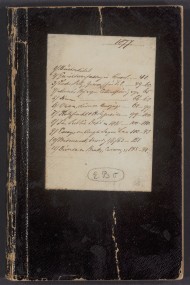
                        <item>Beschreibstoff: Notizbuch mit kartoniertem Einband,
                                    Außenseiten und Rücken mit schwarzlackierter Leinwand bezogen,
                                    Innenseiten mit gleichem Papier wie Heftseiten beklebt. Format
                                    200 × 122 mm. Auf dem Vorderdeckel von Engels Etikett im Format
                                    112 × 78 mm aufgeklebt. Keine Vorsatzblätter. Darin eingeheftet
                                    118 Blatt (= 236 Seiten) mittelstarkes, glattes, weißes Papier,
                                    hellblau liniert. Format wie Einband. Als Wasserzeichen nur
                                    helle Linien im Abstand von 28 mm. Marmorierter
                                    Farbschnitt.</item>
                        <item>Zustand: Gut erhalten, Papier leicht vergilbt. Vorderdeckel
                                    und Rücken des Einbandes leicht abgenutzt, Kanten und Ecken
                                    etwas abgestoßen. Das letzte Blatt bis auf einen Streifen von 30
                                    mm vor Beschriftung abgeschnitten. Keine Textverluste.</item>
                        <item>Schreiber: Marx, Engels (nur Etikett), einige Literaturangaben
                                    auf S. 28 und 46 wahrscheinlich von Eleanor Marx.</item>
                        <item>Schreibmaterial: Schwarze Tinte, leicht bräunlich verfärbt.
                                    Auf der Innenseite des Vorderdeckels eine Eintragung mit
                                    Grünstift, S. 1–19 und 25 zahlreiche Ankreuzungen und vertikale
                                    Durchstreichungen mit Rotstift, S. 25 auch mit Blaustift, S. 39,
                                    48, 53–57, 99, 146 und 148 Eintragungen und Anstreichungen mit
                                    Bleistift, ebenso auf der Innenseite des Hinterdeckels.</item>
                        <item>Beschriftung: Außen- und Innenseite des Vorderdeckels
                                    (teilweise), S. 1–41, 45–148, 151, 233, Innenseite des
                                    Hinterdeckels, davon die S. 8, 30–34, 37, 39–41, 48, 64, 143 und
                                    144 nur teilweise. S. 59, 61–64 durch vertikalen Bleistiftstrich
                                    in zwei Spalten geteilt. S. 42–44, 149/150, 152–232, 234–236
                                    leer. Lateinische Schrift.</item>
                        <item>Paginierung: Marx paginierte 1–152 mit Bleistift; S. 233
                                    später von fremder Hand mit 152 paginiert; alles andere
                                    unpaginiert.</item>
                        <item>Vermerke fremder Hand: Archivstempel IISG, Sign. B 131;
                                    Fotosign. EB 0 - EB 153 (mit Bleistift).</item>
                     </list>
                  </p>
               </physDesc>
            </msDesc>
         </sourceDesc>
      </fileDesc>
      <profileDesc><textClass><keywords><term>excerpts</term></keywords></textClass>
         <creation>
            <persName ref="https://megadigital.bbaw.de/M0001374 http://d-nb.info/gnd/118578537">Marx, Karl (1818–1883)</persName>
            <placeName/>
            <date from="1876-01-01" to="1878-12-31"/>
         </creation>
         <langUsage>
            <language ident="de">German</language>
         </langUsage>
         <abstract>
            <p>156 Seiten</p>
            <p>Exzerpte aus den Jahren 1876 bis 1878 aus:</p>
            <p>– Aleksej Adrianovič Golovačev: Desjat’ let reform, 1861–1871 (1872)</p>
            <p>– William Cobbett: A History of the Protestant “Reformation” in England and
                    Ireland (1868)</p>
            <p>– Henry Dewar: David Hume (1833)</p>
            <p>– 19 Schriften von und zu Robert Owen (1813–1840)</p>
            <p>– Remarks on the Impolicy of Restrictions on Commerce (1821)</p>
            <p>– Magnus Björnstjerna: The Public Debt, Its Influence and Its Management
                    (1831)</p>
            <p>– Essays in Anglo-Saxon Law (1876)</p>
            <p>– Verordnung betreffend das Verbot von Zeitungen und Zeitschriften vom 1. Juni 1863</p>
            <p>sowie bibliographische Notizen</p>
            <p/>
         </abstract>
      </profileDesc>
      
   </teiHeader>
   <text><body>
         <pb n="[Umschlag]"/>
         <div n="1">
            <head type="toc">
               <supplied cert="high">Inhaltsverzeichnis von
                    Engels</supplied>
            </head>
            <table rend="frame" xml:id="Table1">
               <head>1877.</head>
               <row>
                  <cell>1) Büchertitel</cell>
                  <cell/>
               </row>
               <row>
                  <cell>2) Gerichtsverfassung in Russl<ex>and</ex>
                  </cell>
                  <cell>41.</cell>
               </row>
               <row>
                  <cell>3) <ref xml:id="cb9effc6-a2de-4df8-9eff-c6a2defdf83e" corresp="#d32cf3d1-63e0-408f-acf3-d163e0108f16" type="editorialNote">
                           <persName ref="https://megadigital.bbaw.de/M0011447 http://d-nb.info/gnd/118573748">Locke</persName>, <persName ref="https://megadigital.bbaw.de/M0011762 http://d-nb.info/gnd/118740571">Petty</persName>, <persName ref="https://megadigital.bbaw.de/M0011828 http://d-nb.info/gnd/118743163">Quesnay</persName> (für F. E<ex>ngels</ex>
                           <supplied cert="high">)</supplied>
                        </ref><note xml:id="d32cf3d1-63e0-408f-acf3-d163e0108f16" corresp="#cb9effc6-a2de-4df8-9eff-c6a2defdf83e" type="editorial">Es handelt sich um Exzerpte und Notizen
                                    für das 10. Kapitel des zweiten Abschnitts des „Anti-Dühring“
                                    aus Schriften von Carey, Locke, Petty, Massie, North,
                                    Vanderlint, Quesnay u. a. – Diesen Teil, datiert Januar bis
                                    Anfang März 1877, siehe in MEGA I/27. S.
                            131–144.</note>
                  </cell>
                  <cell>49–60.</cell>
               </row>
               <row>
                  <cell>4) <persName ref="https://megadigital.bbaw.de/M0008457 http://viaf.org/viaf/95366881">Moore</persName>’s B<ex>rie</ex>f wegen Cottonspinning
                            wages</cell>
                  <cell>65</cell>
               </row>
               <row>
                  <cell>5) <persName ref="https://megadigital.bbaw.de/M0011185 http://d-nb.info/gnd/118554735">Hume</persName>
                  </cell>
                  <cell>66–68.</cell>
               </row>
               <row>
                  <cell>6) <persName ref="https://megadigital.bbaw.de/M0008745 https://d-nb.info/gnd/118591010">Owen</persName>, diverse Auszüge</cell>
                  <cell>68–99.</cell>
               </row>
               <row>
                  <cell>7) Holzfracht &amp; Holzpreise</cell>
                  <cell>99–100</cell>
               </row>
               <row>
                  <cell>8) The Public Debt v. 1831</cell>
                  <cell>100–110.</cell>
               </row>
               <row>
                  <cell>9) Essays on Anglo-Saxon Law</cell>
                  <cell>110–43</cell>
               </row>
               <row>
                  <cell>10) <persName ref="https://megadigital.bbaw.de/M0005607 http://d-nb.info/gnd/11851136X">Bismarck</persName>, Verordnung
                            1/6/63</cell>
                  <cell>151</cell>
               </row>
               <row>
                  <cell>11) Diversa on Bank, Currency pp</cell>
                  <cell>145–48.</cell>
               </row>
            </table>
         </div>
         <pb n="[0]"/>
         <div n="1">
            <head type="toc">
               <supplied cert="high">Bibliographische Notizen</supplied>
            </head>
            <p>
               <hi rendition="#u">1875.
                        Consular Report über U. St.</hi>
            </p>
            <p>
               <hi rendition="#u">Edward Young</hi>, Ph. D., Chief of the Bureau of Statistics:
                        <hi rendition="#u">Special Report on Immigration</hi> etc. Washington,
                    Government Printing Office. 1872.</p>
            <p>
               <hi rendition="#u">Dr. Guido Krafft:</hi>
               <hi rendition="#u">Lehrbuch d<ex>er</ex> Landwirthschaft.</hi>
                    1. Bd. Allgemeine Ackerbaulehre. Berl. 1875.</p>
            <p>
               <hi rendition="#u">Wilhelm Oechelhäuser:</hi>
               <hi rendition="#u">Die wirthschaftliche Krisis.</hi> Berlin. (Julius Springer.
                    1876)</p>
            <p>
               <hi rendition="#u">A. O. Crawford:</hi>
               <hi rendition="#u">Die Credit-Missverhältnisse in
                        Deutschland.</hi> Dresden (Commissionsverlag v. H. Reichardt.) 1876.</p>
            <p>
               <hi rendition="#u">Gehe</hi> (L.) D<ex>ie</ex> Tarifwirthschaft d<ex>er</ex>
                    deutschen Eisenbahnen. Berlin. 1875 (Fr. Kortkampf)</p>
            <p>
               <hi rendition="#u">idem:</hi>
               <hi rendition="#u">Rückblicke u. Vorblicke im Kampf gegen
                        Eisenbahnwillkühr.</hi> (<hi rendition="#u">Berlin <choice>
                     <sic>1875</sic>
                     <corr>1876</corr>
                  </choice>
               </hi> ib.)</p>
            <p>
               <hi rendition="#u">A. Th. von Krieken:</hi>
               <hi rendition="#u">Ueber die s. g. Organische Staatstheorie.</hi>
               <hi rendition="#u">Leipzig 1873.</hi>
            </p>
            <p>
               <hi rendition="#u">P. Pierret:</hi> Dictionnaire d’archéologie égyptienne. Paris.
                    Imprimerie nationale. 1875. (in 8°)</p>
            <milestone unit="section" rendition="#hr"/>
            <p>
               <anchor type="marginal_start" xml:id="start_m2zg_9wc_732" corresp="#end_m2zg_9wc_732" rendition="#marginal-black_cross"/>
               <anchor type="marginal_end" corresp="#start_m2zg_9wc_732" xml:id="end_m2zg_9wc_732"/>
               <hi rendition="#u">T. Trunk:</hi>
               <hi rendition="#u">Geschichte u. Kritik d<ex>er</ex> Lehre v.
                        d<ex>er</ex> Grundrente</hi> in <hi rendition="#u">Hildebrands Jahrbüchern, 1868 X.
                    Band</hi>
            </p>
            <p>
               <anchor type="marginal_start" xml:id="start_g3of_le0_4cd" corresp="#end_g3of_le0_4cd" rendition="#marginal-black_cross"/>
               <anchor type="marginal_end" corresp="#start_g3of_le0_4cd" xml:id="end_g3of_le0_4cd"/>
               <hi rendition="#u">Louis Lacour:</hi>
               <hi rendition="#u">Mémoires du duc de Lauzun.</hi> Naumburg
                    (Gottfried Paetz) 1862.</p>
            <p>
               <anchor type="marginal_start" xml:id="start_b8hw_nkw_rmq" corresp="#end_b8hw_nkw_rmq" rendition="#marginal-black_cross"/>
               <anchor type="marginal_end" corresp="#start_b8hw_nkw_rmq" xml:id="end_b8hw_nkw_rmq"/>
               <hi rendition="#u">Rodbertus.</hi> Zur Geschichte d<ex>er</ex> röm.
                    Tributsteuern etc in <hi rendition="#u">Hildebrand</hi>, Jahrgang 1865, Bd IV u.
                    V u. <hi rendition="#u">Jahrgang</hi> 1867, Bd VIII</p>
            <p>
               <hi rendition="#u">Pierre Zaccone:</hi> Les mystères de L’Internationale.</p>
            <pb n="1"/>
            <div n="2">
               <head type="toc">Hinrichs’ Vierteljahrskatalog etc.</head>
               <div n="3" xml:id="ny44_h2v_fzb">
                  <note type="excerpt_source" resp="editor" corresp="#ny44_h2v_fzb">
                     <bibl>Vierteljahrs-Catalog aller neuen Erscheinungen im Felde der
                                Literatur in Deutschland. Nach den Wissenschaften geordnet. Mit
                                alphabetischem Register. Jg. 24. 1869. Hrsg. und verlegt von der J.
                                C. Hinrichs’schen Buchhandlung in Leipzig. [Leipzig
                            1869.]</bibl>
                  </note>
                  <head type="toc">1869</head>
                  <p>
                     <hi rendition="#u">Dorn</hi>, Alex., Rückblicke auf die Entwicklung
                                d<ex>er</ex> ungarischen Volkswirthschaft i. J. 1868. (Leip. Wigand)
                                <hi rendition="#sup">2</hi>/<hi rendition="#sub">3</hi> Thl.</p>
                  <p>
                     <anchor type="marginal_start" xml:id="start_tzes_nu4_don" corresp="#end_tzes_nu4_don" rendition="#marginal-black_cross #marginal-red_cross"/>
                     <anchor type="marginal_end" corresp="#start_tzes_nu4_don" xml:id="end_tzes_nu4_don"/>
                     <hi rendition="#u">Hennings</hi>, <anchor type="marginal_start" xml:id="start_kedb_4x0_rf4" corresp="#end_kedb_4x0_rf4" rendition="#marginal-red_solid"/>Dr. P. D. Ch., Ueber die agrarische
                            Verfassung der alten Deutschen nach Tacitus und Caesar (Kiel, Homann)
                                <hi rendition="#sup">1</hi>/<hi rendition="#sub">3</hi> rth.<anchor type="marginal_end" corresp="#start_kedb_4x0_rf4" xml:id="end_kedb_4x0_rf4"/>
                  </p>
                  <p>
                     <hi rendition="#u">Prof. W. S. Teuffel</hi>, Geschichte der römischen
                            Literatur. (Leipzig, Teubner)</p>
                  <p>
                     <hi rendition="#u">Scholtze</hi>, A., Die Beziehungen zwischen Rom und
                            Hellas vom Sturze der Königsherrschaft bis zum epirotischen Kriege.
                            (Leipzig, Gerhard) <hi rendition="#sup">1</hi>/<hi rendition="#sub">3</hi> rth.</p>
                  <p>
                     <hi rendition="#u">Franz Dr. <choice>
                           <sic>Schöbs</sic>
                           <corr>Schöps</corr>
                        </choice>, R. Gellert:</hi> Die Praxis des kaufmännischen Geschäfts.
                            (Leipzig, ’66) (Wigand) 1 rth.</p>
                  <p>
                     <hi rendition="#u">Prof. Dr. Ernst Wagner</hi> und <hi rendition="#u">Gust. Kachel</hi>: Die Grundformen der antiken klassischen
                            Baukunst. (Heidelberg, Bassermann) 1 Thl. 2 gr.</p>
                  <p>
                     <hi rendition="#u">Schützenberger</hi> (Dr. M. P.) Die Farbstoffe etc
                            Bearb. von Dr. H. Schröder. (Berlin, Gerschel).</p>
                  <p>
                     <anchor type="marginal_start" xml:id="start_ipiw_2qy_j2z" corresp="#end_ipiw_2qy_j2z" rendition="#marginal-black_cross #marginal-red_cross"/>
                     <anchor type="marginal_end" corresp="#start_ipiw_2qy_j2z" xml:id="end_ipiw_2qy_j2z"/>
                     <hi rendition="#u">Gropp</hi>, Herm. <anchor type="marginal_start" xml:id="start_yzx1_l8y_axl" corresp="#end_yzx1_l8y_axl" rendition="#marginal-red_solid"/>Untersuchungen und Erfahrungen über
                            das Verhalten des Grundwassers und der Quellen, m<ex>it</ex> besonderer
                            Rücksicht f. d<ex>en</ex> Ackerbau etc. (Lippstadt, 1868, Rempel) 12<hi rendition="#sup">1</hi>/<hi rendition="#sub">2</hi> gr.<anchor type="marginal_end" corresp="#start_yzx1_l8y_axl" xml:id="end_yzx1_l8y_axl"/>
                  </p>
                  <p>
                     <hi rendition="#u">Hamm’s</hi>, Dr. Wilhelm, <hi rendition="#u">agronomische Zeitung</hi> (Leipzig, Klinkhardt)</p>
                  <p>
                     <hi rendition="#u">Jahresbericht üb<ex>er</ex> d<ex>ie</ex>
                                landwirthschaftlichen Verhältnisse Schleswig-Holsteins</hi>,
                            erstattet im Dec. 1868 (Kiel, Schwers) 24 gr.</p>
                  <p>
                     <hi rendition="#u">Kecht’s, J. S.</hi> Verbesserter practischer Weinbau
                            in Gärten und auf Weinbergen. 14 Aufl. (Berlin 1868, <choice>
                        <sic>Nauk’sche</sic>
                        <corr>Nauck’sche</corr>
                     </choice> Buchh.) 1<hi rendition="#sup">1</hi>/<hi rendition="#sub">3</hi> Thlr.</p>
                  <p>
                     <anchor type="marginal_start" xml:id="start_nj1a_nlc_qwx" corresp="#end_nj1a_nlc_qwx" rendition="#marginal-black_cross #marginal-red_cross"/>
                     <anchor type="marginal_end" corresp="#start_nj1a_nlc_qwx" xml:id="end_nj1a_nlc_qwx"/>
                     <hi rendition="#u">Lippe-Weissenfeld</hi>, Armin, Graf zur: Die
                            Grundsätze der Züchtung für den kleineren Landwirth. Ehrenfriedersdorf.
                            (Annaberg, Graser) <hi rendition="#sup">1</hi>/<hi rendition="#sub">3</hi> rth.</p>
                  <p>
                     <anchor type="marginal_start" xml:id="start_piwe_gxv_psg" corresp="#end_piwe_gxv_psg" rendition="#marginal-black_cross #marginal-red_cross"/>
                     <anchor type="marginal_end" corresp="#start_piwe_gxv_psg" xml:id="end_piwe_gxv_psg"/>
                     <hi rendition="#u">Löbe, Dr. Will</hi> Die Futternoth, deren Vorbeugung
                            und Linderung. (Leipzig, Wöller) 18 gr.</p>
                  <p>
                     <anchor type="marginal_start" xml:id="start_zyjb_1m6_x3r" corresp="#end_zyjb_1m6_x3r" rendition="#marginal-black_cross #marginal-red_cross"/>
                     <anchor type="marginal_end" corresp="#start_zyjb_1m6_x3r" xml:id="end_zyjb_1m6_x3r"/>
                     <hi rendition="#u">
                        <choice>
                           <sic>Wilkens</sic>
                           <corr>Wilckens</corr>
                        </choice>
                     </hi>, Dr. M., <anchor type="marginal_start" xml:id="start_jouj_x57_wks" corresp="#end_jouj_x57_wks" rendition="#marginal-red_solid"/>
                     <hi rendition="#u">Die
                                landwirthschaftlichen Verkehrsverhältnisse Norddeutschlands</hi>
                            (Berlin, Schroeder) <hi rendition="#sup">1</hi>/<hi rendition="#sub">3</hi> rth.<anchor type="marginal_end" corresp="#start_jouj_x57_wks" xml:id="end_jouj_x57_wks"/>
                  </p>
                  <p>
                     <anchor type="marginal_start" xml:id="start_ivia_fzr_fe6" corresp="#end_ivia_fzr_fe6" rendition="#marginal-black_cross #marginal-red_cross"/>
                     <anchor type="marginal_end" corresp="#start_ivia_fzr_fe6" xml:id="end_ivia_fzr_fe6"/>
                     <hi rendition="#u">Ney</hi> (Ed<ex>uard</ex>) <anchor type="marginal_start" xml:id="start_q98q_i8h_oh9" corresp="#end_q98q_i8h_oh9" rendition="#marginal-red_solid"/>
                     <hi rendition="#u">Die natürliche Bestimmung d<ex>es</ex> Waldes und der
                                Streunutzung.</hi> Dürkheim, Lang 1 rth.<anchor type="marginal_end" corresp="#start_q98q_i8h_oh9" xml:id="end_q98q_i8h_oh9"/>
                  </p>
                  <pb n="2"/>
                  <p>
                     <anchor type="marginal_start" xml:id="start_d748_heu_hiv" corresp="#end_d748_heu_hiv" rendition="#marginal-black_cross #marginal-red_cross"/>
                     <anchor type="marginal_end" corresp="#start_d748_heu_hiv" xml:id="end_d748_heu_hiv"/>
                     <hi rendition="#u">Clas</hi> (Oberlehrer, G.) Die geognostischen <anchor type="marginal_start" xml:id="start_r237_0ur_f3r" corresp="#end_r237_0ur_f3r" rendition="#marginal-red_solid"/>Verhältnisse und Bodenarten Würtembergs in ihrer Beziehung zur
                            Landwirthschaft. Ravensburg, Ulmer. 8 gr.<anchor type="marginal_end" corresp="#start_r237_0ur_f3r" xml:id="end_r237_0ur_f3r"/>
                  </p>
                  <p>
                     <hi rendition="#u">Creuzburg</hi>, Heinr., Die Vertilgung der Raupen und
                            schädlichsten Insekten <choice>
                        <sic>überhaupten</sic>
                        <corr cert="high">überhaupt</corr>
                     </choice>. Weimar (1866) Voigt. 18 gr.</p>
                  <p>
                     <hi rendition="#u">Pfeiffer</hi>, Ed., Die Consumvereine. 2 Aufl.
                            Stuttgart (Kröner) <hi rendition="#sup">2</hi>/<hi rendition="#sub">3</hi> rth.</p>
                  <p>
                     <hi rendition="#u">Schmidt, Chr. W.</hi>, Die stetige Senkung
                                d<ex>es</ex> Weltmeers auf der nördlichen Halbkugel der Erde und der
                            Südpolar-Welttheil. (<hi rendition="#u">Trier</hi>, Groppe) <hi rendition="#sup">1</hi>/<hi rendition="#sub">6</hi> rth.</p>
                  <p>
                     <anchor type="marginal_start" xml:id="start_lxvq_pmj_odt" corresp="#end_lxvq_pmj_odt" rendition="#marginal-black_cross #marginal-red_cross"/>
                     <anchor type="marginal_end" corresp="#start_lxvq_pmj_odt" xml:id="end_lxvq_pmj_odt"/>
                     <hi rendition="#u">Plath (J. H.)</hi> Nahrung, Kleidung und Wohnung der
                            alten Chinesen. München 1868 (Franz) 1 rth. 6 gr.</p>
                  <p>
                     <anchor type="marginal_start" xml:id="start_awet_p5z_cz7" corresp="#end_awet_p5z_cz7" rendition="#marginal-black_cross #marginal-red_cross"/>
                     <anchor type="marginal_end" corresp="#start_awet_p5z_cz7" xml:id="end_awet_p5z_cz7"/>
                     <hi rendition="#u">Derselbe:</hi> über Schule, Unterricht und Erziehung
                            bei den alten Chinesen. <hi rendition="#u">id.</hi> 1868. <hi rendition="#sup">1</hi>/<hi rendition="#sub">2</hi> rth.</p>
                  <p>
                     <anchor type="marginal_start" xml:id="start_svf3_w7q_qa8" corresp="#end_svf3_w7q_qa8" rendition="#marginal-black_cross #marginal-red_cross"/>
                     <anchor type="marginal_end" corresp="#start_svf3_w7q_qa8" xml:id="end_svf3_w7q_qa8"/>
                     <hi rendition="#u">Baur</hi>, Dr. Franz: <hi rendition="#u">Der
                                Wald</hi> und seine <anchor type="marginal_start" xml:id="start_pw72_amx_wrm" corresp="#end_pw72_amx_wrm" rendition="#marginal-red_solid"/>
                     <choice>
                        <sic>Bodenecke</sic>
                        <corr>Bodendecke</corr>
                     </choice> im Haushalt der Natur etc. Stuttgart. 1869, <hi rendition="#sup">1</hi>/<hi rendition="#sub">6</hi> rth.<anchor type="marginal_end" corresp="#start_pw72_amx_wrm" xml:id="end_pw72_amx_wrm"/>
                  </p>
                  <p>
                     <anchor type="marginal_start" xml:id="start_e2w3_kr6_d5m" corresp="#end_e2w3_kr6_d5m" rendition="#marginal-black_cross #marginal-red_cross"/>
                     <anchor type="marginal_end" corresp="#start_e2w3_kr6_d5m" xml:id="end_e2w3_kr6_d5m"/>
                     <hi rendition="#u">Bernhardt</hi>, Aug., Die Waldwirthschaft und <anchor type="marginal_start" xml:id="start_o71q_k0v_w64" corresp="#end_o71q_k0v_w64" rendition="#marginal-red_solid"/>der
                            Waldschutz m<ex>it</ex> besond. Berücksichtigung auf die
                            Waldschutzgesetzgebung in Preussen. 1 rth. Berlin, Springer.<anchor type="marginal_end" corresp="#start_o71q_k0v_w64" xml:id="end_o71q_k0v_w64"/>
                  </p>
                  <p>
                     <anchor type="marginal_start" xml:id="start_y0na_bnv_vc2" corresp="#end_y0na_bnv_vc2" rendition="#marginal-black_cross #marginal-red_cross"/>
                     <anchor type="marginal_end" corresp="#start_y0na_bnv_vc2" xml:id="end_y0na_bnv_vc2"/>
                     <hi rendition="#u">Au</hi>, Dr. J., <hi rendition="#u">die
                                Hilfsdüngemittel</hi> in ihrer <anchor type="marginal_start" xml:id="start_q7mr_jwb_s2o" corresp="#end_q7mr_jwb_s2o" rendition="#marginal-red_solid"/>volks- und privatwirthschaftlichen
                            Bedeutung. (Heidelberg, <choice>
                        <sic>Bassemann</sic>
                        <corr>Bassermann</corr>
                     </choice>) 2 rth.</p>
                  <p>
                     <anchor type="marginal_start" xml:id="start_ybxv_afg_xoq" corresp="#end_ybxv_afg_xoq" rendition="#marginal-black_cross #marginal-red_cross"/>
                     <anchor type="marginal_end" corresp="#start_ybxv_afg_xoq" xml:id="end_ybxv_afg_xoq"/>
                     <hi rendition="#u">Au</hi>, Dr. J., J. von Liebigs Lehre von der
                            Bodenerschöpfung und die <choice>
                        <sic>nationalökonomische Bevölkerungstheorie</sic>
                        <corr>nationalökonomischen Bevölkerungstheorien</corr>
                     </choice> dargelegt und kritisch untersucht. (Ebd. 1 rth. 16 gr.)<anchor type="marginal_end" corresp="#start_q7mr_jwb_s2o" xml:id="end_q7mr_jwb_s2o"/>
                  </p>
                  <p>
                     <anchor type="marginal_start" xml:id="start_l1es_b30_jae" corresp="#end_l1es_b30_jae" rendition="#marginal-black_cross #marginal-red_cross"/>
                     <anchor type="marginal_end" corresp="#start_l1es_b30_jae" xml:id="end_l1es_b30_jae"/>
                     <hi rendition="#u">Deiters</hi>, K. F., der <anchor type="marginal_start" xml:id="start_h07f_qse_d2h" corresp="#end_h07f_qse_d2h" rendition="#marginal-red_solid"/>Kartoffelbau mit C. L. Gülichs Verfahren. (Wismar, Hinstorff) <hi rendition="#sup">1</hi>/<hi rendition="#sub">4</hi> rth.<anchor type="marginal_end" corresp="#start_h07f_qse_d2h" xml:id="end_h07f_qse_d2h"/>
                  </p>
                  <p>
                     <hi rendition="#u">Grimm</hi> (Paul), les péchés de Christine et
                            d’Isabella d’Espagne. (Würzburg Julien) 1 rth.</p>
                  <p>
                     <hi rendition="#u">Panhuijs</hi>, A. A. F. van, de landgemeente in
                            Friesland (<hi rendition="#u">Groningen, J. B. Huber</hi>) 1 fl.
                            50 cts.</p>
                  <p>
                     <hi rendition="#u">Rölly</hi>, Prof. J. Ign., Uebersicht der
                            vorzüglichsten Studien und Studienorte im Occident während der römischen
                            Kaiserherrschaft. (Luzern, Gebr. Räber) 6 gr.</p>
                  <pb n="3"/>
                  <p>
                     <hi rendition="#u">W. Müldener</hi> Bibliotheca <choice>
                        <sic>geographica</sic>
                        <corr cert="high">geographico</corr>
                     </choice>-statistica et oeconomico-politica oder systematisch geordnete
                            Uebersicht der in Deutschland und dem Auslande auf dem Gebiete der
                            gesammten Geographie, Statistik und der Staatswissenschaften neu
                            erschienenen Bücher. <hi rendition="#u">16 Jahrgang 2 Heft Juli–December
                                1869.</hi> Göttingen, Vandenhoeck und Ruprechts Verlag. 12 gr.</p>
                  <p>
                     <hi rendition="#u">do:</hi>
                     <hi rendition="#u">Bibliotheca mechanico-technologica et oeconomica</hi>
                            etc 7 Jahrg. 2 Heft. Juli–Dec. 1868. (Mit e. alphab. Register)
                            11 gr.</p>
                  <p>
                     <hi rendition="#u">Humpel.</hi> M. C. statistische Tableaus über die
                            Bewegung der Bevölkerung etc in der k. k. Reichs-Haupt- und
                            Residenzstadt Wien, vom J. 1810–1861. Hrsg. von A. Hensinger (Wien.
                            Braumüller) 1 Thlr.</p>
                  <p>
                     <hi rendition="#u">Jäger</hi>, Dr. Ernst Ludwig, die Fortbildung des
                            Bodencredits. (Stuttg. Kröner) 26 gr.</p>
                  <p>
                     <hi rendition="#u">Jaeger</hi>, Jul., der menschliche Verkehr und seine
                            Theorie. (München, Franz) <hi rendition="#sup">2</hi>/<hi rendition="#sub">3</hi> Thl.</p>
                  <p>
                     <anchor type="marginal_start" xml:id="start_x2vd_xm4_024" corresp="#end_x2vd_xm4_024" rendition="#marginal-black_cross #marginal-red_cross"/>
                     <anchor type="marginal_end" corresp="#start_x2vd_xm4_024" xml:id="end_x2vd_xm4_024"/>
                     <hi rendition="#u">Loehnis</hi> (H.) die vereinigten Staaten von
                            Amerika. 2. Ausg. (Leipzig Mayer, 1869.) 1<hi rendition="#sup">1</hi>/<hi rendition="#sub">2</hi> Th.</p>
                  <p>
                     <hi rendition="#u">Maurer</hi>, Konr., die Quellenzeugnisse über
                                d<ex>as</ex> erste Landrecht und über die Ordnung der
                            Bezirksverfassung d<ex>es</ex> isländischen Freistaates. (München,
                            Franz) 1 rth. 6 gr.</p>
                  <p>
                     <hi rendition="#u">Sittenlosigkeit</hi>, die öffentliche, mit
                                besondr<ex>er</ex> Beziehung auf Berlin etc. Petition und
                            Denkschrift des Centralausschusses f. die innere Mission der deutschen
                            evangelischen Kirche etc. 1869. Berlin. Enslin. 3 gr.</p>
                  <p>
                     <anchor type="marginal_start" xml:id="start_s893_pwc_rbw" corresp="#end_s893_pwc_rbw" rendition="#marginal-black_cross #marginal-red_cross"/>
                     <anchor type="marginal_end" corresp="#start_s893_pwc_rbw" xml:id="end_s893_pwc_rbw"/>
                     <hi rendition="#u">Fallou</hi> Frd. Alb., Grund und <anchor type="marginal_start" xml:id="start_hewr_3op_3g6" corresp="#end_hewr_3op_3g6" rendition="#marginal-red_solid"/>Boden
                                d<ex>es</ex> Königreich Sachsen und seiner Umgebung in sämmtlichen
                            Nachbarstaaten in volks- land- und <choice>
                        <sic>forswirthschaftlicher</sic>
                        <corr>forstwirthschaftlicher</corr>
                     </choice> Beziehung, naturwissenschaftlich untersucht. (Dresden,
                            Schönfeld). 1<hi rendition="#sup">1</hi>/<hi rendition="#sub">3</hi> rth.<anchor type="marginal_end" corresp="#start_hewr_3op_3g6" xml:id="end_hewr_3op_3g6"/>
                  </p>
                  <p>
                     <anchor type="marginal_start" xml:id="start_juhl_wij_3m5" corresp="#end_juhl_wij_3m5" rendition="#marginal-black_cross #marginal-red_cross"/>
                     <anchor type="marginal_end" corresp="#start_juhl_wij_3m5" xml:id="end_juhl_wij_3m5"/>
                     <hi rendition="#u">Rivoli</hi>, J., über den <anchor type="marginal_start" xml:id="start_gqxr_3uo_omk" corresp="#end_gqxr_3uo_omk" rendition="#marginal-red_solid"/>Einfluss der Wälder auf die Temperatur der untersten Luftschichten.
                            (Posen, Leitgeber) <hi rendition="#sup">1</hi>/<hi rendition="#sub">3</hi> rth.<anchor type="marginal_end" corresp="#start_gqxr_3uo_omk" xml:id="end_gqxr_3uo_omk"/>
                  </p>
                  <p>
                     <anchor type="marginal_start" xml:id="start_lbag_9yx_1y3" corresp="#end_lbag_9yx_1y3" rendition="#marginal-black_cross #marginal-red_cross"/>
                     <anchor type="marginal_end" corresp="#start_lbag_9yx_1y3" xml:id="end_lbag_9yx_1y3"/>
                     <hi rendition="#u">Trommsdorff</hi>, Dr. Hugo, die Statistik
                                d<ex>es</ex>
                     <anchor type="marginal_start" xml:id="start_tg03_n7y_1vl" corresp="#end_tg03_n7y_1vl" rendition="#marginal-red_solid"/>Wassers
                            und d<ex>er</ex> Gewässer, ihre Wichtigkeit und bish<ex>erige</ex>
                            Vernachlässigung. (Erfurt, Neumann) 1869 <hi rendition="#sup">1</hi>/<hi rendition="#sub">2</hi> rth.<anchor type="marginal_end" corresp="#start_tg03_n7y_1vl" xml:id="end_tg03_n7y_1vl"/>
                  </p>
                  <pb n="4"/>
                  <p>
                     <hi rendition="#u">Maurer</hi> (F<ex>ran</ex>z) eine Reise durch Bosnien,
                            die Saveländer und Ungarn. 1870. (Berlin. C. Heymann) 2 Th.</p>
                  <p>
                     <hi rendition="#u">Semper</hi>, Dr. C., die Philippinen und ihre
                            Bewohner. (Würzburg, Stuber) 1869. 1<hi rendition="#sup">2</hi>/<hi rendition="#sub">3</hi> th.</p>
                  <p>
                     <hi rendition="#u">Bibliothek der gesammten Handelswissenschaften</hi> v.
                            Andree, Bleibtreu, etc. Stuttgart <choice>
                        <sic>Meier</sic>
                        <corr>Maier</corr>
                     </choice>.</p>
                  <p>
                     <hi rendition="#u">Berg</hi>, Dr. C. H. Freiherr von, Pürschgang im
                            Dickicht der Jagd- und Forstgeschichte. (Dresden Schönfeld) 1<hi rendition="#sup">2</hi>/<hi rendition="#sub">3</hi> Th.</p>
                  <p>
                     <anchor type="marginal_start" xml:id="start_qol8_pin_cyb" corresp="#end_qol8_pin_cyb" rendition="#marginal-black_cross #marginal-red_cross"/>
                     <anchor type="marginal_end" corresp="#start_qol8_pin_cyb" xml:id="end_qol8_pin_cyb"/>
                     <hi rendition="#u">Ackerhof</hi>, A. D., Die Nutzung der Teiche und
                            Gewässer durch Fischzucht und Pflanzenbau. (Quedlinburg, Basse) <hi rendition="#sup">2</hi>/<hi rendition="#sub">3</hi> Thl.</p>
                  <p>
                     <anchor type="marginal_start" xml:id="start_iecl_yn4_4mn" corresp="#end_iecl_yn4_4mn" rendition="#marginal-black_cross #marginal-red_cross"/>
                     <anchor type="marginal_end" corresp="#start_iecl_yn4_4mn" xml:id="end_iecl_yn4_4mn"/>
                     <hi rendition="#u">Bauer</hi>, Dr. Max, nordfranzösische <anchor type="marginal_start" xml:id="start_s70i_6wi_k6o" corresp="#end_s70i_6wi_k6o" rendition="#marginal-red_solid"/>Landwirthschaft etc. (Halle, Pfeffer,) 1<hi rendition="#sup">1</hi>/<hi rendition="#sub">3</hi> rth.<anchor type="marginal_end" corresp="#start_s70i_6wi_k6o" xml:id="end_s70i_6wi_k6o"/>
                  </p>
                  <p>
                     <anchor type="marginal_start" xml:id="start_hbmr_4dx_hcw" corresp="#end_hbmr_4dx_hcw" rendition="#marginal-black_cross #marginal-red_cross"/>
                     <anchor type="marginal_end" corresp="#start_hbmr_4dx_hcw" xml:id="end_hbmr_4dx_hcw"/>
                     <hi rendition="#u">Heuser</hi>, Dr. A., Beitrag zur <anchor type="marginal_start" xml:id="start_a5ea_c01_zkq" corresp="#end_a5ea_c01_zkq" rendition="#marginal-red_solid"/>Boden-Ersatzfrage. (Neuwied Heuser) 12 gr.</p>
                  <p>
                     <anchor type="marginal_start" xml:id="start_cq8m_xni_z4l" corresp="#end_cq8m_xni_z4l" rendition="#marginal-black_cross #marginal-red_cross"/>
                     <anchor type="marginal_end" corresp="#start_cq8m_xni_z4l" xml:id="end_cq8m_xni_z4l"/>
                     <hi rendition="#u">Kirchbach</hi>, J. v., Handbuch f. Landwirthe etc.
                            7 Aufl. von neuem revidirt von Dr. K. Birnbaum. (Berlin, 1870, Wiegandt
                            und Hempel) 1 Th.<anchor type="marginal_end" corresp="#start_a5ea_c01_zkq" xml:id="end_a5ea_c01_zkq"/>
                  </p>
                  <p>
                     <hi rendition="#u">Löbe</hi>, Dr. Will., Jahresbericht über die
                            Fortschritte d<ex>er</ex> gesammten Landwirthschaft und der in dieselbe
                            einschlagenden industriellen Gewerbe und Hilfswissenschaften
                                d<ex>es</ex> Jahres 1868. (Stuttgart, Cohen und Risch) 27 gr.</p>
                  <p>
                     <anchor type="marginal_start" xml:id="start_gl2x_o5g_8se" corresp="#end_gl2x_o5g_8se" rendition="#marginal-black_cross"/>
                     <anchor type="marginal_end" corresp="#start_gl2x_o5g_8se" xml:id="end_gl2x_o5g_8se"/>
                     <hi rendition="#u">Mareck</hi> (B) der rationelle Weinbau etc. (Weimar,
                            1870, B. F. Voigt) 3 rth.</p>
                  <p>
                     <hi rendition="#u">Martin</hi> (Wilhelm) Die Hauptlehren der neueren
                            Landwirthschaft. (Ravensburg Ulmer) <hi rendition="#sup">3</hi>/<hi rendition="#sub">4</hi> Th.</p>
                  <p>
                     <anchor type="marginal_start" xml:id="start_luig_x5e_pnm" corresp="#end_luig_x5e_pnm" rendition="#marginal-black_cross #marginal-red_cross"/>
                     <anchor type="marginal_end" corresp="#start_luig_x5e_pnm" xml:id="end_luig_x5e_pnm"/>
                     <hi rendition="#u">Mayer</hi>, Dr. Ad., Das Düngerkapital und <anchor type="marginal_start" xml:id="start_ow2c_c2f_ro3" corresp="#end_ow2c_c2f_ro3" rendition="#marginal-red_solid"/>der
                            Raubbau. (Heidelb. C. Winter) 12 gr.<anchor type="marginal_end" corresp="#start_ow2c_c2f_ro3" xml:id="end_ow2c_c2f_ro3"/>
                  </p>
                  <p>
                     <hi rendition="#u">Reitlechner</hi>, Prof. Dr. Carl, Lehrbuch
                                d<ex>er</ex> landwirthschaftlichen Maschinenlehre. (Wien,
                            Braumüller) 2 Th.</p>
                  <p>
                     <anchor type="marginal_start" xml:id="start_tbh1_06u_1j5" corresp="#end_tbh1_06u_1j5" rendition="#marginal-black_cross #marginal-red_cross"/>
                     <anchor type="marginal_end" corresp="#start_tbh1_06u_1j5" xml:id="end_tbh1_06u_1j5"/>
                     <hi rendition="#u">Schmidt</hi>, G. F. v., die Schafzucht und <anchor type="marginal_start" xml:id="start_wo20_i4u_40k" corresp="#end_wo20_i4u_40k" rendition="#marginal-red_solid"/>Wollkunde für Schafzüchter und Landwirthe. (Stuttgart, Ebner und
                            Seubert) 1 Th. 14 gr.</p>
                  <p>
                     <anchor type="marginal_start" xml:id="start_r7s5_imp_4xf" corresp="#end_r7s5_imp_4xf" rendition="#marginal-black_cross #marginal-red_cross"/>
                     <anchor type="marginal_end" corresp="#start_r7s5_imp_4xf" xml:id="end_r7s5_imp_4xf"/>
                     <hi rendition="#u">Schroeder</hi>, Dr. F. H., über zweckmässige
                            Ernährung d<ex>es</ex> Rindviehs. (Bremen, Hampe) <hi rendition="#sup">1</hi>/<hi rendition="#sub">6</hi> Th.</p>
                  <p>
                     <anchor type="marginal_start" xml:id="start_r6gv_nb6_kuj" corresp="#end_r6gv_nb6_kuj" rendition="#marginal-black_cross #marginal-red_cross"/>
                     <anchor type="marginal_end" corresp="#start_r6gv_nb6_kuj" xml:id="end_r6gv_nb6_kuj"/>
                     <hi rendition="#u">Settegast</hi>, H., welche Richtung ist der
                            Schafzucht Norddeutschlands der Concurrenz des Auslandes gegenüber zu
                            geben? (Breslau <pb n="5"/> Korn) <hi rendition="#sup">1</hi>/<hi rendition="#sub">2</hi> rth.<anchor type="marginal_end" corresp="#start_wo20_i4u_40k" xml:id="end_wo20_i4u_40k"/>
                  </p>
                  <p>
                     <anchor type="marginal_start" xml:id="start_sc0p_sx6_8ke" corresp="#end_sc0p_sx6_8ke" rendition="#marginal-black_cross #marginal-red_cross"/>
                     <anchor type="marginal_end" corresp="#start_sc0p_sx6_8ke" xml:id="end_sc0p_sx6_8ke"/>
                     <hi rendition="#u">Ville</hi>, Prof. Geo., die chemischen Dünger,
                            Landwirthschaftliche Vorträge gehalten auf dem Versuchsfeld v.
                            Vincennes. (Strassburg, Treuttel und Würtz) 1 rth.</p>
                  <p>
                     <hi rendition="#u">Veegens</hi>, J. D., De Banken van leening in
                            Noord-Nederland tot het einde der achttiende eeuw (Rotterd<ex>am</ex> J.
                            van Baalen en zoonen) 2 Fl.</p>
                  <p>
                     <hi rendition="#u">Laspeyres</hi>, Prof. Dr. Etienne, der Einfluss der
                            Wohnung auf die Sittlichkeit. (Berl. Dümmler) 2 Th.</p>
                  <p>
                     <hi rendition="#u">Roscher W.</hi>
                     <hi rendition="#u">System d<ex>er</ex> Volkswirthschaft.</hi> 1 Bd.
                                D<ex>ie</ex> Grundlagen der Nationalök<ex>onomie</ex> 8 Aufl.
                            (Stuttgart Cotta) 3 Thl.</p>
                  <p>
                     <anchor type="marginal_start" xml:id="start_t539_qir_m8e" corresp="#end_t539_qir_m8e" rendition="#marginal-black_cross #marginal-red_cross"/>
                     <anchor type="marginal_end" corresp="#start_t539_qir_m8e" xml:id="end_t539_qir_m8e"/>
                     <hi rendition="#u">Schmoller</hi>, Gust. Zur Geschichte der deutschen
                            Kleingewerbe im 19 Jh. (Halle, 1870) 2 Th.</p>
                  <p>
                     <hi rendition="#u">Sinnenlust</hi> (Die, und ihre Opfer) Geschichte
                                d<ex>er</ex> Prostitution (Berl. 1870, Langmann) 1<hi rendition="#sup">1</hi>/<hi rendition="#sub">2</hi> Th.</p>
                  <p>
                     <hi rendition="#u">Wagner</hi>, Prof. Dr. Adolph, System d<ex>er</ex>
                            deutschen Zettelbankgesetzgeb<ex>ung</ex> (Freiburg im Breisgau, 1870
                            Wagner) 2 rth.</p>
                  <p>
                     <anchor type="marginal_start" xml:id="start_xto4_385_yde" corresp="#end_xto4_385_yde" rendition="#marginal-black_cross"/>
                     <anchor type="marginal_end" corresp="#start_xto4_385_yde" xml:id="end_xto4_385_yde"/>
                     <hi rendition="#u">Gorkom</hi>, K. W. van, die Chinakultur auf Java. Aus
                                d<ex>em</ex> Holl<ex>ändischen</ex> v. <hi rendition="#u">C. <choice>
                           <sic>Haaskarl</sic>
                           <corr>Hasskarl</corr>
                        </choice>
                     </hi> (Leipzig, Engelmann) 18 gr.</p>
                  <p>
                     <anchor type="marginal_start" xml:id="start_q8if_k2d_xv4" corresp="#end_q8if_k2d_xv4" rendition="#marginal-black_cross #marginal-red_cross"/>
                     <anchor type="marginal_end" corresp="#start_q8if_k2d_xv4" xml:id="end_q8if_k2d_xv4"/>
                     <hi rendition="#u">Hehn</hi>, Vict., <anchor type="marginal_start" xml:id="start_wliu_wdr_c8u" corresp="#end_wliu_wdr_c8u" rendition="#marginal-red_solid"/>Kulturpflanzen und Hausthiere in
                            ihrem Uebergang aus Asien nach Griechenland und Italien, sowie in das
                            übrige Europa. (Berlin, 1870, Gebr. Borntraeger) 3 Thl.<anchor type="marginal_end" corresp="#start_wliu_wdr_c8u" xml:id="end_wliu_wdr_c8u"/>
                  </p>
                  <p>
                     <anchor type="marginal_start" xml:id="start_pfvo_3i2_bzv" corresp="#end_pfvo_3i2_bzv" rendition="#marginal-black_cross #marginal-red_cross"/>
                     <anchor type="marginal_end" corresp="#start_pfvo_3i2_bzv" xml:id="end_pfvo_3i2_bzv"/>
                     <hi rendition="#u">Karsten</hi>
                     <anchor type="marginal_start" xml:id="start_tr52_g93_h4e" corresp="#end_tr52_g93_h4e" rendition="#marginal-red_solid"/>Prof.
                            Dr. H. Chemismus der Pflanzenzelle etc (Wien, Braumüller) <hi rendition="#sup">2</hi>/<hi rendition="#sub">3</hi> Th.<anchor type="marginal_end" corresp="#start_tr52_g93_h4e" xml:id="end_tr52_g93_h4e"/>
                  </p>
                  <p>
                     <anchor type="marginal_start" xml:id="start_hswr_d8e_sw3" corresp="#end_hswr_d8e_sw3" rendition="#marginal-black_cross #marginal-red_cross"/>
                     <anchor type="marginal_end" corresp="#start_hswr_d8e_sw3" xml:id="end_hswr_d8e_sw3"/>
                     <hi rendition="#u">Kerner</hi>, A. die <anchor type="marginal_start" xml:id="start_y7th_ypf_p26" corresp="#end_y7th_ypf_p26" rendition="#marginal-red_solid"/>Abhängigkeit der Pflanzengestalt v.
                            Klima und Boden (Innsbruck, Wagner) 12 gr.</p>
                  <p>
                     <anchor type="marginal_start" xml:id="start_p7mz_pk0_gzl" corresp="#end_p7mz_pk0_gzl" rendition="#marginal-black_cross #marginal-red_cross"/>
                     <anchor type="marginal_end" corresp="#start_p7mz_pk0_gzl" xml:id="end_p7mz_pk0_gzl"/>
                     <hi rendition="#u">Linsser</hi>, Carl, Untersuchungen über die
                            periodischen Lebenserscheinungen der Pflanzen. 2 Abh. St. Petersburg
                            (Leipzig, Voss.) <hi rendition="#sup">5</hi>/<hi rendition="#sub">6</hi> Th.</p>
                  <p>
                     <anchor type="marginal_start" xml:id="start_ixqp_wjz_gty" corresp="#end_ixqp_wjz_gty" rendition="#marginal-black_cross #marginal-red_cross"/>
                     <anchor type="marginal_end" corresp="#start_ixqp_wjz_gty" xml:id="end_ixqp_wjz_gty"/>
                     <hi rendition="#u">Mandelblüh</hi>, C., Tabellen zur Berechnung der
                            Bodenerschöpfung und des Bodenkraft-Ersatzes. (Leipzig, 1870, Kormann)
                                <hi rendition="#sup">2</hi>/<hi rendition="#sub">3</hi> Th.</p>
                  <pb n="6"/>
                  <p>
                     <anchor type="marginal_start" xml:id="start_cldh_gye_u7p" corresp="#end_cldh_gye_u7p" rendition="#marginal-black_cross #marginal-red_cross"/>
                     <anchor type="marginal_end" corresp="#start_cldh_gye_u7p" xml:id="end_cldh_gye_u7p"/>
                     <hi rendition="#u">Schmick</hi>; Dr. J. H., Die Umsetzungen d<ex>er</ex>
                            Meere und die Eiszeiten der Halbkugeln der Erde. (Köln, Du
                            Mont-Schauberg) 8 gr.</p>
                  <p>
                     <anchor type="marginal_start" xml:id="start_xdra_9qg_6b4" corresp="#end_xdra_9qg_6b4" rendition="#marginal-black_cross #marginal-red_cross"/>
                     <anchor type="marginal_end" corresp="#start_xdra_9qg_6b4" xml:id="end_xdra_9qg_6b4"/>
                     <hi rendition="#u">Trautschold</hi>, H., über <choice>
                        <sic>saekuläre</sic>
                        <corr>saekulare</corr>
                     </choice> Hebungen und Senkungen der Erdöberfläche. (Moskau) (Berlin H.
                            Müller) <hi rendition="#sup">1</hi>/<hi rendition="#sub">2</hi> Th.<anchor type="marginal_end" corresp="#start_y7th_ypf_p26" xml:id="end_y7th_ypf_p26"/>
                  </p>
                  <p>
                     <hi rendition="#u">Wiesner</hi>, Prof. Dr. Jul., die technisch
                            verwendeten Gummiarten, Harze und Balsame. (Erlangen, Enke) 1 Th.
                            6 gr.</p>
                  <p>
                     <hi rendition="#u">Boissier</hi>, G., Cicero und seine Freunde. Deutsch
                            v. Dr. Ed. Doehler. (Leipzig, <choice>
                        <sic>Teuber</sic>
                        <corr>Teubner</corr>
                     </choice>) 1<hi rendition="#sup">1</hi>/<hi rendition="#sub">2</hi> rth.</p>
                  <p>
                     <hi rendition="#u">Busch.</hi> Dr. Mor., Abriss der Urgeschichte
                                d<ex>es</ex> Orients.</p>
                  <p>
                     <hi rendition="#u">Perizonius</hi>, H. F. W., Geschichte Ostfrieslands.
                            3 Bde. Weener 1868. Leer, Securius. 2 Th. 26 gr.</p>
                  <p>
                     <anchor type="marginal_start" xml:id="start_k71e_dpa_v5e" corresp="#end_k71e_dpa_v5e" rendition="#marginal-black_cross"/>
                     <anchor type="marginal_end" corresp="#start_k71e_dpa_v5e" xml:id="end_k71e_dpa_v5e"/>
                     <hi rendition="#u">Plath</hi>, Dr. J. H., Die Beschäftigungen
                                d<ex>er</ex> alten Chines<ex>en</ex>. München, Franz <hi rendition="#sup">3</hi>/<hi rendition="#sub">4</hi> Th.</p>
                  <p>
                     <anchor type="marginal_start" xml:id="start_baye_087_r3e" corresp="#end_baye_087_r3e" rendition="#marginal-black_cross"/>
                     <anchor type="marginal_end" corresp="#start_baye_087_r3e" xml:id="end_baye_087_r3e"/>
                     <hi rendition="#u">do.</hi> – China vor 4000 Jahren. 1 Th. 6 Gr.</p>
                  <p>
                     <anchor type="marginal_start" xml:id="start_dniz_rl0_k4d" corresp="#end_dniz_rl0_k4d" rendition="#marginal-black_cross"/>
                     <anchor type="marginal_end" corresp="#start_dniz_rl0_k4d" xml:id="end_dniz_rl0_k4d"/>
                     <hi rendition="#u">Roßbach</hi>, Dr. J. Jos., Geschichte der
                            Gesellschaft. Würzburg (Stuber)</p>
                  <p>
                     <hi rendition="#u">Schmidt</hi>, Prof. Ad., tableaux de la révol. frç.
                            publiées sur les papiers inédits du département et de la police secrète
                            de Paris. Leipzig. Veit.</p>
                  <p>
                     <hi rendition="#u">Hoffweiler</hi>, G. F. von, Sicilien (Leipzig 1870, A.
                            Dürr) 5<hi rendition="#sup">1</hi>/<hi rendition="#sub">2</hi> Th.</p>
                  <p>
                     <hi rendition="#u">Peschel</hi> (Osc.) neue Probleme der vergleichenden
                            Erdkunde als Versuch einer Morphologie d<ex>er</ex> Erdoberfläche.
                            (Leipzig, Duncker und Humblot) 1 Th.</p>
                  <p>
                     <hi rendition="#u">Schmidt</hi>, Dr. J. F. Jul., Beiträge zur
                            physikalischen Geographie v. Griechenland. (Athen, Wilberg) <hi rendition="#sup">2</hi>/<hi rendition="#sub">3</hi> Th.</p>
                  <p>
                     <hi rendition="#u">Bohn</hi>, Frdr., die Handelswissenschaft f. angehende
                            Kaufleute. 14 Aufl. bearbeitet v. W. Trempenau. Quedlinburg 1870 Ernst.
                                1<hi rendition="#sup">1</hi>/<hi rendition="#sub">3</hi> Th.</p>
                  <p>
                     <hi rendition="#u">Brentano</hi>, Rect. Dr., Leitfaden für den Unterricht
                            in der Wechsellehre. München, 1870, Fleischmann. 7 gr.</p>
                  <pb n="7"/>
                  <p>
                     <hi rendition="#u">Deutschlands</hi> coursirendes etc Papiergeld etc.
                            (Leipzig 1870, Serbe) 2<hi rendition="#sup">1</hi>/<hi rendition="#sub">2</hi> gr.</p>
                  <p>
                     <hi rendition="#u">Henkel</hi>, Prof. Dr., Die Naturprodukte und
                            Industrieerzeugnisse im Welthandel (Erlangen, Enke)</p>
                  <p>
                     <anchor type="marginal_start" xml:id="start_edcu_u0z_6jv" corresp="#end_edcu_u0z_6jv" rendition="#marginal-black_cross #marginal-red_cross"/>
                     <anchor type="marginal_end" corresp="#start_edcu_u0z_6jv" xml:id="end_edcu_u0z_6jv"/>
                     <hi rendition="#u">Lanzac I</hi>, Lehr. Aug., regelrechte
                            landwirthschaftliche Buchführung. Berlin 1850, Mode. <hi rendition="#sup">5</hi>/<hi rendition="#sub">6</hi> Thl.</p>
                  <p>
                     <hi rendition="#u">Schlössing</hi>, Dir., F. H., Handelsgeographie,
                            Cultur- und Industrie-Geschichte<supplied cert="high">.</supplied>
                            Berlin Langmann und Co.</p>
                  <p>
                     <hi rendition="#u">Schützenberger</hi>, Prof. Dr., M. P. die Farbstoffe
                            etc. Berl. Oppenheim.</p>
                  <p>
                     <hi rendition="#u">Vogel, Dr. Max</hi>, Die Entwicklung der
                            Anilin-Industrie. (Leipzig 1870)</p>
                  <p>
                     <anchor type="marginal_start" xml:id="start_tr7a_bx7_s0b" corresp="#end_tr7a_bx7_s0b" rendition="#marginal-black_cross #marginal-red_cross"/>
                     <anchor type="marginal_end" corresp="#start_tr7a_bx7_s0b" xml:id="end_tr7a_bx7_s0b"/>
                     <hi rendition="#u">Burian</hi>, Jos. Joh., Das Getreide. (Wien 1870.
                            Beck) 28 gr.</p>
                  <p>
                     <hi rendition="#u">Fortschritte</hi> ök. Wochenschrift. Herausg. von
                            Prof. Dr. Phil. Zöller.</p>
                  <p>
                     <anchor type="marginal_start" xml:id="start_tc92_npm_muz" corresp="#end_tc92_npm_muz" rendition="#marginal-black_cross #marginal-red_cross"/>
                     <anchor type="marginal_end" corresp="#start_tc92_npm_muz" xml:id="end_tc92_npm_muz"/>
                     <hi rendition="#u">Funk</hi>, Dr. Vict.,
                            das landwirthschaftliche Vereinswesen in Baden. (Karlsruhe, Braun)
                            18 gr.</p>
                  <p>
                     <hi rendition="#u">Fürstenberg Dr. M.</hi> u. <hi rendition="#u">Dr. O.
                                Rohde</hi>, Die Rindviehzucht nach <supplied cert="high">ihrem
                                jetzigen rationellen Standpunkt</supplied>
                  </p>
                  <p>
                     <anchor type="marginal_start" xml:id="start_nxy1_4j9_5st" corresp="#end_nxy1_4j9_5st" rendition="#marginal-black_cross #marginal-red_cross"/>
                     <anchor type="marginal_end" corresp="#start_nxy1_4j9_5st" xml:id="end_nxy1_4j9_5st"/>
                     <hi rendition="#u">Hagedorn</hi> T. <anchor type="marginal_start" xml:id="start_h8zj_ip0_t8i" corresp="#end_h8zj_ip0_t8i" rendition="#marginal-red_solid"/>Ackerbau und Viehzucht nach den
                            Gesetzen der Natur und d<ex>er</ex> Praxis f. strebsame <hi rendition="#u">Landwirthe</hi> (Leipzig Reichenbach) 1<hi rendition="#sup">1</hi>/<hi rendition="#sub">2</hi> rt<anchor type="marginal_end" corresp="#start_h8zj_ip0_t8i" xml:id="end_h8zj_ip0_t8i"/>
                  </p>
                  <p>
                     <anchor type="marginal_start" xml:id="start_aury_db8_y8a" corresp="#end_aury_db8_y8a" rendition="#marginal-black_cross #marginal-red_cross"/>
                     <anchor type="marginal_end" corresp="#start_aury_db8_y8a" xml:id="end_aury_db8_y8a"/>
                     <hi rendition="#u">Heiden</hi>, Dr. E., Bericht über die Arbeiten der
                            landwirthschaftlichen Versuchsstation des kg. sächsischen
                            Markgrafenthums Oberlausitz zu Pommritz im Juli 1868–69 (Stuttgart 1870,
                            Cohen und Risch) 16 gr.</p>
                  <p>
                     <anchor type="marginal_start" xml:id="start_w29p_l8y_7oe" corresp="#end_w29p_l8y_7oe" rendition="#marginal-black_cross #marginal-red_cross"/>
                     <anchor type="marginal_end" corresp="#start_w29p_l8y_7oe" xml:id="end_w29p_l8y_7oe"/>
                     <hi rendition="#u">Knauer</hi>, Ferd., die Rübe, <anchor type="marginal_start" xml:id="start_hx0i_iq9_bfh" corresp="#end_hx0i_iq9_bfh" rendition="#marginal-red_solid"/>das
                            wichtigste Culturgewächs der gemässigten Zone. 2 Aufl. Halle (1861)
                            Pfeffer. <hi rendition="#sup">5</hi>/<hi rendition="#sub">6</hi>
                                th<anchor type="marginal_end" corresp="#start_hx0i_iq9_bfh" xml:id="end_hx0i_iq9_bfh"/>.</p>
                  <p>
                     <anchor type="marginal_start" xml:id="start_xuys_f9k_y0n" corresp="#end_xuys_f9k_y0n" rendition="#marginal-black_cross #marginal-red_cross"/>
                     <anchor type="marginal_end" corresp="#start_xuys_f9k_y0n" xml:id="end_xuys_f9k_y0n"/>
                     <hi rendition="#u">Komers</hi>, A. E., die <anchor type="marginal_start" xml:id="start_iyci_kir_h98" corresp="#end_iyci_kir_h98" rendition="#marginal-red_solid"/>landwirthschaftliche
                            Betriebsorganisation. Prag, 1870, Calve. 2 Th.<anchor type="marginal_end" corresp="#start_iyci_kir_h98" xml:id="end_iyci_kir_h98"/>
                  </p>
                  <p>
                     <anchor type="marginal_start" xml:id="start_t19z_75s_fb9" corresp="#end_t19z_75s_fb9" rendition="#marginal-black_cross #marginal-red_cross"/>
                     <anchor type="marginal_end" corresp="#start_t19z_75s_fb9" xml:id="end_t19z_75s_fb9"/>
                     <hi rendition="#u">Löbe</hi> Dr. Will. <anchor type="marginal_start" xml:id="start_qnq3_3vg_sz4" corresp="#end_qnq3_3vg_sz4" rendition="#marginal-red_solid"/>Anleitung zum rationellen Anbau der
                            Handelsgewächse. (Stuttgart 1870 Cohen und Risch) 1<hi rendition="#sup">3</hi>/<hi rendition="#sub">4</hi> Th.<anchor type="marginal_end" corresp="#start_qnq3_3vg_sz4" xml:id="end_qnq3_3vg_sz4"/>
                  </p>
                  <p>
                     <hi rendition="#u">id.</hi> Die Futterkräuter. 3 Aufl. Leipzig. Baensch.
                                <hi rendition="#sup">1</hi>/<hi rendition="#sub">2</hi> Th.</p>
                  <pb n="8"/>
                  <p>
                     <anchor type="marginal_start" xml:id="start_gj3m_ro6_o96" corresp="#end_gj3m_ro6_o96" rendition="#marginal-black_cross #marginal-red_cross"/>
                     <anchor type="marginal_end" corresp="#start_gj3m_ro6_o96" xml:id="end_gj3m_ro6_o96"/>
                     <hi rendition="#u">Peetz</hi> (Hartwig Freimund) <anchor type="marginal_start" xml:id="start_cfv5_7h8_viu" corresp="#end_cfv5_7h8_viu" rendition="#marginal-red_solid"/>culturhistorische Einblicke in die Alpenwirthschaft d<ex>es</ex>
                            Chiemgaus. (München, Fleischmann) <hi rendition="#sup">1</hi>/<hi rendition="#sub">6</hi> Th.<anchor type="marginal_end" corresp="#start_cfv5_7h8_viu" xml:id="end_cfv5_7h8_viu"/>
                  </p>
                  <p>
                     <anchor type="marginal_start" xml:id="start_gok3_dtv_3f6" corresp="#end_gok3_dtv_3f6" rendition="#marginal-black_cross #marginal-red_cross"/>
                     <anchor type="marginal_end" corresp="#start_gok3_dtv_3f6" xml:id="end_gok3_dtv_3f6"/>
                     <hi rendition="#u">Raumer</hi>, Carl v., <anchor type="marginal_start" xml:id="start_omr4_kw1_ikv" corresp="#end_omr4_kw1_ikv" rendition="#marginal-red_solid"/>das Petersen’sche Be- und
                            Entwässerungssystem, e<ex>in</ex> natürl. Mittel zur Hebung d<ex>er</ex>
                            Productionskraft d<ex>es</ex> Bodens. Berlin 1870. Wiegandt und Hempel.
                                <hi rendition="#sup">1</hi>/<hi rendition="#sub">6</hi> Th.<anchor type="marginal_end" corresp="#start_omr4_kw1_ikv" xml:id="end_omr4_kw1_ikv"/>
                  </p>
                  <p>
                     <hi rendition="#u">Toussaint</hi>, F. W., Anleitung zum rationellen
                            Grasbau etc. Breslau 1870 Kern. 2<hi rendition="#sup">2</hi>/<hi rendition="#sub">3</hi> Th.</p>
                  <p>
                     <anchor type="marginal_start" xml:id="start_uztm_7a1_r3i" corresp="#end_uztm_7a1_r3i" rendition="#marginal-black_cross #marginal-red_cross"/>
                     <anchor type="marginal_end" corresp="#start_uztm_7a1_r3i" xml:id="end_uztm_7a1_r3i"/>
                     <hi rendition="#u">Trientl</hi>, Ad<ex>ol</ex>f, <anchor type="marginal_start" xml:id="start_wd8v_2vp_c16" corresp="#end_wd8v_2vp_c16" rendition="#marginal-red_solid"/>die
                            Verbesserung der Alpenwirthschaf<ex>t</ex> Wien 1870 Gerold’s Sohn.
                                8 gr.<anchor type="marginal_end" corresp="#start_wd8v_2vp_c16" xml:id="end_wd8v_2vp_c16"/>
                  </p>
                  <p>
                     <hi rendition="#u">Versuchsstationen</hi>, die landwirthschaftlichen.
                            Organ f. naturw. Forschungen auf d<ex>em</ex> Gebiet der
                            Landwirthschaft. Herausg. v. Dr. Fr. Nobbe (Chemnitz, Focke)</p>
                  <p>
                     <hi rendition="#u">Vogel</hi>, Aug., über die Entwicklung der
                            Agrikulturchemie. (München, Franz) 16 gr.</p>
                  <p>
                     <anchor type="marginal_start" xml:id="start_tz2j_r4c_r7k" corresp="#end_tz2j_r4c_r7k" rendition="#marginal-black_cross #marginal-red_cross"/>
                     <anchor type="marginal_end" corresp="#start_tz2j_r4c_r7k" xml:id="end_tz2j_r4c_r7k"/>
                     <hi rendition="#u">Voigt</hi>, Dr. J. F., Geschichtliches über die
                            Gärten um Hamburg, 2 Auf<ex>l</ex>. Hamburg 1870. Grüning. <hi rendition="#sup">1</hi>/<hi rendition="#sub">4</hi> Th.</p>
                  <p>
                     <hi rendition="#u">Wochenblatt</hi>, landwirthschaftliches, d<ex>es</ex>
                            k. k. Ackerbauministeriums. Wien. Gerolds Sohn.</p>
               </div>
               <pb n="9"/>
               <div n="3">
                  <head type="toc">1870 und 71</head>
                  <div n="4" xml:id="nnpm_znv_fzb">
                     <note type="excerpt_source" resp="editor" corresp="#nnpm_znv_fzb">
                        <bibl>Vierteljahrs-Catalog aller neuen Erscheinungen im Felde
                                    der Literatur in Deutschland. Nach den Wissenschaften geordnet.
                                    Mit alphabetischem Register. Jg. 25. 1870. Hrsg. und verlegt von
                                    der J. C. Hinrichs’schen Buchhandlung in Leipzig. [Leipzig
                                    1870.]</bibl>
                     </note>
                     <p>
                        <anchor type="marginal_start" xml:id="start_leal_jzp_bnf" corresp="#end_leal_jzp_bnf" rendition="#marginal-black_cross #marginal-red_cross"/>
                        <anchor type="marginal_end" corresp="#start_leal_jzp_bnf" xml:id="end_leal_jzp_bnf"/>
                        <hi rendition="#u">Birnbaum</hi> (Karl), das Genossenschaftsprincip
                                in Anwendung und Anwendbarkeit in der Landwirthschaft. (Leipzig,
                                Weissbach) 1 Thlr.</p>
                     <p>
                        <hi rendition="#u">Härlin</hi> (A) D<ex>er</ex> Process gegen Emil
                                Schärr (Zürich, Orell, Füssli) 6 gr.</p>
                     <p>
                        <hi rendition="#u">Mieth- Pacht- und Gesinderecht</hi>, das
                                preussische 3 Aufl. Mühlheim a. d. R. Bagel 6 gr.</p>
                     <p>
                        <hi rendition="#u">Sittenlosigkeit</hi> (die oeffentliche).
                                Entgegnung auf die gleichnamige Schrift d<ex>es</ex>
                                Central-Ausschusses f. d<ex>ie</ex> innere Mission. Hamburg.
                                Grüning. 3 gr.</p>
                     <p>
                        <anchor type="marginal_start" xml:id="start_n6g9_pov_2xi" corresp="#end_n6g9_pov_2xi" rendition="#marginal-black_cross #marginal-red_cross"/>
                        <anchor type="marginal_end" corresp="#start_n6g9_pov_2xi" xml:id="end_n6g9_pov_2xi"/>
                        <hi rendition="#u">Stöpel</hi>, Dr. Franz, über einige neuere
                                Theorien vom Geld. (Berlin, Puttkammer und Mühlbrecht) Jena 1869.
                                    <hi rendition="#sup">1</hi>/<hi rendition="#sub">6</hi> Th.</p>
                     <p>
                        <anchor type="marginal_start" xml:id="start_vrpn_zh6_kbv" corresp="#end_vrpn_zh6_kbv" rendition="#marginal-black_cross #marginal-red_cross"/>
                        <anchor type="marginal_end" corresp="#start_vrpn_zh6_kbv" xml:id="end_vrpn_zh6_kbv"/>
                        <hi rendition="#u">Titz.</hi> K. Die Lösung der
                                landwirthschaftlichen Kreditfrage. Berlin (Wiegandt und Hempel) <hi rendition="#sup">1</hi>/<hi rendition="#sub">3</hi> rth.</p>
                     <p>
                        <anchor type="marginal_start" xml:id="start_m205_r5i_cd4" corresp="#end_m205_r5i_cd4" rendition="#marginal-black_cross #marginal-red_cross"/>
                        <anchor type="marginal_end" corresp="#start_m205_r5i_cd4" xml:id="end_m205_r5i_cd4"/>
                        <hi rendition="#u">Dümichen</hi>, Johs., e<ex>ine</ex> vor 3000
                                    <anchor type="marginal_start" xml:id="start_r3j6_i34_zba" corresp="#end_r3j6_i34_zba" rendition="#marginal-red_solid"/>Jahren abgefasste Getreiderechnung. Berlin, Stargardt. <hi rendition="#sup">3</hi>/<hi rendition="#sub">4</hi> Th.<anchor type="marginal_end" corresp="#start_r3j6_i34_zba" xml:id="end_r3j6_i34_zba"/>
                     </p>
                     <p>
                        <hi rendition="#u">Ackermann</hi>, G. Fr., die Indogermanen od. der
                                weissen Menschen Kampf gegen den Weltenfrost. Thurm (Leipzig,
                                Sinhuber) 1<hi rendition="#sup">2</hi>/<hi rendition="#sub">3</hi> Th.</p>
                     <p>
                        <hi rendition="#u">Fessler</hi>, Ig. Aurel., Geschichte der Ungarn.
                                2 Aufl. Bearb. v. Ernst Klein. (Leipzig, Brockhaus)</p>
                     <p>
                        <hi rendition="#u">Pfizmaier</hi>, Dr. A., die Aufstände Wei-Ngao’s
                                u. Kung-Sün-Scho’s. Wien (Gerold’s Sohn) <hi rendition="#sup">1</hi>/<hi rendition="#sub">4</hi> Th.</p>
                     <p>
                        <hi rendition="#u">Allgemeine Beschreibung und Statistik d<ex>er</ex>
                                    Schweiz</hi> h<ex>rsg</ex>. v. Dr Max Wirth.</p>
                     <p>
                        <hi rendition="#u">Neumann</hi>, Pfr. Robert, Emigrantenführer 1869
                                (Philadelphia Schäfer u. Konradi.) <hi rendition="#sup">1</hi>/<hi rendition="#sub">3</hi> Th.</p>
                     <p>
                        <hi rendition="#u">Waitz</hi>, Prof. Dr. Th<ex>eo</ex>d<ex>o</ex>r,
                                Anthropologie der Naturvölker, fortges. v. Lehr. Dr. Geo. Gerland.
                                (Leipzig, Fr. Fleischer)</p>
                     <p>
                        <hi rendition="#u">Dr. J. Burger</hi> kurze Berichte über die
                                neuesten Erfindungen, Entdeckungen und Verbesserungen im Gebiete des
                                Gewerbewesens etc<supplied cert="high">.</supplied> Mannheim,
                                Schneider.</p>
                     <pb n="10"/>
                     <p>
                        <hi rendition="#u">Sauer</hi> (George) The Telegraph in Europe
                                (Aachen, Benrath und Vogelgesang.)</p>
                     <p>
                        <hi rendition="#u">Plessner</hi>, Ferd., die Herstellung billiger
                                Lokal- und Nebenbahnen in Norddeutschland. Berlin, Ernst und Korn.
                                    <hi rendition="#sup">1</hi>/<hi rendition="#sub">3</hi> Th.</p>
                     <p>
                        <anchor type="marginal_start" xml:id="start_pey8_n31_b4r" corresp="#end_pey8_n31_b4r" rendition="#marginal-black_cross #marginal-red_cross"/>
                        <anchor type="marginal_end" corresp="#start_pey8_n31_b4r" xml:id="end_pey8_n31_b4r"/>
                        <hi rendition="#u">Biber</hi>, R., kritische Skizzen <anchor type="marginal_start" xml:id="start_iyvl_0xk_yr9" corresp="#end_iyvl_0xk_yr9" rendition="#marginal-red_solid"/>zu
                                Settegast’s Thierzucht. 2 Aufl. Elbing, Neumann-Hartmann <hi rendition="#sup">2</hi>/<hi rendition="#sub">3</hi> Th.<anchor type="marginal_end" corresp="#start_iyvl_0xk_yr9" xml:id="end_iyvl_0xk_yr9"/>
                     </p>
                     <p>
                        <anchor type="marginal_start" xml:id="start_c4oc_vtn_254" corresp="#end_c4oc_vtn_254" rendition="#marginal-black_cross #marginal-red_cross"/>
                        <anchor type="marginal_end" corresp="#start_c4oc_vtn_254" xml:id="end_c4oc_vtn_254"/>
                        <hi rendition="#u">Bohm</hi>, J. die heutige Lage <anchor type="marginal_start" xml:id="start_cthw_f9y_8zw" corresp="#end_cthw_f9y_8zw" rendition="#marginal-red_solid"/>der
                                Schafzucht Norddeutschlands. Leipzig, Bach. <hi rendition="#sup">2</hi>/<hi rendition="#sub">3</hi> Th.<anchor type="marginal_end" corresp="#start_cthw_f9y_8zw" xml:id="end_cthw_f9y_8zw"/>
                     </p>
                     <p>
                        <anchor type="marginal_start" xml:id="start_bnj2_e8d_os9" corresp="#end_bnj2_e8d_os9" rendition="#marginal-black_cross #marginal-red_cross"/>
                        <anchor type="marginal_end" corresp="#start_bnj2_e8d_os9" xml:id="end_bnj2_e8d_os9"/>
                        <hi rendition="#u">Goltz</hi> Prof. Dr. v. der, die heutigen
                                Aufgaben des landwirthsch. Gewerbs u. seiner Wirthschaft. Danzig,
                                Kafemann, <hi rendition="#sup">1</hi>/<hi rendition="#sub">3</hi> Th.</p>
                     <p>
                        <anchor type="marginal_start" xml:id="start_uf3m_2uf_o3x" corresp="#end_uf3m_2uf_o3x" rendition="#marginal-black_cross #marginal-red_cross"/>
                        <anchor type="marginal_end" corresp="#start_uf3m_2uf_o3x" xml:id="end_uf3m_2uf_o3x"/>
                        <hi rendition="#u">Machts</hi>, Ferd. Die <anchor type="marginal_start" xml:id="start_lrsq_7ed_yvz" corresp="#end_lrsq_7ed_yvz" rendition="#marginal-red_solid"/>
                                Werthschätzung landwirthsch. Güter. Wien Hartleben. <hi rendition="#sup">2</hi>/<hi rendition="#sub">3</hi> Th.<anchor type="marginal_end" corresp="#start_lrsq_7ed_yvz" xml:id="end_lrsq_7ed_yvz"/>
                     </p>
                     <p>
                        <anchor type="marginal_start" xml:id="start_aw6i_1qb_eoa" corresp="#end_aw6i_1qb_eoa" rendition="#marginal-black_cross #marginal-red_cross"/>
                        <anchor type="marginal_end" corresp="#start_aw6i_1qb_eoa" xml:id="end_aw6i_1qb_eoa"/>
                        <hi rendition="#u">Neyen</hi>, J. A. Die Ackerbaukrise im Grossherz.
                                Luxemburg. Luxemburg, Bück, 4 Gr.</p>
                     <p>
                        <anchor type="marginal_start" xml:id="start_boyt_4g9_s7o" corresp="#end_boyt_4g9_s7o" rendition="#marginal-black_cross #marginal-red_cross"/>
                        <anchor type="marginal_end" corresp="#start_boyt_4g9_s7o" xml:id="end_boyt_4g9_s7o"/>
                        <hi rendition="#u">Perels</hi>, Dr. Emil, die <anchor type="marginal_start" xml:id="start_noy6_p8l_xdv" corresp="#end_noy6_p8l_xdv" rendition="#marginal-red_solid"/>Dampfbodenkultur (1870) Berlin Wiegandt et Hempel <hi rendition="#sup">1</hi>/<hi rendition="#sub">3</hi> Th.<anchor type="marginal_end" corresp="#start_noy6_p8l_xdv" xml:id="end_noy6_p8l_xdv"/>
                     </p>
                     <p>
                        <anchor type="marginal_start" xml:id="start_iv9c_jbn_ztk" corresp="#end_iv9c_jbn_ztk" rendition="#marginal-black_cross #marginal-red_cross"/>
                        <anchor type="marginal_end" corresp="#start_iv9c_jbn_ztk" xml:id="end_iv9c_jbn_ztk"/>
                        <hi rendition="#u">Pitsch</hi>, Dr. Otto, die Einführung
                                landwirthsch. Fortbildungsschulen. Bonn (Cohen u. Sohn) <hi rendition="#sup">1</hi>/<hi rendition="#sub">6</hi> Th.</p>
                     <p>
                        <anchor type="marginal_start" xml:id="start_e0my_2zh_nhk" corresp="#end_e0my_2zh_nhk" rendition="#marginal-black_cross"/>
                        <anchor type="marginal_end" corresp="#start_e0my_2zh_nhk" xml:id="end_e0my_2zh_nhk"/>
                        <hi rendition="#u">Rödiger</hi>, F. Bodenverarmung u.
                                Bodenbereicherung etc. Solothurn (Jent und Gassmann Verlag)
                                4 gr.</p>
                     <p>
                        <anchor type="marginal_start" xml:id="start_ohdq_olv_p9u" corresp="#end_ohdq_olv_p9u" rendition="#marginal-black_cross #marginal-red_cross"/>
                        <anchor type="marginal_end" corresp="#start_ohdq_olv_p9u" xml:id="end_ohdq_olv_p9u"/>
                        <hi rendition="#u">Schatzmann</hi> R., die <anchor type="marginal_start" xml:id="start_wc04_8b3_bvf" corresp="#end_wc04_8b3_bvf" rendition="#marginal-red_solid"/>Weide- und Milchwirthschaften v. Schweden, Dänemark, Holstein und
                                Holland. (Aarau, Christen) <hi rendition="#sup">1</hi>/<hi rendition="#sub">3</hi> Th.<anchor type="marginal_end" corresp="#start_wc04_8b3_bvf" xml:id="end_wc04_8b3_bvf"/>
                     </p>
                     <p>
                        <anchor type="marginal_start" xml:id="start_muz7_xj2_5vk" corresp="#end_muz7_xj2_5vk" rendition="#marginal-red_cross"/>
                        <anchor type="marginal_end" corresp="#start_muz7_xj2_5vk" xml:id="end_muz7_xj2_5vk"/>
                        <hi rendition="#u">Sterneborg</hi>, J. H. Mittheilungen über
                                Kulturversuche an früher versumpften, jetzt trockengelegten und mit
                                Moor bedeckten Flächen. Lippstadt, Staats. <hi rendition="#sup">1</hi>/<hi rendition="#sub">4</hi> Th.</p>
                     <pb n="11"/>
                     <p>
                        <hi rendition="#u">Strassberger.</hi> M. H. kurz gefasste Anleitung
                                zum rationellen Betrieb d<ex>es</ex> Seidenbaus. Wien, Wenedikt
                                12 gr.</p>
                     <p>
                        <anchor type="marginal_start" xml:id="start_hu9i_b2a_cs8" corresp="#end_hu9i_b2a_cs8" rendition="#marginal-black_cross #marginal-red_cross"/>
                        <anchor type="marginal_end" corresp="#start_hu9i_b2a_cs8" xml:id="end_hu9i_b2a_cs8"/>
                        <hi rendition="#u">Schumacher</hi> H.: <anchor type="marginal_start" xml:id="start_ny3u_x1b_rxq" corresp="#end_ny3u_x1b_rxq" rendition="#marginal-red_solid"/>J. H. v. Thünen und Rodbertus.
                                Kapitalisationsprincip od. Rentenprincip? Rostock, Leopold. <hi rendition="#sup">1</hi>/<hi rendition="#sub">6</hi> Th.<anchor type="marginal_end" corresp="#start_ny3u_x1b_rxq" xml:id="end_ny3u_x1b_rxq"/>
                     </p>
                     <p>
                        <anchor type="marginal_start" xml:id="start_srj3_a7t_91w" corresp="#end_srj3_a7t_91w" rendition="#marginal-black_cross #marginal-red_cross"/>
                        <anchor type="marginal_end" corresp="#start_srj3_a7t_91w" xml:id="end_srj3_a7t_91w"/>
                        <hi rendition="#u">Fischer<choice>
                              <sic>-</sic>
                              <corr cert="high">, </corr>
                           </choice>Kuno</hi>, <anchor type="marginal_start" xml:id="start_g9pj_brd_uvz" corresp="#end_g9pj_brd_uvz" rendition="#marginal-red_solid"/>Anti-Trendelenburg. Eine
                                Gegenschrift. 2 Aufl. Jena, Deistung. 12 gr.<anchor type="marginal_end" corresp="#start_g9pj_brd_uvz" xml:id="end_g9pj_brd_uvz"/>
                     </p>
                     <p>
                        <anchor type="marginal_start" xml:id="start_lv7h_jmq_3xa" corresp="#end_lv7h_jmq_3xa" rendition="#marginal-red_cross"/>
                        <anchor type="marginal_end" corresp="#start_lv7h_jmq_3xa" xml:id="end_lv7h_jmq_3xa"/>
                        <hi rendition="#u">Rohlfs</hi>, Gerh., <anchor type="marginal_start" xml:id="start_eol7_a38_fdz" corresp="#end_eol7_a38_fdz" rendition="#marginal-red_solid"/>Land und Volk in Afrika
                                (1865–70) Bremen, Kühtmann et Co 1<hi rendition="#sup">1</hi>/<hi rendition="#sub">3</hi> Th.<anchor type="marginal_end" corresp="#start_eol7_a38_fdz" xml:id="end_eol7_a38_fdz"/>
                     </p>
                     <p>
                        <hi rendition="#u">
                           <choice>
                              <sic>Becker’s</sic>
                              <corr cert="high">Beckers</corr>
                           </choice> A.</hi> Anilinfärberei, neubearb. v. Dr. M. Reimann
                                4 Aufl. Berlin Grieben.</p>
                     <p>
                        <anchor type="marginal_start" xml:id="start_hhdk_rtw_450" corresp="#end_hhdk_rtw_450" rendition="#marginal-black_cross #marginal-red_cross"/>
                        <anchor type="marginal_end" corresp="#start_hhdk_rtw_450" xml:id="end_hhdk_rtw_450"/>
                        <hi rendition="#u">Verfall</hi>, der, unsres transatlantischen
                                Geschäfts. Hamburg, Gassmann, 3 gr.</p>
                     <p>
                        <anchor type="marginal_start" xml:id="start_z2sm_2zh_4b6" corresp="#end_z2sm_2zh_4b6" rendition="#marginal-black_cross #marginal-red_cross"/>
                        <anchor type="marginal_end" corresp="#start_z2sm_2zh_4b6" xml:id="end_z2sm_2zh_4b6"/>
                        <hi rendition="#u">Beck</hi>, Otto, die <anchor type="marginal_start" xml:id="start_q2o1_r4s_aw0" corresp="#end_q2o1_r4s_aw0" rendition="#marginal-red_solid"/>
                                Waldschutzfrage in Preussen. <hi rendition="#sup">1</hi>/<hi rendition="#sub">3</hi> Th. (Trier, Lintz)<anchor type="marginal_end" corresp="#start_q2o1_r4s_aw0" xml:id="end_q2o1_r4s_aw0"/>
                     </p>
                     <p>
                        <hi rendition="#u">Arendt</hi> A. Lehrbuch d<ex>es</ex> Land- und
                                Gartenbaus, her. v. C. Schultze Mühlhausen, Heinrichshofen
                                12 gr.</p>
                     <p>
                        <anchor type="marginal_start" xml:id="start_cpmd_w5g_br6" corresp="#end_cpmd_w5g_br6" rendition="#marginal-black_cross #marginal-red_cross"/>
                        <anchor type="marginal_end" corresp="#start_cpmd_w5g_br6" xml:id="end_cpmd_w5g_br6"/>
                        <hi rendition="#u">Fraas</hi>, Prof. Dr. C. <anchor type="marginal_start" xml:id="start_inbh_yzh_fzb" corresp="#end_inbh_yzh_fzb" rendition="#marginal-red_solid"/>Das
                                Wurzelleben der Kulturpflanzen und die Ertragssteigerung. Leipz.
                                Kormann. <hi rendition="#sup">5</hi>/<hi rendition="#sub">6</hi> Th.<anchor type="marginal_end" corresp="#start_inbh_yzh_fzb" xml:id="end_inbh_yzh_fzb"/>
                     </p>
                     <p>
                        <anchor type="marginal_start" xml:id="start_n2ht_r2w_bi0" corresp="#end_n2ht_r2w_bi0" rendition="#marginal-black_cross #marginal-red_cross"/>
                        <anchor type="marginal_end" corresp="#start_n2ht_r2w_bi0" xml:id="end_n2ht_r2w_bi0"/>
                        <hi rendition="#u">Marold</hi>, Spergel u. Seradella. Leipz.
                                Wilfferodt. 12 gr.</p>
                     <p>
                        <anchor type="marginal_start" xml:id="start_ktfz_xuh_jk4" corresp="#end_ktfz_xuh_jk4" rendition="#marginal-black_cross #marginal-red_cross"/>
                        <anchor type="marginal_end" corresp="#start_ktfz_xuh_jk4" xml:id="end_ktfz_xuh_jk4"/>
                        <hi rendition="#u">Nowacki</hi>, Dr. Ant. Untersuchungen über
                                    d<ex>as</ex> Reifen d<ex>es</ex> Getreides. Halle, Buchh. des
                                    Waisenh<ex>auses</ex>
                        <hi rendition="#sup">5</hi>/<hi rendition="#sub">6</hi> Th.</p>
                     <p>
                        <anchor type="marginal_start" xml:id="start_ubk6_d3u_1nd" corresp="#end_ubk6_d3u_1nd" rendition="#marginal-black_cross #marginal-red_cross"/>
                        <anchor type="marginal_end" corresp="#start_ubk6_d3u_1nd" xml:id="end_ubk6_d3u_1nd"/>
                        <hi rendition="#u">Roscher</hi> W. System d<ex>er</ex>
                        <anchor type="marginal_start" xml:id="start_bskx_dz7_fps" corresp="#end_bskx_dz7_fps" rendition="#marginal-red_solid"/>Volkswirthschaft 2. B. Nationalökonomik d<ex>es</ex> Ackerbaus.
                                Stuttgart Cotta. 3<hi rendition="#sup">1</hi>/<hi rendition="#sub">3</hi> Th. (1870)<anchor type="marginal_end" corresp="#start_bskx_dz7_fps" xml:id="end_bskx_dz7_fps"/>
                     </p>
                     <p>
                        <anchor type="marginal_start" xml:id="start_v08z_tz1_o0h" corresp="#end_v08z_tz1_o0h" rendition="#marginal-black_cross #marginal-red_cross"/>
                        <anchor type="marginal_end" corresp="#start_v08z_tz1_o0h" xml:id="end_v08z_tz1_o0h"/>
                        <hi rendition="#u">Wigand</hi> Prof. Dr. über <anchor type="marginal_start" xml:id="start_b0yc_qfu_59s" corresp="#end_b0yc_qfu_59s" rendition="#marginal-red_solid"/>Darwins Hypothese Pangenesis. Marburg, Elwert. 4 gr.<anchor type="marginal_end" corresp="#start_b0yc_qfu_59s" xml:id="end_b0yc_qfu_59s"/>
                     </p>
                     <p>
                        <hi rendition="#u">Wirth</hi>, G. Die Fortschritte d<ex>er</ex>
                                Naturwissenschaften m<ex>it</ex> bes. Berücksichtig. ihrer
                                praktischen Anwendung. Langensalza, Gressler. In Heften. Heft à
                                12 gr.</p>
                     <p>
                        <anchor type="marginal_start" xml:id="start_pndq_cie_738" corresp="#end_pndq_cie_738" rendition="#marginal-black_cross #marginal-red_cross"/>
                        <anchor type="marginal_end" corresp="#start_pndq_cie_738" xml:id="end_pndq_cie_738"/>
                        <hi rendition="#u">Petzholdt</hi>
                        <choice>
                           <sic>Ant.</sic>
                           <corr>Alexander</corr>
                        </choice>, Streifzüge (landwirthsch.) in Frankreich u. Algerien im
                                J. 1862 u. 1868. Leipzig Fries. 3<hi rendition="#sup">2</hi>/<hi rendition="#sub">3</hi> Th.</p>
                     <pb n="12"/>
                     <p>
                        <anchor type="marginal_start" xml:id="start_m7pm_kr6_2wx" corresp="#end_m7pm_kr6_2wx" rendition="#marginal-black_cross #marginal-red_cross"/>
                        <anchor type="marginal_end" corresp="#start_m7pm_kr6_2wx" xml:id="end_m7pm_kr6_2wx"/>
                        <hi rendition="#u">Walz</hi>, Gust., über d<ex>en</ex> Dünger
                                    <anchor type="marginal_start" xml:id="start_sdcg_14l_bl1" corresp="#end_sdcg_14l_bl1" rendition="#marginal-red_solid"/>und
                                die Waldstreu. Stuttg. Cotta. 8 gr.<anchor type="marginal_end" corresp="#start_sdcg_14l_bl1" xml:id="end_sdcg_14l_bl1"/>
                     </p>
                     <p>
                        <anchor type="marginal_start" xml:id="start_vks0_h4u_u64" corresp="#end_vks0_h4u_u64" rendition="#marginal-black_cross #marginal-red_cross"/>
                        <anchor type="marginal_end" corresp="#start_vks0_h4u_u64" xml:id="end_vks0_h4u_u64"/>
                        <hi rendition="#u">Weidenhammer</hi>, Dr. R. die Organisation der
                                landwirthsch. Schulen etc Braunschweig, Helmstedt Beyer <hi rendition="#sup">1</hi>/<hi rendition="#sub">2</hi> Th.</p>
                     <p>
                        <anchor type="marginal_start" xml:id="start_ppgd_rva_m1b" corresp="#end_ppgd_rva_m1b" rendition="#marginal-black_cross #marginal-red_cross"/>
                        <anchor type="marginal_end" corresp="#start_ppgd_rva_m1b" xml:id="end_ppgd_rva_m1b"/>
                        <hi rendition="#u">Wolff</hi>, Ingen. C. Die <anchor type="marginal_start" xml:id="start_nt8u_umb_43y" corresp="#end_nt8u_umb_43y" rendition="#marginal-red_solid"/>Landwirthschaft u. d<ex>ie</ex> Genossenschaft. Ein
                                    Beit<ex>rag</ex> zum Kampf gegen d<ex>as</ex> Wucherthum.
                                Neuwied Heuser. <hi rendition="#sup">1</hi>/<hi rendition="#sub">6</hi> Th.<anchor type="marginal_end" corresp="#start_nt8u_umb_43y" xml:id="end_nt8u_umb_43y"/>
                     </p>
                     <p>
                        <hi rendition="#u">
                           <choice>
                              <sic>Huppe</sic>
                              <corr>Huppé</corr>
                           </choice>
                        </hi>, Dr. S. E. Das sociale Deficit v. Berlin etc
                                Berl. Guttentag 6 gr.</p>
                     <p>
                        <hi rendition="#u">Bitzer</hi>, Frdr., die Genesis der
                                Volkswirthschaft 2. Auf<ex>l</ex>. Stuttgart Schaber (1 Th.)</p>
                     <p>
                        <hi rendition="#u">Schlagintweit-Sakünlünski</hi>, Herm. v., Reisen
                                in Indien und Hochasien. Jena 1871. Costenoble.</p>
                     <p>
                        <hi rendition="#u">Mayer</hi>, Dr. Ad., Lehrbuch der
                                Agrikulturchemie. Heidelberg Winter.</p>
                     <p>
                        <anchor type="marginal_start" xml:id="start_k15f_qt0_u6y" corresp="#end_k15f_qt0_u6y" rendition="#marginal-black_cross #marginal-red_cross"/>
                        <anchor type="marginal_end" corresp="#start_k15f_qt0_u6y" xml:id="end_k15f_qt0_u6y"/>
                        <hi rendition="#u">Reinecke</hi> A., <anchor type="marginal_start" xml:id="start_pyqt_dh5_4gb" corresp="#end_pyqt_dh5_4gb" rendition="#marginal-red_solid"/>der Standpunkt d<ex>es</ex>
                                Wiesenbaues und Vorschläge über d<ex>ie</ex> bei
                                Wiesen-Meliorationen zu bef<ex>olgenden</ex> Grundsätze. Lippstadt,
                                Staats. <hi rendition="#sup">1</hi>/<hi rendition="#sub">2</hi> Th.<anchor type="marginal_end" corresp="#start_pyqt_dh5_4gb" xml:id="end_pyqt_dh5_4gb"/>
                     </p>
                     <p>
                        <anchor type="marginal_start" xml:id="start_ntrv_9q7_dsb" corresp="#end_ntrv_9q7_dsb" rendition="#marginal-black_cross #marginal-red_cross"/>
                        <anchor type="marginal_end" corresp="#start_ntrv_9q7_dsb" xml:id="end_ntrv_9q7_dsb"/>
                        <hi rendition="#u">Schneider</hi>, A. R., <anchor type="marginal_start" xml:id="start_f7kc_2ct_wmv" corresp="#end_f7kc_2ct_wmv" rendition="#marginal-red_solid"/>wie
                                ist dem Verfalle der Viehzucht Böhmens vorzubeugen? (Prag,
                                Reichenecker) 6 gr.<anchor type="marginal_end" corresp="#start_f7kc_2ct_wmv" xml:id="end_f7kc_2ct_wmv"/>
                     </p>
                  </div>
                  <div n="4" xml:id="nckt_wnv_fzb">
                     <note type="excerpt_source" resp="editor" corresp="#nckt_wnv_fzb">
                        <bibl>Vierteljahrs-Catalog aller neuen Erscheinungen im Felde
                                    der Literatur in Deutschland. Nach den Wissenschaften geordnet.
                                    Mit alphabetischem Register. Jg. 26. 1871. Hrsg. und verlegt von
                                    der J. C. Hinrichs’schen Buchhandlung in Leipzig. [Leipzig
                                    1871.]</bibl>
                     </note>
                     <p>
                        <hi rendition="#u">Steins</hi> Handbuch d<ex>er</ex> Geographie und
                                Statistik. Siebente Aufl. C. Hinrichs, Leipzig.</p>
                     <p>
                        <hi rendition="#u">Brentano</hi>, Dr. Lujo, Die Arbeitergilden der
                                Gegenwart. Leipzig Duncker u. Humblot. 1<hi rendition="#sup">2</hi>/<hi rendition="#sub">3</hi> Th.</p>
                     <p>
                        <hi rendition="#u">Geschichte</hi>, die, der Prostitution u.
                                    d<ex>es</ex> Verfalls der Sitten in Berlin seit d<ex>en</ex>
                                letzten 50 J. Altona Verlagsbureau. <hi rendition="#sup">1</hi>/<hi rendition="#sub">2</hi> Th.</p>
                     <p>
                        <hi rendition="#u">John</hi>, Dr. V., die Vorschuss- und
                                Kreditvereine Böhmens. Leipz. Brockhaus 8 gr.</p>
                     <p>
                        <hi rendition="#u">Wunden</hi>, offene, oest.-ungar.
                                Volkswirthschaft. Leipz. O. Wigand. 12 gr.</p>
                     <p>
                        <anchor type="marginal_start" xml:id="start_gdf9_0se_xos" corresp="#end_gdf9_0se_xos" rendition="#marginal-black_cross #marginal-red_cross"/>
                        <anchor type="marginal_end" corresp="#start_gdf9_0se_xos" xml:id="end_gdf9_0se_xos"/>
                        <hi rendition="#u">Zustände</hi>, die wirthschaftl. im <anchor type="marginal_start" xml:id="start_kik9_9n2_zlc" corresp="#end_kik9_9n2_zlc" rendition="#marginal-red_solid"/>Süden und Osten Asiens. Berichte der fachmänn. Begleiter
                                    d<ex>er</ex> kaiserl. und königl. Expedition nach <pb n="13"/>
                                Siam, China und Japan. Her. im Auftr. d<ex>es</ex> k<ex>aiserl</ex>.
                                Handelsministeriums in Wien. Stuttgart Maier. <hi rendition="#sup">1</hi>/<hi rendition="#sub">4</hi> Th.<anchor type="marginal_end" corresp="#start_kik9_9n2_zlc" xml:id="end_kik9_9n2_zlc"/>
                     </p>
                     <p>
                        <hi rendition="#u">Baust</hi>, E., die Ursachen, welche d<ex>ie</ex>
                                Entwicklung d<ex>es</ex> männl. und weibl. Geschlechts bedingen.
                                Stuttgart, Aue 16 gr.</p>
                     <p>
                        <hi rendition="#u">Reuth</hi>, Dr. O., die Fortpflanzung d<ex>es</ex>
                                Menschen, abhängig v. d<ex>em</ex> freien Willen beider
                                Geschlechter. Altona 1870 1<hi rendition="#sup">1</hi>/<hi rendition="#sub">2</hi> Th.</p>
                     <p>
                        <hi rendition="#u">Boltz</hi>, Prof. Dr. August, Lehrgang der russ.
                                Sprache. 2 Th<ex>eile</ex> 4 Aufl. Berlin, Gaertner. 2<hi rendition="#sup">1</hi>/<hi rendition="#sub">3</hi> Th.</p>
                     <p>
                        <hi rendition="#u">Vámbéry</hi>, Prof. Herm. Russland’s Machtstellung in Asien.
                                Eine hist.-pol. Studie. Leipz. <choice>
                           <sic>Brockaus</sic>
                           <corr cert="high">Brockhaus</corr>
                        </choice>. <hi rendition="#sup">1</hi>/<hi rendition="#sub">2</hi> Th.</p>
                     <p>
                        <hi rendition="#u">Lietzmann</hi>, J. C. H., die Herstellung der
                                Leder in ihren chem. und physik. Vorgängen wissenschaftlich
                                begründet. Bonn 1870 3 Th.</p>
                     <p>
                        <anchor type="marginal_start" xml:id="start_kuwd_u2y_qxs" corresp="#end_kuwd_u2y_qxs" rendition="#marginal-black_cross #marginal-red_cross"/>
                        <anchor type="marginal_end" corresp="#start_kuwd_u2y_qxs" xml:id="end_kuwd_u2y_qxs"/>
                        <hi rendition="#u">Reuning</hi> Dr., Beiträge <anchor type="marginal_start" xml:id="start_aham_0r6_zeo" corresp="#end_aham_0r6_zeo" rendition="#marginal-red_solid"/>zu
                                    d<ex>er</ex> Frage üb. d<ex>ie</ex> naturgesetzl. und
                                volkswirthschaftl. Grundprincipien d<ex>es</ex> Waldbaus. Dresden,
                                Schönfelds Verl. 8 gr.<anchor type="marginal_end" corresp="#start_aham_0r6_zeo" xml:id="end_aham_0r6_zeo"/>
                     </p>
                     <p>
                        <hi rendition="#u">Phil. Rothkögel:</hi> Centralblatt f. d<ex>ie</ex>
                                gesammte Landeskultur d<ex>es</ex> In- und Auslandes. Prag,
                                Reichenecker. 2 Th.</p>
                     <p>
                        <anchor type="marginal_start" xml:id="start_kmlo_i5d_xz4" corresp="#end_kmlo_i5d_xz4" rendition="#marginal-black_cross #marginal-red_cross"/>
                        <anchor type="marginal_end" corresp="#start_kmlo_i5d_xz4" xml:id="end_kmlo_i5d_xz4"/>
                        <hi rendition="#u">Drechsler</hi>, Prof. Dr. Gust., der
                                landwirthschaftliche Pachtvertrag. Halle. Buchh. des Waisenh. 2<hi rendition="#sup">2</hi>/<hi rendition="#sub">3</hi> Th.</p>
                     <p>
                        <anchor type="marginal_start" xml:id="start_luxz_cx7_v5w" corresp="#end_luxz_cx7_v5w" rendition="#marginal-black_cross"/>
                        <anchor type="marginal_end" corresp="#start_luxz_cx7_v5w" xml:id="end_luxz_cx7_v5w"/>
                        <hi rendition="#u">Feuser</hi>, Pet. Nic., Lehrbuch der
                                Landwirthschaft f. d<ex>as</ex> Volk. 3 Aufl. Wien (Faesy u. Frick)
                                24 gr.</p>
                     <p>
                        <hi rendition="#u">Müller</hi>, Prof. Dr. Frdr., Beiträge zur
                                Morphologie und Entwicklungsgesch. der Sprachen. Wien, Gerold’s
                                Sohn. 3 gr.</p>
                     <p>
                        <hi rendition="#u">Actenstücke</hi> zum Fallissement der
                                Lauenstein’schen Wagenfabrik-Gesellschaft. Hamburg, Grüning <hi rendition="#sup">1</hi>/<hi rendition="#sub">2</hi> Th.</p>
                     <p>
                        <hi rendition="#u">Bevölkerung und Viehstand v. Böhmen</hi>, nach
                                    d<ex>er</ex> Zählung vom 31 Dec. ’69. Her. v. d<ex>er</ex> k. k.
                                statist. Central-Commiss<ex>ion</ex>. Wien. Gerold’s Sohn. 2<hi rendition="#sup">1</hi>/<hi rendition="#sub">3</hi> Th.</p>
                     <pb n="14"/>
                     <p>
                        <anchor type="marginal_start" xml:id="start_bsh4_hjf_0k6" corresp="#end_bsh4_hjf_0k6" rendition="#marginal-black_cross #marginal-red_cross"/>
                        <anchor type="marginal_end" corresp="#start_bsh4_hjf_0k6" xml:id="end_bsh4_hjf_0k6"/>
                        <hi rendition="#u">Emminghaus</hi> A. <anchor type="marginal_start" xml:id="start_ynyq_805_l4s" corresp="#end_ynyq_805_l4s" rendition="#marginal-red_solid"/>die geschlossenen Hofgüter im
                                    Grossherz<ex>ogthum</ex> Baden<supplied cert="high">.</supplied>
                                Berlin Herbig. <hi rendition="#sup">1</hi>/<hi rendition="#sub">3</hi> Th.<anchor type="marginal_end" corresp="#start_ynyq_805_l4s" xml:id="end_ynyq_805_l4s"/>
                     </p>
                     <p>
                        <anchor type="marginal_start" xml:id="start_c9rl_f1t_np9" corresp="#end_c9rl_f1t_np9" rendition="#marginal-black_cross #marginal-red_cross"/>
                        <anchor type="marginal_end" corresp="#start_c9rl_f1t_np9" xml:id="end_c9rl_f1t_np9"/>
                        <hi rendition="#u">Heimburg</hi> E. v. das <anchor type="marginal_start" xml:id="start_bqr9_fy1_xn7" corresp="#end_bqr9_fy1_xn7" rendition="#marginal-red_solid"/>Grunderbrecht in seinem Verhältniss zum Geiste unsrer Zeit u. in
                                seinem Einflusse auf d<ex>en</ex> Bauernstand seines Gebiets im
                                Herzogthum Oldenburg. Oldenburg Schulze. 8 gr.<anchor type="marginal_end" corresp="#start_bqr9_fy1_xn7" xml:id="end_bqr9_fy1_xn7"/>
                     </p>
                     <p>
                        <anchor type="marginal_start" xml:id="start_ynta_u6z_fqr" corresp="#end_ynta_u6z_fqr" rendition="#marginal-black_cross #marginal-red_cross"/>
                        <anchor type="marginal_end" corresp="#start_ynta_u6z_fqr" xml:id="end_ynta_u6z_fqr"/>
                        <hi rendition="#u">Niendorf</hi>, M. Ant., <anchor type="marginal_start" xml:id="start_g2g1_pz1_s58" corresp="#end_g2g1_pz1_s58" rendition="#marginal-red_solid"/>die
                                Rittergüter d<ex>er</ex> oestlichen Provinzen. Berlin Goldschmidt
                                    <hi rendition="#sup">1</hi>/<hi rendition="#sub">3</hi> Th.<anchor type="marginal_end" corresp="#start_g2g1_pz1_s58" xml:id="end_g2g1_pz1_s58"/>
                     </p>
                     <p>
                        <hi rendition="#u">Roscher W.</hi> I Bd. Die Grundlagen d<ex>er</ex>
                                Nationalök. 9 Aufl. 3<hi rendition="#sup">1</hi>/<hi rendition="#sub">3</hi> Th.</p>
                     <p>
                        <anchor type="marginal_start" xml:id="start_wudm_8u0_j30" corresp="#end_wudm_8u0_j30" rendition="#marginal-black_cross #marginal-red_cross"/>
                        <anchor type="marginal_end" corresp="#start_wudm_8u0_j30" xml:id="end_wudm_8u0_j30"/>
                        <hi rendition="#u">Verhandlungen d<ex>er</ex> zweiten Session
                                        d<ex>es</ex> Landes-Kulturraths in Karlsruhe</hi> v. 1–3
                                Juli 1870. Herausg. vom Gr<ex>oss</ex>-bad<ex>ischen</ex>
                                Handelsministerium. Karlsruhe Braun. 1 Th. 6 gr.</p>
                     <p>
                        <hi rendition="#u">Zustände</hi> die wirthschaftlichen, im Süden und
                                Osten Asiens. Berichte d<ex>er</ex> fachmännischen Begleiter
                                    d<ex>er</ex> kais. u. kgl. Expedition nach Siam etc Stuttgart
                                Maier. 12. Lieferung à <hi rendition="#sup">1</hi>/<hi rendition="#sub">4</hi> Th.</p>
                     <p>
                        <hi rendition="#u">Martiny</hi>, Benno, die Milch, ihr Wesen und ihre
                                Verwerthung. Danzig, Kafemann.</p>
                     <p>
                        <hi rendition="#u">Rossmässler</hi>, E. A. Die 4 Jahreszeiten.
                                    3. Auf<ex>l</ex>. Leipzig Leuckart. 2<hi rendition="#sup">1</hi>/<hi rendition="#sub">2</hi> Th.</p>
                     <p>
                        <hi rendition="#u">Stiebeling</hi> Dr. Geo. O. Naturwissenschaft
                                gegen Philosophie. Eine Widerlegung d<ex>er</ex> Hartmannschen Lehre
                                vom Unbewussten. New York, Schmidt. 1 Th.</p>
                     <p>
                        <hi rendition="#u">Prel</hi>, Dr. Carl Frhr. du, philosoph.
                                Abhandlung über d<ex>ie</ex> Intelligenz d<ex>es</ex> Zufalles und
                                    d<ex>ie</ex> Berechenbarkeit d<ex>es</ex> Glücks. München 1870
                                Franz. 4 gr.</p>
                     <p>
                        <hi rendition="#u">Ueberweg.</hi> Prof. Dr. Fr. Grundriss
                                    d<ex>er</ex> Geschichte d<ex>er</ex> Philosophie. 1 Theil
                                    d<ex>as</ex> Alterthum 4 Aufl. Mittler Berlin 1 Th. 16 gr.</p>
                     <pb n="15"/>
                     <p>
                        <hi rendition="#u">Helms</hi>, Svenn Henrik, neues vollständ.
                                Wörterbuch der dänischen u. deutschen Sprache. 2 Aufl. Leipzig
                                Holtze. 2<hi rendition="#sup">1</hi>/<hi rendition="#sub">2</hi> Th.</p>
                     <p>
                        <anchor type="marginal_start" xml:id="start_orfs_h8d_e8o" corresp="#end_orfs_h8d_e8o" rendition="#marginal-black_cross #marginal-red_cross"/>
                        <anchor type="marginal_end" corresp="#start_orfs_h8d_e8o" xml:id="end_orfs_h8d_e8o"/>
                        <hi rendition="#u">Pelz</hi>, Ed. das Mississippi Gesenke. Leipzig,
                                Fleischer, <hi rendition="#sup">1</hi>/<hi rendition="#sub">2</hi> Th.</p>
                     <p>
                        <anchor type="marginal_start" xml:id="start_slzc_hnr_wtr" corresp="#end_slzc_hnr_wtr" rendition="#marginal-red_cross"/>
                        <anchor type="marginal_end" corresp="#start_slzc_hnr_wtr" xml:id="end_slzc_hnr_wtr"/>
                        <hi rendition="#u">do.</hi> einige
                                Worte über Verschiedenheit d<ex>er</ex> Ansichten in Betreff
                                    d<ex>er</ex> Auswanderung. ebenda. <hi rendition="#sup">1</hi>/<hi rendition="#sub">6</hi> Th.</p>
                     <p>
                        <anchor type="marginal_start" xml:id="start_ixnz_agh_gyk" corresp="#end_ixnz_agh_gyk" rendition="#marginal-black_cross #marginal-red_cross"/>
                        <anchor type="marginal_end" corresp="#start_ixnz_agh_gyk" xml:id="end_ixnz_agh_gyk"/>
                        <hi rendition="#u">Hartig</hi> Geo. Ludw. <anchor type="marginal_start" xml:id="start_y1o5_3qf_84w" corresp="#end_y1o5_3qf_84w" rendition="#marginal-red_solid"/>
                        <hi rendition="#u">Lehrbuch f. Förster</hi> nach d<ex>er</ex>
                                3. Aufl. zeitgemäss bearbeitet von Oberförster Dr. Bern<ex>hard</ex>
                        <supplied cert="high">Borggreve</supplied>. Berlin Cronbach. 1<hi rendition="#sup">5</hi>/<hi rendition="#sub">6</hi> Th.<anchor type="marginal_end" corresp="#start_y1o5_3qf_84w" xml:id="end_y1o5_3qf_84w"/>
                     </p>
                     <p>
                        <hi rendition="#u">Babo</hi> Aug. Freih. v. Natur und Landbau. Lahr,
                                Schauenburg.</p>
                     <p>
                        <anchor type="marginal_start" xml:id="start_a8sv_9q3_hxf" corresp="#end_a8sv_9q3_hxf" rendition="#marginal-black_cross #marginal-red_cross"/>
                        <anchor type="marginal_end" corresp="#start_a8sv_9q3_hxf" xml:id="end_a8sv_9q3_hxf"/>
                        <hi rendition="#u">Baumeister</hi>
                        <anchor type="marginal_start" xml:id="start_n58b_ktr_nje" corresp="#end_n58b_ktr_nje" rendition="#marginal-red_solid"/>Anleitung zur Schweinezucht etc. 4 Aufl. von Dr. A. Rueff.
                                Stuttgart (Ebner u. Seubert) <hi rendition="#sup">1</hi>/<hi rendition="#sub">2</hi> Th.<anchor type="marginal_end" corresp="#start_n58b_ktr_nje" xml:id="end_n58b_ktr_nje"/>
                     </p>
                     <p>
                        <anchor type="marginal_start" xml:id="start_p2f1_xoi_c0a" corresp="#end_p2f1_xoi_c0a" rendition="#marginal-black_cross #marginal-black_cross"/>
                        <anchor type="marginal_end" corresp="#start_p2f1_xoi_c0a" xml:id="end_p2f1_xoi_c0a"/>
                        <hi rendition="#u">Dombasle’s</hi> höhere Landwirthschaftslehre …
                                durch J. Heinr. im Thurn Schaffhausen, Brodtmann. 16 gr.</p>
                     <p>
                        <hi rendition="#u">Höger</hi> Rud. W. Das Ganze d<ex>er</ex>
                                landwirthschaftlichen Geschäftspraktik. Pilsen, Steinhauser u.
                                Korb.</p>
                     <p>
                        <anchor type="marginal_start" xml:id="start_ip1t_7ly_v0l" corresp="#end_ip1t_7ly_v0l" rendition="#marginal-black_cross #marginal-red_cross"/>
                        <anchor type="marginal_end" corresp="#start_ip1t_7ly_v0l" xml:id="end_ip1t_7ly_v0l"/>
                        <hi rendition="#u">Knop</hi> Prof. Dr. W. Die Bonitirung
                                    d<ex>er</ex> Ackererde. Leipzig Hässel 18 gr.</p>
                     <p>
                        <anchor type="marginal_start" xml:id="start_ne9l_r9i_8l7" corresp="#end_ne9l_r9i_8l7" rendition="#marginal-black_cross #marginal-red_cross"/>
                        <anchor type="marginal_end" corresp="#start_ne9l_r9i_8l7" xml:id="end_ne9l_r9i_8l7"/>
                        <hi rendition="#u">Kodolányi</hi>, Anton. die Kultur und Zubereitung
                                    d<ex>es</ex> Flachses 2 Aufl. Wien, Faesy und Frick. 8 gr.</p>
                     <p>
                        <hi rendition="#u">Löbe</hi> Dr. Will. die Ernährung d<ex>er</ex>
                                landwirthschaftlichen Hausthiere. Leipzig Weissbach.</p>
                     <p>
                        <anchor type="marginal_start" xml:id="start_qa85_fny_6bh" corresp="#end_qa85_fny_6bh" rendition="#marginal-black_cross #marginal-red_cross"/>
                        <anchor type="marginal_end" corresp="#start_qa85_fny_6bh" xml:id="end_qa85_fny_6bh"/>
                        <hi rendition="#u"> Martin</hi>,
                                Wilh., die <anchor type="marginal_start" xml:id="start_ndjq_61j_i6z" corresp="#end_ndjq_61j_i6z" rendition="#marginal-red_solid"/>Rechnung d<ex>es</ex> Landwirths in stufenweisem Gang. Ravensburg,
                                Ulmer. 1 Th. 6 gr.<anchor type="marginal_end" corresp="#start_ndjq_61j_i6z" xml:id="end_ndjq_61j_i6z"/>
                     </p>
                     <p>
                        <anchor type="marginal_start" xml:id="start_doau_kat_fz8" corresp="#end_doau_kat_fz8" rendition="#marginal-black_cross #marginal-red_cross"/>
                        <anchor type="marginal_end" corresp="#start_doau_kat_fz8" xml:id="end_doau_kat_fz8"/>
                        <hi rendition="#u">Müller</hi>, Adam, kurzgefasster Unterricht in
                                    d<ex>er</ex> Landwirthschaft 2 Aufl. Mainz, Kunze’s Nachf. <hi rendition="#sup">1</hi>/<hi rendition="#sub">3</hi> Th.</p>
                  </div>
               </div>
               <pb n="16"/>
               <div n="3" xml:id="njj2_3qv_fzb">
                  <note type="excerpt_source" resp="editor" corresp="#njj2_3qv_fzb">
                     <bibl>Vierteljahrs-Catalog aller neuen Erscheinungen im Felde der
                                Literatur in Deutschland. Nach den Wissenschaften geordnet. Mit
                                alphabetischem Register. Jg. 27. 1872. Hrsg. und verlegt von der J.
                                C. Hinrichs’schen Buchhandlung in Leipzig. [Leipzig
                            1872.]</bibl>
                  </note>
                  <head type="toc">1872</head>
                  <p>
                     <anchor type="marginal_start" xml:id="start_uqm0_2oz_9hg" corresp="#end_uqm0_2oz_9hg" rendition="#marginal-black_cross #marginal-red_cross"/>
                     <anchor type="marginal_end" corresp="#start_uqm0_2oz_9hg" xml:id="end_uqm0_2oz_9hg"/>
                     <hi rendition="#u">Haushofer</hi>, <anchor type="marginal_start" xml:id="start_qgsh_8fs_3s1" corresp="#end_qgsh_8fs_3s1" rendition="#marginal-red_solid"/>Prof. Dr. M., Lehr- und Handbuch
                                d<ex>er</ex> Statistik etc Wien, Braumüller. 2<hi rendition="#sup">2</hi>/<hi rendition="#sub">3</hi> Th.<anchor type="marginal_end" corresp="#start_qgsh_8fs_3s1" xml:id="end_qgsh_8fs_3s1"/>
                  </p>
                  <p>
                     <hi rendition="#u">Jahrbücher</hi> für Volks- und Landwirthschaft, her.
                            v. d<ex>er</ex> ökon. Gesellschaft im König<ex>reich</ex> Sachsen
                            Dresden, am Ende.</p>
                  <p>
                     <anchor type="marginal_start" xml:id="start_w068_2cv_b2q" corresp="#end_w068_2cv_b2q" rendition="#marginal-black_cross #marginal-red_cross"/>
                     <anchor type="marginal_end" corresp="#start_w068_2cv_b2q" xml:id="end_w068_2cv_b2q"/>
                     <hi rendition="#u">Mach</hi>, Prof. E., die <anchor type="marginal_start" xml:id="start_gkwr_7qv_lbk" corresp="#end_gkwr_7qv_lbk" rendition="#marginal-red_solid"/>Geschichte und d<ex>ie</ex> Wurzel d<ex>es</ex> Satzes v. d<ex>er</ex>
                            Erhaltung d<ex>er</ex> Arbeit. Stuttgart Maier. 1 Th.<anchor type="marginal_end" corresp="#start_gkwr_7qv_lbk" xml:id="end_gkwr_7qv_lbk"/>
                  </p>
                  <p>
                     <anchor type="marginal_start" xml:id="start_m6ns_4bv_gse" corresp="#end_m6ns_4bv_gse" rendition="#marginal-black_cross #marginal-red_cross"/>
                     <anchor type="marginal_end" corresp="#start_m6ns_4bv_gse" xml:id="end_m6ns_4bv_gse"/>
                     <hi rendition="#u">Nachweisungen</hi>, statistische über d<ex>en</ex>
                            Vollzug d<ex>er</ex> Bodenkultur-Gesetze in Baiern. Einleit. von Dr.
                            Geo. Mayr. Hrsg. vom statistischen Bureau. München, Fleischmann. 1 Th.
                            6 gr.</p>
                  <p>
                     <anchor type="marginal_start" xml:id="start_f6d4_1pu_958" corresp="#end_f6d4_1pu_958" rendition="#marginal-black_cross #marginal-red_cross"/>
                     <anchor type="marginal_end" corresp="#start_f6d4_1pu_958" xml:id="end_f6d4_1pu_958"/>
                     <hi rendition="#u">Richter</hi> Emil. die neuesten <anchor type="marginal_start" xml:id="start_sjsp_qnw_xbw" corresp="#end_sjsp_qnw_xbw" rendition="#marginal-red_solid"/>Prätensionen d<ex>er</ex> pr<ex>eussischen</ex> Aristokratie <choice>
                        <sic>Leipzig</sic>
                        <corr>Berlin</corr>
                     </choice>, Luckhardt. <hi rendition="#sup">1</hi>/<hi rendition="#sub">4</hi> Thl.<anchor type="marginal_end" corresp="#start_sjsp_qnw_xbw" xml:id="end_sjsp_qnw_xbw"/>
                  </p>
                  <p>
                     <hi rendition="#u">Schmitt</hi>, Fr., Statistik d<ex>es</ex>
                            öster.-ungar. Kaiserstaat<ex>es</ex>. In 4 Aufl. neu bearb. v.
                            G. A. Schimmer (Wien, Gerolds Sohn) 1 Th. 4 gr.</p>
                  <p>
                     <hi rendition="#u">Hartwig</hi> Dr Geo. Das Leben d<ex>es</ex> Luftmeers.
                            Wiesbaden. Bischkopff <hi rendition="#sup">1</hi>/<hi rendition="#sub">3</hi> Th. p<ex>er</ex> Lieferung.</p>
                  <p>
                     <hi rendition="#u">Ueberweg.</hi> Prof. Dr. Fr., 3. Th<ex>eil</ex>
                            Grundriss d<ex>er</ex> Geschichte d<ex>er</ex> Philos. 3 Th.</p>
                  <p>
                     <anchor type="marginal_start" xml:id="start_kbgz_cr1_o6n" corresp="#end_kbgz_cr1_o6n" rendition="#marginal-black_cross #marginal-red_cross"/>
                     <anchor type="marginal_end" corresp="#start_kbgz_cr1_o6n" xml:id="end_kbgz_cr1_o6n"/>
                     <hi rendition="#u">Wolff</hi>, Super<ex>int</ex>. a. D. O., <anchor type="marginal_start" xml:id="start_cxb9_lby_0ap" corresp="#end_cxb9_lby_0ap" rendition="#marginal-red_solid"/>Geschichte d<ex>er</ex> Mongolen od. Tataren. Breslau Dülfer. 1<hi rendition="#sup">1</hi>/<hi rendition="#sub">2</hi> Th.<anchor type="marginal_end" corresp="#start_cxb9_lby_0ap" xml:id="end_cxb9_lby_0ap"/>
                  </p>
                  <p>
                     <hi rendition="#u">Hamm</hi>, Dr. Wilh., das Wesen und die Ziele
                                d<ex>er</ex> Landwirthschaft etc. Jena Costenoble. 2 Th.</p>
                  <p>
                     <anchor type="marginal_start" xml:id="start_npvr_bem_xl9" corresp="#end_npvr_bem_xl9" rendition="#marginal-black_cross #marginal-red_cross"/>
                     <anchor type="marginal_end" corresp="#start_npvr_bem_xl9" xml:id="end_npvr_bem_xl9"/>
                     <hi rendition="#u">Mayersbach</hi>, Leop., <anchor type="marginal_start" xml:id="start_e4ia_5er_05d" corresp="#end_e4ia_5er_05d" rendition="#marginal-red_solid"/>die Bodencultur auf dem Karste
                                d<ex>es</ex> oester. illyr. Küstenlandes und im Gebiet d<ex>er</ex>
                            Stadt Triest. Triest, Dase 8 gr.<anchor type="marginal_end" corresp="#start_e4ia_5er_05d" xml:id="end_e4ia_5er_05d"/>
                  </p>
                  <pb n="17"/>
                  <p>
                     <anchor type="marginal_start" xml:id="start_o1tf_8vd_xa5" corresp="#end_o1tf_8vd_xa5" rendition="#marginal-black_cross #marginal-red_cross"/>
                     <anchor type="marginal_end" corresp="#start_o1tf_8vd_xa5" xml:id="end_o1tf_8vd_xa5"/>
                     <hi rendition="#u">Meyn</hi>, Dr. L. die richtige Würdigung d<ex>es</ex>
                            Peru-Guano in d<ex>er</ex> Landwirthschaft f. d<ex>en</ex> Rest
                                d<ex>es</ex> Jhts. Halle. Buchh. d<ex>es</ex> Waisenh. <hi rendition="#sup">1</hi>/<hi rendition="#sub">3</hi>
                     <supplied cert="high">Th.</supplied>
                  </p>
                  <p>
                     <anchor type="marginal_start" xml:id="start_fybr_iqp_vu8" corresp="#end_fybr_iqp_vu8" rendition="#marginal-black_cross #marginal-red_cross"/>
                     <anchor type="marginal_end" corresp="#start_fybr_iqp_vu8" xml:id="end_fybr_iqp_vu8"/>
                     <hi rendition="#u">Schmied</hi>, Prof. Ant. Adam, <anchor type="marginal_start" xml:id="start_sk4h_qw4_5ko" corresp="#end_sk4h_qw4_5ko" rendition="#marginal-red_solid"/>die
                            Verhältnisse d<ex>er</ex> Landwirthschaft in Böhmen. Auf Grundlage
                                d<ex>es</ex> Thatbestandes v. Ende Dec. 1870 dargestellt. Prag,
                            Calve. 1<hi rendition="#sup">1</hi>/<hi rendition="#sub">3</hi> Th.<anchor type="marginal_end" corresp="#start_sk4h_qw4_5ko" xml:id="end_sk4h_qw4_5ko"/>
                  </p>
                  <p>
                     <anchor type="marginal_start" xml:id="start_l0fh_iw5_2yk" corresp="#end_l0fh_iw5_2yk" rendition="#marginal-black_cross #marginal-red_cross"/>
                     <anchor type="marginal_end" corresp="#start_l0fh_iw5_2yk" xml:id="end_l0fh_iw5_2yk"/>
                     <hi rendition="#u">Noah</hi>, G. A., <anchor type="marginal_start" xml:id="start_cga7_ejt_wr0" corresp="#end_cga7_ejt_wr0" rendition="#marginal-red_solid"/>Die Centrallandschaft der
                                pr<ex>eussischen</ex> Staaten. Berlin, C. Heymann. <hi rendition="#sup">1</hi>/<hi rendition="#sub">4</hi> Th.<anchor type="marginal_end" corresp="#start_cga7_ejt_wr0" xml:id="end_cga7_ejt_wr0"/>
                  </p>
                  <p>
                     <hi rendition="#u">Perrot</hi>, F. Der Kampf gegen d<ex>ie</ex>
                            Ausbeutung d<ex>es</ex> Publicums durch d<ex>en</ex> Banknotenschwindel
                            und die Papierpest. Rostock, Kuhn. 1<hi rendition="#sup">1</hi>/<hi rendition="#sub">2</hi> Th.</p>
                  <p>
                     <hi rendition="#u">Tabelle</hi> statistische, v. Deutschland m<ex>it</ex>
                            Oesterreich-Ungarn. Leipzig. G. Schulze 2<hi rendition="#sup">1</hi>/<hi rendition="#sub">2</hi> gr.</p>
                  <p>
                     <hi rendition="#u">Wiss</hi> Dr. E. über d<ex>ie</ex> Wohnungsfrage in
                            Deutschland. Berlin, Mayer und Müller. <hi rendition="#sup">1</hi>/<hi rendition="#sub">3</hi> Th.</p>
                  <p>
                     <hi rendition="#u">Bebber</hi>, Dr. Jac. von, die strengen europäischen
                            Winter vom J. 1829–1871. Kaiserslautern, Rohr. 7 gr.</p>
                  <p>
                     <hi rendition="#u">Boehmer</hi> Dr. Heinr., Geschichte d<ex>er</ex>
                            Entwicklung d<ex>er</ex> naturwissenschaft<ex>lichen</ex> Weltanschauung
                            in Deutschland. Gotha, Besser. 1 Th.</p>
                  <p>
                     <hi rendition="#u">Haake</hi>, Alb., der Besitz u. sein Werth im
                            homerischen Zeitalter. Berlin, Ebeling und Plahn. 6 gr.</p>
                  <p>
                     <anchor type="marginal_start" xml:id="start_cg1i_d6v_1ve" corresp="#end_cg1i_d6v_1ve" rendition="#marginal-black_cross"/>
                     <anchor type="marginal_end" corresp="#start_cg1i_d6v_1ve" xml:id="end_cg1i_d6v_1ve"/>
                     <hi rendition="#u">Hudemann</hi> Subrekt. Dr. E. E. <anchor type="marginal_start" xml:id="start_boni_uxt_v0d" corresp="#end_boni_uxt_v0d" rendition="#marginal-red_solid"/>Die
                            Bauernaufstände in Gallien während d<ex>er</ex> römischen Kaiserzeit.
                            Kiel, Universit. Buchh. 8 gr.<anchor type="marginal_end" corresp="#start_boni_uxt_v0d" xml:id="end_boni_uxt_v0d"/>
                  </p>
                  <p>
                     <anchor type="marginal_start" xml:id="start_b6mn_7i8_e9d" corresp="#end_b6mn_7i8_e9d" rendition="#marginal-black_cross"/>
                     <anchor type="marginal_end" corresp="#start_b6mn_7i8_e9d" xml:id="end_b6mn_7i8_e9d"/>
                     <hi rendition="#u">Schlambach</hi>, O. <anchor type="marginal_start" xml:id="start_hbyn_ry6_cxw" corresp="#end_hbyn_ry6_cxw" rendition="#marginal-red_solid"/>Der italische Sklavenaufstand etc
                            Berlin, Calvary et Co. <hi rendition="#sup">1</hi>/<hi rendition="#sub">3</hi> Th.<anchor type="marginal_end" corresp="#start_hbyn_ry6_cxw" xml:id="end_hbyn_ry6_cxw"/>
                  </p>
                  <p>
                     <anchor type="marginal_start" xml:id="start_b93a_pif_lft" corresp="#end_b93a_pif_lft" rendition="#marginal-black_cross #marginal-red_cross"/>
                     <anchor type="marginal_end" corresp="#start_b93a_pif_lft" xml:id="end_b93a_pif_lft"/>
                     <hi rendition="#u">Stephan</hi>, Heinr., das heutige Aegypten.
                            Brockhaus, Leipzig, 2<hi rendition="#sup">2</hi>/<hi rendition="#sub">3</hi> Th</p>
                  <pb n="18"/>
                  <p>
                     <anchor type="marginal_start" xml:id="start_jzxe_0zj_kex" corresp="#end_jzxe_0zj_kex" rendition="#marginal-black_cross #marginal-red_cross"/>
                     <anchor type="marginal_end" corresp="#start_jzxe_0zj_kex" xml:id="end_jzxe_0zj_kex"/>
                     <hi rendition="#u">Exner</hi> Prof. Dr. <anchor type="marginal_start" xml:id="start_qs96_z0q_31h" corresp="#end_qs96_z0q_31h" rendition="#marginal-red_solid"/>W. F. die Industrie d<ex>es</ex>
                            Böhmerwaldes. Wien, Rosner. 6 gr.<anchor type="marginal_end" corresp="#start_qs96_z0q_31h" xml:id="end_qs96_z0q_31h"/>
                  </p>
                  <p>
                     <hi rendition="#u">Verzeichniss</hi> der im pr. Staat in d<ex>er</ex>
                            Zeit vom 11 Juni 1870 – 31 Dez. 1871 in d<ex>as</ex> Handelsregister
                            eingetragenen Aktiengesells<ex>chaften</ex> und Kommanditgesellschaften
                            auf Aktien. Berlin. von Decker. <hi rendition="#sup">1</hi>/<hi rendition="#sub">6</hi> Th.</p>
                  <p>
                     <anchor type="marginal_start" xml:id="start_bj0v_j1o_fdm" corresp="#end_bj0v_j1o_fdm" rendition="#marginal-black_cross"/>
                     <anchor type="marginal_end" corresp="#start_bj0v_j1o_fdm" xml:id="end_bj0v_j1o_fdm"/>
                     <hi rendition="#u">Gallas</hi>, E. E. die
                            Regulirung der Flüsse Böhmens etc. Prag, Rziwnatz. 1<hi rendition="#sup">2</hi>/<hi rendition="#sub">3</hi> Th.</p>
                  <p>
                     <hi rendition="#u">Mauch</hi>, Prof. J. M. v., die architektonischen
                            Ordnungen der Griechen und Römer. 6 Aufl. mit Text v. Prof. L. Lohde.
                            Fol. Berlin. 4<hi rendition="#sup">5</hi>/<hi rendition="#sub">6</hi> Th.</p>
                  <p>
                     <hi rendition="#u">Schüller</hi>, Ingen<ex>ieur</ex> Siegmund, die
                            natürliche Höhe der Eisenbahntarife. Wien, Becksche Univ. Buchh. 1<hi rendition="#sup">2</hi>/<hi rendition="#sub">3</hi> Th.</p>
                  <p>
                     <anchor type="marginal_start" xml:id="start_awpt_i1w_fk1" corresp="#end_awpt_i1w_fk1" rendition="#marginal-black_cross #marginal-red_cross"/>
                     <anchor type="marginal_end" corresp="#start_awpt_i1w_fk1" xml:id="end_awpt_i1w_fk1"/>
                     <hi rendition="#u">Ebermayer</hi> Oberförster Theodor, <anchor type="marginal_start" xml:id="start_impz_213_fzb" corresp="#end_impz_213_fzb" rendition="#marginal-red_solid"/>die
                            Lehren d<ex>er</ex>
                     <choice>
                        <sic>Forstwirthschaft</sic>
                        <corr>Forstwissenschaft</corr>
                     </choice>. München, Gummi. <hi rendition="#sup">1</hi>/<hi rendition="#sub">2</hi> Th.<anchor type="marginal_end" corresp="#start_impz_213_fzb" xml:id="end_impz_213_fzb"/>
                  </p>
                  <p>
                     <hi rendition="#u">Kotz</hi>, B. W., Skizze einer Forsteinrichtung f.
                            freie Waldbesitzer etc. Prag, André, 24 gr.</p>
                  <p>
                     <hi rendition="#u">Landolt</hi>, Oberf<ex>örster</ex> Prof. El., der
                            Wald. Seine Verjüng<ex>ung</ex>, Pflege und Benutzung. 2 Aufl. herausg.
                            vom schweizer Forstverein. Zürich, Schulthess. Lieferung à <hi rendition="#sup">1</hi>/<hi rendition="#sub">4</hi> Th.</p>
                  <p>
                     <hi rendition="#u">Bohm</hi>, Doc<ex>ent</ex> J. Die Schafzucht nach
                            ihrem jetzigen ration<ex>ellen</ex> Standpunkt. Berlin.</p>
                  <p>
                     <hi rendition="#u">Bouché</hi>, E., <anchor type="marginal_start" xml:id="start_iogt_f13_fzb" corresp="#end_iogt_f13_fzb" rendition="#marginal-red_solid"/>Handbuch d<ex>es</ex> Gemüse- und
                            Obstbaus. Leipzig, Quandt und Händel. 27<hi rendition="#sup">1</hi>/<hi rendition="#sub">2</hi> gr.<anchor type="marginal_end" corresp="#start_iogt_f13_fzb" xml:id="end_iogt_f13_fzb"/>
                  </p>
                  <pb n="19"/>
                  <p>
                     <anchor type="marginal_start" xml:id="start_act6_mks_2pe" corresp="#end_act6_mks_2pe" rendition="#marginal-black_cross #marginal-red_cross"/>
                     <anchor type="marginal_end" corresp="#start_act6_mks_2pe" xml:id="end_act6_mks_2pe"/>
                     <hi rendition="#u">Funke</hi>, Prof. Dr. Walter, <anchor type="marginal_start" xml:id="start_h45u_icy_h3r" corresp="#end_h45u_icy_h3r" rendition="#marginal-red_solid"/>über
                            Untergrundsdüngung u. e<ex>inen</ex> Untergrunds-Düngepflug. Berlin
                            (Wiegandt u. Hempel) <hi rendition="#sup">1</hi>/<hi rendition="#sub">2</hi> Th.<anchor type="marginal_end" corresp="#start_h45u_icy_h3r" xml:id="end_h45u_icy_h3r"/>
                  </p>
                  <p>
                     <anchor type="marginal_start" xml:id="start_wdyv_i83_6j8" corresp="#end_wdyv_i83_6j8" rendition="#marginal-black_cross #marginal-red_cross"/>
                     <anchor type="marginal_end" corresp="#start_wdyv_i83_6j8" xml:id="end_wdyv_i83_6j8"/>
                     <hi rendition="#u">Haack</hi>, H., d<ex>ie</ex>
                     <anchor type="marginal_start" xml:id="start_med3_kpg_n6y" corresp="#end_med3_kpg_n6y" rendition="#marginal-red_solid"/>rationelle Fischzucht. Leipzig, Peter. <hi rendition="#sup">1</hi>/<hi rendition="#sub">2</hi> Th.<anchor type="marginal_end" corresp="#start_med3_kpg_n6y" xml:id="end_med3_kpg_n6y"/>
                  </p>
                  <p>
                     <anchor type="marginal_start" xml:id="start_oerb_7zu_ze9" corresp="#end_oerb_7zu_ze9" rendition="#marginal-black_cross #marginal-red_cross"/>
                     <anchor type="marginal_end" corresp="#start_oerb_7zu_ze9" xml:id="end_oerb_7zu_ze9"/>
                     <hi rendition="#u">
                        <choice>
                           <sic>Kurenaer</sic>
                           <corr>Keurenaer</corr>
                        </choice>
                     </hi>, J. A., die Flachsbereitung in Holland. Berlin (Wieg.
                            und Hempel) <hi rendition="#sup">5</hi>/<hi rendition="#sub">6</hi> Th.</p>
                  <p>
                     <hi rendition="#u">Künstler</hi>, Gust. die unsren Kulturpflanzen
                            schädlichen Insekten. Wien. 14 gr.</p>
                  <p>
                     <anchor type="marginal_start" xml:id="start_t2t3_gq4_682" corresp="#end_t2t3_gq4_682" rendition="#marginal-black_cross #marginal-red_cross"/>
                     <anchor type="marginal_end" corresp="#start_t2t3_gq4_682" xml:id="end_t2t3_gq4_682"/>
                     <hi rendition="#u">Leisewitz</hi>, Prof. Dr. Carl. die Landwirthschaft
                            unter d<ex>em</ex> Einflusse d<ex>es</ex> in Norddeutschland
                                herrschend<ex>en</ex> Steuersystems. Berl. Wieg. und Hempel. 1<hi rendition="#sup">2</hi>/<hi rendition="#sub">3</hi> th.</p>
                  <p>
                     <anchor type="marginal_start" xml:id="start_nfgn_q3i_165" corresp="#end_nfgn_q3i_165" rendition="#marginal-black_cross #marginal-red_cross"/>
                     <anchor type="marginal_end" corresp="#start_nfgn_q3i_165" xml:id="end_nfgn_q3i_165"/>
                     <hi rendition="#u">Lidl</hi>, Prof. Max, <anchor type="marginal_start" xml:id="start_wjmo_zd8_2pf" corresp="#end_wjmo_zd8_2pf" rendition="#marginal-red_solid"/>die landwirthschaftlichen Zustände
                            der fruchtbaren Donauebene Niederbayerns. Straubing, <choice>
                        <sic>1870</sic>
                        <corr>1871</corr>
                     </choice>, Attenkofer. <hi rendition="#sup">1</hi>/<hi rendition="#sub">4</hi> Th.<anchor type="marginal_end" corresp="#start_wjmo_zd8_2pf" xml:id="end_wjmo_zd8_2pf"/>
                  </p>
                  <p>
                     <anchor type="marginal_start" xml:id="start_d0o1_tzf_oaf" corresp="#end_d0o1_tzf_oaf" rendition="#marginal-black_cross #marginal-red_cross"/>
                     <anchor type="marginal_end" corresp="#start_d0o1_tzf_oaf" xml:id="end_d0o1_tzf_oaf"/>
                     <hi rendition="#u">Löbe</hi>, Dr. Will., <anchor type="marginal_start" xml:id="start_w0j5_w6m_fc8" corresp="#end_w0j5_w6m_fc8" rendition="#marginal-red_solid"/>landwirthschaftlicher Futterbau.
                            Berl. Wieg. und Hempel. 1 Thl.<anchor type="marginal_end" corresp="#start_w0j5_w6m_fc8" xml:id="end_w0j5_w6m_fc8"/>
                  </p>
                  <p>
                     <anchor type="marginal_start" xml:id="start_hwz0_kns_opb" corresp="#end_hwz0_kns_opb" rendition="#marginal-black_cross #marginal-red_cross"/>
                     <anchor type="marginal_end" corresp="#start_hwz0_kns_opb" xml:id="end_hwz0_kns_opb"/>
                     <hi rendition="#u">Sasse</hi>, J. W. <anchor type="marginal_start" xml:id="start_ece5_nha_hjv" corresp="#end_ece5_nha_hjv" rendition="#marginal-red_solid"/>die wichtigsten Futtergräser zu
                            Feld und Wiesenkulturen. Hannover, Meyer. <hi rendition="#sup">1</hi>/<hi rendition="#sub">6</hi> Th.<anchor type="marginal_end" corresp="#start_ece5_nha_hjv" xml:id="end_ece5_nha_hjv"/>
                  </p>
                  <p>
                     <anchor type="marginal_start" xml:id="start_vyvw_7aj_mex" corresp="#end_vyvw_7aj_mex" rendition="#marginal-black_cross #marginal-red_cross"/>
                     <anchor type="marginal_end" corresp="#start_vyvw_7aj_mex" xml:id="end_vyvw_7aj_mex"/>
                     <hi rendition="#u">Sucker, Oswald</hi>, <anchor type="marginal_start" xml:id="start_umi9_3cd_k7j" corresp="#end_umi9_3cd_k7j" rendition="#marginal-red_solid"/> die intensive Wirthschaft,
                                d<ex>ie</ex> Bedingung d<ex>es</ex> jetzigen
                                Landw<ex>irthschafts</ex>betriebes. Bresl<ex>au</ex> Trewendt. <hi rendition="#sup">1</hi>/<hi rendition="#sub">4</hi> Th.</p>
                  <p>
                     <anchor type="marginal_start" xml:id="start_ozdh_ez9_xzh" corresp="#end_ozdh_ez9_xzh" rendition="#marginal-black_cross #marginal-red_cross"/>
                     <anchor type="marginal_end" corresp="#start_ozdh_ez9_xzh" xml:id="end_ozdh_ez9_xzh"/>
                     <hi rendition="#u">Susta</hi>, Jos., die landwirthschaftliche
                            Productions-Rechnung auf chemischer Grundlage. Wien, Faesy und Frick.
                                <hi rendition="#sup">2</hi>/<hi rendition="#sub">3</hi> Th.</p>
                  <p>
                     <anchor type="marginal_start" xml:id="start_z6q2_ziy_4p2" corresp="#end_z6q2_ziy_4p2" rendition="#marginal-black_cross #marginal-red_cross"/>
                     <anchor type="marginal_end" corresp="#start_z6q2_ziy_4p2" xml:id="end_z6q2_ziy_4p2"/>
                     <hi rendition="#u">Weidenhammer</hi>, Dr. R. und Dr. <hi rendition="#u">A. Hosaeus</hi>, Grundriss der landwirthschaftlichen Bodenkunde und
                            Mineralogie. Leipzig, Quandt u. Händel. <hi rendition="#sup">1</hi>/<hi rendition="#sub">3</hi> Th.<anchor type="marginal_end" corresp="#start_umi9_3cd_k7j" xml:id="end_umi9_3cd_k7j"/>
                  </p>
                  <pb n="20"/>
                  <p>
                     <hi rendition="#u">Grundsteuerveranlagung</hi>, Klassifikationstarif.
                            Berlin. v. Decker. 3 gr.</p>
                  <p>
                     <hi rendition="#u">Habermann</hi>, Dr. Geo. Studien über
                            Agrargesetzgebung und die Pflege d<ex>er</ex> landwirthschaftlichen <choice>
                        <sic>Interesse</sic>
                        <corr>Interessen</corr>
                     </choice> in Oestreich. Wien. Faesy u. Frick. 1 Th. 8 gr.</p>
                  <p>
                     <hi rendition="#u">Meitzen</hi>, Dr. Aug. die Statistik d<ex>es</ex>
                            deutschen Reichs. Leipzig. Duncker u. Humblot. 6 gr.</p>
                  <p>
                     <hi rendition="#u">Mittheilungen</hi>, statistische und andre
                            wissenschaftliche, aus Russland. 5 Jahrgg. M<ex>it</ex> e.
                            Uebersichtskarte d<ex>er</ex> russ. Eisenbahnen. St. Petersburg.
                            Röttger. 1 Th.</p>
                  <p>
                     <hi rendition="#u">Grouven</hi> Dr. Hub. Vorträge über Agrikulturchemie
                                m<ex>it</ex> bes. Rücksicht auf Thier-Physiologie. (Köln,
                                Hassel.<supplied cert="high">)</supplied> 1. Bd. 3 Auf<ex>l</ex>.
                                2<hi rendition="#sup">1</hi>/<hi rendition="#sub">3</hi> Th.</p>
                  <milestone unit="section" rendition="#hr"/>
               </div>
               <div n="3">
                  <p>
                     <ref xml:id="deee2c92-6738-4155-ae2c-9267386155ab" corresp="#d71cdce9-d875-46e1-9cdc-e9d875d6e193" type="editorialNote">
                           <hi rendition="#u">Die parlamentarische
                                        Thätigkeit d<ex>es</ex> deutschen Reichstags</hi> etc.
                                    Exped. d<ex>es</ex> Volksstaat Leipzig. Zeitzerstrasse 4. –
                                    1 gr. 5 pf.</ref><note xml:id="d71cdce9-d875-46e1-9cdc-e9d875d6e193" corresp="#deee2c92-6738-4155-ae2c-9267386155ab" type="editorial">Diese und die
                                    folgenden zwei Titel aus der Leipziger
                                    Genossenschaftsbuchdruckerei des zentralen sozialdemokratischen
                                    Organs „Volksstaat“ waren nicht in Hinrichs’ Bücher-Catalog
                                    verzeichnet. Neben anderen Titeln werden sie aufgeführt zum
                                    Beispiel in „Der Volksstaat“ vom 23. Juni 1875, S. 4, sowie in
                                    „Neuer Social-Demokrat“ vom 6. August 1875. Im „Volksstaat“
                                    heißt es: „Nachstehende Schriften sind von der Buchhandlung des
                                    ‚Volksstaat‘, Leipzig,
                                    Zeitzerstr.
                                    44, zu beziehen: …“ Unter den aufgeführten Titeln befinden sich
                                    auch die drei genannten. Allerdings werden für alle Broschüren
                                    andere Preise als die von Marx notierten vermerkt, weshalb der
                                    „Volksstaat“ und der „Neue Social-Demokrat“ nicht die Quellen
                                    für die vorliegenden Notizen waren.</note>
                  </p>
                  <p>
                     <hi rendition="#u">Hirsch.</hi> Die angeblichen socialen Theorien etc
                                d<ex>es</ex> Herrn Bakunin. ib. 2 gr.</p>
                  <p>
                     <hi rendition="#u">Generalabstimmungsliste d<ex>es</ex> deutschen
                                Reichstags.</hi> 1867–73. ib. 20 gr.</p>
               </div>
               <div n="3" xml:id="nrth_2gw_fzb">
                  <note type="excerpt_source" resp="editor" corresp="#nrth_2gw_fzb">
                     <bibl>Vierteljahrs-Catalog aller neuen Erscheinungen im Felde der
                                Literatur in Deutschland. Nach den Wissenschaften geordnet. Mit
                                alphabetischem Register. Jg. 28. 1873. Hrsg. und verlegt von der J.
                                C. Hinrichs’schen Buchhandlung in Leipzig. [Leipzig
                            1873.]</bibl>
                  </note>
                  <head type="toc">Vierteljahrskatalog. 1873. 2 Heft. April–Juni</head>
                  <p>
                     <hi rendition="#u">Ankum</hi>. H. v. die Umgestaltung unsrer
                            Wirthschaftssysteme zur rentabeleren Thierproduktion. 2. Aufl.
                            Königsberg, Beyer. <hi rendition="#sup">1</hi>/<hi rendition="#sub">4</hi> Th.</p>
                  <p>
                     <hi rendition="#u">Auerbach</hi> Dr. W. Das Aktienwesen. 1 Abth.
                                (224 S<ex>ei</ex>t<ex>en</ex>) Fkf. a. M. Sauerländer. 1<hi rendition="#sup">1</hi>/<hi rendition="#sub">3</hi> Th.</p>
                  <p>
                     <hi rendition="#u">Augspurg</hi>, G. D. D<ex>ie</ex> Entwerthung
                                d<ex>es</ex> Geldes etc. Bremen, Kühtmann et Co. <hi rendition="#sup">1</hi>/<hi rendition="#sub">6</hi> Th.</p>
                  <p>
                     <hi rendition="#u">Bamberger, L.</hi> Die fünf Milliarden. Berlin.
                            G. Reimer. 4 gr.</p>
                  <p>
                     <hi rendition="#u">Baer</hi> Wilh. <hi rendition="#u">Der
                                vorgeschichtliche Mensch.</hi> Herausgeben v. <hi rendition="#u">F<ex>rie</ex>d. v. Hellwald</hi>, in 2 Abth. 1 Abth. (308 S.)
                            Leipzig, Spamer. 1<hi rendition="#sup">1</hi>/<hi rendition="#sub">3</hi> Th.</p>
                  <p>
                     <hi rendition="#u">Bericht</hi> d<ex>er</ex> v<ex>om</ex>
                                Mecklenb<ex>urgischen</ex> patriot<ex>ischen</ex> Verein ernannten
                            Commission zur Berathung über die Verhältn<ex>isse</ex> der ländlichen
                            Arbeiterklassen. Rostock, Kuhn. 18 gr.</p>
                  <pb n="21"/>
                  <p>
                     <hi rendition="#u">Börse</hi>, die, und ihre Schattenseiten etc.
                            Nordhausen, Haacke. <hi rendition="#sup">1</hi>/<hi rendition="#sub">6</hi> Th.</p>
                  <p>
                     <hi rendition="#u">Erdmann, Prof. Dr. Otto Linné</hi>, Grundriss der
                            allgem. Waarenkunde. 8 Aufl. v. Dr. Chr. R. König. (506 Seiten) Leipzig,
                            Barth. 1 Th. 27 gr.</p>
                  <p>
                     <hi rendition="#u">Brachelli</hi>, Prof. Dr. H. F. statistische Skizze
                            der Ost- und Nord-Europäischen Staaten. Leipzig. Hinrichs. 12 gr.</p>
                  <p>
                     <hi rendition="#u">Brentano</hi>, Dr. Lujo, die wissenschaftliche
                            Leistung des Herrn Ludwig Bamberger. Leipzig, Duncker &amp; Humblot.
                            24 gr.</p>
                  <p>
                     <hi rendition="#u">Curtius</hi> Prof. Dr. Geo., griechische
                            Schulgrammatik. 10. Aufl. Prag. Tempsky. 28 gr.</p>
                  <p>
                     <hi rendition="#u">Burgtorf</hi>. Wiesen- und Weidenbau. Berl. Wieg. und
                            Hempel. <hi rendition="#sup">2</hi>/<hi rendition="#sub">3</hi> Th.</p>
                  <p>
                     <anchor type="marginal_start" xml:id="start_ury4_g81_h0w" corresp="#end_ury4_g81_h0w" rendition="#marginal-black_cross #marginal-grey_cross"/>
                     <anchor type="marginal_end" corresp="#start_ury4_g81_h0w" xml:id="end_ury4_g81_h0w"/>
                     <hi rendition="#u">Enderis</hi>, Consul, Heinr., noramerikan. Haus- und
                            Landwirthschaft. Hauptsächlich für den farmer im Nordwesten der
                                ver<ex>einigten</ex> Staat<ex>en</ex> (208 S.) Schaffhausen,
                            Brodtmann, 24 gr.</p>
                  <p>
                     <hi rendition="#u">Blomberg-Liebthal</hi>, R. F<ex>r</ex>h. v., über
                            Futterbau auf leichtem Boden. Berl. Wieg. u. Hempel <hi rendition="#sup">1</hi>/<hi rendition="#sub">4</hi> Th.</p>
                  <p>
                     <hi rendition="#u">Fabrikgesetzgebung d<ex>es</ex> deutschen Reichs</hi>
                            (208 S.) Berl. Kortkampf. 1<hi rendition="#sup">1</hi>/<hi rendition="#sub">3</hi> Th.</p>
                  <p>
                     <hi rendition="#u">Giebel.</hi> Prof. Dr. C. G. landwirthsch. Zoologie.
                            1 Lief. Glogau, Flemming 12<hi rendition="#sup">1</hi>/<hi rendition="#sub">2</hi> gr.</p>
                  <p>
                     <hi rendition="#u">Heine</hi>, W. Japan.</p>
                  <p>
                     <hi rendition="#u">Lipp</hi>, Adf. die Börsenspeculation in öst. ung.
                            Eisenbahnactien etc Wien, Perles <hi rendition="#sup">5</hi>/<hi rendition="#sub">6</hi> Th.</p>
                  <p>
                     <hi rendition="#u">Meyer</hi>, Rud. D<ex>ie</ex> Actiengesellschaften
                            etc.</p>
                  <p>
                     <hi rendition="#u">Oekonomist</hi>, der österreichische. Deutsche
                            Wochenschrift. Hr. v. W. Sommerfeld. Wien. Gronemeyer.</p>
                  <p>
                     <hi rendition="#u">Pawlowsky</hi>, I., russ. deutsches Wörterbuch.
                            Umgearb. von Nikolitsch u. N. <choice>
                        <sic>Asmuss</sic>
                        <corr>Asmus</corr>
                     </choice>. 1 Lief. (192 S.) Riga. (Leipzig, Fleischer) 24 gr.</p>
                  <p>
                     <anchor type="marginal_start" xml:id="start_ta3x_bdq_kyh" corresp="#end_ta3x_bdq_kyh" rendition="#marginal-red_cross"/>
                     <anchor type="marginal_end" corresp="#start_ta3x_bdq_kyh" xml:id="end_ta3x_bdq_kyh"/>
                     <hi rendition="#u">Perrot.</hi> F. der Bank- Börsen- und
                            Actienschwindel. 1 Abth. D<ex>er</ex> Eisenbahn-actienschwindel.
                            Rostock, Kuhn. 16 gr.</p>
                  <pb n="22"/>
                  <p>
                     <hi rendition="#u">Vámbéry</hi>, Prof. Herm. Centralasien und d<ex>ie</ex> engl.
                            russ. Grenzfrage. Leipzig Brockhaus. 1<hi rendition="#sup">1</hi>/<hi rendition="#sub">2</hi> Th.</p>
                  <p>
                     <hi rendition="#u">Schmoller</hi>, Prof. Dr. Gust. die Entwicklung und
                            Krisis der deutschen Weberei im neunz. Jahrh. (26 S.) Berlin, Lüderitz.
                                <hi rendition="#sup">1</hi>/<hi rendition="#sub">3</hi> Th.</p>
                  <p>
                     <hi rendition="#u">Schneider</hi> Dr. der Lehrermangel. (16 S.) Halle,
                            Fricke. 3 gr.</p>
                  <p>
                     <hi rendition="#u">Richter</hi>, E. ein Licht d<ex>er</ex>
                            Manchestristen. <choice>
                        <sic>Leipzig</sic>
                        <corr>Berlin</corr>
                     </choice>, Luckhardt. 12 gr.</p>
                  <p>
                     <hi rendition="#u">Roscher.</hi> Nationalöko<ex>nomie</ex> d<ex>es</ex>
                            Ackerbaus. 7 Aufl. Stutt<ex>gart</ex> Cotta.</p>
                  <p>
                     <hi rendition="#u">Knauer, Gust.</hi> Das Facit aus E. v. Hartmann’s
                            Philosophie etc. Berl. L. Heimann. <hi rendition="#sup">1</hi>/<hi rendition="#sub">3</hi> Th.</p>
                  <p>
                     <anchor type="marginal_start" xml:id="start_zdkq_wsn_qwv" corresp="#end_zdkq_wsn_qwv" rendition="#marginal-black_cross"/>
                     <anchor type="marginal_end" corresp="#start_zdkq_wsn_qwv" xml:id="end_zdkq_wsn_qwv"/>
                     <hi rendition="#u">Venetianer</hi>, Mor., Schoppenhauer als
                            Scholastiker. (400 S.) Berlin. C. Duncker. 2<hi rendition="#sup">1</hi>/<hi rendition="#sub">3</hi> Th.</p>
                  <p>
                     <anchor type="marginal_start" xml:id="start_qox8_uys_vbu" corresp="#end_qox8_uys_vbu" rendition="#marginal-black_cross"/>
                     <anchor type="marginal_end" corresp="#start_qox8_uys_vbu" xml:id="end_qox8_uys_vbu"/>
                     <hi rendition="#u">Schneider</hi> Dr. L. Roger Bacon etc.
                                Augsb<ex>urg</ex> Kranzfelder. <hi rendition="#sup">3</hi>/<hi rendition="#sub">4</hi> Th.</p>
                  <p>
                     <hi rendition="#u">Werber</hi>, Dr. W. J. A. Die Enstehung d<ex>er</ex>
                            menschlichen Sprache und ihre Fortbildung. Heidelberg. C. Winter.
                            12 gr.</p>
                  <p>
                     <hi rendition="#u">Willmars.</hi> G. Börsenfackel. Berl. Bohne.
                            Lieferungen (2 ersten) 12<hi rendition="#sup">1</hi>/<hi rendition="#sub">2</hi> gr.</p>
               </div>
               <div n="3" xml:id="nfkl_z1x_fzb">
                  <note type="excerpt_source" resp="editor" corresp="#nfkl_z1x_fzb">
                     <bibl>Vierteljahrs-Catalog aller neuen Erscheinungen im Felde der
                                Literatur in Deutschland. Nach den Wissenschaften geordnet. Mit
                                alphabetischem Register. Jg. 27. 1872. Hrsg. und verlegt von der J.
                                C. Hinrichs’schen Buchhandlung in Leipzig. [Leipzig
                            1872.]</bibl>
                  </note>
                  <head type="toc">1872. Viertes Heft. (Oct.–Dec.)</head>
                  <p>
                     <hi rendition="#u">Mémoires de l’académie impér. des sciences de
                                St. Petersbourg.</hi> 7 série. t. XVIII. N. 9 Etudes sur les revenus
                            publics, etc. 1866–1872. Par W. Bésobrasoff. 23 gr. (Leipzig, Voss)</p>
                  <p>
                     <hi rendition="#u">Contzen</hi>, Heinr., neue Studien über Kultur,
                            Volkswirthschaft und Politik im Mittelalter. 1. Th. Geschichte
                                d<ex>er</ex> volkswirth<ex>schaftlichen</ex> Literatur im
                            Mittelalter etc 2 Aufl. Berlin. Heimann 1<hi rendition="#sup">1</hi>/<hi rendition="#sub">3</hi> thl.</p>
                  <p>
                     <hi rendition="#u">Engel</hi>, Dr. die moderne Wohnungsnoth. Leipzig,
                            1873, Duncker &amp; Humblot. <hi rendition="#sup">2</hi>/<hi rendition="#sub">3</hi> Th.</p>
                  <p>
                     <hi rendition="#u">Gedanken über die Socialwissenschaft der Zukunft</hi>
                            von P. L. 1. Th<ex>ei</ex>l die menschliche Gesellschaft als realer
                            Organismus. (399 S.) Mitau 1873. Behre. 2<hi rendition="#sup">1</hi>/<hi rendition="#sub">2</hi> Th.</p>
                  <pb n="23"/>
                  <p>
                     <hi rendition="#u">Goltz</hi>, Dr. Fhr. Th. v. der, die Verhandlungen der
                            Berliner Conferenz ländlicher Arbeitgeber. Danzig, Kafemann. <hi rendition="#sup">1</hi>/<hi rendition="#sub">2</hi> Th.</p>
                  <p>
                     <hi rendition="#u">Handelsgesetzbuch</hi>, das allgemeine deutsche neben
                                d<ex>em</ex> Gesetz v<ex>om</ex> 11 Juni 1870 etc. Mannheim, 1873,
                            Bensheimer. <hi rendition="#sup">1</hi>/<hi rendition="#sub">2</hi> Th.</p>
                  <p>
                     <hi rendition="#u">Lehr</hi>, Dr. Jul., Abriss d<ex>er</ex>
                            Finanzwissenschaft. Münden, Augustin. 9 gr.</p>
                  <p>
                     <hi rendition="#u">Roesler</hi> Dr. Herm. über die geschichtliche
                            Entwicklung d<ex>er</ex> volkswirth<ex>schaftlichen</ex> Ideen der
                            neueren Zeit. Rostock, Kuhn. 6 gr.</p>
                  <p>
                     <hi rendition="#u">Schulze</hi>, Dr. W. R., Fürst Bismarck u.
                                d<ex>er</ex> Bismarckianismus. Stolberg, Heinzelmann, <hi rendition="#sup">2</hi>/<hi rendition="#sub">3</hi> Th.</p>
                  <p>
                     <hi rendition="#u">Vogel</hi>, H., die Verfälschung und Verschlechterung
                                d<ex>er</ex> Lebensmittel. Schwelm, Wortmann. 12 gr.</p>
                  <p>
                     <hi rendition="#u">Boltzmann</hi>, Dr. über das Wirkungsgesetz
                                d<ex>er</ex> Molekularkräfte. Wien, Gerold’s Sohn, 2 gr.</p>
                  <p>
                     <hi rendition="#u">
                        <choice>
                           <sic>Hartmann</sic>
                           <corr>Hartwig</corr>
                        </choice>, Dr. Geo.</hi> Das Leben d<ex>es</ex> Luftmeers.
                            Wiesbaden, Bischkopff. 2<hi rendition="#sup">3</hi>/<hi rendition="#sub">4</hi> Th.</p>
                  <p>
                     <anchor type="marginal_start" xml:id="start_evea_pnk_hsy" corresp="#end_evea_pnk_hsy" rendition="#marginal-black_cross"/>
                     <anchor type="marginal_end" corresp="#start_evea_pnk_hsy" xml:id="end_evea_pnk_hsy"/>
                     <hi rendition="#u">Hosäus</hi>, A., Grundriss d<ex>er</ex> unorganischen
                            Chemie. Hannover, 1873, Hahn. 24 gr.</p>
                  <p>
                     <hi rendition="#u">Ramelow</hi>, C. A., über die Entstehung d<ex>es</ex>
                            ersten organ. Lebens. München, Kaiser. 3 gr.</p>
                  <p>
                     <hi rendition="#u">Geiger</hi>, L. Ursprung und Entwicklung der
                            menschlichen Sprache u. Vernunft. 2 Bd. Cotta.</p>
                  <p>
                     <anchor type="marginal_start" xml:id="start_muiq_e2p_cu6" corresp="#end_muiq_e2p_cu6" rendition="#marginal-black_cross"/>
                     <anchor type="marginal_end" corresp="#start_muiq_e2p_cu6" xml:id="end_muiq_e2p_cu6"/>
                     <hi rendition="#u">Unbewusste</hi>, das, vom Standpunkt d<ex>er</ex>
                            Physiologie und Descendenztheorie. Eine krit. Beleuchtung etc. Berlin,
                            C. Duncker. 1<hi rendition="#sup">1</hi>/<hi rendition="#sub">2</hi> Th.</p>
                  <p>
                     <anchor type="marginal_start" xml:id="start_zcia_rwh_gcd" corresp="#end_zcia_rwh_gcd" rendition="#marginal-black_cross"/>
                     <anchor type="marginal_end" corresp="#start_zcia_rwh_gcd" xml:id="end_zcia_rwh_gcd"/>
                     <hi rendition="#u">Eichhoff.</hi> K. über die Blutrache bei d<ex>en</ex>
                            Griechen. Duisburg, Ewich <hi rendition="#sup">1</hi>/<hi rendition="#sub">3</hi> Th.</p>
                  <p>
                     <hi rendition="#u">Müller</hi>, Aug., die griechischen Philosophen in
                                d<ex>er</ex> arab. Ueberlieferung. Halle, Buchh. d<ex>es</ex>
                            Waisenhauses. <hi rendition="#sup">1</hi>/<hi rendition="#sub">2</hi> Th.</p>
                  <p>
                     <anchor type="marginal_start" xml:id="start_meai_sr8_8my" corresp="#end_meai_sr8_8my" rendition="#marginal-black_cross"/>
                     <anchor type="marginal_end" corresp="#start_meai_sr8_8my" xml:id="end_meai_sr8_8my"/>
                     <hi rendition="#u">Delius</hi>, Dr. Ad., die Bewirthschaftung
                                d<ex>es</ex> geringen Sandbodens. Halle, Buchh. d<ex>es</ex>
                            Waisenh. 1<hi rendition="#sup">1</hi>/<hi rendition="#sub">2</hi> Th.</p>
                  <p>
                     <hi rendition="#u">Löbe</hi>, Dr. W. Abriss d<ex>er</ex> Geschichte
                                d<ex>er</ex> deutschen Landwirthschaft etc. Berlin, 1873. Wiegandt
                            &amp; Hempel. 1 Th.</p>
                  <p>
                     <hi rendition="#u">id.</hi> 5 Auflage. Handbuch d<ex>er</ex> rationellen
                            Landwirthschaft etc. Leipzig. Heinr. Schmidt.</p>
                  <pb n="24"/>
                  <p>
                     <anchor type="marginal_start" xml:id="start_mjwh_6ko_gmb" corresp="#end_mjwh_6ko_gmb" rendition="#marginal-black_cross"/>
                     <anchor type="marginal_end" corresp="#start_mjwh_6ko_gmb" xml:id="end_mjwh_6ko_gmb"/>
                     <hi rendition="#u">Oemler</hi>, Paul, antike Landwirthschaft. etc.
                            (59 S.) Hamburg. (Berlin, Wiegandt &amp; Hempel) <hi rendition="#sup">1</hi>/<hi rendition="#sub">2</hi> Th.</p>
                  <p>
                     <hi rendition="#u">Neuer Atlas der ganzen Erde</hi>, <choice>
                        <sic>23</sic>
                        <corr>33</corr>
                     </choice> Aufl. 1873, 28 Karten, mit Berücksichtigung der geogr. Werke
                            von Dr. C. G. D. Stein u. A. etc. nebst 17 historischen und 30 statist.
                            Tabellen, ergänzt bis 1871. Hinrichs, Leipzig. cart. 6<hi rendition="#sup">1</hi>/<hi rendition="#sub">2</hi> Th., in
                            Leinwandband 7<hi rendition="#sup">1</hi>/<hi rendition="#sub">2</hi> Th.</p>
                  <milestone unit="section" rendition="#hr"/>
                  <lb/>
               </div>
               <div n="3" xml:id="nvys_cbx_fzb">
                  <note type="excerpt_source" resp="editor" corresp="#nvys_cbx_fzb">
                     <bibl>Vierteljahrs-Catalog aller neuen Erscheinungen im Felde der
                                Literatur in Deutschland. Nach den Wissenschaften geordnet. Mit
                                alphabetischem Register. Jg. 28. 1873. Hrsg. und verlegt von der J.
                                C. Hinrichs’schen Buchhandlung in Leipzig. [Leipzig
                            1873.]</bibl>
                  </note>
                  <head type="toc">1873. Erst<ex>es</ex> Heft Jan.–März.</head>
                  <p>
                     <hi rendition="#u">Brentano</hi>, Prof. L., über Einigungsämter. Leipz.,
                            Duncker &amp; Humblot. <hi rendition="#sup">1</hi>/<hi rendition="#sub">3</hi> Th.</p>
                  <p>
                     <anchor type="marginal_start" xml:id="start_r4f2_0mj_nwk" corresp="#end_r4f2_0mj_nwk" rendition="#marginal-red_cross"/>
                     <anchor type="marginal_end" corresp="#start_r4f2_0mj_nwk" xml:id="end_r4f2_0mj_nwk"/>
                     <hi rendition="#u">Michaelis, Dr. Otto</hi>, volkswirth<ex>schaftl</ex>.
                            Schriften. 1 Bd. Eisenbahnfragen, Handelskrisis v. 1857. Berlin. Herbig.
                                2<hi rendition="#sup">3</hi>/<hi rendition="#sub">4</hi> Th.</p>
                  <p>
                     <hi rendition="#u">Verbindlichkeit</hi>, die, zum Schadenersatze f.
                                d<ex>ie</ex> bei d<ex>em</ex> Betrieb v. Eisenbahnen, Bergwerken,
                            Fabriken, et<ex>c</ex>. herbeigeführten Tödtungen etc. Ges<ex>etz</ex>
                            vom 7 Juni 1871. 4 Aufl. Berlin, Kortkampf. 4 gr.</p>
                  <p>
                     <hi rendition="#u">Berichte</hi>, kurze, über d<ex>ie</ex> neuesten
                            Erfindungen etc. Her. von Dr. J. Burger. 11 Jahrg. 1873. Mannheim,
                            Schneider’s Verl. <hi rendition="#sup">2</hi>/<hi rendition="#sub">3</hi> Th.</p>
                  <p>
                     <hi rendition="#u">Löbe</hi>, Dr. W., der landwirthschaftl. Fortschritt.
                            3. Bd. das J. 1872 umfassend. Leipzig, H. Schmidt. <hi rendition="#sup">2</hi>/<hi rendition="#sub">3</hi> Th.</p>
                  <p>
                     <hi rendition="#u">Tobisch</hi>, Dr. Hugo, d<ex>ie</ex> Düngungsfrage
                                v<ex>om</ex> Standpunkte d<ex>er</ex> Rentabilität. Wien, 1872,
                            Braumüller. <hi rendition="#sup">1</hi>/<hi rendition="#sub">3</hi> Th.</p>
                  <p>
                     <hi rendition="#u">Wessely</hi>, Insp<ex>ektor</ex> Jos., der europäische
                            Flugsand u. seine Kultur. Wien, Faesy u. Frick. 5<hi rendition="#sup">1</hi>/<hi rendition="#sub">3</hi> Th.</p>
                  <p>
                     <hi rendition="#u">Handbuch d<ex>er</ex> Geographie u. Statistik</hi>,
                                begr<ex>ündet</ex> durch Dr. C. G. D. Stein etc. 7 Aufl. bearb. von
                            Dr. Wappäus. 4 Bde. in 4 Abth. 24 Th<ex>aler</ex>, geb<ex>unden</ex>
                            29 Th. (Dazu statist. Ergänzungshefte) Hinrichs, Leipzig.</p>
                  <milestone unit="section" rendition="#hr"/>
                  <lb/>
               </div>
               <pb n="25"/>
               <div n="3" xml:id="nzmd_d2x_fzb">
                  <note type="excerpt_source" resp="editor" corresp="#nzmd_d2x_fzb">
                     <bibl>Vierteljahrs-Catalog aller neuen Erscheinungen im Felde der
                                Literatur in Deutschland. Nach den Wissenschaften geordnet. Mit
                                alphabetischem Register. Jg. 28. 1873. Hrsg. und verlegt von der J.
                                C. Hinrichs’schen Buchhandlung in Leipzig. [Leipzig
                            1873.]</bibl>
                  </note>
                  <head type="toc">1873. Drittes Heft. Juli–Sept. </head>
                  <p>
                     <anchor type="marginal_start" xml:id="start_rudn_f70_x0r" corresp="#end_rudn_f70_x0r" rendition="#marginal-red_cross"/>
                     <anchor type="marginal_end" corresp="#start_rudn_f70_x0r" xml:id="end_rudn_f70_x0r"/>
                     <hi rendition="#u">Körösi</hi>, Dr. Jos., Beiträge zur Geschichte
                                d<ex>er</ex> Preise. Pest, Ráth, 28 gr.</p>
                  <p>
                     <hi rendition="#u">Sarauw</hi>, Chr. v., das russ. Reich in
                                s<ex>einer</ex> financ. u. ökon. Entwickelung seit d<ex>em</ex>
                            Krimkriege. Leipzig, Schlicke. 3<hi rendition="#sup">3</hi>/<hi rendition="#sub">4</hi> Th.</p>
                  <p>
                     <anchor type="marginal_start" xml:id="start_n8uc_b30_o3w" corresp="#end_n8uc_b30_o3w" rendition="#marginal-red_cross"/>
                     <anchor type="marginal_end" corresp="#start_n8uc_b30_o3w" xml:id="end_n8uc_b30_o3w"/>
                     <hi rendition="#u">Stöpel</hi>, Dr. F. Die 5 Milliarden. Gegen
                            L. Bamberger. Fk. a. M. Boselli <hi rendition="#sup">1</hi>/<hi rendition="#sub">6</hi> Th</p>
                  <p>
                     <hi rendition="#u">Schramm</hi>, Dr. H., die Anziehungskraft betrachtet
                            als e<ex>ine</ex> Wirkung d<ex>er</ex> Bewegung. Graz. Ferstl’sche
                                Buch<ex>handlung</ex>
                     <hi rendition="#sup">1</hi>/<hi rendition="#sub">6</hi> Th.</p>
                  <p>
                     <anchor type="marginal_start" xml:id="start_j8pe_dbz_t48" corresp="#end_j8pe_dbz_t48" rendition="#marginal-black_cross"/>
                     <anchor type="marginal_end" corresp="#start_j8pe_dbz_t48" xml:id="end_j8pe_dbz_t48"/>
                     <hi rendition="#u">Auerbach.</hi> d<ex>as</ex> Aktienwesen. Frankfurt
                            a. M. Sauerländer. 1<hi rendition="#sup">1</hi>/<hi rendition="#sub">3</hi> Th.</p>
                  <p>
                     <hi rendition="#u">Burckhardt</hi>, Dr. H., der Dampfpflug zur
                            Forstkultur auf Heiden. Hannover. <hi rendition="#sup">1</hi>/<hi rendition="#sub">6</hi> Th.</p>
                  <milestone unit="section" rendition="#hr"/>
                  <lb/>
               </div>
            </div>
            <div n="2">
               <head type="toc">
                  <supplied cert="high">Bibliographische Notizen zur Agrikultur</supplied>
               </head>
               <p>
                  <hi rendition="#u">Fraas:</hi> Grundzüge d<ex>es</ex> Pflanzenbaus. 1857.</p>
               <p>
                  <hi rendition="#u">idem:</hi> Bavaria rediviva. 1865. </p>
               <p>
                  <hi rendition="#u">Stöckhardt:</hi> der chemische Ackermann. 1866.</p>
               <p>
                  <hi rendition="#u">Peters:</hi> Jahresbericht über d<ex>ie</ex> Fortschritte
                            d<ex>er</ex> Agrikulturchemie. 1864 etc</p>
               <p>
                  <hi rendition="#u">Heiden:</hi> Lehrbuch der Düngerlehre 1868.</p>
               <p>
                  <ref xml:id="a458fe68-f28f-4aa1-98fe-68f28fbaa1d2" corresp="#fc40dffd-872e-42c3-80df-fd872e22c3a1" type="editorialNote">
                        <hi rendition="#u">Dr. Gustav Drechsler:</hi> Die
                                Statistik d<ex>es</ex> Landbaus. etc. Göttingen 1869.</ref><note xml:id="fc40dffd-872e-42c3-80df-fd872e22c3a1" corresp="#a458fe68-f28f-4aa1-98fe-68f28fbaa1d2" type="editorial">Dieser Titel wurde mit Blaustift
                                durchgestrichen.</note>
               </p>
               <p>
                  <hi rendition="#u">Landwirthschaftliches Centralblatt</hi> 1865.</p>
               <p>
                  <hi rendition="#u">N. Witt:</hi> Die Landwirthschaft der Schwarzerde
                        Russlands. 1866.</p>
               <p>
                  <hi rendition="#u">Fr. Thon.</hi> v. Liebig’s Bodenverarmung und die
                        Latrinenfrage. 1866.</p>
               <p>
                  <anchor type="marginal_start" xml:id="start_iypm_8ho_zih" corresp="#end_iypm_8ho_zih" rendition="#marginal-red_cross"/>
                  <anchor type="marginal_end" corresp="#start_iypm_8ho_zih" xml:id="end_iypm_8ho_zih"/>
                  <hi rendition="#u">Dr. E. Wiss</hi>, das Gesetz der Bevölkerung und die
                        Eisenbahnen, 1867.</p>
               <p>
                  <hi rendition="#u">Dr. W. Ketrzynski</hi>, die Lygier, ein Beitrag zur
                        Urgeschichte der Westslaven und Vindilen. 1868.</p>
               <p>
                  <hi rendition="#u">K. W. Volz</hi>, Beiträge zur Kulturgeschichte, 1852.</p>
               <p>
                  <hi rendition="#u">v. Thienen-Adlerflycht</hi>, Bilder aus
                        Spanien, 1861.</p>
               <p>Columella,
                            M<ex>arcus</ex> Porcius Cato, M<ex>arcus</ex> Varro, Palladius.</p>
               <p>
                  <hi rendition="#u">Grisebach:</hi> Vegetation der Erde.</p>
               <pb n="26"/>
               <p>Beilagen v. F. C. Forberg’s Ausgabe des <hi rendition="#u">Hermaphroditus von
                            Antonius Panormita, 1824</hi>.</p>
               <p>
                  <hi rendition="#u">Engelmann</hi>, Geschichte d<ex>es</ex> Handels und des
                        Weltverkehrs.</p>
               <p>
                  <hi rendition="#u">S. v. Waltershausen</hi>, Ueber den sicilischen Ackerbau,
                        1863.</p>
               <p>
                  <anchor type="marginal_start" xml:id="start_h17p_q01_5bj" corresp="#end_h17p_q01_5bj" rendition="#marginal-red_cross"/>
                  <anchor type="marginal_end" corresp="#start_h17p_q01_5bj" xml:id="end_h17p_q01_5bj"/>
                  <hi rendition="#u">Reynier</hi>, die
                        Landwirthschaft d<ex>er</ex> alten Völker, übersetzt von Damance.</p>
               <p>
                  <anchor type="marginal_start" xml:id="start_mmyd_zb2_jc4" corresp="#end_mmyd_zb2_jc4" rendition="#marginal-red_cross"/>
                  <anchor type="marginal_end" corresp="#start_mmyd_zb2_jc4" xml:id="end_mmyd_zb2_jc4"/>
                  <hi rendition="#u">H. <choice>
                        <sic>Wiskemenern</sic>
                        <corr>Wiskemann</corr>
                     </choice>
                  </hi>, die antike Landwirthschaft u. d<ex>as</ex> v. Thünen’sche Gesetz.
                        1859.</p>
               <p>
                  <anchor type="marginal_start" xml:id="start_wrcx_agt_fjl" corresp="#end_wrcx_agt_fjl" rendition="#marginal-black_cross"/>
                  <anchor type="marginal_end" corresp="#start_wrcx_agt_fjl" xml:id="end_wrcx_agt_fjl"/>
                  <hi rendition="#u">Dr. J. Conrad</hi>, Liebig’s Ansicht v. d<ex>er</ex>
                        Bodenerschöpfung und ihre geschichtliche, statistische und
                        nationalökonomische Begründung 1864.</p>
               <p>
                  <hi rendition="#u">R. v. Mohl</hi>, Geschichte und Literatur der
                        Staatswissenschaften.</p>
               <p>
                  <hi rendition="#u">Knies</hi>, d<ex>ie</ex>
                        Statistik als <choice>
                     <sic>selbsständige</sic>
                     <corr cert="high">selbstständige</corr>
                  </choice> Wissenschaft, zugleich ein Beitrag zu einer kritischen Geschichte
                            d<ex>er</ex> Statistik seit Achenwall, Cassel, 1850.</p>
               <p>
                  <hi rendition="#u">Dr. W. Schumacher</hi>, Erschöpfung und Ersatz in dem
                        Ackerbaue. <choice>
                     <sic>1856</sic>
                     <corr>1866</corr>
                  </choice>.</p>
               <p>
                  <hi rendition="#u">Dr. F. Senft:</hi> der Steinschutt und Erdboden etc.
                        Berlin 1867.</p>
               <p>
                  <anchor type="marginal_start" xml:id="start_jf9q_8dp_n5w" corresp="#end_jf9q_8dp_n5w" rendition="#marginal-black_cross"/>
                  <anchor type="marginal_end" corresp="#start_jf9q_8dp_n5w" xml:id="end_jf9q_8dp_n5w"/>
                  <hi rendition="#u">„Aktenstücke und Verhandlungen in der Klage der
                            Staatsanwaltschaft gegen die Redaktion der ‚Frankfurter Zeitung‘ wegen
                            behaupteter Verleumdung u. Beleidigung der Führer der Main<supplied cert="high">-</supplied>Armee. Stuttgart. E. Ebner. 1869.“</hi>
               </p>
               <p>
                  <hi rendition="#u">Blackwood</hi>
                        Edinburgh Magazine. N. DCCXXIX July 1876</p>
               <p>
                  <hi rendition="#u">
                     <choice>
                        <sic>Reussler</sic>
                        <corr>Keussler</corr>
                     </choice>
                  </hi>, Joh. v. Zur Geschichte u. Kritik d<ex>es</ex> bäuerlichen <choice>
                     <sic>Grundbesitzes</sic>
                     <corr>Gemeindebesitzes</corr>
                  </choice> in Russland. 1 Th. 8. Riga. Deubner.
               </p>
            </div>
            <pb n="27"/>
            <div n="2">
               <head type="toc">
                  <supplied cert="high">Bibliographische Notizen</supplied>
               </head>
               <p>
                  <hi rendition="#u">Adolph Wagner.</hi>
                  <hi rendition="#u">Lehrbuch d<ex>er</ex> polit. Oekonomie. 1876</hi>
                  <ref xml:id="dbc53ad3-099f-457b-853a-d3099fe57b0a" corresp="#f23f59d8-e41c-4c03-bf59-d8e41ccc0386" type="editorialNote">(noch nicht fertig)</ref><note xml:id="f23f59d8-e41c-4c03-bf59-d8e41ccc0386" corresp="#dbc53ad3-099f-457b-853a-d3099fe57b0a" type="editorial"> Wahrscheinlich
                                Bemerkung
                                von Marx.</note>
               </p>
               <p>
                  <hi rendition="#u">Ludwig Cohnstaedt:</hi>
                  <hi rendition="#u">Zur Silberfrage.</hi> 1876. (Frankfurt <hi rendition="#sup">a</hi>/M. Jägersche Buchhandlung)</p>
               <p>
                  <hi rendition="#u">H. Taine:</hi> Les Origines de la France Contemporaine.
                        Paris 1876.
               </p>
            </div>
            <div n="2" xml:id="nej1_l3x_fzb">
               <note type="excerpt_source" resp="editor" corresp="#nej1_l3x_fzb">
                  <bibl>Bibliotheca juridico-oeconomica et historico-politica. Katalog
                            einer ausgewählten Sammlung von Werken aus dem Gesammtgebiete der
                            Rechts- und Staatswissenschaften und der Geschichte. Zu den beigemerkten
                            Preisen zu beziehen von R. L. Prager. Nr. 29. Berlin 1877.</bibl>
               </note>
               <head type="toc">Bibliotheca jurid. econ. etc N. 29. 1877 <persName ref="https://megadigital.bbaw.de/M6161720 https://d-nb.info/gnd/11769553X">R. L. Prager</persName> Berlin.</head>
               <table rend="frame" xml:id="Table2">
                  <row>
                     <cell>
                        <hi rendition="#u">2158</hi>
                     </cell>
                     <cell>
                        <hi rendition="#u">Kubinyi L.</hi>
                        <hi rendition="#u">Ungarn</hi> polit. ökon. Verhältnisse.
                                (1869)</cell>
                     <cell>1 M. 20.</cell>
                  </row>
                  <row>
                     <cell>
                        <hi rendition="#u">2226</hi>
                     </cell>
                     <cell>
                        <hi rendition="#u">Maurer. G. L. v.:</hi> Geschichte d<ex>es</ex>
                                altgermanischen etc Gerichtsverfahrens. (1824)</cell>
                     <cell>7 M.</cell>
                  </row>
                  <row>
                     <cell>
                        <hi rendition="#u">2229</hi>
                     </cell>
                     <cell>
                        <hi rendition="#u">id.</hi>
                        <hi rendition="#u">Ueber d<ex>ie</ex> bayrischen <supplied cert="high">Städte</supplied> u. ihre Verf. unter röm. u.
                                    fränk. Herrschaft</hi> (1829)</cell>
                     <cell>1 M. 50.</cell>
                  </row>
                  <row>
                     <cell>
                        <hi rendition="#u">2230.</hi>
                     </cell>
                     <cell>
                        <hi rendition="#u">idem:</hi>
                        <hi rendition="#u">Ueber d<ex>as</ex> Wesen d<ex>es</ex> ältesten
                                    Adels d<ex>er</ex> deutschen Stämme in s<ex>einem</ex>
                                    Verhältniss zur gemeinen Freiheit</hi> (1846.<supplied cert="high">)</supplied>
                     </cell>
                     <cell>2 M.</cell>
                  </row>
                  <row>
                     <cell>
                        <hi rendition="#u">2320</hi> (a.)</cell>
                     <cell>
                        <hi rendition="#u">Voigt.</hi> (J.) <hi rendition="#u">Die
                                    Wesphäl.
                                Vemgerichte in Be<ex>ziehun</ex>g a<ex>uf</ex>
                                    Preussen</hi> (1836)</cell>
                     <cell>2 M.</cell>
                  </row>
                  <row>
                     <cell>
                        <hi rendition="#u">2320</hi> (b.)</cell>
                     <cell>
                        <hi rendition="#u">Wigand P.</hi> D<ex>as</ex>
                        <hi rendition="#u">Fehmgericht Westphalens</hi> aus d<ex>en</ex>
                        <hi rendition="#u">Quellen dargestellt</hi> (1825)</cell>
                     <cell>8 M.</cell>
                  </row>
                  <row>
                     <cell>
                        <hi rendition="#u">2429</hi>
                     </cell>
                     <cell>
                        <hi rendition="#u">Loersch</hi> H. <hi rendition="#u">Die
                                    Rechtsverhältnisse d<ex>es</ex> Kohlenbergbaus im Reich Aachen
                                    im 14 u. 17<hi rendition="#sup">t</hi> Jhdt.</hi> (<choice>
                           <sic>1862</sic>
                           <corr>1873</corr>
                        </choice>)</cell>
                     <cell>1 M. 20</cell>
                  </row>
                  <row>
                     <cell>
                        <hi rendition="#u">2430</hi>
                     </cell>
                     <cell>
                        <hi rendition="#u">id.</hi>
                        <hi rendition="#u">Ueber d<ex>en</ex> Aachener Schöffenstuhl</hi>
                                als Oberhof.</cell>
                     <cell>1 M. 20</cell>
                  </row>
                  <row>
                     <cell>
                        <hi rendition="#u">2850</hi>
                     </cell>
                     <cell>
                        <hi rendition="#u">Doyle</hi> J. A. <hi rendition="#u">The
                                    American colonies previous to the declaration of
                                    independence.</hi> Lond. 1869 (cloth)</cell>
                     <cell>4 M. 50</cell>
                  </row>
                  <row>
                     <cell>
                        <hi rendition="#u">2885</hi>
                     </cell>
                     <cell>
                        <hi rendition="#u">Rafn</hi>, Ch. C. <hi rendition="#u">Mémoire
                                    sur la découverte de l’Amérique au 10<hi rendition="#sup">ème</hi> siècle. Avec 9 planches.</hi> Copenhagen.
                                1843.</cell>
                     <cell>2 M. 50</cell>
                  </row>
                  <row>
                     <cell>
                        <hi rendition="#u">2886</hi>
                     </cell>
                     <cell>id. <hi rendition="#u">Aperçu de l’anc. géographie des régions
                                    arct. de l’Amérique avec 3 Cartes.</hi>
                        <hi rendition="#u">Copenh.</hi> 1847.</cell>
                     <cell>1 M. 50</cell>
                  </row>
                  <row>
                     <cell>
                        <hi rendition="#u">2905.</hi>
                     </cell>
                     <cell>
                        <hi rendition="#u">Baxter. R. Dudley.</hi>
                        <hi rendition="#u">The taxation of the Un. Kingd.</hi>
                        <hi rendition="#u">Lond. <choice>
                              <sic>’59</sic>
                              <corr cert="high">’69</corr>
                           </choice>
                        </hi>
                     </cell>
                     <cell>4 M.</cell>
                  </row>
                  <row>
                     <cell>
                        <hi rendition="#u">2965</hi>
                     </cell>
                     <cell>
                        <hi rendition="#u">Bluhme</hi> (R.) D<ex>as</ex>
                        <hi rendition="#u">Bergwerkseigenthum in England u. d<ex>ie</ex>
                                    Entschädigungsverbindlichkeit des<ex>selben</ex>
                        </hi>
                     </cell>
                     <cell>1 M.</cell>
                  </row>
                  <row>
                     <cell>
                        <hi rendition="#u">2937:</hi>
                     </cell>
                     <cell>Laws and Institutes, ancient of England etc</cell>
                     <cell>25 M.</cell>
                  </row>
                  <row>
                     <cell>
                        <anchor type="marginal_start" xml:id="start_vjhu_naj_uhj" corresp="#end_vjhu_naj_uhj" rendition="#marginal-black_cross"/>
                        <anchor type="marginal_end" corresp="#start_vjhu_naj_uhj" xml:id="end_vjhu_naj_uhj"/>
                        <hi rendition="#u">2938</hi>
                     </cell>
                     <cell>
                        <hi rendition="#u">Laws and Institutes (ancient) of Wales.</hi>
                                Lond. 1841 (cloth)</cell>
                     <cell>36 M.</cell>
                  </row>
                  <row>
                     <cell>
                        <hi rendition="#u">2944</hi>
                     </cell>
                     <cell>
                        <hi rendition="#u">Nicholls.</hi> G. A history of the Scotch
                                poorlaw. (Lond. 1856)</cell>
                     <cell/>
                  </row>
                  <row>
                     <cell>
                        <hi rendition="#u">2945</hi>
                     </cell>
                     <cell>
                        <hi rendition="#u">Id.</hi>
                        <hi rendition="#u">A history of the Irish poor law in connection
                                    with the condition of the people</hi>
                     </cell>
                     <cell>5 M.</cell>
                  </row>
               </table>
            </div>
            <pb n="28"/>
            <div n="2">
               <head type="toc">
                  <supplied cert="high">Bibliographische Notizen</supplied>
               </head>
               <p>
                  <hi rendition="#u">William E. Baer:</hi>
                  <hi rendition="#u">The relations of landlord and tenant in England and
                            Scotland</hi>, published by Cobden Club, Lond. 1876.
               </p>
               <p>
                  <hi rendition="#u">Paul Leroy-Beaulieu:</hi>
                  <hi rendition="#u">„De l’administration locale en France
                            et en Angleterre.“</hi>
               </p>
               <p>
                  <hi rendition="#u">W. Oechelhäuser:</hi> (Berlin 1876): <hi rendition="#u">Die Wirthschaftliche Crisis.</hi>
               </p>
               <p>
                  
                  <hi rendition="#u">Revue
                            des Deux Mondes:</hi>
                  Strousberg,
                            <hi rendition="#u">1 Novemb.</hi>
                  <hi rendition="#u">1876.</hi>
               </p>
               <p>Sieh <hi rendition="#u">ibid.</hi>
                  
                  <hi rendition="#u">Nummer v. 15 Juli 1873.</hi> (über
                            franz<ex>ösische</ex>
                        Bank)</p>
               <p>
                  <hi rendition="#u">Henri Rink:</hi>
                  Eskimo
                        folktales.</p>
               <p>
                  <hi rendition="#u">Bancroft.</hi> History of the native races of the pacific
                        states. (5 volumes)</p>
               <milestone unit="section" rendition="#hr"/>
               <lb/>
            </div>
            <div n="2">
               <head type="toc">Fortsetzung v. voriger Seite.
               </head>
               <p>
                  <hi rendition="#u">Cantu C.</hi> Histoire des Italiens. trad. p<ex>ar</ex>
                        A. Lacombe. 12 v. Paris <choice>
                     <sic>’67</sic>
                     <corr>’59</corr>
                  </choice>.</p>
               <milestone unit="section" rendition="#hr"/>
               <lb/>
               <p>
                  <anchor type="marginal_start" xml:id="start_tkpd_c0y_js1" corresp="#end_tkpd_c0y_js1" rendition="#marginal-black_cross"/>
                  <anchor type="marginal_end" corresp="#start_tkpd_c0y_js1" xml:id="end_tkpd_c0y_js1"/> Neu erschienen: <hi rendition="#u">Georg
                            Schanz</hi>: <hi rendition="#u">Zur Geschichte d<ex>er</ex> deutschen
                            Gesellenvereine</hi>
                   (14–17<hi rendition="#sup">t</hi> Jhdt) <hi rendition="#u">Duncker u.
                            Humblot.</hi> 1877.</p>
               <p>
                  <hi rendition="#u">Die <choice>
                        <sic>Almeinde</sic>
                        <corr>Allmeinde</corr>
                     </choice>
                  </hi> etc v. <hi rendition="#u">Dr. B. Becker</hi> (Pfarrer in Linthal)
                            <hi rendition="#u">Basel. 1868</hi> (Schweighausersche Buchhandlung)</p>
               <p>
                  <hi rendition="#u">Asso:</hi>
                  <hi rendition="#u">Historia de la economía política <choice>
                        <sic>en</sic>
                        <corr>de</corr>
                     </choice> Aragon.</hi>
               </p>
               <p>
                  <hi rendition="#u">Gierke:</hi>
                  <hi rendition="#u">D<ex>as</ex> deutsche Genossenschaftswesen</hi>
                  
               </p>
               <p>
                  <ref xml:id="ef9c8bfa-9762-4cf3-9c8b-fa9762ecf39b" corresp="#a737ebe0-e93a-4124-b7eb-e0e93a812469" type="editorialNote">Dutt. The peasantry of Bengal.</ref><note xml:id="a737ebe0-e93a-4124-b7eb-e0e93a812469" corresp="#ef9c8bfa-9762-4cf3-9c8b-fa9762ecf39b" type="editorial">Vom fremder
                        Hand
                        geschrieben.</note>
               </p>
               <p>
                  <ref xml:id="a40dfde4-e6f5-4dfc-8dfd-e4e6f51dfc25" corresp="#a774edff-f283-4cf5-b4ed-fff2835cf51b" type="editorialNote">Narada, by Jolly.</ref><note xml:id="a774edff-f283-4cf5-b4ed-fff2835cf51b" corresp="#a40dfde4-e6f5-4dfc-8dfd-e4e6f51dfc25" type="editorial">Vom fremder
                                Hand
                                geschrieben. </note>
               </p>
               <p>
                  <hi rendition="#u">
                     <choice>
                        <sic>Hannsen</sic>
                        <corr>Hanssen</corr>
                     </choice>. G.</hi>
                  <hi rendition="#u">History
                            of the Fieldsystems in Germany</hi>, <hi rendition="#u">Zeitschrift für
                                d<ex>ie</ex> gesammte Staatswissenschaft.</hi> V. XXI</p>
               <p>
                  <hi rendition="#u">Hasted</hi> (Edward) <hi rendition="#u">The History and Topographical Survey of the County of
                            Kent.</hi> 2<hi rendition="#sup">nd</hi> ed. 12 vl. Canterbury.
                        1797–1801.</p>
               <p>
                  <hi rendition="#u">Thudichum (Friedrich)</hi>
               </p>
               <list>
                  <item>1) <hi rendition="#u">D<ex>er</ex>
                                altdeutsche Staat.</hi>
                     <hi rendition="#u">Giessen, 1862.</hi>
                  </item>
                  <item>2) <hi rendition="#u">Die Gau- u.
                            Markverfassung in Deutschland.</hi>
                     <hi rendition="#u">Giessen 1860.</hi>
                  </item>
               </list>
            </div>
            <pb n="29"/>
            <div n="2" xml:id="nqcw_xqy_gzb">
               <note type="excerpt_source" resp="editor" corresp="#nqcw_xqy_gzb">
                  <bibl>Catalog
                            Nr. 11 des antiquarischen Bücherlagers L. M.
                                Glogau Sohn in Hamburg. Enthaltend ca. 50,000 Bände von
                            nach den Wissenschaften geordneten Werken … Hamburg 1876.</bibl>
               </note>
               <head type="toc">Catalog. N. 11. <persName ref="https://megadigital.bbaw.de/M7476023 https://d-nb.info/gnd/1304254755">L. M.
                            Glogau</persName> in Hamburg. (1876)</head>
               <table rend="frame" xml:id="Table3" cols="3">
                  <row>
                     <cell>(2310)</cell>
                     <cell>
                        <hi rendition="#u">Geschichte d<ex>er</ex> alten Dithmarschen an
                                        d<ex>er</ex> Westküste.</hi>
                     </cell>
                     <cell>(50 Pf.)</cell>
                  </row>
                  <row>
                     <cell>(164)</cell>
                     <cell>
                        <hi rendition="#u">Clement.</hi> Lebens u.
                                    Leidensgesch<ex>ichte</ex> d<ex>er</ex> Friesen (1845)</cell>
                     <cell>1 M. 20</cell>
                  </row>
                  <row>
                     <cell>(337)</cell>
                     <cell>
                        <hi rendition="#u">Gerothwohl</hi> (B) D<ex>as</ex> Bankgeschäft
                                (1875)</cell>
                     <cell>2 M.</cell>
                  </row>
                  <row>
                     <cell>(888)</cell>
                     <cell>
                        <hi rendition="#u">Sacharoff.</hi> the numerical relations of the
                                people of China. Hongkong.</cell>
                     <cell>2 M. 70</cell>
                  </row>
                  <row>
                     <cell>(2331)</cell>
                     <cell>
                        <hi rendition="#u">
                           <choice>
                              <sic>Herz</sic>
                              <corr>Hertz</corr>
                           </choice>:</hi> Geschichte der Hamb<ex>urger</ex>
                                Handelsverwirrung <choice>
                           <sic>1797</sic>
                           <corr>1799</corr>
                        </choice> u. 1858.</cell>
                     <cell>
                        <hi rendition="#u">90 Pf.</hi>
                     </cell>
                  </row>
               </table>
            </div>
            <div n="2" xml:id="ntky_2sy_gzb">
               <note type="excerpt_source" resp="editor" corresp="#ntky_2sy_gzb">
                  <bibl>Antiquarischer Catalog. Nr. 26. Hrsg. von Otto Harrassowitz,
                            Buchhandlung und Antiquarita in Leipzig. [Leipzig] 1876.</bibl>
               </note>
               <head type="toc">
                  <anchor type="marginal_start" xml:id="start_vx64_6ja_g4h" corresp="#end_vx64_6ja_g4h" rendition="#marginal-black_cross"/>
                  <anchor type="marginal_end" corresp="#start_vx64_6ja_g4h" xml:id="end_vx64_6ja_g4h"/>
                  <persName ref="https://megadigital.bbaw.de/M8397336 https://d-nb.info/gnd/11648456X">Otto <choice>
                        <sic>Harrowitz</sic>
                        <corr>Harrassowitz</corr>
                     </choice>
                  </persName>. Antiquar. Catalog 26. 1876.</head>
               <table rend="frame" xml:id="Table4" cols="3">
                  <row>
                     <cell>(1913)</cell>
                     <cell>
                        <hi rendition="#u">Sammlung v. 50 Abhandlungen</hi> d<ex>er</ex>
                        Kulturgesch
                                <ex>ichte</ex>
                                    d<ex>er</ex> Griechen u. Römer.</cell>
                     <cell>12 M.</cell>
                  </row>
               </table>
            </div>
            <div n="2" xml:id="ndtv_45y_gzb">
               <note type="excerpt_source" resp="editor" corresp="#ndtv_45y_gzb">
                  <bibl>Catalog
                            des antiquarischen Bücherlagers von B. Seligsberg in Bayreuth. Nr. 145.
                            Bayreuth 1875.</bibl>
               </note>
               <head type="toc">
                  <persName ref="https://megadigital.bbaw.de/M9440590 https://d-nb.info/gnd/1103523449">B. Seligsberg</persName> (Bayreuth) N.
                        145. (1875)</head>
               <table rend="frame" xml:id="Table5" cols="3">
                  <row>
                     <cell>
                        <hi rendition="#u">1039.</hi>
                     </cell>
                     <cell>
                        <hi rendition="#u">Roth</hi> (J. F.) Geschichte d<ex>es</ex>
                                    Nürnberg<ex>er</ex> Handels. 4 Bd.</cell>
                     <cell>3 M.</cell>
                  </row>
               </table>
            </div>
            <div n="2">
               <head type="toc">
                  <persName ref="https://megadigital.bbaw.de/M2250497">John Wilson</persName>. (12 King Will.
                        Street, Charing Cross) (Part. 36. 1876.)</head>
               <table rend="frame" xml:id="Table6" cols="3">
                  <row>
                     <cell>
                        <hi rendition="#u">N. 188.</hi>
                     </cell>
                     <cell>
                        <hi rendition="#u">Cobbett</hi> (W<hi rendition="#sup">m</hi>)
                                Legacy to Labourers. (1835)</cell>
                     <cell>2sh.</cell>
                  </row>
                  <row>
                     <cell>
                        <hi rendition="#u">N. 203</hi>
                     </cell>
                     <cell>
                        <hi rendition="#u">Cooperation.</hi>
                        <hi rendition="#u">The Crisis</hi> by Robert Owen and Robert Dale.
                                (1832–4)</cell>
                     <cell>10sh.</cell>
                  </row>
               </table>
            </div>
            <div n="2" xml:id="nhcm_lyy_gzb">
               <note type="excerpt_source" resp="editor" corresp="#nhcm_lyy_gzb">
                  <bibl>Bibliotheca juridica et politico-oeconomica. Katalog einer
                            ausgewählten Sammlung von Werken aus dem Gesammtgebiete der Rechts- und
                            Staatswissenschaften und der Geschichte. Zu den beigemerkten Preisen zu
                            beziehen von R. L. Prager. Nr. 26. Berlin 1876.</bibl>
               </note>
               <head type="toc">
                  <persName ref="https://megadigital.bbaw.de/M6161720 https://d-nb.info/gnd/11769553X">R. L. Prager</persName> N. 26.
                        Biblioth. jurid. etc (Berlin)</head>
               <table rend="frame" xml:id="Table7" cols="3">
                  <row>
                     <cell>
                        <hi rendition="#u">3845</hi>
                     </cell>
                     <cell>
                        <hi rendition="#u">Diest-Daber:</hi> Geldmacht u. Socialismus. </cell>
                     <cell>1 M. 80</cell>
                  </row>
                  <row>
                     <cell>
                        <hi rendition="#u">3854</hi>
                     </cell>
                     <cell>
                        <hi rendition="#u">Dumont. <choice>
                              <sic>Ch.</sic>
                              <corr>C.</corr>
                           </choice>
                        </hi> Essai sur les colonies Romaines. 1844.</cell>
                     <cell>1 M.</cell>
                  </row>
                  <row>
                     <cell>
                        <hi rendition="#u">4428</hi>
                     </cell>
                     <cell>
                        <hi rendition="#u">Hüllmann.</hi> K. D. Deutsche
                                    Finanzgesch<ex>ichte</ex> d<ex>es</ex> Mitt<ex>el
                                    </ex>A<ex>lters</ex> (Berl. 1805) </cell>
                     <cell>4 M. 50</cell>
                  </row>
                  <row>
                     <cell>
                        <hi rendition="#u">4468</hi>
                     </cell>
                     <cell>Rothschild. (Das Haus R.) Prag 1857. </cell>
                     <cell>2 M.</cell>
                  </row>
                  <row>
                     <cell>
                        <hi rendition="#u">4488.</hi>
                     </cell>
                     <cell>
                        <hi rendition="#u">Toussenel. A.</hi> Les juifs Rois de l’époque.
                                    (Par<ex>is</ex> 1845) </cell>
                     <cell>8 M.</cell>
                  </row>
                  <row>
                     <cell>
                        <hi rendition="#u">4815</hi>
                     </cell>
                     <cell>
                        <hi rendition="#u">Bonnemère.</hi> E. histoire de l’association
                                agricole (Paris 1850) </cell>
                     <cell>1 M.</cell>
                  </row>
                  <row>
                     <cell>
                        <hi rendition="#u">4977</hi>
                     </cell>
                     <cell>
                        <hi rendition="#u">Rössig:</hi>
                        <hi rendition="#u">D<ex>ie</ex> Gesch<ex>ichte</ex> d<ex>er</ex>
                                    Oekon.</hi> etc Leipzig. 1798. </cell>
                     <cell>(2 M.)</cell>
                  </row>
               </table>
            </div>
            <div n="2" xml:id="nfdb_ksy_gzb">
               <note type="excerpt_source" resp="editor" corresp="#nfdb_ksy_gzb">
                  <bibl>Antiquarischer Catalog. Nr. 26. Hrsg. von Otto Harrassowitz,
                            Buchhandlung und Antiquarita in Leipzig. [Leipzig] 1876.</bibl>
               </note>
               <head type="toc">
                  <persName ref="https://megadigital.bbaw.de/M8397336 https://d-nb.info/gnd/11648456X">Otto Harrasowitz</persName>. N. 26
                        Antiq. Catalog (76)</head>
               <table rend="frame" xml:id="Table8" cols="3">
                  <row>
                     <cell>1533.</cell>
                     <cell>
                        <hi rendition="#u">Albrecht:</hi>
                        <hi rendition="#u">Ueber Aemtervertheilung in Athen</hi>
                     </cell>
                     <cell>1 M.</cell>
                  </row>
                  <row>
                     <cell>1538.</cell>
                     <cell>
                        <hi rendition="#u">Baissac.</hi> J. Les femmes dans les temps
                                anciens. <choice>
                           <sic>Brux.</sic>
                           <corr>Leipzig</corr>
                        </choice> 1857.</cell>
                     <cell>1 M.</cell>
                  </row>
                  <row>
                     <cell>
                        <hi rendition="#u">1549.</hi>
                     </cell>
                     <cell>
                        <hi rendition="#u">Benedict.</hi> Geschichte d<ex>er</ex>
                                Schiffarth u. d<ex>es</ex> Handels d<ex>er</ex> Alten. </cell>
                     <cell>1 M. 50</cell>
                  </row>
                  <row>
                     <cell>
                        <hi rendition="#u">1588</hi>
                     </cell>
                     <cell>
                        <hi rendition="#u">Böckh.</hi> D<ex>ie</ex> Staatshaushaltung
                                    d<ex>er</ex> Athener. </cell>
                     <cell>4 M. 50</cell>
                  </row>
                  <row>
                     <cell>
                        <hi rendition="#u">1566.</hi>
                     </cell>
                     <cell>
                        <hi rendition="#u">Brehmer</hi> Entdeckungen im Alterthum. </cell>
                     <cell>3 M.</cell>
                  </row>
                  <row>
                     <cell>
                        <hi rendition="#u">1617.</hi>
                     </cell>
                     <cell>
                        <hi rendition="#u">Drumann</hi> W. Ideen zur Geschichte
                                    d<ex>es</ex> Verfalls d<ex>er</ex> griech. Staaten.</cell>
                     <cell>1 M. 50</cell>
                  </row>
                  <row>
                     <cell>
                        <hi rendition="#u">1633</hi>
                     </cell>
                     <cell>
                        <hi rendition="#u">Finlay</hi> Griechenland unter d<ex>en</ex>
                                Römern. </cell>
                     <cell>2 M. 50.</cell>
                  </row>
                  <pb n="30"/>
                  <row>
                     <cell>
                        <hi rendition="#u">1692</hi>
                     </cell>
                     <cell>
                        <hi rendition="#u">Hegewisch D. H.</hi> Geogr. u. hist.
                                Nachrichten über d<ex>ie</ex> Colonien d<ex>er</ex> Griechen. </cell>
                     <cell>1 M.</cell>
                  </row>
                  <row>
                     <cell>
                        <hi rendition="#u">1693</hi>
                     </cell>
                     <cell>
                        <hi rendition="#u">id.</hi> D<ex>ie</ex> griech. Colonien seit
                                Alexander d<ex>em</ex> Gr. </cell>
                     <cell>7 M.</cell>
                  </row>
                  <row>
                     <cell>
                        <hi rendition="#u">1710</hi>
                     </cell>
                     <cell>
                        <hi rendition="#u">
                           <choice>
                              <sic>Hofmann</sic>
                              <corr>Hoffmann</corr>
                           </choice>.</hi> D<ex>ie</ex> Alterthumswissenschaft. </cell>
                     <cell>4 M. 50</cell>
                  </row>
                  <row>
                     <cell>
                        <hi rendition="#u">1760</hi>
                     </cell>
                     <cell>
                        <hi rendition="#u">A.
                                    Mommsen:</hi>
                                Land- u. Gartenwirthschaft d<ex>er</ex> Griechen u. Römer. </cell>
                     <cell>2 M. 50</cell>
                  </row>
                  <row>
                     <cell>
                        <hi rendition="#u">1767</hi>
                     </cell>
                     <cell>
                        <hi rendition="#u">Lauchert.</hi> D<ex>as</ex> Weidwerk
                                    d<ex>er</ex> Römer. </cell>
                     <cell>80 Pf.</cell>
                  </row>
                  <row>
                     <cell>
                        <hi rendition="#u">1817</hi>
                     </cell>
                     <cell>
                        <hi rendition="#u">Müller</hi> Studien zur Gesch<ex>ichte</ex>
                                    d<ex>er</ex> röm. Kaiserzeit.</cell>
                     <cell>1 M.</cell>
                  </row>
                  <row>
                     <cell>
                        <hi rendition="#u">1883</hi>
                     </cell>
                     <cell>
                        <hi rendition="#u">Reitemeier</hi> Geschichte d<ex>er</ex>
                                Sklaverei u<ex>nd</ex> Leibeigenschaft in Griechenland.</cell>
                     <cell>1 M.</cell>
                  </row>
                  <row>
                     <cell>
                        <hi rendition="#u">1598</hi>
                     </cell>
                     <cell>
                        <hi rendition="#u">Creuzer.</hi> Fr. <hi rendition="#u">Zur röm.
                                        Gesch<ex>ichte</ex>
                        </hi> (die Sklaverei et)</cell>
                     <cell>1 M.</cell>
                  </row>
                  <row>
                     <cell>
                        <hi rendition="#u">1737.</hi>
                     </cell>
                     <cell>
                        <hi rendition="#u">Kirchhoff:</hi> D<ex>ie</ex>
                                Tributpflichtigkeit d<ex>er</ex> attischen Kleruchen.</cell>
                     <cell>1 M.</cell>
                  </row>
                  <row>
                     <cell>
                        <hi rendition="#u">1878.</hi>
                     </cell>
                     <cell>
                        <hi rendition="#u">Re F.</hi> Saggio storico s. agricoltura <choice>
                           <sic>antiqua</sic>
                           <corr>antica</corr>
                        </choice> Mil<ex>ano</ex> 1817. </cell>
                     <cell>6 M. 50</cell>
                  </row>
               </table>
            </div>
            <div n="2" xml:id="njp3_lsy_gzb">
               <note type="excerpt_source" resp="editor" corresp="#njp3_lsy_gzb">
                  <bibl>Catalog
                            Nr. 11 des antiquarischen Bücherlagers L. M.
                                Glogau Sohn in Hamburg. Enthaltend ca. 50,000 Bände von
                            nach den Wissenschaften geordneten Werken … Hamburg 1876.</bibl>
               </note>
               <head type="toc">Catalog N. 11 <persName ref="https://megadigital.bbaw.de/M7476023 https://d-nb.info/gnd/1304254755">Glogau</persName> in
                        Hamburg (1876)</head>
               <table rend="frame" xml:id="Table9" cols="3">
                  <row>
                     <cell>
                        <hi rendition="#u">467</hi>
                     </cell>
                     <cell>
                        <hi rendition="#u">Houzeau.</hi> Klima u. Boden. </cell>
                     <cell>90 Pf.</cell>
                  </row>
                  <row>
                     <cell>
                        <hi rendition="#u">488</hi>
                     </cell>
                     <cell>
                        <hi rendition="#u">Jechl</hi> J. H. d<ex>er</ex> böhmische
                                Grossgrundbesitz. </cell>
                     <cell>1 M. 20</cell>
                  </row>
                  <row>
                     <cell>
                        <hi rendition="#u">494</hi>
                     </cell>
                     <cell>
                        <hi rendition="#u">Ingerle.</hi> Bayerns Hochland</cell>
                     <cell>75 Pf.</cell>
                  </row>
                  <row>
                     <cell>
                        <hi rendition="#u">621</hi>
                     </cell>
                     <cell>
                        <hi rendition="#u">Lorenz u. Rothe.</hi>
                        <hi rendition="#sup">
                           
                        </hi> Lehrbuch d<ex>er</ex>
                                Klimatologie mit bes. Rücksicht auf Land u. Forstwirthschaft</cell>
                     <cell>9 M.</cell>
                  </row>
                  <row>
                     <cell>
                        <hi rendition="#u">709</hi>
                     </cell>
                     <cell>
                        <hi rendition="#u">Moritz</hi> A. Norwegen.</cell>
                     <cell>1 M. 80.</cell>
                  </row>
               </table>
            </div>
            <pb n="31"/>
            <div n="2">
               <head type="toc">12 July. 1876.
                    Erhalten v. <persName ref="https://megadigital.bbaw.de/M0007659 1014933">P. S.
                        King</persName>.</head>
               <p>1) <hi rendition="#u">Coals, Cinders</hi> etc
                        (Return) (1 June ’76)</p>
               <p>2) <hi rendition="#u">Copper</hi> (etc) (3 March ’76)</p>
               <p>3) <hi rendition="#u">Deaths of Starvation</hi>
                        (Return, 30 May ’76)</p>
               <p>4) <hi rendition="#u">Land Tenure Bill</hi> (27 June, 1876)</p>
               <p>5) <hi rendition="#u">Paupers</hi> (Return) <supplied cert="high">(</supplied>8 May 76)</p>
               <p>6) <hi rendition="#u">Report.</hi> Depreciation of Silver. (5 July ’76)</p>
               <p>7) <hi rendition="#u">Local
                            Taxation</hi> (1876)</p>
               <p>8) <hi rendition="#u">Past
                            and Present Policy of Bank of England</hi>
                        1855.</p>
               <p>9) <hi rendition="#u">Our
                            Monetary System.</hi> 1857.</p>
               <p>10) <hi rendition="#u">Commercial.
                            N. 3. (1876) Trade Reports.</hi>
                            Secret<ex>ary</ex> of Embassy. Part 1 (April ’76)</p>
               <p>11) <hi rendition="#u">Commercial.
                            N. 6 (1876) Trade Reports. N. 6. (’76) Secr. of
                            Emb. Part II</hi>
               </p>
               <p>12) <hi rendition="#u">Commercial.
                        N. 5. (1876)</hi>
                  <hi rendition="#u">Consuls. Part III
                            (May ’76) May 76</hi>.</p>
               <p>13) <hi rendition="#u">Public
                            Health. ’76. New Series. N. VII.</hi>
               </p>
               <p>14) <hi rendition="#u">Mines
                            Reports</hi> for 1875. (pub<ex>lished</ex> ’76)</p>
               <p>15) <hi rendition="#u">Railways Accidents.</hi> 1876. (Jan.–March ’76)</p>
               <p>16) <hi rendition="#u">Return. Population, Areas, Houses.</hi> (23. Feb.
                        ’76)</p>
               <p>17) <hi rendition="#u">Land
                            Owners in Ireland</hi>. Dublin. 1876.</p>
               <p>18) <hi rendition="#u">Howell.</hi> Handybook of Labour Laws. (’76)</p>
            </div>
            <pb n="32"/>
            <div n="2">
               <head type="toc">Nachzusehn.</head>
               <p>
                  <hi rendition="#u">Evans. D. M.</hi>
                  <hi rendition="#u">Facts, failures and frauds.</hi> Lond. 1859</p>
               <p>
                  <hi rendition="#u">id.</hi>
                  <hi rendition="#u">the history of the commercial crisis 1857–58</hi> Lond.
                        1859.</p>
               <p>
                  <anchor type="marginal_start" xml:id="start_cdz7_bjl_lyd" corresp="#end_cdz7_bjl_lyd" rendition="#marginal-black_cross"/>
                  <anchor type="marginal_end" corresp="#start_cdz7_bjl_lyd" xml:id="end_cdz7_bjl_lyd"/>
                  <hi rendition="#u">Low</hi> (D.) <hi rendition="#u">On landed property</hi>, and the economy of estates.
                        Lond. 1844.</p>
               <p>
                  <hi rendition="#u">Foster.</hi> J. W. Prehistoric races of the U. St.
                        Chicago. 1874</p>
               <p>
                  <hi rendition="#u">Jones.</hi> Ch. C. Antiquities of the Southern Indians.
                        New York. 1873.</p>
               <p>
                  <hi rendition="#u">Young</hi> (E.) <hi rendition="#u">Spec<ex>ial</ex> Report
                            on immigration.</hi> Wash<ex>ington</ex> 1872.</p>
               <p>
                  <hi rendition="#u">Baxter</hi> (D. R.) <hi rendition="#u">National
                            Income.</hi> 1868.</p>
               <p>
                  <anchor type="marginal_start" xml:id="start_iak4_bc4_oxl" corresp="#end_iak4_bc4_oxl" rendition="#marginal-black_cross"/>
                  <anchor type="marginal_end" corresp="#start_iak4_bc4_oxl" xml:id="end_iak4_bc4_oxl"/>
                  <hi rendition="#u">Guillard.</hi> E. Les banquiers <choice>
                     <sic>athen.</sic>
                     <corr>athén.</corr>
                  </choice> et romains. Par<ex>is</ex> 1875</p>
               <p>
                  <hi rendition="#u">Bamberger.</hi> Reichsgold. Leipz. 1876</p>
               <p>
                  <anchor type="marginal_start" xml:id="start_lqz7_8bi_4fl" corresp="#end_lqz7_8bi_4fl" rendition="#marginal-black_cross"/>
                  <anchor type="marginal_end" corresp="#start_lqz7_8bi_4fl" xml:id="end_lqz7_8bi_4fl"/>
                  <hi rendition="#u">Bresson (J.)</hi>
                  <hi rendition="#u">Hist. financ. de la France.</hi>
                  <hi rendition="#u">1843</hi>
               </p>
               <p>
                  <hi rendition="#u">Hüllmann.</hi> Deutsche Finanzgeschichte d<ex>es</ex>
                        Mittelalters. 1805.</p>
               <p>
                  <hi rendition="#u">Toussenel. A.</hi>
                  <hi rendition="#u">(Les juifs, rois de l’époque)</hi> Paris 1845.</p>
               <p>
                  <hi rendition="#u">Wiszniewski. Pr. A.</hi> La méth<ex>ode</ex>
                            histor<ex>ique</ex> appliquée à la réforme des banques etc Paris
                        1865.</p>
               <p>
                  <hi rendition="#u">Jubb</hi> (S.) History of
                        the Shoddy Trade. Lond. 1860.</p>
               <p>
                  <hi rendition="#u">Hoyle</hi> (W.) <hi rendition="#u">Our national resources</hi> and how they are wasted.
                        Lond. 1871.</p>
               <p>
                  <hi rendition="#u">Nasse E.</hi> Ueber d<ex>ie</ex> mittelaltr<ex>ige</ex>
                        Feldgemeinschaft etc Bonn 1869</p>
               <p>
                  <hi rendition="#u">Villegardelle</hi> F. Hist. des idées sociales avant la
                            rév<ex>olution</ex> f<ex>ran</ex>ç<ex>aise</ex> 1846</p>
               <p>
                  <hi rendition="#u">Lorenz u. Rothe:</hi> Klimatologie
                        mit besond. Rücksicht auf Land etc Wirthschaft. <hi rendition="#u">Wien
                            1874.</hi>
               </p>
               <p>
                  <hi rendition="#u">Sacharoff:</hi> the numerical relations of the population
                        of China.</p>
               <p>
                  <hi rendition="#u">Schilthuis.</hi> U. G. De Verhouding van den <choice>
                     <sic>Landbow</sic>
                     <corr>Landbouw</corr>
                  </choice> tot den <choice>
                     <sic>Boden</sic>
                     <corr>Bodem</corr>
                  </choice> etc Haarlem <choice>
                     <sic>1835</sic>
                     <corr>1853</corr>
                  </choice>.</p>
               <p>
                  <hi rendition="#u">Fraas</hi> (C<ex>arl</ex>) Geschichte d<ex>er</ex>
                            Landbau<supplied cert="high">-</supplied> u. Forstwissenschaft 1865.</p>
            </div>
            <pb n="33"/>
            <div n="2">
               <head type="toc">Camden
                        Society’s Publications.</head>
               <p>
                  <hi rendition="#u">Ellis. (Sir Henry)</hi> A General Introduction to Domesday
                        Book.</p>
               <p>
                  <hi rendition="#u">Wright</hi> (Th.) <hi rendition="#u">A History of Engl.
                            Culture.</hi> Lond. 1874.</p>
               <pb n="34"/>
               <p>
                  <hi rendition="#u">Asia Minor</hi> (<hi rendition="#u">Reports</hi>
                  <supplied cert="high">)</supplied> (v. <hi rendition="#u">Consuls</hi>, it seems)
                        (respecting the landed proprietors.<supplied cert="high">)</supplied>
                  <hi rendition="#u">(1869)</hi>
               </p>
            </div>
            <pb n="35"/>
            <div n="2">
               <head type="toc">Blue Books etc. Fehlendes.</head>
               <div n="3">
                  <head type="toc">I) Agricultural etc (Landed Property)</head>
                  <div n="4">
                     <head>a) Ireland fehlen die Agricultural statistics:</head>
                     <p>
                        <hi rendition="#u">Agricultural Statistics</hi> (Ireland) <hi rendition="#u">Tables of Average Produce</hi> fehlt seit <hi rendition="#u">1870</hi> (incl.)</p>
                     <p>
                        <hi rendition="#u">ditto</hi>
                        <hi rendition="#u">General
                                    Abstracts</hi> fehlt seit 1860 nur <hi rendition="#u">1868</hi>;
                                1869 ist da. <hi rendition="#u">Fehlt seit 1870.</hi>
                     </p>
                     <p>
                        <hi rendition="#u">Irish Landbill</hi> u. d<ex>ie</ex> meisten <hi rendition="#u">andern Acte</hi> v. 1870 etc. sind da.</p>
                  </div>
                  <div n="4">
                     <head>b) Great Britain:</head>
                     <p>
                        <hi rendition="#u">Children’s Employment Commission</hi> (<hi rendition="#u">„Employment of Children, Young Persons and Women
                                    in Agriculture.<supplied cert="high">“</supplied>
                        </hi>) geht bis
                                zu <hi rendition="#u">Third Report 1870</hi> (inclus.)</p>
                     <p>
                        <hi rendition="#u">Agricultural Statistics</hi> (England u. Wales) nur
                                die <hi rendition="#u">f. 1862</hi>.</p>
                     <p>
                        <hi rendition="#u">Masse da v<ex>on</ex> Publications 1869 und 1870</hi>
                            (zu vergleichen.)</p>
                     <p>
                        <hi rendition="#u">Agricult<ex>ural</ex> Labourers Earnings</hi> nur <hi rendition="#u">f. 1869</hi>.</p>
                     <p>
                        <hi rendition="#u">Returns of Corn, Grain</hi> (<choice>
                           <sic>letzer</sic>
                           <corr cert="high">letzter</corr>
                        </choice> da v<ex>on</ex>
                        <hi rendition="#u">18 Feb. 1867</hi>.<supplied cert="high">)</supplied>
                     </p>
                     <p>
                        <hi rendition="#u">Foreign
                                    Cattle Trade Return da f. 1870.</hi>
                     </p>
                  </div>
                  <div n="4">
                     <head>c) India</head>
                     <p>
                        <hi rendition="#u">Punjab Tenures u. East Indian Irrigation.</hi>
                        <hi rendition="#u">1870</hi>
                        <hi rendition="#u">Orissa etc.</hi> Famine. (1867)</p>
                  </div>
                  <div n="4">
                     <head>d) Foreign Countries.</head>
                     <p>Report Part. I (1869) Part II (1869 u. 70)</p>
                  </div>
               </div>
               <div n="3">
                  <head type="toc">II) Factories.</head>
                  <p>
                     <hi rendition="#u">Reports</hi>
                            bis (<hi rendition="#u">inclusive</hi>) <hi rendition="#u">April
                                1870</hi>.</p>
                  <p>
                     <hi rendition="#u">Acts</hi> enthält nur bis <hi rendition="#u">1870</hi>
                            (incl.), wo vielleicht verschiednes fehlt, u. a. fehlt <hi rendition="#u">Report d<ex>er</ex> Truck Commission</hi>, Criminal
                            Amendment Act, <hi rendition="#u">Master and
                                man
                            </hi>
                            (blos 1861) etc.</p>
               </div>
               <pb n="36"/>
               <div n="3">
                  <head type="toc">III Mines.</head>
                  <p>
                     <hi rendition="#u">Fehlt neuster Act</hi> (<hi rendition="#u">nach
                                1870</hi>); <hi rendition="#u">Letzter Report d<ex>er</ex>
                                    Insp<ex>ectors</ex>
                     </hi> (1867) allein da; ditto v. d<ex>em</ex>
                            Jahr d<ex>er</ex>
                     <hi rendition="#u">Report d<ex>er</ex> Commission</hi>. <hi rendition="#u">Mines Accidents</hi> nur bis <hi rendition="#u">1867</hi> (inclus.)</p>
               </div>
               <div n="3">
                  <head type="toc">IV) Friendly societies</head>
                  <p>
                     <hi rendition="#u">Friendly Societies</hi> Reports and <hi rendition="#u">Returns</hi>
                                (<hi rendition="#u">bis 1867</hi> incl.)</p>
               </div>
               <div n="3">
                  <head type="toc">V) Savings Banks and Post Office Saving Banks</head>
                  <p>
                     <hi rendition="#u">bis 1869</hi> (published <hi rendition="#u">1870</hi>)</p>
               </div>
               <div n="3">
                  <head type="toc">VI Public Health.</head>
                  <p>
                     <hi rendition="#u">bes. Report f. 1869</hi>
                     <hi rendition="#u">XII Report.</hi> (published
                            1870)</p>
                  <p>
                     <hi rendition="#u">Royal
                                Sanitary Comm<ex>ission</ex>
                     </hi>
                     <hi rendition="#u">I Rep<ex>ort</ex> 1869</hi>, allein da.</p>
                  <p>
                     <hi rendition="#u">Gas and Water</hi> Supply etc. (nur <hi rendition="#u">f. 1870</hi>)</p>
               </div>
               <div n="3">
                  <head type="toc">
                     <choice>
                        <sic>VI</sic>
                        <corr>VIa</corr>
                     </choice>) Pauperism, Vagrancy, Crime, Poor Laws.</head>
                  <p>
                     <hi rendition="#u">Poor
                                Law Board.</hi>
                     <hi rendition="#u">22<hi rendition="#sup">nd</hi> Rep<ex>ort</ex>
                     </hi>
                            (1869–70) <supplied cert="high">(</supplied>publ. 1870.)</p>
                  <p>
                     <hi rendition="#u">Ueber Pauperism</hi> etc. <hi rendition="#u">Zu
                                vergleichen d<ex>ie</ex> Liste.</hi>
                  </p>
               </div>
               <div n="3">
                  <head type="toc">VII) Railways</head>
                  <p>
                     <hi rendition="#u">Accidents</hi> bis 1870 (incl.) Sonst fast nur <hi rendition="#u">1867</hi>.</p>
               </div>
               <div n="3">
                  <head type="toc">VIII) Revenue, Finance, Taxes etc.</head>
                  <p>
                     <hi rendition="#u">Inland Revenue.</hi>
                     <hi rendition="#u">Comm<ex>ission</ex> Report</hi> geht bis 1869
                            (incl.)</p>
                  <p>
                     <hi rendition="#u">Trade and Navig<ex>ation</ex> Accounts</hi> (ditto for
                            Foreign Countries) Zu vergl<ex>eichen</ex> Bestand.</p>
               </div>
               <div n="3">
                  <head type="toc">IX) Bank o<ex>f</ex> Engl. (Societies)</head>
                  <p>Zu vergl. Liste.</p>
               </div>
               <div n="3">
                  <head type="toc">X) Statistics.</head>
                  <p>
                     <hi rendition="#u">U. Kingd. Statistic<ex>al</ex> Abst<ex>ract</ex>
                     </hi>
                            Letztes Heft da: <hi rendition="#u">1855–1869</hi>.</p>
                  <p>
                     <hi rendition="#u">U. Kingd.</hi>
                     <hi rendition="#u">Miscell.</hi> Statistics <hi rendition="#u">1866 u.
                                1869</hi> da.</p>
                  <p>
                     <hi rendition="#u">Census.</hi>
                     <hi rendition="#u">England</hi> blos 1863. <supplied cert="high">(</supplied>Scotland 1864.) <unclear reason="illegible">Sonst</unclear> papiere bis <hi rendition="#u">1867</hi>
                            (incl.)</p>
               </div>
               <pb n="37"/>
               <div n="3">
                  <head type="toc">XI. India.</head>
                  <p>(geht bis <hi rendition="#u">1870</hi> incl.)</p>
               </div>
               <div n="3">
                  <head type="toc">XII) Colonies and Emigration.</head>
                  <p>
                     <hi rendition="#u">Emigration Commission Reports
                                nur bis 1870.</hi> (incl.)</p>
                  <p>
                     <hi rendition="#u">Emigration return</hi> (nur f. <hi rendition="#u">1870</hi>)</p>
                  <p>
                     <hi rendition="#u">Colonies. Statist<ex>ical</ex> Abst<ex>ract</ex>.</hi>
                     <hi rendition="#u">Letzter:</hi> (1852–1865) <hi rendition="#u">publ.
                                1867</hi>.</p>
               </div>
               <div n="3">
                  <head type="toc">XIII) China, Siam Japan.</head>
                  <p>Zu <hi rendition="#u">vergl.
                            Liste</hi>.</p>
               </div>
               <div n="3">
                  <head type="toc">XIV)</head>
                  <p>
                     <hi rendition="#u">Reports of Secr<ex>etaries</ex> of Embassies</hi>
                            letztes <hi rendition="#u">1868</hi>
                     <hi rendition="#u">N. 1.2.</hi>
                  </p>
                  <p>
                     <hi rendition="#u">Commercial Reports Consuls.</hi>
                     <hi rendition="#u">Letztes 1867</hi> (N. 1–7) (Feb.–July 1867)</p>
               </div>
            </div>
            <pb n="38"/>
            <div n="2" xml:id="njgp_tyf_hzb">
               <note type="excerpt_source" resp="editor" corresp="#njgp_tyf_hzb">
                  <bibl>Bibliotheca historica. Verzeichniss des Antiquarischen
                            Bücherlagers von A. Bielefeld’s
                            Hofbuchhandlung in Carlsruhe. Nr. 46. [Karlsruhe 1875.]</bibl>
               </note>
               <head type="toc">Bibliotheca historica <persName ref="https://megadigital.bbaw.de/M3104049">A.
                            Bielefeld</persName>: Hofbuchhandlung in Carlsruhe N. 46)</head>
               <table rend="frame" xml:id="Table10">
                  <row>
                     <cell>
                        <hi rendition="#u">68.</hi>
                     </cell>
                     <cell>
                        <hi rendition="#u">Böhner.</hi> N. <hi rendition="#u">Naturforschung u. Culturleben</hi> in ihren neusten Ergebnissen
                                (1864) mit 3 Tafeln. 2 Aufl.</cell>
                     <cell>3 M.</cell>
                  </row>
                  <row>
                     <cell>
                        <hi rendition="#u">259</hi>
                     </cell>
                     <cell>
                        <hi rendition="#u">Handelscrisis,
                                    1857 u. 1858.</hi>
                        <hi rendition="#u">D<ex>er</ex> Verlauf d<ex>er</ex> Crisis in
                                    Europa</hi> v. <hi rendition="#u">G. Cohen</hi>
                     </cell>
                     <cell>80 Pf.</cell>
                  </row>
                  <row>
                     <cell>
                        <hi rendition="#u">514.</hi>
                     </cell>
                     <cell>
                        <hi rendition="#u">Pallmann. R.</hi> D<ex>ie</ex> Pfahlbauten u.
                                ihre Bewohner. Greifswald. 1866.</cell>
                     <cell>4 M. 50</cell>
                  </row>
                  <row>
                     <cell>
                        <hi rendition="#u">561.</hi>
                     </cell>
                     <cell>
                        <hi rendition="#u">Rossbach J. <choice>
                              <sic>G.</sic>
                              <corr cert="high">J.</corr>
                           </choice>
                        </hi>
                        <hi rendition="#u">Geschichte d<ex>er</ex> Gesellschaft.</hi>
                     </cell>
                     <cell/>
                  </row>
                  <row>
                     <cell>
                        <anchor type="marginal_start" xml:id="start_qm1l_dxf_nlv" corresp="#end_qm1l_dxf_nlv" rendition="#marginal-black_cross"/>
                        <anchor type="marginal_end" corresp="#start_qm1l_dxf_nlv" xml:id="end_qm1l_dxf_nlv"/>
                        <hi rendition="#u">604.</hi>
                     </cell>
                     <cell>
                        <hi rendition="#u">Poppe. A.</hi>
                        <hi rendition="#u">Chronolog. Uebersicht d<ex>er</ex> Erfindungen u.
                                    Entdeckungen.</hi> 1856.</cell>
                     <cell>60 Pf.</cell>
                  </row>
                  <row>
                     <cell>
                        <anchor type="marginal_start" xml:id="start_g10j_u2c_ofm" corresp="#end_g10j_u2c_ofm" rendition="#marginal-black_cross"/>
                        <anchor type="marginal_end" corresp="#start_g10j_u2c_ofm" xml:id="end_g10j_u2c_ofm"/>
                        <hi rendition="#u">741. </hi>
                     </cell>
                     <cell>
                        <hi rendition="#u">Adam. V.</hi>
                        <hi rendition="#u">Ueber d<ex>ie</ex> geograph. Einflüsse unter
                                    denen sich d<ex>as</ex> Culturleben der Völker entwickelt.</hi>
                                    Carlsr<ex>uhe</ex> 1872</cell>
                     <cell>60 Pf.</cell>
                  </row>
                  <row>
                     <cell>
                        <anchor type="marginal_start" xml:id="start_k5u8_vyl_0bp" corresp="#end_k5u8_vyl_0bp" rendition="#marginal-black_cross"/>
                        <anchor type="marginal_end" corresp="#start_k5u8_vyl_0bp" xml:id="end_k5u8_vyl_0bp"/>
                        <hi rendition="#u">873.</hi>
                     </cell>
                     <cell>
                        <hi rendition="#u">Löwenberg. J.</hi>
                        <hi rendition="#u">Geschichte d<ex>er</ex> Geographie v.
                                        d<ex>en</ex> ältesten Zeiten bis auf d<ex>ie</ex>
                                    Gegenwart.</hi> 2 Aufl. 1866.</cell>
                     <cell>3 M.</cell>
                  </row>
                  <row>
                     <cell/>
                     <cell>
                        <hi rendition="#u">idem.</hi>
                        <hi rendition="#u">Bibl<ex>iotheca</ex> hist<ex>orica</ex> N.
                                    47.</hi>
                     </cell>
                     <cell/>
                  </row>
                  <row>
                     <cell/>
                     <cell>
                        <hi rendition="#u">idem.</hi>
                        <hi rendition="#u">N. 49.</hi>
                     </cell>
                     <cell/>
                  </row>
                  <row>
                     <cell/>
                     <cell>
                        <hi rendition="#u">idem.</hi>
                        <hi rendition="#u">N. 50 </hi>
                     </cell>
                     <cell/>
                  </row>
                  <row>
                     <cell>
                        <anchor type="marginal_start" xml:id="start_j1et_tf2_apt" corresp="#end_j1et_tf2_apt" rendition="#marginal-black_cross"/>
                        <anchor type="marginal_end" corresp="#start_j1et_tf2_apt" xml:id="end_j1et_tf2_apt"/>
                        <hi rendition="#u">972</hi>
                     </cell>
                     <cell>
                        <p>
                           <hi rendition="#u">Papiergeld.</hi>
                           <hi rendition="#u">d<ex>as</ex> russ.</hi> Ein
                                        finanzgesch<ex>ichtlicher</ex> Umriss. Riga. 1866.</p>
                     </cell>
                     <cell>1 M. 20</cell>
                  </row>
               </table>
               <p>(<persName ref="https://megadigital.bbaw.de/M0003142">Wohlauer</persName> soll verschreiben v. demselben:
                            <hi rendition="#u">Catalog</hi> N. 14. (Technologie,
                        Handelswissenschaft). 1<unclear reason="illegible" cert="high">5</unclear>)
                        Botanik, Landwirthschaft. 30) (Staats u. Cameralwissenschaften)</p>
            </div>
            <div n="2" xml:id="nu5k_1dg_hzb">
               <note type="excerpt_source" resp="editor" corresp="#nu5k_1dg_hzb">
                  <bibl>Bibliotheca Haeberliniana. Verzeichniss der von den Herren Dr.
                            Ernst Mich. u. Dr. Conrad H. Haeberlin dahier hinterlassenen werthvollen
                            Bücher, welche zu den beigesetzten billigen Preisen bei Ludolph St.
                            Goar, Buchhändler &amp; Antiquar in Frankfurt a. M., Zeil 30 zu haben
                            sind. Abth. 1. Geschichte und deren Hilfs-Wissenschaften. Frankfurt
                            a. M. 1876.</bibl>
               </note>
               <head type="toc">Bibliotheca Haeberliniana. bei <persName ref="https://megadigital.bbaw.de/M5943334 https://d-nb.info/gnd/141057793">Ludolph
                            St. Goar</persName>, Fk. a. M. Erste Abtheilung. Frankfurt. Dec.
                        ’76.</head>
               <table rend="frame" xml:id="Table11">
                  <row>
                     <cell>
                        <anchor type="marginal_start" xml:id="start_adpj_k7u_x3q" corresp="#end_adpj_k7u_x3q" rendition="#marginal-black_cross"/>
                        <anchor type="marginal_end" corresp="#start_adpj_k7u_x3q" xml:id="end_adpj_k7u_x3q"/>
                        <hi rendition="#u">1410:</hi>
                     </cell>
                     <cell>
                        <hi rendition="#u">Geschichte d<ex>er</ex> engl. Colon<ex>ien</ex>
                                    in Nordamerika b<ex>is</ex> 1763</hi> 2 Th<ex>eile</ex> (<hi rendition="#u">Deutsch von Klausing</hi>
                        <supplied cert="high">)</supplied> Leip<ex>zig</ex> 1775–76</cell>
                     <cell>1 M. 20.</cell>
                  </row>
                  <row>
                     <cell>
                        <hi rendition="#u">1933.</hi>
                     </cell>
                     <cell>K. <hi rendition="#u">Ritter</hi>. D<ex>ie</ex> Kolonisation v.
                                Neu Seeland. 1842.</cell>
                     <cell>1 M.</cell>
                  </row>
               </table>
            </div>
            <pb n="39"/>
            <div n="2">
               <head type="toc">
                  <supplied cert="high">Bibliographische Notizen</supplied>
               </head>
               <p>
                  <ref xml:id="da7d2bf9-931e-4cda-bd2b-f9931ebcda31" corresp="#cb05f8c7-4e10-439a-85f8-c74e10239af2" type="editorialNote">
                        <hi rendition="#u">Sir William Erle:</hi>
                        <hi rendition="#u">The Law
                        relating to Trade Unions.</hi>
                        <hi rendition="#u">London 1869</hi>
                     </ref><note xml:id="cb05f8c7-4e10-439a-85f8-c74e10239af2" corresp="#da7d2bf9-931e-4cda-bd2b-f9931ebcda31" type="editorial">Mit Bleistift geschrieben.</note>
               </p>
               <p>
                  <ref xml:id="ca498144-f921-40c1-8981-44f921f0c124" corresp="#e4e87c86-769e-46e0-a87c-86769e26e033" type="editorialNote">
                        <hi rendition="#u">W. Th. Thornton:</hi>
                        <hi rendition="#u">On Labor.</hi>
                     </ref><note xml:id="e4e87c86-769e-46e0-a87c-86769e26e033" corresp="#ca498144-f921-40c1-8981-44f921f0c124" type="editorial">Mit Bleistift geschrieben.</note>
               </p>
               <pb n="40"/>
               <p>
                  <hi rendition="#u">Wm. Thomson</hi>, <hi rendition="#u">The Sizing of Cotton
                            Goods.</hi>
                  <hi rendition="#u">Manchester</hi> (Palmer &amp; <hi rendition="#u">Howe</hi>)</p>
               <p>
                  <hi rendition="#u">L. de Lavergne.</hi>
               </p>
               <list>
                  <item>1) <hi rendition="#u">L’économie
                            rurale de la France depuis 1789</hi>. (Bei <hi rendition="#u">Guillaume</hi>, 4<hi rendition="#sup">ème</hi> édit. 1877)</item>
                  <item>2) <hi rendition="#u">„Assemblées provinciales“</hi>
                  </item>
                  <item>3) <hi rendition="#u">„Economistes du dix-huitième siècle“</hi>
                  </item>
               </list>
            </div>
         </div>
         <pb n="41"/>
         <div n="1" xml:id="ngxd_f3g_yrb">
            <note type="excerpt_source" resp="editor" corresp="#ngxd_f3g_yrb">
               <bibl>
                  <persName ref="https://megadigital.bbaw.de/M0006991 http://d-nb.info/gnd/1139200240">А. А. Головачевъ</persName>: Десять лѣтъ реформъ.
                        1861–1871. Изд. „Вѣстника Европы“. Санктпетербургъ 1872.</bibl>
            </note>
            <head type="toc">Gerichtsverfassung in Russland.</head>
            <p>I) <hi rendition="#u">Procuratoren</hi> (Oeffentliche Ankläger); II) <hi rendition="#u">Untersuchungsrichter</hi>; Mitglieder d<ex>er</ex> окружныхъ
                    Gerichte.</p>
            <div n="2">
               <head>III) Rechtsprechende.</head>
               <p>1) <hi rendition="#u">Friedensrichter</hi> u. deren <hi rendition="#u">Versammlungen</hi> (съѣзды) richten in ihrem Bezirk über weniger
                        wichtige Vergehen (Gefängnisstrafe bis 1 Jahr, <hi rendition="#u">Civilsachen</hi> nicht höher als 500 Rubel.<supplied cert="high">)</supplied> Alles übrige geht an die Collectiven Gerichtshöfe.</p>
               <p>2) <hi rendition="#u">Kreis<supplied cert="high">-</supplied> od.
                            Bezirksgerichte</hi> (<hi rendition="#u">окружны суда</hi>), 3) <hi rendition="#u">Судебныя палаты</hi> (Gerichtshöfe<supplied cert="high">)</supplied> (Criminal- Civil etc Gerichtshof)</p>
               <p>3) <hi rendition="#u">
                     <choice>
                        <sic>Dirigirende</sic>
                        <corr>Dirigirender</corr>
                     </choice> Senat</hi> (<hi rendition="#u">in seiner Eigenschaft als höchstes
                        Cassationsgericht.</hi>)</p>
               <p>D<ex>ie</ex>
                  <hi rendition="#u">Procurator</hi>aufsicht etc erstreckt sich nur auf Processe,
                    die in d<ex>ie</ex> Instanz d<ex>er</ex>
                  <hi rendition="#u">Kreisgerichte</hi> fallen. Ganz u. direct abhängig
                        v<ex>om</ex> Minister der Justiz.</p>
               <p>Nach einigen §§ d<ex>es</ex>
                  <choice>
                     <sic>Gesetz</sic>
                     <corr cert="high">Gesetzes</corr>
                  </choice> d<ex>er</ex>
                  <hi rendition="#u">Untersuchungsrichter</hi> hat nur den „gesetzlichen“
                        Forderungen d<ex>es</ex> Prokurators nachzukommen »aber nach andern
                            <supplied cert="high">§§</supplied> muss er unbedingt ausführen was
                            d<ex>er</ex> Prokurator ihm befiehlt (auch wenn er dessen Ansichten
                        ungesetzlich findet.), z. B. auch Untersuchungen zu vervollständigen, die er
                            (d<ex>er</ex> Untersuchungsrichter) für geschlossen erklärt hat.</p>
            </div>
         </div>
         <pb n="45"/>
         <div n="1">
            <head type="toc">
               <supplied cert="high">Bibliographische Notizen</supplied>
            </head>
            <div n="2">
               <p>
                  <hi rendition="#u">Dr. Heinrich Contzen:</hi> „Geschichte d<ex>er</ex>
                        volkswirthschaftl. Literatur im Mittelalter.“ Leipzig. 1869.</p>
               <p>
                  <hi rendition="#u">Dr. Buckland:</hi> Bridgewater Treaty.</p>
               <p>
                  <hi rendition="#u">Revue Contemporaine.</hi>
                  Avril
                    1869. (Crédit Mobilier.)</p>
               <p>
                  <hi rendition="#u">Things not generally known</hi> being Revelations of
                        England’s Treatment of Political Prisoners. By the Convict of Clonmel. 6d.
                        Irishman Office, 33, Lower Abbey Street, Dublin.</p>
               <p>
                  <anchor type="marginal_start" xml:id="start_mtmv_960_n3z" corresp="#end_mtmv_960_n3z" rendition="#marginal-black_cross"/>
                  <anchor type="marginal_end" corresp="#start_mtmv_960_n3z" xml:id="end_mtmv_960_n3z"/>
                  <hi rendition="#u">R. H. Patterson.</hi> The Science of Finance. 1868.</p>
               <p>
                  <anchor type="marginal_start" xml:id="start_p54c_7ra_8gs" corresp="#end_p54c_7ra_8gs" rendition="#marginal-black_cross"/>
                  <anchor type="marginal_end" corresp="#start_p54c_7ra_8gs" xml:id="end_p54c_7ra_8gs"/>
                  <hi rendition="#u">John Laing:</hi> Theory of Business.</p>
               <p>A. E. <hi rendition="#u">Cherbuliez</hi>. Précis de la Science
                        Economique.</p>
               <p>
                  <hi rendition="#u">Newenham:</hi>
                    Essay on the Population of Ireland.</p>
               <p>
                  <hi rendition="#u">The Crisis of 1866:</hi> a Financial Essay. By William
                        Fowler. Longmans.</p>
               <p>
                  <hi rendition="#u">The Panic of 1866</hi> By Robert Baxter.</p>
               <p>
                  <hi rendition="#u">Dr. J. C.
                        Santlus:</hi>
                    Ueber d<ex>ie</ex> Zunahme der Geisteskrankheiten. 1859.</p>
               <p>
                  <hi rendition="#u">Oscar
                        Schmidt:</hi>
                    Die Anwendung d<ex>er</ex> Wärmelehre auf d<ex>en</ex> Menschen.</p>
               <p>
                  <hi rendition="#u">Roesler</hi> H.: <hi rendition="#u">Ueber d<ex>ie</ex> Grundlehren der v. A. Smith
                            begründeten Volkswirthschaftstheorie.</hi> Ein Beitrag zur
                        Rechtsphilosophie. Erl<ex>angen</ex> 1868.</p>
               <p>
                  <hi rendition="#u">New York.</hi>
                  <hi rendition="#u">5 Août.</hi>
                  Enquête
                    du dernier Congrès sur les fraudes commises au préjudice des Indiens depuis un
                    certain nombre d’années.</p>
               <p>
                  <hi rendition="#u">Capt. Butler:</hi> The great Lone Land.</p>
               <p>
                  <hi rendition="#u">John Yeats:</hi> „The natural History of the Raw Materials
                        of Commerce.<supplied cert="high">“</supplied> 1872.</p>
               <p>
                  <hi rendition="#u">id.</hi>
                  <hi rendition="#u">The technical history of commerce.</hi> (1871)</p>
               <p>
                  <hi rendition="#u">id.</hi>
                  <supplied cert="high">„</supplied>The growth and vicissitudes of commerce
                        from 1500–1788.“ (1872)</p>
               <p>
                  <hi rendition="#u">Id.</hi> A manual of recent and existing commerce. (1872.) </p>
               <pb n="46"/>
               <p>
                  <hi rendition="#u">Edinburgh Review. April. 1873:</hi>
                  Cost
                    and Consumtion of Coal.</p>
               <p>
                  <hi rendition="#u">Fraser’s Magazine</hi>, May 1873: Peasantry of the South
                        of England.</p>
               <p>
                  <hi rendition="#u">W. Watkin (od<ex>er</ex> ss?) Loyd:</hi> Panics and their
                        Panaceas.</p>
               <p>
                  <hi rendition="#u">J. R. <choice>
                        <sic>Leichfield </sic>
                        <corr>Liefchild</corr>
                     </choice>:</hi> Coal at home and abroad. (Longmans)</p>
               <p>
                  <hi rendition="#u">Perrot:</hi> D<ex>er</ex> Bank- Börsen<supplied cert="high">-</supplied> u. Aktienschwindel. (Rostock)</p>
               <p>
                  <hi rendition="#u">Dr. F. Stöpel</hi>: Die fünf Milliarden (gegen L. Bamberger)
                        Fkft.</p>
               <p>
                  <hi rendition="#u">Mac Donnell</hi> (1873)
                    Grundrente
                    in England.</p>
               <p>
                  <hi rendition="#u">St. John</hi> (J. A.) <hi rendition="#u">Anatomy of
                        Society.</hi> 1831. 2 vls.</p>
               <p>
                  <anchor type="marginal_start" xml:id="start_kgcq_sk9_qx8" corresp="#end_kgcq_sk9_qx8" rendition="#marginal-black_cross"/>
                  <anchor type="marginal_end" corresp="#start_kgcq_sk9_qx8" xml:id="end_kgcq_sk9_qx8"/>
                  <hi rendition="#u">John Evelyn:</hi> A Philosophical Discourse of Earth. Lond.
                    1676.</p>
               <p>
                  <anchor type="marginal_start" xml:id="start_x8vq_ziw_r45" corresp="#end_x8vq_ziw_r45" rendition="#marginal-black_cross"/>
                  <anchor type="marginal_end" corresp="#start_x8vq_ziw_r45" xml:id="end_x8vq_ziw_r45"/> Andrews (Stephen etc) <hi rendition="#u">The science of Society.</hi> 2 vol.
                    New York. 1833.</p>
               <p>
                  <anchor type="marginal_start" xml:id="start_cba7_xoq_y5g" corresp="#end_cba7_xoq_y5g" rendition="#marginal-black_cross"/>
                  <anchor type="marginal_end" corresp="#start_cba7_xoq_y5g" xml:id="end_cba7_xoq_y5g"/>
                  <hi rendition="#u">Cent per Cent.</hi> A <hi rendition="#u">Company
                    Swindle</hi>. 1875.</p>
               <p>
                  <anchor type="marginal_start" xml:id="start_ry4x_b0a_vai" corresp="#end_ry4x_b0a_vai" rendition="#marginal-black_cross"/>
                  <anchor type="marginal_end" corresp="#start_ry4x_b0a_vai" xml:id="end_ry4x_b0a_vai"/>
                  <hi rendition="#u">James Napier:</hi> Manufacturing Arts in Ancient Times.
                    1875</p>
               <p>
                  <hi rendition="#u">W. H. Greenwood.</hi> Manual of Metallurgy. 1875.</p>
               <p>
                  <ref xml:id="d02f287c-8825-416e-af28-7c8825816efe" corresp="#ff7d013e-53d0-436c-bd01-3e53d0736c59" type="editorialNote">Zeitschrift für schweizerisches Recht, vol. I et II
                                (herausgegeben von Wyss und Heuszler).</ref><note xml:id="ff7d013e-53d0-436c-bd01-3e53d0736c59" corresp="#d02f287c-8825-416e-af28-7c8825816efe" type="editorial">Von fremder Hand geschrieben.</note>
               </p>
               <p>
                  <ref xml:id="a296f86e-e553-497e-96f8-6ee553f97e52" corresp="#f8c4c00b-0575-4445-84c0-0b0575d44524" type="editorialNote">Blösch,
                            Stettler: Bernerisches Gemeindewesen.</ref><note xml:id="f8c4c00b-0575-4445-84c0-0b0575d44524" corresp="#a296f86e-e553-497e-96f8-6ee553f97e52" type="editorial">Von fremder Hand geschrieben.</note>
               </p>
               <p>
                  <hi rendition="#u">Francis A. Walker:</hi>
                  <hi rendition="#u">The Wages Question. A Treatise on Wages and the Wages
                        Classes.</hi> (Yankee d<ex>er</ex> Mann) <hi rendition="#u">London Macmillan
                        et Co. 1877.</hi>
               </p>
            </div>
            <pb n="47"/>
            <div n="2" xml:id="nzbp_s2h_hzb">
               <note type="excerpt_source" resp="editor" corresp="#nzbp_s2h_hzb">
                  <bibl>
                     <persName ref="https://megadigital.bbaw.de/M0007623 http://d-nb.info/gnd/132693216">Ilarion Ignat’evič Kaufman</persName>:
                            Teorija i praktika bankovago dela. T. 1. Kredit, banki i denežnoe
                            obraščenіe. St. Petersburg 1873; T. 2. Istorіja bankov. St. Petersburg
                            1877.</bibl>
               </note>
               <head type="toc">
                  <supplied cert="high">Bibliographische Notizen zu Kaufmanns
                        „Theorie und Praxis des Bankgeschäfts“</supplied>
               </head>
               <p>
                  <hi rendition="#u">Colwell:</hi>
                  <hi rendition="#u">The ways and means of payment.</hi>
                  <hi rendition="#u">Philad<ex>elphia</ex> 1859</hi>
               </p>
               <p>
                  <hi rendition="#u">E. Laveleye:</hi>
                  <hi rendition="#u">Le marché monétaire et ses crises. <choice>
                        <sic>
                           <ref xml:id="c0dbdbc0-b6dc-4dac-9bdb-c0b6dc6dac96" corresp="#c205055c-fdb1-4793-8505-5cfdb1c793b3" type="editorialNote">1864</ref><note xml:id="c205055c-fdb1-4793-8505-5cfdb1c793b3" corresp="#c0dbdbc0-b6dc-4dac-9bdb-c0b6dc6dac96" type="editorial">Fehler in der Quelle.</note>
                        </sic>
                        <corr cert="high">1865</corr>
                     </choice>.</hi>
               </p>
               <p>
                  <hi rendition="#u">
                     <choice>
                        <sic>
                           <ref xml:id="cdcb3488-4903-4da1-8b34-884903cda19d" corresp="#ced2ad8b-ec9f-470d-92ad-8bec9ff70d35" type="editorialNote">Bagshot</ref><note xml:id="ced2ad8b-ec9f-470d-92ad-8bec9ff70d35" corresp="#cdcb3488-4903-4da1-8b34-884903cda19d" type="editorial">Fehler in der Quelle.</note>
                        </sic>
                        <corr>Bagehot</corr>
                     </choice>:</hi>
                  <hi rendition="#u">Lombard
                        Street.</hi>
                  <hi rendition="#u">Lond. 1873.</hi>
               </p>
               <p>
                  <hi rendition="#u">Savary.</hi>
                  <hi rendition="#u">Parfait Negociant. 1777</hi> t. I, ch. XII; p. 257
                        (virements auf d<ex>em</ex> Markt
                    zu Lyon)</p>
               <p>
                  <hi rendition="#u">ditto:</hi>
                  
                  <hi rendition="#u">
                     
                     <choice>
                        <sic>
                           <ref xml:id="b955aada-ec52-4f61-95aa-daec52ef6145" corresp="#a60672fa-2ca6-4365-8672-fa2ca6a365a5" type="editorialNote">Girardeau</ref><note xml:id="a60672fa-2ca6-4365-8672-fa2ca6a365a5" corresp="#b955aada-ec52-4f61-95aa-daec52ef6145" type="editorial">Fehler in der
                                Quelle.</note>
                        </sic>
                        <corr>Giraudeau</corr>
                     </choice>
                  </hi>, <hi rendition="#u">Banque rendue facile aux principaux
                        nations de <choice>
                        <sic>de</sic>
                        <corr type="deleted"/>
                     </choice> l’Europe.</hi>
                  <hi rendition="#u">
                     <choice>
                        <sic>
                           <ref xml:id="e3c2323e-2284-4f48-8232-3e22849f48cf" corresp="#e98cf049-f659-47d3-8cf0-49f659f7d3cb" type="editorialNote">1703</ref><note xml:id="e98cf049-f659-47d3-8cf0-49f659f7d3cb" corresp="#e3c2323e-2284-4f48-8232-3e22849f48cf" type="editorial">Fehler in der Quelle.</note>
                        </sic>
                        <corr>1793</corr>
                     </choice>
                  </hi> (p. 129)</p>
               <p>
                  <hi rendition="#u">ditto:</hi>
                  <hi rendition="#u">
                     <choice>
                        <sic>
                           <ref xml:id="a2afef00-c43a-439f-afef-00c43a739f72" corresp="#f6f1e170-32e7-4586-b1e1-7032e7c58652" type="editorialNote">Jewis</ref><note xml:id="f6f1e170-32e7-4586-b1e1-7032e7c58652" corresp="#a2afef00-c43a-439f-afef-00c43a739f72" type="editorial">Fehler in der Quelle.</note>
                        </sic>
                        <corr>Lewis</corr>
                     </choice>
                        Roberts:</hi>
                  <hi rendition="#u">Map of commerce.</hi> (1700) (<choice>
                     <sic>p.</sic>
                     <corr>cap</corr>
                  </choice> 303)</p>
               <p>
                  <hi rendition="#u">Cl. Juglar:</hi>
                  <hi rendition="#u">Des crises commerciales. <choice>
                        <sic>
                           <ref xml:id="d7aef44e-11cd-47c6-aef4-4e11cdc7c630" corresp="#f58743cc-f2b7-4135-8743-ccf2b7813590" type="editorialNote">1863</ref><note xml:id="f58743cc-f2b7-4135-8743-ccf2b7813590" corresp="#d7aef44e-11cd-47c6-aef4-4e11cdc7c630" type="editorial">Fehler in der Quelle.</note>
                        </sic>
                        <corr cert="high">1862</corr>
                     </choice>
                  </hi>
               </p>
               <p>
                  <hi rendition="#u">Schäffle:</hi> „Zur Lehre v. d<ex>en</ex> Handelskrisen“ <hi rendition="#u">u. Deutsche Vierteljahrschrift, f. 1858.</hi>
                  <hi rendition="#u">Heft IV</hi>
               </p>
               <p>
                  <hi rendition="#u">H. N. Sealy:</hi>
                  <hi rendition="#u">A treatise on coins, currency and banking.</hi>
                  <hi rendition="#u">Lond.
                            (v<ex>ol</ex>. I, 1858) (v<ex>ol</ex>. II. 1867)</hi>
               </p>
               <p>
                  <hi rendition="#u">R. H. Inglis Palgrave:</hi>
                  
                  <hi rendition="#u">Notes on Banking.</hi>
                  <hi rendition="#u">London 1873</hi>
               </p>
               <p>
                  <hi rendition="#u">Ch. Babbage:</hi>
                  <hi rendition="#u">Analysis of the statistics of the Clearing House during the year 1839</hi> (in Journal d<ex>er</ex>
                        statist<ex>ical</ex> soc<ex>iety</ex> of Lond<ex>on</ex> v<ex>ol</ex>. XIX
                    f. 1856, p. 28–48)</p>
               <p>
                  <hi rendition="#u">Robert Somers:</hi>
                  <hi rendition="#u">The Scotch banks and system of issue.</hi>
                  <hi rendition="#u">Edinb. 1873</hi>
               </p>
               <p>
                  <hi rendition="#u">Rey de Foresta.</hi>
                  <hi rendition="#u">Des cheques et des banques des depôts.</hi>
                  <hi rendition="#u">Paris. 1864</hi>
               </p>
               <p>
                  <hi rendition="#u">Hankey:</hi>
                  <hi rendition="#u">The principles of banking</hi>
                  <hi rendition="#u">Lond. 1873</hi>
               </p>
               <p>
                  <hi rendition="#u">Gilbart.</hi>
                  
                  <hi rendition="#u">The Laws of Currency</hi> (<hi rendition="#u">Journal
                            d<ex>er</ex> statist<ex>ical</ex> society.</hi>
                  <hi rendition="#u">v<ex>ol</ex>. XVII</hi> f. <choice>
                     <sic>1852</sic>
                     <corr>1854</corr>
                  </choice>, Dec. Heft. p. 289–321 u. v<ex>ol</ex>. XIX, p. 144–170.<supplied cert="high">)</supplied>
               </p>
               <p>
                  <hi rendition="#u">W. Stanley Jevons:</hi>
                  <hi rendition="#u">On the frequent autumnal pressure in the money market.</hi>
                        (<hi rendition="#u">Stat<ex>istical</ex> J<ex>ournal</ex> d<ex>er</ex>
                        London soc<ex>iety</ex>
                  </hi>) v<ex>ol</ex>. XXIX (f. 1866, June)</p>
               <p>
                  <hi rendition="#u">Inglis Palgrave</hi> (im selben Journal f. 1873)</p>
               <p>Ueber <hi rendition="#u">d<ex>ie</ex> Gesetzmässigkeiten d<ex>er</ex>
                        Wechselcirkulation</hi>
                  <hi rendition="#u">Newmarch</hi> in <hi rendition="#u">Tooke Hist<ex>ory</ex> of
                            Pr<ex>ices</ex> vol. VI, p. 584–609</hi> u. <hi rendition="#u">Ingl<ex>is</ex> Palgr<ex>ave</ex>
                  </hi>
                  <hi rendition="#u">„Notes on banking<supplied cert="high">“</supplied>
                  </hi>.
                    p. 30–46. <ref xml:id="cd07c92f-2047-4344-87c9-2f2047034477" corresp="#b01055e6-7765-45b6-9055-e6776525b625" type="editorialNote">(<hi rendition="#u">Verte</hi>)</ref><note xml:id="b01055e6-7765-45b6-9055-e6776525b625" corresp="#cd07c92f-2047-4344-87c9-2f2047034477" type="editorial">Bemerkung von Marx zur eigenen
                            Orientierung.</note>
               </p>
               <pb n="48"/>
               <p>
                  <hi rendition="#u">John Lubbock:</hi> Im (Lond<ex>on</ex>) <hi rendition="#u">Stat<ex>istical</ex> Journal</hi> v<ex>o</ex>l. XXVIII, p. 361, sq.</p>
               <p>
                  <hi rendition="#u">
                     <choice>
                        <sic>
                           <ref xml:id="e837a49c-cbe3-402d-b7a4-9ccbe3f02dc2" corresp="#cbd32617-ad1f-43fe-9326-17ad1f93fe65" type="editorialNote">Jacobs</ref><note xml:id="cbd32617-ad1f-43fe-9326-17ad1f93fe65" corresp="#e837a49c-cbe3-402d-b7a4-9ccbe3f02dc2" type="editorial">Fehler in der Quelle.</note>
                        </sic>
                        <corr>Jacob</corr>
                     </choice>:</hi>
                  <hi rendition="#u">Das russische Papiergeld.
                    <choice>
                        <sic>
                           <ref xml:id="ec9c10c6-8666-41d7-9c10-c6866671d74c" corresp="#c1ac1ea9-5e73-45a6-ac1e-a95e7395a651" type="editorialNote">1816</ref><note xml:id="c1ac1ea9-5e73-45a6-ac1e-a95e7395a651" corresp="#ec9c10c6-8666-41d7-9c10-c6866671d74c" type="editorial">Fehler in der Quelle.</note>
                        </sic>
                        <corr>1817</corr>
                     </choice>.</hi>
               </p>
               <p>
                  <hi rendition="#u">v. Hock:</hi>
                  <hi rendition="#u">„Abgaben u. Schulden“</hi> u. <hi rendition="#u">„Die
                        Finanzen Nordamerikas“</hi>.</p>
               <p>
                  <hi rendition="#u">Н. Х. Bunge</hi> (dessen Noten zu seiner russ. Uebersetzung <ref xml:id="a8f82eff-b806-472a-b82e-ffb806a72aac" corresp="#caf9c458-2d09-4c74-b9c4-582d09dc74e4" type="editorialNote">des Schundes v. <hi rendition="#u">A. Wagner</hi>
                     </ref><note xml:id="caf9c458-2d09-4c74-b9c4-582d09dc74e4" corresp="#a8f82eff-b806-472a-b82e-ffb806a72aac" type="editorial"> Adolph Wagner: Die
                            russische Papierwährung … Riga 1868.</note>)</p>
               <p>
                  <hi rendition="#u">В. П. <choice>
                        <sic>Безоразовъ</sic>
                        <corr cert="high">Безобразовъ</corr>
                     </choice>:</hi> О нѣкоторыхъ явленіяхъ <hi rendition="#u">денежнаго обращенія въ Россіи</hi>. <hi rendition="#u">
                     <choice>
                        <sic>
                           <ref xml:id="dbeef31e-c51b-4785-aef3-1ec51b878579" corresp="#e1f0fe1d-2270-4105-b0fe-1d2270510567" type="editorialNote">1862</ref><note xml:id="e1f0fe1d-2270-4105-b0fe-1d2270510567" corresp="#dbeef31e-c51b-4785-aef3-1ec51b878579" type="editorial">Fehler in der Quelle.</note>
                        </sic>
                        <corr cert="high">1863</corr>
                     </choice>
                  </hi>
               </p>
               <p>
                  <hi rendition="#u">Goldman:</hi>
                  <hi rendition="#u">D<ex>as</ex> russ. Papiergeld. 1866</hi>
               </p>
               <p>
                  <hi rendition="#u">Helferich:</hi>
                  <hi rendition="#u">Die östr. Valuta seit 1848</hi>, <hi rendition="#u">Tübinger Zeitschrift</hi>
                   für <hi rendition="#u">1856</hi> u. <hi rendition="#u">1857</hi>.</p>
            </div>
         </div>
         <pb n="48–58, 60"/>
         <div n="1">
            <head type="toc">
               <supplied cert="high">Randnoten zu Dührings „Kritischer Geschichte
                        der Nationalökonomie“. Notizen.</supplied>
            </head>
            <p>
               <ref xml:id="c859a15e-42c4-4edf-99a1-5e42c4dedf90" corresp="#a68d95ec-9413-49f8-8d95-ec941319f872" type="editorialNote">
                     <supplied cert="high">Veröffentlicht in: MEGA I/27.
                                S. 131–143.</supplied>
                  </ref><note xml:id="a68d95ec-9413-49f8-8d95-ec941319f872" corresp="#c859a15e-42c4-4edf-99a1-5e42c4dedf90" type="editorial"> Auf den Seiten 48–58 und 60 des Hefts
                            befinden sich Exzerpte aus Schriften von Carey, Locke, Petty, Massie,
                            Sir Dudley North, Vanderlint, Quesnay und Cobbett, die Marx für die
                            Bearbeitung des 10. Kapitels des zweiten Abschnitts von Engels’
                            „Anti-Dühring“ verwendet hat. Zwischen diesen Exzerpten setzt Marx auf
                            diesen Seiten die bibliographischen Notizen fort. – Siehe Henry Charles
                            Carey: The past, the present, and the future. Philadelphia 1848; William
                            Petty: The political anatomy of Ireland. … To which is added Verbum
                            Sapienti. … London 1691; J. Massie. (“An Essay on the Governing Causes
                            of the Natural rate of Interest; wherein the sentiments of Sir W. Petty
                            and Mr. Locke, on that head, are considered.”) 1750; Jacob Vanderlint:
                            Money answers all things: or, an essay to make money sufficiently
                            plentiful amongst all ranks of people, and increase our foreign and
                            domestick trade. London 1734; Notizen aus 6 Schriften von François
                            Quesnay. – Siehe MEGA I/27. S. 137.6–13 u. S. 1392/1393; François
                            Quesnay: Analyse de la formule arithmétique du Tableau économique de la
                            distribution des dépenses annuelles d’une nation agricole. In: Journal
                            de l’agriculture … Paris. Juni 1766. T. 5. Pt. 3.S.
                    3-41.</note>
            </p>
         </div>
         <pb n="59"/>
         <div n="1" xml:id="ndny_gkh_hzb">
            <note type="excerpt_source" resp="editor" corresp="#ndny_gkh_hzb">
               <bibl>
                  <persName ref="https://megadigital.bbaw.de/M0006104 http://d-nb.info/gnd/118669591">William Cobbett</persName>: A History of the
                        Protestant “Reformation,” in England and Ireland; Showing how that Event Has
                        Impoverished and Degraded the Main Body of the People in those Countries. In
                        a Series of Letters, Addressed to all Sensible and just Englishmen. Dublin,
                        London 1868.</bibl>
            </note>
            <head type="toc">
               <persName ref="https://megadigital.bbaw.de/M0006104 http://d-nb.info/gnd/118669591">Cobbett</persName>. </head>
            <table rend="frame" xml:id="Table12">
               <row>
                  <cell>„<hi rendition="#u">engendered</hi>
                     <hi rendition="#u">in</hi> lust“</cell>
                  <cell>„<hi rendition="#u">answer in the affirmative.</hi>“</cell>
               </row>
               <row>
                  <cell>„<hi rendition="#u">brought forth</hi>
                     <hi rendition="#u">in</hi> hypocrisy“</cell>
                  <cell>„<hi rendition="#u">shut up in a prison</hi> as <hi rendition="#u">a
                                sort</hi>
                     <hi rendition="#u">of hostage</hi> for the conduct of her son.“ </cell>
               </row>
               <row>
                  <cell>„<hi rendition="#u">prevalence</hi> of crimes.“</cell>
                  <cell>
                     <supplied cert="high">„</supplied>the king <hi rendition="#u">chose to
                                suspect</hi>, that the <hi rendition="#u">rebels</hi> had been <hi rendition="#u">instigated</hi> by her“</cell>
               </row>
               <row>
                  <cell>„<hi rendition="#u">for a similar purpose.</hi>“</cell>
                  <cell>„<hi rendition="#u">dragged</hi> his mother <hi rendition="#u">to</hi>
                            the scaffold“</cell>
               </row>
               <row>
                  <cell>„this man <hi rendition="#u">all was of a piece</hi>; <hi rendition="#u">all was consistent</hi>“;</cell>
                  <cell>„she was <hi rendition="#u">upwards</hi>
                     <hi rendition="#u">of</hi> 70 years“.</cell>
               </row>
               <row>
                  <cell>„<hi rendition="#u">any compassion for</hi> the suffering“.</cell>
                  <cell>„<hi rendition="#u">worn down in body by her</hi> imprisonment“</cell>
               </row>
               <row>
                  <cell>„<hi rendition="#u">to cap</hi> the whole“.</cell>
                  <cell>„<hi rendition="#u">condemn</hi> to death“</cell>
               </row>
               <row>
                  <cell>„to <hi rendition="#u">complete</hi> a series“.</cell>
                  <cell>„she <hi rendition="#u">maintained to the last</hi> a <hi rendition="#u">true sense</hi> of her character and noble
                            descent“.</cell>
               </row>
               <row>
                  <cell>„all law and justice were <hi rendition="#u">laid
                            prostrate</hi>“</cell>
                  <cell>„When <hi rendition="#u">bidden</hi>
                     <hi rendition="#u">to lay</hi> her head upon the block“</cell>
               </row>
               <row>
                  <cell>„<hi rendition="#u">trample under foot</hi>“.</cell>
                  <cell>„<hi rendition="#u">bow to</hi> tyranny“</cell>
               </row>
               <row>
                  <cell>„<hi rendition="#u">assail</hi> the Pope’s supremacy“.</cell>
                  <cell>„<hi rendition="#u">struck at her <ref xml:id="baf566e6-3f81-4f61-b566-e63f813f613f" corresp="#ea2ee7a8-47b9-4365-aee7-a847b91365fa" type="editorialNote">head</ref><note xml:id="ea2ee7a8-47b9-4365-aee7-a847b91365fa" corresp="#baf566e6-3f81-4f61-b566-e63f813f613f" type="editorial">Bei Cobbett,
                                        S. 137: neck</note> with</hi> the axe“</cell>
               </row>
               <row>
                  <cell>„<hi rendition="#u">unfounded</hi> charges“.</cell>
                  <cell>„he <hi rendition="#u">pursued</hi>, giving her <hi rendition="#u">repeated chops</hi>, till at last he brought her down“.</cell>
               </row>
               <row>
                  <cell>„was <hi rendition="#u">wholly</hi>
                     <hi rendition="#u">set aside</hi>“ „<hi rendition="#u">laid
                            aside</hi>“</cell>
                  <cell>„<hi rendition="#u">bloody butcheries</hi>
                     <hi rendition="#u">like this</hi> … would have <hi rendition="#u">roused</hi> a Turkish populace <hi rendition="#u">to</hi>
                            resistance“</cell>
               </row>
               <row>
                  <cell>„without being <hi rendition="#u">arraigned</hi> and heard in their
                            defence“</cell>
                  <cell>„so <hi rendition="#u">thoroughly</hi>
                     <hi rendition="#u">subdued</hi>“</cell>
               </row>
               <row>
                  <cell>„without being <hi rendition="#u">apprized</hi>
                     <hi rendition="#u">of</hi> their pretended crimes“.</cell>
                  <cell>„to the last <hi rendition="#u">seemingly</hi> beloved.“</cell>
               </row>
               <row>
                  <cell>„they <hi rendition="#u">were chosen from amongst</hi> the most
                            virtuous subjects“.</cell>
                  <cell>„<hi rendition="#u">refute</hi> the assertion“</cell>
               </row>
               <row>
                  <cell>„his axe <hi rendition="#u">hewed</hi>
                     <hi rendition="#u">down</hi> whole families“.</cell>
                  <cell>„<hi rendition="#u">One object</hi>, always <hi rendition="#u">uppermost</hi>
                     <hi rendition="#u">with</hi>
                     <persName ref="https://megadigital.bbaw.de/M0011185 http://d-nb.info/gnd/118554735">
                        <hi rendition="#u">Hume</hi>
                     </persName>, is to
                            malign etc“</cell>
               </row>
               <row>
                  <cell>„to <hi rendition="#u">look awry</hi> excited suspicion“</cell>
                  <cell>„having <hi rendition="#u">devided</hi>
                     <hi rendition="#u">them</hi>“ (the people)</cell>
               </row>
               <row>
                  <cell>„while he, fat and <hi rendition="#u">jocose</hi>, <hi rendition="#u">sat</hi> in his palace“.</cell>
                  <cell>„<hi rendition="#u">holding out</hi> a mass of plunder <hi rendition="#u">as reward</hi>
                     <hi rendition="#u">for</hi> abandoning the rights of the people“</cell>
               </row>
               <row>
                  <cell>„<hi rendition="#u">sanction and sanctify</hi> all his deeds“</cell>
                  <cell>„<hi rendition="#u">a mere flock</hi> or <hi rendition="#u">herd</hi>,
                                <hi rendition="#u">to be</hi>
                     <hi rendition="#u">dealt with at pleasure</hi>“</cell>
               </row>
               <row>
                  <cell>„<hi rendition="#u">weary</hi> the reader“</cell>
                  <cell>„The <hi rendition="#u">malignity</hi> and the <hi rendition="#u">envy</hi> of the Scotchman <hi rendition="#u">blinded</hi>
                     <hi rendition="#u">him</hi>
                     <hi rendition="#u">to this</hi>
                     <hi rendition="#u">view</hi>
                     <hi rendition="#u">of the matter</hi>“</cell>
               </row>
               <row>
                  <cell>„bring somebody <hi rendition="#u">within his grasp</hi>“</cell>
                  <cell>„the tyranny <hi rendition="#u">under</hi>
                     <hi rendition="#u">which</hi>
                     <hi rendition="#u">they groan</hi>“</cell>
               </row>
               <row>
                  <cell>„<hi rendition="#u">wreak his ruthless vengeance upon him</hi>“</cell>
                  <cell>„Did they <hi rendition="#u">submit</hi>
                     <hi rendition="#u">to</hi> him <hi rendition="#u">from</hi>
                            admiration?“</cell>
               </row>
               <row>
                  <cell>„<hi rendition="#u">charge somebody with</hi> having done
                            something“</cell>
                  <cell>„the most malignant and <hi rendition="#u">perverse</hi>“</cell>
               </row>
               <row>
                  <cell>„all this was so <hi rendition="#u">barefaced</hi>“, that it was
                            impossible to think of <hi rendition="#u">„a trial“</hi>
                  </cell>
                  <cell>„<hi rendition="#u">to what</hi> mind would it <hi rendition="#u">occur</hi>, that <persName ref="https://megadigital.bbaw.de/M0010802 http://d-nb.info/gnd/118522841">Cromwell</persName>’s
                            impunity <hi rendition="#u">arose from</hi> willing submission?“</cell>
               </row>
            </table>
            <pb n="61"/>
            <table rend="frame" xml:id="Table13">
               <head type="toc">Cobbett.</head>
               <row>
                  <cell>„means <hi rendition="#u">by which</hi> … <hi rendition="#u">seduced</hi>“</cell>
                  <cell>„<hi rendition="#u">boldly stand up and reprove</hi>“</cell>
               </row>
               <row>
                  <cell>„we are now going to <hi rendition="#u">take a view of a
                            thing</hi>.“</cell>
                  <cell>„her <hi rendition="#u">partialities</hi>, <hi rendition="#u">tattlings</hi>, <hi rendition="#u">bickerings</hi>“</cell>
               </row>
               <row>
                  <cell>„<hi rendition="#u">impoverish</hi> and degrade a people“</cell>
                  <cell>„<hi rendition="#u">strict dictates</hi> of duty“</cell>
               </row>
               <row>
                  <cell>„These statements <hi rendition="#u">I am now about to prove to be
                                true</hi>.“</cell>
                  <cell>„to <hi rendition="#u">omit</hi> hundred reasons“</cell>
               </row>
               <row>
                  <cell>„those who <hi rendition="#u">aided and abetted him</hi> in the work
                            of plunder“</cell>
                  <cell>„reasons that might, <hi rendition="#u">in addition</hi>, be <hi rendition="#u">suggested</hi>“</cell>
               </row>
               <row>
                  <cell>„I <hi rendition="#u">pray you</hi> … to observe.“</cell>
                  <cell>„<hi rendition="#u">here it is that</hi> the married priest will, and
                                <hi rendition="#u">with nature on his side</hi>, <hi rendition="#u">be deaf</hi> to <hi rendition="#u">these calls</hi>.“</cell>
               </row>
               <row>
                  <cell>„the <hi rendition="#u">sole</hi> benefit“</cell>
                  <cell>„<hi rendition="#u">cite instances</hi>“</cell>
               </row>
               <row>
                  <cell>„<hi rendition="#u">for the far greater part</hi>“</cell>
                  <cell>„<hi rendition="#u">request the attendance of</hi>“</cell>
               </row>
               <row>
                  <cell>„<hi rendition="#u">flow back amongst the people at large</hi>“</cell>
                  <cell>„<hi rendition="#u">not afraid</hi> … <hi rendition="#u">to face
                                death</hi>“</cell>
               </row>
               <row>
                  <cell>„<hi rendition="#u">hideous sound of the words</hi>“</cell>
                  <cell>„<hi rendition="#u">carry</hi> poison … <hi rendition="#u">into the
                                bosoms</hi> of our families“</cell>
               </row>
               <row>
                  <cell>„how tithes were <hi rendition="#u">disposed of</hi>“</cell>
                  <cell>„<hi rendition="#u">the cassock’s taking shelter behind the
                                petticoat</hi>“</cell>
               </row>
               <row>
                  <cell>„<hi rendition="#u">fresh in your recollection</hi>“</cell>
                  <cell>„<hi rendition="#u">in what dilemma does this place him?</hi>“</cell>
               </row>
               <row>
                  <cell>„consume <hi rendition="#u">to no good purpose whatever</hi>“</cell>
                  <cell>„<hi rendition="#u">flee into the arms</hi> of somebody“</cell>
               </row>
               <row>
                  <cell>„<hi rendition="#u">make up one’s mind completely upon it</hi>“</cell>
                  <cell>„<hi rendition="#u">still hold up</hi>
                     <ref xml:id="a2faa853-051b-4524-baa8-53051b4524c4" corresp="#af2efe21-eef0-45d7-aefe-21eef055d7e5" type="editorialNote">(d. h. deklamiren)</ref><note xml:id="af2efe21-eef0-45d7-aefe-21eef055d7e5" corresp="#a2faa853-051b-4524-baa8-53051b4524c4" type="editorial">Zusatz von Marx.</note> against a
                            thing“</cell>
               </row>
               <row>
                  <cell>„<hi rendition="#u">the putting down</hi> of institutions“</cell>
                  <cell>„<hi rendition="#u">find little to spare to the poor</hi>“</cell>
               </row>
               <row>
                  <cell>„<hi rendition="#u">propensities of this sort</hi>“</cell>
                  <cell>„<hi rendition="#u">expend</hi> his revenue <hi rendition="#u">amongst</hi> the people“</cell>
               </row>
               <row>
                  <cell>„make an <hi rendition="#u">odious appearance</hi> amongst etc“</cell>
                  <cell>„<hi rendition="#u">expend</hi> a part of revenue <hi rendition="#u">on</hi> a church“</cell>
               </row>
               <row>
                  <cell>„<hi rendition="#u">dispose of an objection</hi>“</cell>
                  <cell>„<hi rendition="#u">Besides</hi>, who is <hi rendition="#u">to
                                expect</hi> of human nature etc“</cell>
               </row>
               <row>
                  <cell>„<hi rendition="#u">compels nobody to</hi> etc“</cell>
                  <cell>„It is for the lawgiver <hi rendition="#u">to interpose</hi>“</cell>
               </row>
               <row>
                  <cell>„<hi rendition="#u">watch over</hi>“ „<hi rendition="#u">having care
                                of</hi>“ somebody.</cell>
                  <cell>„<hi rendition="#u">frailty</hi> of the nature of individuals“</cell>
               </row>
               <row>
                  <cell>„<hi rendition="#u">incessant, racking cares</hi>“</cell>
                  <cell>„<hi rendition="#u">a tendency to produce</hi>“</cell>
               </row>
               <row>
                  <cell>„<hi rendition="#u">inseparable from</hi>“</cell>
                  <cell>„<hi rendition="#u">quit</hi> the bar <hi rendition="#u">for</hi> the
                            pulpit“</cell>
               </row>
               <row>
                  <cell>„being <hi rendition="#u">in distress from</hi> some thing“</cell>
                  <cell>„have somebody <hi rendition="#u">for</hi> a relation“</cell>
               </row>
               <row>
                  <cell>„having to <hi rendition="#u">provide for a family</hi>“</cell>
                  <cell>„<hi rendition="#u">In short</hi>, if etc“</cell>
               </row>
               <row>
                  <cell>„<hi rendition="#u">tempted</hi> to <hi rendition="#u">swerve
                                from</hi> his duty“</cell>
                  <cell>„I do not say or <hi rendition="#u">insinuate</hi>“</cell>
               </row>
               <row>
                  <cell/>
                  <cell>„I most <hi rendition="#u">distinctly assert</hi>“</cell>
               </row>
               <row>
                  <cell/>
                  <cell>„<hi rendition="#u">sell by wholesale or retail</hi>“</cell>
               </row>
               <row>
                  <cell/>
                  <cell>„Saint Cross <hi rendition="#u">situated in</hi> a <hi rendition="#u">meadow half a mile from</hi>“</cell>
               </row>
               <row>
                  <cell/>
                  <cell>„<hi rendition="#u">a suitable maintenance for etc<choice>
                           <sic>)</sic>
                           <corr cert="high">“</corr>
                        </choice>
                     </hi>
                  </cell>
               </row>
            </table>
            <pb n="62"/>
            <table rend="frame" xml:id="Table14">
               <head type="toc"> Cobbett.</head>
               <row>
                  <cell>„<hi rendition="#u">decayed</hi> gentlemen“</cell>
                  <cell>„<hi rendition="#u">burden upon</hi> the people“</cell>
               </row>
               <row>
                  <cell>„<hi rendition="#u">make provision for</hi> the poor“</cell>
                  <cell>„parliament was <hi rendition="#u">pestered with projects
                            for</hi>“</cell>
               </row>
               <row>
                  <cell>„allowed <hi rendition="#u">to carry home</hi>“</cell>
                  <cell>„<hi rendition="#u">lead a life</hi> of celibacy“</cell>
               </row>
               <row>
                  <cell>„<hi rendition="#u">Consume on the spot</hi>“</cell>
                  <cell>„<hi rendition="#u">look at a thing</hi> … <hi rendition="#u">in a
                                point of view</hi>“</cell>
               </row>
               <row>
                  <cell>„<hi rendition="#u">Poor creatures creeping about in the
                            building</hi>“</cell>
                  <cell>„<hi rendition="#u">founded in</hi> wisdom“</cell>
               </row>
               <row>
                  <cell>„it is <hi rendition="#u">not a trifle</hi>“</cell>
                  <cell>„<hi rendition="#u">so much</hi>, <hi rendition="#u">then</hi>, for
                                <hi rendition="#u">this topic</hi> of everlasting railing against
                            the Catholic Church“</cell>
               </row>
               <row>
                  <cell>„the <hi rendition="#u">last remaining vestige</hi> of
                            hospitality“</cell>
                  <cell>„<hi rendition="#u">the ruffian</hi>, who <hi rendition="#u">conducted
                                the work</hi> of <hi rendition="#u">plunder</hi>“</cell>
               </row>
               <row>
                  <cell>„<hi rendition="#u">knock at the gate</hi>“</cell>
                  <cell>„in answer <hi rendition="#u">to the general charge</hi> … <hi rendition="#u">preferred against</hi> monasteries“</cell>
               </row>
               <row>
                  <cell>„<hi rendition="#u">asking for</hi> relief.“</cell>
                  <cell>„There was not <hi rendition="#u">so much harm in</hi> the
                            plunderings“</cell>
               </row>
               <row>
                  <cell>„<hi rendition="#u">save out of</hi> their earnings“</cell>
                  <cell>„cruel <hi rendition="#u">and inveterate</hi> factions“</cell>
               </row>
               <row>
                  <cell>„<hi rendition="#u">take in all the bishops</hi> … <hi rendition="#u">even back</hi> to <persName ref="https://megadigital.bbaw.de/M5890951">Saint Swithin
                            </persName>“</cell>
                  <cell>„men … <hi rendition="#u">confined within</hi> the same walls“</cell>
               </row>
               <row>
                  <cell>„the poor and <hi rendition="#u">the ailing</hi>“</cell>
                  <cell>„mutual <hi rendition="#u">animosities</hi>“</cell>
               </row>
               <row>
                  <cell>„a thought <hi rendition="#u">so bright as</hi> that <hi rendition="#u">of causing</hi>“</cell>
                  <cell>„<hi rendition="#u">cut <choice>
                           <sic>of</sic>
                           <corr cert="high">off</corr>
                        </choice> from</hi> … connexions“</cell>
               </row>
               <row>
                  <cell>„to <hi rendition="#u">soften</hi> their hearts“.</cell>
                  <cell>„<hi rendition="#u">cursed with</hi> selfish hearts“</cell>
               </row>
               <row>
                  <cell>„<hi rendition="#u">refrain from</hi> marriage.“</cell>
                  <cell>„tempers <hi rendition="#u">more unrelenting than fall to the
                                share</hi> of other men“</cell>
               </row>
               <row>
                  <cell>„<hi rendition="#u">quit</hi> the subject“</cell>
                  <cell>„these facts are, <hi rendition="#u">almost upon the face of
                            them</hi>, a <hi rendition="#u">tissue of malignant</hi> lies“</cell>
               </row>
               <row>
                  <cell>„<hi rendition="#u">perish from</hi> starvation“</cell>
                  <cell>„<hi rendition="#u">Contrast between the</hi> charities of Catholic
                            and <hi rendition="#u">those</hi> of Protestant bishops“</cell>
               </row>
               <row>
                  <cell>„the vow … must be <hi rendition="#u">nugatory</hi>“</cell>
                  <cell>„<hi rendition="#u">practise frauds to</hi> get money“</cell>
               </row>
               <row>
                  <cell>„nature <hi rendition="#u">at work</hi> to <hi rendition="#u">overcome</hi> the vow“</cell>
                  <cell>„<hi rendition="#u">destitute</hi> of emulation“</cell>
               </row>
               <row>
                  <cell>„<hi rendition="#u">it is the grossest of</hi> inconsistency … <hi rendition="#u">but that</hi> … we <hi rendition="#u">trace it
                                back</hi> to the Reformation“</cell>
                  <cell>„The malignity of this liar (<persName ref="https://megadigital.bbaw.de/M0011185 http://d-nb.info/gnd/118554735">Hume</persName>)
                                <hi rendition="#u">made him not perceive that</hi>“</cell>
               </row>
               <row>
                  <cell>„<hi rendition="#u">premeditated</hi> wickedness“</cell>
                  <cell/>
               </row>
               <row>
                  <cell>„<hi rendition="#u">despoil of</hi> the patrimony“</cell>
                  <cell/>
               </row>
               <row>
                  <cell>„<hi rendition="#u">tear from</hi> somebody what nature <hi rendition="#u">assigns him</hi>“</cell>
                  <cell/>
               </row>
               <row>
                  <cell>„<hi rendition="#u">rob somebody of the relief for</hi>“</cell>
                  <cell/>
               </row>
               <row>
                  <cell>„<hi rendition="#u">compulsory, grudging, unnatural mode of
                                relief</hi>“</cell>
                  <cell/>
               </row>
               <row>
                  <cell>„<hi rendition="#u">Prolific in</hi> mischief“</cell>
                  <cell/>
               </row>
               <row>
                  <cell>„living <hi rendition="#u">out of the fruits</hi>“</cell>
                  <cell/>
               </row>
               <row>
                  <cell cols="2">„<hi rendition="#u">no pretence of</hi> etc“</cell>
               </row>
            </table>
            <pb n="63"/>
            <table rend="frame" xml:id="Table15">
               <head type="toc"> Cobbett</head>
               <row>
                  <cell>„<hi rendition="#u">furnishing strong presumptive proof against</hi>
                            etc“</cell>
                  <cell>„<hi rendition="#u">evidences for the</hi> dominion“</cell>
               </row>
               <row>
                  <cell>„Has deceived <hi rendition="#u">me along with so many
                            others</hi>“</cell>
                  <cell>„<hi rendition="#u">houses of entertainment for</hi>
                            travellers“</cell>
               </row>
               <row>
                  <cell>„<hi rendition="#u">agree with one upon this</hi>; <hi rendition="#u">one of the most</hi> important <hi rendition="#u">points</hi>
                     <hi rendition="#u">in</hi> our history“</cell>
                  <cell>„when they <hi rendition="#u">were upon the road</hi> (i. e.
                                travelling)<supplied cert="high">“</supplied>
                  </cell>
               </row>
               <row>
                  <cell>„persons <hi rendition="#u">stripped</hi> in an instant <hi rendition="#u">of</hi> all their property, <hi rendition="#u">torn</hi>
                     <hi rendition="#u">from</hi> their dwellings, <hi rendition="#u">turned
                                out into the</hi> wide world <hi rendition="#u">to beg</hi> or
                            starve.“</cell>
                  <cell>„<hi rendition="#u">seldom</hi> went to inns.“</cell>
               </row>
               <row>
                  <cell>„<hi rendition="#u">in violation</hi>
                     <hi rendition="#u">of</hi> all law“</cell>
                  <cell>„being <hi rendition="#u">of advantage to somebody</hi>“</cell>
               </row>
               <row>
                  <cell>„Let us <hi rendition="#u">bear in mind</hi>“</cell>
                  <cell>„<hi rendition="#u">fines</hi> paid <hi rendition="#u">for</hi> the
                            confirmation“</cell>
               </row>
               <row>
                  <cell>„character and <hi rendition="#u">pursuits of</hi> the
                            monasteries“</cell>
                  <cell>„<hi rendition="#u">get preferment</hi>“</cell>
               </row>
               <row>
                  <cell>„<hi rendition="#u">keep</hi>
                     <hi rendition="#u">in</hi> your minds“</cell>
                  <cell>„places where the monasteries had <hi rendition="#u">their sites</hi>
                            and <hi rendition="#u">estates</hi>“</cell>
               </row>
               <row>
                  <cell>„<hi rendition="#u">Look back at</hi> his charges of etc“</cell>
                  <cell>„<hi rendition="#u">letting land at easy rates</hi>“</cell>
               </row>
               <row>
                  <cell>„<hi rendition="#u">above all things</hi> remember“</cell>
                  <cell>„ornaments <hi rendition="#u">to</hi> the country“</cell>
               </row>
               <row>
                  <cell>„<hi rendition="#u">make it one’s whole business to</hi>
                            transcribe“</cell>
                  <cell/>
               </row>
               <row>
                  <cell>„they <hi rendition="#u">were</hi> generally <hi rendition="#u">upon</hi> other works“</cell>
                  <cell/>
               </row>
               <row>
                  <cell>„<hi rendition="#u">so zealous were they in general for the work</hi>
                            that etc“</cell>
                  <cell/>
               </row>
               <row>
                  <cell>„<hi rendition="#u">digest</hi> historical occurrences <hi rendition="#u">into</hi> annals“</cell>
                  <cell/>
               </row>
               <row>
                  <cell>„pedigrees <hi rendition="#u">drawn up from</hi> tradition
                            only“</cell>
                  <cell/>
               </row>
               <row>
                  <cell>„<hi rendition="#u">severe upon</hi> their enemies“</cell>
                  <cell/>
               </row>
               <row>
                  <cell>„the <hi rendition="#u">choicest</hi> records“</cell>
                  <cell/>
               </row>
               <row>
                  <cell>„<hi rendition="#u">deposited</hi> in the Priory“</cell>
                  <cell/>
               </row>
               <row>
                  <cell>„<hi rendition="#u">rolls lodged</hi> in the Abbey“</cell>
                  <cell/>
               </row>
               <row>
                  <cell>„most authentic <hi rendition="#u">records</hi>
                     <hi rendition="#u">for</hi>
                     <hi rendition="#u">proof of</hi>“</cell>
                  <cell/>
               </row>
               <row>
                  <cell>„<hi rendition="#u">inserted in</hi> the chronicles“</cell>
                  <cell/>
               </row>
               <row>
                  <cell>„many other <hi rendition="#u">such-like <hi rendition="#u">places</hi>
                     </hi>“</cell>
                  <cell/>
               </row>
               <row>
                  <cell>„<hi rendition="#u">controversy relating to</hi> the crown of
                            etc“</cell>
                  <cell/>
               </row>
            </table>
         </div>
         <div n="1">
            <head type="toc">
               <supplied cert="high">Englische Formulierungen</supplied>
            </head>
            <table rows="15" cols="2">
               <row>
                  <cell cols="2">
                     <anchor type="marginal_start" xml:id="start_wxgd_s0h_t3i" corresp="#end_wxgd_s0h_t3i" rendition="#marginal-black_solid"/>
                     <hi rendition="#u">abide by.</hi>
                  </cell>
               </row>
               <row>
                  <cell cols="2">
                     <hi rendition="#u">importance attached to</hi>
                  </cell>
               </row>
               <row>
                  <cell cols="2">
                     <hi rendition="#u">dissent from</hi>
                  </cell>
               </row>
               <row>
                  <cell cols="2">
                     <hi rendition="#u">impute something to</hi>
                  </cell>
               </row>
               <row>
                  <cell cols="2">
                     <hi rendition="#u">reverse the state of things</hi>
                  </cell>
               </row>
               <row>
                  <cell cols="2">
                     <hi rendition="#u">he clinches his assertions by pointing
                                out</hi>
                  </cell>
               </row>
               <row>
                  <cell cols="2">
                     <hi rendition="#u">refrains from</hi>
                  </cell>
               </row>
               <row>
                  <cell cols="2">
                     <hi rendition="#u">both parties pledged to give</hi>
                     <anchor type="marginal_end" corresp="#start_wxgd_s0h_t3i" xml:id="end_wxgd_s0h_t3i"/>
                  </cell>
               </row>
               <row>
                  <cell>
                     <anchor type="marginal_start" xml:id="start_rhd0_q6l_fbh" corresp="#end_rhd0_q6l_fbh" rendition="#marginal-black_solid"/>
                     <hi rendition="#u">lest</hi>
                  </cell>
                  <cell>
                     <hi rendition="#u">damit nicht</hi> etc „prevention or care <hi rendition="#u">lest</hi> a thing should haspen“</cell>
               </row>
               <row>
                  <cell/>
                  <cell>
                     <hi rendition="#u">damit</hi> (emphatisch) (One doubt – <hi rendition="#u">lest</hi> all I cannot die)</cell>
               </row>
               <row>
                  <cell cols="2">
                     <hi rendition="#u">unless</hi> we observe this (= <hi rendition="#u">except</hi> we observe etc) </cell>
               </row>
               <row>
                  <cell cols="2">
                     <hi rendition="#u">unless</hi> I look on Sylvia (= if
                            not)</cell>
               </row>
               <row>
                  <cell cols="2">„no poet sung … <hi rendition="#u">unless</hi> he were young“
                        </cell>
               </row>
               <row>
                  <cell cols="2">„it never comes <hi rendition="#u">unless</hi>
                            extorted“</cell>
               </row>
               <row>
                  <cell cols="2">
                     <hi rendition="#u">unless</hi> ditto = supposing that
                                not.<anchor type="marginal_end" corresp="#start_rhd0_q6l_fbh" xml:id="end_rhd0_q6l_fbh"/>
                  </cell>
               </row>
               <row>
                  <cell cols="2">
                     <anchor type="marginal_start" xml:id="start_c23a_sca_mty" corresp="#end_c23a_sca_mty" rendition="#marginal-black_solid"/>„they
                                <hi rendition="#u">yearn</hi> to be united“</cell>
               </row>
               <row>
                  <cell cols="2">„<hi rendition="#u">devoid</hi> of undue eagerness“</cell>
               </row>
               <row>
                  <cell cols="2">„this power may <hi rendition="#u">wane</hi>“</cell>
               </row>
               <row>
                  <cell cols="2">„the <hi rendition="#u">longed</hi> to be quit of it“</cell>
               </row>
               <row>
                  <cell cols="2">„<hi rendition="#u">evince</hi> a desire“</cell>
               </row>
               <row>
                  <cell cols="2">„correctly <hi rendition="#u">gauge</hi> the feeling“</cell>
               </row>
               <row>
                  <cell cols="2">„<hi rendition="#u">peer</hi> about inquisitively“</cell>
               </row>
               <row>
                  <cell cols="2">„<hi rendition="#u">shine</hi> for the future to cultivate
                            etc“</cell>
               </row>
               <row>
                  <cell cols="2">
                     <supplied cert="high">„</supplied>
                     <hi rendition="#u">to
                                achieve</hi> a work“<anchor type="marginal_end" corresp="#start_c23a_sca_mty" xml:id="end_c23a_sca_mty"/>
                  </cell>
               </row>
               <pb n="64"/>
               <row>
                  <cell cols="2">
                     <anchor type="marginal_start" xml:id="start_imsk_lqr_25b" corresp="#end_imsk_lqr_25b" rendition="#marginal-black_solid"/>„<hi rendition="#u">garbed</hi> in the cloak of religion“</cell>
               </row>
               <row>
                  <cell cols="2">„<hi rendition="#u">within sight of each other</hi>, <hi rendition="#u">almost within gunshot</hi> … were <hi rendition="#u">encamped</hi> etc“</cell>
               </row>
               <row>
                  <cell cols="2">„<hi rendition="#u">testify to</hi> principles“</cell>
               </row>
               <row>
                  <cell cols="2">„<hi rendition="#u">close in upon them</hi> … <hi rendition="#u">put them all to the bayonet</hi>“<anchor type="marginal_end" corresp="#start_imsk_lqr_25b" xml:id="end_imsk_lqr_25b"/>
                  </cell>
               </row>
            </table>
         </div>
         <pb n="65"/>
         <div n="1" xml:id="nhm2_wk5_hzb">
            <note type="excerpt_source" resp="editor" corresp="#nhm2_wk5_hzb">
               <bibl>Samuel Moore
                        an Marx, 8. November 1877. (Der Brief ist nicht überliefert.)</bibl>
            </note>
            <head type="toc"> Aus <persName ref="https://megadigital.bbaw.de/M0008457 http://viaf.org/viaf/95366881">Moore</persName>’s letter.
                    (Manchester, 8 Nov. 1877)</head>
            <p>Wirkung d<ex>er</ex> 5% Herabsetzung d<ex>er</ex> Arbeitslöhne auf d<ex>ie</ex>
                    Preise d<ex>er</ex> cotton Gespinste (f<ex>ür</ex> 2 verschiedne mills). (Garn,
                    twist)</p>
            <div n="2">
               <head>a) 32<hi rendition="#sup">s.</hi>
                  Cop
                        twist
                    </head>
               <p>1) <hi rendition="#u">Price of cotton used.</hi> 6<hi rendition="#sup">1</hi>/<hi rendition="#sub">2</hi>d. in Liverpool. Percentage of waste made 12%.
                        Average price of waste cannot get any reliable information. The spinner who
                        gave me the above says that 12% is the <hi rendition="#u">nett</hi> waste
                        after allowing credit for waste sold.</p>
               <p>2) <hi rendition="#u">Price of Yarn</hi> per lb 9d<hi rendition="#sup">1</hi>/<hi rendition="#sub">8</hi> to 9<hi rendition="#sup">1</hi>/<hi rendition="#sub">4</hi> at most.</p>
               <p>3) <hi rendition="#u">(Wages)</hi> 1d. per lb.</p>
               <p>4) Total cost of spinning 32<hi rendition="#sup">s</hi> is 2d<hi rendition="#sup">1</hi>/<hi rendition="#sub">2</hi> per lb without waste.</p>
            </div>
            <div n="2">
               <head>b) 20<hi rendition="#sup">s</hi> mule in bundle.</head>
               <p>1) <hi rendition="#u">Price of cotton.</hi> 5d.<hi rendition="#sup">1</hi>/<hi rendition="#sub">2</hi>. Percentage of waste made 18%. Price of Waste cannot
                    tell.</p>
               <p>2) <hi rendition="#u">Price of yarn 8d.<hi rendition="#sup">3</hi>/<hi rendition="#sub">8</hi>.</hi>
               </p>
               <p>3) <hi rendition="#u">Wages</hi> 1<hi rendition="#sup">1</hi>/<hi rendition="#sub">16</hi>d.</p>
               <p>4) The total cost in this mill is 2d.<hi rendition="#sup">1</hi>/<hi rendition="#sub">8</hi> producing 20 000 lb weekly.</p>
               <p>(The difficulty about the waste: perhaps <hi rendition="#sup">1</hi>/<hi rendition="#sub">3</hi> of it is invisible and the rest is sold at such
                        various prices that they cannot say what the average value is. I believe the
                        waste sold knocks about 2% off the gross loss – In the second mill (that
                        under b) to remark, that no credit is given for waste sold; whatever is got
                        by that is so much to the good.)</p>
            </div>
         </div>
         <pb n="66"/>
         <div n="1" xml:id="nu4b_mjj_bsb">
            <note type="excerpt_source" resp="editor" corresp="#nu4b_mjj_bsb">
               <bibl>[<persName ref="https://megadigital.bbaw.de/M0364819">Henry Dewar</persName>:] Hume, David. In: The
                        Edinburgh Encyclopædia. Conducted by David Brewster. Vol. 11. Edinburgh
                        1833. S. 340–345.</bibl>
            </note>
            <head type="toc">The Edinburgh Encyclopaedia; conducted by <persName ref="https://megadigital.bbaw.de/M4743662 https://d-nb.info/gnd/119440660">David Brewster</persName> vol. XI Edinburgh. 1833.</head>
            <p>
               <hi rendition="#u">
                  <persName ref="https://megadigital.bbaw.de/M0011185 http://d-nb.info/gnd/118554735">Hume
                        (David)</persName>
               </hi> born at Edinburgh, <hi rendition="#u">26 April 1711</hi> † <hi rendition="#u">25 August 1776</hi>.</p>
            <p>
               <hi rendition="#u">1738</hi> publishes <choice>
                  <sic>hies</sic>
                  <corr cert="high">his</corr>
               </choice>
               <hi rendition="#u">„Treatise on Human Nature“</hi>. It „fell“, wie er selbst
                    sagt, „dead born from the press“. <hi rendition="#u">1742:</hi> First part of
                    his <hi rendition="#u">
                  <supplied cert="high">„</supplied>Essays“</hi>
            </p>
            <p>
               <hi rendition="#u">1745</hi> resided as companion to the <persName ref="https://megadigital.bbaw.de/M5819246">Marquis of Annandale</persName> in England for 12 months,
                        <hi rendition="#u">„from his appointments during that time, acquired a
                        considerable accession to his small fortune“</hi>. Da die <hi rendition="#u">professorship of moral philosophy</hi> in the <hi rendition="#u">University
                            of Edinburgh</hi> became vacant by the resignation of Dr <persName ref="https://megadigital.bbaw.de/M0800679 https://d-nb.info/gnd/116290625">Pringle</persName> (afterwards: <hi rendition="#u">Sir
                        John</hi>), Mr. <persName ref="https://megadigital.bbaw.de/M0011185 http://d-nb.info/gnd/118554735">Hume</persName> became a candidate;
                    fiel durch, his application ineffectual, „the sceptical principles which he had
                    advanced in his first work … too offensive to <hi rendition="#u">allow the
                        magistrates</hi>, who were the patrons, to receive him etc“</p>
            <p>
               <hi rendition="#u">1746</hi> attends <hi rendition="#u">General St. Clair</hi> as
                        <hi rendition="#u">private secretary</hi> in (hostile) incursion on the
                    coast of France. <hi rendition="#u">1747</hi> attends the same gentleman in <hi rendition="#u">his military embassies</hi> to the courts of Vienna and
                    Turin. (his literary occupations so suspended for 2 years.<supplied cert="high">)</supplied> ⦗Er selbst aber, nach einer andern Encyclopädie<supplied cert="high">,</supplied> trug militairische Uniform as St. Clair’s man⦘
                    Populäre Umarbeitung seiner ersten Speculation: <hi rendition="#u">„An Inquiry
                        concerning the Human Understanding“</hi>, had little better success than the
                    original <hi rendition="#u">„treatise“</hi>. He had now returned to his
                    brother’s house in Scotland, where he composed his <hi rendition="#u">„Political
                        Discourses“</hi> and his <hi rendition="#u">„Inquiry concerning the
                        Principles of Morals“</hi>.</p>
            <p>
               <hi rendition="#u">1752</hi> his <hi rendition="#u">„Political discourses“</hi>
                    published. This, the first of his works which gained immediate attention and
                    general approbation. Published now also his: <hi rendition="#u">„Inquiry
                        concerning the Principles of Morals“</hi>, met with little notice. Refers
                        <hi rendition="#u">all moral distinction to utility</hi>. Im selben Jahr
                    made <hi rendition="#u">librarian</hi> to the <hi rendition="#u">„Faculty of
                        Advocates at Edinburgh“</hi>, gave him command of the invaluable library
                    belonging to that body. Began to write his <hi rendition="#u">„History of
                        England“</hi>. First <hi rendition="#u">volume</hi> (<hi rendition="#u">James I u. Charles I</hi>) published <hi rendition="#u">1754</hi>. »The
                    plausible coolness of <persName ref="https://megadigital.bbaw.de/M0011185 http://d-nb.info/gnd/118554735">Hume</persName> degenerates into
                    a <pb n="67"/> cavalierly insensibility: his sarcasms are directed only against
                    the great mass of the nation, while his sympathetic feeling and indulgence are
                    reserved for kings and ministers.« »His displeasure is chiefly directed against
                    the complaints, and even the non-conformity of the people; and he palliates in
                    the conduct of princes all deviations from patriotism and law, as well as that
                    offensive arrogance etc<supplied cert="high">.</supplied> He construes the
                    slightest incongruity in the complaints of the nation, which was capable of
                    being turned to ridicule, into a vindication of the most arbitrary and
                    intolerant conduct on the part of the sovereign. Appeals to the original and
                    universal rights of man are reckoned dangerous, as being subject to the widest
                    differences of opinion, and therefore <hi rendition="#u">precedents</hi> in
                    favour of liberty had been chiefly appealed to by the Whigs. Precedents,
                    however, on both sides; and Hume points out the shallowness of any pretence to
                    make the ultimate decision of great and general questions in politics depend on
                    them.«</p>
            <p>
               <hi rendition="#u">Dr. <persName ref="https://megadigital.bbaw.de/M7790351 https://d-nb.info/gnd/141498943">Herring</persName>
               </hi> and <hi rendition="#u">Dr. <persName ref="https://megadigital.bbaw.de/M8168176">Stone</persName>
               </hi>, the one
                    primate of England, and the other of Ireland, were the only persons from whom
                    the author heard favourable sentiments of his work. Both … wrote to him not to
                    be discouraged … <persName ref="https://megadigital.bbaw.de/M0011185 http://d-nb.info/gnd/118554735">Der Bursche</persName> so full of
                    himself, dass: He confesses that his mortification would have now determined him
                    to retire to a corner of France, to change his name, and never more revisit his
                    native country, had not
                    a
                    war breaking out between the two nations prevented the
                    execution of any such scheme.</p>
            <p>Next published his: <hi rendition="#u">„National History of Religion<supplied cert="high">“</supplied>
               </hi>.</p>
            <p>
               <hi rendition="#u">1756</hi> Second <hi rendition="#u">Volume of the History of
                        England (down to the revolution)</hi> (This, containing fewer obnoxious
                    sentiments, etwas besser received.)</p>
            <p>
               <hi rendition="#u">1759</hi> he published: <hi rendition="#u">„History of the
                        House of Tudor<supplied cert="high">“</supplied>
               </hi>. „In this publication
                    he displayed considerable address in supporting his <pb n="68"/>
               <hi rendition="#u">Tory</hi> principles … Habit had now rendered Mr. Hume
                    callous to the impressions of public opinion, which he affected to despise; yes
                    he owed his equanimity in some measure to the increased forbearance of his
                    opponents, and the tribute of admiration which some of his qualities as a writer
                    extorted from all. <hi rendition="#u">In 1761</hi>, he published the 2 volumes
                    which contain the earlier part of the English history. The <hi rendition="#u">copy money given to him by the booksellers much exceeded</hi> any thing of
                    the kind formerly known in England, and <hi rendition="#u">his circumstances
                        were in consequence rendered opulent</hi>
               <supplied cert="high">.</supplied>
            </p>
            <p>
               <hi rendition="#u">1763</hi> he attended the <persName ref="https://megadigital.bbaw.de/Hertfort">
                  <hi rendition="#u">Earl of Hertfort</hi>
               </persName> on his embassy to
                    Paris.</p>
            <p>
               <hi rendition="#u">1766</hi> returned to England, then to Edinburgh. On this
                    occasion he brought <persName ref="https://megadigital.bbaw.de/M0003893 http://d-nb.info/gnd/118603426">
                  <hi rendition="#u">Rousseau</hi>
               </persName> with him.</p>
            <p>
               <hi rendition="#u">1767</hi> invited by <hi rendition="#u">Mr. <persName ref="https://megadigital.bbaw.de/Conway">Conway</persName>
               </hi> to be undersecretary
                    of state; accepted this u. held it <hi rendition="#u">bis 1769</hi>, when he
                    returned to Edinburgh. 1775 his health began to decline.</p>
            <p>»By his own confession, <hi rendition="#u">his ruling passion</hi> was <hi rendition="#u">the love of fame</hi>.«</p>
            <milestone unit="section" rendition="#hr"/>
            <lb/>
         </div>
         <div n="1">
            <head type="toc">
               <supplied cert="high">Notizen zu und Auszüge aus Schriften von und
                        über Robert Owen</supplied>
            </head>
            <div n="2" xml:id="ny31_ktm_c1c">
               <note type="excerpt_source" resp="editor" corresp="#ny31_ktm_c1c">
                  <bibl>New View
                            of Society. Tracts Relative to this Subject; viz. Proposals for Raising
                            a Colledge of Industry of all Useful Trades and Husbandry. By <persName ref="https://megadigital.bbaw.de/M0010592 http://d-nb.info/gnd/131961217">John Bellers</persName>. Report to the Committee of
                            the Association for the Relief of the Manufacturing and Labouring Poor.
                            A Brief Sketch of the Religious Society of People Called Shakers. With
                            an Account of the Public Proceedings, Connected with the Subject, which
                            Took Place in London in July and August 1817. Published by Robert Owen.
                            London 1818.</bibl>
               </note>
               <head>„New <choice>
                     <sic>Views</sic>
                     <corr>View</corr>
                  </choice> of Society (Tracts relative to this Subject, viz.
                        Proposals
                        for Raising a Colledge of Industry of all useful Trades and Husbandry.“ By
                            <persName ref="https://megadigital.bbaw.de/M0010592 http://d-nb.info/gnd/131961217">John Bellers</persName>. (Reprinted from the
                        Original, published in the year 1696.) „Report to the Committee of the
                        Association for the Relief of the Manufacturing and Labouring Poor.“ „A
                        Brief Sketch of the religious Society of People called Shakers.“ With an
                        account of the Public proceedings, connected with the Subject, which took
                        place in London in July and August 1817. Published By Robert Owen. London
                        1818.</head>
            </div>
            <pb n="69"/>
            <div n="2">
               <head type="toc">The Crisis, edit<ex>ed</ex> by Robert Owen<lb/>
                        Als Untertitel: The
                        Crisis; or the change from Error and Misery, to Truth u<ex>nd</ex>
                        Happiness.</head>
               <p>
                  <hi rendition="#u">vol. I</hi> (<hi rendition="#u">First number v. 14 April,
                            1832</hi>, endet mit N. 44, <hi rendition="#u">5 Jan. 33</hi> (Printed
                        for, and published by, the Association of the intelligent and well disposed
                        of the Industrious Classes for Removing Ignorance and Poverty, by Education
                        and Employment, at their Institution, Gray’s Inn Road.)</p>
               <p>
                  <hi rendition="#u">vol. II beginnt mit N. I Jan. 12, 1833</hi> (6<hi rendition="#sup">te </hi>Number out of print, fehlt) endet mit <hi rendition="#u">No. 35 u. 36 v. August 31. 1833.</hi>
               </p>
               <p>
                  <hi rendition="#u">vol. III.</hi> (N. I v. Sept. 7, 1833; letzte Nummer <hi rendition="#u">5 April</hi>, 34.<supplied cert="high">)</supplied>
               </p>
               <p>
                  <hi rendition="#u">v<ex>ol</ex>. IV.</hi> ⦗<hi rendition="#u">N. I, April 12.
                            (1834)</hi> endet mit August 3. 1834⦘</p>
               <div n="3" xml:id="nyhj_hy5_hzb">
                  <note type="excerpt_source" resp="editor" corresp="#nyhj_hy5_hzb">
                     <bibl>Messrs. Cobbett and Attwood. The Currency. In: The Crisis, or
                                the Change from Error and Misery, to Truth and Happiness. Ed. by
                                Robert Owen. Vol. 1. Nr. 27, 8. September 1832. S.
                                106–109.</bibl>
                  </note>
                  <p>
                     <anchor type="marginal_start" xml:id="start_alrz_8ul_huq" corresp="#end_alrz_8ul_huq" rendition="#marginal-black_solid"/>
                     <hi rendition="#u">vol. I</hi> (p. 107. <ref xml:id="b2f21edd-ceb6-4f4d-b21e-ddceb61f4df4" corresp="#f9a30e11-cb31-4433-a30e-11cb317433c0" type="editorialNote">über
                                        d<ex>ie</ex> labour Exchange theory</ref><note xml:id="f9a30e11-cb31-4433-a30e-11cb317433c0" corresp="#b2f21edd-ceb6-4f4d-b21e-ddceb61f4df4" type="editorial">Zusatz von Marx.</note>) »the
                            natural standard of value is, in principle, human labour, or the
                            combined manual and mental powers of men called into action«<anchor type="marginal_end" corresp="#start_alrz_8ul_huq" xml:id="end_alrz_8ul_huq"/> … »It will be said by those who have
                            taken a superficial or mere partial view of the question, that human
                            labour or power is so <hi rendition="#u">unequal in individuals</hi>, <hi rendition="#u">that
                                its average amount</hi> cannot be estimated. Already, however, <hi rendition="#u">the average physical power of men as well as of
                                horses</hi> (equally varied in the individuals) has been calculated
                            for scientific purposes, and both now serve to measure inanimate powers.
                            On the same principle, the <hi rendition="#u">average of human
                                labour</hi> or <hi rendition="#u">power</hi> may be also
                            ascertained, and its exchangeable value with all other values fixed
                            accordingly; the <hi rendition="#u">whole to be permanent for a given
                                period</hi>. Human labour would thus acquire its natural or
                            intrinsic value which would increase as science advanced; and this is,
                            in fact, the only really useful object of science. The demand for human
                            labour would be not no longer subject to caprice, nor would the <hi rendition="#u">support of human life be made</hi>, as at present, a
                                <hi rendition="#u">perpetually varying article of commerce</hi>, and
                            the working classes made the slaves of an artificial system of wages,
                            more cruel in its effects than any slavery ever practised by society,
                            either barbarous or civilized.</p>
                  <pb n="70"/>
                  <p>This change in the standard of value would immediately open the most
                            advantageous domestic markets, until the wants of all were amply
                            supplied; nor while this standard continued could any evil arise in
                            future from the want of markets. It would secure the means for the
                            unlimited and advantageous intercourse and exchange with other nations,
                            without compromising national interests, and enable all governments to
                            withdraw every existing injurious commercial restriction. <hi rendition="#u">It would render unnecessary and entirely useless the
                                present demoralising system of bargaining between individuals, and
                                no practice perhaps tends more than this to deteriorate and degrade
                                the human character.</hi>
                     <supplied cert="high">«</supplied> etc
                            (107)</p>
                  <p>»No real benefit could arise to any party from a return to cash payments,
                                <hi rendition="#u">if such a measure were practicable</hi>.<supplied cert="high">«</supplied> (l. c.) <ref xml:id="afce39a5-ff14-4d65-8e39-a5ff14ad6575" corresp="#e3044e8c-8149-482c-844e-8c8149282cc4" type="editorialNote">⦗Dies
                                    gegen <persName ref="https://megadigital.bbaw.de/M0006104 http://d-nb.info/gnd/118669591">
                              <hi rendition="#u">Cobbett</hi>
                           </persName>; <hi rendition="#u">im
                                        September</hi> 1833 waren discussions between <hi rendition="#u">Cobbett u. <persName ref="https://megadigital.bbaw.de/M0005351 https://d-nb.info/gnd/132054159">Attwood</persName>
                           </hi> (zu Birmingham) u. d<ex>er</ex>
                                    citirte Artikel d<ex>er</ex> Crisis starts <hi rendition="#u">from </hi>this fact; ist überschrieben: Mssrs. <hi rendition="#u">Cobbett</hi> and <hi rendition="#u">Attwood</hi>. <hi rendition="#u">The
                                    Currency</hi>⦘</ref><note xml:id="e3044e8c-8149-482c-844e-8c8149282cc4" corresp="#afce39a5-ff14-4d65-8e39-a5ff14ad6575" type="editorial">Bemerkung von
                                    Marx.</note>
                  </p>
                  <p>»<hi rendition="#u">The genuine principle of barter</hi> was, to exchange
                            the suppose prime cost <supplied cert="high">of</supplied>, or value of
                            labour, in one article, against the price cost of, or amount of labour
                            contained in any other article. This is the only equitable principle of
                            exchange; but, as inventions increased, and human desires multiplied, it
                            was found to be inconvenient in practice. <hi rendition="#u">Barter was
                                succeeded by commerce</hi>, the principle of which is, <hi rendition="#u">to produce or procure every article at the </hi>
                     <hi rendition="#uu">lowest</hi>, and to obtain for it in exchange, the
                                <hi rendition="#u">highest</hi> amount of labour. To effect this,
                                <hi rendition="#u">an artificial standard of value</hi> was
                            necessary; and <hi rendition="#u">metals</hi> were, by common consent
                            among nations, permitted to perform the office. This principle, in the
                            progress of its operation, has been productive of important advantages,
                            and of very great evils; but, like barter, it <hi rendition="#u">has
                                been suited to a certain stage of society</hi>. It has stimulated
                            invention; it has given industry and talent to the human character and
                            secured the future exertion <pb n="71"/> of these energies, which
                            otherwise might have remained dormant and unknown. But it has made man
                            ignorantly, individually selfish; placed him in opposition to his
                            fellows; engendered fraud and deceit; blindly urged him forward to
                            create, but deprived him of the wisdom to enjoy. In striving to take
                            advantage of others, he has overreached himself« … D<ex>as</ex>
                            »improvement in the progress of society may be easily effected by
                            exchanging all articles with each other at their prime cost, or with
                            reference to the amount of labour in each, which can be <ref xml:id="f2155380-b9fa-4dfa-9553-80b9fabdfacb" corresp="#e4532ff5-68cb-4c6a-932f-f568cbac6a3b" type="editorialNote">equaly</ref><note xml:id="e4532ff5-68cb-4c6a-932f-f568cbac6a3b" corresp="#f2155380-b9fa-4dfa-9553-80b9fabdfacb" type="editorial">In The
                                    Crisis, S. 108: equitably</note> ascertained, and by
                            permitting the exchange to be made through a convenient medium, to
                            represent this value, and which will thus represent a real and
                            unchanging value, and be issued only as substantial wealth increases.
                            The profit of production will arise in all cases, from the <hi rendition="#u">value of the labour</hi> contained in the article
                            produced, and it will be for the interest of society that profit should
                            be most ample. Its exact amount will depend upon what, by strict
                            examination, shall be proved to be the present real value of a day’s
                            labour; calculated with reference to the amount of wealth, in the
                            necessaries and comforts of life, which <hi rendition="#u">an average
                                labourer</hi> may, by <hi rendition="#u">temperate</hi> exertions,
                                <hi rendition="#u">be now made</hi> to produce.« nimmt an, dass
                            »this unit need not represent a less value than <ref xml:id="cebaca5f-445c-4abb-baca-5f445c9abbb6" corresp="#ed9f96d6-e983-47b5-9f96-d6e98307b5e7" type="editorialNote">the comforts etc which</ref><note xml:id="ed9f96d6-e983-47b5-9f96-d6e98307b5e7" corresp="#cebaca5f-445c-4abb-baca-5f445c9abbb6" type="editorial">In The Crisis, S. 108: the wealth contained in the necessaries
                                    and comforts of life, which</note> may now be purchased by
                            5 shillings.« (108) »A <hi rendition="#u">paper representative of the
                                value of labour</hi>, <anchor type="marginal_start" xml:id="start_tqkn_flx_jf1" corresp="#end_tqkn_flx_jf1" rendition="#marginal-black_solid"/>manufactured on the principle of
                            the new notes of the Bank of England, will serve for every purpose of
                            domestic commerce or exchanges, and will be issued only for intrinsic
                            value received<anchor type="marginal_end" corresp="#start_tqkn_flx_jf1" xml:id="end_tqkn_flx_jf1"/> and in store.« (l. c.)</p>
                  <p>
                     <anchor type="marginal_start" xml:id="start_obzu_sek_j8e" corresp="#end_obzu_sek_j8e" rendition="#marginal-black_solid"/>»<hi rendition="#u">It is the want of a profitable market</hi> that alone
                            checks the successful and otherwise beneficial industry of the working
                            classes. The markets of the world are created solely by the remuneration
                            allowed for the industry of the working classes, and those markets are
                            more or less extended and profitable, in proportion <pb n="72"/> as
                            these classes are well or ill remunerated for their labour. But the
                            existing arrangements of society will not permit the labourer to be
                            remunerated for his industry, <hi rendition="#u">and in consequence all
                                markets fail</hi>.<anchor type="marginal_end" corresp="#start_obzu_sek_j8e" xml:id="end_obzu_sek_j8e"/> To
                            recreate and extent demand in proportion as the late scientific
                            improvements and others which are hourly advancing to perfection, extend
                            the means of supply, the natural standard of value is required.<supplied cert="high">«</supplied> (108)</p>
                  <milestone unit="section" rendition="#hr"/>
                  <lb/>
               </div>
            </div>
            <div n="2" xml:id="nxz3_glv_hzb">
               <note type="excerpt_source" resp="editor" corresp="#nxz3_glv_hzb">
                  <bibl>[<persName ref="https://megadigital.bbaw.de/M0008745 https://d-nb.info/gnd/118591010">Robert Owen</persName>:] A New View of
                            Society: or, Essays on the Principle of the Formation of the Human
                            Character, and the Application of the Principle to Practice. London
                            1813.</bibl>
               </note>
               <head type="toc">1) A New View of Society, or, Essays on the Principle of the
                        Formation of the Human Character, and the Application of the Principle to
                        Practice. Essay second. By One of His Majesty’s Justices of Peace <ref xml:id="d2d3ee12-a543-4e41-93ee-12a5436e410d" corresp="#e1e1be13-91e8-4875-a1be-1391e8887515" type="editorialNote">⦗i. e. Owen R.⦘</ref><note xml:id="e1e1be13-91e8-4875-a1be-1391e8887515" corresp="#d2d3ee12-a543-4e41-93ee-12a5436e410d" type="editorial">Zusatz von Marx.</note> for the County of Lanark. London.
                        1813.</head>
               <p>⦗<ref xml:id="a909285c-77e4-471e-8928-5c77e4971e5e" corresp="#d5f2ad40-5596-4ac3-b2ad-4055967ac305" type="editorialNote">Hauptsache ist</ref><note xml:id="d5f2ad40-5596-4ac3-b2ad-4055967ac305" corresp="#a909285c-77e4-471e-8928-5c77e4971e5e" type="editorial">Zusatz von Marx.</note> 1) d<ex>ie</ex>
                  <hi rendition="#u">formation of character</hi> – »the <hi rendition="#u">national plan</hi> for <hi rendition="#u">the formation of
                            character</hi> should <hi rendition="#u">include</hi> all the modern
                        improvements of education, without regard to the system of any one
                        individual, and should not <hi rendition="#u">exclude</hi> the child of any
                        one subject in the empire<supplied cert="high">«</supplied> (61) u. 2) »by
                        government’s preparing a reserve of employment <anchor type="marginal_start" xml:id="start_emub_u2r_k1g" corresp="#end_emub_u2r_k1g" rendition="#marginal-black_solid"/>
                  <hi rendition="#u">for the surplus working classes</hi>, when the general
                        demand for labour throughout the country is not equal to the full occupation
                        of the whole: that employment to <hi rendition="#u">be on useful national
                            objects</hi>, <hi rendition="#u">from which the public may derive
                            advantage equal to the expense which those works may
                            require</hi>.<supplied cert="high">«</supplied> (61)<anchor type="marginal_end" corresp="#start_emub_u2r_k1g" xml:id="end_emub_u2r_k1g"/>
               </p>
            </div>
            <div n="2" xml:id="nog5_g5m_c1c">
               <note type="excerpt_source" resp="editor" corresp="#nog5_g5m_c1c">
                  <bibl>
                     <persName ref="https://megadigital.bbaw.de/M0008745 https://d-nb.info/gnd/118591010">Robert
                            Owen</persName>: Observations on the Effect of the Manufacturing System: with Hints
                            for the Improvement of those Parts of it which Are Most Injurious to
                            Health and Morals. Dedicated most Respectfully to the British
                            Legislature. London 1815.</bibl>
               </note>
               <head type="toc">2) Observations on the Effect of The Manufacturing System: with
                        hints for the improvement of those parts of it which are most injurious to
                        health and Morals. Dedicated most respectfully to the British Legislature.
                        By Robert Owen, of New Lanark. London. 1815.</head>
            </div>
            <pb n="73"/>
            <div n="2" xml:id="nh4h_3lv_hzb">
               <note type="excerpt_source" resp="editor" corresp="#nh4h_3lv_hzb">
                  <bibl>
                     <persName ref="https://megadigital.bbaw.de/M0008745 https://d-nb.info/gnd/118591010">Robert
                            Owen</persName>: An Address Delivered to the Inhabitants of New Lanark, on the
                            first of January, 1816, at the Opening of the Institution established
                            for The Formation of Character. 2. Ed. London 1816.</bibl>
               </note>
               <head type="toc">3) An Address, delivered to the Inhabitants of New Lanark on
                        the First of January, 1816, at the Opening of the Institution established
                        for The Formation of Character. By Rob. Owen<supplied cert="high">.</supplied> Second edit. London 1816</head>
               <p>
                  <ref xml:id="bd63ab41-9547-4d76-a3ab-4195471d7631" corresp="#ff4c5cb5-141d-44ec-8c5c-b5141d74ecdd" type="editorialNote">(Hier kündigt er schon d<ex>ie</ex> »communities«
                                an, die »shall be formed«. (p. 37)</ref><note xml:id="ff4c5cb5-141d-44ec-8c5c-b5141d74ecdd" corresp="#bd63ab41-9547-4d76-a3ab-4195471d7631" type="editorial">Bemerkung von Marx.</note>
               </p>
            </div>
            <div n="2" xml:id="ngr1_rnt_lzb">
               <note type="excerpt_source" resp="editor" corresp="#ngr1_rnt_lzb">
                  <bibl>
                     <persName ref="https://megadigital.bbaw.de/M0008745 https://d-nb.info/gnd/118591010">Robert
                            Owen</persName>: A New View of Society: or, Essays on the Formation of the Human
                            Character. Preparatory to the Development of a Plan for Gradually
                            Ameliorating the Condition of Mankind. 2. Ed. London 1816.</bibl>
               </note>
               <p>Die sub I) erwähnten: „<hi rendition="#u">A New View</hi>“ etc zusammen mit
                        andern Essays in: „<hi rendition="#u">A New View of Society</hi>, or, <hi rendition="#u">Essays on the Formation of Character</hi>, Preparatory to
                        the Development of a Plan for gradually ameliorating the Condition of
                        Mankind. <hi rendition="#u">By Rob. Owen of New Lanark. 2nd ed. Lond.
                            1816.</hi> (Dedicated dem Prince Regent) Owen sagt selbst, <hi rendition="#u">Essay I, p. 15</hi> Note: „The <hi rendition="#u">first
                            Essay</hi> written <hi rendition="#u">in 1812</hi> u. published early
                            <hi rendition="#u">in 1813</hi>; the Second … <hi rendition="#u">written
                            and published at the end of 1813</hi>; <hi rendition="#u">the third and
                            fourth Essays</hi> written, and printed and circulated among the
                        principal political, literary and religious characters in this country and
                        on the continent, as well as among the governments of Europe, America and
                        British India. <hi rendition="#u">They were first printed for sale in July
                            1816.</hi>“</p>
               <p>
                  <hi rendition="#u">Essay Third.</hi> The principles of the former Essays
                        applied to a particular situation. (p. 70–125) Endlich d<ex>as</ex> letzte
                            <hi rendition="#u">Essay</hi> dieses Bandes: <hi rendition="#u">Essay
                            fourth.</hi> The Principles of the former Essays applied to Government.
                        (p. 129–184)</p>
            </div>
            <div n="2" xml:id="nly5_cfw_bsb">
               <note type="excerpt_source" resp="editor" corresp="#nly5_cfw_bsb">
                  <bibl>Mr.
                            Owen’s Proposed Arrangements for the Distressed Working Classes, Shown
                            to be Consistent with Sound Principles of Political Economy: in Three
                            Letters Addressed to David Ricardo. London 1819.</bibl>
               </note>
               <head type="toc">Mr. Owen’s Proposed Arrangements for the Distressed Working
                        Classes, shown to be consistent with sound principles of Political Economy:
                        in Three Letters addressed to David Ricardo, Esq. M. P. London 1819.</head>
               <p>
                  <ref xml:id="ea6c4acb-ea8d-4902-ac4a-cbea8d4902bc" corresp="#dcc4baf2-8f34-4009-84ba-f28f34600938" type="editorialNote">⦗Dies nicht v. Owen selbst.⦘</ref><note xml:id="dcc4baf2-8f34-4009-84ba-f28f34600938" corresp="#ea6c4acb-ea8d-4902-ac4a-cbea8d4902bc" type="editorial">Bemerkung von Marx.</note>
                        (1027.i.5./5.)
                            <ref xml:id="d6618076-fafd-47d5-a180-76fafd57d5b9" corresp="#b949c991-730d-496a-89c9-91730d196abf" type="editorialNote">(Wichtig diese Brochure, wegen d<ex>er</ex>
                                Crisen v<ex>on</ex> damals:</ref><note xml:id="b949c991-730d-496a-89c9-91730d196abf" corresp="#d6618076-fafd-47d5-a180-76fafd57d5b9" type="editorial">Kommentar von Marx.</note> »there never was a period recorded
                        in history when abundance and pauperism were so <pb n="74"/> paradoxically
                            coexistent.<supplied cert="high">«</supplied> (4) It is universally
                        acknowledged that the present productive powers of the country, employed in
                        creating articles of necessity, convenience and luxury, have never been
                        equalled … that we have, by our immense powers of production in
                        manufactures, overstocked every market to which we could gain access. (5)
                        Some of our most intelligent economists have pointed to this <hi rendition="#u">excess of production beyond the means of consumption, as
                            the principal cause of our present national distress</hi>, and are
                        therefore directing their attention to some rational expedient by which this
                        mighty power of production may be guided to beneficent purposes etc (5)
                            <anchor type="marginal_start" xml:id="start_vyf3_um1_3ty" corresp="#end_vyf3_um1_3ty" rendition="#marginal-black_solid"/>whence …
                        the great manufacturing system acquired the power of overstocking every
                        market with its useful and valuable productions?<anchor type="marginal_end" corresp="#start_vyf3_um1_3ty" xml:id="end_vyf3_um1_3ty"/> – doubtless
                        through the aid which it has derived from science and mechanism. This
                        system, which fifty years ago could scarcely keep pace with the wants of
                            Gr<ex>eat</ex> Brit<ex>ain</ex> alone, has been able, by the aid derived
                        from its new allies, to spread abundance and excess throughout the
                        4 quarters of the globe, until its overwhelming produce has at length
                        created the very evils which result from privation itself. (6) This
                        accession to our powers of production advances both in prosperous and
                        adverse commercial seasons; and our foreign rivals are contributing to
                        augment the general distress, by erecting machinery of the same description,
                        as fast as their growing capitals will permit. Our present system will
                        probably proceed, until the labouring classes, finding their labour reduced
                        below the means of subsistence, become goaded into fury and despair, and
                        suddenly overwhelm our noble <pb n="75"/> and beneficent institutions in one
                        undistinguished ruin. (p. 7) It is only within the last 30 years that this
                        mighty power of production has unfolded itself to our view. Let us then
                        cease to accuse any of our fellow countrymen of wilfully contributing to our
                        existing manufacturing distress, of which they are in truth as innocent as
                        the unconscious mechanism itself. (8)</p>
               <p>Remedies hitherto proposed:</p>
               <p>1) <hi rendition="#u">Remission of a portion of those taxes which bear most
                            heavily on the <ref xml:id="b7702ed7-496f-46cb-b02e-d7496f96cbc2" corresp="#ccc9819a-abd1-404c-8981-9aabd1604c9c" type="editorialNote">working</ref><note xml:id="ccc9819a-abd1-404c-8981-9aabd1604c9c" corresp="#b7702ed7-496f-46cb-b02e-d7496f96cbc2" type="editorial">In der Quelle: labouring</note>
                            classes</hi>; nämlich »as the <hi rendition="#u">home consumption</hi>,
                        or <hi rendition="#u">best market of our manufactured produce</hi>, mainly
                        depends on the general diffusion of the wealth of the country<supplied cert="high">«</supplied>. (8) Aber much more than double such an
                        increased consumption (v. 10 Mill. solcher taxes z. B.) absolutely
                        necessary, even with our present powers of production. In der That aber:
                        consumption would not be materially increased by such remission; as every
                        soldier, sailor and taxgatherer, is as much a consumer as those from whom
                        the taxes are now raised; <anchor type="marginal_start" xml:id="start_p8th_vdl_5rc" corresp="#end_p8th_vdl_5rc" rendition="#marginal-black_solid #marginal-black_solid"/>
                  <hi rendition="#u">their being productive or non-productive consumers has
                            little to do with the present question</hi>.«<anchor type="marginal_end" corresp="#start_p8th_vdl_5rc" xml:id="end_p8th_vdl_5rc"/> (9)</p>
               <p>⦗<ref xml:id="da8958f6-3f70-49f2-8958-f63f7079f2bd" corresp="#b30a2593-dcc8-4514-8a25-93dcc8951455" type="editorialNote">Erklärt zugleich:</ref><note xml:id="b30a2593-dcc8-4514-8a25-93dcc8951455" corresp="#da8958f6-3f70-49f2-8958-f63f7079f2bd" type="editorial">Zusatz von Marx.</note> I must not be
                        misunderstood on <ref xml:id="b05c6511-7b48-4b5d-9c65-117b483b5d7e" corresp="#c07fdf5d-38a4-4695-bfdf-5d38a4169582" type="editorialNote">the</ref><note xml:id="c07fdf5d-38a4-4695-bfdf-5d38a4169582" corresp="#b05c6511-7b48-4b5d-9c65-117b483b5d7e" type="editorial">In der Quelle: this</note> subject: I
                        never can be the <hi rendition="#u">advocate of that legal spoliation</hi>
                  <ref xml:id="eabedc9c-52b0-4923-bedc-9c52b03923b3" corresp="#ca0ca1de-6168-4f78-8ca1-de61688f7842" type="editorialNote">(selbe Taxes in erhöhtem Geldwerth)</ref><note xml:id="ca0ca1de-6168-4f78-8ca1-de61688f7842" corresp="#eabedc9c-52b0-4923-bedc-9c52b03923b3" type="editorial">Zusatz von Marx.</note> which now
                        irritates the country.<choice>
                     <sic>)</sic>
                     <corr type="deleted"/>
                  </choice> (9)⦘</p>
               <p>2) <supplied cert="high">»</supplied>
                  <hi rendition="#u">Partial reduction of
                            machinery</hi>, and restriction of the hours of labour, have been
                        proposed; but (with an exception in favour of very young children) of course
                        rejected: as our <hi rendition="#u">foreign trade</hi> must be utterly
                        annihilated, unless we are permitted to put forth our utmost manufacturing
                        energies in competition which our rivals in foreign markets, opposed as we
                        are by countries where machinery <ref xml:id="a2b9e29b-9ab2-49ee-b9e2-9b9ab209ee9b" corresp="#e6571cbe-3104-45f3-971c-be310465f327" type="editorialNote">(u. dies in
                                1818)</ref><note xml:id="e6571cbe-3104-45f3-971c-be310465f327" corresp="#a2b9e29b-9ab2-49ee-b9e2-9b9ab209ee9b" type="editorial">Bemerkung von
                            Marx.</note> ist fast erecting.« (10)</p>
               <pb n="76"/>
               <p>3) Advocates of <hi rendition="#u">Emigration</hi> etc (p. 10)</p>
               <p>The only plan <ref xml:id="f06bfcc3-c203-4298-abfc-c3c203e298c7" corresp="#a895e372-f3c9-49e2-95e3-72f3c959e261" type="editorialNote">⦗Owens⦘</ref><note xml:id="a895e372-f3c9-49e2-95e3-72f3c959e261" corresp="#f06bfcc3-c203-4298-abfc-c3c203e298c7" type="editorial">Bemerkung von Marx.</note> which appears
                        to meet all the exigencies of the case is that which <hi rendition="#u">proposes</hi> the <hi rendition="#u">employment of idle capital</hi>,
                        at legal interest, to enable the unemployed poor <hi rendition="#u">to
                            support themselves</hi>; so that whatever number of workmen the use of
                        mechanism may deprive of employment, may be taken up by establishments
                        created by this capital; that the poor may no longer place their ultimate
                        dependence on the cold hand of parochial charity. Indeed, parochial relief
                        cannot continue for a very <choice>
                     <sic>protacted</sic>
                     <corr>protracted</corr>
                  </choice> period, as it is well known that, in more than one parish, the
                        greatly increased poor-rates have totally ruined the whole parish, every
                        inhabitant having sunk into pauperism or fled from the devoted spot.
                            (<supplied cert="high">10,</supplied> 11) Can it be possible, that at
                        the present period, when our poorrates are so excessive, and, combined with
                        our taxes, almost insupportable, that any political economist can oppose
                        attempts to enable the poor to subsist independent of parochial aid? (11
                        note)</p>
               <p>At <persName ref="https://megadigital.bbaw.de/M0009638 http://d-nb.info/gnd/118615033">A. Smith</persName>’s period „things soon found
                        their own level“. (16)</p>
               <p>Some political economists will … object to the raising of British corn, when
                        equally good can be imported at a lower rate, as being injurious to the
                        increase of national wealth. But it is doubtful whether the accumulation of
                        capital in the hands of a few hundreds of individuals, is so important at
                        the present crisis, as the more general distribution of wealth. (16<supplied cert="high">, 17</supplied>, note)</p>
               <p>Aber sagen sie: Mr Owen’s plan <hi rendition="#u">may</hi> fail and thus
                        capital may be lost. Aber wie viel Millions of capital annually sacrificed
                        to the poor-laws? (18)</p>
               <p>Mit Bezug auf details enthalten in the <hi rendition="#u">Appendix of the
                            Select Committee of the House of Commons appointed</hi> to consider the
                        poor laws, <pb n="77"/> sagt <hi rendition="#u">Edinb<ex>urgh</ex>
                                Rev<ex>iew</ex> v<ex>ol</ex>. 29. p. 501</hi>:
                        „Such is the extraordinary picture, exhibited on the highest authority, of
                        the richest, the most industrious, and the most moral population that
                        probably ever existed; more <hi rendition="#u">than <hi rendition="#sup">9</hi>/<hi rendition="#sub">10</hi> of its whole amount
                            occasionally subsisting on public charity</hi>, and the nation taxed for
                        their support in an annual sum larger than its whole revenue in the days of
                        its greatest power and glory; and in spite of all these exertions, the evil
                        uniformly and rapidly progressive.“</p>
               <p>Dann, wenn dies Argument nicht zieht, d<ex>ie</ex> political <choice>
                     <sic>economist</sic>
                     <corr cert="high">economists</corr>
                  </choice> »suddenly change their position, and <hi rendition="#u">exclaim
                            against the extensive evils which Mr. Owen’s arrangements must create by
                            increasing our present population</hi>.« (19, 20)</p>
               <p>This is the substance of their reasoning: „If you cause plenty and comfort to
                        abound among the poor, they will increase with such rapidity that the means
                        of subsistence will no longer be found for them.“ And yet, these are the
                        individuals who censure the proposed arrangements, on the plea of the
                        probable loss which their <choice>
                     <sic>promoter</sic>
                     <corr>promoters</corr>
                  </choice> will sustain from their not being likely to answer their intended
                        purpose. Now, if these establishments will not yield a profit of 5%, more
                        than one will not be formed; and then … end of the argument … of their
                        creating an excessive population. But if … they yield this moderate profit,
                        then will <supplied cert="high">these</supplied> establishments increase
                        and, through them, the means of subsistence for the whole island; as <hi rendition="#u">additional labour will be devoted to agriculture</hi>.
                        (20)</p>
               <p>Nur so fern hat <persName ref="https://megadigital.bbaw.de/M0008157 http://d-nb.info/gnd/118576860">Malthus</persName> recht, that
                        unless new arrangements are formed in society „crime and misery must
                        increase with our increasing population“; ja it is to be dreaded lest the
                        ratio of their increase very far outstrip the calculation of statesmen. (20,
                        21) Aber »famine, crime and misery« are in fact as effectually <hi rendition="#u">repressed</hi> by <hi rendition="#u">increasing the means
                            of subsistence</hi> as by diminishing our existing population. (21) </p>
               <pb n="78"/>
               <p>Those economists … anticipate that by emigration, pestilence, or famine, we
                        shall be able to reduce our population to what they consider a proper level
                        … can these gentlemen ensure to this country that our <hi rendition="#u">transatlantic rivals</hi>, with their immense increase of numerical
                        force, drained from Gr<ex>eat</ex> Brit<ex>ain</ex> through the influence of
                        their perverted theories, will not gladly erect their trophies on our fallen
                        Greatness? Already is our capital beginning to follow our population to more
                        favoured countries. (22) Wir müssen annehmen that all our economists must
                        recommend the employment of our utmost capital and population at home,
                        rather than transport them to foreign <ref xml:id="b563cdb7-b1b2-4dfa-a3cd-b7b1b22dfaeb" corresp="#aee75056-fe28-492f-a750-56fe28592fdc" type="editorialNote">countries</ref><note xml:id="aee75056-fe28-492f-a750-56fe28592fdc" corresp="#b563cdb7-b1b2-4dfa-a3cd-b7b1b22dfaeb" type="editorial">In der Quelle:
                                climes</note>. (l. c.)</p>
               <p>I might here notice, <ref xml:id="c324cc5f-f2fc-42ff-a4cc-5ff2fcd2ff75" corresp="#c4bd078d-34fd-4477-bd07-8d34fd047761" type="editorialNote">⦗als einen d<ex>er</ex>
                                Vortheile v<ex>on</ex> Annahme v<ex>on</ex> Owen’s Plan⦘</ref><note xml:id="c4bd078d-34fd-4477-bd07-8d34fd047761" corresp="#c324cc5f-f2fc-42ff-a4cc-5ff2fcd2ff75" type="editorial">Zusatz von Marx.</note> »the restoration
                        of peace and tranquillity in our disturbed districts; it being now
                        universally acknowledged that want of employment and privation principally
                        contribute to create the present alarming appearances.« (25)</p>
               <p>It is certain that society, in these establishments (Owen’s) will possess
                        considerable commercial advantages over society, out of them, <anchor type="marginal_start" xml:id="start_yxkj_sgp_lyn" corresp="#end_yxkj_sgp_lyn" rendition="#marginal-black_solid #marginal-black_solid"/>assuming that,
                        in both cases, <hi rendition="#u">labour by piecework</hi> is introduced to
                            <hi rendition="#u">the utmost</hi>. (27)<anchor type="marginal_end" corresp="#start_yxkj_sgp_lyn" xml:id="end_yxkj_sgp_lyn"/>
               </p>
               <p>The extensive use of machinery, which, in existing society, effectually
                        competes with and depreciates the value of human labour, will, in these
                        establishments, become one of the most efficient means of benefiting the
                        lower classes, since the more useful labour (whether mechanical or human)
                        these establishments can command, the greater prosperity must attend them;
                        as it will put them in possession of the means of creating more useful or
                        valuable productions. (27. Note)</p>
               <p>
                  <supplied cert="high">1)</supplied> the <hi rendition="#u">purchase of their
                            seed</hi> and <hi rendition="#u">raw material of clothing</hi> (to be
                        afterwards by them manufactured), at the very best market, would create a
                        considerable <hi rendition="#u">saving in the cost of their means of
                            subsistence</hi>, compared with the manner in which the poor individuals
                        of present society are compelled to lay out their hard <pb n="79"/>
                        earnings; sie haben zu pay the profit of the manufacturer, the additional
                        profits of 3 or 4 successive dealers through whose hands the goods pass, and
                        the expense of repeated carriage before they reach the impoverished hand;
                        this may be averaged at 30%. (27, 28, 29<supplied cert="high">)</supplied>
               </p>
               <p>So <hi rendition="#u">cost of a loaf of bread</hi> for <hi rendition="#u">the
                            supply of a labourer</hi>:</p>
               <table rend="frame" xml:id="Table16">
                  <row role="label">
                     <cell>At Present.</cell>
                     <cell>In the proposed establishment.</cell>
                  </row>
                  <row>
                     <cell>
                        <hi rendition="#u">Seed</hi>; <hi rendition="#u">taxes, rates and tithes</hi>; <hi rendition="#u">rent of land</hi>;
                                <hi rendition="#u">agricultural labour.</hi>
                     </cell>
                     <cell>
                        <hi rendition="#u">Selben items</hi>
                     </cell>
                  </row>
                  <row>
                     <cell>
                        <hi rendition="#u">Carriage of corn to market</hi>; <hi rendition="#u">farmer<supplied cert="high">’</supplied>s profit
                                    on his capital</hi> (including a profit on account of risk;
                                profit on the above named taxes etc<supplied cert="high">)</supplied>
                     </cell>
                     <cell>
                        <hi rendition="#u">vacat.</hi>
                     </cell>
                  </row>
                  <row>
                     <cell>
                        <hi rendition="#u">Carriage of corn to the Miller</hi>, <hi rendition="#u">Cornfactor’s
                                    Profit on his capital</hi> (including a profit on account of
                                risk; also profit on all the foregoing charges and profits)</cell>
                     <cell>
                        <hi rendition="#u">vacat.</hi>
                     </cell>
                  </row>
                  <row>
                     <cell>
                        <hi rendition="#u">Baker’s profit on his capital</hi>, including
                                profit on account of risk; also on all the foregoing charges and
                                profits.</cell>
                     <cell>
                        <hi rendition="#u">vacat.</hi>
                     </cell>
                  </row>
               </table>
               <p>The <hi rendition="#u">cost of labour</hi> for <hi rendition="#u">warehousing</hi>, <hi rendition="#u">superintending the mill</hi>, <hi rendition="#u">and baking</hi>, here supposed to be the same on both
                        sides, therefore left out. I might also notice the great <hi rendition="#u">saving of labour</hi> … effected merely <hi rendition="#u">by the
                            contiguity of the operations of thrashing, warehousing, grinding, and
                            baking, as they might all take place within 200 yards of the same
                            spot</hi>. (28 Note)</p>
               <p>2) their labour must cost considerably less than at present; in proportion as
                        it enters into the cost of any manufactured article, such article produced
                        at 20% less. 3) Great saving … where <hi rendition="#u">250 families unite
                            in one system of maintenance</hi> – the food being prepared in the most
                        economical and scientific manner – compared mit expence of maintaining the
                        same number of poor families in the present mode of living; estimated at
                        20%.; 4) the <hi rendition="#u">vigilance</hi> called forth where each
                        member of a society possesses the greatest interest in its well being and
                        prosperity (29) ⦗The reward of labour produced by piecework, and the actual
                        possession and enjoyment of substantial comforts, in proportion to the
                        prosperity of the establishments, must for ever distinguish these hives of
                        industry from those moral pests – the workhouses. (29 Note)<supplied cert="high">⦘</supplied> Dies shown durch progress of society <pb n="80"/> at New Lanark. At the period when its present proprietors became
                        possessed of the works, the depredations committed on them almost exceed
                        belief. Theft, the reception of stolen goods, and every species of
                        intemperance and disorder <supplied cert="high">were</supplied> most
                        prevalent, and the interests of the proprietors were entirely sacrificed to
                        the private ends of these abandoned operatives. (29, 30)</p>
               <p>
                  <anchor type="marginal_start" xml:id="start_m8rh_blh_2jt" corresp="#end_m8rh_blh_2jt" rendition="#marginal-black_solid #marginal-black_solid"/> The object of
                        Mr. Owen’s pursuit for the last 25 years … has been the collection of facts
                        relative to the most certain means of benefiting the lower orders of
                        society. (12) His exhaustive early reading plainly discovered to him that
                        every writer on the subject of polit<ex>ical</ex> econ<ex>omy</ex> had been
                        content to mix up some fundamental errors<anchor type="marginal_end" corresp="#start_m8rh_blh_2jt" xml:id="end_m8rh_blh_2jt"/> with much that
                        was true and valuable. Finding, therefore, no certainty in <choice>
                     <sic>thesese</sic>
                     <corr cert="high">these</corr>
                  </choice> fallible and inconsistent theorists, he <hi rendition="#u">determined to apply himself to the study of facts alone</hi>; and in
                        order to attain the greater certainty, has formed the most extensive and
                        varied arrangements, that he might the more easily detect any fallacies
                        which might have escaped a less severe scrutiny. He has thus possessed
                        himself of the vantage ground of personal and enlarged experience:
                        disclaiming any subtle or mysterious doctrines, he only requests an
                        impartial and attentive examination … He has endeavoured by every means to
                        induce the acute and philosophical to point out any errors they may discover
                        in his principles and reasonings; and has boldly attacked the prejudices of
                        every sect and party, in order to elicit the utmost force of argument that
                        could be brought against him. (13, 14)</p>
               <p>
                  <ref xml:id="cd4dd17c-16e3-45e3-8dd1-7c16e305e36b" corresp="#c73b12d8-dba4-4b8e-bb12-d8dba41b8e0d" type="editorialNote">
                        <hi rendition="#u">Citirt in 2<hi rendition="#sup">nd</hi> letter</hi>
                     </ref><note xml:id="c73b12d8-dba4-4b8e-bb12-d8dba41b8e0d" corresp="#cd4dd17c-16e3-45e3-8dd1-7c16e305e36b" type="editorial">Zusatz von Marx.</note> proceedings of Sir <persName ref="https://megadigital.bbaw.de/Thompson">Benjamin Thompson</persName> (created Count de Rumford
                        durch d<ex>en</ex> reigning <persName ref="https://megadigital.bbaw.de/M0011345 http://d-nb.info/gnd/118560115">Duke of Bavaria</persName>) at Munich,
                        with which he has favoured us. (p. 34 sqq.) Proceedings of the <hi rendition="#u">Ladies’ Committee at Newgate</hi> (Mrs <persName ref="https://megadigital.bbaw.de/Fry">
                     <hi rendition="#u">Elizabeth Fry</hi>
                  </persName>, reforming
                        the female prisoners) (p. 61 sqq.)</p>
               <p>
                  <hi rendition="#u">3<hi rendition="#sup">d</hi> letter:</hi> Settlement
                        called Harmony, originally established in Pennsylvania, recently removed and
                        now in flourishing condition in Indiana. Bericht darüber in: <hi rendition="#u">
                     <choice>
                        <sic>Extracts of</sic>
                        <corr type="deleted"/>
                     </choice>
                  </hi>
                  <pb n="81"/>
                  <hi rendition="#u">
                     <supplied cert="high">„</supplied>
                     Extracts
                            of a letter from Mr. Courtauld, who has recently visited the Settlement,
                            dated Aug. 16, 1819, Clydestreet, Edinburgh.“</hi> (p. 91 sqq.)</p>
            </div>
            <div n="2" xml:id="nawz_5tw_bsb">
               <note type="excerpt_source" resp="editor" corresp="#nawz_5tw_bsb">
                  <bibl>
                     <persName ref="https://megadigital.bbaw.de/M0008136 http://viaf.org/viaf/77787754">Henry
                            Grey Macnab</persName>: The New Views of Mr. Owen of Lanark Impartially Examined,
                            as Rational Means of Ultimately Promoting the Productive Industry,
                            Comfort, Moral Improvement, and Happiness of the Labouring Classes of
                            Society, and of the Poor … London 1819.</bibl>
               </note>
               <head type="toc">The new views of Mr. Owen of Lanark impartially examined etc By
                            <persName ref="https://megadigital.bbaw.de/M0008136 http://viaf.org/viaf/77787754">Henry Grey Macnab</persName>. M. D. London
                        1819.</head>
               <p>Darin enthalten account given by Mr. Owen, of himself, at a Public meeting in
                        London (City of London Tavern, 14 August <ref xml:id="b5f84574-3c9a-486b-b845-743c9a286b8c" corresp="#ed160d06-d17f-4ee0-960d-06d17f7ee0c0" type="editorialNote">1819
                                    (od<ex>er</ex> 18?)</ref><note xml:id="ed160d06-d17f-4ee0-960d-06d17f7ee0c0" corresp="#b5f84574-3c9a-486b-b845-743c9a286b8c" type="editorial">Zusatz von
                                Marx.</note> Er sagt, er erzählt his past: „because I wish
                        that everything which can be said against <hi rendition="#u">the
                            individual</hi>, may be urged by those who are desirous so to do, in
                        order to have done with these trifling and insignificant personalities, and
                        that I may proceed onward to the accomplishment of that which is of real
                        practical utility … I shall not ask for, or accept, any quarter: my purposes
                        have been long fixed; and my determination is, <anchor type="marginal_start" xml:id="start_dfeu_ea0_aj2" corresp="#end_dfeu_ea0_aj2" rendition="#marginal-black_solid"/>not to give any quarter to the errors
                        and evils of the existing systems, <hi rendition="#u">civil, political, and
                            religious</hi>,<anchor type="marginal_end" corresp="#start_dfeu_ea0_aj2" xml:id="end_dfeu_ea0_aj2"/> until they shall become so obvious, as that
                        their removal shall be desired by all parties, even by those who <hi rendition="#u">now</hi> feel the strongest interest in, and inclination
                        to support them.“ (<supplied cert="high">62,</supplied> 63)</p>
               <p>
                  <ref xml:id="ad4bef25-adfd-477b-8bef-25adfde77be3" corresp="#b5d051e6-9cdd-470f-9051-e69cdd070f32" type="editorialNote">In d<ex>er</ex> Note sagt <persName ref="https://megadigital.bbaw.de/M0008136 http://viaf.org/viaf/77787754">MacNab</persName>:</ref><note xml:id="b5d051e6-9cdd-470f-9051-e69cdd070f32" corresp="#ad4bef25-adfd-477b-8bef-25adfde77be3" type="editorial">Zusatz von
                                Marx.</note> »Mr. Owen has published several pamphlets on
                            Polit<ex>ical</ex> economy in manufactories etc<supplied cert="high">.</supplied> He has published and placed at the head of his writings,
                        the excellent
                        work
                        of <persName ref="https://megadigital.bbaw.de/M0010592 http://d-nb.info/gnd/131961217">J. Bellers</persName>, and has ascribed to the
                        latter gentleman, with a candour and liberality which does Mr. Owen great
                        honour, the merit due to the New Views.« (63 Note)</p>
               <milestone unit="section" rendition="#hr"/>
               <lb/>
            </div>
            <div n="2" xml:id="nbbh_rww_bsb">
               <note type="excerpt_source" resp="editor" corresp="#nbbh_rww_bsb">
                  <bibl>
                     <persName ref="https://megadigital.bbaw.de/M0008745 https://d-nb.info/gnd/118591010">Robert Owen</persName>: An Explanation of the
                            Cause of the Distress which Pervades the Civilized Parts of the World,
                            and of the Means whereby It May Be Removed. London 1823.</bibl>
               </note>
               <head type="toc">Robert Owen: An Explanation of the Cause of the Distress which
                        pervades the Civilized Parts of the World, and of the Means whereby it may
                        be removed. Lond. 1823. (Printed by A. Applegath, Stamford-street, for the
                            Brit<ex>ish</ex> and Foreign Philantropic Society<supplied cert="high">)</supplied>
               </head>
               <pb n="82"/>
               <p>The wants of the world have been long supplied through a commerce founded on
                        a <hi rendition="#u">profit upon cost price</hi>, <hi rendition="#u">a minute division of labour</hi>,
                            <hi rendition="#u">and a competition of individual interests</hi>. (1, 2)</p>
               <p>The various systems founded on these principles have been, perhaps, <hi rendition="#u">necessary and useful</hi> for a <hi rendition="#u">particular period of human affairs</hi>; the <hi rendition="#u">overwhelming influence of scientific improvements, however, is now
                            rapidly bringing that period to a termination</hi>. These systems cannot
                        much longer proceed; and <hi rendition="#u">profit upon price cannot
                            henceforth be generally obtained</hi>. (2)</p>
               <p>The <hi rendition="#u">minute division of labour</hi> has <hi rendition="#u">materially deteriorated</hi> the human race, by dividing, and thereby
                        weakening, their <hi rendition="#u">physical and mental powers</hi>; and <hi rendition="#u">a competition of individual interests</hi>, by <hi rendition="#u">creating a general opposition of interests</hi>, now
                        destroys <hi rendition="#u">the real interests</hi> of society, and of every
                        individual of which it is composed. (2)</p>
               <p>In the rude ages of the world, before mechanical and other scientific
                        inventions were known, the natural wants of men exceeded the productions of
                        their industry; for much labour was necessary even to create their ordinary
                        food, clothing, and a few simple conveniences, and it <hi rendition="#u">was
                            then</hi>, if ever, that <hi rendition="#u">an excess of population
                            existed</hi>. But when, by mechanical and other inventions and
                        improvements, the natural wants of men came to be more easily supplied, <hi rendition="#u">artificial wants</hi> were then excited, and a new era
                        commenced. A commerce was established, founded <hi rendition="#u">on a
                            profit upon price</hi>, and <hi rendition="#u">individual gain</hi>
                        became the ruling passion throughout society. A <hi rendition="#u">profit
                            upon price for individual gain</hi>, and the accumulation of useless and
                        unnecessary individual wealth, brought into action the lower passions of
                        human nature; a false estimate of all things ensued, and every thing became
                        valued by its <hi rendition="#u">cost</hi>, instead of its <hi rendition="#u">intrinsic worth</hi>. Cunning and deception etc
                        (l. c.)</p>
               <p>Ebenso <hi rendition="#u">minute division of labour</hi> u. <hi rendition="#u">competition of individual interests</hi> have been also
                        found to degrade the human character – materially to weaken the social
                        system, – and to involve society, in its utmost advanced stages, in every
                        kind of difficulty. (<supplied cert="high">2,</supplied> 3)</p>
               <p>A <hi rendition="#u">profit upon price</hi> can be obtained only, when <hi rendition="#u">the demand is equal to</hi>, <hi rendition="#u">or exceeds the supply</hi>, <hi rendition="#u">while the
                        real interest of society requires that the supply should</hi>, <hi rendition="#u">at all times</hi>,
                            <hi rendition="#u">exceed the demand</hi>; <pb n="83"/>
                  <hi rendition="#u">and herein will be found the vast</hi>, <hi rendition="#u">the incalculable
                            advantage of general and united interest over individual and conflicting
                            interest</hi>; <hi rendition="#u">inasmuch as supply cannot be permitted adventageously to
                            exceed demand under the system of individual and opposing interest</hi>.
                        (3)</p>
               <p>Fortunately, for society, in the present advanced state of science, <hi rendition="#u">injuriously as science is now directed</hi>, <hi rendition="#u">demand cannot
                            exceed, or be equal to supply</hi>; for a small number of men, with the
                        aid of science <hi rendition="#u">properly directed</hi>, can easily produce
                        far more than a large number can (advantageously for themselves) consume.
                        <hi rendition="#u">The powers of production</hi>, <hi rendition="#u">aided by science</hi>, <hi rendition="#u">being
                            almost unlimited</hi>. ⦗the new powers of supply, in Great
                            Brit<ex>ain</ex>, derived from science within the last 40 years, exceeds
                        the labour of 350 millions of adults. dies in <hi rendition="#u">Note</hi>
                        p. 3⦘ At the period when peace was last proclaimed, <hi rendition="#u">the
                            new powers of supply</hi> which had been <hi rendition="#u">called into
                            action</hi> by the <hi rendition="#u">previous extraordinary demand</hi>
                        for the <hi rendition="#u">materials of war</hi>, were discovered to be far
                        too abundant for <hi rendition="#u">the former peace arrangements</hi> of
                        society, founded, as they were, on a profit upon price: and from that
                        period, <hi rendition="#u">a profit on price upon the average of all British
                            Productions has not been obtained</hi>; nor is it likely that a profit
                        upon price can be again procured, except through some great public calamity.
                        For a commercial system, founded on profit upon price, can only be again
                        successful through foreign or domestic war, pestilence, or famine. (3)</p>
               <p>Also nothwendig, u<ex>nd</ex> alle Welt giebt dies zu, measures to relieve
                        civilized society from the injurious effects now experienced by a system of
                        commerce, founded on a profit upon price, and from the difficulties arising,
                        under this system, from the excess of produce, generated by the new powers
                        of supply, derived from science, which new powers of supply, however, <hi rendition="#u">when properly directed</hi>, will secure to the whole of
                        society the highest permanent prosperity. … All parties agree in thinking
                        that „something must be done<supplied cert="high">“.</supplied> It is now
                        evident, that that something, by whatever means it may be attained in
                        practice, <hi rendition="#u">must permit supply greatly to exceed demand</hi>,
                        <hi rendition="#u">that there may be an evident excess of supply <hi rendition="#uu">For All</hi>
                  </hi>, <hi rendition="#u">without injury to the producers</hi>.
                        … It is not <pb n="84"/> the interest of any portion of society that
                        production should be restrained, until the wants of all shall have been
                        fully supplied. The existing arrangements of society permit <hi rendition="#u">production</hi> and <hi rendition="#u">consumption to
                            proceed only through profit upon price</hi> … a profit upon price, to be
                        successful, must always necessarily <hi rendition="#u">limit</hi> the <hi rendition="#u">supply <hi rendition="#uu">within</hi>
                  </hi> the demand.
                        Productions can be easily created to an unlimited extent, even to
                        over-supply the wants of all, why then should not the wants of all be <hi rendition="#u">now</hi> over-supplied? It is however inpracticable to
                        permit those who are now in want to supply themselves, <hi rendition="#u">except through their own labour</hi>, and also without the means being
                        secured <hi rendition="#u">by which there shall be at all
                        times an excess of supply over consumption without injury
                            to the producers</hi>. (4) »This appalling difficulty, in political
                        economy, can be alone overcome in the present stage of society, by
                        scientific arrangements … which shall permit the producers, advantageously
                        for all ranks, not only to produce with facility, but also <hi rendition="#u">to consume a larger portion than heretofore</hi>, <hi rendition="#u">of that
                            which they produce</hi>. … it assuredly cannot be effected by <hi rendition="#u">a profit upon price</hi>, which the advanced state of
                        society, and of the sciences will no longer permit; but it can, and must be
                        effected <hi rendition="#u">through arrangements which are to allow of
                            unlimited productions, and encourage the unrestrained exchange of
                            them</hi>.<supplied cert="high">«</supplied> (<supplied cert="high">4,</supplied> 5)</p>
               <p>The change will, most advantageously for society, <hi rendition="#u">commence
                            with those who are in the lowest rank</hi>. The arrangements alluded to,
                        are in consequence made for those who are now paupers, who subsist on the
                        industry and wealth of others, and who are not only a burthen to all
                        classes, but a fertile source of crime. (5) Dieser change ist unter
                        gegenwärtigen circumstances d<ex>er</ex> society nur »practicable« »<hi rendition="#u">by means of competing for a short time with the existing
                            commercial system</hi> … and by these means <hi rendition="#u">the
                            change becomes</hi> not only natural, but irresistible.<supplied cert="high">«</supplied> (6)</p>
               <p>
                  <hi rendition="#u">All cost resolves itself into labour</hi> … it is evident
                        that <hi rendition="#u">those arrangements which can produce the most
                            skilful labour at the least expense</hi>, <pb n="85"/> and <hi rendition="#u">at the same time support the labourer in the best health
                            and most</hi>
                  <anchor type="marginal_start" xml:id="start_frpa_3g4_5ad" corresp="#end_frpa_3g4_5ad" rendition="#marginal-black_solid"/>comfort,
                        will, upon common commercial principles, put all other methods out of the
                        market. (6)<anchor type="marginal_end" corresp="#start_frpa_3g4_5ad" xml:id="end_frpa_3g4_5ad"/>
               </p>
               <p>The members of these communities <hi rendition="#u">will be able</hi>, <hi rendition="#u">with facility</hi>, <hi rendition="#u">to create a
                            considerable surplus beyond their own consumption</hi>; this surplus
                        produce they will exchange for the surplus produce of other similar
                        communities, by estimating the value of such surplus produce <hi rendition="#u">in labour</hi>, and <hi rendition="#u">not in money</hi>,
                        as at present. By this arrangement they will receive all their external
                        supply, and thereby render money, and all money transactions wholly
                        unnecessary; <hi rendition="#u">their labour, for these arrangements, will
                            require no other representative than notes or vouchers, to be given when
                            the articles are delivered at the appointed depot</hi>; these notes or
                        vouchers will designate the exact amount of labour contained in such
                        articles, which amount will be estimated upon equitable principles,
                        ascertained and fixed by the communities.* (<ref xml:id="ce878ea1-8d7b-4317-878e-a18d7bb31732" corresp="#c0e96755-8408-4795-a967-558408b79586" type="editorialNote">Heisst
                                in d<ex>er</ex> Note dazu*:</ref><note xml:id="c0e96755-8408-4795-a967-558408b79586" corresp="#ce878ea1-8d7b-4317-878e-a18d7bb31732" type="editorial">Zusatz
                                von Marx.</note> (p. 11*) ⦗Their transactions with present
                        society will, of course, be carried on by means of the usual circulating
                        medium.⦘ <hi rendition="#u">Thus all bargaining</hi>, <hi rendition="#u">and its degrading effects
                            on the human character</hi>, will be obviated. But even this stage of
                        society will be but temporary; for, by the most simple arrangements, which
                        will be beneficial to all, <hi rendition="#u">supply may be made</hi> so far
                        to exceed any possible demand, that it will be discovered, in a
                        comparatively short time, <hi rendition="#u">that all may use whatever they
                            desire</hi>, <hi rendition="#u">without the necessity existing for the
                            intervention of any immediate equivalent</hi>. (11)</p>
               <p>The general advantages of these new arrangements are (to state them in a few
                        words) that they clearly discover to us the only true solution of that,
                        hitherto most difficult, problem in polit<ex>ical</ex> economy, viz: – <hi rendition="#u">The due distribution</hi> of that immense amount of
                        production which manufactures and agriculture<supplied cert="high">,</supplied> aided by machinery and other scientific <ref xml:id="e8ca7781-a6c5-489e-8a77-81a6c5589ecf" corresp="#e0d2f703-cc2f-41e6-92f7-03cc2f81e67e" type="editorialNote">purposes</ref><note xml:id="e0d2f703-cc2f-41e6-92f7-03cc2f81e67e" corresp="#e8ca7781-a6c5-489e-8a77-81a6c5589ecf" type="editorial">Bei
                                Owen: improvements</note>, can now create. <pb n="86"/> Under
                        these arrangements, an abundant harvest and a liberal supply of all useful
                        and agreeable commodities by machinery, will not produce (as under the
                        existing system) distress and ruin, – on the contrary, these arrangements
                        will effectually <hi rendition="#u">Prevent</hi> the rising generation from
                        being subject to poverty, or the <hi rendition="#u">fear of poverty</hi> –
                        will preserve them from ignorance – from acquiring any bad habits or
                        dispositions – from all cause of anger or malevolence towards their fellow
                        creatures etc (11)</p>
               <p>
                  <ref xml:id="b7033ae5-657c-40fa-833a-e5657c10fa32" corresp="#fa0870a0-fb56-424f-8870-a0fb56d24f59" type="editorialNote">Schliesst m<ex>it</ex> d<ex>en</ex>
                                Worten:</ref><note xml:id="fa0870a0-fb56-424f-8870-a0fb56d24f59" corresp="#b7033ae5-657c-40fa-833a-e5657c10fa32" type="editorial">Zusatz von
                            Marx.</note>
               </p>
               <p>»And it can never be too much impressed on the public mind, <hi rendition="#u">that the only solid foundation</hi> of <hi rendition="#u">public</hi> liberty <hi rendition="#u">is to be found</hi> in the full
                        supply of the wants – in the virtuous habits – in the intelligence, and <choice>
                     <sic>consequence</sic>
                     <corr cert="high">consequent</corr>
                  </choice> happiness of the whole population.<supplied cert="high">«</supplied> (12)</p>
               <milestone unit="section" rendition="#hr"/>
               <lb/>
            </div>
            <div n="2" xml:id="nupx_scx_bsb">
               <note type="excerpt_source" resp="editor" corresp="#nupx_scx_bsb">
                  <bibl>The
                            Addresses of <persName ref="https://megadigital.bbaw.de/M0008745 https://d-nb.info/gnd/118591010">Robert Owen</persName>, (as Published in the London Journals),
                            Preparatory to the Development of a Practical Plan for the Relief of all
                            Classes, without Injury to any. London 1830. </bibl>
               </note>
               <head type="toc">The Addresses of Robert Owen (as published in the London
                        Journals.) Preparatory to the development of a Practical Plan for the Relief
                        of all Classes without injury to any. London 1830.</head>
               <div n="3">
                  <head>Addresses.</head>
                  <div n="4">
                     <head>1) To the Gentlemen who direct the London Press.</head>
                  </div>
                  <div n="4">
                     <head>2) To the Governments of Europe and America.</head>
                     <p>»In <hi rendition="#u">Sept. 1818</hi>, I presented to you a memorial;
                                and in <hi rendition="#u">October</hi> of the same year I presented
                                another, through the late <persName ref="https://megadigital.bbaw.de/M0009748 http://d-nb.info/gnd/11851962X">Lord Castlereagh</persName>, to the
                                allied Powers, assembled in Congress at Aix-la-Chapelle.<supplied cert="high">«</supplied>
                                (5)</p>
                  </div>
                  <div n="4">
                     <head>3) To the British Nation.</head>
                  </div>
                  <div n="4">
                     <head>4) To the Imperial Parliament of Great Britain.</head>
                     <p>The population of the Brit<ex>ish</ex> Empire is oppressed by a
                        superabundance of wealth, and by an excess of poverty … Other civilized
                        nations are beginning to experience the same effects from similar causes …
                        excess of production, unaccompanied by a knowledge of the means by which
                        that excess may be advantageously distributed.</p>
                     <p>
                        <hi rendition="#u">These evils were first experienced in the year 1810</hi>,
                                when a new era commenced with regard to supply and demand. Up to
                                that period the supply never <pb n="87"/> equalled the demand. Daher
                                chief business of polit<ex>ical</ex> economists and others to devise
                                and point out the best means of increasing the supply. The
                                introduction, within the last 50 years, of machinery into the
                                manufactures of Gr. Brit., overcome this difficulty, and in … 1810
                                the period for a deficient supply was passed for the first time in
                                the history of nations … in the midst of a long, general and most
                                wasteful war … Since that eventful year, the distress … in Gr.
                                Brit., U. St. of N<ex>orth</ex> America, and in many of the
                                civilized countries … uniformly arisen from an excess, continually
                                increasing, of supply over demand. … distress in 1816 … such that
                                the proceeds of a large public subscription were inadequate to
                                afford relief to the extent required. Under these circumstances, a
                                public meeting held in London, to consider the cause of the evil,
                                and of its remedy. At the Meeting a Committee appointed to
                                investigate the subject, Statesmen, polit<ex>ical</ex> economists,
                                archbishop of Canterbury its <hi rendition="#u">president</hi>\chairman. (<supplied cert="high">13,</supplied>
                                14)</p>
                     <p>Owen machte da on request of the chairman his statement. (<choice>
                           <sic>15</sic>
                           <corr>14</corr>
                        </choice>) (»probably, <ref xml:id="a96cf16d-627a-4e00-acf1-6d627a9e006b" corresp="#b4b8d12a-e92b-479e-b8d1-2ae92bd79ea2" type="editorialNote">sagt er</ref><note xml:id="b4b8d12a-e92b-479e-b8d1-2ae92bd79ea2" corresp="#a96cf16d-627a-4e00-acf1-6d627a9e006b" type="editorial">Zusatz von Marx.</note>, in a very
                        imperfect manner, as he was then unaccustomed to public speaking.«<supplied cert="high">)</supplied> Owen wurde darauf requested to draw up a Report
                        on the existing state of the working classes, and to propose remedy
                            etc<supplied cert="high">.</supplied> In spring 1817 he presented to the
                        Committee a detailed report.</p>
                     <p>so general had the distress of the work<ex>ing</ex> class become and to such
                                an alarming extent pauperism »in consequence« increased, that »your
                                Lower House <ref xml:id="c73abcdb-6b36-4281-babc-db6b3642813e" corresp="#e2e3fb63-3a31-4fbe-a3fb-633a316fbe3c" type="editorialNote">(H. o. C.)</ref><note xml:id="e2e3fb63-3a31-4fbe-a3fb-633a316fbe3c" corresp="#c73abcdb-6b36-4281-babc-db6b3642813e" type="editorial">Zusatz von Marx.</note>
                                appointed <hi rendition="#u">„Committee on the Poor Laws“</hi> to
                                trace the subject to its source, and through all its
                                    ramifications.<supplied cert="high">«</supplied> (14) Owens
                                Report to the General Committee wurde v. selbem submitted »to the
                                Committee of the H. o. C. on the Poor Laws, which was then sitting.«
                                (l. c.) Nach ständiger discussion »with closed doors« kam
                                    d<ex>as</ex> Committee (d<ex>es</ex> H. o. C.) to »the
                                Resolution not to receive the Report, or to examine the writer
                                (Owen) upon the subject.« (15) Aber er wurde »extensively published«
                                ohne deren Erlaubniss (d<ex>er</ex> Parlamentler) … In <hi rendition="#u">1818</hi>
                        <ref xml:id="c4075800-6af5-48a0-8758-006af538a01e" corresp="#ad61727f-f257-46e6-a172-7ff25756e6f4" type="editorialNote">experiments</ref><note xml:id="ad61727f-f257-46e6-a172-7ff25756e6f4" corresp="#c4075800-6af5-48a0-8758-006af538a01e" type="editorial">Bei Owen: experiment</note>
                                commenced in the Netherlands, under the sanction of the gvt. and the
                                auspices of the royal family, some of the principles, and much of
                                the detail, put to the test of experience. <pb n="88"/> That
                                experience, during a period of nearly 12 years, has now abundantly
                                proved these eminently calculated to diminish pauperism, and to
                                improve generally the habits and condition of the industrious
                                classes. (15)</p>
                  </div>
                  <div n="4">
                     <head>5) To the Proprietors and Editors of the Press in Gr. Brit. and
                                Ireland.</head>
                  </div>
                  <div n="4">
                     <head>6) To the Merchants and to the Wholesale and Retail Traders in Gr.
                                Brit.</head>
                     <p>The business in which you are engaged, is, fortunately for yourselves and
                        society, rapidly drawing to a termination. The genuine Brit<ex>ish</ex>
                        merchant is already scarcely to be found in any part of the world, and the
                        wholesale and retail trade of the Kingdom will soon be absorbed by a few
                        great houses, such as Morrison and Co. etc, which principle of
                        trade will continue to obtain until the whole business shall be taken up by
                            <hi rendition="#u">banking bazaars</hi>, which will supersede banking,
                        and every other more expensive and hazardous made of representing and
                        distributing throughout society the wealth of the producers. (19)</p>
                     <p>… you do not <hi rendition="#u">create</hi> a particle of wealth for society
                        … you consume, in the support of useless, showy establishments, a large
                        portion of that wealth which others produce. The real utility to the public
                        of all your industry lies in the distribution you make of the wealth
                        produced by the industrious classes; but this your system effects, only at
                        enormous waste of that wealth, and at a cost of, perhaps, 99% beyond what
                        would be necessary, under a rational arrangement of society. (19) Interest
                        of the Brit<ex>ish</ex> empire, that there should be, amongst its
                        population, the greatest number of intelligent producers, and the fewest
                        distributors of wealth. (20) The superior faculties of your nature can never
                        be called forth under a system which makes it appear to be your interest to
                        endeavour to buy us cheap, and to sell as dear as possible. While men are
                        involved in such practices, <anchor type="marginal_start" xml:id="start_j8sx_keu_dyk" corresp="#end_j8sx_keu_dyk" rendition="#marginal-black_solid"/>it is idle to talk of virtue … It is a system of
                        vicious competition, for the purpose of procuring for each family the
                        greatest amount, directly or indirectly, of the hard earnings of the
                        industrious classes. (20)<anchor type="marginal_end" corresp="#start_j8sx_keu_dyk" xml:id="end_j8sx_keu_dyk"/>
                     </p>
                  </div>
                  <pb n="89"/>
                  <div n="4">
                     <head>7) To the religious of every Denomination.</head>
                  </div>
                  <div n="4">
                     <head>8) To the Bankers of Gr. Brit. and Ireland.</head>
                     <p>
                        <supplied cert="high">»</supplied>By all your proceedings, you have not
                        created one pennyworth of real wealth; but you have abundantly consumed that
                        which the working classes produced; of which, however, by a legerdemain in
                        society, they have been prevented consuming but a very small portion.«
                        (24)</p>
                  </div>
                  <div n="4">
                     <head>9) To the <ref xml:id="bd6e08a8-29d4-4aa0-ae08-a829d4faa0f6" corresp="#d6622546-eaf9-49fb-a225-46eaf999fbb5" type="editorialNote">Agriculturists</ref><note xml:id="d6622546-eaf9-49fb-a225-46eaf999fbb5" corresp="#bd6e08a8-29d4-4aa0-ae08-a829d4faa0f6" type="editorial">Bei Owen:
                                    Agriculturalists</note> and Manufacturers of Gr.
                                Brit.</head>
                     <p>Those whom you employ are now the slaves of the non<supplied cert="high">-</supplied>producing classes in society; and you are no better, under
                        this system, than mere slave-drivers. (26)</p>
                  </div>
                  <div n="4">
                     <head>10) To the operative <choice>
                           <sic>Manufactures</sic>
                           <corr cert="high">Manufacturers</corr>
                        </choice> and Agricultural Labourers in Gr. Brit. and
                                Ireland.</head>
                  </div>
                  <div n="4">
                     <head>11) To the Polit<ex>ical</ex> Economists and Utilitarians.</head>
                  </div>
                  <div n="4">
                     <head>12) To the Infant School Societies, and to the Patrons of Infant
                                Schools.</head>
                  </div>
                  <div n="4">
                     <head>13) To the members of the learned, naval and military professions.</head>
                  </div>
                  <div n="4">
                     <head>14) To the literary members of the Brit<ex>ish</ex> Population.</head>
                  </div>
                  <div n="4">
                     <head>15) To the Aristocracy of Gr. Br.</head>
                     <p>
                        <ref xml:id="b1eab0a6-7494-4fa3-aab0-a674949fa30c" corresp="#a8053cc2-af97-40bd-853c-c2af97f0bdb0" type="editorialNote">(1 Ad<ex>resse</ex> v<ex>om</ex>
                              <choice>
                                 <sic>6</sic>
                                 <corr>4</corr>
                              </choice> Jan. 1830 u. letzte v<ex>om</ex> 4 Febr. 1830)</ref><note xml:id="a8053cc2-af97-40bd-853c-c2af97f0bdb0" corresp="#b1eab0a6-7494-4fa3-aab0-a674949fa30c" type="editorial">Bemerkung von Marx.</note>
                     </p>
                     <milestone unit="section" rendition="#hr"/>
                     <lb/>
                  </div>
               </div>
            </div>
            <div n="2" xml:id="nb51_gvm_c1c">
               <note type="excerpt_source" resp="editor" corresp="#nb51_gvm_c1c">
                  <bibl>
                     <persName ref="https://megadigital.bbaw.de/M0008745 https://d-nb.info/gnd/118591010">Robert
                            Owen</persName>: A Development of the Origin and Effects of Moral Evil, and of the
                            Principles and Practices of Moral Good, Exemplified in the Following
                            Proofs of the Irrationality of the Old Immoral World, Contrasted by an
                            Exposition of the Principles and Practices which Will Ensure the
                            Rationality of the New Moral World. Manchester, London
                        1838.</bibl>
               </note>
               <head type="toc">Robert Owen: A Development of the Origin and Effects of Moral
                        Evil, and of the Principles and Practices of Moral Good. Manchester.
                        1838.</head>
            </div>
            <div n="2" xml:id="npvq_fvm_c1c">
               <note type="excerpt_source" resp="editor" corresp="#npvq_fvm_c1c">
                  <bibl>
                     <persName ref="https://megadigital.bbaw.de/M0008745 https://d-nb.info/gnd/118591010">Robert
                            Owen</persName>: The Catechism of the New Moral World. Manchester, London [1838 od.
                            1840].</bibl>
               </note>
               <head type="toc">Robert Owen: The Catechism of the New Moral World.
                        Manchester.</head>
            </div>
            <div n="2" xml:id="no3d_fmx_bsb">
               <note type="excerpt_source" resp="editor" corresp="#no3d_fmx_bsb">
                  <bibl>
                     <persName ref="https://megadigital.bbaw.de/M1872170">R[obert]
                            Buchanan</persName>: An Exposure of the Falsehoods, Calumnies, and
                            Misrepresentations of a Pamphlet Entitled “The Abominations of Socialism
                            Exposed;” Being a Refutation of the Charges and Statements of the Rev.
                            Joseph Barker, and all Others who Have Adopted a Similar Mode of
                            Opposing Socialism. Manchester 1840.</bibl>
               </note>
               <head type="toc">
                  <persName ref="https://megadigital.bbaw.de/M1872170">R. Buchanan</persName>, Social
                        Missionary: An Exposure of the Falsehoods, Calumnies, and Misrepresentations
                        of a Pamphlet entitled: „The Abominations of Socialism exposed“ being a
                        refutation of the charges and statements of the Rev. Joseph Barker etc
                        Manchester.</head>
               <p>
                  <ref xml:id="dfc171cf-157d-4bc4-8171-cf157ddbc478" corresp="#a4b51f30-2532-403f-b51f-302532b03f15" type="editorialNote">In Antwort auf d<ex>en</ex>
                        <persName ref="https://megadigital.bbaw.de/M3990404 https://d-nb.info/gnd/132344696">Pfaffen</persName> citirt R. Buchanan die
                                    v<ex>on</ex> ersterem missquotirten Stellen.</ref><note xml:id="a4b51f30-2532-403f-b51f-302532b03f15" corresp="#dfc171cf-157d-4bc4-8171-cf157ddbc478" type="editorial">Bemerkung von Marx.</note>
                  <hi rendition="#u">Mr. Owen’s</hi> „<hi rendition="#u">Lectures on
                            Marriage</hi>“, publ. by Mr. <hi rendition="#u">Hobson</hi>, <hi rendition="#u">of Leeds</hi>, are <hi rendition="#u">abstracts of
                            Lectures delivered in 1834</hi>, and are part of a series, the former
                        Lectures <pb n="90"/> being on the influence of the Institutions of the
                        Priesthood, Lawyers and Magistrates etc etc. and lastly Marriage. … these
                        lectures »not … printed from Mr. <persName ref="https://megadigital.bbaw.de/M0008745 https://d-nb.info/gnd/118591010">Owen</persName>’s
                        manuscript … taken down by some reporter at the time of delivery, and
                        afterwards printed without Mr. Owen being a party to the same.<supplied cert="high">«</supplied> (23)</p>
               <p>
                  <hi rendition="#u">page 7</hi> Mr. Owen begins by saying: „I now tell you,
                        and through you the populations of the earth, <hi rendition="#u">that the
                            Marriages of the world</hi>, <hi rendition="#u">under the system of moral evil</hi>, <hi rendition="#u">in which they
                                have been devised and are now contracted</hi>, <hi rendition="#u">are the sole cause of all the
                                    prostitution</hi>, <hi rendition="#u">of all the incalculable growing evils</hi>, and of more
                        than one half of all the vilest and most degrading crimes known to
                        society.“</p>
               <p>It is, sagt Buchanan, the »existing marriages of the world, <ref xml:id="b83198a7-d9b1-469f-b198-a7d9b1669fc0" corresp="#a3f4ffd9-70a8-416e-b4ff-d970a8416e56" type="editorialNote">the marriages of the priesthood,</ref><note xml:id="a3f4ffd9-70a8-416e-b4ff-d970a8416e56" corresp="#b83198a7-d9b1-469f-b198-a7d9b1669fc0" type="editorial">Zusatz von Marx.</note> in conjunction
                        with individual competition and private property, that Mr. Owen
                            denounced<supplied cert="high">«</supplied>. (23)</p>
               <p>
                  <hi rendition="#u">p. 8</hi> Owen says: „It is now ascertained, that you have
                        not been organized to feel, or not to feel, at your pleasure: you therefore
                        commit a crime, against the everlasting laws of your nature, when you say
                        that you will ‚love and cherish‘, what your organization <hi rendition="#u">may</hi> compel you to dislike or loathe the even in a few hours.“</p>
               <p>
                  <hi rendition="#u">p. 9. Owen</hi> „… We … have gradually degenerated,
                        through all ranks and degrees into mere pedlars, and panderers for money
                        gains, or some tomfoolery of name or personal distinction, which makes the
                        individual appear only the more conspicuously irrational to those who
                        understand the nature and real character of man. And instead of natural
                        connexions being formed between those whose sympathies or qualities of mind
                        and body are in harmony with each other, wealth, family, title, or
                        privileges of some kind have been the artificial uniting motives, in
                        opposition to national desires <ref xml:id="da7e7d52-8cf0-4636-be7d-528cf02636d0" corresp="#d5446b4d-a96b-44c5-846b-4da96b74c571" type="editorialNote">of</ref><note xml:id="d5446b4d-a96b-44c5-846b-4da96b74c571" corresp="#da7e7d52-8cf0-4636-be7d-528cf02636d0" type="editorial">Von Buchanan versehentlich falsch gesetzt. Bei
                                Owen: or</note> pure and chaste feelings.“</p>
               <p>
                  <hi rendition="#u">p. 10:</hi> „Were any of our friends to attempt,
                        individually, to introduce any of our principles and practices of moral
                        good, in this pandemonium of single-family feuds and mal-arrangements, it
                        would increase ten fold, the evils <pb n="91"/> which now reign triumphant
                        throughout almost all the families of mankind.“</p>
               <p>
                  <hi rendition="#u">p. <supplied cert="high">11,</supplied> 12</hi> „Chastity
                        is a feeling and sympathy mysteriously implanted in human nature, and exists
                            <ref xml:id="a0dce3f8-a796-47e8-9ce3-f8a796a7e800" corresp="#ac8337dc-b518-4751-8337-dcb518f75145" type="editorialNote">
                        <supplied cert="high">between the
                                    sexes</supplied>
                     </ref><note xml:id="ac8337dc-b518-4751-8337-dcb518f75145" corresp="#a0dce3f8-a796-47e8-9ce3-f8a796a7e800" type="editorial">Von Buchanan
                                versehentlich nicht übernommen.</note> only when in their
                        intercourse, they feel a sincere and genuine affection for each other; and
                        this deligthful union of heart and mind, the Priesthood never gave by their
                        unhallowed, and grossly absurd ceremonies; which they have invented for
                        their gain, and called Marriages; nor do they yet know how to create these
                        pure feelings or to obtain them when created … In the New Moral World, the
                        unerring <ref xml:id="ade8549b-5273-44af-a854-9b5273f4aff9" corresp="#b1a76518-10a3-49d7-a765-1810a379d7a2" type="editorialNote">Law</ref><note xml:id="b1a76518-10a3-49d7-a765-1810a379d7a2" corresp="#ade8549b-5273-44af-a854-9b5273f4aff9" type="editorial">Bei
                                Buchanan, S. 28: Laws</note> of our Nature, that guide which,
                        when referred to, never deceives us, will alone direct <hi rendition="#u">the mode</hi> by which the association of the sexes will be maintained,
                        as well as every other arrangement for the well ordering and conducting the
                        whole business of human life; but, assuredly the <hi rendition="#u">present
                            Marriages of the Priesthood of the world</hi>, the source of so much
                        crime and misery, will form no part of it.“</p>
               <p>
                  <hi rendition="#u">p. 16<supplied cert="high">, 17</supplied>
                  </hi> „As men
                        and women have not been formed with power to create their own feelings, or
                        to love or hate at their own pleasure, but are, on the contrary, compelled
                        to receive such feelings as the influence of external objects produce in
                        their organization, it is blasphemy, if any thing is blasphemy, against the
                        laws of their nature, for man or woman to make any promises or engagements
                        relative to their future feelings of affection or hatred, or of liking or
                        disliking, for each other. These feelings are neither to be promised or
                        bartered away with impunity, for nature will have her course and her course
                        is a wise one; and nature declares that man and woman shall associate
                        together without evil, only when they shall have <hi rendition="#u">a real
                            affection</hi> for each other; and that affection will be strong and
                        durable, in proportion to the extent of the good and superior qualities
                        which shall have been cultivated in each from infancy … The marriages
                        devised by the priests have been the chief cause of this long night of
                        ignorance <ref xml:id="c81c7a66-1382-49e3-9c7a-66138229e32e" corresp="#f2c4ee86-fdd8-4462-84ee-86fdd85462bb" type="editorialNote">⦗nämlich mit bezug auf „human
                                nature“⦘</ref><note xml:id="f2c4ee86-fdd8-4462-84ee-86fdd85462bb" corresp="#c81c7a66-1382-49e3-9c7a-66138229e32e" type="editorial">Bemerkung von
                                Marx.</note> and superstition, <pb n="92"/> ⦗<ref xml:id="cada8385-58e3-47e9-9a83-8558e397e91a" corresp="#bef4625d-20b0-4102-b462-5d20b0b102dc" type="editorialNote">Vorher noch:</ref><note xml:id="bef4625d-20b0-4102-b462-5d20b0b102dc" corresp="#cada8385-58e3-47e9-9a83-8558e397e91a" type="editorial">Zusatz von Marx. Der folgende Satz steht wenige Zeilen vor dem
                                zuvor exzerpierten.</note> the secrets of nature will be
                        therefore no longer unwisely hidden, and man and woman will acquire more
                        knowledge of themselves and of human nature in one day, than they have
                        hitherto attained in a hundred years. <ref xml:id="feb64334-5dbf-431b-b643-345dbf231ba3" corresp="#c491ca3e-5bb3-42d9-91ca-3e5bb322d940" type="editorialNote">Danach
                                folgt:</ref><note xml:id="c491ca3e-5bb3-42d9-91ca-3e5bb322d940" corresp="#feb64334-5dbf-431b-b643-345dbf231ba3" type="editorial">Zusatz von
                            Marx.</note> the marriages, devised by the priests etc.⦘</p>
               <p>
                  <ref xml:id="c90d8c24-667b-47ef-8d8c-24667b87ef70" corresp="#d64109bb-1b1d-46f6-8109-bb1b1d96f64a" type="editorialNote">and superstition, of mystery and
                                secrecy.</ref><note xml:id="d64109bb-1b1d-46f6-8109-bb1b1d96f64a" corresp="#c90d8c24-667b-47ef-8d8c-24667b87ef70" type="editorial">Marx knüpft hier an den
                                kurz zuvor durch die Klammern unterbrochenen Satz von S. 92 des
                                vorliegenden Hefts an.</note> Man and woman, in an artificial
                        and unnatural bond of wedlock, could only be hypocrites to each other and to
                        the world. And the more they became acquainted with the facts from which the
                        general laws of nature are deduced, the greater would be their hypocrisy
                        relative to the most obvious laws of their nature, and the greater would be
                        their sufferings; for hypocrisy and suffering advance together; for
                        deception always produces misery.“</p>
               <p>
                  <hi rendition="#u">p. 32, 33</hi> „But these unions of the sexes, devised by
                        the priests, still further tend to increase the inequality of wealth in
                        society, by creating motives for wealth to unite in marriage with wealth;
                        and for wealth thus to become the general bond of union between the sexes,
                        instead of affection and suitability of the physical and mental qualities of
                        the parties. These artificial unions are also <hi rendition="#u">the least
                            likely to improve the organization or natural constitution of the
                            children at birth</hi>; and all know how important it is to have the
                        best materials to commence with, when we desire to form a superior character
                        for mankind. It has been discovered that it is practicable materially to
                        change and improve the organization of many animals for particular purposes.
                        The subject is so well understood that it is known by some men almost as a
                        science; so accurately can they attain the points and qualities of the
                        animal formation, which they desire to obtain. Now, it is much more
                        important to the wellbeing and happiness of man that the human organization
                        should be advanced and essentially improved … The improvements of the
                        organization of man, however, have been neglected, and must be neglected, as
                        long as the marriages devised by the priests and sanctioned by Governments
                            <pb n="93"/> as a divine institution, and <hi rendition="#u">conducted
                            on the principle of individual competition for individual wealth</hi>,
                        shall remain the law of the land. While this irrational and truly impious
                        practice shall be the law and sanctioned by the public opinion of the most
                        civilized, or rather, least barbarous states, the original constitution or
                        organization of human nature will remain not only unimproved, but it must be
                        annually deteriorated. The effects of wealth, luxury, and marriages of
                        ambition, upon the upper, and of the manufacturing system upon the lower
                        orders, are now rapidly reducing the superior powers and qualities of the
                        human organization in this country to a very low and inferior standard; and
                        should these pernicious measures be permitted to continue, this inferior
                        standard must in every generation become yet more and more defective
                        physically, intellectually, and morally.“</p>
               <p>
                  <hi rendition="#u">p. 36</hi> „The single family arrangements are hostile to
                        the cultivation in children of any of the superior <ref xml:id="f681220a-9098-436a-8122-0a9098736af5" corresp="#e7ccef28-8b22-432f-8cef-288b22c32f59" type="editorialNote">
                        <supplied cert="high">and</supplied>
                     </ref><note xml:id="e7ccef28-8b22-432f-8cef-288b22c32f59" corresp="#f681220a-9098-436a-8122-0a9098736af5" type="editorial">Von Buchanan versehentlich nicht
                                übernommen.</note> ennobling qualities of human nature. They
                        are trained by them to acquire all the most mean and ignorant selfish
                        feelings, that can be generated in the human character. The children within
                        those dens of selfishness and hypocrisy, are taught to consider their own
                        individual family their own world, and that it is the duty and interest of
                        all within this little orb, to do whatever they can to promote the
                        advantages of all the legitimate members of it. With these persons it is <hi rendition="#u">my</hi> house, <hi rendition="#u">my</hi> wife, <hi rendition="#u">my</hi> estate, and <hi rendition="#u">my</hi> children,
                        or <hi rendition="#u">my</hi> husband; <hi rendition="#u">our</hi> estate,
                        and <hi rendition="#u">our</hi> children; or <hi rendition="#u">my</hi>
                        parents, <hi rendition="#u">my</hi> brothers; <hi rendition="#u">my</hi>
                        sisters; and <hi rendition="#u">our</hi> house and property. This family
                        party is trained to consider it quite right, and a superior mode of acting,
                        for each member of it to seek, by all fair <hi rendition="#u">means</hi>, as
                        almost any means, except <hi rendition="#u">direct</hi> robbery, are termed,
                        to increase the wealth, honour and privileges of the family, end every
                        individual member of it. Now, all other families … desire to
                            promote<supplied cert="high">,</supplied> by the same <hi rendition="#u">fair</hi> means, … the interest of every individual relative within
                        their family circle. Thus is every family made a little exclusive world,
                        seeking its advantage, regardless of, and to a great extent in direct
                        opposition to, all other families, having the same objects in view; and,
                        consequently, there is a more or less direct competition between all
                        families.“</p>
               <pb n="94"/>
               <p>
                  <hi rendition="#u">p. 66, 67, 68, 71, 72:</hi> „The human law which binds one
                        man to the same woman, and the woman to the man through life, <hi rendition="#u">whether or not they can retain an affection for each
                            other</hi>, has produced more hatred, and destroyed more love between
                        these parties than would otherwise have taken place, probably many thousand
                        fold. It has produced a general practice of the most gross as well as
                        refined falsehood, and the deepest deception between these parties, and to
                        the public … This <hi rendition="#u">permanent artificial union of a single
                            pair</hi> for life, has forced a system of promiscuous intercourse, in
                        those countries in which this law prevails, most degrading and injurious to
                        the physic<ex>al</ex>, intellect<ex>ual</ex> and moral character and conduct
                        of both sexes; and thereby produced an extent of injustice, cruelty, and
                        misery, especially to the female, beyond the power of any written statement,
                        or mere wordy document to enable the present race of man to comprehend …
                        through the natural effect of these vicious institutions of the priesthood,
                        acting and reacting continually upon human nature, they are also calculated,
                        as well as if they were devised for the purpose, to constitute a weak,
                        artificial, heartless, miserable condition of human society. <anchor type="marginal_start" xml:id="start_skpl_4xo_efh" corresp="#end_skpl_4xo_efh" rendition="#marginal-black_solid"/>This
                        Christian custom cannot therefore, be intended to be the practice of the
                        human race when they shall acquire sufficient experience to become rational
                        creatures.“</p>
               <p>„Then the Eastern legal custom of one man having permission to have<anchor type="marginal_end" corresp="#start_skpl_4xo_efh" xml:id="end_skpl_4xo_efh"/> as many wives as he can maintain, although
                        perhaps, less injurious in some respects than the customs of the Christians,
                        and especially as it materially diminishes promiscuous intercourse, is
                        nevertheless, a most unfortunate device for mankind. It tends powerfully to
                        make men and women weak, jealous, irrational beings. It destroys the
                        confidence of man in woman, and woman in man, and makes woman a mere slave
                        to man’s sexual <ref xml:id="ec8b5dce-89b4-4e01-8b5d-ce89b41e01c3" corresp="#b643d6ed-1481-4a63-83d6-ed14810a6381" type="editorialNote">propensities</ref><note xml:id="b643d6ed-1481-4a63-83d6-ed14810a6381" corresp="#ec8b5dce-89b4-4e01-8b5d-ce89b41e01c3" type="editorial">Bei Buchanan, S. 36: propensity</note>;
                        it tends to perpetuate woman in a state of mental childhood … creates an
                        ignorant and most antisocial state of society etc etc“</p>
               <p>„We, therefore, pronounce that neither of these modes of restricting the
                        intercourse between the sexes, will ever produce a <pb n="95"/> virtuous,
                        intelligent, rational, or happy state of human society; and that it will be
                        more in accordance with common sense and with virtue, for Nature, when <hi rendition="#u">man</hi> and woman <hi rendition="#u">shall be trained to
                            be rational creatures</hi>, to direct her own proceedings, and to decide
                        upon her own operations. But before this very superior state of existence
                        can be obtained, <hi rendition="#u">new general external arrangements must
                            be introduced, of a very different character to those which now exist
                            throughout society</hi> …</p>
               <p>
                  <anchor type="marginal_start" xml:id="start_ql41_klf_3it" corresp="#end_ql41_klf_3it" rendition="#marginal-black_solid"/>Many
                        persons conceive that nothing can be easier than to establish a community,
                        and to carry the system into practice; but no community has yet been begun
                        which did not consist <hi rendition="#u">of married couples</hi>. I have
                        known from the first that no such practice could succeed, <hi rendition="#u">as the interest of private families is quite opposed to that of a
                            number of equally free and intelligent individuals</hi>.“<anchor type="marginal_end" corresp="#start_ql41_klf_3it" xml:id="end_ql41_klf_3it"/>
               </p>
               <p>Great „domestic, social, and political changes must first be made, before any
                        change can be ventured upon in the institutions of Marriage.“ <ref xml:id="d93fde43-28d4-4ffc-bfde-4328d4dffc45" corresp="#aaf0ca37-e409-4148-b0ca-37e4091148c3" type="editorialNote">(aus Owen cit<ex>irt</ex> p. 38 d<ex>es</ex>
                                pamphlets v<ex>on</ex>
                        <hi rendition="#u">Buchanan</hi>)</ref><note xml:id="aaf0ca37-e409-4148-b0ca-37e4091148c3" corresp="#d93fde43-28d4-4ffc-bfde-4328d4dffc45" type="editorial">Bemerkung von Marx. Buchanan zitiert S. 38 die hier von Marx
                                exzerpierte Passage aus Owens „Lectures on the Marriages of the
                                Priesthood“.</note>
               </p>
               <milestone unit="section" rendition="#hr"/>
               <lb/>
            </div>
            <div n="2">
               <head type="toc">The Co-Operator </head>
               <p>Nummer im Brit. Museum <ref xml:id="fa6f84ff-08df-44ee-af84-ff08df84eeaa" corresp="#e712544f-e882-4b27-9254-4fe8823b2740" type="editorialNote">P. P.</ref><note xml:id="e712544f-e882-4b27-9254-4fe8823b2740" corresp="#fa6f84ff-08df-44ee-af84-ff08df84eeaa" type="editorial">Periodical Publications</note> 1105 (1–2)
                    Beginnt <hi rendition="#u">N. 1</hi>, <hi rendition="#u">May I, 1828</hi>, Ende
                        <hi rendition="#u">August I, 1830</hi>. (printed at Brighton) In dieser
                    letzten Nummer, see the educational system of <hi rendition="#u">
                     <persName ref="https://megadigital.bbaw.de/M9769320 https://d-nb.info/gnd/118686577">Fellenberg</persName> in Switzerland</hi>.</p>
               <div n="3" xml:id="nk5t_bj5_qzb">
                  <note type="excerpt_source" resp="editor" corresp="#nk5t_bj5_qzb">
                     <bibl>The
                            Co-Operator. Brighton. Nr. 28, 1. August 1830. S. 1–4.</bibl>
                  </note>
                  <p>In the early part of the French Revolution, <persName ref="https://megadigital.bbaw.de/M9769320 https://d-nb.info/gnd/118686577">he</persName> exerted himself to turn the public events of the day to
                        the advantage of his country. He hoped, improved public institutions would
                        materially promote the welfare of the people; soon perceived, that a
                        revolution was a game of selfishness, folly, cruelty and tyranny. Quitted
                        public life. Began with taking charge of a few children, orphans and
                        beggars. His plans prospered: his numbers increased. Has now upwards of a
                        100 children, of the working classes, learning to labour, and acquiring
                        knowledge and character. <ref xml:id="b613fcb2-f462-4431-93fc-b2f462e43179" corresp="#db6c0d54-3598-46bc-ac0d-543598f6bc0e" type="editorialNote">In
                                diesem
                                work
                                </ref><note xml:id="db6c0d54-3598-46bc-ac0d-543598f6bc0e" corresp="#b613fcb2-f462-4431-93fc-b2f462e43179" type="editorial">The
                                Co-Operator, S. 1: in the education of workmen</note> employed
                        for upwards of 30 years. <ref xml:id="c8a6d3f5-36ce-4e9f-a6d3-f536ce7e9f63" corresp="#dde14f84-0310-4b48-a14f-840310db4835" type="editorialNote">(also Ende d<ex>es</ex>
                                18 Jh.)</ref><note xml:id="dde14f84-0310-4b48-a14f-840310db4835" corresp="#c8a6d3f5-36ce-4e9f-a6d3-f536ce7e9f63" type="editorial">Bemerkung von
                            Marx.</note> He has a farm, on which their education takes place;
                        they are chiefly employed in agricultural labour. <pb n="96"/> They begin to
                        labour as soon as their strength permits; and the kind and quantity of
                        labour they perform, is suited to their age and powers. The farm is supplied
                        <hi rendition="#u">with workshops</hi>, <hi rendition="#u">in which every machine used on the
                            premises is manufactured</hi>. The children are also taught these
                        trades, and various others necessary or useful to their own comfort or to
                        their future destination in the world. A moderate portion of the day is
                        devoted to schools, in which the elements of a useful education are taught –
                        reading, writing, arithmetic, geography, history, geometry, land measuring,
                        botany. In these schools the master is not a mere master to teach letters,
                        and keep order with a stick. After school hours, he accompanies the boys to
                        their labour; he assists and instructs them in that; he teaches, by
                        conversation, all the knowledge connected with the employment of the day.
                        The children acquire a double interest in their labour, for it is the source
                        of profit and of knowledge: they understand the mechanical principles of the
                        machines they use, the natural history of all the plants they cultivate in
                        the field or garden, the qualities and uses of all the wild plants and trees
                        of the country, and the nature of the minerals and rocks by which they are
                        surrounded. When they return from their labour they bring home specimens of
                        plants to form herbariums, and of minerals to form museums. They also learn
                        the medical properties of such plants as are used in curing diseases, and
                        the mode of preparing them for that purpose.</p>
                  <p>
                     <persName ref="https://megadigital.bbaw.de/M9769320 https://d-nb.info/gnd/118686577">Fellenberg</persName> takes the children when
                            extremely young, keeps them till they reach the age of <ref xml:id="cfa7ad9f-9453-4e52-a7ad-9f94537e52e4" corresp="#ed63b2ee-e4dd-4430-a3b2-eee4ddf430b3" type="editorialNote">22</ref><note xml:id="ed63b2ee-e4dd-4430-a3b2-eee4ddf430b3" corresp="#cfa7ad9f-9453-4e52-a7ad-9f94537e52e4" type="editorial">The
                                    Co-Operator: twenty-one</note>; they are then able to go
                            into the world and earn their own living; they either go into service as
                            workmen, or as superintendents and managers of estates, for which many
                            of them are well qualified. Are not brought up above their station, for
                            their habits of life and clothing have been those of workingmen. …
                            Fellenberg does all this <hi rendition="#u">without expense</hi>. The
                            labour of the children repays all the expenses of their education … This
                            is one of the most important <pb n="97"/> practical problems that has
                            ever been solved in human nature. At 8 years old they begin to labour;
                            at 12 they maintain themselves; after that age their labour yields a
                            surplusproduce, which increases till they leave the school; and by the
                            time they are 21 years old, they have repaid all the expenses of their
                            education. Children may be educated without any expense to any one, but
                            themselves … Fellenberg has doubled the productive <ref xml:id="ef7537f3-47ce-4832-b537-f347ce5832bf" corresp="#b5fd526b-730f-4662-bd52-6b730f86625b" type="editorialNote">powers</ref><note xml:id="b5fd526b-730f-4662-bd52-6b730f86625b" corresp="#ef7537f3-47ce-4832-b537-f347ce5832bf" type="editorial">The Co-Operator:
                                    power</note> of his land; no land in Switzerland yields
                            anything like the produce which his does. He has increased the number
                            and value of his buildings; collected libraries and museums of natural
                            history, mineralogy and geology, and models of all kinds of useful
                            machines. The labour of his schools has about doubled the value of his
                            property. (l. c. p. 1–3 <ref xml:id="ba4e89b3-83b5-44d0-8e89-b383b554d01e" corresp="#ed2488fd-94a5-4d3e-a488-fd94a50d3efb" type="editorialNote">d<ex>er</ex> letzten
                                    Nummer</ref><note xml:id="ed2488fd-94a5-4d3e-a488-fd94a50d3efb" corresp="#ba4e89b3-83b5-44d0-8e89-b383b554d01e" type="editorial">Zusatz von Marx.
                                    Gemeint ist die letzte Nummer des „Co-Operator“ vom 1. August
                                    1830, aus der diese Exzerpte stammen.</note>.)</p>
                  <p>
                     <ref xml:id="c6746b87-6bfa-4294-b46b-876bfa0294e9" corresp="#c35679f9-2d96-4a24-9679-f92d962a24ce" type="editorialNote">In derselben No:</ref><note xml:id="c35679f9-2d96-4a24-9679-f92d962a24ce" corresp="#c6746b87-6bfa-4294-b46b-876bfa0294e9" type="editorial">Zusatz von Marx.</note> »The profits of trade depend very
                            greatly upon good management in buying, both as to quality and quantity;
                            on the one hand there is an advantage in making large purchases; on the
                            other, there is a loss in having too much dead stock. The secret of all
                            trade is a quick return: a small capital frequently turned over, is more
                            profitable than a large one lying dead. The necessity of buying and
                            selling for ready money only, is absolute. A society dealing in credit,
                            must infallibly be ruined in a given number of <ref xml:id="df5cd3a1-bb7a-4062-9cd3-a1bb7a306201" corresp="#cd478c1d-80df-4b60-878c-1d80df9b60ca" type="editorialNote">years</ref><note xml:id="cd478c1d-80df-4b60-878c-1d80df9b60ca" corresp="#df5cd3a1-bb7a-4062-9cd3-a1bb7a306201" type="editorial">The Co-Operator:
                                    months</note> … point … now so well known from experience
                            etc (3) Another point of importance … an accurate system of accounts.
                            (l. c.)</p>
                  <p>The principles of Co-Operation have been disseminated among the working
                        classes <ref xml:id="b474d559-e924-4f2f-b4d5-59e9240f2fa4" corresp="#b47e613a-dc80-4690-be61-3adc80d690cc" type="editorialNote">(durch d<ex>en</ex>
                                Cooperator)</ref><note xml:id="b47e613a-dc80-4690-be61-3adc80d690cc" corresp="#b474d559-e924-4f2f-b4d5-59e9240f2fa4" type="editorial">Zusatz von
                                Marx.</note> and made intelligible to them … <hi rendition="#u">300 Societies</hi> have been started up to put these
                        principles to the test. <hi rendition="#u">These Societies constitute <choice>
                           <sic>and</sic>
                           <corr type="deleted"/>
                        </choice> a new and a grand experiment</hi> … When Cooperation had made
                        a certain progress, and attracted some degree of public notice, it <choice>
                        <sic>becam</sic>
                        <corr>became</corr>
                     </choice> an object of attack partly foolish and partly malignant. (4)</p>
               </div>
               <div>
                  <p xml:id="ncrc_5r5_qzb">
                     <note type="excerpt_source" resp="editor" corresp="#ncrc_5r5_qzb">
                        <bibl>A Letter to the Rev. W. L. Pope, Tunbridge
                                Wells, in Reply to Two Sermons Preached by Him on the Subject of
                                Co-Operation. [1829.]</bibl>
                     </note>Als Anhang zu d<ex>em</ex>
                     <hi rendition="#u">Cooperator</hi>, Brief an d<ex>en</ex>
                     <hi rendition="#u">parson <persName ref="https://megadigital.bbaw.de/Pope">W. L. Pope</persName>
                     </hi>,
                            <hi rendition="#u">Tunbridge Wells</hi>, welches Vieh „Cooperation“
                        verdonnert u. d<ex>ie</ex> motives of the <persName ref="https://megadigital.bbaw.de/M7008862 https://d-nb.info/gnd/1089856954">editor</persName> of the „CoOperator“ denuncirt als »wicked«, »his
                        principles horrid«, himself <hi rendition="#u">»an infidel«</hi>
                  </p>
               </div>
            </div>
            <pb n="98"/>
            <div n="2">
               <head type="toc">R. Owen.</head>
               <p>Brit. Mus<ex>eum</ex> 8406.gg.</p>
               <list>
                  <item>1) <hi rendition="#u">A new View of Society</hi> (Ersten 2 Essays) (<hi rendition="#u">London</hi> 1813) <hi rendition="#u">By One of His M’s
                        Justices of Peace for the County of Lanark</hi>
                  </item>
                  <item>2) <hi rendition="#u">A new view</hi> etc <hi rendition="#u">By Rob. Owen of New
                    Lanark</hi>, <hi rendition="#u">London. 1814</hi>
                  </item>
               </list>
               <p>Dieser whole volume zusammen <hi rendition="#u">privately</hi> printed, <hi rendition="#u">
                     <hi rendition="#uu">not</hi> for sale</hi>.</p>
               <milestone unit="section" rendition="#hr"/>
               <lb/>
            </div>
            <div n="2" xml:id="nuxj_dfy_bsb">
               <note type="excerpt_source" resp="editor" corresp="#nuxj_dfy_bsb">
                  <bibl>
                     <persName ref="https://megadigital.bbaw.de/M0008745 https://d-nb.info/gnd/118591010">Robert Owen</persName>: Lectures on an Entire New State of Society;
                            Comprehending an Analysis of British Society, Relative to the Production
                            and Distribution of Wealth; the Formation of Character; and Government,
                            Domestic and Foreign. London [1830 od. 1835].</bibl>
               </note>
               <head type="toc">8205.ee. R. Owen. Lectures on an Entire New State of Society,
                        comprehending an analysis of British Society, relative to the Production and
                        Distribution of Wealth; the formation of character; and government, Domestic
                        and foreign. (London) (1820?)</head>
               <p>The waste of capital and labour, by unnecessary establishments, and by the
                        production of useless or injurious articles, created to tempt society to
                        purchase them, are small evils compared to etc d<ex>en</ex> (moralischen
                        Folgen d<ex>er</ex> competition) (p. 69) »It necessarily creates a covered
                        civil warfare between the individuals … engaged in the same professions of
                            business.<supplied cert="high">«</supplied> (68) Individual and national
                        competition and contest are the best modes, that have been, or perhaps can
                        be devised, under the existing irrational notions of the world, by which
                        wealth can be created and distributed; and the object desired is thereby
                        effected, in some manner, to a certain extent. But it is obtained by
                        creating and calling into full action, the most inferior feelings, the
                        meanest faculties, the worst passions, and the most injurious vices, which
                        can be cultivated in human nature; and the objects sought to be obtained …
                        yet most imperfectly obtained. (68, 69)</p>
               <milestone unit="section" rendition="#hr"/>
               <lb/>
            </div>
            <div n="2" xml:id="nsm5_dgy_bsb">
               <note type="excerpt_source" resp="editor" corresp="#nsm5_dgy_bsb">
                  <bibl>[<persName ref="https://megadigital.bbaw.de/M0008745 https://d-nb.info/gnd/118591010">Robert
                            Owen</persName>:] Observations on the Critique Contained in the Edinburgh Review
                            for October 1819, of Mr Owen’s Plans, for Relieving the National
                            Distress. Edinburgh 1819.</bibl>
               </note>
               <head type="toc">Observations on the Critique contained in the Edinburgh Review
                        for October 1819 of Mr. Owen’s Plans, for relieving the national distress.
                        By a Lover of Truth. Edinburgh, <pb n="99"/> 1819.</head>
               <p>
                  <ref xml:id="c522944b-8966-4776-a294-4b896687761f" corresp="#a589e196-b14f-4156-89e1-96b14f7156ca" type="editorialNote">(Ist durch Owen selbst geschrieben.)</ref><note xml:id="a589e196-b14f-4156-89e1-96b14f7156ca" corresp="#c522944b-8966-4776-a294-4b896687761f" type="editorial">Bemerkung von Marx.</note>
               </p>
               <p>»The Reviewers could not finish their Critique without once more expressing
                        the absurd notion, <hi rendition="#u">that female intellect is inferior to
                            that of man</hi>. Is it possible that, in the year 1819, it should be
                        necessary to tell any public writers in the Brit<ex>ish</ex> Empire, that
                        woman is only inferior to man in bodily strength. Much is the good which
                        such wise mortals do with their power of body! By the authority obtained by
                        that power, these learned guides impose restrictions upon female education;
                        and when they have, by their folly, impaired the mental faculties of woman,
                        they would fain make all mankind acknowledge their absurd
                            doctrines!<supplied cert="high">«</supplied> (8)</p>
               <milestone unit="section" rendition="#hr"/>
               <lb/>
            </div>
            <div n="2" xml:id="nlfd_nkv_qzb">
               <note type="excerpt_source" resp="editor" corresp="#nlfd_nkv_qzb">
                  <bibl>New View
                            of Society. Tracts Relative to this Subject; viz. Proposals for Raising
                            a Colledge of Industry of all Useful Trades and Husbandry. By <persName ref="https://megadigital.bbaw.de/M0010592 http://d-nb.info/gnd/131961217">John Bellers</persName>. Report to the Committee of
                            the Association for the Relief of the Manufacturing and Labouring Poor.
                            A Brief Sketch of the Religious Society of People Called Shakers. With
                            an Account of the Public Proceedings, Connected with the Subject, which
                            Took Place in London in July and August 1817. Published by <persName ref="https://megadigital.bbaw.de/M0008745 https://d-nb.info/gnd/118591010">Robert Owen</persName>.
                            London 1818.</bibl>
               </note>
               <head type="toc">New View of Society. Tracts relative to the Subject.
                        (1818)</head>
               <p>
                  <formula>
                     <m:math xmlns:m="http://www.w3.org/1998/Math/MathML">
                        <m:mrow>
                           <m:mfrac>
                              <m:mrow>
                                 <m:mi>1137.k.3</m:mi>
                              </m:mrow>
                              <m:mrow>
                                 <m:mi>1–2.</m:mi>
                              </m:mrow>
                           </m:mfrac>
                        </m:mrow>
                     </m:math>
                  </formula>
                  Wieder
                        anzusehn wegen d<ex>es</ex> Wieder<hi rendition="#u">Abdrucks</hi> v. <hi rendition="#u">John Bellers</hi>: <hi rendition="#u">Proposals for Raising a Colledge of Industry</hi>
               </p>
               <p>Darin auch enthalten, d<ex>er</ex> v<ex>on</ex> Owen verfasste <hi rendition="#u">„Report to the Committee of the Association for the
                            Relief of The Manufacturing and Labouring Poor. Laid before the
                            Committee of the H. o. C. on the Poor Laws<supplied cert="high">“</supplied>
                  </hi>. Ditto: <hi rendition="#u">New
                            View of Society</hi>, extracted <hi rendition="#u">from the Daily Papers
                            of 30<hi rendition="#sup">th</hi> July, and 9 u. 10<hi rendition="#sup">th</hi> August 1817</hi>.</p>
               <milestone unit="section" rendition="#hr"/>
               <lb/>
            </div>
            <div n="2" xml:id="nn3p_wvm_c1c">
               <note type="excerpt_source" resp="editor" corresp="#nn3p_wvm_c1c">
                  <bibl>
                     <persName ref="https://megadigital.bbaw.de/M0008745 https://d-nb.info/gnd/118591010">Robert
                            Owen</persName>: Peace on Earth – Good Will towards Men. Development of the Plan
                            for the Relief of the Poor, and the Emancipation of Mankind. London
                            1817.</bibl>
               </note>
               <head type="toc">Peace on Earth. – Good Will towards Men. Development of the
                        Plan for the Relief of the Poor, and the Emancipation of Mankind. By
                        R. Owen. London ⦗8244.k.⦘ (Sept. 1817 London)</head>
               <milestone unit="section" rendition="#hr"/>
               <lb/>
            </div>
         </div>
         <div n="1" xml:id="nd52_vgg_dsb">
            <note type="excerpt_source" resp="editor" corresp="#nd52_vgg_dsb">
               <bibl>Remarks on
                        the Impolicy of Restrictions on Commerce; with a Particular Application to
                        the Present State of the Timber Trade. London 1821.</bibl>
            </note>
            <head type="toc" resp="editor">
               <supplied reason="editorialOutline">Remarks on the Impolicy of Restrictions on
                        Commerce</supplied>
            </head>
            <p>
               <anchor type="marginal_start" xml:id="start_ci81_jtn_r9v" corresp="#end_ci81_jtn_r9v" rendition="#marginal-grey_cross"/>
               <anchor type="marginal_end" corresp="#start_ci81_jtn_r9v" xml:id="end_ci81_jtn_r9v"/>Aus einer Brochure, <hi rendition="#u">London 1821</hi>, in d<ex>er</ex>
                    Streitfrage über resp. Besteuerung v. <anchor type="marginal_start" xml:id="start_wdia_97h_jxk" corresp="#end_wdia_97h_jxk" rendition="#marginal-black_solid"/>
               <hi rendition="#u">Canadischem u. Norwegischem Holz</hi>, ergiebt sich, dass
                    »the <hi rendition="#u">difference of freight</hi> between timber from the <hi rendition="#u">North of Europe and from Canada</hi> = <hi rendition="#u">1<hi rendition="#i">l.</hi> 18sh</hi> per load<supplied cert="high">«</supplied>. Prices, <hi rendition="#u">clear of duty</hi> ⦗u. diese war
                    enorm zu Gunsten d<ex>er</ex> Canader auf d<ex>ie</ex> andern gelegt⦘: <ref xml:id="d2d5022e-0275-4811-9502-2e0275281157" corresp="#aeee21e8-bf5e-40c3-ae21-e8bf5e30c3e4" type="editorialNote">(verte)</ref><note xml:id="aeee21e8-bf5e-40c3-ae21-e8bf5e30c3e4" corresp="#d2d5022e-0275-4811-9502-2e0275281157" type="editorial">Bemerkung von
                            Marx zur eigenen Orientierung.</note>
               <anchor type="marginal_end" corresp="#start_wdia_97h_jxk" xml:id="end_wdia_97h_jxk"/>
            </p>
            <pb n="100"/>
            <p>
               <anchor type="marginal_start" xml:id="start_ux28_54c_e15" corresp="#end_ux28_54c_e15" rendition="#marginal-black_solid"/>
               <hi rendition="#u">(Folgendes aus
                        Appendix
                        of the Rep<ex>ort</ex> of the Select Committee of the H<ex>ouse</ex>
                            o<ex>f</ex> Lords relative to the Timber Trade)</hi>
               <anchor type="marginal_end" corresp="#start_ux28_54c_e15" xml:id="end_ux28_54c_e15"/>
            </p>
            <table rend="frame" xml:id="Table18" cols="7">
               <head>Appendix. Calculation of the State of the Timber Trade on the
                        1<hi rendition="#sup">st</hi> Jan. 1820</head>
               <row role="label">
                  <cell cols="7">Deals</cell>
               </row>
               <row role="label">
                  <cell cols="3">Average dimensions of Imports from:</cell>
                  <cell/>
                  <cell cols="3">Prices clear of duty.<lb/>Per load of 50 cubic feet</cell>
               </row>
               <row role="label">
                  <cell> </cell>
                  <cell>feet</cell>
                  <cell>inches</cell>
                  <cell/>
                  <cell>£.</cell>
                  <cell>s.</cell>
                  <cell>d.</cell>
               </row>
               <row>
                  <cell>Christiania or Norway</cell>
                  <cell>12</cell>
                  <cell>3 × 9</cell>
                  <cell/>
                  <cell>
                     <hi rendition="#c">2 </hi>
                  </cell>
                  <cell>
                     <hi rendition="#c">12 </hi>
                  </cell>
                  <cell>
                     <hi rendition="#c">2 </hi>
                  </cell>
               </row>
               <row>
                  <cell>Sweden</cell>
                  <cell>16.</cell>
                  <cell>3 × 9</cell>
                  <cell/>
                  <cell>
                     <hi rendition="#c">2.</hi>
                  </cell>
                  <cell>
                     <hi rendition="#c">17.</hi>
                  </cell>
                  <cell>
                     <hi rendition="#c">0 </hi>
                  </cell>
               </row>
               <row>
                  <cell>Petersburgh</cell>
                  <cell>18.</cell>
                  <cell>3 <choice>
                        <sic>.</sic>
                        <corr cert="high">×</corr>
                     </choice> 11</cell>
                  <cell/>
                  <cell>
                     <hi rendition="#c">3.</hi>
                  </cell>
                  <cell>
                     <hi rendition="#c">9.</hi>
                  </cell>
                  <cell>
                     <hi rendition="#c">9.</hi>
                  </cell>
               </row>
               <row>
                  <cell>Memel</cell>
                  <cell>18.</cell>
                  <cell>3 × 11</cell>
                  <cell/>
                  <cell>
                     <hi rendition="#c">3.</hi>
                  </cell>
                  <cell>
                     <hi rendition="#c">9.</hi>
                  </cell>
                  <cell>
                     <hi rendition="#c">9 </hi>
                  </cell>
               </row>
               <row>
                  <cell>Canada</cell>
                  <cell>12.</cell>
                  <cell>3 × 11</cell>
                  <cell/>
                  <cell>
                     <hi rendition="#c">4.</hi>
                  </cell>
                  <cell>
                     <hi rendition="#c">7.</hi>
                  </cell>
                  <cell>
                     <hi rendition="#c">6.</hi>
                  </cell>
               </row>
            </table>
            <milestone unit="section" rendition="#hr"/>
            <lb/>
         </div>
         <div n="1" xml:id="ngml_23g_dsb">
            <head type="toc">
               <supplied cert="high">Bibliographische Notiz</supplied>
            </head>
            <p>Joseph
                    Pinsent:
                    Conversations on Political Economy etc Lond. 1821.</p>
            <milestone unit="section" rendition="#hr"/>
            <lb/>
         </div>
         <div n="1" xml:id="nkdv_zjg_dsb">
            <note type="excerpt_source" resp="editor" corresp="#nkdv_zjg_dsb">
               <bibl>
                  <persName ref="https://megadigital.bbaw.de/M7454763">M[agnus]
                        B[jörnsterna]</persName>: The Public Debt, Its Influence and Its Management Considered
                        in a Different Point of View from Sir Henry Parnell, in his Work on
                        Financial Reform. London 1831.</bibl>
            </note>
            <head type="toc">The Public Debt, its influence and its management, considered in a
                    different point of view from Sir <persName ref="https://megadigital.bbaw.de/M9409124">Henry
                        Parnell</persName>, in his work on Financial Reform. By <persName ref="https://megadigital.bbaw.de/M7454763">M. <hi rendition="#u">B</hi>.</persName>
               <ref xml:id="cde81795-4bcc-4aa5-a817-954bcc8aa52d" corresp="#ec498188-72dd-4fb5-8981-8872dddfb523" type="editorialNote">(Lord <choice>
                        <sic>Burgherst</sic>
                        <corr cert="high">Burghersh</corr>
                     </choice>!)</ref><note xml:id="ec498188-72dd-4fb5-8981-8872dddfb523" corresp="#cde81795-4bcc-4aa5-a817-954bcc8aa52d" type="editorial">Kommentar von Marx. Der
                            Verfasser war kein „Lord Burgherst“, wie Marx schrieb und dabei
                            wahrscheinlich „Lord Burghersh“ meinte, sondern Magnus Fredrik Ferdinand
                            Björnstjerna.</note> Lond. 1831.</head>
            <p>
               <hi rendition="#u">In the reign of <persName ref="https://megadigital.bbaw.de/M0012171 https://d-nb.info/gnd/118643355">William</persName>
                        and <persName ref="https://megadigital.bbaw.de/M0011550 http://d-nb.info/gnd/118865838">Mary</persName> good land</hi>
               <supplied cert="high">was</supplied> let at little more than <hi rendition="#u">1sh. per acre</hi> (corresponding to 4sh. now.); the expenditure then
                    amounted to <hi rendition="#u">7,000,000£</hi>. <hi rendition="#u">Acre of good
                        land now</hi> lets, on an average, at <hi rendition="#u">40sh.</hi> and
                    expenditure <hi rendition="#u">amounts to 52 millions</hi> (war in 1827 =
                    £55,744,863, aber da diminution v<ex>on</ex> 3–4 mill. <hi rendition="#u">since
                        1827</hi>, calculated at <hi rendition="#u">52 mill.</hi>)</p>
            <p>
               <table rows="2" cols="4">
                  <row>
                     <cell>
                        <hi rendition="#u">
                           <anchor type="marginal_start" xml:id="start_o41l_xgt_z48" corresp="#end_o41l_xgt_z48" rendition="#marginal-black_solid"/>Present expenditure</hi>
                                (gvt.)</cell>
                     <cell>about</cell>
                     <cell>
                        <hi rendition="#u">7<hi rendition="#sup">1</hi>/<hi rendition="#sub">2</hi> ×</hi>
                     </cell>
                     <cell>die d<ex>er</ex> Zeit v<ex>on</ex>
                        <hi rendition="#u">
                           <persName ref="https://megadigital.bbaw.de/M0012171 https://d-nb.info/gnd/118643355">Wilhelm</persName> u.
                                        <persName ref="https://megadigital.bbaw.de/M0011550 http://d-nb.info/gnd/118865838">Marie</persName>
                        </hi>,</cell>
                  </row>
                  <row>
                     <cell>
                        <hi rendition="#u">Rent of land</hi>
                     </cell>
                     <cell>increased</cell>
                     <cell>
                        <hi rendition="#u">10 ×</hi>
                     </cell>
                     <cell>v<ex>on</ex> 4 <hi rendition="#u">to 40sh.</hi>
                     </cell>
                  </row>
               </table>
            </p>
            <p>The country <ref xml:id="ff89fead-09c7-489e-89fe-ad09c7989e5b" corresp="#cf2af602-d02f-4cbd-aaf6-02d02f2cbd11" type="editorialNote">(which, it seems is <hi rendition="#u">identical with the rent of land</hi>)</ref><note xml:id="cf2af602-d02f-4cbd-aaf6-02d02f2cbd11" corresp="#ff89fead-09c7-489e-89fe-ad09c7989e5b" type="editorial">Bemerkung von Marx.</note>, therefore,
                    contributes now<supplied cert="high">,</supplied> comparatively, <hi rendition="#u">to its income</hi> only <hi rendition="#sup">3</hi>/<hi rendition="#sub">4</hi> of what it did then. (p. 16)<anchor type="marginal_end" corresp="#start_o41l_xgt_z48" xml:id="end_o41l_xgt_z48"/>
            </p>
            <p>
               <hi rendition="#u">1672</hi> machte <hi rendition="#u">
                  <persName ref="https://megadigital.bbaw.de/M0010727 http://d-nb.info/gnd/118560042">Charles II</persName>
               </hi> bankruptcy f<ex>or</ex> a sum of <hi rendition="#u">£1,328,516</hi>, the interest of which, <hi rendition="#u">£79,711</hi>, continued to be paid f<ex>or</ex> some years, but ceased
                    previously to his death. Creditors pursued their claims in the Courts of
                    Justice, obtained verdict against Government, <pb n="101"/> in <hi rendition="#u">1697</hi>, f<ex>or</ex>
               <hi rendition="#u">£3,428,526</hi>, incl. 25 years interest. »Government,
                    however, being the strongest party, overthrew the decision; u<ex>nd</ex>
               <hi rendition="#u">in 1699</hi>, by a single stroke of the pen, cancelled the
                    above debt, substituting in its stead a sum of <hi rendition="#u">£664,263</hi>,
                        <hi rendition="#u">which forms the foundation of the present debt of Gr.
                        Brit</hi>. Since that period public debt gone on increasing: It was:</p>
            <table rend="frame" xml:id="Table19" cols="4">
               <row>
                  <cell>At the accession of</cell>
                  <cell>
                     <persName ref="https://megadigital.bbaw.de/M0010500 http://d-nb.info/gnd/118649450">Queen Ann</persName>
                  </cell>
                  <cell>16 Mill.</cell>
                  <cell/>
               </row>
               <row>
                  <cell/>
                  <cell>
                     <persName ref="https://megadigital.bbaw.de/M0011054 http://d-nb.info/gnd/118538535">George I</persName>
                  </cell>
                  <cell>54 〃</cell>
                  <cell/>
               </row>
               <row>
                  <cell cols="2">     Close of War mit Spain </cell>
                  <cell>78 〃</cell>
                  <cell/>
               </row>
               <row>
                  <cell cols="2">At the beginning of the French Revolution, 1793</cell>
                  <cell>252 〃</cell>
                  <cell/>
               </row>
               <row>
                  <cell cols="2">At the Peace of Luneville,
                            1803
                        </cell>
                  <cell>570 〃</cell>
                  <cell/>
               </row>
               <row>
                  <cell cols="2">At present <ref xml:id="b5d0da14-9bc4-40af-90da-149bc450af68" corresp="#b2d658c8-f082-469c-9658-c8f082769cf7" type="editorialNote">(1831)</ref><note xml:id="b2d658c8-f082-469c-9658-c8f082769cf7" corresp="#b5d0da14-9bc4-40af-90da-149bc450af68" type="editorial">Zusatz von Marx.</note> about</cell>
                  <cell>780.</cell>
                  <cell>(p. 17)</cell>
               </row>
            </table>
            <table>
               <head>Public debt</head>
               <row>
                  <cell>At beginning of French Revol<ex>ution</ex>
                  </cell>
                  <cell>£252,000,000.</cell>
                  <cell>(Nach
                            Lowe
                            (State of England)) Taxable income at that time (in 1793) =
                            £125,000,000</cell>
               </row>
               <row>
                  <cell>Annual charge for interest</cell>
                  <cell>£9,500,000</cell>
                  <cell/>
               </row>
               <row>
                  <cell>Thus the interest of the debt, in 1793, </cell>
                  <cell>consumed <hi rendition="#sup">1</hi>/<hi rendition="#sub">13</hi>
                  </cell>
                  <cell>of the income <supplied cert="high">of</supplied> Gr. Britain</cell>
               </row>
               <row>
                  <cell>At present (1830 about)</cell>
                  <cell>same</cell>
                  <cell>income = (£350,000,000)*</cell>
               </row>
            </table>
            <p>
               <hi rendition="#u">Interest of debt at present</hi>, which constitutes the <hi rendition="#u">only true burthen</hi> or <hi rendition="#u">imputed</hi>
                    burthen … does not consume more than about <hi rendition="#sup">1</hi>/<hi rendition="#sub">13</hi> part of the income. ⦗* <persName ref="https://megadigital.bbaw.de/M0009127 http://d-nb.info/gnd/118600214">Ricardo</persName>, <hi rendition="#u">1819</hi>, calculirte d<ex>as</ex>
                    income auf <hi rendition="#u">300 millions</hi>; f<ex>ür</ex> d<ex>ie</ex>
                        12 J<ex>ahre</ex>
               <choice>
                  <sic>v<ex>on</ex> Ricardo’s Tod</sic>
                  <corr cert="high">seit Ricardos Berechnungen</corr>
               </choice>, shewing a continued increase of production, 50 millions gerechnet.
                    The increase of a million a year in the rateable income of Lancashire, stated by
                    Sir <persName ref="https://megadigital.bbaw.de/M0008808 http://d-nb.info/gnd/118790129">R. Peel</persName>, in the H. o. C., to have taken
                    place between 1815 u. 1829, sustain this conclusion. p. 18, note⦘ Also trotz
                        d<ex>er</ex>
               <hi rendition="#u">538 mill.</hi> increase of public debt, since 1793, … the
                    increase of means to provide for the interest has kept pace with the increase of
                    the debt <choice>
                  <sic>himself</sic>
                  <corr>itself</corr>
               </choice>. (19)</p>
            <p>
               <hi rendition="#u">Gr. Brit.</hi> in <hi rendition="#u">1831</hi>, with a debt of
                    780 mill., and an income of 350 mill., is much wealthier than in <hi rendition="#u">1793</hi>, with a debt of 252 mill., and an income of 125,
                    hat in <hi rendition="#u">1831</hi> an excess of income of 322 mill., in <hi rendition="#u">1793</hi> nur of 116 mill. (19)</p>
            <pb n="102"/>
            <table rend="frame" xml:id="Table20" cols="7">
               <row>
                  <cell>J<ex>ahr</ex> 1806</cell>
                  <cell>the income of the country</cell>
                  <cell rend="end" rendition="#right">170 mill.</cell>
                  <cell/>
                  <cell>now</cell>
                  <cell>income </cell>
                  <cell rend="end" rendition="#right">350 mill.</cell>
               </row>
               <row>
                  <cell/>
                  <cell>Expenditure</cell>
                  <cell rend="end" rendition="#right">60 mill.</cell>
                  <cell/>
                  <cell/>
                  <cell>expenditure</cell>
                  <cell rend="end" rendition="#right">52 mill.</cell>
               </row>
               <row>
                  <cell/>
                  <cell cols="2">more than <hi rendition="#sup">1</hi>/<hi rendition="#sub">3</hi> of the income;</cell>
                  <cell/>
                  <cell/>
                  <cell cols="2">not more than <hi rendition="#sup">1</hi>/<hi rendition="#sub">7</hi> of the income</cell>
               </row>
            </table>
            <p>England, <ref xml:id="a64e172f-52f1-4071-8e17-2f52f1f0714e" corresp="#c8eb539e-e61a-4583-ab53-9ee61a3583f9" type="editorialNote">sagt d<ex>er</ex> Bursche</ref><note xml:id="c8eb539e-e61a-4583-ab53-9ee61a3583f9" corresp="#a64e172f-52f1-4071-8e17-2f52f1f0714e" type="editorial">Zusatz von Marx.</note>, könnte Irland
                        v<ex>on</ex> Staats wegen <ref xml:id="ef1e494d-aa8c-4b5e-9e49-4daa8cab5ec9" corresp="#ee312c14-7407-4838-b12c-1474077838ec" type="editorialNote">(i. e. durch
                            Contrahirung neuer Staatschuld)</ref><note xml:id="ee312c14-7407-4838-b12c-1474077838ec" corresp="#ef1e494d-aa8c-4b5e-9e49-4daa8cab5ec9" type="editorial">Bemerkung von Marx.</note> auf d<ex>ie</ex> Beine bringen, u.
                    dadurch sich selbst helfen »by creating in <hi rendition="#u">Ireland that
                        amount of demand for the products of her industry, which she is now obliged
                        to seek in the remotest regions of the globe</hi>. In Ireland, she has, at
                    her very <choice>
                  <sic>treshhold</sic>
                  <corr>threshold</corr>
               </choice>, millions of fellow subjects, who have only rags for covering; mud
                    huts for shelter; and not even bread for food.« (27)</p>
            <p>
               <supplied cert="high">»</supplied>Let this unnatural state of things be remedied,
                    and the evil which now oppresses the working classes in England, <hi rendition="#u">„low wages“</hi>, will be at once removed.« (27)</p>
            <p>
               <ref xml:id="c23d178b-ff9e-47e7-bd17-8bff9ea7e7dc" corresp="#c5ac1139-ca38-4fbf-ac11-39ca382fbf23" type="editorialNote">Mit Bezug auf d<ex>en</ex> englischen
                            Arbeiter:</ref><note xml:id="c5ac1139-ca38-4fbf-ac11-39ca382fbf23" corresp="#c23d178b-ff9e-47e7-bd17-8bff9ea7e7dc" type="editorial">Zusatz von
                        Marx.</note> »The landed proprietor and his tenant are taxed, the one
                    exacts a higher rent, and the other a greater price for his produce; but, as the
                    demand for labour has not increased, and improvements in machinery and larger
                    farms have a tendency to diminish it, the wages of labour do not experience a
                    corresponding advance, so that the labourer can no longer procure, with his
                    usual salary, the common necessaries of life for himself and family.<supplied cert="high">«</supplied> (25) There is another <hi rendition="#u">cause</hi>
                    in action to prevent a due proportion of wages, compared with the prices of
                    commodities: it is <hi rendition="#u">the too great competition occasioned by
                        the influx of the Irish labourers into England</hi>. (26)</p>
            <p>Why is <hi rendition="#u">Sweden</hi> ⦗damals ohne »a shilling of public debt« u.
                    »whose revenue exceeds its annual expenditure« u. dennoch: »capital is wanting
                    for enterprise: the rate of interest is too high … trade, industry, agriculture
                    … languish«⦘ in such a condition? Because, »she wants <hi rendition="#u">an
                        internal National Debt</hi>, which alone can stimulate <pb n="103"/>
                    circulation, and create an invigorated spirit of enterprise.<supplied cert="high">«</supplied> (30–31)</p>
            <p>We may also here advert to another way of stimulating public credit, on account
                    of its <hi rendition="#u">direct connexion with a National Debt</hi> – the <hi rendition="#u">banking system</hi>.</p>
            <p>In the U. St. of America this system has been introduced with considerable
                    effect, and has acted as a lever, by means of which that country has extricated
                    herself of her morasses, cleared her forests, cultivated her wilds, and has
                    created, in fact, in the shortest time possible, almost as by enchantment, all
                    that constitutes the elements of civilization. <orgName ref="https://megadigital.bbaw.de/M2488634">United
                        States Bank</orgName>. (31)</p>
            <p>The success of this plan depends, besides, entirely on the spirit of enterprise
                    and confidence of the people by whom it is adopted. In the U. St., banks of this
                    description, known to have circulated notes to the amount of ten times their
                    real capital, and which have stopped payment at the first run upon them, have
                    again risen and flourished with the celerity of a mushroom’s growth, and the
                    strength of the oak. The very principle of these private banks is to put into
                    circulation a much larger capital than they really possess, and one, which
                    affords them the only means by which the interest of the capital, and the
                    expense of management of their establishments, can be covered: thus a <hi rendition="#u">fictitious capital</hi> is created, which, however, so long
                    as its credit is maintained, answers all the purposes of a <hi rendition="#u">real one</hi>, by providing a circulating medium <ref xml:id="a4ded3f8-c2cc-4cd8-9ed3-f8c2cc0cd8d1" corresp="#c4b1577c-f34f-49ca-b157-7cf34f39caab" type="editorialNote">(!)</ref><note xml:id="c4b1577c-f34f-49ca-b157-7cf34f39caab" corresp="#a4ded3f8-c2cc-4cd8-9ed3-f8c2cc0cd8d1" type="editorial">Zusatz von
                        Marx.</note> for the country. A National Debt offers the <hi rendition="#u">same</hi> advantages, with more security, although <hi rendition="#u">the capital <ref xml:id="fb0d29a3-baa9-439e-8d29-a3baa9439ee2" corresp="#a58857c3-93a6-410e-8857-c393a6910efb" type="editorialNote">represented
                                is</ref><note xml:id="a58857c3-93a6-410e-8857-c393a6910efb" corresp="#fb0d29a3-baa9-439e-8d29-a3baa9439ee2" type="editorial">Bei Björnstjerna, S. 32:
                                represented by it be</note> fictitious</hi>; it operates on
                    the circulation of the country as if the whole capital were real; the money lent
                    to Government returns immediately into circulation, and the amount of stock
                    remains, to fulfil all the functions of solid, real and active property.
                        (<supplied cert="high">31,</supplied> 32)</p>
            <pb n="104"/>
            <p>Look at the <hi rendition="#u">Scotch Banks</hi> and <hi rendition="#u">the
                        Savings Banks</hi> – they collect the small savings of individuals, and
                    transform them into capitals; the effect of these, on a small scale, is <hi rendition="#u">produced by the public debt on a large one</hi>. Without the
                    debt, Gr. Brit. would feel the want of the capital which it represents, and
                    which has acted as the great lever of all her <choice>
                  <sic>entreprises</sic>
                  <corr>enterprises</corr>
               </choice> of industry, commerce and agriculture. (Citirt dazu aus <persName ref="https://megadigital.bbaw.de/M0002332 http://d-nb.info/gnd/117696358">
                  <hi rendition="#u">P. Colquhoun</hi>
               </persName> (2nd ed.
                    p. 118): »Mere revenue, or stationary income, has seldom a reproductive quality,
                    and hence the <hi rendition="#u">proportion between capital and revenue seems
                        everywhere to regulate the proportion between industry and</hi>
               <hi rendition="#u">idleness</hi>. Wherever capital prevails, industry, producing
                    some benefit to the country, is active. Wherever revenue is to be found, it is
                    generally surrounded by <hi rendition="#u">idleness or unproductive labour</hi>.
                    It is capital, therefore, and not revenue, that gives impetus to the productive
                    labour of all countries in a state of civilization. The larger the capital is,
                    the more abundant are the resources for the beneficial employment of the people;
                    and in <hi rendition="#u">proportion to the means which a nation possesses of
                        exporting the surplus labour thus produced</hi>, so will be the increase or
                    diminution of the prosperity of a country.«) (p. 33<supplied cert="high">,
                        34</supplied>)</p>
            <p>The sinking fund is to the public debt, what cash payment is to private banks;
                    both are intended to maintain credit by answering all demands for outstanding
                    bonds or notes, requiring to be realised; but the preference of the public debt
                    over private banks, is founded on that <hi rendition="#u">more permanent
                        confidence which is felt in national over private institutions</hi>; thus,
                    while the private banks are obliged to keep in cash, at least, <hi rendition="#sup">1</hi>/<hi rendition="#sub">10</hi> of the amount of their
                    circulation, the public debt <pb n="105"/> maintains its credit, by keeping up a
                    sinking fund of only 1%. <ref xml:id="eb641062-8658-4f5a-a410-628658ff5ad8" corresp="#e309b3a3-37d5-471c-89b3-a337d5971cde" type="editorialNote">(Miserabel hinkende
                            Analogie)</ref><note xml:id="e309b3a3-37d5-471c-89b3-a337d5971cde" corresp="#eb641062-8658-4f5a-a410-628658ff5ad8" type="editorial">Kommentar von
                        Marx.</note> (p. <supplied cert="high">33,</supplied> 34)</p>
            <p>
               <anchor type="marginal_start" xml:id="start_fcid_jla_o0q" corresp="#end_fcid_jla_o0q" rendition="#marginal-black_solid"/> The one
                    institution (public debt) does not exclude the other (private banks); <hi rendition="#u">on the contrary</hi>, <hi rendition="#u">one is a natural consequence</hi>, <hi rendition="#u">a sine qua non
                        of the other</hi>. (34)<anchor type="marginal_end" corresp="#start_fcid_jla_o0q" xml:id="end_fcid_jla_o0q"/>
            </p>
            <p>Where funded stocks exist <ref xml:id="b6ff70ee-db8a-4cc5-bf70-eedb8aecc55b" corresp="#ad397480-6a09-456f-b974-806a09d56f15" type="editorialNote">(wie in England)</ref><note xml:id="ad397480-6a09-456f-b974-806a09d56f15" corresp="#b6ff70ee-db8a-4cc5-bf70-eedb8aecc55b" type="editorial">Zusatz von Marx.</note>, a private bank can
                    be established with more security; for in its circulation of 1 Million £ St. it
                    can still derive profit, if it has one third of the amount in cash, and <hi rendition="#sup">2</hi>/<hi rendition="#sub">3</hi> invested in stock. Dies
                    Vorzug v<ex>on</ex> England gegen U. St., (wo <ref xml:id="c8eee328-9b68-4989-aee3-289b68098941" corresp="#fcd10b50-9b30-4cc2-910b-509b301cc242" type="editorialNote">damals,
                            1830, Public debt nur nominell</ref><note xml:id="fcd10b50-9b30-4cc2-910b-509b301cc242" corresp="#c8eee328-9b68-4989-aee3-289b68098941" type="editorial">Zusammenfassende Bemerkung von Marx.</note>, considering its
                    small amount, <ref xml:id="ebbe631f-ba74-4abc-be63-1fba740abc98" corresp="#e203ea4d-bc0b-4085-83ea-4dbc0b30857f" type="editorialNote">xxx</ref><note xml:id="e203ea4d-bc0b-4085-83ea-4dbc0b30857f" corresp="#ebbe631f-ba74-4abc-be63-1fba740abc98" type="editorial">Bei dem Wort handelt es sich um eine nachträgliche
                            Einfügung von Marx. Bei Björnstjerna, S. 32: and</note> daily
                    diminishing) wo private banks based upon <hi rendition="#u">silver deposits</hi>
               <ref xml:id="a553ad8d-97f2-4c3d-93ad-8d97f27c3de3" corresp="#c8f19b21-f8f3-4341-b19b-21f8f3434108" type="editorialNote">(da no hinreichend quantity of funded stocks<choice>
                        <sic>“</sic>
                        <corr cert="high">)</corr>
                     </choice>
                  </ref><note xml:id="c8f19b21-f8f3-4341-b19b-21f8f3434108" corresp="#a553ad8d-97f2-4c3d-93ad-8d97f27c3de3" type="editorial">Zusammenfassende Bemerkung
                            von Marx.</note>. (34, 35) ⦗Sagt <hi rendition="#u">35, Note</hi>:
                    The mode of introducing a <hi rendition="#u">local public debt</hi> in the
                    U. St., is as follows: <hi rendition="#u">A tax is</hi> agreed upon between the
                    citizens of a whole State, or of part of it; a <hi rendition="#u">loan is
                        founded on that tax</hi>, the interest, as well as the sinking fund of which
                    are payable out of that very tax; the amount of the loan is put into circulation
                    by bills, which, employed in some public undertaking, become beneficial to the
                    community, by whose cooperation the loan is created. Thus, a large floating
                    capital is formed, where none formerly existed, and the whole country derives
                    immediate compensation for the sacrifice spontaneously imposed.⦘</p>
            <p>A country cannot create an <hi rendition="#u">internal debt at will</hi>; it
                    requires a <hi rendition="#u">stock of disposable capital</hi>, which afterwards
                    generates and <hi rendition="#u">accumulates with the debt</hi>. (37, 38) It can
                    only be contracted <hi rendition="#u">gradually</hi>, according to the
                    increasing wealth of the country, and the provided means of development. the <hi rendition="#u">debt</hi> … not only a <hi rendition="#u">proof</hi> of
                    wealth, but also a <hi rendition="#u">medium</hi> by which it is acquired.
                    (38)</p>
            <pb n="106"/>
            <p>⦗<hi rendition="#u">See p. 41 sqq.</hi> Frage (<unclear reason="illegible">wobei</unclear>
                    auch Rede <persName ref="https://megadigital.bbaw.de/M0004598 https://d-nb.info/gnd/116645148">Jacques Laffitte</persName>s (May 20, 1828)
                    in fzs. Kammer<supplied cert="high">)</supplied>, ob nützlicher public Schuld zu
                    contrahiren in „paying <hi rendition="#u">a less rate</hi> of interest on a <hi rendition="#u">nominal larger</hi> capital, or to pay a <hi rendition="#u">higher rate</hi> of interest on the capital <hi rendition="#u">actually</hi> received?“⦘ ⦗»That a country, borrowing in a <hi rendition="#u">nominal</hi> capital, should receive, proportionally, <hi rendition="#u">more</hi> money for its loan than by borrowing in a <hi rendition="#u">real</hi> capital, is accounted for by the fact, that it is
                    easier for the former to rise to <hi rendition="#u">par</hi>, than for the
                    latter to mount <hi rendition="#u">above <choice>
                     <sic>far</sic>
                     <corr cert="high">par</corr>
                  </choice>
               </hi>; the former rises easier <hi rendition="#u">to par</hi>,
                    because the sinking fund ceases to act when the price goes <hi rendition="#u">above par</hi>; and because the exercise of the right of repayment begins
                        <hi rendition="#u">at par</hi>, and becomes dangerous to the holder of
                    stocks <hi rendition="#u">above par</hi>. It is, therefore, very evident, that
                    the contractors for a loan are enabled to grant better terms for one in a <hi rendition="#u">nominal</hi> capital, than for one in a <hi rendition="#u">real</hi> capital; and, consequently, the former is always more
                    advantageous to the country.<supplied cert="high">«</supplied> (43, 44) Also
                    2 nations v<ex>on</ex>
               <hi rendition="#u">gleichem Credit</hi> unterstellt, contrahiren z. B. Anleihe
                        v<ex>on</ex> 80 Mill. »In borrowing in a nominal capital, the rate of
                    interest is reduced in a proportion, that the equality of credit of the
                    2 countries would otherwise not admit. The country which borrowed in a nominal
                    capital of 100 millions, instead of receiving 80 mill. of money, would receive
                    85, or even 90 mill. cash; and thus the actual annual charge for interest would
                    be reduced to 4<hi rendition="#sup">3</hi>/<hi rendition="#sub">4</hi>, or 4<hi rendition="#sup">1</hi>/<hi rendition="#sub">2</hi>%; while the other
                    country, borrowing in a real capital, would be subject to the full charge of 5%
                    interest; leaving, thus, to the first country, a saving of <hi rendition="#sup">1</hi>/<hi rendition="#sub">4</hi> or <hi rendition="#sup">1</hi>/<hi rendition="#sub">2</hi>% a year: <pb n="107"/> which, employed as a sinking
                    fund, redeems the principal in a fixed period, and is an arithmetical proof of
                    the <hi rendition="#u">advantage in loans</hi> in <hi rendition="#u">a nominal
                        capital</hi>, <hi rendition="#u">over those of a real capital</hi>.<supplied cert="high">«</supplied> (43)</p>
            <p>D<ex>ie</ex> detaillirten Ausführungen v<ex>on</ex>
               <persName ref="https://megadigital.bbaw.de/M0004598 https://d-nb.info/gnd/116645148">Lafitte</persName>, p. 45–47⦘</p>
            <p>Er sagt nämlich in seiner speech v<ex>om</ex>
               <hi rendition="#u">14 Mai 1828</hi>
               <ref xml:id="d20d0e5e-4a1a-468f-8d0e-5e4a1a668f25" corresp="#c805bdaf-2aa8-4705-85bd-af2aa83705e9" type="editorialNote">wesentlich</ref><note xml:id="c805bdaf-2aa8-4705-85bd-af2aa83705e9" corresp="#d20d0e5e-4a1a-468f-8d0e-5e4a1a668f25" type="editorial">Zusatz
                            von Marx.</note>:</p>
            <p>
               <ref xml:id="b4498be2-087b-4844-898b-e2087b284476" corresp="#b454ff31-1d79-43ab-94ff-311d79c3ab25" type="editorialNote">Stellt d<ex>ie</ex> Frage so:</ref><note xml:id="b454ff31-1d79-43ab-94ff-311d79c3ab25" corresp="#b4498be2-087b-4844-898b-e2087b284476" type="editorial">Zusatz von Marx.</note> „On <hi rendition="#u">receiving 100 millions</hi>, to acknowledge a debt <hi rendition="#u">of 100 Mill.</hi>, and pay 5 millions a year for interest, or
                    to acknowledge a debt of <hi rendition="#u">133 mill. and one third</hi>, and
                    pay <hi rendition="#u">4 mill.</hi> a year interest? … in the first case, you
                    are only obliged to repay the 100 mill. received, subject to an annual charge of
                    5 mill. for interest; in the other you promise 133 mill. and <hi rendition="#sup">1</hi>/<hi rendition="#sub">3</hi>, increasing thereby the
                    capital by <hi rendition="#sup">1</hi>/<hi rendition="#sub">3</hi>; but
                    incurring an annual charge for interest of <hi rendition="#u">only</hi> 4 mill.,
                    there is a saving of 1 mill. a year; this million a ready found sinking fund.
                    133 millions, are redeemed in 45 years by 1 million, with compound interest.
                    Thus, at the end of 45 years, the 3% loan will be fully redeemed by the due
                    application of this saving of 1 mill. a year; whereas, the annual charge of
                    5 mill. will remain upon the other, until the whole capital of one 100 mill.
                    repaid.“ Weiter sagt Lafitte: „30 millions of 5% rentes, forming a capital of
                    600 mill., have been converted into 3%; and under their new form, they cost the
                    country only 24 mill. It is true, that, instead of a capital of 600 mill., one
                    of 800 mill. has been acknowledged; but the 6 mill., economized yearly by the
                    reduced rate of interest, will, in the space of 36 years, if the redemption
                    operated in 5%; or in 45 years, if in four %, extinguish not only the additional
                    200 mill., but the whole capital of 800 mill. … The sinking fund, if strictly
                    applied will redeem the capital in 32 and 42 years, instead of 36 and 45
                    years.“</p>
            <p>
               <hi rendition="#u">Am 19 May 1828</hi> sagt <ref xml:id="c202b54e-bfcd-4df9-82b5-4ebfcd6df95d" corresp="#b38bcabd-46ae-4db3-8bca-bd46aefdb3b3" type="editorialNote">derselbe
                            moneymonger and debtmonger, called</ref><note xml:id="b38bcabd-46ae-4db3-8bca-bd46aefdb3b3" corresp="#c202b54e-bfcd-4df9-82b5-4ebfcd6df95d" type="editorial">Zusatz von Marx.</note>
               <persName ref="https://megadigital.bbaw.de/M0004598 https://d-nb.info/gnd/116645148">Jacques Lafitte</persName>:</p>
            <pb n="108"/>
            <p>„To borrow 80 millions, in 5 per cents, it will cost:</p>
            <table rend="frame" xml:id="Table21" cols="2">
               <row>
                  <cell rend="end" rendition="#right">£4,000 000</cell>
                  <cell>for interest</cell>
               </row>
               <row>
                  <cell rend="end" rendition="#right">800 000</cell>
                  <cell>for the sinking fund</cell>
               </row>
               <row>
                  <cell rend="end" rendition="#right">in all 4,800 000</cell>
                  <cell>a year.</cell>
               </row>
            </table>
            <p>To borrow 80 millions in 3%, with a sinking fund of 1% on the nominal capital of
                    £114,777,600, it will cost only:</p>
            <table rend="frame" xml:id="Table22">
               <row>
                  <cell/>
                  <cell rend="end" rendition="#right">£.3,443,328</cell>
                  <cell>f<ex>or</ex> interest,</cell>
               </row>
               <row>
                  <cell/>
                  <cell rend="end" rendition="#right">1,147,776</cell>
                  <cell>for sinking fund</cell>
               </row>
               <row>
                  <cell rend="end">in all,</cell>
                  <cell rend="end" rendition="#right">4,591,104</cell>
                  <cell>a year.</cell>
               </row>
            </table>
            <p>These loans would be redeemed in 33 or 42 years. Thus the plan of the Minister
                    costs the country 208,896 frs. a year more than the one which I propose. Does
                    not this sum of 208,896f. offer an immediate saving, or an additional sinking
                    fund, which would redeem the debt so much sooner?“ <ref xml:id="b77295b4-87ef-41ac-b295-b487ef71ac96" corresp="#b33621ae-28d3-4126-b621-ae28d36126fa" type="editorialNote">So
                            far this horrible liberare
                            <persName ref="https://megadigital.bbaw.de/M0004598 https://d-nb.info/gnd/116645148">Jacques Laffitte</persName>.</ref><note xml:id="b33621ae-28d3-4126-b621-ae28d36126fa" corresp="#b77295b4-87ef-41ac-b295-b487ef71ac96" type="editorial">Bemerkung von Marx.</note>
            </p>
            <p>
               <ref xml:id="dc82df57-ea89-4177-82df-57ea8931770f" corresp="#e219f112-13e7-4b70-99f1-1213e72b707b" type="editorialNote">Unser Verfasser goes on: Laffitte, obgleich
                                v<ex>on</ex> selben principles ausgehend, die er ihm nachgeht, sei
                            partial;</ref><note xml:id="e219f112-13e7-4b70-99f1-1213e72b707b" corresp="#dc82df57-ea89-4177-82df-57ea8931770f" type="editorial">Zusammenfassende Bemerkung
                            von Marx.</note> weil er »not started from the same point in the
                    two plans«. … A Country, which <anchor type="marginal_start" xml:id="start_ku0x_6wj_qzk" corresp="#end_ku0x_6wj_qzk" rendition="#marginal-black_solid"/>would be enabled to borrow the sum in
                    question at 5% interest, would not probably succeed in raising the other loan at
                    4%; therefore, the starting point, which, in good logic, ought to be an <hi rendition="#u">equal</hi> credit,<anchor type="marginal_end" corresp="#start_ku0x_6wj_qzk" xml:id="end_ku0x_6wj_qzk"/> is erroneously
                    stated, and, consequently, the arguments that follow are vitiated. (47)</p>
            <p>Andre question: »which is most advantageous for the country, to <hi rendition="#u">borrow</hi> on <hi rendition="#u">funded stock</hi>, or to
                        <hi rendition="#u">borrow in terminable annuities</hi>, as <persName ref="https://megadigital.bbaw.de/M9409124">Parnell</persName> advises.<supplied cert="high">«</supplied>
                    He in <pb n="109"/> ch. XXII on <hi rendition="#u">terminable annuities</hi>
                    adopts the principles of Dr. <persName ref="https://megadigital.bbaw.de/M0008979 https://d-nb.info/gnd/119229137">Price</persName>, and
                    quotes from him. (p. 285 of Parnell’s Schrift)</p>
            <p>
               <persName ref="https://megadigital.bbaw.de/M0008979 https://d-nb.info/gnd/119229137">
                  <persName ref="https://megadigital.bbaw.de/M0008979 https://d-nb.info/gnd/119229137">Price</persName>
               </persName> says:
                    „It is obvious, that accumulating debt so rapidly, and mortgaging posterity for
                    eternity, in order to pay the interest of it, must, in the end, prove
                    destructive. Rather than go on in this way, it is absolutely necessary that no
                    money should be borrowed, except in annuities, which are to terminate in a given
                    period.“ (etc etc) <supplied cert="high">(48)</supplied>
            </p>
            <p>To re-establish, as <persName ref="https://megadigital.bbaw.de/M9409124">Sir Henry</persName> here proposes,
                    the <hi rendition="#u">system of terminable</hi> annuities, and to substitute
                    them for <hi rendition="#u">funded stocks</hi>, would be to throw <hi rendition="#u">the science</hi>
               <ref xml:id="a492e4a6-eed6-433c-92e4-a6eed6533ce8" corresp="#feb3d24d-a9b9-4f11-b3d2-4da9b9af1156" type="editorialNote">(!!!)</ref><note xml:id="feb3d24d-a9b9-4f11-b3d2-4da9b9af1156" corresp="#a492e4a6-eed6-433c-92e4-a6eed6533ce8" type="editorial">Zusatz von
                            Marx.</note> back to its infancy, would be to return to the times
                    when no transfer of stock could be made, but by a notarial contract etc (51)</p>
            <p>The following difference … experienced by the holders between <hi rendition="#u">terminable annuities</hi> and <hi rendition="#u">funded stocks</hi>:</p>
            <list>
               <item>1) By the annuities, the capital is <hi rendition="#u">sunk</hi>, the <hi rendition="#u">means of redemption being too inconsiderable</hi> to be
                    re-invested or fructified, whereas, in <hi rendition="#u">the funded
                    stocks</hi>, <hi rendition="#u">the capital remains unimpaired at the disposal
                        of its holder</hi>.</item>
               <item>2) Annuities are not <hi rendition="#u">disposable</hi>, unless as hypothetical
                    securities, whereas, stock is <hi rendition="#u">saleable at the market
                        price</hi>, and thus allows always of the use of the capital.</item>
               <item>3) Annuities which are <hi rendition="#u">redeemable by lottery</hi>, have the
                    inconvenience of exposing the holder to the receipt of his capital at an
                    unexpected period, when he may not meet with another eligible investment for his
                    money; whereas, the capital placed in <hi rendition="#u">the stocks</hi>, unites
                    the advantage of <hi rendition="#u">an optional time of sale</hi>, with that of
                    perfect <hi rendition="#u">stability</hi> (52).</item>
            </list>
            <p>The investment in funded stocks is, therefore, so superior to that in terminable
                    annuities, that a loan in the latter securities could only be effected <hi rendition="#u">at a much higher rate of annual interest than in the former</hi>,
                    <hi rendition="#u">and would consequently be more onerous</hi> to the state. Aber d<ex>as</ex>
                    Wichtigste: Mit d<ex>en</ex> terminable annuities <pb n="110"/> ist da
                    Obligation d<ex>es</ex> Staats for annual payment of a <hi rendition="#u">fixed</hi> amount as a sinking fund, whereas, according to the present
                    practice, that amount is left <hi rendition="#u">ad libitum</hi>, and is not
                    fixed by the <hi rendition="#u">amount of the debt</hi>, <hi rendition="#u">but by the surplus of
                        income</hi>; or in other means that may be applied to that use. By one of
                    these methods of borrowing, the State has <hi rendition="#u">its hands
                        fettered</hi>, the <choice>
                  <sic>others</sic>
                  <corr>other</corr>
               </choice>
               <hi rendition="#u">leaves them free</hi>. (52, 53)</p>
            <milestone unit="section" rendition="#hr"/>
            <lb/>
         </div>
         <div n="1">
            <head type="toc">
               <supplied cert="high">Bibliographische Notiz</supplied>
            </head>
            <p>Sieh: <formula>
                  <m:math xmlns:m="http://www.w3.org/1998/Math/MathML">
                     <m:mrow>
                        <m:mfrac>
                           <m:mrow>
                              <m:mi>8244.dd.5</m:mi>
                           </m:mrow>
                           <m:mrow>
                              <m:mi>1–7</m:mi>
                           </m:mrow>
                        </m:mfrac>
                     </m:mrow>
                  </m:math>
               </formula>
               Facts
                    for the Labouring Man; By a Laboring Man. New Port. R. I. 1840</p>
         </div>
         <div n="1" xml:id="nugj_p23_dsb">
            <note type="excerpt_source" resp="editor" corresp="#nugj_p23_dsb">
               <bibl>Essays in
                        Anglo-Saxon Law. Boston 1876.</bibl>
            </note>
            <head type="toc">
               <ref xml:id="cd79a638-07be-489a-b9a6-3807be789a31" corresp="#da971eb9-2d1c-4863-971e-b92d1c0863e3" type="editorialNote">6006.bb.7:</ref><note xml:id="da971eb9-2d1c-4863-971e-b92d1c0863e3" corresp="#cd79a638-07be-489a-b9a6-3807be789a31" type="editorial"> Signatur der Bibliothek des British
                            Museum.</note> Essays in Anglo-Saxon Law. Boston 1876 (v.
                    Macmillan. London)*</head>
            <p>⦗Citirt: Koenigswarter L. J. Histoire de l’organization de la famille en France.
                    Paris. 1851.⦘</p>
            <p>* besteht aus <hi rendition="#u">Essays</hi> v<ex>on</ex>
               <choice>
                  <sic>5</sic>
                  <corr cert="high">4</corr>
               </choice> Burschen, beginnt mit:</p>
            <div n="2" xml:id="nixl_dg3_dsb">
               <note type="excerpt_source" resp="editor" corresp="#nixl_dg3_dsb">
                  <bibl>
                     <persName ref="https://megadigital.bbaw.de/M0847819 https://d-nb.info/gnd/118646931">Henry
                            Adams</persName>: The Anglo-Saxon Courts of Law. In: Essays in Anglo-Saxon Law.
                            Boston 1876. S. 1–54.</bibl>
               </note>
               <head type="toc">1) The Anglo-Saxon Courts of Law (By <persName ref="https://megadigital.bbaw.de/M0847819 https://d-nb.info/gnd/118646931">Henry Adams</persName>)</head>
               <p>D<ex>ie</ex> Sache dreht sich darum: Absence <hi rendition="#u">of all
                            information</hi> zwischen <hi rendition="#u">450</hi> (p. C.) (when the
                        Germans emigrated from the Danish peninsula upon the South Eastern Coast of
                        England) bis 600; d<ex>ie</ex> sources nach 600 geben ebenfalls kein precise
                        picture of Anglo-Saxon Society. Frage <ref xml:id="fa1d733b-12e9-49a0-9d73-3b12e9b9a064" corresp="#fb283f75-ba8b-40ea-a83f-75ba8be0eae1" type="editorialNote">(ob ihr
                                Rechtscourts etc d<ex>ie</ex> altdeutschen, od<ex>er</ex> herkommend
                                    v<ex>on</ex> celtischer od<ex>er</ex> römisch<ex>er</ex>
                                    G<ex>rün</ex>d<ex>un</ex>g)</ref><note xml:id="fb283f75-ba8b-40ea-a83f-75ba8be0eae1" corresp="#fa1d733b-12e9-49a0-9d73-3b12e9b9a064" type="editorial">Bei Adams, S. 6/7: One school has seen in the Roman institutions of
                                the conquered Britons the influence which reacted upon the
                                conquerors, and gave character to Anglo-Saxon law. The other has
                                maintained that the conquerors swept away in one mass every thing
                                which was British or Roman, and introduced pure German law in its
                                place.</note> noch mehr complicated by the fact that the <hi rendition="#u">Anglo-Saxon district</hi>, <hi rendition="#u">known</hi>
                        as <hi rendition="#u">the hundred</hi>, appears to be a creation of the <hi rendition="#u">9<hi rendition="#sup">th</hi> century</hi> at the
                        earliest. But if the district ⦗d<ex>ie</ex> gewöhnliche Unterabtheilung
                            d<ex>es</ex> Staats bei d<ex>en</ex> Deutschen, <ref xml:id="a9460dce-b1b6-468e-860d-ceb1b6d68e44" corresp="#b6093b93-db33-4cca-893b-93db33accad2" type="editorialNote">called
                                pagus
                                etc</ref><note xml:id="b6093b93-db33-4cca-893b-93db33accad2" corresp="#a9460dce-b1b6-468e-860d-ceb1b6d68e44" type="editorial">Bei Adams, S. 5: Sometimes it
                                was called a <hi rendition="#i">gau</hi>, or <hi rendition="#i">scir</hi>, and was translated into Latin as <hi rendition="#i">pagus</hi>, or <hi rendition="#i">pagellus</hi>, or simply as
                                    <hi rendition="#i">regio</hi> […]</note>⦘ did not exist
                        from the first, the district court could hardly have existed, and the
                        historical connection with German institutions is lost. (<supplied cert="high">5–</supplied>7) <ref xml:id="d3c0630c-512d-4294-8063-0c512d029437" corresp="#ef3780d8-edb9-49ae-b780-d8edb919ae19" type="editorialNote">Er
                                will</ref><note xml:id="ef3780d8-edb9-49ae-b780-d8edb919ae19" corresp="#d3c0630c-512d-4294-8063-0c512d029437" type="editorial">Zusammenfassend von
                                Marx.</note> also prove, if possible, that the Anglo-Saxons
                        brought with them from Germany and established in England, not merely
                            Germ<ex>an</ex> law, but Germ<ex>an</ex> Courts of law, and the German
                        territorial district which was the theatre of activity of the German
                        district court. (7, 8) Um das zu <pb n="111"/> beweisen hinreichend zu
                        zeigen that all the evidence which exists is conclusive in favour of the
                        identity, in the 7<hi rendition="#sup">
                     <supplied cert="high">th</supplied>
                  </hi> and 8<hi rendition="#sup">
                     <supplied cert="high">th</supplied>
                  </hi> centuries, between Anglo-Saxon law courts and
                        judicial districts and those of Germany. (8)</p>
               <p>Sobald <hi rendition="#u">Kent</hi> Christenthum acceptirt v<ex>on</ex>
                  <persName ref="https://megadigital.bbaw.de/St. Augustine">St. Augustine</persName>
                  , begann Process d<ex>er</ex> Niederschreibung
                            d<ex>es</ex> customary law. Erste Collection davon, about 600, the <hi rendition="#u">Laws of <persName ref="https://megadigital.bbaw.de/M8200438 https://d-nb.info/gnd/102419248">Aethelberht</persName>
                  </hi>, enthält 90 short §§, state meist nur
                            d<ex>er</ex>
                  <hi rendition="#u">amount of money atonements</hi>, die d<ex>ie</ex>
                  <hi rendition="#u">courts to allow in the enumerated cases of simple
                            personal injury</hi>.</p>
               <p>Next collection auch Kentish, about <hi rendition="#u">675</hi>, unter
                        2 Kings, <persName ref="https://megadigital.bbaw.de/Hlothar">
                     <hi rendition="#u">Hlothar</hi>
                  </persName>
                        u. <persName ref="https://megadigital.bbaw.de/M1401855 https://d-nb.info/gnd/102441707">
                     <hi rendition="#u">Eadric</hi>
                  </persName>, <hi rendition="#u">zwischen 673 u. 680</hi>. Namen f<ex>ür</ex> Court of
                        law: <hi rendition="#u">methel (Anglo-Saxon)</hi>, <hi rendition="#u">mahal
                            (Frankish)</hi>, <hi rendition="#u">thing (Norwegian)</hi> all <choice>
                     <sic>synonimes</sic>
                     <corr>synonymes</corr>
                  </choice>. (<hi rendition="#u">
                     <persName ref="https://megadigital.bbaw.de/M0007087 http://d-nb.info/gnd/118542257">Grimm</persName>
                  </hi>)
                        Im 8 paragraph of this collection: „If any man make plaint against another
                        and meet him at the <hi rendition="#u">methel</hi> or <hi rendition="#u">the
                            thing</hi>, let the defendant always give surety to the other and do him
                        such right as the Kentish judges prescribe to him.“ (Dies entspricht ganz
                            d<ex>em</ex> deutschen, by contemporary record for any continental state
                        (of that time)<supplied cert="high">)</supplied>
               </p>
               <p>
                  <hi rendition="#u">Next Kentish laws</hi>, close of 7<hi rendition="#sup">t</hi> Jhdt, those of <hi rendition="#u">
                     <persName ref="https://megadigital.bbaw.de/M8115087 https://d-nb.info/gnd/104110082">Wihtraed</persName>
                  </hi>. Preamble hierzu welches erklärt that they
                        were adopted by an assembly of great men, including king, archbishop, bishop
                        of Rochester, rest of the priesthood, acting in unison with the people. § 5
                        of these laws seems to give the name of <hi rendition="#u">Gemot</hi> to
                        this assembly.</p>
               <p>
                  <anchor type="marginal_start" xml:id="start_p8ov_bu7_3m1" corresp="#end_p8ov_bu7_3m1" rendition="#marginal-black_solid"/>Also f<ex>ür</ex>
                  <hi rendition="#u">Königreich Kent</hi> zweifellos, dass es brought from the
                        continent the judicial system of the Germans in all its parts, and had even
                        followed with exactitude the judicial development of the Merovingian
                            kingdom.<anchor type="marginal_end" corresp="#start_p8ov_bu7_3m1" xml:id="end_p8ov_bu7_3m1"/>
               </p>
               <p>
                  <hi rendition="#u">F<ex>ür</ex> kingdom of Wessex</hi> evidence nicht so
                        complete. The Laws of <hi rendition="#u">
                     <persName ref="https://megadigital.bbaw.de/M7944606">Ine</persName> of Wessex</hi>, the <hi rendition="#u">earliest</hi>
                        collection of Wessex laws, nicht far, perhaps, v<ex>on</ex> 690; also <pb n="112"/> little older than the latest of the Kentish series.</p>
               <p>The next collection of Wessex laws that of <persName ref="https://megadigital.bbaw.de/M0003826 http://d-nb.info/gnd/118637681">
                     <hi rendition="#u">Alfred the Great</hi>
                  </persName>, published <hi rendition="#u">towards end of 9<hi rendition="#sup">th</hi>
                        century</hi>. The distinction between the <hi rendition="#u">2 courts</hi>
                        (deutsche) zwischen <hi rendition="#u">district court</hi> (heisst hier <choice>
                     <sic>fol</sic>
                     <corr>folk</corr>
                  </choice>-gemot of the sheriff) u. <hi rendition="#u">state court</hi>
                        (heisst hier: <supplied cert="high">„</supplied>the gemot of the ealdorman“
                        etc. Dann <hi rendition="#u">laws of Alfred’s</hi> son and successor, <hi rendition="#u">
                     <persName ref="https://megadigital.bbaw.de/M5431704 https://d-nb.info/gnd/123249767">Edward</persName>
                  </hi>,
                            direct<ex>ed</ex> § 8, that <hi rendition="#u">„every reeve shall hold
                            gemot every 4 weeks“</hi>, while the state assembly, now the <hi rendition="#u">ealdorman’s court</hi>, <supplied cert="high">was</supplied> in the habit of meeting only <hi rendition="#u">twice a
                            year</hi>. Aber nicht genug zu beweisen dass the court of the district,
                        später known as the hundred, existed in England v<ex>on</ex> d<ex>er</ex>
                        ältesten Zeit an, sondern to prove the existence of the <hi rendition="#u">territorial district</hi> as well as <hi rendition="#u">that of the
                            court</hi>.</p>
               <p>
                  <hi rendition="#u">Dr. <persName ref="https://megadigital.bbaw.de/M4647852">Reinhold
                            Schmid</persName>
                  </hi> (<hi rendition="#u">Gesetze d<ex>er</ex>
                            Angelsachsen</hi>) owns that, in all the older sources (before the 9<hi rendition="#sup">th</hi> or tenth centuries), especially in <persName ref="https://megadigital.bbaw.de/M0002604 http://d-nb.info/gnd/118508237">Beda</persName>
                  , the <hi rendition="#u">hide</hi> is always, the <hi rendition="#u">hundred</hi>
                        never mentioned as the measure of land. Dies beweist nichts, denn down to
                        Norman times <hi rendition="#u">the hide</hi> was always the <hi rendition="#u">ordinary measure of territory</hi>. Und <hi rendition="#u">Beda’s History</hi> selbst swarms with references to
                        places and districts which may have been <choice>
                     <sic>hamlet</sic>
                     <corr cert="high">hamlets</corr>
                  </choice> od<ex>er</ex> aber hundreds, aber certainly were <hi rendition="#u">divisions of territory between the hide and the
                            kingdom</hi>. Neither before nor after <persName ref="https://megadigital.bbaw.de/M0003826 http://d-nb.info/gnd/118637681">Alfred</persName>’s reign erwähnen d<ex>ie</ex> Chronicles d<ex>ie</ex>
                        hundred; selbst when describing the Domesday census of <persName ref="https://megadigital.bbaw.de/M0012176 https://d-nb.info/gnd/118643347">William
                            the Conqueror</persName>, it speaks only of hides u<ex>nd</ex> shires;
                        also, obgleich hundred long since existed.</p>
               <p>
                  <anchor type="marginal_start" xml:id="start_r4rw_0gl_wk7" corresp="#end_r4rw_0gl_wk7" rendition="#marginal-black_solid"/>
                  <persName ref="https://megadigital.bbaw.de/Offa">
                     <hi rendition="#u">Offa</hi>
                  </persName>,<anchor type="marginal_end" corresp="#start_r4rw_0gl_wk7" xml:id="end_r4rw_0gl_wk7"/> 774, grants three hides „in occidentali parte regionis quae dicitur
                            <hi rendition="#u">Mersware</hi> ubi nominatur ad Liden.“ Here is
                        another Kentish Liberty, enjoying its own jurisdiction time out of mind, –
                        that of Romney Marsh. (p. 17)</p>
               <p>the <hi rendition="#u">State</hi> of the 7<hi rendition="#sup">th</hi>
                        century became the <hi rendition="#u">Shire</hi> of the 10<hi rendition="#sup">th</hi>, while the <hi rendition="#u">shire</hi> of the
                            7<hi rendition="#sup">th</hi> century became the <hi rendition="#u">Hundred</hi> of the 10<hi rendition="#sup">th</hi>. (19)</p>
               <p>Citirt 
                  <hi rendition="#u">Sohm, Rudolf</hi>:
                            <hi rendition="#u">Die fränkische Reichs- u. Gerichtsverfassung.</hi>
                  <hi rendition="#u">Weimar <choice>
                        <sic>1872</sic>
                        <corr>1871</corr>
                     </choice>
                  </hi>, wo I, 541 gesagt: „The hundred, and the principle that the
                        hundred community is a judicial body, outlived the storms of the folk
                        wanderings, the political creations of <persName ref="https://megadigital.bbaw.de/M0010748 http://d-nb.info/gnd/118675958">Clovis</persName>, the reforms of <persName ref="https://megadigital.bbaw.de/M0011334 http://d-nb.info/gnd/118560034">Charlemagne</persName>, the dissolution of the Frankish Empire, the
                        dissolution of the county system, the dissolution of public authority by
                        feudalism, the complete beginning of a wholly new development in the
                        isolated territories. The hundred <pb n="113"/> constitution gave way at
                        last only to a more powerful enemy, – the awakening legal science of the
                            16<hi rendition="#sup">th</hi> century.“</p>
               <p>
                  <persName ref="https://megadigital.bbaw.de/M0003826 http://d-nb.info/gnd/118637681">Alfred</persName> or some member of his family, in
                        reorganizing the enlarged kingdom, introduced, in imitation of Frankish
                        usage, the <hi rendition="#u">name</hi> of hundred <ref xml:id="aa0ef4d9-d953-4dc4-8ef4-d9d953bdc462" corresp="#cd713843-f92d-46fe-b138-43f92d16fe09" type="editorialNote">(f. d<ex>en</ex>
                        <hi rendition="#u">district</hi>)</ref><note xml:id="cd713843-f92d-46fe-b138-43f92d16fe09" corresp="#aa0ef4d9-d953-4dc4-8ef4-d9d953bdc462" type="editorial">Zusatz von Marx.</note>; aber introduced nicht the hundred
                        constitution of <persName ref="https://megadigital.bbaw.de/M0011334 http://d-nb.info/gnd/118560034">Charlemagne</persName>. Statt dessen
                        the <hi rendition="#u">ancient state</hi>
                  <ref xml:id="c07a3e55-9301-42f6-ba3e-55930122f6b1" corresp="#cb16857d-ce46-4c3e-9685-7dce46bc3e17" type="editorialNote">(jezt als shires)</ref><note xml:id="cb16857d-ce46-4c3e-9685-7dce46bc3e17" corresp="#c07a3e55-9301-42f6-ba3e-55930122f6b1" type="editorial">Zusatz von Marx.</note> were allowed to
                        preserve its state assembly when the <hi rendition="#u">national
                            assembly</hi> had made it superfluous. This is the distinctive
                        peculiarity of England as compared with Germany. (<supplied cert="high">20,</supplied> 21)</p>
               <p>Hier The <hi rendition="#u">ancient states</hi>, though <hi rendition="#u">degraded to the rank of shires</hi>, preserved their autonomy to the
                        utmost <ref xml:id="af8c3326-002d-444d-8c33-26002d644da3" corresp="#cb74a8ce-014e-47c3-b4a8-ce014e87c3d9" type="editorialNote">practical</ref><note xml:id="cb74a8ce-014e-47c3-b4a8-ce014e87c3d9" corresp="#af8c3326-002d-444d-8c33-26002d644da3" type="editorial">Bei Adams, S. 21: practicable</note> extent. They retained
                        their state assembly; and it was, in fact, their supreme court of law: the
                        king himself sat in it, as in the national assembly. It <hi rendition="#u">dealt with folkland</hi>, the highest act of sovereignty. In the king’s
                        absence, the ealdorman presided in it. (21) The shire government is not
                        royal, but ducal. Says <persName ref="https://megadigital.bbaw.de/M0009664 http://d-nb.info/gnd/118615238">
                     <hi rendition="#u">Sohm</hi>
                  </persName>: „The Anglo-Saxon shire constitution, in spite of
                        the establishment of the empire, is an expression of still undeveloped
                        royalty.“</p>
               <p>Under the new constitution of <persName ref="https://megadigital.bbaw.de/M0003826 http://d-nb.info/gnd/118637681">Alfred</persName>, the
                        old <hi rendition="#u">district court</hi> retained intact with a mere
                        change of name; the old <hi rendition="#u">state assembly</hi> retained
                        intact, with only a steady decline in its political powers; endlich, <hi rendition="#u">a national assembly</hi> – the <hi rendition="#u">Witan</hi> – arose to the highest authority in the U. Kingd., in theory
                        it was an assembly of the whole people, though in practice a highly
                        aristocratic body. the function of acting as a judicial tribunal inherent in
                        the German conception of a popular assembly. Witan became thus the highest
                        court of law in the kingdom. (22)</p>
               <pb n="114"/>
               <p>The <hi rendition="#u">law courts of the Anglo-Saxon cities</hi> – the <hi rendition="#u">burg gemot</hi>, the <hi rendition="#u">hustings</hi> etc
                            <supplied cert="high">–</supplied> were but the <hi rendition="#u">shire
                            and hundred courts</hi> in a slightly different form. Ihr origin the
                        same u. ihre procedure. The <hi rendition="#u">mark-gemot</hi>
                  <supplied cert="high">was</supplied> either the <hi rendition="#u">hundred
                            court</hi> under a different name, or a mere corporation meeting, whose
                        acts were of a private nature. The <hi rendition="#u">various guilds</hi>
                        were also without authority as courts of the common law. Nor to be supposed
                        that there <hi rendition="#u">was any court of the township</hi> … there is
                        no evidence that <hi rendition="#u">the township</hi> ever enjoyed any <hi rendition="#u">judicial powers other than
                        such essential to the smallest matters of police</hi>.
                        (22, 23) The township … for judicial purposes … was but a <hi rendition="#u">police district of the hundred</hi>. Such it was in the Lex Salica, and in all Germanic
                        systems; and such it always remained. (23)</p>
               <p>the king, like the ealdorman and sheriff, had no judicial powers separate
                        from those of the court in which he sat. He was simply the presiding officer
                        of that court, with executive powers to carry out its decrees. (24)</p>
               <p>Kein appeal, in modern sense, v<ex>on</ex> einem d<ex>er</ex> courts zum
                        andern; the decision of the court was final; <hi rendition="#u">it was only
                            when the court failed to decide within the time prescribed</hi>, <hi rendition="#u">that the
                            case could be carried before a higher</hi> court. Against a decision
                        incorrect in law, the suitor had no such remedy. Could then only accuse the
                        presiding officer before the king or ealdorman, and procure his removal as
                        incompetent or venal. (l. c.)</p>
               <p>
                  <hi rendition="#u">Equity</hi>, as part of legal system, begann im
                        Frankenland very early, nie in England during Anglo-Saxon time; erst survived
                        – the Frankish equitable procedure – in Normandy, to be carried from there
                        by the <hi rendition="#u">Norman and Angevin</hi> kings to England.
                        (l. c.)</p>
               <pb n="115"/>
               <p>Uebrigens d<ex>ie</ex> parties unter Anglo-Saxon regime rarely allowed to
                        push their differences to final judgment; compromise effected if possible;
                            <hi rendition="#u">Arbitration</hi>, perhaps, the habitual mode of
                        settling disputes among the Anglo-Saxons; this arbitration might take the
                        actual forms of legal proceedings; sehr oft judges <hi rendition="#u">mere
                            arbiters in judicial form</hi>; the king seems to have habitually
                        performed the function of <hi rendition="#u">quasi</hi> judge. (26) If a
                        decision were given without the previous assent of both parties to the
                        jurisdiction, it might be rejected and a legal trial required, even though
                        the King himself were judge. This loose habit of judicial administration,
                        stimulated doubtless by popular distrust of the knowledge or honesty of the
                        Kingʼs sheriffs, grew into a system, and not improbably was <hi rendition="#u">the germ of subsequent manorial jurisdictions</hi>
                        (l. c.)</p>
               <p>The three law courts … appear, wie in d<ex>en</ex> earliest times, so in the
                        latest, <hi rendition="#u">unchanged during 6 centuries</hi>, so far as
                        their essential character is concerned, and unchanged in fact, except by the
                        steadily increasing tendency <hi rendition="#u">towards aristocracy</hi> and
                        feudalism. This tendency produced the only considerable changes entdeckbar
                        in the long history d<ex>er</ex>
                  <hi rendition="#u">Anglo-Saxon</hi> judicial constitution, vor d<ex>er</ex>
                  accession
                        <persName ref="https://megadigital.bbaw.de/M0012176 https://d-nb.info/gnd/118643347">Wilhelmʼs v. Normandie</persName>. (27)</p>
               <p>
                  <hi rendition="#u">The royal grants</hi>, so far as they affected the
                        ordinary course of justice, double in their nature; in the first place: <hi rendition="#u">grants of the fines and pecuniary profits of
                            jurisdiction</hi>, which, by the old system, <hi rendition="#u">fell to
                            the crown</hi>; this an entirely fiscal arrangement, which only
                        indirectly concerns the subject of jurisdiction; not intended to convey, and
                        did not convey, <ref xml:id="bf3e33ef-492e-4a64-be33-ef492e2a64d4" corresp="#dd763afb-3efd-4c0c-b63a-fb3efd3c0cd5" type="editorialNote">to the large ⦗manorial⦘
                                proprietors,</ref><note xml:id="dd763afb-3efd-4c0c-b63a-fb3efd3c0cd5" corresp="#bf3e33ef-492e-4a64-be33-ef492e2a64d4" type="editorial">Zusatz von
                                Marx.</note> the capacity of acting as a court of law. (29,
                        30) The offender blieb in the same position as before, except that <hi rendition="#u">his landlord</hi> stood, <hi rendition="#u">so far as the
                            fine was concerned</hi>, in the place of the king. (31)</p>
               <pb n="116"/>
               <p>In the second place, apart from the fiscal character of these grants, appear
                        in some cases intended to <hi rendition="#u">exclude the royal officials
                            entirely from the exempted territory</hi>, and <hi rendition="#u">to
                            substitute the steward of the church or manor in the place of the
                            sheriff, in all manner of legal acts</hi>. This side of the subject …
                        not altogether so clear etc (33) u. diese Unklarheit <hi rendition="#u">»all
                            the more remarkable because of the distinctness with which the principle
                            is avowed as the foundation of immunities in the contemporary
                            continental charters<supplied cert="high">«</supplied>
                  </hi>. (33, 34)
                        Formula observed by the Frankish kings is dagegen precise on this point.
                        (34) Dies nicht d<ex>er</ex> Fall in d<ex>en</ex> Anglo-Saxon grants
                        (charters), von <persName ref="https://megadigital.bbaw.de/M0319431">
                     <hi rendition="#u">Aethilbald</hi>
                  </persName>, <hi rendition="#u">Charter v. 718</hi>
                        bis <persName ref="https://megadigital.bbaw.de/M2366028 https://d-nb.info/gnd/118682474">
                     <hi rendition="#u">Aethelred</hi>
                  </persName>
                        (1002, seine Charter of that date). So <hi rendition="#u">far as the
                            charters are concerned</hi> ⦗there are charters which follow the
                        continental formula, aber all <hi rendition="#u">forgeries</hi> of a late
                        period⦘, the evidence that private <hi rendition="#u">jurisdictions</hi>
                        were known to the law of England, <hi rendition="#u">before the year
                            1000</hi>, is limited to the inferences that may be drawn from these
                        grants. The best authorities … now agree that the argument, <hi rendition="#u">as based on these grants</hi>, <hi rendition="#u">fails to prove the existence of
                            such private courts of law</hi>. (<supplied cert="high">34,</supplied>
                        35)</p>
               <p>Selbst auf d<ex>em</ex> Continent, the creation of private jurisdictions was
                        a comparatively late event. ⦗<hi rendition="#u">Roth</hi>, Feudalität u. Unterthanenverband; <persName ref="https://megadigital.bbaw.de/M0009664 http://d-nb.info/gnd/118615238">
                     <hi rendition="#u">Sohm</hi>
                  </persName>
                  ; ferner 
                  <persName ref="https://megadigital.bbaw.de/Heusler">
                     <hi rendition="#u">Heusler</hi>
                  </persName>, Stadtverfassung⦘ The first recorded
                        attempt made to set up the <hi rendition="#u">authority of a private court
                            against that of the State tribunals</hi>
                  <supplied cert="high">was</supplied> that of bishop <persName ref="https://megadigital.bbaw.de/Hincmar">
                     <hi rendition="#u">Hincmar</hi>
                  </persName>, <hi rendition="#u">of
                            Laon</hi> about 868. Bis dahin … spiritual u. temporal lords … content
                        with the private authority exercised by them and supported by the State, as
                        regarded their own families and dependants. Such authority, verging though
                        it did upon the character of a legal tribunal, was not <pb n="117"/> as yet,
                        recognized by the law in any other character than that of a private
                        association, which in no way excluded the ultimate jurisdiction of the
                        public courts. (36) Erst mit Verfall aller political ties in <hi rendition="#u">Northern France</hi> in d<ex>en</ex> spätern Zeiten
                            d<ex>es</ex> 9<hi rendition="#sup">t</hi> u. dem <hi rendition="#u">10<hi rendition="#sup">t</hi> Jhd</hi>. (l. c.)</p>
               <p>
                  <hi rendition="#u">Aber grade diese Periode</hi>, so fatal to the structure
                        of European society, <hi rendition="#u">favourable to the quiet development
                            of England</hi>. D<ex>er</ex>
                  <hi rendition="#u">struggle m<ex>it</ex> d<ex>en</ex> Danes</hi>, marking
                        the lowest point of England’s power, closed <hi rendition="#u">by
                            <persName ref="https://megadigital.bbaw.de/M0003826 http://d-nb.info/gnd/118637681">Alfred</persName> and <persName ref="https://megadigital.bbaw.de/Guthrum">Guthrum</persName>’s peace about 880</hi>. Zur Zeit wo
                            f<ex>rän</ex>k<ex>i</ex>s<ex>cher</ex> Kaiser abgesetzt
                        (887)
                        England began to develop a degree of unity and political power die es nie
                        vorher gekannt. D<ex>ie</ex>
                  <hi rendition="#u">Theilung v. Mercia zwischen <persName ref="https://megadigital.bbaw.de/M0003826 http://d-nb.info/gnd/118637681">Alfred</persName> u.
                                d<ex>en</ex> Dänen</hi> etablirte d<ex>ie</ex>
                  <hi rendition="#u">supremacy of Wessex</hi> beyond all future question;
                            d<ex>ie</ex> abilities v. <hi rendition="#u">Alfred</hi>,
                        s<ex>einem</ex> Sohn <hi rendition="#u">
                     <persName ref="https://megadigital.bbaw.de/M5431704 https://d-nb.info/gnd/123249767">Edward</persName>
                  </hi> u. grandson <persName ref="https://megadigital.bbaw.de/M8250009 https://d-nb.info/gnd/12932521X">
                     <hi rendition="#u">Aethelstan</hi>
                  </persName> fortified this supremacy …
                        mit death of Aethelstan a moment of confusion, aber d<ex>ie</ex>
                        administrative skill of <persName ref="https://megadigital.bbaw.de/Oda">
                     <hi rendition="#u">Oda</hi>
                  </persName> u. <persName ref="https://megadigital.bbaw.de/M3043375">
                     <hi rendition="#u">Dunstan</hi>
                  </persName> soon restored order, continued undisturbed
                        till after the <hi rendition="#u">close of <persName ref="https://megadigital.bbaw.de/M1900922 https://d-nb.info/gnd/129636525">Edgar</persName>’s reign in
                            975</hi> … During all this period, there was no time wo d<ex>ie</ex>
                        Krone in a position to make a sacrifice of its rights. (<supplied cert="high">36,</supplied> 37)</p>
               <p>Aber im <hi rendition="#u">nächsten halben Jahrhundert</hi> condition of
                        England sehr changed. Disasters eins more destructive than the other u.
                        culminating in the absolute collapse of the royal power in 1013 u.
                        deposition, or abdication<supplied cert="high">,</supplied> of <persName ref="https://megadigital.bbaw.de/M2366028 https://d-nb.info/gnd/118682474">
                     <hi rendition="#u">Aethelred the Unready</hi>
                  </persName>,
                        who retired to the continent. Absolute political disorganization. English
                        choose a Dane and a pagan to wear his crown, in their submission to Swegen.
                        Nur schlimmer, but in all essentials, the situation of England – <hi rendition="#u">990–1017</hi> – <anchor type="marginal_start" xml:id="start_nt9m_4x1_90y" corresp="#end_nt9m_4x1_90y" rendition="#marginal-black_solid"/>identical with that of the Empire
                        (Frankish) <choice>
                     <sic>one</sic>
                     <corr type="deleted"/>
                  </choice> 100 years before – social u. political anarchy. (38) Natural, dass
                        during these long years of disorder … the great landed proprietors, with the
                        church at their head,<anchor type="marginal_end" corresp="#start_nt9m_4x1_90y" xml:id="end_nt9m_4x1_90y"/>
                  <pb n="118"/> should assume powers which did not legally belong to them.
                        (38)</p>
               <p>
                  <persName ref="https://megadigital.bbaw.de/M7437236 https://d-nb.info/gnd/11856384X">
                     <hi rendition="#u">Cnut</hi>
                  </persName> was welcomed by
                        the Engl<ex>ish</ex> people, who never attempted to disturb his reign.
                        Andrerseits er nicht attempted to disturb their customs; was kein great
                        law-giver; accepted the laws as he found them; the administration of justice
                        remained where it was left by the wars. (38, 39)</p>
               <p>
                  <anchor type="marginal_start" xml:id="start_bb5x_pt0_nr6" corresp="#end_bb5x_pt0_nr6" rendition="#marginal-black_solid"/>
                  <hi rendition="#u">Keine contemporaneous evidence</hi> – <hi rendition="#u">trotz d<ex>es</ex> concurrent agreement of all modern writers that
                            private jurisdiction did exist in the law of England at least from the
                            time of <persName ref="https://megadigital.bbaw.de/M2366028 https://d-nb.info/gnd/118682474">Aethelred</persName>
                  </hi>
                  <anchor type="marginal_end" corresp="#start_bb5x_pt0_nr6" xml:id="end_bb5x_pt0_nr6"/> – exists to
                        bear out any such theory. <hi rendition="#u">If such jurisdiction existed,
                            they existed outside the law</hi>; not as a part of the constitutional
                        system; received no countenance from the crown; left no trace on the
                        contemporaneous records of the period. (39)</p>
               <p>
                  <hi rendition="#u">Seit Thronbesteigung <persName ref="https://megadigital.bbaw.de/M2634189 https://d-nb.info/gnd/11907978X">Edward’s the
                                Confessor</persName>
                  </hi>, new theory of constit<ex>utional</ex> law
                        makes itself apparent in Form wie matter d<ex>er</ex> royal charters. Dieser
                        „Confessor“ half Norman by birth, wholly Norman by education u. sympathies;
                        filled the offices in his chancery, so far as was in his power, by Normans;
                        attempted to make the Duke of Normandy his successor on the English throne –
                        little surprising that his constitutional practice should have been Norman
                        also. (45, 46) Als Beispiele dieser changes, eine <hi rendition="#u">charter</hi>, <hi rendition="#u">dated between 1042 u. 1050</hi>, also early in des „Bekenners“
                        reign (46, 47); anderes Beispiel; seine royal charter to <persName ref="https://megadigital.bbaw.de/Harold">Harold</persName>’s religious foundation at Waltham (1062)
                        etc etc (p. 47 sq.)</p>
               <p>The <hi rendition="#u">
                     <persName ref="https://megadigital.bbaw.de/M2634189 https://d-nb.info/gnd/11907978X">Confessor</persName>ʼs
                            charters</hi> frequently, not to say habitually, convey the most
                        important rights of jurisdiction <pb n="119"/> into private hands, by simple
                        writ, without suggesting the concurrence of the Witan; and they do so on the
                        ground <hi rendition="#u">that the jurisdiction is the property of the King
                            in his private capacity and may be alienated at his pleasure</hi>. (50)
                        Seine »Theory of government« war dieselbe als die <persName ref="https://megadigital.bbaw.de/M0012176 https://d-nb.info/gnd/118643347">William d<ex>es</ex> Eroberers</persName>. (l. c.)</p>
               <p>
                  <anchor type="marginal_start" xml:id="start_lxzv_axz_isb" corresp="#end_lxzv_axz_isb" rendition="#marginal-black_solid"/>
                            D<ex>er</ex>
                  <persName ref="https://megadigital.bbaw.de/M2634189 https://d-nb.info/gnd/11907978X">Kerl</persName> begnügte sich nicht to confer here
                        and there, on favoured religious communities, the privilege of a private
                        court of justice;<anchor type="marginal_end" corresp="#start_lxzv_axz_isb" xml:id="end_lxzv_axz_isb"/> towards the close of his reign he <hi rendition="#u">adopted the settled policy of granting to all religious
                            bodies the jurisdiction which had previously belonged to the state
                            tribunals</hi>. Beispiel v<ex>om</ex> year 1052–53, p. 50, 51. Weitere
                        grants
                            d<ex>en</ex>
                            Arch<ex>bishops</ex>. (p. 51) Er even <hi rendition="#u">granted entire hundreds outright into the hands of the
                            church</hi>, as in the case of Goddelie hundred, which was given to the
                            Abbot <persName ref="https://megadigital.bbaw.de/Wulfwold"/>
                        of St. Peter’s in <hi rendition="#u">Chertsey</hi> … The language of the
                        charters … is enough to show that the intention of the grantor was to convey
                        new privileges (51), in einigen (51, u. 52) giebt d<ex>er</ex>
                  <persName ref="https://megadigital.bbaw.de/M2634189 https://d-nb.info/gnd/11907978X">Hund</persName> als Grund an to render the churches
                        more secure from external encroachment, whether of the royal officials or of
                        private persons ⦗u. zwar dies (p. 52) mentioned in 2 charters die belonged
                        to the earliest years of Edwards reign u. frequently afterwards.<supplied cert="high">⦘</supplied>
                  <ref xml:id="dffd9d02-c911-4f7c-bd9d-02c9115f7ce8" corresp="#f4ce0e9b-af7b-41f3-8e0e-9baf7bd1f382" type="editorialNote">Pfaffenfreud</ref><note xml:id="f4ce0e9b-af7b-41f3-8e0e-9baf7bd1f382" corresp="#dffd9d02-c911-4f7c-bd9d-02c9115f7ce8" type="editorial">Bei
                                Adams, S. 52: the Confessor’s love for the church</note> u.
                        Norman education stempelten d<ex>en</ex>
                  <persName ref="https://megadigital.bbaw.de/M2634189 https://d-nb.info/gnd/11907978X">Burschen</persName>. Er betrachtete zuerst <hi rendition="#u">jurisdiction</hi> als <hi rendition="#u">private property
                            of the King</hi> (l. c.) the recognition of the legality of private
                        tribunals for the church was a recognition of the legality of private
                        tribunals in general. (54)</p>
               <pb n="120"/>
               <p>England bald covered with new courts of law, endowed by royal favour, or by
                        prescriptive use, mit juridical functions of the most diverse nature over
                        territories inextricably interwoven and confused. Einige dieser territories
                        were complete states of themselves, like the counties palatine of Durham and
                        of Chester. Some were completely organized as counties. Far the larger
                        number had only the jurisdiction of a hundred court. (54)</p>
               <p>The <hi rendition="#u">manorial system</hi> … also dem origin nach <hi rendition="#u">Anglo-Saxon</hi>, nicht feudal. The manor was <hi rendition="#u">a private
                            hundred</hi>, so far as its judicial powers were concerned; the law
                        administered in the manorial court was hundred law; the procedure <supplied cert="high">was</supplied> hundred procedure; the jurisdiction, like
                        that of the hundred, controlled by the shire. The manor was but a
                        proprietary hundred. (54)</p>
            </div>
            <div n="2" xml:id="nsnn_yqn_dsb">
               <note type="excerpt_source" resp="editor" corresp="#nsnn_yqn_dsb">
                  <bibl>
                     <persName ref="https://megadigital.bbaw.de/M3162023 https://d-nb.info/gnd/118728687">. Cabot
                            Lodge</persName>: The Anglo-Saxon Land Law. In: Essays in Anglo-Saxon Law. Boston
                            1876. S. 55–119. </bibl>
               </note>
               <head type="toc">2) Essay. The Anglo-Saxon Landlaw ⦗by <persName ref="https://megadigital.bbaw.de/M3162023 https://d-nb.info/gnd/118728687">H. Cabot Lodge</persName>⦘</head>
               <p>»Extreme clumsiness of the Anglo-Saxon mind … apparent« (55)</p>
               <p>Free from the injurious influences of the Roman and Celtic peoples, the laws
                        and institutions of the ancient German tribes flourished and waxed strong on
                        the soil of England. (56)</p>
               <p>
                  <hi rendition="#u">Estates originating in a written instrument</hi> (<hi rendition="#u">boc-land</hi>),<lb/>
                  <hi rendition="#u">Est<ex>ates</ex> orig<ex>inating</ex> in custom:</hi>
                  <hi rendition="#u">family land</hi> (estates of the family or individual);
                            <hi rendition="#u">estates of a corporation</hi>
                  <ref xml:id="fa1b0f63-a438-4508-9b0f-63a438f50808" corresp="#f1089b5f-a26d-4d51-889b-5fa26dfd5197" type="editorialNote">(!)</ref><note xml:id="f1089b5f-a26d-4d51-889b-5fa26dfd5197" corresp="#fa1b0f63-a438-4508-9b0f-63a438f50808" type="editorial">Zusatz von
                                Marx.</note>, like the mark, thorpe or hundred (the <hi rendition="#u">common land</hi>); estate <hi rendition="#u">of the
                            nation or state</hi> (the <hi rendition="#u">folcland</hi>) (57) The
                        same person could, and often did, hold estates of all the kinds so
                        intermingled, z. B. Duke <persName ref="https://megadigital.bbaw.de/M0003826 http://d-nb.info/gnd/118637681">Alfred</persName>
                        bequeathed family land, boc-land, folcland, or certain definite parcels of
                        the same, and appendant rights in common land, and these estates lay in
                        various parts of the County. (<hi rendition="#u">Cod. Dipl.</hi>
                  
                  <hi rendition="#u"> CCCXVII</hi>) (p. 58) There were in England many owners
                        of large estates. The most prominent were the <hi rendition="#u">state</hi>,
                        the <hi rendition="#u">crown</hi>, and the <hi rendition="#u">church</hi>;
                        but also many large individual proprietors, including the king. On these
                        great estates, <pb n="121"/> or on the folcland, groups forming communities,
                        exactly similar to the pure, independent community, – except that the title
                        to the land they occupied was not vested in themselves – were seated. A
                        community on the folc-land affords the best illustration … A large
                        proprietor, like Duke Alfred … held extensive estates of folc-land which he
                            <hi rendition="#u">let out</hi> to poor freemen, his tenants. A communal
                        group was thus formed, with all the usual intricate relations and customs.
                        In this case (Duke Alfred’s) the title to the land is in the state, the
                        lands are <hi rendition="#u">laens</hi> to the individual tenant, and
                        communal as to the aggregate of tenants, and Duke Alfred, the lord of the
                        land, is in turn but the tenant on sufferance of the state. There are
                        instances in plenty, in the later grants, of the gift of lands and
                        communities together. (58, 59)</p>
               <p>
                  <hi rendition="#u">superimposition of one estate upon another, no one of them
                            being entirely destroyed.</hi> Judged by its title, the land was of one
                        kind; by its occupiers, of another; and by the manner of dividing and using,
                        of a third. The same person could hold lands of all the 4 principal classes,
                        be a member of several communities, and the practical proprietor of several
                        more, and could create and hold laens. … dennoch land changed its original
                        legal position only by certain well-defined methods (60)</p>
               <p>Nothing exercised greater <hi rendition="#u">influence on the development of
                            real property law</hi> than the <hi rendition="#u">growth</hi> of the
                            <hi rendition="#u">principle of taxation</hi> (60). D<ex>ie</ex>
                        deutschen conquerors brachten nirgendwo mit sich irgendein system of
                        taxation; on the continent, they destroyed the elaborate system of the
                        Romans, and introduced nothing; in <hi rendition="#u">England</hi> … they
                        found nothing to destroy. (60. N<ex>ote</ex> 2)</p>
               <p>
                  <ref xml:id="e86e2e6e-de8c-4557-ae2e-6ede8c4557af" corresp="#ef3fc6e6-3c44-463f-bfc6-e63c44e63fff" type="editorialNote">Ursprüngliche Steuer war:</ref><note xml:id="ef3fc6e6-3c44-463f-bfc6-e63c44e63fff" corresp="#e86e2e6e-de8c-4557-ae2e-6ede8c4557af" type="editorial">Zusatz von Marx.</note>
                  <hi rendition="#u">Military Service</hi>, incumbent on every free man.
                        (60)</p>
               <p>Wie duty of military service, so attendance <hi rendition="#u">on the
                            courts</hi> ⦗justice⦘ based solely on personal freedom, and … universal
                        in its application. (61) D<ex>ie</ex> Erobrung neuen, bereits civilisirten
                        Landes, produced the new expense of <hi rendition="#uu">public works</hi>;
                        dies noch met in d<ex>er</ex> alten Manier. <hi rendition="#u">Labour on the
                            public works, the roads, and fortification, was added to the army
                            service</hi>, and made <hi rendition="#u">compulsory on every one</hi>.
                        This common burden was the <hi rendition="#u">trinoda necessitas</hi>, in
                        its origin required of all people, <hi rendition="#u">not resting on
                            land</hi>, and therefore not the subject of immunity. (61) No genuine
                        charter contains an exemption from the <hi rendition="#u">trinoda
                            necessitas</hi>. Ausserdem, <pb n="122"/> in all the early charters it
                        is described as the „burden common to all people“ etc, aber nie as »a burden
                        common to all lands«. (61 not<ex>e</ex> 2)</p>
               <p>One <hi rendition="#u">of the consequences of invasion u. conquest</hi> … <hi rendition="#u">the rise of the royal</hi> or <hi rendition="#u">centralizing principle</hi> … on the continent, all unoccupied lands
                        went to the king. In England, on the contrary, only certain definite
                        quantities of land were allotted to him. The lands thus given of two kinds,
                        – <hi rendition="#u">private</hi> and <hi rendition="#u">crown lands</hi>.
                        Bald wurde es nöthig mehr f<ex>ür</ex> d<ex>en</ex> Mann zu thun u. the
                        readiest way to supply the <hi rendition="#u">royal needs</hi> was <hi rendition="#u">by payments in kind or services</hi>. In the proem to
                            <persName ref="https://megadigital.bbaw.de/Wihtraed">Wihtraed</persName>s laws, u. auch in the first
                        chapter of the same code, a reference to the contributions made to princes
                        and leaders in the time of <persName ref="https://megadigital.bbaw.de/M0010794 http://d-nb.info/gnd/118620452">Tacitus</persName>. (<hi rendition="#u">Germania</hi> XV Purely voluntary nature of these
                        contributions), which became afterwards the <hi rendition="#u">cyninges-gafol</hi>. (61, 62) The language of Wihtraed’s law is
                        obscure, but can leave no doubt that the <hi rendition="#u">gafol</hi> still
                        retained its ancient voluntary character. (62) (<hi rendition="#u">gafol-gildan</hi> rent-payer) (<hi rendition="#u">gebur</hi> peasant)
                        (<hi rendition="#u">gafol-land</hi>) ⦗<persName ref="https://megadigital.bbaw.de/M0002604 http://d-nb.info/gnd/118508237">
                     <hi rendition="#u">Beda</hi>
                  </persName>
                        in s<ex>eine</ex>r descript<ex>ion</ex> of <persName ref="https://megadigital.bbaw.de/M0917297">
                     <hi rendition="#u">Aethelfrith</hi>
                  </persName>, Hist. Aeccl. L. 1, c. 34
                        sagt, dass Aethelfrith was remarkable for his conquests, and <hi rendition="#u">turning the Britons into tributaries</hi>
                  <hi rendition="#u">„to gafolgyldum gesette“</hi>. This suggests one of the
                        sources of the compulsory <hi rendition="#u">gafol</hi> u. zeigt also its
                            <hi rendition="#u">non<supplied cert="high">-</supplied>universality</hi>.⦘ <supplied cert="high">63</supplied>
               </p>
               <p>the old voluntary contribution of Tacitus became, in the process of time,
                        assimilated with the <hi rendition="#u">cyninges-feorm</hi>. The latter was
                        one of the services mentioned in the charters from which immunity was given:
                        These services were dealt with by the Witan, and assumed the form of
                        taxation because their <hi rendition="#u">starting point</hi> was the <hi rendition="#u">folc-land</hi>, not because they were services rendered
                        to the king. The kingʼs revenues, considered merely as such, were purely
                        personal, and not of necessity subject to the consent of the Witan. (64) The
                            <hi rendition="#u">cyninges-gafol</hi> – in its origin voluntary –
                        became compulsory <hi rendition="#u">first on the holders of folc-land</hi>,
                        u. in its extension followed the course of the other services, becoming
                        finally, as in <persName ref="https://megadigital.bbaw.de/M7437236 https://d-nb.info/gnd/11856384X">Cnut</persName>’s law, durchaus
                        amalgamated mit them, u. indeed <pb n="123"/> ununterscheidbar from one kind
                        of service. The <hi rendition="#u">gafol was</hi> in its nature <hi rendition="#u">a rent</hi>, <anchor type="marginal_start" xml:id="start_d40i_2ig_1d0" corresp="#end_d40i_2ig_1d0" rendition="#marginal-black_solid"/>
                  <hi rendition="#u">and did not differ from the rents</hi>
                  <anchor type="marginal_end" corresp="#start_d40i_2ig_1d0" xml:id="end_d40i_2ig_1d0"/> exacted by private lessors. D<ex>ie</ex>
                        andern services wuchsen an in Zahl steadily, bis unter <hi rendition="#u">
                     <persName ref="https://megadigital.bbaw.de/M2634189 https://d-nb.info/gnd/11907978X">Edw. the Confessor</persName>
                  </hi> ihre
                        Liste lang, u. the <hi rendition="#u">old voluntary contribution</hi>, wie
                        zu lernen v<ex>on</ex> Domesday, <hi rendition="#u">had become compulsory
                            upon every landholder in the Kingdom</hi> (64)</p>
               <p>Ausserdem <hi rendition="#u">source of royal revenue</hi> – <hi rendition="#u">the proceeds of justice</hi>, amtlich auch <hi rendition="#u">confiscated lands</hi> going into the King’s hands; hier
                        Schutz gegen Willkühr in the »criminal procedure«; ausserdem fast in jedem
                        Fall »the <hi rendition="#u">judgment of the Witan is expressly
                            mentioned</hi>« (<hi rendition="#u">64–67</hi>)</p>
               <p>⦗<hi rendition="#u">Escheat</hi> of boc-land etc, cases selten … . All
                        estates lying in a community reverted to such community; boc-land reverted
                        to the donor, folc-land to the estate, leaving only family estates, which
                        were neither communal in their origin, nor an old estate of bocland, liable
                        to escheat to the crown, in the modern sense.⦘ <supplied cert="high">(67,
                            Note)</supplied>
               </p>
               <p>Vor der time of <persName ref="https://megadigital.bbaw.de/M2366028 https://d-nb.info/gnd/118682474">Aethelred</persName>, no <hi rendition="#u">instance of general tax</hi> levied by the Witan. The <hi rendition="#u">
                     <ref xml:id="cb243261-f707-4fea-a432-61f7076feab7" corresp="#a3e26a70-5a7c-4659-a26a-705a7c9659f4" type="editorialNote">Danegeld</ref><note xml:id="a3e26a70-5a7c-4659-a26a-705a7c9659f4" corresp="#cb243261-f707-4fea-a432-61f7076feab7" type="editorial">Kriegssteuer zur Abwehr der
                                Dänen</note>
                  </hi>, <hi rendition="#u">at the close of 10<hi rendition="#sup">th</hi> century</hi>, was great extension of the
                        power of the National Assembly … The only revenues of the State waren used
                        to support the dignity of the Sovereign. The Witan … had few or no expenses
                        … these <hi rendition="#u">services were connected with land</hi>, and <hi rendition="#u">immunity from them</hi>, wenn grosse Majority
                            d<ex>er</ex> charters to be believed, <hi rendition="#u">required the
                            presence and consent of the Witan</hi>. Dies konnte nicht entspringen
                        aus d<ex>er</ex> Natur d<ex>er</ex> services, weil meist personal, sondern
                        nur aus ihrem origin … Certain lands (and no others) known as <hi rendition="#u">folc-land</hi>, under the peculiar protection
                            d<ex>er</ex> Witan; to grant an immunity from these services was an
                        especial attribute of the Witan; also d<ex>ie</ex> services must have
                        originated in the folc-land. (68) <hi rendition="#u">The history of the
                            immunities in the grants is the history of taxation</hi>; and its spread
                        from the folclands to all the lands of the Kingdom may therein be traced.
                        (68)</p>
               <pb n="124"/>
               <p>
                  <anchor type="marginal_start" xml:id="start_mw6c_udo_u3n" corresp="#end_mw6c_udo_u3n" rendition="#marginal-black_solid"/>1) <hi rendition="#u">family land</hi>: when coming into the range of history,
                        generally held by individuals, was the origin of individual property in
                            land,<anchor type="marginal_end" corresp="#start_mw6c_udo_u3n" xml:id="end_mw6c_udo_u3n"/> and in its growth took the form of the
                        development of individual property. (69) the <hi rendition="#u">„houseland“</hi>, means the ground actually covered by the house,
                        together with the yards, stables, gardens etc –, in short, <hi rendition="#u">the curtilage</hi>. dies d<ex>ie</ex> foundation of
                        individual property. (69) Dieses family land creation of customary law (wie
                        also d<ex>as</ex> folcland u. common land) = an estate essentially of
                        inheritance; based upon the family, subject to certain rights on the part of
                        the family; finally, in origin and theory, liable to no public burdens,
                        except the <hi rendition="#u">trinoda necessitas</hi>. (70)</p>
               <p>At a subsequent period, an attempt – apparently successful – was made to
                        convert <hi rendition="#u">estates of boc-land</hi> into <hi rendition="#u">estates of the family</hi>, then rapidly changing into individual
                        property. (l. c.)</p>
               <p xml:id="nujx_xh4_dsb">
                  <note type="excerpt_source" resp="editor" corresp="#nujx_xh4_dsb">
                     <bibl>Die Gesetze der Angelsachsen. In der
                                Ursprache mit Uebersetzung, Erläuterungen und einem antiquarischen
                                Glossar. Hrsg. von <persName ref="https://megadigital.bbaw.de/M4647852">Reinhold Schmid</persName>. 2., völlig umgearb. und verm.
                                Aufl. Leipzig 1858. S. 94.</bibl>
                  </note>
                  <hi rendition="#u">Aelfreds
                            Gesetze</hi> (p. 94: <hi rendition="#u">Dr. <persName ref="https://megadigital.bbaw.de/M4647852">Reinhold Schmid</persName>
                  </hi>, <hi rendition="#u">Prof.
                                d<ex>er</ex> Rechte zu Bern</hi>: <hi rendition="#u">Die Gesetze der
                            Angelsachsen</hi>, <hi rendition="#u">2<hi rendition="#sup">t</hi> Ausg.
                            Leipzig 1858</hi>) § 41: Von <hi rendition="#u">Buchländern</hi>. (Be
                        bôc-londum.) Se mon se pe bôc-land haebbe, and him his maegas leâfden, ponne
                        (dann) setton we, paet he hit ne môste sellan of his maeg-burge (dass er es
                        nicht aus seiner <ref xml:id="c5f1768f-624f-4479-b176-8f624f34791e" corresp="#e6310f62-88da-4ea4-b10f-6288da6ea4dc" type="editorialNote">Magenschaft</ref><note xml:id="e6310f62-88da-4ea4-b10f-6288da6ea4dc" corresp="#c5f1768f-624f-4479-b176-8f624f34791e" type="editorial">Verwandtschaft</note> verkaufen soll, ne
                        illom extra cognationem suam mittere possit), gif paêr bîð gewrit ⦗if there be
                        writing⦘ oððe gewitnes (Zeugniss,), paet pâra manna forbod waêre, (dass es
                        deren Verbot war), pe hit on fruman gestrindon (die es zuerst erworben), and
                        para, pe hit him sealdon (u. deren die es ihm gaben), paet he swâ ne môte
                        (dass er es nicht thun dürfe); and paet ponne on cyninges and on biscopes
                        gewitnesse gerecce beforan his maegum. (u. dies thue man kund mit dem
                        Zeugniss d<ex>es</ex> Königs u. des Bischofs vor seinen <ref xml:id="c54ae526-1314-494a-8ae5-261314c94abf" corresp="#e2fb438b-94da-4624-bb43-8b94da162478" type="editorialNote">Magen</ref><note xml:id="e2fb438b-94da-4624-bb43-8b94da162478" corresp="#c54ae526-1314-494a-8ae5-261314c94abf" type="editorial">Verwandten</note>.)</p>
               <p>
                  <ref xml:id="bdaf4db9-e828-4b1c-af4d-b9e8287b1cbf" corresp="#f1aa85e6-6535-4067-aa85-e66535d0675e" type="editorialNote">Bevor wir auf das weitere hierhin gehörige eingehn,
                                folgendes was d<ex>er</ex>
                        <persName ref="https://megadigital.bbaw.de/M3162023 https://d-nb.info/gnd/118728687">Bursche</persName> erst später
                                giebt:</ref><note xml:id="f1aa85e6-6535-4067-aa85-e66535d0675e" corresp="#bdaf4db9-e828-4b1c-af4d-b9e8287b1cbf" type="editorial">Bemerkung von Marx. Die
                                Exzerpte von dieser Stelle setzt er auf <ref target="https://megadigital.bbaw.de/M0012594/npc1_cyg_fsb">S. 140</ref>
                        fort.</note>
               </p>
               <p>
                  <hi rendition="#u">Folcland</hi> ⦗<hi rendition="#u">Allen John:</hi> Inquiry
                        into the Rise and Growth of Royal Prerogative etc. Lond. 1861⦘ ⦗<hi rendition="#u">Kemble John M.:</hi>
                  <hi rendition="#u">Codex Diplomaticus Aevi Saxonici</hi>
                  <hi rendition="#u">1839. Lond. 6 vols</hi>⦘ ⦗<hi rendition="#u">Kemble
                            J. M.</hi>
                  <hi rendition="#u">The Saxons in <pb n="125"/> England.</hi>
                  <hi rendition="#u">Lond. 1849. 2 vols.</hi>⦘ ⦗<hi rendition="#u">Maurer
                            Konrad:</hi>
                  <hi rendition="#u">Ueber angelsächsische Rechtsverhältnisse</hi>, in <hi rendition="#u">„Kritische Ueberschau d<ex>er</ex> deutschen
                            Gesetzgebung“</hi>
                  <hi rendition="#u">München</hi>. <hi rendition="#u">Maurer Konrad.</hi>
                  <hi rendition="#u">Island von seiner ersten Entdeckung</hi> etc <hi rendition="#u">München. 1874</hi>.⦘ ⦗Von <persName ref="https://megadigital.bbaw.de/M0009664 http://d-nb.info/gnd/118615238">
                     <hi rendition="#u">Sohm (Rudolph)</hi>
                  </persName> citirt: 1) <hi rendition="#u">D<ex>ie</ex> fränkische Reichs u.
                        Gerichtsverfassung</hi>. <hi rendition="#u">Weimar 1872</hi>. 2) <hi rendition="#u">La Procédure de la Lex Salica</hi>, trad. etc par <hi rendition="#u">Marcel Thévenin</hi>. Paris 1873. 3) D<ex>as</ex>
                  <hi rendition="#u">Recht d<ex>er</ex> Eheschliessung aus d<ex>em</ex>
                            deutschen u. kanon. Recht geschichtlich entwickelt</hi>. Weimar 1875. 4)
                            <hi rendition="#u">Ueber
                                d<ex>ie</ex> Entstehung d<ex>es</ex> Lex Ripuaria</hi>. In
                        Zeitschrift f. Rechtsgeschichte. V. Weimar. 1866. 5) <hi rendition="#u">Die
                            geistliche Gerichtsbarkeit im fränk. Reich</hi>. In Zeitschrift f.
                        Kirchenrecht. IX⦘</p>
               <p>folcland … „nicht royal, sondern nur d<ex>es</ex> Königs, soweit er at the
                        head of the whole body of the people, represents the public power … the
                        public objects are the objects of all, and the public property the property
                        of all.“ (<hi rendition="#u">Sohm</hi>)</p>
               <p>On the continent the <ref xml:id="d0e2cab6-78fb-44c4-a2ca-b678fb44c4cc" corresp="#c5e93bde-b52c-47b0-a93b-deb52cc7b044" type="editorialNote">(bei Eroberung)</ref><note xml:id="c5e93bde-b52c-47b0-a93b-deb52cc7b044" corresp="#d0e2cab6-78fb-44c4-a2ca-b678fb44c4cc" type="editorial">Zusatz von Marx.</note> unoccupied lands
                        fell to the crown. ⦗<hi rendition="#u">Roth</hi> (Paul) <hi rendition="#u">Geschichte d<ex>es</ex> Beneficialwesens</hi>. <hi rendition="#u">Erlangen 1850</hi>; von selbigem: <hi rendition="#u">Feudalität u.
                            Unterthanenverband</hi>, Weimar, 1863⦘. In England, the king had a large
                        share of the conquered territory <hi rendition="#u">as an individual</hi>,
                            <hi rendition="#u">and still more annexed to the Crown</hi>; but <hi rendition="#u">the larger <choice>
                        <sic>proportion</sic>
                        <corr>portion</corr>
                     </choice> of the conquests remained unshared and national property</hi>.
                        The primary use of folcland, accoding to <persName ref="https://megadigital.bbaw.de/M0002604 http://d-nb.info/gnd/118508237">Bede</persName>’s celebrated epistle to <persName ref="https://megadigital.bbaw.de/M3158517">Ecgberht</persName> (<hi rendition="#u">Bedae:</hi>
                  <hi rendition="#u">Opera Minora</hi>; ad Ecgberhtum Antistitem, § 11, 12.),
                        was to reward soldiers. Nach u. nach viel v<ex>on</ex> diesem folcland
                        angeeignet, nicht nur durch individuals, sondern ganze communities. Art <choice>
                     <sic>es</sic>
                     <corr type="deleted"/>
                  </choice> zu utilize the land thus occupied – <anchor type="marginal_start" xml:id="start_ri1q_cof_ui1" corresp="#end_ri1q_cof_ui1" rendition="#marginal-black_solid #marginal-black_solid #marginal-black_solid"/>to draw <hi rendition="#u">rent</hi>, in diesem Fall <hi rendition="#u">but another name for taxation</hi>. Taxation, abgesehn v<ex>on</ex>
                            d<ex>en</ex> trinoda necessitas, bestand in services to the King, and
                            <pb n="126"/>
                  <hi rendition="#u">to this all the folcland was liable</hi>. Folcland thus
                        became the <hi rendition="#u">
                     <ref xml:id="e7bb0a3a-e65e-495d-bb0a-3ae65e895daa" corresp="#efa56a66-7b00-497e-a56a-667b00697e79" type="editorialNote">ager
                                    vectigalis</ref><note xml:id="efa56a66-7b00-497e-a56a-667b00697e79" corresp="#e7bb0a3a-e65e-495d-bb0a-3ae65e895daa" type="editorial">Öffentliches Land,
                                    das gegen einen jährlichen Zins einem Erbpächter zur Benutzung
                                    übergeben wird.</note> of England</hi>. The title was in
                        the State, the usufruct, on certain conditions, in the occupier, and the
                        only power capable of dealing with this land <supplied cert="high">was</supplied> the people in their collective capacity, <supplied cert="high">or</supplied> through their representatives.<anchor type="marginal_end" corresp="#start_ri1q_cof_ui1" xml:id="end_ri1q_cof_ui1"/> A well established function of the King or
                        other leader was to <hi rendition="#u">distribute the conquered</hi> lands;
                        and in this capacity, with <hi rendition="#u">the witness and consent of the
                            Witan</hi>, in theory … the representatives of the people, he dealt with
                        the folc-land. This equally true in <hi rendition="#u">freeing lands from
                            services and in restoring them</hi>. In both cases, the consent of the <choice>
                     <sic>Withan</sic>
                     <corr cert="high">Witan</corr>
                  </choice> requisite. ⦗(<hi rendition="#u">Cod. Dipl.</hi> CCLXXXI; <hi rendition="#u">Sohm</hi>, <hi rendition="#u">Verfassungsgesch.</hi>
                            v<ex>ol</ex>. I, p. 34⦘ (<supplied cert="high">92,</supplied> 93)</p>
               <p>By the will of <hi rendition="#u">Duke <persName ref="https://megadigital.bbaw.de/M0003826 http://d-nb.info/gnd/118637681">Alfred</persName>
                  </hi> ⦗Cod. Dip. CCCXVII⦘, it is
                        determined that <hi rendition="#u">estates</hi> of folc-land existed, held
                        by private individuals, not heritable nor the subject of devise. Says Duke
                        Alfred: „and I grant to <persName ref="https://megadigital.bbaw.de/M6279765">
                     <hi rendition="#u">Aethelweard</hi>
                  </persName>, my son, III hides of boc-land … and if
                        the <hi rendition="#u">king will give him the folc-land</hi> in addition to
                        the boc-land, let him have and enjoy it. If not, then let her ⦗his wife or
                        doughter⦘ give him whichever she pleases, either the land at Horsalege or
                        Langafield.“ (<choice>
                     <sic>98</sic>
                     <corr>93</corr>
                  </choice>)</p>
               <p>Neither the provision in the will nor the fact that the legatee was the
                        testator’s son was of any legal value in giving a title to the folc-land.
                        The <hi rendition="#u">folcland reverted to the State</hi>, while boc-land
                        followed the provisions of the book. (93)</p>
               <p>⦗The <hi rendition="#u">
                     <choice>
                        <sic>Merovingians</sic>
                        <corr cert="high">Merovingian</corr>
                     </choice> gifts of crown lands</hi> were private and <choice>
                     <sic>hereditable</sic>
                     <corr>heritable</corr>
                  </choice> estates; when once created, confirmation was not necessary to
                        prolong their existence, and was sought merely as evidence of the
                        rightfulness of that existence. <hi rendition="#u">The Carolingian
                            benefice</hi>, the successor of <hi rendition="#u">the Merovingian
                            gift</hi>, was an estate which lapsed on the death of either the grantor
                        or the grantee, and confirmation was sought because a new grant was
                        necessary in order to create a new title in the holder or his heirs. The
                        land conveyed by the Merovingian gift was conveyed in full and free property
                        to the grantee. The Carolingian benefice remained the property of the
                        grantor.⦘ <supplied cert="high">(93, 94)</supplied>
               </p>
               <p>The <hi rendition="#u">estate</hi> of folc-land never became a favorite state
                        of Anglo-Saxon <pb n="127"/> law. ⦗resembles d<ex>as</ex>
                            Caroling<ex>ian</ex> beneficium, wie the estate of bookland d<ex>as</ex>
                            Meroving<ex>ian</ex> grant or gift.⦘</p>
               <p>Estates of folc-land … as carefully bounded as any other estates … appear to
                        have existed in the midst of other estates … the character of folcland and
                        its legal position remained for long periods unchanged. Its essential
                        feature – the <hi rendition="#u">taxation</hi>, of which it was the origin,
                        and with which it was inseparably connected. (94)</p>
               <p>One other form of folc-land <hi rendition="#u">the laen</hi>. Prof. <persName ref="https://megadigital.bbaw.de/M1522389 https://d-nb.info/gnd/117353043">Stubbs</persName> irrthümlich meint – u. dies
                            d<ex>ie</ex> opinion in vogue – dass folc-land converted into bookland
                        only when the estate created was an alodial and heritable estate for ever.
                            (<supplied cert="high">94,</supplied> 95) ⦗<hi rendition="#u">Stubbs
                            William:</hi> 1) <hi rendition="#u">The Constit. History of England in
                            its Origin and Development</hi>
                  <hi rendition="#u">v<ex>ol</ex>. I. Oxford. 1874</hi> 2) <hi rendition="#u">Select charters</hi> and <hi rendition="#u">other Illustrations of
                            Engl. Const. Hist. from the earliest times to the Reign of Edward the
                            First</hi>. <hi rendition="#u">2<hi rendition="#sup">nd</hi> ed. Oxford.
                            1874</hi>⦘</p>
               <p>The Anglo-Saxon <hi rendition="#u">laen</hi> was no <hi rendition="#u">leasehold estate</hi> in any sense of the word. <hi rendition="#u">Lease</hi> must be for a <hi rendition="#u">term of years</hi>, a
                        definite and limited period of time. The time certain is of the very essence
                        of any estate less than a freehold. Nur 1 Beispiel, u. zwar erst sehr spät,
                        of Anglo-Saxon leasehold properly so called. Folgt daraus dass Anglo-Saxons
                        conceived of <hi rendition="#u">no estate less than an estate for life</hi>.
                        Dies estate sehr precarious as an <hi rendition="#u">unbooked laen</hi>, or
                        an estate of folcland, so dass d<ex>er</ex> tenant, genau gesprochen, held
                        only on sufferance; dennoch, if a man had possession, it was <hi rendition="#u">prima facie</hi> a possession for life. Anglo<supplied cert="high">-</supplied>Saxon <hi rendition="#u">laen</hi> meint estate
                        wo title u. possession not vested in the same person; <anchor type="marginal_start" xml:id="start_rply_pj4_zu9" corresp="#end_rply_pj4_zu9" rendition="#marginal-black_solid"/>a <hi rendition="#u">loan of land</hi> for a greater or less period – <hi rendition="#u">rent sometimes being received</hi>, <hi rendition="#u">and as often not</hi>. <hi rendition="#u">Two classes of laens</hi>,
                        those held <hi rendition="#u">by book</hi> and <hi rendition="#u">those
                            which are not</hi>.<anchor type="marginal_end" corresp="#start_rply_pj4_zu9" xml:id="end_rply_pj4_zu9"/> To the latter
                        class belong the <hi rendition="#u">unbooked laens of a lord’s utland</hi>,
                        and <hi rendition="#u">all estates of folc-land</hi>. Nur d<ex>er</ex>
                        leichtern <choice>
                     <sic>uebericht</sic>
                     <corr cert="high">Übersicht</corr>
                  </choice> wegen, d<ex>ie</ex>
                  <hi rendition="#u">estates directly held</hi> of the <hi rendition="#u">state</hi> bezeichnet als folcland, im Gegensatz zu <hi rendition="#u">portions of such</hi>
                  <pb n="128"/>
                  <hi rendition="#u">estates underlet by the tenants of the State</hi> – <hi rendition="#u">as
                            laens</hi>. (95, 96)</p>
               <p>⦗<hi rendition="#u">Bookland</hi>, in the ordinary acceptation of the term,
                        meant <hi rendition="#u">„terra haereditaria“</hi> od<ex>er</ex>
                  <hi rendition="#u">„terra <choice>
                        <sic>testimentalis</sic>
                        <corr>testamentalis</corr>
                     </choice>“</hi>, aber ebenso a <hi rendition="#u">laen created by a
                            book</hi> … <hi rendition="#u">An estate created by book</hi>, whether a
                            <hi rendition="#u">fee simple</hi> or a <hi rendition="#u">laen for one
                            life</hi>, was bookland, and remained so as long as held by virtue and
                        under the terms of the grant. Dies gegen <hi rendition="#u">
                     <persName ref="https://megadigital.bbaw.de/M2365709 https://d-nb.info/gnd/116126582">Kemble</persName>’s</hi>
                        views, aber dieser mit Bezug auf scientific theory meagre to the last
                        degree, misty, and confused.⦘</p>
               <p xml:id="nhqw_s44_dsb">
                  <note type="excerpt_source" resp="editor" corresp="#nhqw_s44_dsb">
                     <bibl>Die Gesetze der Angelsachsen. In der
                                Ursprache mit Uebersetzung, Erläuterungen und einem antiquarischen
                                Glossar. Hrsg. von <persName ref="https://megadigital.bbaw.de/M4647852">Reinhold
                                    Schmid</persName>. 2., völlig umgearb. und verm. Aufl. Leipzig
                                1858. S. 574.</bibl>
                  </note>⦗<hi rendition="#u">Feorm</hi>
                  <choice>
                     <sic>(</sic>
                     <corr type="deleted"/>
                  </choice>Dieser Nominativ allein findet sich in d<ex>en</ex> Gesetzen
                        (Alfred 2 Pr.) u. d<ex>er</ex> Genitiv feorme (z. B. Ine, 30) heisst: 1)
                        Nahrung, Kost, Unterhalt; auch Herberge. (so <hi rendition="#u">flîgman-feorm</hi> od. <hi rendition="#u">flîgman-fyrmt</hi>;
                        unerlaubte Beherbung eines Flüchtlings), auch für Mahl. 2) <hi rendition="#u">Pachtgut, Hofgut, Domaine</hi>. (Alfred, Aethelstan; in
                        selbem Sinn d<ex>as</ex> lateinische <hi rendition="#u">firma</hi>. 3) <hi rendition="#u">cyning-feorm</hi>, bezeichnet Beherbergung u. Beköstigung
                            d<ex>es</ex> Königs (pastus, receptio regis, firma regis), u.
                            d<ex>ie</ex> Abgabe an Lebensmitteln zu entrichten für d<ex>en</ex>
                        Unterhalt d<ex>es</ex> Königs. »<hi rendition="#u">Feorm-fultum</hi>,
                        Beihilfe zum Unterhalt durch Lieferung v. Lebensmitteln.« »<hi rendition="#u">Feormian</hi>, lat. <hi rendition="#u">firmare</hi>: 1)
                        unterhalten, ernähren. 2) Aufnehmen u. Beköstigen landloser Leute.« <choice>
                     <sic>(</sic>
                     <corr type="deleted"/>
                  </choice>»<hi rendition="#u">feormung</hi>, 1) statt feorm. Z. B. <hi rendition="#u">Alfred</hi>: <hi rendition="#u">wreccena feormung</hi>,
                            d<ex>ie</ex> Beherbergung Geächteter. 2) Ausbesserung, Wiederherstellung
                            (<hi rendition="#u">Alfred</hi>: wâepne tô feormunge syllan.<supplied cert="high">)</supplied>«⦘</p>
               <p>The estates of folc-land were obtained in the beginning by <hi rendition="#u">general and indiscriminate appropriation</hi>. This … method … chiefly
                            <hi rendition="#u">employed by the more powerful members of the
                            community</hi>. Dr
                        Smith
                        points out; in all the cases where folcland is expressly mentioned by large
                        proprietors, it is owned by large proprietors, the <hi rendition="#u">crown,
                            church, king, duke or sheriff</hi>. Nevertheless, as time went on, small
                        proprietors undoubtedly took estates of folc-land, and <pb n="129"/> the
                        numberless instances in the charters of grants, represent, wie <persName ref="https://megadigital.bbaw.de/M2365709 https://d-nb.info/gnd/116126582">Kemble</persName> richtig bemerkt, <hi rendition="#u">the
                            steady process of <supplied cert="high">conversion of</supplied>
                            folc-land into bookland</hi> … All estates of
                        folc-land were unbooked laens, and no book laens were folc-land … These
                        estates of folcland were sublet, as appears by the expression in <persName ref="https://megadigital.bbaw.de/M8200438 https://d-nb.info/gnd/102419248">Aethelbert</persName>’s charter: „cyninges folc-land
                        quod abet wighelm and wulflaf.“ Letztre were lessees of the King u. estates
                        of this description … laens of folcland im narrower sense as opposed to
                        estates of folc-land im allgemeinen Sinn. (97, 98)</p>
               <p>D<ex>as</ex> folc-land nur so weit alienable, that the holder could grant all
                        the right and title possessed by himself, also capable of subletting.
                        (98)</p>
               <p>
                  <supplied cert="high">»</supplied>folcland as a unit was the national fund –
                        the common stock administered by the King and Witan conjointly as
                        representatives of the whole state.« (98)</p>
               <p>Dr. <persName ref="https://megadigital.bbaw.de/M4647852">Schmid</persName> dagegen: dass folcland the
                        special and primary taxpaying estate of the community, aber dafür <persName ref="https://megadigital.bbaw.de/M9638186">Konrad Maurer</persName> u. <persName ref="https://megadigital.bbaw.de/M0009664 http://d-nb.info/gnd/118615238">Sohm</persName>. (l. c.)</p>
               <p>König hatte certain <hi rendition="#u">general rights</hi> in the <hi rendition="#u">wild lands all</hi> over the kingdom … aber <anchor type="marginal_start" xml:id="start_i312_nde_wes" corresp="#end_i312_nde_wes" rendition="#marginal-black_solid"/>auch the
                        people, wie <hi rendition="#u">rights of wood</hi>, <hi rendition="#u">pasture</hi>, <hi rendition="#u">water</hi> etc u. diese rights in
                        strict analogy with the communal rights,<anchor type="marginal_end" corresp="#start_i312_nde_wes" xml:id="end_i312_nde_wes"/> as were the
                        royal rights with those of the <ref xml:id="f2ec7dc4-a606-4a5a-ac7d-c4a6063a5a61" corresp="#e79f0e73-9930-4c61-9f0e-739930ac61dd" type="editorialNote">kings</ref><note xml:id="e79f0e73-9930-4c61-9f0e-739930ac61dd" corresp="#f2ec7dc4-a606-4a5a-ac7d-c4a6063a5a61" type="editorial">Bei Cabot Lodge, S. 98: king</note> or
                        lords on the Continent. <anchor type="marginal_start" xml:id="start_lk98_nlt_oif" corresp="#end_lk98_nlt_oif" rendition="#marginal-black_solid #marginal-black_solid"/>
                  <hi rendition="#u">They endured in England until a late period</hi> ⦗See <hi rendition="#u">Digby</hi> (<hi rendition="#u">
                     <choice>
                        <sic>Kenhelm</sic>
                        <corr>Kenelm</corr>
                     </choice> Edward</hi>): <hi rendition="#u">An Introduction to the
                            History of the Law of Real Property, with Original Authorities</hi>. <hi rendition="#u">Oxford 1875</hi>⦘<anchor type="marginal_end" corresp="#start_lk98_nlt_oif" xml:id="end_lk98_nlt_oif"/>
               </p>
               <p>
                  <hi rendition="#u">History and ultimate fate of folc-land:</hi>
                  <persName ref="https://megadigital.bbaw.de/M0002604 http://d-nb.info/gnd/118508237">Bede</persName>’s complaint <hi rendition="#u">in the
                            early part of the 8<hi rendition="#sup">th</hi> century</hi> is, that
                        the folc-land had even then been so far absorbed <hi rendition="#u">by
                            religious corporations</hi> and others, that nothing was left with which
                        to reward the defenders of the country. At this comparatively early period
                            <hi rendition="#u">the church was the great enemy of the national
                            property</hi>, but laymen were not slow to follow the example of the
                        priests. (99)</p>
               <pb n="130"/>
               <p>A large proportion of the first grants are made <hi rendition="#u">„jure
                            aecclesiastico“, or
                            „ad
                            jus aecclesiasticum“</hi>. A grant of lands in 736 is made „ad
                        construendum coenubium“, and in the indorsement it appears that this was a
                        grant „ad jus aecclesiasticum“, so that estates of boc-land „jure
                        aecclesiastico“ were estates conditioned to found a religious establishment
                        or perform some similar religious duty. It is the neglect of this condition
                        which especially calls forth the invective of <persName ref="https://megadigital.bbaw.de/M0002604 http://d-nb.info/gnd/118508237">Bede</persName>. Apparently, about the same time, an effort was made to
                        enforce this condition by retaking the estate on no fulfilment, and in a
                        case ⦗840, ereignend sich under <persName ref="https://megadigital.bbaw.de/Berchtwulf">Berchtwulf</persName>, king of the Mercians.⦘ a grant of the king,
                        without the authority of the Witan, is annulled, with the same general
                        object of protecting the folcland. <hi rendition="#u">Trotzdem grants of
                            folcland made in the regular way to the church or the courtiers become
                            more and more numerous with each succeeding reign.</hi>
                  <hi rendition="#u">As the royal power grew</hi>, and the government became
                        more centralized, the natural tendency was to throw the <hi rendition="#u">control of the folcland more and more into the hands of the King</hi>.
                        The establishment of the <hi rendition="#u">Danish rule under <persName ref="https://megadigital.bbaw.de/M7437236 https://d-nb.info/gnd/11856384X">Cnut</persName>
                  </hi> exhibits, in a few instances, a very
                        significant change in the form of the grants for which <hi rendition="#u">the centralization under the Wessex kings</hi> had undoubtedly prepared
                        the way. <hi rendition="#u">This change is in the mode of acknowledging the
                            advice and consent of the Witan</hi>, and began apparently by directing
                            <hi rendition="#u">grants of folc-land</hi> simply by a writ in the
                        ordinary form addressed to the shiremoot. … The exception in Cnut’s reign
                        became the rule under the strong Norman influences of <persName ref="https://megadigital.bbaw.de/M2634189 https://d-nb.info/gnd/11907978X">Edward the Confessor</persName>’s … In Bezug auf fines,
                        confiscation u. escheats, the power of the Witan was recognized <pb n="131"/> even in the days of the Confessor; but the conquering power of <persName ref="https://megadigital.bbaw.de/M0012176 https://d-nb.info/gnd/118643347">William</persName> broke down this defence against
                        illegal and unjust confiscation of property. … The people’s land, in
                        William’s time, is no longer heard of. The folcland had become the <hi rendition="#u">
                     <ref xml:id="fba98060-980e-4a9b-a980-60980e1a9bc7" corresp="#fde6962b-e500-426f-a696-2be500b26f17" type="editorialNote">terra regis</ref><note xml:id="fde6962b-e500-426f-a696-2be500b26f17" corresp="#fba98060-980e-4a9b-a980-60980e1a9bc7" type="editorial">Land (oder Hufe) des Königs
                                (lat.)</note>
                  </hi>. (99, 100)</p>
               <p>
                  <hi rendition="#u">Bookland:</hi> d<ex>ie</ex> bisher erwähnten
                        Eigenthumsformen were the offspring and the pure growth of popular customs;
                            <hi rendition="#u">bocland is the offspring of the church and the enemy
                            of customs</hi>. The estates thus created rested upon written
                        instruments called by the Saxons „books“. The charters zeigen the religious
                        forms persisting to the latest times, u. <anchor type="marginal_start" xml:id="start_i8tp_072_td6" corresp="#end_i8tp_072_td6" rendition="#marginal-black_solid"/>show that the exclusive object of all
                        the early grants was the enrichment and endowment of the church.<anchor type="marginal_end" corresp="#start_i8tp_072_td6" xml:id="end_i8tp_072_td6"/> Sie <hi rendition="#u">was civilizing u.
                            Romanizing</hi> in an eminent degree u. hatte powerful motive to push
                        zealously the arts of civilization in all matters relating to the conveyance
                        of land. Under the old <ref xml:id="c2358359-984a-41ae-b583-59984a21ae4d" corresp="#a302b853-175d-4db3-82b8-53175dbdb302" type="editorialNote">German</ref><note xml:id="a302b853-175d-4db3-82b8-53175dbdb302" corresp="#c2358359-984a-41ae-b583-59984a21ae4d" type="editorial">Bei Cabot Lodge, S. 101: Germanic</note>
                        system, brought by the heathen Angles, Saxons, and Jutes, from their
                        forests, no way had been devised for clerical acquisitions. What with the
                        claims of the family, the community, and of the nation, and the
                        non-existence of wills, there was no room for the church under the existing
                        methods. Books were in their essence a mode of transfer, ihre introduction
                        dadurch <choice>
                     <sic>erleichter</sic>
                     <corr cert="high">erleichtert</corr>
                  </choice> that <hi rendition="#u">transfer</hi>
                  <ref xml:id="c5e73148-0af3-420f-a731-480af3020f9d" corresp="#c2653fb0-df4c-4547-a53f-b0df4cf547f9" type="editorialNote">(aber ohne documents)</ref><note xml:id="c2653fb0-df4c-4547-a53f-b0df4cf547f9" corresp="#c5e73148-0af3-420f-a731-480af3020f9d" type="editorial">Zusatz von Marx.</note> was no new idea
                        among the Germans etc (<supplied cert="high">100,</supplied> 101) (Cf. <hi rendition="#u">Heusler, Andreas</hi>. <hi rendition="#u">Die
                            Gewere.</hi>
                  <hi rendition="#u">Weimar. 1872</hi> u. <hi rendition="#u">Sohm</hi>
                  <hi rendition="#u">Verf. Ges.</hi>
                  <hi rendition="#u">Vol. I, p. 525</hi> etc)</p>
               <p>Before the introduction of documents, parties went to the land, accompanied
                        by chosen witnesses, and the transfer was completed by the actual taking
                        possession of the grantee or vendee. The locality of the <hi rendition="#u">traditio</hi>
                  
                  <pb n="132"/> was lost by gifts to the church; and the <hi rendition="#u">traditio at the altar gradually</hi> absorbed even the name of
                        investiture. (101) the books so far superseded the old method as a means of
                        transfer that, in historical times, traces of even the later stage of
                        development – the placing the book, a turf, or some other symbol on the
                        altar – occur only in a few early cases. D<ex>as</ex> main object
                            d<ex>es</ex> new system of books … to secure better and more enduring
                        evidence, by the superior nature of which, and by the solemnity and sanctity
                        of a written instrument, signed by numerous witnesses, the claims of the
                        community, the nation, and, above all, of the family, were to be most
                        effectually barred. (102) ⦗The latest instance of placing a turf on the
                        altar is in a forged charter, a. d. 799⦘</p>
               <p>Mr. <persName ref="https://megadigital.bbaw.de/M2365709 https://d-nb.info/gnd/116126582">Kemble</persName> divides <hi rendition="#u">»a
                            book« as distinguished from a will, contract or synodal decree, into
                            6 parts</hi>: 1) <hi rendition="#u">the invocation</hi>, 2) <hi rendition="#u">the proem</hi>, 3) <hi rendition="#u">the Grant</hi>, 4)
                            <hi rendition="#u">the sanction</hi> (one or 2 cases of a temporal
                        sanction occur, but only in forged charters, and for the benefit of the
                        church), 5) <hi rendition="#u">the date</hi>, 6) <hi rendition="#u">the
                            teste</hi>.</p>
               <p>
                  <hi rendition="#u">N. 1, 2, 4</hi>, purely religious, 5) u. 6) merely formal,
                        useful only in questions of chronology and genuineness, or as the proof of
                        the presence of a Witan. The <hi rendition="#u">3<hi rendition="#sup">d</hi>
                            division</hi>, the Grant, contains all the important legal matter of the
                        charter. (102)</p>
               <p>
                  <hi rendition="#u">Bis zur Wessex supremacy</hi>, grosse diversity in manner
                        u. kind of the grants; <hi rendition="#u">the religious portions of the
                            books</hi> short and simple;</p>
               <p>
                  <hi rendition="#u">From <persName ref="https://megadigital.bbaw.de/M0003826 http://d-nb.info/gnd/118637681">Alfred</persName>
                  </hi>, grosser change im Charakter der books; <hi rendition="#u">sameness taking the place of the former variety</hi>;
                        arrangement u. language der charters einander so ähnlich, dass in all
                        <hi rendition="#u">
                     <persName ref="https://megadigital.bbaw.de/M6650479 https://d-nb.info/gnd/1014632609">Edmund</persName>’s</hi> grants (nach <persName ref="https://megadigital.bbaw.de/M2365709 https://d-nb.info/gnd/116126582">Kemble</persName>) probable, <hi rendition="#u">that blank forms were
                            used</hi>, to be filled up simply with the name of the grantee. <hi rendition="#u">The religious portions of the grant increase immensely
                            both in obscurity and verbiage</hi>, until, <hi rendition="#u">during
                            <persName ref="https://megadigital.bbaw.de/M3043375">Dunstan</persName>’s period</hi>, they become
                        little more than magnificent nonsense, written in very bad Latin. (102,
                        103)</p>
               <p>
                  <hi rendition="#u">Mit advent of <persName ref="https://megadigital.bbaw.de/M7437236 https://d-nb.info/gnd/11856384X">Cnut</persName>
                  </hi> u. the subsequent reigns, werden d<ex>ie</ex>
                        charters wieder simple; d<ex>ie</ex> bad paraphrases u. doubtful extracts
                            v<ex>on</ex> d<ex>en</ex> Vulgata nehmen
                        ab. D<ex>ie</ex> private grants increase in number u. <pb n="133"/>
                        namentlich unter</p>
               <p>
                  <hi rendition="#u">
                     <persName ref="https://megadigital.bbaw.de/M2634189 https://d-nb.info/gnd/11907978X">Edward the
                            Confessor</persName>
                  </hi>; were it not for the general air of Norman
                        influence and monkish fraud which surrounds every thing connected with
                        Edward the Confessor, the charters of his reign would be almost as
                        interesting as the earliest ones. (<choice>
                     <sic>102, 3</sic>
                     <corr>103</corr>
                  </choice>)</p>
               <p>In <hi rendition="#u">allen diesen centuries … no fundamental legal changes
                            in the books u. kaum any new clauses</hi>; fast d<ex>ie</ex> einzige
                        innovation on the earliest form: <hi rendition="#u">Insertion</hi>
                        ⦗sometimes⦘ <hi rendition="#u">of a clause barring other charters</hi>, and
                        declaring such other charters null and void. (103)</p>
               <p>D<ex>er</ex>
                  <hi rendition="#u">Grant</hi> beginnt meist mit <hi rendition="#u">Nennung</hi>, in erster od. 3<hi rendition="#sup">t</hi> Person,
                            d<ex>es</ex> grantor u. grantee; jeder freie Mann konnte in einer dieser
                        Eigenschaften fungiren, ditto jede religiöse Corporation u. any dignitary,
                        noble or royal, spiritual or temporal. Grants could be made by which land
                        was conveyed between the members of the same family. Jeder Freie konnte make
                        book; u. <hi rendition="#u">Gegenstände</hi> von written grants, nicht nur
                            <hi rendition="#u">lands</hi>, u. all the rights, privileges or
                        immunities connected with them, individually u. collectively so übertragbar,
                        sondern auch <hi rendition="#u">every description of personal property u.
                            revenues</hi> arising from ships u. the like, were conveyed in this way
                        (103)</p>
               <p>Stets a consideration expressed, meist of a purely religious kind: „pro
                        remedio animae meae“, „pro redemptione criminum meorum“
                            etc<supplied cert="high">.</supplied> Similar phrases the most usual
                        forms.</p>
               <p>In some cases, the consideration was, in modern language, a <hi rendition="#u">purely valuable consideration</hi>; u. ausser
                            d<ex>er</ex> formal religious invocation u. proem, books of this sort
                        differ in no essential respect from a <hi rendition="#u">modern
                            conveyance</hi>. The <hi rendition="#u">estate</hi> conveyed is always
                        carefully expressed; and the numerous limitations, of which examples are
                        found, served to create <hi rendition="#u">a great variety of estates</hi>,
                        corresponding very nearly with some of those familiar to the law to-day.</p>
               <p>The <hi rendition="#u">estate most commonly conveyed</hi> was the <hi rendition="#u">largest possible</hi>, corresponds almost <pb n="134"/>
                        exactly to our <hi rendition="#u">estate in free-simple</hi>: „quam is
                        semper possideat et post se cui voluerit heredum relinquat“ etc. One <hi rendition="#u">form of limitation</hi> created <hi rendition="#u">estates in special tail</hi>
                  <supplied cert="high">.</supplied> Z. B. a
                        grant to a man and wife, <hi rendition="#u">„et si contigerit ut vobis
                            filius aut filia nati fuerint“</hi>
                  , then to the children. <hi rendition="#u">Estates
                            in tail male</hi> nicht uncommon: „Rus etiam hoc modo donatum est ut
                        suum
                        masculum possideat et non femininum.“ (<hi rendition="#u">a. d.
                            784</hi>) „Donabo meam propriam
                        haereditatem; tali conditione adfirmo quod mei haeredes in mea genealogia in
                        aecclesiastico gradu de virili sexu percipiant.“ (<hi rendition="#u">a. d.
                            781–798</hi>)
               </p>
               <p>
                  <hi rendition="#u">Nach</hi> dem erst genannt <hi rendition="#u">largest</hi>
                        (dem free-simple entsprechenden) estate war d<ex>as</ex> most common – <hi rendition="#u">an estate for life or lives</hi>; cases of this sort
                        abound in the collection (of <persName ref="https://megadigital.bbaw.de/M2365709 https://d-nb.info/gnd/116126582">Kemble</persName>);
                        diese grants usually f<ex>ür</ex> 1 life or 3 lives, aber auch instances
                            f<ex>ür</ex> 2, 4 u. 5 lives; u. nicht unusual, at the expiration of the
                        lives as provided in the grant, to obtain a renewal for a certain number
                        more. (104, 5)</p>
               <p>
                  <anchor type="marginal_start" xml:id="start_iofk_1mc_rzb" corresp="#end_iofk_1mc_rzb" rendition="#marginal-black_solid"/>In <hi rendition="#u">all the documents u. codes of the Anglo-Saxon period</hi>
                        nur ein einziges Beispiel of a <hi rendition="#u">true leasehold
                            estate</hi>:<anchor type="marginal_end" corresp="#start_iofk_1mc_rzb" xml:id="end_iofk_1mc_rzb"/>
               </p>
               <p>Cod. Dipl. DCCCCXXIV (after <hi rendition="#u">a. 1058</hi>): <ref xml:id="b2103273-cbde-4469-9032-73cbde746911" corresp="#abb6def3-c9f0-4507-b6de-f3c9f08507aa" type="editorialNote">(übersetzt)</ref><note xml:id="abb6def3-c9f0-4507-b6de-f3c9f08507aa" corresp="#b2103273-cbde-4469-9032-73cbde746911" type="editorial">Zusatz von Marx.</note> „Here it is declared about the
                        contract which was wrought between the Chapter at Worcester and Fulder. That
                        is, that <hi rendition="#u">he have the land at Ludinton three years</hi>, <hi rendition="#u">for
                            which he pays three pounds</hi>, and let him enjoy the land for three
                        years, and within three years give the land to the chapter“ (105)</p>
               <p>Other kinds of limitation and condition not uncommon: An estate limited to
                        the family; another hereditary estate granted „eadem libertate qua illi
                        concessum est“; „this
                        is the land booked to <persName ref="https://megadigital.bbaw.de/M1401855 https://d-nb.info/gnd/102441707">Eaderic</persName> as his
                        father held it.“ Besides these … <anchor type="marginal_start" xml:id="start_fkjv_lr8_qe4" corresp="#end_fkjv_lr8_qe4" rendition="#marginal-black_solid"/>
                  <hi rendition="#u">numberless instances of lands
                            conditioned to pay rent</hi>. (l. c.)<anchor type="marginal_end" corresp="#start_fkjv_lr8_qe4" xml:id="end_fkjv_lr8_qe4"/>
               </p>
               <pb n="135"/>
               <p>In allen diesen various estates – <hi rendition="#u">ausser d<ex>em</ex>
                            ersten u. largest</hi> – there must have been <hi rendition="#u">a
                                remainder</hi>, <hi rendition="#u">and all the remainders thus left by the estates created are
                            duly provided for</hi>. (105) Diese <hi rendition="#u">provision</hi>
                            (f<ex>ür</ex> d<ex>ie</ex> remainders) ist universal u. sie <hi rendition="#u">completes the alienation of the estates, and renders them
                            as entirely alienated from the folc-land</hi>, or any other kind of
                        lands, as the <hi rendition="#u">allodial and hereditary grants</hi> which
                        der <ref xml:id="ad845f70-a9ac-4796-845f-70a9ac779663" corresp="#b178d83c-b699-4cd7-b8d8-3cb699fcd7d3" type="editorialNote">grausse</ref><note xml:id="b178d83c-b699-4cd7-b8d8-3cb699fcd7d3" corresp="#ad845f70-a9ac-4796-845f-70a9ac779663" type="editorial">große</note>
                  <persName ref="https://megadigital.bbaw.de/M1522389 https://d-nb.info/gnd/117353043">Stubbs</persName> considers himself distinctively
                        bookland. (l. c.)</p>
               <p>Manche grants made simply for the <hi rendition="#u">purpose of providing for
                            the remainder</hi>; andrer use of the books the confirmation of estates,
                        wo Dunkelheit rested on the title, od<ex>er</ex>
                  <choice>
                     <sic>den</sic>
                     <corr cert="high">dem</corr>
                  </choice> holder d<ex>es</ex> estate confirmed d<ex>ie</ex> Protection
                            d<ex>es</ex> Königs nöthig war; eine sort of confirmation, sehr häufig
                            <hi rendition="#u">während 10<hi rendition="#sup">th</hi> Jhdt in
                                subsequently</hi>, <hi rendition="#u">restoration of charters lost or destroyed</hi>, oft –
                        showing the strong respect be for customs – <hi rendition="#u">in the new
                            charters often simply said that the lands were to be held as they were
                            under the</hi>
                  <ref xml:id="a734c8c8-2e19-4ad1-b4c8-c82e198ad13f" corresp="#c822aeeb-6e41-42c6-a2ae-eb6e4142c621" type="editorialNote">⦗destroyed or lost⦘</ref><note xml:id="c822aeeb-6e41-42c6-a2ae-eb6e4142c621" corresp="#a734c8c8-2e19-4ad1-b4c8-c82e198ad13f" type="editorial">Zusatz von Marx.</note>
                  <hi rendition="#u">old</hi> charter. (<supplied cert="high">105,</supplied>
                        106)</p>
               <p>
                  <hi rendition="#u">Ausser grants or confirmations of grants</hi>, welche
                            d<ex>ie</ex> large majority of the charters bilden, auch gefunden <hi rendition="#u">books which contain marriage settlements, mortgages and
                            wills</hi>. (l. c.)</p>
               <p>
                  <anchor type="marginal_start" xml:id="start_ep0t_4kv_ry8" corresp="#end_ep0t_4kv_ry8" rendition="#marginal-black_solid"/>
                  <hi rendition="#u">Mortgages</hi> occur in at least 2 charters<anchor type="marginal_end" corresp="#start_ep0t_4kv_ry8" xml:id="end_ep0t_4kv_ry8"/> ⦗wovon wichtigste <hi rendition="#u">Cod.
                            Dipl.</hi> CCCCXCIX, MCCXXXVII⦘ daraus klar dass the land mortgaged was
                        in the actual possession d<ex>es</ex> mortgagee; dass on payment <anchor type="marginal_start" xml:id="start_ecqa_dzh_f9p" corresp="#end_ecqa_dzh_f9p" rendition="#marginal-black_solid"/>of the
                        money loaned, the mortgagee, having <hi rendition="#u">found his profit or
                            interest on his loan</hi> in the use of the lands,<anchor type="marginal_end" corresp="#start_ecqa_dzh_f9p" xml:id="end_ecqa_dzh_f9p"/> was to render back the property at once to
                        the mortgagor, and that the failure to do so was good ground of action. The
                        other charter referring to a mortgage is a deed by <persName ref="https://megadigital.bbaw.de/M4784832">Aescwine</persName>, bishop of Dorchester, granting certain lands to
                        the church (<hi rendition="#u">a. d. 995</hi>) <ref xml:id="e57f201e-e237-443b-bf20-1ee237a43b82" corresp="#a2b15d4b-fa75-472f-b15d-4bfa75f72f38" type="editorialNote">„quam videlicet terram Sigericus archiepiscopus ejusdem
                                aecclesiae Christi, praedecessor praefati archiepiscopi Aelfrici,
                                    <hi rendition="#u">dedit mihi in vadimonium pro pecunia quam a
                                    me mutuo accepit</hi>“</ref><note xml:id="a2b15d4b-fa75-472f-b15d-4bfa75f72f38" corresp="#e57f201e-e237-443b-bf20-1ee237a43b82" type="editorial">„ganz
                                gewiß hat mir der Erzbischof Sigericus dieser Kirche Christi, der
                                Vorgänger des zuvor genannten Erzbischofs Aelfricus, dieses Land
                                gegeben <hi rendition="#u">als Bürgschaft(sleistung) für das Geld,
                                    das er als Wechsel (wechselseitig) annimmt</hi>“</note>
                            (<hi rendition="#u">Cod. Dipl. DCXC</hi>) Here the <hi rendition="#u">mortgagee deeds away the mortgaged land</hi>, showing that at some
                        time, or in some way, the <hi rendition="#u">title could vest in the
                            mortgagee unconditionally</hi>.</p>
               <pb n="136"/>
               <p>Die facts coming out aus d<ex>en</ex> 2 charters … show <hi rendition="#u">a
                            pledge of lands for money borrowed</hi> to have been a conception quite
                        distinct <hi rendition="#u">from the taking pledges of other kinds of
                            debts</hi>. (106, 107)</p>
               <p>The <hi rendition="#u">wills</hi> mostly in favour of the church. (107) Nach
                        ganz unzweideutiger Stelle bei <persName ref="https://megadigital.bbaw.de/M0010794 http://d-nb.info/gnd/118620452">Tacitus</persName> …
                            <hi rendition="#u">no testaments among the German tribes</hi>; wills,
                        however, early introduced by church influence; einfachste
                        Bereicherungsmanier f<ex>ür</ex> Pfaffen to exploit the superstitious fears
                        of dying men u. women; in <hi rendition="#u">
                     <ref xml:id="ec698c6a-fadd-43cf-a98c-6afadd33cf8f" corresp="#f37c3f73-de4a-4010-bc3f-73de4a70102b" type="editorialNote">(angelssächs.)</ref><note xml:id="f37c3f73-de4a-4010-bc3f-73de4a70102b" corresp="#ec698c6a-fadd-43cf-a98c-6afadd33cf8f" type="editorial">Zusatz
                                    von Marx.</note> England</hi> gelang das bei weitem nicht
                        in d<ex>em</ex> Umfang wie auf Continent schon sehr frühe. (l. c.) Im
                        Pfaffeninteresse in England created a <hi rendition="#u">class of estates
                            especially distinguished as <ref xml:id="fcad38a9-4672-4942-ad38-a94672f9420e" corresp="#d7b4ae2f-e67f-4c84-b4ae-2fe67f7c84d9" type="editorialNote">„terra
                                    testamentalis“</ref><note xml:id="d7b4ae2f-e67f-4c84-b4ae-2fe67f7c84d9" corresp="#fcad38a9-4672-4942-ad38-a94672f9420e" type="editorial">„das vererbte
                                    Land (der letzwilligen Verfügung)“</note>
                  </hi>; trotzdem
                        (comparatively) little devise will took place. ⦗As the wills were mostly in
                        favour of the church, probably a fair proportion have been preserved⦘;
                            v<ex>on</ex> 36 Beispielen, 26 <hi rendition="#u">nach d<ex>em</ex>
                            Beginn v<ex>on</ex> Aethelreds reign</hi>, when the Anglo-Saxon power
                        rapidly began to break up; v<ex>on</ex> diesen 26 gehören wieder 16 zum <hi rendition="#u">reign v<ex>on</ex>
                     <persName ref="https://megadigital.bbaw.de/M2634189 https://d-nb.info/gnd/11907978X">Edward the
                                Confessor</persName>
                  </hi>. <hi rendition="#u">Bis Mitte d<ex>es</ex>
                            10 Jhdts</hi> nur 4 Beispiel<ex>e</ex> v. wills in existence; <hi rendition="#u">darin no reference to royal permission</hi>, or to <hi rendition="#u">those gifts to a superior</hi>, <anchor type="marginal_start" xml:id="start_c4fa_d0y_c73" corresp="#end_c4fa_d0y_c73" rendition="#marginal-black_solid #marginal-black_solid"/>afterwards
                        known as <hi rendition="#u">
                     <hi rendition="#uu">a</hi> heriot</hi>.<anchor type="marginal_end" corresp="#start_c4fa_d0y_c73" xml:id="end_c4fa_d0y_c73"/> Nach dieser Zeit, <hi rendition="#u">the
                            permission of the king or lord occurs in almost every case</hi>, and
                        there is mention of being declared <hi rendition="#u">testament-worthy</hi> … Dies erklärlich: indicates <hi rendition="#u">the
                            extension of the system of unbooked laens mit d<ex>em</ex> sie
                            begleitenden growth of the lord’s power</hi>, <hi rendition="#u">bis,
                                zur Zeit <persName ref="https://megadigital.bbaw.de/M7437236 https://d-nb.info/gnd/11856384X">Cnut</persName>’s</hi>, <hi rendition="#u">the gift to the lord and the permission to devise property</hi> had <hi rendition="#u">changed to the heriot</hi>, the relief of the next
                        conqueror. <hi rendition="#u">Every form of property was made the subject of
                            devise.</hi> Wie früher schon erwähnt – Duke <persName ref="https://megadigital.bbaw.de/M0003826 http://d-nb.info/gnd/118637681">Alfred</persName> in his will distinguishing <hi rendition="#u">„my
                            yrfe land“</hi>
                  <ref xml:id="e695eb98-ceaa-49fd-95eb-98ceaae9fda1" corresp="#f278bc65-187a-4925-b8bc-65187a7925fb" type="editorialNote">(Erbeland)</ref><note xml:id="f278bc65-187a-4925-b8bc-65187a7925fb" corresp="#e695eb98-ceaa-49fd-95eb-98ceaae9fda1" type="editorial">Zusatz von Marx.</note> u. my <hi rendition="#u">„boc-land“</hi> zeigt, dass not <hi rendition="#u">all lands of
                            inheritance</hi> were not boc-land, <pb n="137"/> aber in many instances
                        family land u., as such, <hi rendition="#u">matter of bequest</hi> ⦗aber
                        höchstens Recht d<ex>es</ex> individ<ex>uellen</ex> possessors <supplied cert="high">»</supplied>to direct the course of descent of family lands
                        within the limits of the family«<supplied cert="high">⦘</supplied>. (108)
                        These wills made, with all possible solemnity u. publicity vor King and
                        Witan; the principal devisee, in all the later examples, and in the many of
                        the early ones, was the church; d<ex>ie</ex> chief peculiarity d<ex>er</ex>
                        früheren: they make provision in the first place, and most fully, for the
                        wife and children, with remainders to the family; in d<ex>en</ex> later
                        cases, the church and the King or lord get a large share, and the remainders
                        generally are to the church, and not to the family (l. c.)</p>
               <p>
                  <hi rendition="#u">An estate created by book was only held in exact
                            accordance with the terms of the written instrument to which it <choice>
                        <sic>owned</sic>
                        <corr cert="high">owed</corr>
                     </choice> its existence</hi>; and, theoretically, if not always
                        practically, <hi rendition="#u">any departure from the terms worked
                            forfeiture</hi> (109) In all grants, the most terrific spiritual
                        penalties invoked against the presumptuous man who dares infringe the terms
                        of the book; and, in cases where <anchor type="marginal_start" xml:id="start_iacn_3mf_fsb" corresp="#end_iacn_3mf_fsb" rendition="#marginal-black_solid"/>
                  <hi rendition="#u">rent is reserved</hi>,
                        <hi rendition="#u">this is applied to non-payment</hi>,<anchor type="marginal_end" corresp="#start_iacn_3mf_fsb" xml:id="end_iacn_3mf_fsb"/> and the more
                        practical remedy of forfeiture by default in the stipulated rent is often
                        expressly added. (l. c.)</p>
               <p>Ausser in wenigen early examples of placing a turf on the altar, there is no
                        trace of either the <hi rendition="#u">traditio</hi>
                   or the <hi rendition="#u">investitura</hi>
                  ; <hi rendition="#u">right of possession u.
                            actual possession</hi> seem to have been conveyed by the simple modern
                        process of passing the books, or mutual exchange of deeds. (110)</p>
               <p>
                  <hi rendition="#u">Escheats of bookland</hi> … selten, owing probably to the
                        family organization; scheint aber, that estates of bookland always reverted
                        to the donor (111)</p>
               <p>The <hi rendition="#u">system of making grants by written instruments</hi>
                        went on unchecked, <hi rendition="#u">bis advent of Normans u. system of
                            feudal tenures</hi>, wenn the old significance <pb n="138"/>
                  <hi rendition="#u">of the Anglo-Saxon book, as well as the name, almost
                            disappeared</hi>. The importance of the book <anchor type="marginal_start" xml:id="start_bzof_pqb_50t" corresp="#end_bzof_pqb_50t" rendition="#marginal-black_solid"/>
                  <hi rendition="#u">primarily lay in its opposition to the old Germanic
                            customs</hi>, and in the protection it afforded against the claims
                        recognized by that system.<anchor type="marginal_end" corresp="#start_bzof_pqb_50t" xml:id="end_bzof_pqb_50t"/> Wurde useless
                        when each u. every estate formed but one link in the great feudal chain …
                        blieb nur als an evidence of title. <hi rendition="#u">Charters u.
                            titledeeds</hi> went on accumulating … but old Saxon book perished with
                        the Conquest. <hi rendition="#u">In all Domesday</hi>
                   but
                        one estate of boc-land mentioned … nun nur one object left for a written
                        instrument, to evidence title; and the Norman charters fulfilled that object
                        … religious portions of the book are gone, u. auch that of the consent of
                        the Witan very soon disappears. The keen legal spirit d<ex>es</ex> new
                        conquerors soon reduced the charters to the simplest form in which they
                        could serve as evidence. They differed as essentially from the books, as we
                        see them in the cod. dipl., as the system of <persName ref="https://megadigital.bbaw.de/M0012176 https://d-nb.info/gnd/118643347">William</persName>
                  <supplied cert="high">differed</supplied> from that of <persName ref="https://megadigital.bbaw.de/M0003826 http://d-nb.info/gnd/118637681">Alfred</persName>. (112, 113)</p>
               <p>In all the law to be drawn from the (Anglo-Saxon) books, <hi rendition="#u">women appear as in every respect equal to men</hi>. (113)</p>
               <p>Nach d<ex>en</ex> researches v. <persName ref="https://megadigital.bbaw.de/Hanssen">
                     <hi rendition="#u">
                        <choice>
                           <sic>Hansen</sic>
                           <corr cert="high">Hanssen</corr>
                        </choice>
                     </hi>
                  </persName> u. <persName ref="https://megadigital.bbaw.de/Thudichum">
                     <hi rendition="#u">Thudichum</hi>
                  </persName> fact established that <hi rendition="#u">personal freedom nicht</hi> primarily, in d<ex>en</ex>
                        German tribes, resting on the possession of land. <hi rendition="#u">Gegentheil</hi> behauptet v<ex>on</ex>
                  <hi rendition="#u">Waitz (Georg)</hi>
                  <hi rendition="#u">(Deutsche Verfassungsgeschichte. 2 Auf<ex>l</ex>. Kiel
                            1865–66</hi>. Von selbigem: <hi rendition="#u">„Ueber d<ex>ie</ex>
                            Anfänge d<ex>er</ex> Vasallität“. Göttingen. 1856</hi>), aber dieser
                            <anchor type="marginal_start" xml:id="start_ar3u_6s3_08c" corresp="#end_ar3u_6s3_08c" rendition="#marginal-black_solid"/>completely overthrown durch <persName ref="https://megadigital.bbaw.de/M0009664 http://d-nb.info/gnd/118615238">
                     <hi rendition="#u">Sohm</hi>
                  </persName> (R. G. <ref xml:id="ac2c1e79-f835-4954-ac1e-79f8354954f9" corresp="#afc2121e-9166-4bf8-8212-1e9166bbf8df" type="editorialNote">⦗i. e.
                                    D<ex>ie</ex> fränkische Reichs- u.
                                Gerichtsverfassung.⦘</ref><note xml:id="afc2121e-9166-4bf8-8212-1e9166bbf8df" corresp="#ac2c1e79-f835-4954-ac1e-79f8354954f9" type="editorial">Zusatz von
                                Marx.</note> VI p. 133) u. <hi rendition="#u">Roth</hi> (<hi rendition="#u">Feudalität</hi> u. <hi rendition="#u">Unterthanenverband</hi> p.p. 322–335. <hi rendition="#u">Beneficialwesen</hi> p. 42 u. 182–200)<anchor type="marginal_end" corresp="#start_ar3u_6s3_08c" xml:id="end_ar3u_6s3_08c"/>
                  <supplied cert="high">»</supplied>The latter have further shown (<hi rendition="#u">wie auch <persName ref="https://megadigital.bbaw.de/M4647852">R. Schmid</persName>
                  </hi>
                  <hi rendition="#u">Gesetze</hi> p. 587) that the <hi rendition="#u">attendance on the court and service in the army</hi>, under the pure
                        Germanic system, incumbent on every freeman, and, therefore, <hi rendition="#u">not on the possession of land</hi>.« (116) Dasselbe
                        System existirte in England (<supplied cert="high">116,</supplied> 117)</p>
               <p>Zu erinnern that <hi rendition="#u">the personal relation</hi> of <hi rendition="#u">princeps</hi> u. <hi rendition="#u">comes</hi> was <pb n="139"/>
                  <hi rendition="#u">brought to England</hi>, and this relation was <hi rendition="#u">extended</hi> to matters involving the holding of land.
                        (l. c.) <ref xml:id="d2530a09-d237-4a57-930a-09d237da5701" corresp="#dd88ef16-1c64-45ce-88ef-161c6455cee7" type="editorialNote">Hier ein Keim d<ex>es</ex>
                                Feudalismus.</ref><note xml:id="dd88ef16-1c64-45ce-88ef-161c6455cee7" corresp="#d2530a09-d237-4a57-930a-09d237da5701" type="editorial">Zusammenfassende
                                Bemerkung von Marx in eigenen Worten.</note>
               </p>
               <p>Ferner: <hi rendition="#u">Large estates</hi> existirten in England from the
                        earliest period, spreading slowly, until, <hi rendition="#u">under the
                                <persName ref="https://megadigital.bbaw.de/M2634189 https://d-nb.info/gnd/11907978X">Confessor</persName>
                  </hi>, they must <hi rendition="#u">have been almost universal</hi>. <ref xml:id="f37a5fd5-31be-40ff-ba5f-d531be70ff7a" corresp="#a2f1aad4-c95c-4664-b1aa-d4c95cc66437" type="editorialNote">(Andre Basis of feudalism)</ref><note xml:id="a2f1aad4-c95c-4664-b1aa-d4c95cc66437" corresp="#f37a5fd5-31be-40ff-ba5f-d531be70ff7a" type="editorial">Zusammenfassende Bemerkung von Marx in eigenen Worten.</note>
                        (l. c.)</p>
               <p>
                  <hi rendition="#u">Beneficial tenures</hi> of a modified form also prevailed
                        in later times. Hence <hi rendition="#u">all the factors necessary to
                            produce feudalism were present</hi>, <hi rendition="#u">except the all-important one of the army
                            constitution</hi>. The old Germanic system of universal military service
                        was but a form of taxation … aber the period of military tenures, i. e. <hi rendition="#u">when land is held on the condition of military services
                            and personal relations is the true feudal period</hi>. (117)</p>
               <p>Bewiesen, dass in the <hi rendition="#u">time of <persName ref="https://megadigital.bbaw.de/Ìne">Ìne</persName>
                  </hi>, the old Germanic system still
                        prevailed, <ref xml:id="b35c5a43-7226-4fe2-9c5a-4372267fe2ea" corresp="#d7f2ade4-74d5-455e-b2ad-e474d5e55e71" type="editorialNote">also in first half of 8<hi rendition="#sup">th</hi> cent</ref><note xml:id="d7f2ade4-74d5-455e-b2ad-e474d5e55e71" corresp="#b35c5a43-7226-4fe2-9c5a-4372267fe2ea" type="editorial">Zusatz von Marx.</note>. His laws provide:</p>
               <p xml:id="ns1l_fpp_11c">
                  <note type="excerpt_source" resp="editor" corresp="#ns1l_fpp_11c">
                     <bibl>Die Gesetze der Angelsachsen. In der
                                Ursprache mit Uebersetzung, Erläuterungen und einem antiquarischen
                                Glossar. Hrsg. von <persName ref="https://megadigital.bbaw.de/M4647852">Reinhold
                                    Schmid</persName>. 2., völlig umgearb. und verm. Aufl. Leipzig
                                1858. S. 44/45.</bibl>
                  </note>
                  <choice>
                     <sic>(</sic>
                     <corr type="deleted"/>
                  </choice>Gesetze <hi rendition="#u">Ìnes</hi>, c. 51: „Gif <choice>
                     <sic>gesîðkund</sic>
                     <corr cert="high">gesîðcund</corr>
                  </choice> mon (Wenn ein Gesithkundmann) land-àgende (Landeignend) forsitte
                        fierd (versäumt die Heerfahrt), geselle CXX scill. (zahle er 120 shilling)
                        and polie his landes (u. verliere sein Land); unlandàgende LX scill. (einer
                        der kein Land hat 60 scill.). Cierlisc (ein Keorl) XXX scill. to fierd-wìte
                        (30 shill. zur Heerfahrtswette, i. e. Strafe).<supplied cert="high">“</supplied>
               </p>
               <p>Dr. <persName ref="https://megadigital.bbaw.de/M9638186">Konrad
                            Maurer
                        </persName>
                        schliesst fälschlich v<ex>on</ex> 2 passages in fragments of the
                        Northumbrian Codes: „that, at least <hi rendition="#u">since the beginning
                            of the 10<hi rendition="#sup">th</hi> century</hi>, the higher military
                        service was connected with the possession of five hides of land“ u. that
                        this reform introduced by <persName ref="https://megadigital.bbaw.de/M0003826 http://d-nb.info/gnd/118637681">Alfred</persName>. Dies
                        falsch. The expression: <hi rendition="#u">„five hides to the king<supplied cert="high">’</supplied>s utware, or army summons“</hi>, relied on
                        by K. Maurer, is simply used as a badge of a certain rank liable to certain
                        kinds of military equipment (see <pb n="140"/>
                  <hi rendition="#u">Robertson</hi>, E. W. <hi rendition="#u">Historical
                            Essays</hi>
                  <hi rendition="#u">Edinb. 1852</hi>) Five hides were simply a qualification
                        for a degree in the kinds of army services. <anchor type="marginal_start" xml:id="start_r4f3_5pm_6yz" corresp="#end_r4f3_5pm_6yz" rendition="#marginal-black_solid"/>
                  <hi rendition="#u">As the small
                            freeholders gradually sank in the social scale</hi>, <hi rendition="#u">land became more and more the badge of freedom</hi>. (118)<anchor type="marginal_end" corresp="#start_r4f3_5pm_6yz" xml:id="end_r4f3_5pm_6yz"/>
               </p>
               <p>At the time of the
                        conquest,
                        the feudal system did not exist except in embryo. The army which fought at
                        Stamfordbridge and Hastings, with the exception of the mercenary household <choice>
                     <sic>trops</sic>
                     <corr>troops</corr>
                  </choice>, was the „fyrd“, the militia of the shires. With the militia, army
                        duty was an individual responsibility inseparably connected with the status
                        of every freeman – not connected with land. (118, 119)</p>
               <p>On the nascent feudalism of the Anglo-Saxons was superimposed the full-grown
                        system of <persName ref="https://megadigital.bbaw.de/M0012176 https://d-nb.info/gnd/118643347">William</persName> and
                        Normandy.
                        (119)</p>
               <p>
                  <anchor type="marginal_start" xml:id="start_vret_8l0_df4" corresp="#end_vret_8l0_df4" rendition="#marginal-black_solid"/>
                  <ref xml:id="dc071c87-ef39-4320-871c-87ef39a32007" corresp="#e1f03b42-a394-464f-b03b-42a394e64f1d" type="editorialNote">⦗Nun folgt Schluss von dem mit <ref target="https://megadigital.bbaw.de/M0012594/nfsc_k34_dsb">p. 70</ref>
                        Abgebrochnen
                                und Uebersprungnen⦘:</ref><note xml:id="e1f03b42-a394-464f-b03b-42a394e64f1d" corresp="#dc071c87-ef39-4320-871c-87ef39a32007" type="editorial">Bemerkung von
                                Marx.</note>
                  <anchor type="marginal_end" corresp="#start_vret_8l0_df4" xml:id="end_vret_8l0_df4"/>
               </p>
               <p>D<ex>as</ex> citirte Gesetz v. <persName ref="https://megadigital.bbaw.de/M0003826 http://d-nb.info/gnd/118637681">Alfred</persName>
                        (§ 41) indicates the struggle, introduced by the church, which was in
                        progress between the Saxon principles and these of the <anchor type="marginal_start" xml:id="start_di64_zfl_y06" corresp="#end_di64_zfl_y06" rendition="#marginal-black_solid"/>boc-land.
                        Hier wie in andren cases under Alfred archaic revival der pure Saxon
                        elements in law.<anchor type="marginal_end" corresp="#start_di64_zfl_y06" xml:id="end_di64_zfl_y06"/> The effort was made im citirten Gesetz to
                        establish the principle that estates of boc-land, die passed from one
                        generation by testament od<ex>er</ex> otherwise to another, were then to be
                            <hi rendition="#u">familiy land</hi>. ⦗In the laws of Henry Prim. 88.
                        § 14, also 70. § 21 <hi rendition="#u">
                     <persName ref="https://megadigital.bbaw.de/M0003826 http://d-nb.info/gnd/118637681">Alfred</persName>’s</hi> law as to bocland is
                        substantially repeated in regard to a feud. In the law of <persName ref="https://megadigital.bbaw.de/M7437236 https://d-nb.info/gnd/11856384X">
                     <hi rendition="#u">Cnut</hi>
                  </persName> (II, 70) the family
                        claim is recognized, the <hi rendition="#u">propinqui</hi> being classed
                        among the other legal heirs.⦘ This and the other laws of the same period
                        show that the struggle of the family to hold its own was still in progress.
                        (72)</p>
               <p>The attempts to extend the domain of family land in the time of <persName ref="https://megadigital.bbaw.de/Offa">Offa</persName> and <persName ref="https://megadigital.bbaw.de/M0003826 http://d-nb.info/gnd/118637681">Alfred</persName>
                        were due to the encroachments <pb n="141"/> of boc-land; their object was to
                        convert estates held by virtue of a written instrument into the <hi rendition="#u">old estate originating in custom</hi> … the principle
                        contended for was the identity of all heritable estates with family land.
                        The result would seem, by the laws of <persName ref="https://megadigital.bbaw.de/M0003840 http://d-nb.info/gnd/118773739">Henry</persName>, to have been that the two kinds of land merged, and
                        became <anchor type="marginal_start" xml:id="start_q7wp_pfq_fbn" corresp="#end_q7wp_pfq_fbn" rendition="#marginal-black_solid"/>boc-land in name and
                            <hi rendition="#u">family land</hi> in principle (73)<anchor type="marginal_end" corresp="#start_q7wp_pfq_fbn" xml:id="end_q7wp_pfq_fbn"/>
               </p>
               <p>The <hi rendition="#u">family land</hi> was essentially an <hi rendition="#u">estate of inheritance</hi> … it was the <hi rendition="#u">only one
                            essentially so</hi>. Nach <ref xml:id="b3b9f534-6452-4289-b9f5-346452c2894e" corresp="#d2b3f816-625d-47cb-b3f8-16625de7cbf1" type="editorialNote">L.</ref><note xml:id="d2b3f816-625d-47cb-b3f8-16625de7cbf1" corresp="#b3b9f534-6452-4289-b9f5-346452c2894e" type="editorial">Zusatz von Marx.</note>
                  <persName ref="https://megadigital.bbaw.de/M0008255 http://d-nb.info/gnd/118732056">v. Maurer</persName>, it was the opposite of an
                        estate acquired by purchase. (73) Equally it was opposed to estates created
                        by book. <hi rendition="#u">Bokland</hi> might be an estate for life or
                        lives, limited in tail general, or tail made, and subject to an indefinite
                        right of alienation. The <hi rendition="#u">estate of the family</hi> …
                        could descend only according to certain fixed principles; not alienable,
                        could not – in theory – be granted by book. (73) Zu <persName ref="https://megadigital.bbaw.de/M0010794 http://d-nb.info/gnd/118620452">Tacitus</persName> Zeit the law of intestate succession was fixed (c.
                        20, 21), but there were no wills. Mit d<ex>er</ex>
                  <hi rendition="#u">introduction of written instruments</hi> by the church
                        influence came, too, the <hi rendition="#u">introduction</hi> of wills, –
                        also an invasion of the family domain – not only keeping from its power
                        estates of purchase or grant, but tending to infringe upon the family land
                        itself. (73) bocland called „terra testamentalis“ – the land capable of
                        devise, während family land purely an estate of inheritance, in theory
                        incapable of devise. (74)</p>
               <p>Long before the period when laws and charters first begin, the family as such
                        had ceased to hold land. It was held by individuals, in that capacity alone,
                        or as the heads of households. The influence of the family in historic times
                        … reduced to the exercise of certain rights. These rights pertained to the
                            <hi rendition="#u">whole maegth</hi>, including of course the household,
                        as against any stranger or individual <pb n="142"/> member of the family.
                        Wichtigstes darunter: <hi rendition="#u">inalienability of the family
                            lands</hi> … <anchor type="marginal_start" xml:id="start_m1j8_e8y_mlk" corresp="#end_m1j8_e8y_mlk" rendition="#marginal-black_solid"/>Intestate
                        succession was fixed; and all such lands, in <choice>
                     <sic>defaults</sic>
                     <corr cert="high">default</corr>
                  </choice> of heirs, reverted to the community from which they had been
                        derived …<anchor type="marginal_end" corresp="#start_m1j8_e8y_mlk" xml:id="end_m1j8_e8y_mlk"/>
               </p>
               <p>… lands of a community were inalienable, and all family lands were originally
                        communal. <hi rendition="#u">The working of this principle in England may be
                            traced in the efforts to break through it.</hi> Einerseits efforts
                            d<ex>er</ex> Pfaffen; andererseits efforts d<ex>er</ex> family to break
                        books u. wills, u. the law of <persName ref="https://megadigital.bbaw.de/M0003826 http://d-nb.info/gnd/118637681">Alfred</persName>
                        sustains dies. The principle contended for was the inalienability of the all
                        hereditary land; … this principle cited by <persName ref="https://megadigital.bbaw.de/Offa">Offa</persName> … nicht introduction of a new principle, but the
                        extension of an old one to new forms of hereditary land. <supplied cert="high">(74–76)</supplied>
               </p>
               <p>Die Unveräusserlichkeit siegte mit Bezug auf intestate estates, daher
                        protected from the <hi rendition="#u">invasion of a superior</hi>, aber
                        probably broke down <hi rendition="#u">when the alienation was made by the
                            possessor</hi>. Erste innovation which led to this result was
                            d<ex>as</ex> establishment d<ex>es</ex> principle that <hi rendition="#u">lands were alienable within the limits and by the consent
                            of the family</hi>. … Dies first breach in the family system, abundantly
                        proved; <hi rendition="#u">will of Duke <persName ref="https://megadigital.bbaw.de/M0003826 http://d-nb.info/gnd/118637681">Alfred</persName>
                  </hi> (Cod. Dipl. CCCXVII), wo er defines „which of my kin and friends are the men to
                        whom I will my <hi rendition="#u">yrfe land</hi> ⦗kann hier nur be <hi rendition="#u">family land</hi>, da neither folc- nor communal land as
                        such heritable, u. <hi rendition="#u">laen-land</hi> stets unter diesem
                        seinem eignen Namen aufgeführt wird⦘ and my <hi rendition="#u">boc-land</hi>.“ (76) Aber necessity of family consent shown by the
                        provision in <persName ref="https://megadigital.bbaw.de/M4936718">Aethelric</persName>s will, that the
                        land could be alienated „cum recto consilio propinquorum“ (<supplied cert="high">76,</supplied> 77)</p>
               <p>In a contract of <hi rendition="#u">1046</hi> the vendors agreed „that they
                        would see that all the brothers went out of the land, except one, that is
                        called Ulf, to whom it was bequeathed, and he should have it for life.“ This
                        wieder instance of the family dealing with land already devised, in
                        connection with family rights. <hi rendition="#u">1056</hi>, <persName ref="https://megadigital.bbaw.de/Leofwine">Leofwine</persName> buys land of his kinsman <persName ref="https://megadigital.bbaw.de/M1401855 https://d-nb.info/gnd/102441707">Eadric</persName>, the son of <persName ref="https://megadigital.bbaw.de/Usic">Usic</persName>, „Ever in his <choice>
                     <sic>kind</sic>
                     <corr>kin</corr>
                  </choice> to hold and sell to whom best pleases him“. This again a family
                        arrangement, u. d<ex>ie</ex>
                  <pb n="143"/> limitation exhibits the vigor of the family principle even at
                        so late a date. Im selben Mass aber wie family gathered strength against the
                        principle of boc-land, they lost it by the force of individualism working
                        from within. This is shown by attempts … to bar the <hi rendition="#u">parentela</hi>
                  .
                        In this and similar cases, the <hi rendition="#u">confirmation of the king
                            and Witan is substituted for that of the family</hi>, <hi rendition="#u">in order to give force
                            and strength to the instrument</hi>. Andre cases in which family lands
                        are alienated ohne consent d<ex>er</ex> family noch confirmation of King u.
                        Witan. Diese represent in its fullest extent, <hi rendition="#u">the <anchor type="marginal_start" xml:id="start_s36w_4xf_vls" corresp="#end_s36w_4xf_vls" rendition="#marginal-black_solid"/>principle contended for by the church – of barring</hi>,<anchor type="marginal_end" corresp="#start_s36w_4xf_vls" xml:id="end_s36w_4xf_vls"/>
                  <hi rendition="#u">by the simple writing</hi>, <hi rendition="#u">all future claims
                            from the family</hi> or others. (77)</p>
               <p>V<ex>on</ex> d<ex>er</ex> analogy d<ex>er</ex>
                  <hi rendition="#u">Scandinavian Codes</hi>, <hi rendition="#u">
                     <persName ref="https://megadigital.bbaw.de/M9638186">Konrad Maurer</persName>
                  </hi> argues, dass <hi rendition="#u">family land</hi>, in theory and primarily, was an <hi rendition="#u">untaxed Estate</hi>. (Dagegen <persName ref="https://megadigital.bbaw.de/M2365709 https://d-nb.info/gnd/116126582">Kemble</persName> u. <persName ref="https://megadigital.bbaw.de/M1522389 https://d-nb.info/gnd/117353043">Stubbs</persName>) (78)</p>
               <p>
                  <hi rendition="#u">Taxation</hi> started with the <hi rendition="#u">folc-land</hi>, was not at first <hi rendition="#u">compulsory</hi> on
                        the <hi rendition="#u">holders of family lands</hi>, and only after several
                        centuries <hi rendition="#u">spread to all the lands in the Kingdom</hi>.
                        (79)</p>
            </div>
         </div>
         <pb n="144"/>
         <div n="1">
            <head type="toc">
               <supplied cert="high">Verzeichnis der Bücher von
                    Utin</supplied>
            </head>
            <p>
               <hi rendition="#u">27 März 1878</hi>
               <persName ref="https://megadigital.bbaw.de/M0003399 http://d-nb.info/gnd/1080092374">N. <hi rendition="#u">Outine</hi>
               </persName> (<hi rendition="#u">diese Bücher
                            v<ex>on</ex>
                  <persName ref="https://megadigital.bbaw.de/M0002740  http://d-nb.info/gnd/11857213X">Lessner</persName> genommen, wovon d<ex>em</ex>
                            Out<ex>ine</ex> u. nicht mir gehören</hi>:</p>
            <p>1) <hi rendition="#u">K. Marx:</hi>
               <hi rendition="#u">Misère de la Philos.</hi>
               <hi rendition="#u">1847</hi>.</p>
            <p>2) <hi rendition="#u">Avigdor:</hi> D<ex>as</ex>
               <hi rendition="#u">Wohlsein d<ex>es</ex> Menschen</hi> in Grossstädten. Mit bes.
                    Rücksicht auf Wien. <hi rendition="#u">1874</hi>.</p>
            <p>3) <hi rendition="#u">New York</hi> in <hi rendition="#u">Sept. 1873</hi>
               <hi rendition="#u">By W. H.
                        Schultz.</hi>
            </p>
            <p>4) <hi rendition="#u">H. Wiener:</hi> Actiengesetzgeb<ex>ung</ex>
               
            </p>
            <p>5) <hi rendition="#u">R. Giffen:</hi>
               <hi rendition="#u">Les chemins de fer américains.</hi> 1873.</p>
            <p>6) <hi rendition="#u">Auerbach, W.</hi>
               <hi rendition="#u">Actienwesen.</hi>
            </p>
            <p>7) <hi rendition="#u">Urban Sanitary Authorities</hi> etc. Lond. 1873.</p>
            <p>8) <hi rendition="#u">Samuel Griffiths:</hi> Guide to the Iron Trade of Great
                    Brit. 1873.</p>
            <p>9) <hi rendition="#u">Unsere Zeit</hi> (<hi rendition="#u">R. Gottschall</hi>)
                        <hi rendition="#u">Viert<ex>er</ex> Jahrg. 13 Heft. 1 Juli 1868.</hi>
            </p>
            <p>10) <hi rendition="#u">Ed. Barlet:</hi>
               <hi rendition="#u">Hist
                        <ex>oire</ex>
                        de la Belgique.</hi> 1870. </p>
            <p>11) <hi rendition="#u">R.
                        Wegener:</hi>
               <hi rendition="#u">Arbeiterwohnungen</hi> 1875.</p>
            <p>12) <hi rendition="#u">Besobrasoв:</hi> Uralische Minenwirthschaft. <hi rendition="#u">St. Petersb. 1869.</hi>
            </p>
            <p>13) <hi rendition="#u">
                  <choice>
                     <sic>Fonssagrivies</sic>
                     <corr cert="high">Fonssagrives</corr>
                  </choice>:</hi>
               <hi rendition="#u">Hygiène</hi> etc des villes. <hi rendition="#u">Paris.
                        1874.</hi>
            </p>
            <p>14) <hi rendition="#u">Pecqueur:</hi>
               <hi rendition="#u">Econ. Sociale</hi> (2 vols.) (Paris 1838 u.
                    39)</p>
            <p>15) <hi rendition="#u">
                  <choice>
                     <sic>Pettenkoffer</sic>
                     <corr>Pettenkofer</corr>
                  </choice>:</hi>
               <hi rendition="#u">Kleidung, Wohnung u. Boden</hi> etc <hi rendition="#u">1873.</hi>
            </p>
            <p>16) <hi rendition="#u">Arbeiderswoningen</hi>
                door
                    <hi rendition="#u">Dr. S. Stratingh Tresling</hi>. <hi rendition="#u">1873.</hi>
            </p>
            <p>17) <hi rendition="#u">Dr. Finkelburg:</hi>
               <hi rendition="#u">Oeffentliche Gesundheitspflege Englands.</hi>
               <hi rendition="#u">1874.</hi>
            </p>
            <p>18) <hi rendition="#u">Maine.</hi>
               <hi rendition="#u">Village Communities</hi> 2nd. 1872.</p>
            <p>19) <hi rendition="#u">Fuchs</hi>
               <hi rendition="#u">Grammaire Russe.</hi>
               
                    1872.</p>
            <p>20) <hi rendition="#u">J. B. Lyman:</hi> Cotton Culture. New York.</p>
            <p>21) <hi rendition="#u">Reports by Her Maj<ex>esty</ex>’s</hi> Embassy and
                    Legation <hi rendition="#u">U. States</hi>
               <hi rendition="#u">1874.</hi>
            </p>
            <p>22) <hi rendition="#u">Ditto.</hi>
                    (Russia)
                        <hi rendition="#u">Lond. 1867.</hi>
            </p>
            <p>23) <hi rendition="#u">Ditto.</hi>
               <hi rendition="#u">1870.</hi>
            </p>
            <p>24) ditto. <hi rendition="#u">1869</hi>
            </p>
            <p>25) <hi rendition="#u">List of Parl. Papers</hi>
               <hi rendition="#u">1836–72.</hi> (<hi rendition="#u">Lond. 1874</hi>)</p>
            <p>26) <hi rendition="#u">Reports of Poor Law Inspect<ex>ors</ex> in Ireland.</hi>
                    1873.</p>
            <milestone unit="section" rendition="#hr"/>
            <lb/>
         </div>
         <div n="1">
            <head type="toc">
               <supplied cert="high">Bibliographische Notizen</supplied>
            </head>
            <p>
               <hi rendition="#u">The life and struggles.</hi>
               <hi rendition="#u">William Lovett.</hi>
               <hi rendition="#u">Lond. 1876.</hi>
               <hi rendition="#u">(Trübner)</hi>
            </p>
            <pb n="145"/>
            <div n="2">
               <head type="toc">
                  <persName ref="https://megadigital.bbaw.de/M0007623 http://d-nb.info/gnd/132693216">Kaufman</persName>. II. Geschichte
                            d<ex>es</ex> Bankgeschäfts in Grossbrit. u. Irland.</head>
               <p>
                  <hi rendition="#u">Bagehot:</hi>
                  <hi rendition="#u">Lombard Street</hi>
               </p>
               <p>
                  <hi rendition="#u">Macpherson.</hi>
                  <hi rendition="#u">Annals of Commerce.</hi>
               </p>
               <p>Unter <persName ref="https://megadigital.bbaw.de/M0010726 http://d-nb.info/gnd/118720856">
                     <hi rendition="#u">Charles I</hi>
                  </persName>
                    (1627) v<ex>on</ex> Seiten d<ex>er</ex> Krone, erschien als Plaidoyer: „<hi rendition="#u">Cambium regis or the office of H<ex>is</ex> Maj.ʼ <choice>
                        <sic>exchanger</sic>
                        <corr>exchange</corr>
                     </choice> royal</hi>, <hi rendition="#u">declaring and justifying his m’s right</hi>
                    thereto and the conveniency thereof.“</p>
               <p>
                  <hi rendition="#u">Ueber Goldsmiths:</hi>
                  <list>
                     <item>
                        <hi rendition="#u">Francis</hi>, <hi rendition="#u">Hist<ex>ory</ex> of B. o. E.</hi> V<ex>ol</ex>. I,
                                p. 38.</item>
                     <item>
                        <hi rendition="#u">1875:</hi>
                        
                        <hi rendition="#u">In hist. Gesellschaft f. London u.
                                    Middlessex</hi> verlas one of the
                                socii
                                of the <hi rendition="#u">„Child“</hi> bankhouse, <hi rendition="#u">
                           <persName ref="https://megadigital.bbaw.de/M8092950">Price</persName>
                        </hi>, verlas
                                Memoire: „<hi rendition="#u">Temple bar or some account of ye
                                    Marygold</hi>.<supplied cert="high">“</supplied> U. a. zeigte
                                alten cheque d<ex>er</ex> Gräfin Cleveland <persName ref="https://megadigital.bbaw.de/Villiers, Barbara"/>
                         v<ex>or</ex>:
                                „April 1 1689. Please pay the bearers 50 guineas and place them to
                                my account. Cleveland.“ ⦗Dies aus russ<ex>ischem</ex> übersetzt.
                                Sieh Original: <hi rendition="#u">The Banker’s Magazin (New York)
                                    July 1875</hi>.<supplied cert="high">⦘</supplied>
                     </item>
                     <item>
                        <hi rendition="#u">Sir Josiah Child:</hi>
                        <hi rendition="#u">„The mistery of the new fashioned goldsmiths or
                                    bankers discovered.<supplied cert="high">“</supplied>
                        </hi>
                        <hi rendition="#u">Lond. 1676.</hi> In seinen <hi rendition="#u">„New Discourses of Trade <choice>
                              <sic>1667</sic>
                              <corr>1693</corr>
                           </choice>“</hi> wirft <persName ref="https://megadigital.bbaw.de/M0010745 http://d-nb.info/gnd/118987119">Child</persName> d<ex>en</ex> „neumodischen Banquiers“ vor dass
                                vor ihnen Leute, die Gelder besassen, sie <hi rendition="#u">fruchtlos (ohne Zins) bei sich aufbewahren mussten</hi>; das
                                gab d<ex>en</ex> Geldern grössere Unbeweglichkeit (Festigkeit) als
                                besteht „<hi rendition="#u">seit d<ex>er</ex> Erfindung</hi>
                        <choice>
                           <sic>seit</sic>
                           <corr type="deleted"/>
                        </choice> d<ex>er</ex> neuen Methode (<hi rendition="#u">„the new
                                    invention of cashiering“</hi>) <hi rendition="#u">Kasse bei
                                        d<ex>en</ex> Banquiers zu halten</hi>.“</item>
                  </list>
               </p>
               <p>
                  <hi rendition="#u">Lawson:</hi>
                  <hi rendition="#u">History of Banking.</hi>
                  <hi rendition="#u">Boston 1852</hi>
               </p>
               <p>
                  <hi rendition="#u">Colwell:</hi>
                  <hi rendition="#u">The ways and means of <choice>
                        <sic>payement</sic>
                        <corr>payment</corr>
                     </choice>.</hi>
                  <hi rendition="#u">Philadelphia. 1859</hi>
               </p>
               <p>
                  <hi rendition="#u">MacLeod:</hi>
                  <hi rendition="#u">
                     <choice>
                        <sic>Dictionnary</sic>
                        <corr>Dictionary</corr>
                     </choice>
                  </hi> (pp. <hi rendition="#u">152–53</hi>) Bibliographie v<ex>on</ex>
                    Bankpamphlets in 2<hi rendition="#sup">t</hi> Hälfte d<ex>es</ex> 17<hi rendition="#sup">t</hi> Jhdts.</p>
               <p>
                  <hi rendition="#u">Gerbier:</hi>
                  <hi rendition="#u">Some considerations on the <choice>
                        <sic>three</sic>
                        <corr cert="high">two</corr>
                     </choice> great staple commodities of England an on certain establishments,
                        wherein the public is much concerned.</hi>
                  <hi rendition="#u">Lond. 1651</hi> (Ueber public
                    bank)</p>
               <p>
                  <hi rendition="#u">Samuel Lamb:</hi>
                  <hi rendition="#u">Trade, Shipping, Banks.</hi>
                  <hi rendition="#u">Lond. 1657.</hi>
               </p>
               <p>
                  <hi rendition="#u">M. Lewis:</hi>
                  <hi rendition="#u">A large model of a Bank (1678)</hi>
               </p>
               <p>
                  <hi rendition="#u">„Corporation Credit or a Bank of Credit made current by common
                    consent in London, more useful and safe than money“.</hi>
                  <hi rendition="#u">Lond. 1682.</hi>
               </p>
               <p>
                  <hi rendition="#u">Bannister:</hi>
                  <hi rendition="#u">Life and Works of Will.
                   Paterson</hi>
                  <hi rendition="#u">1858.</hi>
               </p>
               <p>
                  <hi rendition="#u">Paul Coq:</hi>
                  <hi rendition="#u">La monnaie de Banque.</hi> (darin über <persName ref="https://megadigital.bbaw.de/M0011732 http://d-nb.info/gnd/118789856">Patterson</persName> p. VI–LXXXIX) <hi rendition="#u">Paris 1863</hi>
               </p>
               <p>
                  <hi rendition="#u">
                     <persName ref="https://megadigital.bbaw.de/M0008116 http://d-nb.info/gnd/11857566X">Macaulay</persName>
                  </hi>
                        (über
                            d<ex>ie</ex> Concurrenz f. Gründung d<ex>er</ex>
                  <orgName ref="https://megadigital.bbaw.de/M0001603 https://d-nb.info/gnd/39169-4">engl. Bank</orgName>.) ⦗Kampf zwischen <hi rendition="#u">
                     <persName ref="https://megadigital.bbaw.de/M0010723 http://viaf.org/viaf/24947180">Chamberlaine</persName> u.
                                <persName ref="https://megadigital.bbaw.de/M0011732 http://d-nb.info/gnd/118789856">Patterson</persName>
                  </hi>⦘ <hi rendition="#u">Ditto:</hi>
                  <hi rendition="#u">Michelet</hi>, <hi rendition="#u">Hist<ex>oire</ex> de
                            France</hi>, v<ex>ol</ex>. XV <hi rendition="#u">La Régence</hi>
                        1863.</p>
               <pb n="146"/>
               <p>
                  <anchor type="marginal_start" xml:id="start_l91t_9r7_9i3" corresp="#end_l91t_9r7_9i3" rendition="#marginal-grey_cross"/>
                  <hi rendition="#u">Freignier</hi>
                  <anchor type="marginal_end" corresp="#start_l91t_9r7_9i3" xml:id="end_l91t_9r7_9i3"/> od<ex>er</ex>
                        aber <hi rendition="#u">„Frignet“</hi>?:
                            <hi rendition="#u">Histoire de l’assoc<ex>iation</ex>
                        commerciale.</hi>
               </p>
               <p>
                  <hi rendition="#u">Pablo Pebrer:</hi>
                  <hi rendition="#u">Hist<ex>oire</ex> financ<ex>ière</ex> de l’Empire Brit.</hi>
                  <hi rendition="#u">Paris 1834</hi>
               </p>
               <p>
                  <hi rendition="#u">Ruffhead:</hi> The <hi rendition="#u">Statutes at large</hi>
                            v<ex>ol</ex>. III p. 558–568. <ref xml:id="edef946a-50bf-4388-af94-6a50bf0388a8" corresp="#c3ca9bf5-9a90-41d2-8a9b-f59a90a1d200" type="editorialNote">(<hi rendition="#u">Zusatz d<ex>er</ex>
                           <orgName ref="https://megadigital.bbaw.de/M0001603 https://d-nb.info/gnd/39169-4">B. o. E.</orgName>
                        </hi>)</ref><note xml:id="c3ca9bf5-9a90-41d2-8a9b-f59a90a1d200" corresp="#edef946a-50bf-4388-af94-6a50bf0388a8" type="editorial">Bemerkung von Marx.</note>
               </p>
               <p>
                  <hi rendition="#u">A short account of the B. o. E.</hi> (<hi rendition="#u">Francis</hi>, <hi rendition="#u">Hist.
                        v<ex>ol</ex>. II. p. 241–257</hi>)</p>
               <p>
                  <hi rendition="#u">The Banker’s Magazine.</hi>
                  <hi rendition="#u">New York.</hi> (u. a. July 1875)</p>
               <p>
                  <hi rendition="#u">Michelet:</hi>
                  <hi rendition="#u">Histoire de France.</hi> v<ex>o</ex>l. XIV u. XV.</p>
               <p>
                  <hi rendition="#u">Francis:</hi>
                  <hi rendition="#u">History of the B. o. E.</hi>
                  <ref xml:id="e51846ea-ce2d-42d9-9846-eace2dd2d93c" corresp="#f134dfaa-b296-4704-b4df-aab296870425" type="editorialNote">(Lobschreiber d<ex>er</ex> Bank)</ref><note xml:id="f134dfaa-b296-4704-b4df-aab296870425" corresp="#e51846ea-ce2d-42d9-9846-eace2dd2d93c" type="editorial">Bemerkung von Marx.</note>
               </p>
               <p>
                  <hi rendition="#u">Giraudeau.</hi>
                  <hi rendition="#u">La banque rendue facile aux principaux nations de l’Europe.</hi>
                  <hi rendition="#u">Paris. 1769.</hi>
               </p>
               <p>
                  <hi rendition="#u">J. Ch. Earle:</hi>
                  <hi rendition="#u">English Premiers from Rob. Walpole to Rob. Peel.</hi>
                  <hi rendition="#u">Lond. 1871</hi> 2 vls</p>
               <p>
                  <hi rendition="#u">Henry Thornton:</hi>
                  <hi rendition="#u">An enquiry into the nature and effects of the paper credit in
                        Gr. Britain.</hi>
                  <hi rendition="#u">Lond. 1802.</hi>
               </p>
               <p>
                  <hi rendition="#u">Bailly:</hi>
                  <hi rendition="#u">Administration des finances du
                            Royaume Uni.</hi>
                  <hi rendition="#u">Paris 1837</hi>
               </p>
               <p>
                  <hi rendition="#u">Lords\Commons Committees</hi> on the order in council of
                        26 Feb. 1797 <choice>
                     <sic>of <hi rendition="#u">1797</hi>
                     </sic>
                     <corr type="deleted"/>
                  </choice>. (Evidence of <hi rendition="#u">
                     <persName ref="https://megadigital.bbaw.de/M1702234">Hoare</persName>
                  </hi> besonders gedruckt in <hi rendition="#u">1826</hi>.</p>
               <p>
                  <hi rendition="#u">Francis Baring:</hi>
                  <hi rendition="#u">Observations on the Bank of England and on the paper
                        circulation of the country.</hi>
                  <hi rendition="#u">Lond. 1797.</hi>
               </p>
               <p>
                  <anchor type="marginal_start" xml:id="start_ignq_rpm_fsb" corresp="#end_ignq_rpm_fsb" rendition="#marginal-grey_cross"/>
                  <hi rendition="#u">Français:</hi>
                  <anchor type="marginal_end" corresp="#start_ignq_rpm_fsb" xml:id="end_ignq_rpm_fsb"/>
                  <hi rendition="#u">La Bourse de Londres</hi>
               </p>
               <p>
                  <hi rendition="#u">Report of Commons select Committee on the State of Commercial
                        Credit 1793.</hi>
               </p>
               <p>
                  <hi rendition="#u">John Noble.</hi>
                  <hi rendition="#u">National finance.</hi>
                  <hi rendition="#u">London 1875.</hi>
               </p>
               <p>
                  <hi rendition="#u">W.
                            Newmarch:</hi>
                  <hi rendition="#u">On loans raised by Pitt during the first French war.</hi>
                  <hi rendition="#u">Journal of the Lond<ex>on</ex> Statist<ex>ical</ex>
                            Society. v<ex>ol</ex>. XVIII</hi>, p. 243.</p>
               <p>
                  <hi rendition="#u">Lord King:</hi>
                  <hi rendition="#u">Thoughts on the effects of the Bank restriction</hi> 2 ed.
                    Lond. 1804.</p>
               <p>
                  <anchor type="marginal_start" xml:id="start_ixj4_4qm_fsb" corresp="#end_ixj4_4qm_fsb" rendition="#marginal-black_cross"/>
                  <hi rendition="#u">Walter Boyd:</hi>
                  <anchor type="marginal_end" corresp="#start_ixj4_4qm_fsb" xml:id="end_ixj4_4qm_fsb"/>
                  <hi rendition="#u">Letter to W. Pitt on the influence of the stoppage etc</hi>
                  <hi rendition="#u">2 ed. Lond. 1811</hi>
               </p>
               <p>
                  <hi rendition="#u">Calmon:</hi>
                  <hi rendition="#u">W. Pitt</hi> (p. 188) <hi rendition="#u">Paris</hi> 1865.</p>
               <p>
                  <hi rendition="#u">Horner</hi>, <hi rendition="#u">Octoberheft 1802 d<ex>er</ex>
                        Edinburgh Review</hi> (p. 172–201)</p>
               <p>
                  <hi rendition="#u">Leone Levi.</hi>
                  <hi rendition="#u">History of Brit<ex>ish</ex> Commerce</hi>
                  <hi rendition="#u">Lond. 1872.</hi>
               </p>
               <p>
                  <hi rendition="#u">D. Ricardo:</hi>
                  <hi rendition="#u">The High price of Bullion</hi>
                  <hi rendition="#u">1809.</hi> (First published by <hi rendition="#u">Morning Chronicle</hi>.)</p>
               <p>
                  <hi rendition="#u">Lyne:</hi>
                  <hi rendition="#u">„A letter to etc George Rose on the real causes of the
                            scarcity and consequent high price of gold and silver.<supplied cert="high">“</supplied>
                  </hi>
                  <hi rendition="#u">Lond. 1810</hi>
                  <ref xml:id="b826c396-4e1b-4160-a6c3-964e1b316053" corresp="#d76e813a-1990-4e2c-ae81-3a19906e2c61" type="editorialNote">(Einer d<ex>er</ex> Pittites)</ref><note xml:id="d76e813a-1990-4e2c-ae81-3a19906e2c61" corresp="#b826c396-4e1b-4160-a6c3-964e1b316053" type="editorial">Bemerkung von Marx. Pittites: Anhänger von
                                    <persName ref="https://megadigital.bbaw.de/M0008902 http://d-nb.info/gnd/118792393">William
                        Pitt</persName>.</note>
               </p>
               <p>
                  <hi rendition="#u">Morgan:</hi>
                  <hi rendition="#u">Facts addressed to the serious attention of the people
                        of Gr. Brit. respecting the expense of the war and the state of the
                        Nat<ex>ional</ex> Debt.</hi>
                  <hi rendition="#u">Lond. 1796</hi>
               </p>
               <p>
                  <hi rendition="#u">Answer</hi>
                        to <hi rendition="#u">Mr. Morgan’s Facts</hi>. <hi rendition="#u">Lond. 1796.</hi>
               </p>
               <p>
                  <hi rendition="#u">D. Ricardo</hi>
                  <hi rendition="#u">Proposals for an econ<ex>omic</ex> and secure currency.</hi>
                  <hi rendition="#u">Lond.
                        1816</hi>
               </p>
            </div>
            <pb n="147"/>
            <div n="2">
               <head type="toc">History of <orgName ref="https://megadigital.bbaw.de/M0001603 https://d-nb.info/gnd/39169-4">B. o. E.</orgName>
               </head>
               <p>
                  <hi rendition="#u">Speech of <persName ref="https://megadigital.bbaw.de/M9009432">Tierney</persName> Febr. 1819</hi>
                  <hi rendition="#u">Parliamentary
                            Debates</hi> v<ex>ol</ex>. XXXIX p. 213–29 u. 269–275 <ref xml:id="aa4bf1ed-97d2-4b98-8bf1-ed97d20b980a" corresp="#a19327f2-55ef-4d68-9327-f255ef4d681e" type="editorialNote">(<hi rendition="#u">Börsenspieler</hi> u. <hi rendition="#u">inconvertibility of Banknotes</hi>)</ref><note xml:id="a19327f2-55ef-4d68-9327-f255ef4d681e" corresp="#aa4bf1ed-97d2-4b98-8bf1-ed97d20b980a" type="editorial">Bemerkung von Marx.</note>
               </p>
               <p>
                  <hi rendition="#u">Return to an order of the H. o. C. on the whole amount of
                            the National Debt etc from 1688 to the 5<hi rendition="#sup">th</hi>
                            Jan. 1857</hi>
                  <hi rendition="#u">(Parl. Papers, session 1858. N. 443</hi>)</p>
               <p>
                  <hi rendition="#u">Commons</hi>
                  <hi rendition="#u">Committee of 1832 on Bank Charter.</hi> N. 83.</p>
               <p>
                  <hi rendition="#u">Parliamentary Return of 1869 on public income and
                            expenditure</hi>
               </p>
               <p>Lords\Commons <hi rendition="#u">Committee of 1810 on
                            the High Price of <hi rendition="#uu">Gold</hi> Bullion</hi>
                  <hi rendition="#u">(Johnson’s edition 8°)</hi>
               </p>
               <p>
                  <hi rendition="#u">Third Report of Commons Comm<ex>ittee</ex> of 1797 on the
                            outstanding demands of the B. o. E.</hi>
               </p>
               <p>
                  <hi rendition="#u">Commons
                                Com<ex>mittee</ex> of 1833 on the B. o. E.
                            Charter.</hi>
               </p>
               <p>
                  <hi rendition="#u">
                     <choice>
                        <sic>Hamilton</sic>
                        <corr>Huskisson</corr>
                     </choice>:</hi>
                  <hi rendition="#u">The question concerning the depreciation of
                            our paper currency.</hi>
                  <hi rendition="#u">Lond. 1810</hi>
               </p>
               <p>
                  <anchor type="marginal_start" xml:id="start_okxc_qy4_nxt" corresp="#end_okxc_qy4_nxt" rendition="#marginal-black_cross"/>
                  <hi rendition="#u">Earl of Lauderdale:</hi>
                  <anchor type="marginal_end" corresp="#start_okxc_qy4_nxt" xml:id="end_okxc_qy4_nxt"/>
                  <hi rendition="#u">The depreciation of the paper currency of Gr. Brit.
                            proved.</hi>
                  <hi rendition="#u">Lond. 1812</hi>
                  <anchor type="marginal_start" xml:id="start_l1ah_x1r_lh5" corresp="#end_l1ah_x1r_lh5" rendition="#marginal-black_solid"/>
                  <ref xml:id="b759d554-4ed9-4916-99d5-544ed9191641" corresp="#f570e78c-3866-426b-b0e7-8c3866c26b17" type="editorialNote">(enthält p. 133–156 u. 188–192) einzig
                                vollständige Darstellung d<ex>er</ex>
                        <hi rendition="#u">Crisis v<ex>on</ex> 1696</hi>)</ref><note xml:id="f570e78c-3866-426b-b0e7-8c3866c26b17" corresp="#b759d554-4ed9-4916-99d5-544ed9191641" type="editorial">Bemerkung von Marx.</note>
                  <anchor type="marginal_end" corresp="#start_l1ah_x1r_lh5" xml:id="end_l1ah_x1r_lh5"/>
               </p>
               <p>
                  <hi rendition="#u">Francis:</hi>
                  <hi rendition="#u">Reflections on the abundance of paper in circulation.</hi>
                  <hi rendition="#u">1810.</hi>
               </p>
               <p>
                  <hi rendition="#u">Danmoniensis:</hi>
                  <hi rendition="#u">Desultory</hi>
                  
                  <hi rendition="#u"> reflections on
                            banks in general.</hi>
                  <hi rendition="#u">Lond. 1810.</hi>
               </p>
               <p>
                  <hi rendition="#u">Glocester Wilson:</hi>
                  <hi rendition="#u">Defense of abstract currencies.</hi>
                        Lond. 1811. <ref xml:id="d6c77405-f9b9-49b2-8774-05f9b909b272" corresp="#e5d7dea3-c23c-495a-97de-a3c23c495a13" type="editorialNote">(<hi rendition="#u">gegen d<ex>en</ex>
                                        Bull<ex>ion</ex> Report</hi>)</ref><note xml:id="e5d7dea3-c23c-495a-97de-a3c23c495a13" corresp="#d6c77405-f9b9-49b2-8774-05f9b909b272" type="editorial">Bemerkung von Marx.</note>
               </p>
               <p>
                  <hi rendition="#u">Coutts Trotter:</hi>
                  <hi rendition="#u">The principles of currency and exchanges applied to
                            the</hi> Bullion Report. <hi rendition="#u">Lond. 1810 2<hi rendition="#sup">nd</hi>
                            ed.</hi>
                  <ref xml:id="df2f232b-3f42-4afa-af23-2b3f42fafa78" corresp="#dd201119-b33a-4582-a011-19b33ad58293" type="editorialNote">
                        <hi rendition="#u">(gegen Bull<ex>ion</ex>
                                        Rep<ex>ort</ex>)</hi>
                     </ref><note xml:id="dd201119-b33a-4582-a011-19b33ad58293" corresp="#df2f232b-3f42-4afa-af23-2b3f42fafa78" type="editorial">Bemerkung von Marx.</note>
               </p>
               <p>
                  <hi rendition="#u">Edward Thornton:</hi>
                  <hi rendition="#u">Remarks</hi>
                  
                  <hi rendition="#u"> on the Report of the
                                    Bull<ex>ion</ex> Com<ex>mittee</ex>
                  </hi>
                  <hi rendition="#u">Lond. 1811</hi>
                  <ref xml:id="ca617c63-6218-450a-a17c-636218750a74" corresp="#b70a1d47-bebd-4cd3-8a1d-47bebd3cd32b" type="editorialNote">
                        <hi rendition="#u">(Gegen B<ex>ullion</ex>
                                        R<ex>eport</ex>)</hi>
                     </ref><note xml:id="b70a1d47-bebd-4cd3-8a1d-47bebd3cd32b" corresp="#ca617c63-6218-450a-a17c-636218750a74" type="editorial">Bemerkung von Marx.</note>
               </p>
               <p>
                  <hi rendition="#u">Eliot</hi>, <hi rendition="#u">Observations on the fallacy
                        of the supposed depreciation etc</hi>
                  <hi rendition="#u">L<ex>ondon</ex> 1811</hi>
               </p>
               <p>
                  <hi rendition="#u">S. Cock:</hi>
                  <hi rendition="#u">On examination of the Rep<ex>ort</ex> of the
                            Bull<ex>ion</ex> Comm<ex>ittee</ex>
                  </hi>
                  <hi rendition="#u">Lond.</hi> 1810 <ref xml:id="bba2ab3e-9daa-4989-a2ab-3e9daa298912" corresp="#d4a9cf86-d583-42d8-a9cf-86d583f2d895" type="editorialNote">(<hi rendition="#u">gegen</hi>)</ref><note xml:id="d4a9cf86-d583-42d8-a9cf-86d583f2d895" corresp="#bba2ab3e-9daa-4989-a2ab-3e9daa298912" type="editorial">Bemerkung von Marx.</note>
               </p>
               <p>
                  <hi rendition="#u">Sir Robert Peel</hi>
                  <hi rendition="#u">Speech of 11 <choice>
                        <sic>Novbr</sic>
                        <corr>March</corr>
                     </choice> 1811 Hansard Debates</hi>
                  
                  <hi rendition="#u"> XIX,
                        p. 344.</hi>
               </p>
               <p>
                  <hi rendition="#u">Rose (George)</hi>
                  <hi rendition="#u">Substance of the speech delivered in the
                            H. o. C. the 6 Mai 1811 on the Rep<ex>ort</ex> o<ex>f</ex> the
                        Bull<ex>ion</ex> Com<ex>mittee</ex>.</hi>
                  <hi rendition="#u">Lond. 1811</hi>
               </p>
               <p>
                  <hi rendition="#u">Ueber d<ex>ie</ex> Profitcher d<ex>er</ex> B. o. E:</hi>
                  <hi rendition="#u">Hansard Parl<ex>iamentary</ex> Deb<ex>ates</ex>
                  </hi>
                            v<ex>ol</ex>. XXX 660–69, 871–76; vol. XXXI p. 126–31, 613–24, 718–72,
                        1001–1005, 1084–86 v<ex>ol</ex>. XXXII p. 458–507, 720–35, 981–83.
                            v<ex>ol</ex>. XXXIII p. 264–87 v<ex>ol</ex>. XXXV p. 447–69,
                            v<ex>ol</ex>. XXXVI p. 253–56.</p>
               <p>
                  <anchor type="marginal_start" xml:id="start_ihtf_2bn_fsb" corresp="#end_ihtf_2bn_fsb" rendition="#marginal-black_cross"/>
                  <hi rendition="#u">Moreau.</hi>
                  <anchor type="marginal_end" corresp="#start_ihtf_2bn_fsb" xml:id="end_ihtf_2bn_fsb"/>
                  <hi rendition="#u">Records etc</hi>
                  
                  <hi rendition="#u">Lond. <choice>
                        <sic>1826</sic>
                        <corr>1828</corr>
                     </choice>.</hi>
               </p>
               <pb n="148"/>
               <p>Bank o. E. u. Börse. Hansard Parl<ex>iamentary</ex> Debates.
                        v<ex>ol</ex>. XXXVII (113–115). etc v<ex>o</ex>l. XXXVIII. vol. XXXIX.
                            v<ex>ol</ex>. XL. (152, 178. 198–224)</p>
               <p>
                  <hi rendition="#u">
                     <supplied cert="high">„</supplied>A letter to the R. H. R. Peel on the pernicious effect of a variable
                            standard of value“</hi>, <hi rendition="#u">3 ed. <choice>
                        <sic>Lond.</sic>
                        <corr>Oxford</corr>
                     </choice> 1819.</hi>
               </p>
               <table rend="frame" xml:id="Table23" cols="2">
                  <row>
                     <cell>
                        <hi rendition="#u">Ch. Lyne:</hi>
                        <hi rendition="#u">A letter to the R. H. Lord Castlereagh
                                on the danger and fallacy of the proposed
                                    plan.</hi>
                        <hi rendition="#u">Lond. 1819.</hi>
                     </cell>
                     <cell rows="4">Alle gegen <hi rendition="#u">Resumption
                                    Committee of 1819</hi>
                     </cell>
                  </row>
                  <row>
                     <cell>
                        <hi rendition="#u">Cooke:</hi>
                        <hi rendition="#u">An address on the plan.</hi>
                        <hi rendition="#u">London 1819</hi>
                     </cell>
                  </row>
                  <row>
                     <cell>
                        <hi rendition="#u">Remarks since the reports etc</hi>
                        <hi rendition="#u">Lond. 1819</hi>
                     </cell>
                  </row>
                  <row>
                     <cell>
                        <hi rendition="#u">A few remarks on the reports.</hi>
                        <hi rendition="#u">Lond. 1819</hi>
                     </cell>
                  </row>
               </table>
               <milestone unit="section" rendition="#hr"/>
               <lb/>
            </div>
            <div n="2">
               <head type="toc">Labour Question. (Combination)</head>
               <p>
                  <hi rendition="#u">March 1874</hi>
                  <hi rendition="#u">Parliamentary Committee
                            to inquire into the several acts known as master and servant acts, and
                            the law of conspiracy.</hi>
               </p>
               <p>
                  <hi rendition="#u">Ch. u. H.
                            Adams
                        </hi>
                        (<hi rendition="#u">Boston 1871:</hi>
                  <hi rendition="#u">Chapters of Erie</hi> etc)</p>
               <p>
                  <hi rendition="#u">North American Review.</hi>
                  
               </p>
               <p>
                  <hi rendition="#u">Quarterly Review, Oct. 1871:</hi>
                  
                  <hi rendition="#u">„On Industrial Monopolies“.</hi>
               </p>
               <p>
                  <hi rendition="#u">Commissionsbericht (English) (Blue Book)</hi>
                  <hi rendition="#u">On Railways</hi>
                        (1872 u. 73)</p>
               <p>
                  <hi rendition="#u">Karl Knies:</hi>
                  <hi rendition="#u">Die Eisenbahnen u.
                        ihre Wirkungen, 1853.</hi>
               </p>
               <p>
                  <hi rendition="#u">Oesterr. Oekonomist.</hi>
               </p>
               <p>
                  <hi rendition="#u">Lette:</hi>
                  <hi rendition="#u">Die Vertheilung d<ex>es</ex>
                        Grundeigenthums.</hi>
               </p>
               <p>
                  <hi rendition="#u">Sugenheim:</hi>
                  <hi rendition="#u">Geschichte d<ex>er</ex> Aufhebung der
                            Leibeigenschaft</hi>
               </p>
               <p>
                  <hi rendition="#u">Meitzen:</hi>
                  <hi rendition="#u">Der Boden</hi> etc</p>
               <p>
                  <hi rendition="#u">Bücher:</hi>
                            (Sicil<ex>ianischer</ex>
                  <choice>
                     <sic>Skavenaufstand</sic>
                     <corr>Sklavenaufstand</corr>
                  </choice>)</p>
               <p>
                  <hi rendition="#u">С. Соколовский:</hi>
                  <hi rendition="#u">
                     <choice>
                        <sic>Очерки</sic>
                        <corr cert="high">Очеркъ</corr>
                     </choice> исторіи сельской <choice>
                        <sic>общиной</sic>
                        <corr cert="high">общины</corr>
                     </choice> на сѣверѣ <choice>
                        <sic>Россій</sic>
                        <corr cert="high">Россіи</corr>
                     </choice>
                  </hi>
               </p>
               <p>
                  <hi rendition="#u">Keussler:</hi>
                  <hi rendition="#u">„Zur Geschichte u. Kritik d<ex>es</ex> bäuerl.
                            Gemeindebesitzes in Russland.<supplied cert="high">“</supplied>
                  </hi>
               </p>
            </div>
         </div>
         <pb n="151"/>
         <div n="1">
            <head type="toc" resp="editor">
               <supplied reason="editorialOutline">Notizen zur Verordnung vom 1. Juni 1863, betreffend das Verbot von Zeitungen und Zeitschriften</supplied>
            </head>
            <p>
               <hi rendition="#u">1 Juni 1863:</hi>
               <hi rendition="#u">Verordnung unter <persName ref="https://megadigital.bbaw.de/M0005607 http://d-nb.info/gnd/11851136X">Bismarck</persName>’s</hi> Schild (als preuss. Ministerpräsident – <hi rendition="#u">Conflictzeit</hi>) erlassen: ⦗gegen d<ex>ie</ex>
                    Liberalen⦘</p>
            <p>
               <hi rendition="#u">§ 1.</hi>
            </p>
            <list>
               <item>»Die Verwaltungsbehörden sind befugt, das fernere Erscheinen einer inländischen
                    Zeitung od. Zeitschrift, wegen <hi rendition="#u">fortdauernder</hi>, <hi rendition="#u">die öffentliche
                        Wohlfahrt</hi> gefährdender Haltung <hi rendition="#u">zeitweise</hi> od.
                        <hi rendition="#u">dauernd zu verbieten</hi>.</item>
               <item>»Eine Gefährdung d<ex>er</ex> öffentlichen Wohlfahrt ist als vorhanden
                    anzunehmen, nicht blos <choice>
                     <sic>wegen einzelner</sic>
                     <corr>wenn einzelne</corr>
                  </choice> Artikel für sich ihres Inhaltes wegen zur strafrechtlichen Verfolgung
                    Anlass gegeben haben, sondern auch dann, wenn die <hi rendition="#u">Gesammthaltung</hi> des Blattes das Bestreben erkennen lässt oder dahin
                    wirkt:
                    <list>
                     <item>»die Ehrfurcht und die Treue gegen den König zu untergraben;</item>
                     <item>»den öffentlichen Frieden durch Aufreizung der Angehörigen des Staats gegen
                    einander zu gefährden;</item>
                     <item>»die Einrichtungen des Staats, die öffentlichen Behörden u. deren Anordnungen
                    durch Behauptung entstellter oder gehässig dargestellter Thatsachen oder durch
                    Schmähungen u. Verhöhnungen dem Hasse u. der Verachtung auszusetzen,</item>
                     <item>»zum Ungehorsam gegen die Gesetze oder gegen die Anordnungen der Obrigkeit
                    anzureizen,</item>
                     <item>»die Gottesfurcht u. die Sittlichkeit zu untergraben,</item>
                     <item>»die Lehren, Einrichtungen oder Gebräuche <hi rendition="#u">einer der
                        christlichen Kirchen</hi> oder einer anerkannten Religionsgesellschaft durch
                    Spott herabzuziehen.«</item>
                  </list>
               </item>
            </list>
            <milestone unit="section" rendition="#hr"/>
            <lb/>
         </div>
         <pb n="[233]"/>
         <div n="1">
            <head type="toc">Inhalt.</head>
            <p>1) <hi rendition="#u">Gerichtverfassung in Russland</hi> (p. 41)</p>
            <p>2) <hi rendition="#u">
                  <persName ref="https://megadigital.bbaw.de/M0011447 http://d-nb.info/gnd/118573748">Locke</persName>, <persName ref="https://megadigital.bbaw.de/M0011762 http://d-nb.info/gnd/118740571">Petty</persName>, <persName ref="https://megadigital.bbaw.de/M0011828 http://d-nb.info/gnd/118743163">Quesnay</persName>
               </hi> etc (p. 49–60)</p>
            <p>3) <hi rendition="#u">Herabsetzung d<ex>es</ex> Arbeitslohn (Einfluss auf
                        Gespinnstpreis)</hi> (p. 65)</p>
            <p>4) <persName ref="https://megadigital.bbaw.de/M0011185 http://d-nb.info/gnd/118554735">
                  <hi rendition="#u">Hume</hi>
               </persName> (p. 66–68)</p>
            <p>5) <hi rendition="#u">
                  <persName ref="https://megadigital.bbaw.de/M0008745 https://d-nb.info/gnd/118591010">Owen</persName>
               </hi>
                    (p. 68–99)</p>
            <p>6) <hi rendition="#u">Einfluss v. freight</hi> auf Preise <hi rendition="#u">timber v<ex>on</ex> Nord of Europe u. Canada</hi> (1820) <supplied cert="high">(</supplied>p. 99–100)</p>
            <p>7) <hi rendition="#u">„The Public Debt etc<supplied cert="high">“</supplied>
                        (gegen Sir Henry Parnell) By <persName ref="https://megadigital.bbaw.de/M7454763">M. B.</persName>
               </hi>
                    (p. 100–110)</p>
            <p>8) <hi rendition="#u">Essays in Anglo-Saxon Law.</hi>
               <hi rendition="#u">Boston 1876</hi>
               <hi rendition="#u">(p. 110–143)</hi>
            </p>
            <p>9) <hi rendition="#u">
                  <persName ref="https://megadigital.bbaw.de/M0005607 http://d-nb.info/gnd/11851136X">Bismarck</persName>
               </hi> (<hi rendition="#u">Verordnung v. 1 Juni 1863</hi>) <supplied cert="high">(</supplied>p. 151)</p>
            <p>10) <hi rendition="#u">Bücher on banks, currency etc</hi> (p. 145–48)</p>
         </div>
         
         <pb n="[235]"/>
         
         <div n="1">
            <head type="toc" resp="editor">
               <supplied cert="high">Wohnadresse und
                        bibliographische Notizen</supplied>
            </head>
            <p>
               <hi rendition="#u">rue de mission, 37.
                    <persName ref="https://megadigital.bbaw.de/M3092971">Paul Corriez</persName>
               </hi>
            </p>
            <p>
               <ref xml:id="d8acde89-9f94-4338-acde-899f946338d6" corresp="#fb4ffc47-7347-4657-8ffc-477347b657d8" type="editorialNote">
                     <hi rendition="#u">
                        <persName ref="https://megadigital.bbaw.de/M6377082">Pietro
                                    Rota</persName>.</hi>
                  </ref><note xml:id="fb4ffc47-7347-4657-8ffc-477347b657d8" corresp="#d8acde89-9f94-4338-acde-899f946338d6" type="editorial"> Mit
                            Bleistift geschrieben. Marx exzerpierte zwei Bücher von Rota in den
                            Heften V bis IX.</note>
            </p>
            <p>
               <ref xml:id="ca420daf-fc9e-4656-820d-affc9ee656da" corresp="#e7653db1-eea5-480f-a53d-b1eea5280f18" type="editorialNote">
                     <hi rendition="#u">F. X. Neumann:</hi>
                     <hi rendition="#u">Die Civilisation u. d<ex>er</ex>
                        <choice>
                           <sic>gesellschaftliche</sic>
                           <corr>wirthschaftliche</corr>
                        </choice> Fortschritt</hi>, <hi rendition="#u">Wien, 1869.</hi>
                  </ref><note xml:id="e7653db1-eea5-480f-a53d-b1eea5280f18" corresp="#ca420daf-fc9e-4656-820d-affc9ee656da" type="editorial">Mit Bleistift geschrieben.</note>
            </p>
            <p>
               <hi rendition="#u">J. A. Crowe and G. B. <choice>
                     <sic>Calvacaselle</sic>
                     <corr>Cavalcaselle</corr>
                  </choice>:</hi>
               <hi rendition="#u">Titian, his life and times
                        etc</hi> London 1877</p>
         </div>
      </body></text>
</TEI>