<TEI xmlns="http://www.tei-c.org/ns/1.0" xml:id="M0012517">
   <teiHeader>
      <fileDesc>
         <titleStmt>
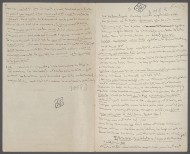
            <title type="main">Abschrift aus Heft VIII (1879)</title>
            <author>
               <persName ref="http://d-nb.info/gnd/118578537">
                  <surname>Marx</surname>
                  <forename>Karl</forename>
               </persName>
            </author>
            <editor>
               <persName ref="http://d-nb.info/gnd/1159394350">
                  <forename>Timm</forename>
                  <surname>Graßmann</surname>
               </persName>
            </editor>
         </titleStmt><editionStmt><p/></editionStmt>
         
         <publicationStmt><publisher><ref target="https://www.bbaw.de">Berlin-Brandenburgische Akademie der Wissenschaften</ref></publisher><pubPlace ref="https://www.geonames.org/2950159">Berlin</pubPlace><availability><licence target="https://creativecommons.org/licenses/by-sa/4.0/">Creative Commons Attribution-ShareAlike 4.0 International (CC BY-SA 4.0)</licence></availability><idno type="URLWeb">https://megadigital.bbaw.de/</idno><idno type="URLXML">https://megadigital.bbaw.de/.xml</idno></publicationStmt>
         <seriesStmt>
            <title>Exzerpte und Notizen</title>
            <biblScope unit="section" n="IV"/>
            
            <biblScope unit="volume" n="25"/>
            
            <biblScope unit="chapter" n="14" select="main" prev="M0012516" next="M0012518"/>
            
         </seriesStmt>
         <notesStmt>
            <relatedItem type="introduction">
               <bibl>
                  <ref target="https://megadigital.bbaw.de/M1753722"/>
               </bibl>
            </relatedItem>
            <relatedItem type="cover_image">
               <ref target="https://digilib.bbaw.de/digitallibrary/servlet/Scaler/IIIF/silo10!mega!exzerptstart!14_Abschrift.jpg/full/!190,400/0/default.jpg"/>
            </relatedItem>
         </notesStmt>
         <sourceDesc>
            <msDesc>
               <msIdentifier>
                  <institution>IISH (International Institute of Social History)</institution>
                  <repository>ARCH00860</repository>
                  <collection>Karl Marx and Friedrich Engels Papers</collection>
                  <idno>
                     <idno type="shelfmark">B 149 [B 152]</idno>
                     <idno type="uri">https://search.iisg.amsterdam/Record/ARCH00860/ArchiveContentList#ARCH00860</idno>
                     <idno type="URLCatalogue">https://search.iisg.amsterdam/Record/ARCH00860/ArchiveContentList#B_149</idno>
                     <idno type="URLImages">https://access.iisg.amsterdam/universalviewer/#?manifest=https://hdl.handle.net/10622/ARCH00860.B_149?locatt=view:manifest</idno>
                  </idno>
               </msIdentifier>
               <physDesc>
                  <p>
                     <list>
                        <item>H Originalhandschrift: IISG, Marx-Engels-Nachlass, Sign.
                                        B 149/B 152.</item>
                        <item>Beschreibstoff: Ein Bogen (= 2 Blatt = 4 Seiten)
                                        mittelstarkes, geripptes, weißes Papier, unliniert. Format:
                                        179 × 222 mm, gefaltet auf 179 × 111 mm. Als Wasserzeichen
                                        nur helle Linien im Abstand von 26 mm.</item>
                        <item>Zustand: Gut erhalten. Papier leicht vergilbt, letzte
                                        Seite etwas verschmutzt, Unterkanten leicht beschädigt.
                                        Keine Textverluste.</item>
                        <item>Schreiber: Marx.</item>
                        <item>Schreibmaterial: Schwarze Tinte, leicht bräunlich
                                        verfärbt.</item>
                        <item>Beschriftung: S. 1–3 vollständig, S. 4 zur Hälfte.
                                        Lateinische Schrift.</item>
                        <item>Paginierung: Marx paginierte von 1–4 mit Tinte.</item>
                        <item>Vermerke fremder Hand: Archivstempel IISG, Sign. B 152;
                                        Fotosign. 3019a – 3019d (mit Bleistift).</item>
                     </list>
                  </p>
               </physDesc>
            </msDesc>
         </sourceDesc>
      </fileDesc>
      <profileDesc><textClass><keywords><term>excerpts</term></keywords></textClass>
         <creation>
            <persName ref="https://megadigital.bbaw.de/M0001374 http://d-nb.info/gnd/118578537">Marx, Karl (1818–1883)</persName>
            <placeName/>
            <date from="1878-12-01" to="1879-01-31"/>
         </creation>
         <langUsage>
            <language ident="de">German</language>
         </langUsage>
         <abstract>
            <p>4 Seiten</p>
            <p/>
         </abstract>
      </profileDesc>
      
   </teiHeader>
   <text><body>
         <pb n="1"/>
         <div n="1" xml:id="nk2k_5kr_bzb">
            <note type="excerpt_source" resp="editor" corresp="#nk2k_5kr_bzb">
               <bibl>
                  <ref target="https://megadigital.bbaw.de/M0012516/nlfq_zth_rvb">Heft VIII, S. 71</ref>. (Exzerpte aus
                        Emil Du Bois-Reymond: Das Kaiserreich und der Friede. Leibnizische Gedanken
                        in der neueren Naturwissenschaft. Zwei Festreden in öffentlichen Sitzungen
                        der königl. preuss. Akademie der Wissenschaften. Berlin 1871.)</bibl>
            </note>
            <head type="toc">I) <persName ref="https://megadigital.bbaw.de/M0006395 http://d-nb.info/gnd/118527665">Emil Du Bois-Reymond</persName>.
                    (Beständiger Secretär der Kgl. Pr. Akademie etc) „Das Kaiserreich und der
                    Friede. Leibnizische Gedanken in der neueren Naturwissenschaft. Zwei Festreden
                    in öffentlichen Sitzungen der Kgl. Pr. Akademie der Wissenschaften. (Zum Besten
                    des Berliner Hülfs-Vereins der deutschen Armeen im Felde)<supplied cert="high">“</supplied> Berlin 1871.</head>
            <div n="2">
               <head>Erste Rede. Das Kaiserreich und der Friede, „gehalten in der
                        Friedrichssitzung am 26 Januar 1871“.</head>
               <p>»Für die daheim gebliebnen Bürger ist es Pflicht, während die ausgezogenen
                            <hi rendition="#u">den wahnsinnig sich sträubenden Feind</hi> bändigen,
                        mit männlicher Fassung und verdoppeltem Eifer jeder an seiner Stelle <ref xml:id="c7ee25c4-8fcc-4899-ae25-c48fcce89931" corresp="#bfcdad0f-f46a-472a-8dad-0ff46a372a5c" type="editorialNote">daheim</ref><note xml:id="bfcdad0f-f46a-472a-8dad-0ff46a372a5c" corresp="#c7ee25c4-8fcc-4899-ae25-c48fcce89931" type="editorial">Bei Du
                                Bois-Reymond, S. 3: dafür</note> zu sorgen, dass der
                        Staatsorganismus im Gang bleibe.« (3) Lobhudelei des <persName ref="https://megadigital.bbaw.de/M0011012 http://d-nb.info/gnd/118535749">alten Fritzen</persName>, Preussens, der Krieg gegen
                        Frankreich Befreiungswerk der übrigen europ<ex>äischen</ex> Völker etc.</p>
            </div>
            <div n="2">
               <head>Zweite Rede. „Leibnizische Gedanken in der neueren Naturwissenschaft.“
                            (geh<ex>alten</ex> in der Leibniz-Sitzung der Akademie der
                            Wissenschaft<ex>en</ex> am 7 Juli <choice>
                     <sic>1871</sic>
                     <corr>1870</corr>
                  </choice>.)</head>
               <p>»<hi rendition="#u">Der Lehre von der Erhaltung der Kraft</hi>, welche unsere
                        Weltanschauung beherrscht, gab <persName ref="https://megadigital.bbaw.de/M0011411 http://d-nb.info/gnd/118571249">Leibniz</persName>
                        zuerst den richtigen Ausdruck, und wie sinnreich ist das Bild, durch welches
                        er das scheinbare Verschwinden von Kraft bei Umwandlung von Massenbewegung
                        in Molecularbewegung erläutert: wie das Umwechseln eines grossen Geldstückes
                        in Scheidemünze. Aber wie für <persName ref="https://megadigital.bbaw.de/M0010831 http://d-nb.info/gnd/118524844">
                     <hi rendition="#u">Descartes</hi>
                  </persName> ist auch für ihn die <hi rendition="#u">Constanz der Kraft nur ein Ausfluss des göttlichen Willens</hi>« <ref xml:id="b80a8cef-98bc-439f-8a8c-ef98bc539f49" corresp="#f6413d6d-9f1c-4982-813d-6d9f1c1982d6" type="editorialNote">(!)</ref><note xml:id="f6413d6d-9f1c-4982-813d-6d9f1c1982d6" corresp="#b80a8cef-98bc-439f-8a8c-ef98bc539f49" type="editorial">Zusatz von
                                Marx.</note> (p. 17) <ref xml:id="c27d2f69-6982-491a-bd2f-696982a91a29" corresp="#fb93a020-f7cf-4be8-93a0-20f7cf1be884" type="editorialNote">
                        <persName ref="https://megadigital.bbaw.de/M0006395 http://d-nb.info/gnd/118527665">Er</persName> citirt dazu in Note:</ref><note xml:id="fb93a020-f7cf-4be8-93a0-20f7cf1be884" corresp="#c27d2f69-6982-491a-bd2f-696982a91a29" type="editorial">Zusatz von Marx.</note> „les forces <ref xml:id="f6b4cb75-e4c6-4458-b4cb-75e4c6f45846" corresp="#e44ca021-da74-41ed-8ca0-21da74c1ed3e" type="editorialNote">ne sont détruites</ref><note xml:id="e44ca021-da74-41ed-8ca0-21da74c1ed3e" corresp="#f6b4cb75-e4c6-4458-b4cb-75e4c6f45846" type="editorial">Bei Du Bois-Reymond, S. 35: ne sont ⦗pas⦘ détruites</note>,
                        mais dissipées parmi les parties menues. Ce n’est pas les perdre, mais c’est
                        faire <ref xml:id="e0a64d7b-26cd-412a-a64d-7b26cdc12a58" corresp="#ef931ac8-93a5-4cd8-931a-c893a54cd880" type="editorialNote">comme ceux</ref><note xml:id="ef931ac8-93a5-4cd8-931a-c893a54cd880" corresp="#e0a64d7b-26cd-412a-a64d-7b26cdc12a58" type="editorial">Bei Du Bois-Reymond, S. 35: comme ⦗font⦘ ceux</note> qui
                        changent la grosse monnaie en petite“ (aus: <hi rendition="#u">Leibnitii</hi>
                  <hi rendition="#u">opera philosophica</hi>
                  <hi rendition="#u">ed. J. E. Erdmann. Berolini 1840.</hi>)</p>
               <p>
                  <ref xml:id="a317827d-6382-43f2-9782-7d6382d3f256" corresp="#b8b0dac9-d6f2-4716-b0da-c9d6f2371626" type="editorialNote">Das Einzige was <persName ref="https://megadigital.bbaw.de/M0006395 http://d-nb.info/gnd/118527665">er</persName> sonst darüber sagt, dies:</ref><note xml:id="b8b0dac9-d6f2-4716-b0da-c9d6f2371626" corresp="#a317827d-6382-43f2-9782-7d6382d3f256" type="editorial">Bemerkung von Marx.</note>
               </p>
               <p>»Unsere heutige Naturwissenschaft lässt mehrere … Ausläufer <persName ref="https://megadigital.bbaw.de/M0011411 http://d-nb.info/gnd/118571249">Leibniz</persName>ischer Gedanken erkennen … Die Lehre
                        von der Erhaltung der Kraft ist nicht ein blosser Ausläufer zu nennen, und
                        also nicht hierher zu rechnen.« (p. 21) </p>
            </div>
         </div>
         <div n="1" xml:id="nlyr_skr_bzb">
            <note type="excerpt_source" resp="editor" corresp="#nlyr_skr_bzb">
               <bibl>
                  <ref target="https://megadigital.bbaw.de/M0012516/nljm_5m3_rvb">Heft VIII,
                        S. 72</ref>. (Exzerpte aus R. Des-Cartes: Opuscula Posthuma, Physica et
                        Mathematica. Amstelodami 1701.)</bibl>
            </note>
            <head type="toc">II) <persName ref="https://megadigital.bbaw.de/M0010831 http://d-nb.info/gnd/118524844">R. des Cartes</persName>. Opuscula
                    Posthuma, Physica et Mathematica. Amstelodami, 1701.</head>
            <p>»Infinitam considero motus diversitatem semper in Mundo permanentem. Et post <pb n="2"/> observatos motus maximos, qui conficiunt dies, menses, annos,
                    animadverto vapores indesinenter a terra versus nubes adsurgere, indeque
                    descendere; aërem ventis agitari, mare nunquam quiescere; uti nec flumina, nec
                    fontes; firmissima corruere aedificia; plantas et animalia crescere solummodo et
                    corrumpi: tandemque nihil uspiam locorum reperiri quod non sit mutationi
                    obnoxium. Unde satis perspicio solam non esse flammam, in qua <hi rendition="#u">multae occurrunt particulae</hi>, <hi rendition="#u">quae moveri omnino
                        haud cessant</hi>: sed <hi rendition="#u">in omnibus etiam aliis corporibus
                        eas reperiri</hi>, quamvis earum operationes adeo validae non sint, <hi rendition="#u">nec propter molis suae parvitatem ullus sensuum nostrorum eas
                        percipere valeat</hi>.« (p. 5, 6) </p>
            <p>»Non multis causam motus eorum inquiram: si quidem <hi rendition="#u">mihi
                        sufficit concipere motum una cum Mundo ortum fuisse</hi>. Quo posito,
                    dictitat mihi ratio, <hi rendition="#u">fieri non posse ut motus esse desineret,
                        aliamve, quam respectu subjectorum, mutationem subiret</hi>. Id est, quod
                        <hi rendition="#u">vis movendi</hi> quae est in aliquo corpore, vel omnis,
                    vel ex parte, <hi rendition="#u">possit quidem transire in aliud</hi>, et non
                    amplius in esse priori; <hi rendition="#u">verum quod nequeat omnino non amplius
                        esse in Mundo</hi>.« (6)</p>
         </div>
         <div n="1" xml:id="nuds_vkr_bzb">
            <head type="toc">III <persName ref="https://megadigital.bbaw.de/M0011411 http://d-nb.info/gnd/118571249">Leibniz</persName>
            </head>
            <div n="2" xml:id="nn5z_wkr_bzb">
               <note type="excerpt_source" resp="editor" corresp="#nn5z_wkr_bzb">
                  <bibl>
                     <ref target="https://megadigital.bbaw.de/M0012516/ngnh_4yd_qyb">Heft VIII, S. 69/70</ref>. (Exzerpte
                            aus Otto Caspari<bibl>: </bibl>Leibniz’ Philosophie, beleuchtet vom
                            Gesichtspunkt der physikalischen Grundbegriffe von Kraft und Stoff. Ein
                            historischer Beitrag zur neueren Philosophie und zur Geschichte der
                            Naturwissenschaft. Leipzig 1870.)</bibl>
               </note>
               <head>1) 1671 publicirte Leibniz: „Hypothesis physica nova: seu
                        theoria motus concreti et theoria motus abstracti“</head>
               <p>Darin u. a.:</p>
               <p>»<choice>
                     <sic>Secundum</sic>
                     <corr cert="high">Sciendum</corr>
                  </choice> est enim, ut praeclari illi Micrographi, <persName ref="https://megadigital.bbaw.de/M9228509 https://d-nb.info/gnd/118562347">Kircher</persName>us et <persName ref="https://megadigital.bbaw.de/M0011178 http://d-nb.info/gnd/118774883">Hookius</persName>,
                        observavere, pleraque, quae nos sentimus in majoribus, lynceum aliquem
                        deprehensurum proportione in minoribus, quae si in infinitum progrediantur,
                        quod certe possibile est, quum <hi rendition="#u">continuum sit divisibile
                            in infinitum</hi>, <hi rendition="#u">quaelibet atomus erit infinitarum specierum <supplied cert="high">quidam</supplied> velut mundus</hi>, <hi rendition="#u">et dabuntur mundi in
                            mundis in infinitum</hi>.«</p>
               <p>
                  <persName ref="https://megadigital.bbaw.de/M0011411 http://d-nb.info/gnd/118571249">Leibniz</persName> schreibt über obige Schrift, 21
                        Mai, 1671, an den <persName ref="https://megadigital.bbaw.de/M3072316">Herzog von
                            Braunschweig-Lüneburg</persName>:</p>
               <p>„Ich habe ein Hypothesin formirt und gewiesen, dass ein einiger, von niemand
                        verneinlicher, <hi rendition="#u">Universal-Motus und</hi>
                  <hi rendition="#u"> Circulation</hi>
                  <pb n="3"/>
                  <hi rendition="#u">des Liechts</hi> umb unsere Erdkugel alle 24 Stunden, so
                        kein <persName ref="https://megadigital.bbaw.de/M1000282 https://d-nb.info/gnd/118514237">Tychonicus</persName> oder <persName ref="https://megadigital.bbaw.de/M0010790 http://d-nb.info/gnd/118565273">Copernicanicus</persName> verwerffen kann, es stehe
                        gleich oder gehe die Erde, <hi rendition="#u">fast aller wunderlicher
                            effecten der Natur ursach sei</hi>. … dass Liecht oder der subtile mit
                        dem Liecht oder Sonnen sich bewegende, alles durchdringende Aether, welcher
                        von der Lufft unterschieden, weil solche schwer, er aber als ein Kind der
                        Sonne, nicht.“</p>
            </div>
            <div n="2" xml:id="nxr4_wkr_bzb">
               <note type="excerpt_source" resp="editor" corresp="#nxr4_wkr_bzb">
                  <bibl>
                     <ref target="https://megadigital.bbaw.de/M0012516/jnjf_51b_754">Heft VIII, S. 67</ref>. (Exzerpte
                            aus Recuil de lettres entre Leibniz et Clarke sur dieu, l’ame, l’espace,
                            la duree etc. In: Gottfried Wilhelm Leibniz: Opera Philosophica. Edita
                            recognovit e temporum rationibus disposita pluribus ineditis auxit
                            introductione critica atque indicibus instruxit Joannes Eduardus
                            Erdmann. Pars prior. Berolini 1840. S. 746–788.)</bibl>
               </note>
               <head>2) <persName ref="https://megadigital.bbaw.de/M0011411 http://d-nb.info/gnd/118571249">Leibniz</persName>: „Opera Philosophica“ etc
                        ed. J. E. Erdmann. Berlin 1840.</head>
               <p>Darin aus seinem <hi rendition="#u">Briefwechsel mit
                                <persName ref="https://megadigital.bbaw.de/M0010766 http://d-nb.info/gnd/118669478">Clarke</persName> (1715–16)</hi>:</p>
               <p>§93) »Je n’admets point que toute <hi rendition="#u">action</hi> donne une
                            <hi rendition="#u">nouvelle force</hi> à ce qui pâtit. Il arrive souvent
                        dans le concours des corps, que <hi rendition="#u">chacun garde sa
                            force</hi>; comme lorsque deux corps durs égaux concourent directement.
                        Alors la seule direction est changée, sans qu’il y ait du changement dans la
                        force; chacun des corps prenant la direction de l’autre, et retournant avec
                        la même vitesse qu’il avait déjà eue.« (p. 774)</p>
               <p>§94) »Cependant je n’ai garde de dire qu’il soit <hi rendition="#u">surnaturel de donner une nouvelle force à un
                            corps</hi>; car je reconnais qu’un corps reçoit souvent une nouvelle <hi rendition="#u">force</hi> d’un autre corps, qui en perd autant de la
                        sienne. Mais je dis seulement, qu’il est <hi rendition="#u">surnaturel</hi>
                        que <hi rendition="#u">tout l’univers des corps</hi> reçoive une <hi rendition="#u">nouvelle force</hi>; et ainsi
                        qu’un corps gagne de la force, sans que d’autres en perdent autant. C’est
                        pourquoi je dis aussi, qu’il est insoutenable que <hi rendition="#u">l’ame</hi>
                  <hi rendition="#u">donne de la
                            force au corps</hi>; car
                        alors <hi rendition="#u">tout l’univers des corps</hi> recevrait une
                        nouvelle force.« (p. 774, 775)</p>
               <p>§95) »Il faut que l’homme
                        agisse surnaturellement, ou que l’homme soit une pure machine comme une
                        montre.« (775)</p>
               <p>§99) »Je n’entreprends <choice>
                     <sic>point</sic>
                     <corr cert="high">pas</corr>
                  </choice> ici d’établir ma <hi rendition="#u">Dynamique</hi>, ou ma doctrine
                        des <hi rendition="#u">Forces</hi>: ce lieu n’y serait point propre.
                        Cependant je puis fort bien répondre à l’objection qu’on me fait ici.
                        J’avais soutenu que les <hi rendition="#u">Forces actives se conservent dans
                            le Monde</hi>. On m’objecte, que deux corps mous, ou non élastiques,
                        concourant <pb n="4"/> entre eux, <hi rendition="#u">perdent <supplied cert="high">de</supplied> leur force</hi>. Je reponds que non. Il
                        est vrai que <hi rendition="#u">les Touts la perdent par rapport à leur
                            mouvement total</hi>; <hi rendition="#u">mais les parties la
                            reçoivent</hi>, <hi rendition="#u">étant agitées intérieurement</hi> par
                        la force du concours. Ainsi ce défaut n’est qu’en apparence. Les <hi rendition="#u">forces ne sont détruites</hi>, <hi rendition="#u">mais
                            dissipées parmi les parties menues</hi>. Ce n’est pas les perdre, mais
                        c’est faire comme font ceux qui changent la grosse monnaie en petite. Je
                        demeure cependant d’accord que la <hi rendition="#u">quantité du mouvement
                            ne demeure point la même</hi>, et en cela j’approuve ce qui se dit
                        p. 341 de <hi rendition="#u">l’Optique
                            de M<hi rendition="#sup">r</hi>
                     <persName ref="https://megadigital.bbaw.de/M0011668 http://d-nb.info/gnd/118587544">Newton</persName>
                  </hi>; qu’on cite ici. Mais
                        j’ai montré ailleurs, qu’<hi rendition="#u">il y a de la différence entre la
                            quantité du mouvement</hi> et <hi rendition="#u">la quantité de la
                            force</hi>.« (775)</p>
               <p>§102) <ref xml:id="d2add1b8-6fc6-454c-add1-b86fc6654cac" corresp="#b0e6d1e0-7ee1-42bb-a6d1-e07ee182bbc8" type="editorialNote">(Man hatte <persName ref="https://megadigital.bbaw.de/M0011411 http://d-nb.info/gnd/118571249">ihm</persName> eingeworfen, es gehe force verloren in Folge der
                                vis inertiae der Materie)</ref><note xml:id="b0e6d1e0-7ee1-42bb-a6d1-e07ee182bbc8" corresp="#d2add1b8-6fc6-454c-add1-b86fc6654cac" type="editorial">Zusammenfassende Bemerkung von Marx.</note> »L’inertie de la
                        matière … fait seulement que les vitesses sont diminuées quand les matières
                        sont augmentées; mais c’est sans aucune diminuation des forces.« (l. c.)</p>
               <milestone unit="section" rendition="#hr"/>
            </div>
         </div>
      </body></text>
</TEI>