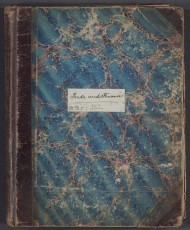
112 Seiten
Ausschnitte aus 73 Zeitungsartikeln vom 2. Juli 1869 bis zum 6. Januar 1870
SIR,—There is a great evil in the practice of the directors of several of the leading Life Insurance Companies permitting their actuaries to become connected with new offices as consulting actuaries or as valuers of their liabilities, the names of those gentlemen, and their connection with offices of high repute, being calculated to give confidence where none should exist. Take the case of the Professional Life Office, which went to grief some years ago. Three well-known and able actuaries a very short time before its doors were closed, professed to have valued its outstanding risks, and pronounced its ability to provide for them as unquestionable. I know nothing of the matters beyond what then appeared in print, but soon after I had occasion to see one of them on the affairs of another office which has since come to grief, to whom I said that his report had astonished me, as I knew that the office was in a very different state to that which he had represented it to be. I then ascertained from him that he knew nothing whatever of the affairs of the office by personal investigation. All he knew was that he had received from the manager a statement showing, as he supposed, the amount insured by each policy, and that of each future renewal premium, with instructions to make a valuation by a given table of mortality and interest at a given rate. Whether the statements laid before him were true or not he told me was no business of his to inquire into, as all he had to answer for was the correctness of his valuation. I think it a disgrace to some of our great and undoubtedly respectable offices, that their chief assistants should be supposed to be so ill-paid or so little wanted as to have time to undertake not only to make valuations for solicitors and others, but also to be the actuaries of rival establishments. The evil has slowly grown until it has been made a means of deceiving the public and bringing ruin on thousands. Let the directors of honest companies look to this, and see that they are not indirectly made parties to mischief.—I am, &c.,
CAUTION.
SIR,—Mr. Clench, in his letter which appears in your paper of to-day, says, “the proposed reconstruction of the Albert will be conducted under the advice and assistance of the most eminent actuaries of the day.” Now I ask Mr. Clench and these “eminent actuaries” if it is not a notorious fact that money spent (on the purchase of rotten offices) is always treated as the accumulated fund? A case tried some years ago against a Mr. Carpenter would expose many assurance frauds, if reprinted.—I am, &c.,
W. J.
August 24.
SIR,—The unfortunate share and policy holders of the Albert are
greatly indebted to you for the interest manifested on their behalf;
and the sound advice given in your leader of to-day confers an
additional obligation. Just twenty years ago I insured my life in
the “Metropolitan Counties” for 1,000l.
Sometime afterwards there were unpleasant rumours afloat, and I was
more satisfied when a transfer of the business of that office took
place to the “Western,” knowing some of its directors to be men of
wealth and character. My confidence, however, was soon again shaken,
as in a few years we were “shunted” into the “Albert;” the result of
which is now shown. I have paid 27l. 10s.
per annum for the 20 years, or a total of 550l., which, with the interest thereon, amounts to a much
larger sum. Should I lose the whole of this it will not be of
material consequence, as I am thankful to say business has prospered
with me; but had I only been holding a situation of limited income,
and debarred my family many comforts to keep up the annual payments,
and having now a wife and eleven children depending at my decease on
the sum insured for, it would have been a most distressing position
for them to be placed in; and I fear such is the case in many
instances. The point to be determined in my case is, are the
shareholders of the companies which were transferred to the “Albert”
now liable? If so, as your correspondent “W. W.” states that the
“Metropolitan Counties” had a paid-up capital of 100,000l., and the “Western” of 500,000l., I have clearly a demand against them. At
this stage I would strongly urge on both the shareholders and
policy-holders the necessity of engaging two professional men of
undoubted skill and character to represent their separate interests,
having the same “unity of purpose,” and on no account to fall into
the views of the parties who are so deeply interested in patching up
and again floating this so-called “unfortunate company,” as, in my
opinion, no amount of “Clenching” will make it safe and
trustworthy.—I am, &c.,
J. G. M.
August 26.
SIR,—I came up to town this forenoon to attend a meeting of
shareholders and policy-holders referred to in your paper a few days
ago, stopping at Cannon-street station. I went to the Committee who
advertise that they hold meetings at the hotel; and one of them
informed me there was to be no meeting there. He thereupon asked me
to sit down and read a paper he put in my hands. Having read it (the
purport of which was that Mr. Kirby should be removed from the
position of liquidator), he thereupon produced a book in which about
half a dozen gentlemen’s names appeared for sums of from 1l. 1s. to 3l. 3s. I
declined to subscribe, although agreeing in the point that Mr. Kirby
is not the right man for liquidator. On my saying I would go to the
office of the company, he insisted on my giving him back the paper.
I then went to the office of the company, where I found the clerks
employed sending out notices similar to what appears in your paper
of to-day, and calling a meeting for the 9th September of
policy-holders. My object in this letter is not to find fault with
the object the Cannon-street gentlemen may have, but to caution the
policy-holders no to be led away by them, or by any other of those
gentlemen who advertise in your columns; but to wait till the
meeting, and then replace Mr. Kirby by some commercial man of
standing. The proposals of the directors ought in common fairness to
be considered calmly. I hope they may have the effect of staying the
wild state which a number of those interested have got into. My
advice to all is to hold their hands till the meeting, and then
replace Mr. Kirby by some gentleman of experience in insurance
business, but one perfectly clear of all company making.—I am,
&c.,
A POLICY-HOLDER ONLY.
London, August 26.
SIR,—I have read with much interest your remarks upon the proposed
reconstruction of this unfortunate concern, but while fully
concurring in the desirability of frustrating, if possible, the
designs of the whole band of professional wreckers and would-be
liquidators, who are no doubt at this moment hovering, Vampire-like,
over what they conceive to be their legitimate prey, I would
urgently impress upon the policy-holders the inexpediency of giving
their assent to any arrangement without first comprehending its
principles and carefully examining its details. The statement put
forth under the authority of Messrs. Jellicoe and Bailey appears to
me to be suggestive of one very important inquiry, viz., does the
value of the annuities (150,000l.), with
half of which it is proposed to saddle the new concern, include the
special annuities payable to negotiators and others, as compensation
for bringing over a lot of rotten businesses? If this question be
answered in the affirmative, I would suggest that every liability
the company, or rather the directors, may have entered into in this
way be at once renounced, on the ground of no proper consideration
having been given. I will not trespass farther on your space, beyond
reminding those who hold policies, that if they allow themselves to
be bustled in the excitement of the moment into putting their
signatures to forms of assent, or other documents emanating from
official quarters, without perfectly understanding the nature of the
power they are conferring, they will only have themselves to blame
should a further reconstruction and further reduction become
necessary at no distant date.—I am, &c.,
FIAT JUSTITIA.
SIR,—We are very greatly indebted to you and others for the ventilation of opinions regarding this office. One thing I would ask—that some reliable centre be organised in behalf of the premium payers, whose interests, I think, are antagonistic to the shareholders, and both against the directors and managers. I have paid nearly thirty years—originally to Freemasons’ Office—and I should be glad to see the question tried if we cannot recover the value—surrender—of our payments. Were the office prosperous, it would be monstrous that certain parties should filch such sums. How much more monstrous that, in our ruin, they should expect to retain these immense sums, and escape the responsibilities of losses incurred by themselves. It is a wide-spread calamity, and I trust will continue to receive your powerful sympathy.—I am, &c.,
A PREMIUM PAYER OF LONG STANDING.
Norwich, August 25.
SIR,—A somewhat long experience of Life Assurance has convinced me of
the difficulty felt by many persons in grappling with the figures of
an actuarial statement; the following plain explanation of the
proposal made by the Albert Office to its share and policy-holders
may therefore be useful. Put shortly, the office proposes to
extinguish 7-10ths of its liability, and give each assurer for
1,000l. a policy for 300l. This is all they can afford to do, no
doubt, as the following figures (their own) show sufficiently
well:
All that follows is a plain rule of three sum. As the assets they
ought to have are to the assets they have, so are the sums assured
that exist to those they can now undertake—a proportion of about 30
per cent. This is perfectly consistent with the letter of the Albert
proposal, although perhaps the consistency is not on the surface.
The office offers to keep on the existing policies, subject to a
deduction of 25 per cent. only; but the offer is contingent on the
payment of the original premium for the whole sum, and the position
of the assured under these circumstances is identical with the one
they would hold if the amount of the policy had been decreased
seventy per cent., with a corresponding diminution in the
premium—perhaps an imaginary case will show this point more clearly
than general statements. A man about 38 years of age assures
thirteen years ago with the Albert for 1,000l. at a premium of 30l. per annum;
the office now offers him a policy of 750l.
at the same premium. What the figures of the office justify would be
an offer of a policy for 300l. at a premium
of 9l., and this offer they in effect make,
coupled with another of a new assurance for 450l. at the correct premium for the man’s present age of
about 5l. The two assurances represent
750l., the sum given, at a premium of
30l., the amount required. The position,
therefore, is plain and simple; seven-tenths of the existing sum
assured is lost to the policy-holders, and they are asked to pay
forty-five per cent. of new assurance premium. These being the
facts, the next question is, How are we to treat a shareholding body
which has lost to its policy-holders something more than
5,500,000l. out of 8,000,000l.? The answer of the liquidators is
creditable to their humanity: “The shareholders owe 324,000l.—say we let them off for 150,000l. ‘estimated realization,’ then construct a
new company out of the old materials, with the old spent capital to
represent the new basis of security, and where they will receive not
more than 5 per cent. per annum out of the profits made in the
future by those who have for years been paying premium on 100l. to obtain a policy for 30l., as the result of the Albert management.”
Every one would, of course, wish to give all assistance to those
unfortunately connected with this miserable affair; but there are
two things that ought to be done—the whole position should be
clearly understood, and the penalty should fall as far as possible
on those who are responsible for the calamity.—I am, &c.,
R. W.
August 26.
SIR,—I have carefully read the statement contained in the Daily News of to-day regarding the affairs
of the Albert Assurance Company. It is very im-l., derived from the premiums received and the paid up
capital, when it ought to have had, according to the report of the
actuaries now consulted, a fund amounting to at least five times
that sum derived from the premiums alone. This loss of capital must
have resulted from improper management, either by accepting bad
lives, or by investing in bad securities, of from a laxity which
allowed an actual plunder of the funds of the company. The truth,
whatever it may be, ought to be carefully sought and made known to
the public. If the accounts have been properly kept, they will show
where the money has gone. If they have not been efficiently kept, a
personal responsibility and blame must rest on some one for that
neglect. If the mortality has been excessive, that fact may readily
be shown; and to what extent it has been excessive, and under what
circumstances. To bring into bankruptcy a life assurance company,
transacting business of the magnitude transacted by the Albert,
positive blame must rest somewhere, and not mere misfortune; and
whatever the actual cause or causes of failure may be, to
reconstruct the company under the old management, or with the old
materials, will be as disastrous as to send to sea a vessel
reconstructed from the materials of a ship wrecked and broken up, on
account of dry rot being in its timbers.—I am, &c.,
W. H. T.
SIR,—I and many of my friends have policies to a large amount in the
Albert, having been transferred from other offices which we believed
to be sound. I have paid premiums upon a 2,000l. policy for 25 years, and now what is my position? To
secure the same amount to my family it would cost me nearly double
the premium. For the information of the public who are not
thoroughly acquainted with the difference between good and bad
insurance companies, I will add that I have a policy of 1,000l. taken up in the Scottish Equitable office
at the same time as the one I have with the Albert. At the present
time my 1,000l. policy is increased by
additions of profits to 1,500l., whilst my
2,000l. policy in the Albert is
worth—what? Probably nothing. And had I insured for 3,000l. in the Scottish Equitable, the policy
would now be worth 4,500l. in case of my
death.—I am, &c.,
B. H.
SIR,—One great evil resulting from the amalgamation of insurance companies, and one not prominently noticed by any of your correspondents, is the creation of sinecure positions. The Amalgamating Society generally stipulates that some of its most important officers, such as secretary, superintendent, &c., shall have positions in the new concern which will command salaries equal to those which they formerly received. When we then consider that the Albert had united with about twenty offices, we are not surprised to find that it had at its collapse between ninety and one hundred such sinecures. Surely so many parasites must have contributed largely to bring about the late disastrous issue by sucking the life-blood of the concern. So many dead-weights are enough to sink the finest craft. Amalgamated companies are very similar to a fleet of pirate junks which prey upon honest commerce, and, like the pirates, the unarmed and unsuspecting passengers in both cases are cruelly massacred.—I am, &c.,
AN INSURANCE SUPERINTENDENT.
Manchester, August 25.
SIR,—I am a medical practitioner, and have worked hard all my life
for small fees. Twenty years ago, by the practice of the strictest
economy, I began to pay 185l. annually to
the Family Endowment Society (absorbed by the Albert in 1861), and
paid it most regularly for a life annuity of 200l. in my old age; these payments swallowed up every
farthing I could save from my income, and amounted to a very large
sum. I am now more than 70 years of age, incapable of practising my
profession as I used to do. All the savings of my long life have
been swindled from me by this society, and I am left without a penny
to support my wife and family. This is a very hard case.—I am,
&c.,
X. Y. Z.
SIR,—In the year 1857 or 1858, an amalgamation was carried out
between two London assurance offices. It was subsequently discovered
that the chairman and directors of one of the offices put into their
own pockets 5,000l. The case is best
explained by giving the following questions that were submitted to
counsel on the occasion, and the answers of Sir Roundell Palmer
thereon. Sir Roundell Palmer’s advice was acted upon, a bill filed,
and the 5,000l. refunded. The case may
interest your readers at the present moment.—I am, &c.,
A. T.
London, August 25.
SIR,—With reference to the important question of liability on the
part of the shareholders whose companies have been transferred to
the Albert, should that liability, as “An Actuary” surmises, “revive
again,” it may be some consolation to the policy-holders originally
insured in those companies to know that a large amount of uncalled
capital must still be available to meet their claims. The following
is a statement of the nominal capital of seventeen companies out of
the twenty-two whose business has from time to time been transferred
to the Albert. In several of those offices the capital had been
fully subscribed prior to transfer: Anchor, 1,000,000l.; Beacon, 150,000l.; Empire,100,000l.; English
Provident, 50,000l.; Falcon, 100,000l.; Family Endowment, 500,000l.; Kent Mutual, “pro-l.; Manchester and London, “with a numerous
and wealthy proprietary,” 500,000l.;
Medical, Invalid, “subscribed capital,” 500,000l.; Merchants’ and Tradesmen’s guaranteed fund, 100,000l.; Metropolitan Counties, 100,000l.; National Guardian, 100,000l.; National Provincial, alias Bank of London, 1,000,000l.;
Oak Mutual, guarantee fund, 50,000l.; St.
George, 100,000l.; Times, 250,000l.; Western, 500,000l.; Here we have independent of the “ample guaranteed
capital” of the Kent Mutual a nominal capital exceeding five
millions (5,200,000l.) subscribed to in
numerous cases by a wealthy proprietary. Surely, then, if the
shareholders’ liability in the defunct companies has only lain
dormant, liable to be called into action in the event of the Albert
not meeting its claims, the failure cannot be so great as is just
now anticipated.—I am, &c.,
W. W.
August 25.
SIR,—Nineteen years ago I assured my life in the “Anchor.” Their business was transferred without, I believe, the assured having a voice in the matter, to the “Albert,” and the only intimation of the transfer that I at least ever had was, that instead of receiving the usual yearly notice of my premium being due from the old office in Cheapside (where there is now a flourishing dining-room), I was summoned to pay in Waterloo-place, and so, woe is me! I have continued to do for years past. I have every reason to believe that the “Anchor” took lives of any kind, and as long as premiums were paid all went merrily as a marriage bell, but when those lives began to fall in, the concern as inevitably got into difficulties, as the Albert has now done from precisely the same reasons. Though a grievous sufferer by the Albert’s downfall, I cannot but congratulate the public on the clearing of the horizon which must be the result, and I do hope for the sake of the public at large that life assurance will be managed on improved principles hereafter. It is high time that the wings of promoters, agents, self-appointed managers and directors, should be clipped, and if anything will call attention to the unmerciful and impudent swindling of the public by insurance companies, surely the collapse of the Albert will do it—if not, why all I can say is that the public deserve to be gulled. My mind is irresistibly called to one of Dickens’s ablest satires, and though irritated and naturally desponding over the probable loss if the little sum I had hoped to secure to my family, I cannot but remember with a smile the “Anglo-Bengalee Disinterested Loan Society,” in “Martin Chuzzlewit,” the magnificent Tigg Montague, and the complaisant, though wary Jobling, in connection with the affairs of the company under inquiry.—I am, &c.,
FORTY-THREE.
London, August 25.
SIR,—The collapse of the Albert Life Company appears to have taken
many by surprise, but the surprise to many has been that the event
had not taken place long since. Here is a company professedly doing
about 336,000l. per annum, with only about
630,000l. funds invested; and I judge it
will be found having a liability of about 11 millions, being about
5l. 10s. 2d. in hand to meet every
100l. assured—(you will see by published
statistics enclosed that I have not overstated the figures)—and yet
some persons are surprised that the company had come to a
standstill. There are more surprises in store for some people; there
are above a dozen life companies now in existence having less than
9l. in hand to meet every 100l. assured, and this does not include
several industrial class companies, they being in a far worse
position. Company letter A, 1l. 12s. 6d. in
hand to meet every 100l.; B, 2l. 6s. 8d.; C, 2l.
10s.; D, 2l. 14s. 11d.; E, 3l. 18s. 5d.; F, 4l.
8s. 10d.; G, 5l. 7s. 7d.; H, 5l. 16s. 4d.; I, 6l.
2s. 1d; J, 6l. 13s. 11d.; K, 6l. 17s. 1d.; L, 6l.
18s. 10d.; M, 8l. 4s. 3d.; N, 8l. 9s. 2d.; O, 8l.
10s. 6d.; P, 8l. 18s. 1d., being about an
average of 5l. 14s. in hand to meet every
100l. assured, these companies having
liabilities amounting to nearly 35,000,000l.—five out of the above list having liabilities amounting to
about 30 millions. I am aware it will be said that the liabilities
will not arise for some years. I am quite aware of that, but I am
sure that if the Albert was obliged to come to a standstill with
5l. 10s. 2d. in hand to meet every
100l. assured, those in the list with
less than that amount cannot be safe, and I fancy that sensible men
would not select companies having less than 9l. per 100l. in hand. There has
been quite a rage for amalgamations to benefit various parties
behind the scenes, and to enable secretaries and managers to boast
of their large annual income. We have, including the Albert, four
life companies who have between them absorbed 86 companies, many of
these being at the time in a wretched position, and yet the sellers,
the life traffickers, have managed to net large sums for the
transfer of these insolvent companies. The public have been
astonished to see how easily some people have made their way in the
world, living in mansions, keeping their carriages, and standing
ready to contest any manageable borough, and yet none have dared to
speak out; but the game is nearly played out, and a few more Albert
displays will bring the actors to the surface, and show them in
their true light. Government would do great service by legislating
on the subject of life assurance, enforcing every company to publish
annually such a balance-sheet as could be understood by the public,
and having Government auditors who should be associated with the
company’s auditors, and give or withhold a certificate as the
circumstances required. We often hear persons boasting of the
security of proprietary companies. It does not appear that the
capital of the Albert could save it, and unfortunately all the
companies in the list I send are blest with shareholders. There is
great truth in the well-known statement of one of our greatest
actuaries, “that no amount of capital will save a company reared on
a false basis.” I hope the assurable public will be more cautious in
future, and not become connected with companies simply because a
friend of theirs happens to be an agent, but use their common sense
as they would in any every-day commercial transaction; and, above
all, to eschew flaming reports and puffing circulars.—I am,
&c.,
JOHN SEARCH.
London, August 24.
SIR,—As a policy-holder in one of the assurance companies which have
gone down with the Albert, I thank you for the valuable aid you are
giving to us, the policy-holders, by your powerful leading articles,
and the insertion of letters in your columns. It is pretty evident
that companies have been formed not to prosper, but for the sake of
the plunder which falling concerns are made to yield to the harpies
which hang about their track. The case of the International has
already been referred to by one of your correspondents. The
liabilities of this unlimited company were, last year, handed over
to the Hercules, a young and a limited company, with, I believe, a
comparatively small proprietary. According to the report of Mr. W.
J. White, the official liquidator of the last-named company, the
liabilities of the International are given as 329,685l. It is presumed that the holders of the
original shares in the Hercules are not liable; if it be so, the
uncalled capital of this company is only 134,752l. to meet the liabilities of both. What a prospect for
the policy-holders of the International! The cost of handing over
the policy-holders as above, from the International to the Hercules,
was upwards of 20,000l. The principal part
of this sum appears to have gone into the hands of two individuals,
as a fee for the operation performed. Premiums paid by
policy-holders are frequently the fruit of hard work, care, and
stint, and yet, forsooth, these are flung wholesale into the hands
of avaricious schemers. Policy-holders should earnestly unite in an
appeal to the Court of Chancery to set aside all illegitimate
amalgamations. And, further, that all actuaries, agents, managers,
and others, who by way of bonuses in these amalgamations, have taken
above and beyond what the Court shall deem to be just and equitable,
shall be compelled to disgorge for the benefit of the
policy-holders. In some cases the amount which these individuals
ought to receive would be nil. Anxious to see justice done as far as
the wrong-doing of the past will permit. —I am, &c.,
A SUFFERER.
August 24.
SIR,—I enclose a prospectus of the Albert Life Office, which is very
carefully prepared for the purpose intended, but the only facts
given upon which the condition of the office is to be determined are
the annual income of the company from insurance contracts, and the
assets, including the value of the premiums. Any person wishing to
insure his life ought to be satisfied that the office is well and
economically managed, that the security is ample, and that there is
a fair division of the profits. For this purpose the following
particulars are absolutely necessary:—The sums and annuities
assured, the value of the sums and annuities, the additions, the
value of the additions, the amount of the annual payments, the value
of the annual payments, the annual income from premiums, the annual
income from invested assets, the annual costs of management, a
statement of the assets and how invested. There should also be a
table of all the policies, showing the sums assured, and additions
by way of bonus and annual premiums. In this table parties of the
same age would have their policies considered as one collective
policy. Now the Albert prospectus does not even state the total
income, the invested assets, and the liabilities—that is, the sums
assured and bonuses. It shows a large income from assurance
contracts, namely, 328,622l. 7s. 2d., and
that the assets amounted to 4,652,236l. 1s.
2d.; but unfortunately this includes the value of the premiums. In
April, 1868, I wrote to the secretary for the amount of the assets,
exclusive of the value of the premiums, and the amount of the sums
assured, and bonuses. I did not ask for much, as I was afraid if I
did it might frighten him, but he never answered my letter.—I am,
&c.,
R. J. PARSONS.
Mansfield, August 24.
SIR,—Presuming this public company, whose annual income exceeds a quarter of a million sterling, to be legally registered, will any number of the members holding not less than one-fifth part of the whole of the shares for the time being issued apply to the Board of Trade to appoint a competent inspector to examine into and report on its affairs under the powers of the 56th and following sections of the Companies Act, 1862, and to this end, on the order for winding-up the company being made, obtain the leave of the Court. Such an authoritative proceeding will do much to allay the fear which has seized the minds of many connected with this unfortunate company. Regarding the meeting about to be convened in London of the policy-holders, would the company’s executive arrange that our attendance thereat should in no way prejudice our rights against third parties or companies? We, holders of policies granted by other companies which, it is said, claim to have amalgamated with the Albert, while uniting for our common good, ought carefully to ascertain our exact legal position before committing ourselves to any line of conduct.—I am, &c.,
SAMUEL HARLEY KOUGH.
Church Stretton, August 24.
SIR,—We will be obliged by your correcting an error in your otherwise accurate report of what took place yesterday before the Chief Clerk. We objected, it is true, to pledge our clients to bear the expense for the representative of the policy holders, but with this distinction, that whereas the objection was to bear such expense throughout the whole liquidation, yet as it was clear that the application must go before the judge personally, our clients offered, until that period, to attend the proceedings (and meetings, if necessary), at their own expense. The difficulty that the Chief Clerk felt in dealing with the application was, that the leave to hold the meetings, &c., had been obtained from the judge direct.—We are, &c.,
G. S. and H. BRANDON.
15, Essex-street, Strand, August 25.
BY this time the great body, both of shareholders and policy-holders in
the Albert Assurance Company know their true position. It is a painful
subject to dwell on, but we had better discuss it directly and plainly.
The shareholders understand that whatever money they may have severally
paid upon their shares is all lost; and that whatever sums remain unpaid
upon their shares, is lost also; although upon the former they were
receiving only the other day 5 per cent., as the dividend of a
profitable concern. It will increase their regret to know that after
they have thus lost all their capital—amounting to 500,000l.—as much as 986,000l.
is still needed to place
Let us turn, then, to the policy-holders, and in their case the first
question that confronts us is, Supposing the official view of the
affairs and resources of the Albert, which we published yesterday, to be
correct, why should a policy-holder consent to the scheme put forward by
the provisional liquidators? That proposal, it will be remembered, is
substantially that every subsisting policy before being transferred to
the new company shall be cut down in order to bring it into proportion
to the amount of assets of the old company, which the new company is to
take over, together with its liabilities. As we explained yesterday,
this cutting down would average 25 per cent.; but each case would be
dealt with separately, so that while a young policy-holder who had
insured in the old Albert for 1,000l. would be
asked to consent to take for it a new policy for 950l., an older one might be asked to accept a new policy for
only 600l. This is one the face of it unequal,
but it is an indispensable condition of the scheme; for if terms were
proposed which would make it better worth the while of the young lives
to go off to other offices than to remain in this, and the New Albert
were left with merely the old lives, there would be an immediate end of
the matter. The inequality may be either accepted or rejected, but with
it stands or falls the scheme. But to return to our question, Why should
a policy-holder entertain this scheme? Well, not for some reasons that
are being mentioned. Not because it is endorsed by very eminent
solicitors. Not because its facts are guaranteed and its calculations
superintended by able actuaries and accountants. Not because every
business man instinctively shrinks from the thought of a fine connection
dispersed, and sunken capital rendered for ever unproductive, and the
liabilities of future schemes rashly undervalued and ignorantly thrown
away—not, we say, for all these or for other like reasons. If
policy-holders are to hold up their hands at meetings, or sign printed
forms in favour of this scheme, it must be on the clear understanding
that in this way they may best promote their private interests.
The most obvious objection to the scheme is that this proposed average
reduction of 25 per cent. of the sum assured is not the whole loss which
a policy-holder is practically asked to accept. A moment’s consideration
will show that it cannot be, for no one whose assets are only 6s. 8d. in
the pound can pay 15s. except by external assistance, which in this case
is not to be had. The Albert is only able to propose so small a
reduction as 25 per cent. on policies because policy-holders accepting
the new arrangement will have to continue to pay their old full rates
for a diminished advantage; will have to pay in the most favourable case
upon 1,000l. to secure 950l. The letters which we publish elsewhere show that we have
here the materials for some very elaborate calculations: but the subject
need not be embarrassed by recondite inquiries. Every policy-holder can
judge for himself, by consulting the tables of companies of acknowledged
stability, whether the annual payment which is necessary to secure a
certain sum under the new Albert scheme would secure more or less if
otherwise employed. This is the simplest way of looking at the matter.
The 6s. 8d. in the pound which is available towards satisfying the
claims of policy-holders, certainly ought to enable the new company to
offer policy-holders much better terms than they can get elsewhere.
Supposing that the present constituents of the company can agree to hold
together, they ought to be able to conduct their business upon much
easier terms than a company either with a new connexion to form or
bearing burdens inherited from earlier days.
It would be idle, or rather impossible, to ignore the truth that the
proposal now before the policy-holders is very much prejudiced by the
fact that the complete severance of the new company from the personnel of the old management is not made
sufficiently clear. Policy-holders cannot and must not be asked to
accept a new plan at the hands of those who have been concerned in
ruining the old company. We do not say that they are expected to do so;
we do not overlook the statement in the Proposal that in no case will
Mr. KIRBY act as an ordinary liquidator. This is good as far as it goes;
but, then, who is going to take charge of the new scheme and carry it
through? Policy-holders will not be likely to move until they see some
persons in whom they have con-
SIR,—On behalf of this committee I have to request the favour of your permitting me to explain the circumstances under which the name of its chairman appears amongst those of the committee appointed at the meeting held at the Agra Bank on Friday last. At that meeting it was agreed that if arrangements for the purpose could be made an amalgamation of the two committees should be effected, but with the understanding that no one connected with the former management of the company should be a member. That arrangement having been departed from, this committee will continue to act independently as heretofore.—I am, &c.,
JOHN PIKE, Hon. See.
Committee Room, City Terminus Hotel,
Cannon-street, August 30.
SIR,—With reference to a question asked by a shareholder at the
meeting on Saturday last, “whether Mr. Sadler, as solicitor to the
Medical, Invalid, and General Insurance Society, received 2,000l. compensation upon the amalgamation of
that society with the Albert Office,” I am in a position to state
that the late Mr. R. R. Sadler received no compensation at all. I
shall feel obliged by your inserting this contradiction, in justice
to Mr. Sadler.—I am, &c.,
FRANK RICHARDSON.
28, Golden-square, August 30.
SIR,—Twenty-years ago, being then twenty-nine years of age, I took an
endowment policy for 500l. in the Western
Life-office, the amount to be paid to me on attaining the age of 55,
or to my legal representatives, in case of premature decease. I
contracted to pay 25 annual premiums of 19l.
17s. 6d. each, which I did for several years to the Western, when
one morning I received a notice from the Albert Life-office, the
first intimation I ever had, that I was, in future, to pay the
annual premiums to them. On making inquiry I learnt that the Western
was no longer in existence, and had transferred its business to the
Albert. The surrender value of my policy at that time was 77l. 5s., and on making an application for it
was informed that the Albert could not allow any surrender value in
Western policies till after five annual premiums had been paid to
them, and then only on that amount. So that I had no alternative but
to go on paying, and having only my head and my hands to depend upon
for my daily bread, under the many vicissitudes in trade and
business, it has not been without some pinching, screwing, and
sweating that I have been able to regularly meet them. In May last I
paid the twentieth annual premium, making an aggregate of 397l. 10s. already paid; there are now five
more annual premiums due; altogether 99l.
17s. 6d. and then my part of the contract would be fully completed,
and I should, or rather ought to be, entitled to the sum of 500l. As it happens I have never parted with
the original policy I received in May, 1849, from the Western, and
it is now before me, although I have paid the premiums for several
years past to the Albert.
There being no Albert now to take the future premiums, and the
reconstruction of the office being extremely problematical, I am
advised that I have an immediate claim against the directors of the
western, who signed the policy, for the actuarial surrender value of
the 397l. 10s. already paid. I cannot expect
more, as had my life become extinct in the past my legal
representative could have claimed the full amount insured. Failing
in this I have lost 400l., which is only as
a drop of water in the ocean compared with the thousands, and tens
of thousands that have gone into the pockets of the managers,
secretaries, directors, and other officials of the 22 defunct Life
offices, swallowed up in the Albert. I can but turn the moral page,
and say with Plato, “I too am a philosopher”—and console myself with
the reflection that I am none the worse than I should have been if I
had never seen the inside of the Western or any other Life office,
and instead of screwing, pinching, and sweating as I have done for
20 years to meet these payments, I had made myself as jolly as those
who take no heed of the morrow, who never dream of life insurance,
and had spent the money annually on brandy and water and cigars.—I
am, &c.,
JOSEPH CARTWRIGHT.
10, Philips-road, Peckham-rye, August 23.
SIR,—I was requested by a client, unfortunately a shareholder as trustee for a lady, to attended the meeting called for this morning of shareholders, but on our arrival at the offices we were informed that no solicitors could be admitted. Of course the projectors of the proposed reconstruction have their solicitors, but no one else was to be assisted. If the proposed scheme is so advantageous and obviously the best course, why pursue such tactics as these, altogether unusual, and, I venture to say, improper? Of course, if the suspicions of some of your correspondents are well founded, it is easy to understand the reason; but I may say my client held no preconceived opinion, and was only desirous to do what was best, but he will certainly require more amount of persuasion to take the course of the projectors than if openness and straightforward steps were adopted. My client simply refused to enter the room, and I agree with him in his opinion that it is very doubtful if the Vice-Chancellor, under whose directions these meetings are stated to be held, will approve of this course. The reason given at the door, viz., that the room was not large enough, was evidently a lame excuse.—I am, &c.,
A SOLICITOR.
August 28.
On Saturday, a meeting of the holders of ten shares and upwards was held at the offices in Waterloo-place, Pall-mall, for the purpose of considering the property of registering the company under the Joint Stock Companies Act of 1862.
The chair was taken by Mr. NEALE, a director, who said he presumed that no one could feel the slightest hesitation with regard to the course suggested, for no one could doubt that it would be greatly to the advantage of everybody to put the company under the protection of the Joint Stock Companies Act. He did expect, therefore, that there would not be one dissentient to the resolution which he should conclude by moving. But he had further to state that Mr. Price, one of the provisional liquidators, had prepared a very careful report, containing, as he was informed, a complete history of the company’s transactions so far as they could be ascertained. The question, therefore, was whether the meeting would have the report at once read, or whether they would first pass the resolution which he would now formally propose, namely, “That this company be forthwith registered under the Joint Stock Companies Act of 1862.”
Mr. NORTHMORE seconded the motion.
A general opinion was expressed that the resolution should be disposed of first, but
Mr. COTTRELL wished to ask whether the passing of this resolution was the only business the meeting had been called to perform, or whether it would be open to them to inquire into the reasons which had brought the company to its present very lamentable pass?
The CHAIRMAN said it was entirely for the meeting to decide what course it would take.
Mr. COTTRELL said it struck him that the shareholders had better consider the position in which they were placed before they consented to pass a resolution framed by the directors who had brought the company into such a position by their own wilful misconduct. They ought to have known long since that the concern was perfectly insolvent, and yet they had gone on for the sake of keeping their own position till the company had become the opprobrium of the insurance world. (Cheers.) Before the meeting passed the resolution it seemed to him that it ought to have some little explanation, and he thought it would be prudent to appoint a committee of shareholders to meet a committee of policy-holders in order to go carefully into the affairs of the company, and to report thereon. (Cheers, and cries of “No, no!”) He wished in the mean time to ask why it was that a meeting of influential shareholders had been called on the 12th inst. Of that meeting he had received no notice, though from the number of his shares he thought he might have been invited to it.
Mr. KIRBY—Had you sold your shares, Mr. Cottrell?
Mr. Cottrell—No, I had not.
Dr. WHITE said the question for the meeting was a very simple one. It was a question whether they preferred going into the Court of Chancery, and facing the nice little legal expenses which that would entail, or whether they would take steps for keeping the settlement of their affairs in their own hands. The directors were perfectly willing to have a committee appointed, and to allow it to examine their books; but that was a matter which they would have an opportunity of considering hereafter. (Hear, hear.)
Mr. JACQUES said that Mr. Cottrell did not refuse to pass the resolution. He only asked first for explanation.
Mr. ED. LEE said that before agreeing to the resolution he should like to
ask a few questions. In the first place, he desired to know whether, if
they established a new company, it was proposed to give 50 per cent. of
the first year’s receipts to their agents. In the next place, he wished
to ask whether the late manager’s will had not been proved under
60,000l., and whether his annual income had
not been at the rate of 15,000l. (Cries of
“Question.”)
Dr. WHITE—Cannot you ask your questions afterwards?
Mr. LEE—I shall ask them when it pleases me. (Interruption.)
Mr. Slater said the majority seemed to be studying their pockets rather than principles of high honour and integrity. He had quite expected to hear some statement respecting the means by which the company had been brought into its present state. (Hear, hear.)
The CHAIRMAN—But the meeting has expressed an opinion that the report shall be read after the resolution has been disposed of.
Mr. TARRING said the shareholders could have but one wish, and that was to ascertain what remained of their property; and to take care that the new company did not fall into a position no better than the old one.
The CHAIRMAN—This solution has nothing to do with a new company. It is merely to authorise the registration of the old one, in order that it may enjoy all the privileges and advantages that are conferred by the Joint Stock Companies Act. (Hear, hear.)
Mr. C. E. LEWIS, solicitor to the provisional liquidators, said he would explain the exact meaning of the resolution, and in doing so he should speak with a sense of the responsibility which belonged to his position, and as one bound to tell them not only the truth, but the whole truth. The object of registering the company under the Companies Act of 1862 was to enable the shareholders, at a subsequent meeting which must be called for that purpose, to resolve, by the requisite majority, that the company should be voluntarily wound up rather than allowed to go into the Court of Chancery. What was now proposed was a necessary preliminary step, without which such a meeting could not be held at all. It was merely a formal act to put them in a position to do something else.
Mr. SLATER asked why the meeting had been restricted to holders of ten shares and upwards.
Mr. LEWIS—This is a formal meeting, and it is so restricted by the deed of settlement.
Mr. SLATER—I can quite understand that; but we are under a different locus now.
Mr. LEWIS—No, Sir. We are holding a legal meeting.
The resolution was then unanimously agreed to. After this,
Mr. PRICE rose for the purpose of reading this report, but before doing so he said he had been afforded the fullest information by the offices of the company. He wished also to explain the term “profit and loss,” as he used it. In a life insurance company there were periodical valuations of the assets, its policies and liabilities. These valuations were made by actuaries, and they depended not only on the number of the policies but upon the ages of the insurers. If there should at any time be an excess of mortality it would cause a serious difference in the value of the reversionary interest of the company in the premiums at the next valuation. In this instance, when they came to the later periods, they would find a very considerable decrease in the actuarial value of the premiums. When, therefore, he talked of “losses” of hundreds of thousands, and in the last period of upwards of a million of money, they would understand that he did not mean a loss in the sense in which an ordinary trader would say that he had lost so much money; he meant only the differences between the actuarial value of the company’s assets at one period compared with their computed value at some anterior date. (Hear, hear.) Mr. Price then read the following
“This company was established in 1838, under the title of the
Freemason’s and General Life Assurance, Loan, Annuity, and
Reversionary Interest Company. In December, 1849, the title was
changed to the Albert Life Assurance Company, and so remained until
September, 1860, when, on the amalgamation of the Medical, Invalid
and General Life Assurance Society, it was changed to the Albert and
Medical Life Assurance Company. On the absorption of the business of
the Family Endowment Life Assurance and Annuity Society, in March,
1861, the name was again altered to the Albert Medical and Family
Endowment Life Assurance Company, and so continued until April,
1863, when it re-assumed its title of the Albert Life Assurance
Company. The capital is 500,000l., in 25,000
shares of 20l. each, all of which have been
allotted. Upon each of the shares 3l. have
been paid; but in many instances further sums have been paid up at
the desire of the holders, and in others, shares, with an agreed sum
to be taken as paid up, have been issued as part of the arrangements
upon taking over the business of other companies. The total amount
of the capital now standing to the credit of shareholders is
178,001l., leaving a sum of 321,989l. yet to
be called up. Upon the formation of the company it was stimulated by
the deed that the shareholders should receive 5 per cent. interest,
and that the whole of the profits upon the policies not entitled to
a share of the profit should be divided amongst the shareholders,
and the profits upon the policies issued on the participating scale
should be apportioned between the holders of such policies. But it
was found impracticable to continue this principle of division after
the amalgamation of other companies, and from the 1st January, 1862,
the profit has been divided in fixed proportions, namely, 80 per
cent. to the policy-holders, and 20 per cent. to the shareholders.
Interest has been paid up to January last, at the rate of 5 per
cent., and during some years a bonus of 1 or 2 per cent. was added.
The company has branch offices in England at Birmingham, Leeds,
Manchester, Newcastle-on-Tyne, and Nottingham; also at Berlin, and
in India, and China; and agencies throughout the United Kingdom. The
Indian branch was established at Calcutta in September, 1860. It was
commenced by taking the business of the Medical, Invalid and General
Life Assurance Society, which had been established in 1851. This
company had absorbed, in 1853, the business of the New Oriental Life
Assurance Company. The Indian business of the Family Endowment
Society was added in 1861, and in 1865 that of the Indian Laudable
Mutual Life Assurance Society. The head offices of the company in
India are at Calcutta, where, as also at Bombay and Madras, there is
a local board, a secretary, and staff. There are branches conducted
by managing agents in China and Ceylon, namely, at Hong Kong and
Colombo, the former having been very recently established. There are
about 100 agents throughout the East Indies. The expenses of
management in 1868 at the head office and at the branch
establishments in England and abroad were as follows:—Directors’ and
auditors’ fees, 4,220l. 10s.; salaries
(including that of the present management, 1,200l.), 9,440l. 17s. 1d.; medical officers, 2,528l. 8s. 7d.; advertisements, stamps
circulars, and postages, 6,255l. 6s. 3d.;
law charges, 753l. 2s. 3d.; rents, taxes,
and miscellaneous expenses, 5,781l. 5s. 9d.;
agent’s commission and expenses, 24,204l.
11s. 9d.—making a total of 53,194l. 0s. 11d.
Many of the premiums being received quarterly, a considerable
increase of expense has been thereby incurred. The yearly charge on
annuities is now 18,500l. For some years
past the company has almost ceased to grant annuities. This company
has at various times either amalgamated with other companies, or has
taken over their business. The following is a list of such
companies, with the dates and cost of each such amalgamation or
transfer, exclusive of any loss upon the assets handed ever:—
It has been impossible, as yet, to distinguish the profit (if any) or
the loss resulting to the Albert Company from each of these
amalgamations, it having been the custom to include the premiums
received and the claims and annuities paid under each in the general
accounts of those items in the books of the Albert Company. The
balance of loss debited to profit and loss since 1855 in respect of
assets is 85,538l. 15s. 4d., and has arisen
almost wholly upon those taken over from the amalgamated companies.
Besides the liabilities under policies there are debts due by the
company to general creditors amounting to about 20,000l. Of this about 14,000l. is due to the estate of the late Mr. George Goldsmith
Kirby. Mr. Kirby was the original projector of the company, and the
terms of his engagement as stated in the deed of settlement
were—that he should receive the annual sum of 400l., and also 5l. per cent. Upon
all premiums received; that he should be permitted to occupy as a
private business, rent free, the premises in Waterloo-place not
required by the company; that he should be allowed to carry on his
professional business on his own account, and have the conduct of
the legal business of the company, for which he was to be allowed
usual professional charges. When the an amalgamation with the
Medical Invalid and General Office was effected in 1860, it was
arranged that Mr. Kirby should take one-half per cent. Only upon its
premiums, and allow a yearly reduction from his total commissions of
500l. From the 1st January, 1864, to
31st December, 1867, Mr. Kirby’s account had been credited with one
moiety of the 5 per cent. Commission, of which 6,188l. 11s. 3d. remained unpaid, and he was
entitled to the other moiety, amounting to about 18,000l. On the 4th December, 1867, the following
arrangement was made, viz., that in lieu of the above 18,000l. Mr. Kirby could accept 15,000l., payable by six half-yearly payments with
5 per cent. Interest, the first instalment to be paid on the 1st
January, 1868, and that subsequently to the 31st of December, 1867,
Mr. Kirby was not to be entitled in any one year to more than
3,100l. in respect of commission. In
default of payment of any of the above instalments and interest for
thirty days after due date, Mr. Kirby’s original rights to receive,
and the agreement was not to prejudice his right to the balance of
the moiety which he had not received. On account of the 15,000l. and interest, two instalments, of
together 5,312l. 10s., have been paid, the
latter in Jury, 1868, since which nothing has been paid. On Mr.
Kirby’s death, in April, 1868, the commission arrangement
terminated.
1869
The accounts I have prepared, which are very voluminous, will be
produced at the forthcoming meetings of the shareholders and
policy-holders. They show the following yearly results of the income
and expenditure of the company from the 1st January, 1855, to the
31st of December, 1868. This period covers all the amalgamations
with and the purchases of the business of other companies. A
valuation of the assets and liabilities, as on the 31st December,
1854, was made in 1855, and there was then a balance of 53,314l. 16s. 5d. in favour of the company. Since
that date the following is a summary of the transactions of the
company, between 1855 and 1858, 1858 and 1861, 1861 and 1866, and
between 1866 and 1868, at each of which dates a valuation of the
assets and liabilities was made.
In the following tables the cost of the amalgamations and the loss upon assets, previously stated, are not included. The profit or less stated to have been made includes the difference between the then present values of the premiums and assurance liabilities at the beginning and end of each period, and at the last valuation the calculation was made upon net premiums, whereas, in the former valuations, it had been based upon the gross premium income:
The following, therefore, is a summary of the profit and loss since 1854:
The position of the Company on August 14, 1869, was:
These accounts have been prepared with as much exactness as the
limited time given for their preparation has rendered possible.
S. LOWELL PRICE.
13, Gresham-street, City, 28th August,
1869.
The cost of the Bank of London and the Medical Invalid Companies created some sensation, and the total sum called forth exclamations of horror.
Mr. PRICE explained that the names of various other concerns had been
mentioned in the newspapers, but those companies had previously been
taken over by others which had been purchased. The list given above
included all those which the Albert Company itself had taken. The
sums specified included allowances and compensations. Of the loss on
the last period, no less than 956,973l.
represented the differences in the valuation of the company’s assets
and claims, as compared with the last stocktaking. Previous
valuations had been made on the gross premiums, a principle which he
could not but regard as very inaccurate, whereas the present one
allowed 221/2
per cent. for “loading.”
Mr. KIRBY—And that was charged on three millions and a half.
Mr. SLATER wished to know why, when the uncalled capital amounted to
321,000l., it was estimated to produce
only 150,000l.
Mr. TARRING said a great deal had been stated by the press with
reference to the amalgamations and the enormous sums paid to various
parties—negotiators, secretaries, and managers in connection with
them. He should like to know whether Mr. Price had been able to
ascertain the amount of the payments, and if so, whether they were
included in the account which had just been read. For instance, the
cost of the amalgamation with the Bank of London and National
Provincial Assurance Association was stated in the account to be
91,641l. Did that amount include all the
various sums that passed from hand to hand at the time when the
transaction took place?
Mr. PRICE said he had ascertained, so far as it could be done, from the books of the Albert Company—and he thought it was impossible that any account cold have been omitted—the cost of each of the amalgamations. He had also analysed the cost of each, including the various heads under which the payments were made, and he would now read the result to the meeting.
Mr. TARRING, before that was done, wished to ask Mr. Price whether he considered it possible that in the handing over of one concern to another any payments were omitted from the accounts for the purpose of satisfying certain parties, and consequently did not appear in any accounts which the Albert Company now possessed.
Mr. PRICE said he did not think that was possible in the case of that company.
Mr. TARRING said he alluded to the passing of accounts into other hands after the agreement for the transfer was made.
Mr. PRICE said the books of the Albert Company only showed its own
transactions, and he was going to give them the result of the
investigation of the Albert books. Of course it was impossible for
him to tell what had been done in other companies, but so far as the
Albert was concerned he believed he could give every payment which
had been made on account of amalgamations. He would first state what
occurred in the case of the Bank of London Association, which might
be a guide to the others. There was paid to various parties who were
connected with the Bank of London Association, by way of
compensation as it was called, 34,116l.
There was a claim upon a company for 25,000l., and taken over at that amount, which was properly
estimated to be then worth only 15,000l.,
occasioning a cost to that company of 10,000l. The Bank of London Association had an unliquidated
account for preliminary expenses, and profit and loss, of 36,400l., which was returned as paid. The l., and that was
also paid. There was likewise due from the Bank of London
Association to the Anchor Assurance Company 7,405l., which was also paid. Those sums amounted together to
91,641l. 18s. 4d.
Mr. TARRING inquired whether Mr. Lewis had the names of all the parties to whom the payments were made.
Mr. LEWIS replied that he had.
Mr. TARRING thought that under the circumstances the cases might properly from the subject of an inquiry on the part of the shareholders, but that it would be better to defer the matter to a later period.
Mr. J. S. FIRMIN inquired whether it was a fact that Mr. Clench, the
manager of the association just referred to, obtained 8,300l.; Mr. Cave, the fire manager, 8,300l.; and Mr. Walker, the actuary, 8,300l., making altogether 25,000l.?
Mr. PRICE replied that that was so.
Mr. FIRMAN then asked whether the directors had a couple of hundred pounds each.
Mr. PRICE—Yes.
Mr. FIRMIN wished to know also whether the shareholders in the Albert
Company became liable for annuities of 600l.
and 400l. payable to the manager and
secretary of the Merchants and Tradesmans Life Office, which had
been amalgamated with the Bank of London Association.
Mr. PRICE—Yes.
Mr. FIRMIN further asked whether the fire business of the Bank of
London Association was purchased of the Albert by the Liverpool and
London Association for 25,000l. agreed
price, 10,000l. only being paid, because
certain conditions were not complied with.
Mr. PRICE said he had not the information desired. He had given the gross amounts, but did not possess the details.
Mr. FIRMIN thought the accountant of the company should make out a full list.
Mr. PRICE said the claim of 10,000l. upon a
company which he had mentioned was a claim upon the Liverpool and
London Association, and was included in the amount which he had
given.
Mr. FIRMIN said, with regard to the Beacon and Times Associations, he
thought Mr. Sheridan had 8,000l. as his
share.
Mr. PRICE replied that there were several items of compensation in
the books, amounting altogether to 2,700l.,
and Mr. Sheridan had 2,000l. There was an
annuity given to that gentleman of 665l.,
which was afterwards purchased by the Albert Company for 8,725l.
Mr. FIRMIN believed Mr. Sheridan had 2,000l.
for the National Guardian purchase.
Mr. PRICE said he had.
Mr. FIRMIN—Then, in the case of the Medical Invalid, he had 11,000l.
Mr. PRICE said he had 15,750l.
Mr. FIRMIN believed that in the case of the Family Endowments Association Mr. Sheridan received money from the Albert Company.
Mr. Price thought the meeting should bear in mind that Mr. Sheridan was not the only gentleman who was fortunate enough to receive considerable sums.
Mr. FIRMIN went on to remark that in the case the Medical Invalid
Association the Secretary, Mr. Singer, had 15,000l.
Mr. PRICE replied that he had.
Mr. FIRMIN inquired whether Mr. Saddler, the solicitor of that
association, did not receive 2,000l.
Mr. PRICE said there was a long list, but he did not find Mr. Saddler’s name in it.
Mr. FIRMIN then asked whether the directors of the Medical Invalid
Association who did not join the Albert board did not receive
1,100l. each.
Mr. PRICE replied that a great many persons had that amount, and that
he could give the names if they were required, adding that about
twenty-five or twenty-six persons received sums ranging from 150l. to 15,000l.
Mr. FIRMIN went on to inquire whether in the case of the Kent Mutual
Association, Mr. Preston, the secretary, did not receive 3,000l. ?
Mr. PRICE said he obtained 3,500l.
Mr. FIRMIN—And Mr. Clench?
Mr. PRICE—3,500l.
Mr. FIRMIN said he thought Mr. Sheridan figured again in that case.
Mr. PRICE—For 1,500l.
Mr. FIRMIN thought that after all those statements there could not be any doubt as to where the money went. (Hear, hear.) Those figures spoke for themselves. (Hear, hear.) In the balance-sheet for 1866, which he had then before him, there was not the slightest reference to the payment of any such sums as had been mentioned in the way of compensation. There was, he believed, no allusion to anything of the kind in any of the balance-sheets. In 1867 the directors did not issue a balance-sheet, and the reason was evident.
Mr. PRICE observed that the form of the accounts for 1886 would exclude such items; they might have appeared in some other accounts.
Mr. NORTON said although the balance-sheet was one only of assets and liabilities, some account ought to have been given of the manner in which the company’s money had been dispersed.
Mr. TARRING said he wished to put a question with regard to the secretary. When they received any notice on paper the secretary’s name had always been attached, and they were warranted in supposing that he was the executive officer of the company. He had, however, been informed that that gentleman had seldom, if ever, been allowed to be present at meetings of the Board—that he had, in fact, been systematically excluded; and he wished to know whether that was a fact.
The CHAIRMAN said it had not been customary for the Secretary to be present.
Mr. TARRING having repeated his question, and there having been loud calls for the Secretary.
Mr. EASUM (the Secretary) said—I answer candidly that I have not been present at the board meeting of this company—(cries of “oh, oh”)—except in the absence of the managing director or manager, when I have been requested to attend.
Mr. TARRING—Have you not been present as the officer of the board to take minutes, and to attend to the business of the board?
The SECRETARY—I have not.
Mr. TARRING—You have not been allowed to do that?
The SECRETARY—I have not attended. (Loud cries of “Why?” and “Explain.”)
Mr. TARRING thought that would be a matter for subsequent inquiry. (Hear, hear.) What he wanted was to get at the facts.
Mr. NORTON inquired how long the present direction had existed?
The CHAIRMAN said he had only been a director of the company since its union with the Western Life Assurance Company in 1865. He did not know the dates of the appointments of the other directors, but there had been no new directors since he joined.
A SHAREHOLDER having asked who was the chairman of the Albert Board.
The CHAIRMAN replied that no one had filled that office permanently, the directors having taken the chair according to a monthly rotation.
A SHAREHOLDER wished to know whether, after the death of the late manager, Mr. Kirby, it was not made a condition at the appointment of the present manager that the claim of his father against the company should not be pressed.
Mr. KIRBY—Not that I ever heard of; certainly not.
A SHAREHOLDER complained that no answer had been given by Mr. Price
to the question why the uncalled capital, amounting to 321,000l., was put down in the accounts just
presented at 150, 000l.
Mr. PRICE replied that the list of shareholders, which had been
carefully gone through, included the names of many persons who never
contemplated having a penny more to pay in that unfortunate company,
and who were in fact utterly unable to pay any call. His desire had
been, not to make the best of the matter, but to let the
shareholders know the worst at once. (Hear, hear.) He believed that
the statement which he had read was in accordance with that desire.
It was possible, and in fact not improbable, that somewhat more than
150,000l. might be realised, but he had
been very desirous that they should not go away with an impression
that the assets were larger in amount than at the worst they might
be expected to prove. (Hear, hear.)
Mr. SLATER asked Mr. Price if he had examined what might be considered the real assets of the company—in which term he did not include uncalled capital.
Mr. PRICE had not personally done so. If, for example, he had seen a mortgage on an estate in Somersetshire it would have been impossible for him to say whether the property was worth the money. He had, however, gone through all the securities, and he had questioned the proper officer as to the basis on which those securities had been valued. In several cases where he thought that assets had been put at something above their value, he had estimated them at less than their nominal value.
Mr. SLATER—But are there any of them that would be at once convertible?
Mr. PRICE—Some of them; but others of them are not. I believe, however, that if you keep the management of your affairs in your own hands, the assets may be realized for the sum I have put down for them.
A SHAREHOLDER—Am I to understand that you look upon half the shareholders as insolvent? (A laugh.)
Mr. PRICE—I should be very sorry to put the matter in that way. I may say that I have had considerable experience in the liquidation of companies, and I believe it will be found that I am not far wrong; but I should be sorry to throw any imputation upon the circumstances of individual shareholders. (Hear, hear.)
Mr. COTTRELL said that in 1867 the balance-sheet showed assets
amounting to 634,000l. The premiums in 1867
were 331,000l., and those in 1868 were
301,000l. It appeared, therefore, that
the company had lost the whole of its premiums for the last two
years, and two-thirds of its assets.
Mr. PRICE had no doubt that the reduction in the assets was owing to the difference in the actuarial valuation of the premiums and liabilities; but during the last two years there had been a considerable excess in the payments over the receipts. However he should be able to give further information at the next meeting. The figures he had read merely contained the results of a great mass of accounts which were in the rough upstairs; and at the next meeting he should be able to produce a profit and loss account.
Mr. TARRING said that in 1861 the assets were entered in the report
at 749,000l.; in 1862, at 736,000l.; and in 1863 at 714,000l. He was not able to carry the comparison any later; but
here was a very serious falling off in the assets; and yet the
condition of the company had been represented as progressive and
prosperous. He did not wish to say anything against the directors,
who were all honourable men—(cries of “Question”)—but it was clear
that they had been misled. He did not wish to speak disrespectfully
of the late manager, Mr. Kirby, but he thought they must consider
him to have been wholly to blame. He believed, from what he knew of
Mr. Kirby, that he had been the mainspring of the company, and that
the confidence the directors had in him had been such that they were
always ready to do his bidding. That being the case he very much
regretted that that gentleman’s son should have been announced as
one of the provisional liquidators, and he would move that Mr. Kirby
be requested to resign.
Mr. PRICE said Mr. Kirby had only consented to act temporarily, and not as an ordinary liquidator. He had been very much indebted to Mr. Kirby for the assistance which he had given him, and he thought that under the circumstances the motion would not be a very gracious one.
Mr. TARRING could not but think that under the circumstances Mr. Kirby’s retention of his office, temporary though it was, would complicate the final settlement of the affairs of the company; and unless Mr. Kirby resigned, he should feel it his duty to press his motion.
MR. GRARY entirely agreed that it would not be consistent with the interests of the company that Mr. Kirby should be a liquidator in the ordinary sense of the term; but his office was in reality a merely temporary one. It must be recollected that there was another, and he feared a much more difficult, body to deal with—the policy-holders; and he thought it was extremely desirable, with reference to that fact, that Mr. Kirby should remain in his present office. He wished to know what were the intentions of the directors. Would they call the shareholders together again, or would they consent to an adjournment till after the meeting of the policy-holders?
Mr. PRICE said it was intended to call the shareholders together again as soon as that could be legally done. As to his colleague, he thought it would be very damaging to their interests if they dismissed him, or asked him to withdraw. (Hear, hear.)
Mr. KIRBY could have had but one object in accepting the office, for he got nothing by it except a great deal of correspondence and a certain amount of abuse in the newspapers. He had consented to act as provisional liquidator simply for the purpose of carrying the thing through, and if it was thought that his continuing to act would not answer that purpose he should withdraw. (Hear, hear.)
Mr. BIDDER suggested that it was essential that Mr. Kirby should remain, for the sake of the company’s agents, who retained a great deal of confidence in him.
Mr. KING and Dr. WHITE also joined in deprecating the motion.
A GENTLEMAN, who was not himself a shareholder, but who said that he represented a large number of shareholders in Yorkshire, asked leave to address the meeting, but Mr. LEWIS said that it would be contrary to the deed of settlement to allow any one who was not a shareholder to take part in their proceedings.
Mr. LEE then intimated that he wished to withdraw his seconding of the motion requesting Mr. Kirby to retire from the office of liquidator.
Mr. LEWIS observed that when the company was called upon to decide whether there should be a voluntary winding up, an opportunity would be afforded to determine who should carry on the liquidation. Mr. Kirby and Mr. Price had, as co-liquidators, been requested to attend a meeting of policy-holders to be held at Manchester in the following week. The question raised must come before the Vise-Chancellor on the 17th of the succeeding month, and there could be no doubt that at a very early period the shareholders would have an abundant opportunity of giving practical effect to their wishes. That meeting could not desire to throw any difficulty in the way of calm and patient consideration on the part of the policy-holders. If he understood the feelings of the meeting, whatever might be the views of the shareholders with regard to past mismanagement, their object was in the main to resuscitate the company, and thus prevent complete disaster. (Hear.) He thought that however they might differ with regard to details, their desire was to prevent the company from becoming an entire wreck, a result which could do the policy-holders no good, and must bring great distress and disaster on the shareholders. (Hear, hear) After listening to the statement of details which had been made by Mr. Price—a statement which was very full, considering the short time that that gentleman had been engaged in the work of investigation—the shareholders present must feel that there was not the least disposition to keep back anything relating to past mismanagement, or to shield any person, but that Mr. Price’s object had been to present such a statement as it was their duty and their interest to obtain. The chairman had told them in effect that if they passed the formal resolution which constituted the only business they were called upon on that occasion to transact, they would not find that they had been caught in a trap and be sent away without any information. Mr. Price’s report would be presented at a future meeting, with the addition of further information, and the shareholders would then have full opportunity of sifting everything in any way they might think proper; but he (Mr. Lewis) now asked them to show that they approved of the attempt which was being made to reconstruct the company and prevent a common disaster to policy-holders and shareholders. (Hear.) In conclusion, he would suggest that the meeting should be adjourned to a future day, believing, as he did, that a frank, straightforward, and candid course was most likely to lead to the desired result.
Mr. TARRING said he was far from wishing to divide the meeting, and after the remarks just made by Mr. Lewis he had no desire to press his resolution. (Cheers.) His sole object, in fact, had been to carry out what Mr. Lewis had just mentioned.
A SHAREHOLDERS having inquired what would be the effect of an adjournment upon the resolution which had been passed with regard to registration.
Mr. LEWIS replied that the Act of Parliament only required the assent of a majority to such a resolution, and it had in fact been carried unanimously.
The CHAIRMAN also intimated that nothing which might occur could prevent the registration.
Mr. LEWIS said it appeared on reflection that there were legal difficulties in the way of an adjournment, and what he would suggest therefore was that the chairman should pledge himself to call a meeting of the shareholders for the following Tuesday three weeks, that being the earliest period at which a meeting could take place after the registration. (Hear, hear.)
THE unfortunate policy-holders of the Albert Life Insurance Company are
anxiously looking forward to the meeting on Thursday next, and to the
explanations which must then be given as to the company’s means of
discharging its liabilities, and the causes which have led to its
present position. Of the latter we shall say no more at present than
that they may be summed up in two words—Plunder and Waste; two things
which commonly go together. It is hardly to be expected that a very
detailed history of the progress of the Albert on the road to ruin can
be given at the meeting next week, but it will be found that the
disasters of the company are chiefly assignable to the two causes we
have mentioned. A professional contemporary, from whose article we have
borrowed elsewhere, gives the following illustration of the matter in
which the frequent amalgamations of the Albert were made pleasant, at
the expense of the concern:—When the Bank of London and National
Provincial Company was transferred to the Albert, Mr. CLENCH got
8,000l. as compensation; the directors got
3,000l.; Mr. CAVE, 5,000l.; Mr. WALKER, 5,000l.; and the
Secretary an annuity of 600l. a year; in all
nearly 30,000l. When there is time to attend to
them—and there will be plenty—the history of the Albert will afford an
abundance of similar illustrations. For the present, however,
policy-holders will be most anxious to know what are the resources,
actual and potential, of the Company. With respect to the assets, we
have nothing to add to the approximative statement given in another
column; but there is one point of much interest to all parties to which
we would allude. It was stated in this journal on Wednesday that
although the Albert was not registered under the Limited Liability Act,
“the liability of the shareholders “appeared to be restricted by certain
clauses in “the policies.” A disposition has been shown in some quarters
to contest this very qualified statement, which was only offered as an
element of a very complicated question. The policy-holders and
shareholders of the Albert will be fortunate if they succeed in wholly
avoiding litigation as to their respective rights and obligations, and
it would be presumptuous on the part of any one to anticipate the
decisions of the Courts. It will be found, however, that our previous
remarks were well founded. In a neighbouring column we print an extract
from one of the Albert policies, which should be carefully read. As too
often happens in similar documents, its language is studiously involved,
but the sense we have assigned is undeniably there. The policy sets out
certain funds or property of the Albert “which shall alone be answerable for all claims and demands upon the
society,” in respect of each policy, and it is further declared that
“neither the Directors signing the policy, nor any other proprietor, nor
holder of shares in the capital of the Society, shall, when any claim or
demand is made in respect of a policy, be individually subject or liable
to such claim beyond so much of the shares then held by him in the said
capital.” We refer to the letter of our correspondent “G. R.” for the
full text from which we quote, and proceed to inquire in what consists
the property thus, according to the policy, liable to the claims of
policy-holders. In the first place, there is the “Proprietors’ Fund,”
then the “Assurance Fund,” and, lastly, that portion of the capital held
in shares which has not been called and paid up. These are declared to
be “alone answerable” for all claims of policy-holders, and these
limitations each policy-holder has accepted. As we have already said, we
do not pretend to predict what a Court of Equity would have to say to
the clauses to which we have referred. There is no doubt whatever that
any such clauses inserted in the deed of a
proprietary Assurance Company, such as the Albert is, would be illegal
and perfectly nugatory. But, it is argued, the limitations of the
company’s liability being embodied in every policy, form in each case a
part of a special contract between the assurers
and the assured. This is a matter upon which each policy-holder can
obtain advice. We are more concerned, however, to place the elements of
a judgment fairly before the public than to insist on a particular
opinion.
MR. H. B. SHERIDAN has come forward to vindicate his position as one of
the principal amalgamators of the Albert Assurance Company. His name, as
he reminds us, was mentioned at the Shareholders’ meeting on Saturday,
as one who had received commissions for policies introduced to the
office. There is no need to be periphrastic on such an occasion as this,
and we may therefore recall the statement of Mr. PRICE, the accountant
and one of the provisional liquidators of the Albert, that Mr. SHERIDAN
had received as much as 28,475l. for his
services in connection with the transfer of five companies to that
office. The honourable gentleman—Mr. SHERIDAN is M.P. for Dudley—informs
us that “some of the statements made at the meeting are incorrect”; but
in what respect, and whether the amounts are under or over stated, he
does not explain. We may therefore infer that any inaccuracy there may
be is not material. His object in writing is to remove an impression
conveyed by a shareholder at Saturday’s meeting, that the Albert Office
had “failed to profit by its transactions with him.” This is a very mild
way of putting the matter; we may, however, say at once that if by the
Company Mr. SHERIDAN means the handful of persons who hold the shares,
it is a question hardly worth discussing, and certainly not one which
the public is much troubling itself about. The interest of the
shareholders is not to be mentioned in the same breath with the vastly
greater interest of the policy-holders which they took in charge, and
which they have betrayed.
What has most forcibly struck the public in the history of these
amalgamations is the extreme care that has been taken of every interest,
actual, contingent, or conceivable, except that of the policy-holders,
for whose sake every Insurance Office professes to exist. We saw on
Monday that the cost of taking over the assets and liabilities of the
ten amalgamated offices amounted to 283,000l.—considerably more than half the nominal capital of the Albert,
and within 45,000l. of its realised and
realisable sum. It is further known that these ten offices had absorbed
twelve others by a similar process before they were merged in the
Albert, so that we have been contemplating only a part of the operations
of a great amalgamating interest which could only be served by the
artificial production, sustenance, and transfer of other interests which
ought, above all others, to be marked by stability and permanence. We
also saw on Monday what interest Mr. KIRBY had in the multiplication of
these purchases. Every 10,000l. which he added
500l. per annum to his commission. In like
manner the managers, secretaries, promoters, and other functionaries
whose services were no longer required in the absorbed offices were
taken good care of. Even the Albert shareholders celebrated the waste of
their own capital and the assumption of heavy responsibilities by
declaring and driving profits that were never earned. But what the
public would like to know is, who was taking care of the poor
policy-holders in the amalgamated offices all this while. Mr. SHERIDAN
tells us that that was no business of his. The Albert people, he says,
published no accounts, and withheld the knowledge of their financial
condition from all persons but those especially appointed to investigate
their affairs. In fact he was “only an agent in the matter, acting upon
instructions, and receiving as payment a commuted commission on the
business done.” Mr. SHERIDAN, then, was certainly not thinking of the
policy-holders of the Beacon, Times, National Guardian, Medical Invalid,
or Family Endowments Association, when he took his enormous commissions.
He did not, he says, pretend to be. Then was this duty left to the
officers of these societies? That cannot be. They had no interest in
entertaining doubts or making inquiries about the solvency of the
Albert. They were being well paid for that highly figmentary article,
the goodwill of a clerkship, which Mr. CLENCH lately told us ought not
to be reckoned as worth less than fourteen years’ salary. It appears,
then, that these poor policy-holders were treated like so many sheep, to
be shorn, slaughtered, melted down, packed off, or otherwise treated as
suited the interests of a number of professional traders in insurance
accidents, events which they best knew how to bring about. It was with
the policy-holders’ money that these amalgamators were paid fees such as
are unheard of in legitimate commerce, and which were themselves
fortunes; it was the policy-holders who had to suffer most by this
trafficking in companies; and it is with the policy-holders that the
public now most deeply sympathise. The opinion of the public is
expressed on all hands with unmistakeable clearness. The policy-holders
have been plundered most unmercifully, and without pretending at present
to assess the exact amount of blame due to every party, we must say that
the deep discredit of those transactions is reflected upon all who were
concerned in them, but chiefly upon those who profited most, and most
exceptionably, by them.
Mr. EYKYN, in rising to call the attention of the House to the case of
“Regina v. Gurney and others,” and to move that in the opinion of the
House the prosecution of the defendants was of such national importance
that the burden of it ought to be borne by the Government and the case
conducted by the law officers of the Crown said that he considered the
Stock Exchange were responsible in the first instance for having given a
settling day to the company in the face of the clause in the prospectus
guaranteeing all outstanding liabilities, because it was now perfectly
plain that the company could not have substantiated such a guarantee,
and if the Stock Exchange had done its duty the company could not have
been started. They were the more to blame because in 1865 they tacitly
sanctioned the issue of no less than 34,870,000l., which in the same or following year came into liquidation.
Be that as it might, the ruin caused by this company was so vast that it
assumed a national importance and the effect upon public morality if
this case was not sifted to the bottom would be such as seriously to
damage our national reputation for integrity. Dr. Thom alleged that he
had already spent all the money which he was able to spend in this
prosecution, and unless the matter was taken up by the Government, they
would hear the hackneyed phase of there being one law for the rich and
another for the poor. This case showed more than anything of late years
the necessity of appointing a public prosecutor. If the persons charged
should escape through the inability of the prosecutor to carry on the
prosecution, the Lord Chief Justice having stated that the rules of the
court would not allow of Dr. Thom appearing in person, it would be a
disgrace and scandal to the whole country, because it would prove how
easily wealthy defaulters could escape, even after their solemn
committal to take their trial, and though nominally the Queen was the
prosecutor. He justified his motion by the action of the Government in
the case of the British Bank.
The SPEAKER informed the hon. gentleman that one amendment having been put and negatived on the question of going into supply, it was not competent to put another.
Mr. FOTHERGILL, who stated that he was himself a sufferer to the extent
of 4,000l., considered that the prosecution was
one which was instituted in a spirit of vindictiveness and revenge by
angry speculators, who instead of making money had lost it. He was of
opinion that there was nothing in the case which ought to induce the
Government to step out of its way and prosecute the case at the public
expense.
Dr. DALRYMPLE also protested against the Government taking up this case. He deprecated any discussion on the eve of this important trial, and said that although it might suit the press to write sensational articles on the case previous to trial, he did not expect the House of Commons to be made the arena for a sensational discussion, which he could only suppose was attempted to be introduced at the present moment for the purpose of prejudicing the case.
Mr. FAWCETT said that he only expressed the opinion of the independent members when he said that the motion had been defeated by the tactics of those who had resorted to the technical forms of the House to prevent any decision taking place. But clever as they thought themselves there was one mode remaining by which an expression of the opinion of the House could be obtained, and of that mode he would avail himself. The defendants were either guilty or innocent. If they were guilty let them be punished as they deserved; if innocent let their innocence be made clear; and with a view to give the House an opportunity of expressing, though in an indirect way, their opinion, he would move the adjournment of the House. (Cheers.)
Mr. MUNDELLA solemnly disclaimed the smallest vindictive feeling, but he should regard the breaking down of the prosecution for want of means as a public calamity, and he therefore felt bound to second the motion.
Mr. BRUCE indignantly denied that the Government had resorted to any
tactical device to prevent the question from being raised; and the
Speaker confirmed the right hon. gentleman. As regarded the prosecution
itself, Mr. Bruce pointed out that there had been but one exception to
the rule of non-interference on the part of the Government, namely, the
case of the Royal British Bank in 1857, which had cost the country
20,000l. But had there been no instances of
gross immorality since then? If the House thought that the Executive
ought to interfere, it ought to have done it long ago. The Secretary of
State who had directed the prosecution of the Royal British Bank
directors had since expressed an opinion that that course ought not to
have been taken; and the right hon. gentleman opposite had declined to
assist in a proceeding against the Leeds Bank. In this case the
Government had been called upon to undertake a prosecution when it had
had no opportunity of investigating the case, and when the result of
such an examination might have led it to the conclusion that there was
no ground for proceeding. (Oh! oh!) He was expressing no opinion upon
that point; but it was quite clear that the
Sir P. O’BRIEN thought that as the Government had been a consenting party to the passing of the Limited Liability Act, it was fair to ask it to assist an inquiry into the results of that measure.
Mr. GILPIN had relations who had been reduced to the verge of ruin by the failure of Overend, Gurney, and Co., but they would not add a feather’s weight to the load of humiliation, degradation, and suffering which had fallen upon the firm. (Oh.) The defendants were most anxious that the trial should proceed—(cheers)—but he protested against the power of the State being invoked at the last moment to carry on a suit began by a private person. (Hear, hear.)
Mr. S. HILL agreed with the Home Secretary that it had never been the practice of the Government to take up a case after the committal of the defendant. (Hear.)
The ATTORNEY-GENERAL had always supported the proposal for the appointment of a public prosecutor, but he agreed with his hon. and learned friend opposite that for the Government now to interfere would be a step wholly without precedent. The Government either prosecuted or it did not; but such a thing as for the Government to subsidise a prosecutor was never before heard of. The Government did not take up a case unless it felt almost a moral certainty that it would obtain a conviction. In his instance no depositions had been laid before it, so that the law officers knew absolutely nothing about the matter, and could form no idea as to the probability of success or failure. (Hear, hear).
Sir J. PAKINGTON did not think that either Mr. Hill or the Attorney-General had grappled with the real question. (Cheers.) For his own part, neither he nor any friend of his had suffered from the failure of Overend and Gurney; but he thought that if this prosecution would be created from one end of the country to the other. (Cheers.) It might be true that there was no precedent for the present proposal; but if there was not the House ought to make one; and he trusted that no such scandal would arise as would be created by the failure of this prosecution for want of funds. (Cheers.)
Mr. C. BUXTON said the subject was one peculiarly painful to him, but he was in a position to say that the directors of the company would deeply regret the breaking down of the prosecution, for they had, by the advice of their counsel, withheld their defence when they were before the Lord Mayor; and they believed that if the trial went on it would end in their triumphant acquittal. He would not characterise the conduct of those rich gentlemen who professed to think that they had been injured by misconduct on the part of the directors, but who had refrained from supporting Dr. Thom. Certainly the defendants would, above all men, regard the proceeding of the prosecution as a great boon. (Hear, hear.)
Mr. BARNETT agreed with the hon. gentleman who had just spoken, and thought that the Government had exercised a wise discretion in not interfering.
Mr. GLADSTONE said he was glad to hear from the hon. gentleman who had just sat down that there was a great likelihood that the prosecution would proceed, notwithstanding the decision of the Government. He thought the strong and positive assertion of the right hon. member for Droitwich was a little out of place when they considered that the proper time for undertaking this prosecution on the part of the Government was at the earliest stage of the proceeding, when the right hon. gentleman himself was in the Cabinet. No doubt the House had a right to interfere with the Government in the discharge of its executive functions; but it was an extreme right, and one which the House never dreamt of exercising only in the rarest cases. If an exception was to be made in this case, what were the grounds on which it was to be based. Was it on the moral enormity of the offence of the supposed delinquents? That could not be alleged in the present instance without the grossest inconsistency. Whatever might be said as to the magnitude of the ruin and the amount of the scandal, there could be no doubt that other cases of commercial immorality had been before them year by year without any call for a public prosecutor. Another important element was the certainty of the result. If they had a public prosecutor, he would not take up everybody’s case, but would carefully consider whether there was a probability of a conviction before he undertook it. But here they had no means of judging of the probability of a conviction. The motion of the hon. member for Windsor concluded by saying that the case should be undertaken by the law officers of the Crown. But the Solicitor-General had for months been retained for the defence. The third ground was a more plausible one, and that was that the shareholders had not the means to vindicate their own cause. But was that the case here? The fourth ground was the magnitude of the case. But the meaning of those words was, that although a portion of the shareholders might be persons of small means, others were persons of great wealth. No doubt it was a moral good that his hon. friend had in view. But (continued the right hon. gentleman) our object is to deter. And are we to say to a generation too greedy of money, when they adopt one of the most culpable means of obtaining money, that is to say placing their investments in concerns of which they know nothing at all, with a view of grasping large and easy gains—of gaining the fruits of industry without going through the toils by which those fruits are ordinarily obtained—are we to say “You have only to look to the best prospectuses, you may rush into speculation, the advertisement will stand you instead of intelligence and forethought—you shall have all these advantages, and if you fail you will fail with a tragic splendour, benevolent men will be excited to make motions in Parliament to assist you; and for your neglect of the rules of prudence, and for your hasty and incautious indulgence of the thirst for gain, you will receive the exceptional favour of the State, and the British taxpayer will bear the expense of carrying your case before a court of justice? (Loud cheers.)
Mr. R. N. FOWLER expressed his belief in the honesty of the accused, however much they might be mistaken, ant that the trial would vindicate their honour.
After a few words from Mr. Morrison and Mr. Clay in support of the motion, and Mr. Muntz against it, the House was cleared for a division; but none took place, and the motion was negatived.
SIR,—Mr. H. B. Sheridan, in his letter which was published in the Times of the 1st inst., states that in the
year 1862 a valuation of the risks of the Albert Life Office was
commenced by Professor de Morgan, and completed in 1864, and that
the report of that investigation showed in the clearest manner that
the result of the business was most satisfactory and profitable. I
have never seen the Professor’s report, and am therefore unable to
judge of the accuracy of that statement; but this I can assert, that
it was not the opinion of the soundest actuaries of the day that the
Albert was at that date in a satisfactory condition, but that on the
contrary it was considered by them to be in a state of insolvency;
and I have reason to know that the confidential advice which would
have been given by them to any friend who was unfortunate enough to
hold a policy in that company would be, to surrender it on any
terms.
Mr. Sheridan wishes the public to draw the conclusion that the money which he received from the Albert was merely a commuted commission for the introduction of ordinary business. To this I demur, because a heavy commission had no doubt already been allowed by the transferred office to the original introducer of any policy, a commission which, to my knowledge, often amounts to one per cent. on the sum assured, or fifty per cent. on the first year’s premium, with, in either case, five per cent. per annum on the premium afterwards. In addition to this, it is certain that the commissions on many of the transferred policies had already been commuted by the payment of a lump sum to the original agent. The sum which Mr. Sheridan received was not paid by way of ordinary commission at all, but for his diplomatic skill in being able to transfer the business of a sinking concern to another of better reputation.
Now that public attention has been drawn to this question of
compensation it would be well if shareholders as well as
policy-holders insisted upon knowing the sums
Until life assurance companies are compelled to publish the date on which their valuations are made exposures like that of the Albert will periodically occur, as unscrupulous actuaries and well-paid managers can, by a mere alteration of the rate of interest on which their calculations are based, prove anything; and so long as a certain amount of new business can be obtained, the first break down is for many years averted. At the present time the ordinary topic of conversation in well-informed insurance circles is the number of months that more than one of the very large assurance companies will be able to survive.—I am, &c.,
JNO. L. OLIVER.
45, King William-street.
SIR,—I ventured to send you last week an extract from the form of
policy in use by the above office, from which shareholders might
calculate the extent of their liability, and policy-holders that of
their security. I would not attempt to draw any practical
conclusions, as I felt that the “disturbing elements” were far too
numerous and potent to admit of even an approximation to the truth
being arrived at. I do not place the smallest reliance on the
calculations put forward, and I look upon the “reconstruction
scheme” as about on a par with the famous Laputian one for
extracting sunbeams from cucumbers. The disturbing elements I refer
to are the incalculable but frightful cost of the winding-up
machinery there seems so earnest a desire to set in motion, the vast
field for ordinary and extraordinary litigation, arising out of the
questions of liability of the shareholders to the annuitants and
policy-holders, and of one set of shareholders to another, and their
unascertained ability to meet the calls that will be made. I would
now offer a practical suggestion, that may be worth the
consideration of such of the policy-holders as are in position to
avail themselves of it, and which, simple as it is, may not have
presented itself to all of them. The class I refer to is not perhaps
so large as might be wished, but still considerable—policy-holders,
viz., of a comparatively recent date, and who are now in good
health. To such I say—Cut the connexion, waste no time in attending
meetings, no money in litigation, treat your payments as lost,
abandon your claim, and at once effect a new insurance in some
really good and solvent office; there are plenty to choose from, and
there is not a solicitor in London of five years standing who cannot
point them out. The loss to such will not be very serious; it is not
represented—as might at first sight appear to be the case—by the
premiums paid; for up to the time of stoppage consideration was
received for them. Claims were paid as they arose, and the insurance
paid for was actually enjoyed. The real present loss is limited to
the surrender value of the policy, the future to the excess of
premium paid for the new insurance, and that in the case of young
lives will be very trifling indeed. It may, too, be fairly expected
that offices would treat the insured under the peculiar
circumstances with exceptional liberality.—I am, &c., G. R.
Lincoln’s-inn-fields.
SIR,—Will you please permit us through the medium of your columns to express on behalf of our clients, who are shareholders, policy-holders, and creditors in this company, our entire concurrence in the resolution passed at the meeting at Manchester yesterday on the motion of Mr. Probis, and also to thank that gentleman and the other policy-holders who supported the resolution for the confirmation which it affords that we were right in advising our clients to apply for the dismissal of Mr. Kirby from the office of provisional liquidator? Our clients desire that their interests, which pecuniarily are of very considerable value, should be protected independently, except and until a sound and equitable arrangement of the affairs of this company can be preferred, which would be acceptable to all concerned; but no such arrangement has yet been brought forward. Upon the request of our clients we have instructed Mr. W. J. White, whose peculiar experience in the liquidations of insurance companies is a matter of notoriety (especially having regard to his very satisfactory liquidation of the Hercules Insurance Company), to prepare a proposal for such equitable arrangement, which will be submitted for the Vice-Chancellor’s consideration on the hearing of the petitions for the winding up of the company, when we believe there will be two or more schemes brought before his notice; and we confidently expect that the proposal for an arrangement which Mr. White will then submit will be such that will not only merit his Honour’s approval, but will recommend itself as a satisfactory basis for the solution of all the complications of the disastrous affairs of this company. It is only just to inform the public that the proposed schemes for reconstruction have not yet been fairly submitted for his Honour’s consideration.
The whole matter will be fully discussed before the Judge on the 17th inst., and while we shall carefully guard our clients’ interests, that they be not committed to any of the various channels open for litigation, we shall advise them not to discountenance, but, on the other hand, to support the best means that can be adopted to stay litigation and expenses, and dispose of the business of the company to some one or more of the present well-established insurance company or companies, which would secure a guarantee of the minimum loss to the shareholders and the maximum value to the assured therein.—We are, &c.,
MERRIMAN and Co.
28, Queen-street, City, E. C., Sept. 2.
THE Directors of the European Assurance Society are making a somewhat superfluous appeal to the Policy-holders and Shareholders. It is but of little use to tell them, in the largest of capital letters, not to be alarmed, unless some figures can be given which will show them that the alarm is needless. It is, indeed, not quite obvious what harm it can do if the policy-holders and shareholders are alarmed. In the present position of affairs the Society is not likely to do any new business, and no shareholder can throw up his shares nor can any policy-holder demand the surrender value of his policy, for the Directors have already said that “in the interest of the great body of “policy-holders” they decline to purchase any more of the Society’s policies. Nor is it much to the point that the Directors are still “in full assurance of its sound position.” Their complete belief in the Society’s position is no sufficient reason for the public to believe in it. They have sent out such assurances so long and so often that the public cannot now rely upon their judgment. The policy-holders and shareholders may do far more harm to their own interests by accepting these assurances than they can possibly do by continuing their alarm. Whether the petitions for winding up are “unwarrantable” or not, they equally come on for hearing this day week, and the policy-holders must be prepared to establish their position in the liquidation should a winding-up order be made. Even if the position of the Society is as sound as the Directors believe it to be, it has been so shaken by recent events that nothing but an independent investigation can satisfy the policy-holders, and they must organize themselves, if only to enforce such an investigation. Meanwhile soundness is a demonstrable thing. It can be set out in figures; it can be proved by facts. Let the Directors and their Manager give the figures and the facts. Their balance-sheets are before the world; but by mystifying the case they cast suspicion over it. Let us have at once a clear balance-sheet, showing the liabilities and their nature, setting forth the assets in detail, describing the exact quality of the securities, and making the sound financial position of the Company so clear that even the unlearned in figures may understand it, and the learned in figures may approve. The Directors must have had some such statements before them or they could not, as men of business, arrive at the full assurance they profess. It can hardly be with them merely the full assurance of faith; and we can assure them that even if it is they will never communicate it to the public merely by printing it in capitals. Let us have it in figures, for in such a case seeing, and only seeing, is believing.
SIR,—As some misapprehension exists with reference to the extent of the shareholders’ liability in the above office, the enclosed extract from one of the policies may not be uninteresting to your readers.—I am, &c.,
G. R.
Lincoln’s-inn-fields, August 20.
“Provided also that the funds or property of the said society, consisting of the sums and moneys of which the two funds, respectively called “The Proprietors’ Fund” and “The Assurance Fund,” may from time to time be composed, according to the directions contained in the deed of settlement of the said society, and of the stocks, funds, securities, and property, in which the same may from time to time be respectively invested, and of so much of the capital of the said society for the time being held in shares by proprietors and others, as shall not for the time being have been paid up, or according to the provisions in the said deed of settlement in that behalf contained, treated and considered as paid up, and for the time being remaining unapplied and undisposed of, and inapplicable to prior claims and demands in pursuance of the trusts, powers, and authorities contained in the said deed of settlement, shall alone be answerable for all claims and demands upon the said society in respect of this policy, and neither the directors signing this policy, nor any other proprietor or holder or holders of shares in the capital of the said society, shall, when any claim or demand shall be made in respect of this policy, be individually subject or liable to such claim or demand beyond so much of the shares then held by him, her, or them in the said capital, and not subject to prior claims and demands, as shall not for the time being have been paid up, or according to the provisions in the said deed of settlement in that behalf, contained, treated, and considered, as paid up, and no other person shall upon any account whatsoever, be in anywise subject or liable to any claims or demands in respect of this policy.”
SIR,—I have read the various letters of your correspondents, and beg to inform them that measures are being taken by myself and a number of policy holders to procure an independent supervision of the companies’ affairs. If your correspondents will communicate with me I shall be happy to inform them how it is proposed to obtain this.—I am, &c.,
ALEX. WERNER.
41, St. Mary-axe, E. C., August 20.
SIR,—I have been this day instructed by the Secretary of the
Investigation Committee to act on behalf of the committee, and I am
desired to notice the letter of Messrs. Lewis, Munns, and Co.,
solicitors for the provisional liquidators, published in your paper
of yesterday. My clients approve the suggestion made in your issue
of
My clients make no suggestions; their maxim is audi alteram partem. But they require the most thorough
explanations and the fullest investigation. They challenge the right
of trustees to shield themselves from responsibility for the
gigantic ruin impending over the heads of thousands, and they will
discharge with unflinching resolution, and at the expenditure of
adequate labour, the duty the policy and share holders have reposed
upon them. The solicitors to the liquidators shadow forth a plan for
the “reconstruction of the company,” which they state will be issued
“in a few days.” Meantime a circular has been issued by the
secretary of the company, convening a meeting of the shareholders
for the 28th instant, to sanction the registration of the company
under the Companies Act, 1862. It is manifest that, looking to the
enormous interests involved, undue haste is to be avoided. The
fullest inquired should be courted by those now invested with
authority, and this is all that is required by those for whom I am
acting, before being asked to consider or assent to any “plan of
reconstruction.”—I am, &c.,
WALER WEBB,
27, Gresham-street, August 20.
SIR,—I see by a letter in your money article of to-day that a strict
investigation of the affairs of this company is being made by Mr.
S. L. Price, the well-known accountant. It would, I feel certain, be
very instructive if Mr. Price would give us the amount of
compensation paid to the respective managers of the following
companies absorbed by the Albert Life Office—viz., the Falcon
Insurance Company, the Kent, Mutual, the Anchor, the National
Provincial, the Bank of London and National Provincial, the Medical
Invalid and General, and, I believe, two or three others, the names
of which I cannot at the moment call to mind. I feel sure if this
can be done the policy holders and the public will learn how it is
that amalgamations so often take place, and it will no doubt be a
warning to avoid insuring in an office that has made its business by
the combination of a lot of companies got up for the sole purpose of
being transferred, in order that the managers (who have in nearly
all cases been the promoters) may bag some 5,000l. to 10,000l. each, as
compensation for the supposed loss of their appointments. I very
much fear there are several offices built on the same rotten
foundations, with large incomes, in quite as bad a position as this
unfortunate Albert, and which would, on strict investigation, be
found hopelessly insolvent.—I am, &c.,
W. H.
August 20.
SIR,—I feel that you will excuse me troubling you, but I cannot help
telling you a little about my affair with the Albert. In 1834 I
think it was that my late husband and me were at Exeter Hall, and we
saw strewd over the seats prospectus of the Times
Life Assurance Office on Ludgate Hill, and in them it spoke
of that office as being so suteable for the working classes as they
took the money quarterly, and we had not seen any other that took
the money quarterly, so we made great sacrifices, and has paid ever
since my husband died, five years ago, and since that time I have
struggled to pay the £3 6s. a year. I can assure you that it has
distressed me fearfully as the quarter comes round, even the week
before last I was obliged to borrow the money, as I have a sister
that works hard to help me to keep my home, and would never marry,
tho she might have done so while our mother lived, and now my mother
has gone to her rest in her 89 year, my sister will still work to
keep our home, but I do not wish to fill this letter up with my
distress; only seeing your remarks in this day paper about folks
saying they knew the Albert was going, and they could have told me
so 3 years ago, one lodger said this to me on wednesday when I spoke
about it after reading it in the Daily News,
and another said how much better if you had put it in a bank, and
another person said that gone that 45l. that
you have half starved to pay, and a 4th has said the same, but Sir
these people that have this world comforts cannot see that working
people cannot do what they can, we do work very hard from 4 in the
morning till late at night to keep our home, but I feel my sister
and me cannot always work if we are spared, as even now we are
getting old and I cannot see very well, but what I want to tell you
Sir is they never ask the policy holder weather they will continue
or not but send as usual every quarter the notice to pay my 16s. 6d.
and once I could not get it till one day after and they made me go
to the Dr. to see if I was still in health before they would take
the 16s. 6d., that was last year and I would not have submitted to
that only I had paid more than 40l. and of
course I thought of my sister and felt that was the only way that I
could do anything for her if I was taken from this world, now only
think Sir how I feel now I fear I shall not be able to leave her A
shilling, surely some protection ought to be given to those who are
obliged to trust to others it does seem so cruel I feel for others
as well as ourselves, hopeing you will excuse me takeing up your
time to read this I am your Obedient Servant,
H. M.
August 20
SIR,—The scandal recently unveiled of the Albert Life Assurance
Society must keenly affect and prejudice the business and credit of
all existing offices, but there are some points to which your
correspondents have not directed attention, of great interest to the
unfortunate victims of such transfers or amalgamations with other
offices, and I desire to prove how such amalgamations may set all
prudence of selection at defiance. In my own case, I assured
1,000l. with the Family Endowment
Society (absorbed by the Albert), being influenced by the high names
attached to its direction and proprietary. Are such to prove no
protection to those unwillingly transferred, and who groan over the
grievous additional wrong that for 20 years the full rate of premium
has been exacted without reduction, ending in a breach of contract
now beyond repair? Surely some legal claim must attach to the
original directors of the office who signed such policy.—I am,
&c.,
A VICTIM.
SIR,—Every life insurer must thank you for the article in yesterday’s
paper. It is to me surprising that so much notice should be taken of
the Albert, and so little of the failure of the International,
which, as the National Loan Fund, was established about 1836, as I
have a receipt for 10l. 15s. for a life
annuity, dated Nov., 1837. From all I can gather the Hercules took
off all the liabilities of the International last May twelvemonth
for 77,000l. (the two negotiators receiving
8,000l. and 10,000l. respectively, in hard cash, for their share of the
business). The Hercules came to grief in February last; and instead
of 77,000l. being the price for the
liabilities, &c., of the International, no less than 329,685l. is the sum to be paid the Prudential for
taking off all the International liabilities, as by circular
inclosed from Mr. Maynard, the liquidator. I may add I wrote Mr.
Bright some months since, giving him particulars of the
International matters, and received from his secretary a very
courteous reply. Life insurance has never had such a blow before.—I
am, &c.,
W. J. CLARKE.
Bath, August 19.
SIR,—Observing the notice of meeting called for the 26th inst., allow me to urge the policy-holders firmly to unite in requiring that the shareholders and directors be held responsible for the due return of the moneys paid in premiums to all such as may object to enter a reconstructed company. The shares are not “limited.”—I am, &c.,
ONE WHO HAS PAID PREMIUMS FOR MANY YEARS.
It is a most difficult thing to get at any reliable data as to the
present state of affairs, but when a valuation of the assets and
liabilities of the office was made by Professor De Morgan, in 1861,
the result showed that after the valuation of the sums assured and
the gross premiums, and a distribution of 50,000l. as bonus, the reserve for future profits and expenses
was not equal to 10 per cent. of the value of the gross premiums. If
on that occasion the whole of the loading had been reserved, as it
ought to have been, it would have been impossible to have divided
any bonus at all. At this period 1/4
millions, and the assets were 747,939l.
These assets consisted of the following items:—Government stock and
East India Government paper, 113,226l.;
mortgages, 143,159l. bonds, freehold
property, and other investments, 253,969l.;
loans on policies, agents’ balances, current interest, premiums due
and since paid, and other assets, 121,449l.;
life interests and reversions, 71,395l.;
value of policies with other offices, 13,679l.; cash at banker’s (deposit and drawing account),
31,062l.; making, as above, 747,939l. At the end of December, 1863, the assets
had been reduced to 714,846l., whilst the
liabilities had slightly increased. From that time to the present
the assets seem to have declined very rapidly, until they are now
something like 400,000l., and of these it
appears that only the sum of about 180,000l.
is absolutely available to meet policy liabilities, which amount in
round numbers to 8,000,000l. In addition to
this large sum there are annuities of about 22,000l. a year, which, at eight years’ purchase, may be set
down at 176,000l. To meet these large
liabilities there is the 180,000l. already
mentioned, and an annual income of about 350,000l. Assuming, then, the annual premium income to be
300,000l. the value of the liabilities
under the policies, estimating them at the moderate rate of three
years’ purchase, will amount to 900,000l.
Setting the annuities and assets against each other, there remains a
deficit of a sum but little short of a million sterling. It may be
imagined, therefore, that the shareholders are not in a position of
themselves to make up this deficiency. Many of them have, no doubt,
been large sufferers through the failure of other unfortunate
concerns within the last few years, and are already to a certain
extent “skinned out.” If, then, the shareholders are unable to meet
the demands upon them, the policyholders must suffer. To what extent
they will be called upon to do so it is impossible to say until a
fair valuation of the liabilities and assets has been made. The
office may be able to pay them, say, 10s. in the pound for a few
years, and then on a fresh valuation, according to some principle
yet to be defined, this may be increased or decreased as the
experience of the office may justify. Of course, any arrangement
with the policyholders such as that indicated will require the
sanction of the Court of Chancery before it can be carried out. That
sanction may be withheld, but if it be given, the probability is
that the young and healthy lives will retire from the office, as it
will be more to their advantage to lose the few premiums they have
already paid than to continue paying for years for what they will
never get by a very large percentage. The old and diseased lives
will probably keep their policies in force, and consequently the
claims will be excessive during the whole period of the existence of
the office. Until some scheme is propounded and laid before the
policyholders, it would be premature to offer any advice on the
subject. There are one or two committees being formed for the
ostensible purpose of protecting their interests, and with reference
to these we would only caution those interested against putting
their fingers, as the French say, “between the hammer and the
anvil.” A meeting of the shareholders and policyholders has been
convened for Thursday next at the offices of the company.
Yesterday, at the Justice-room of the Mansion-house, Mr. Richard Bridgman Barrow, a magistrate for Derbyshire, described as of Sydnope-hall, Matlock, appeared before the Lord Mayor and Alderman Sir Robert Carden, on a summons which charged him with writing and publishing a certain false, malicious, and defamatory libel of and concerning Dr. Adam Thom and Mr. Oswald Howell, well knowing it to be false.
The charge arose out of the investigation recently made into the case of Overend, Gurney, and Co., in which, it will be remembered. Dr. Thom was the prosecutor, and Mr. Howell the accountant. The defendant, Mr. Barrow, was a shareholder in the company, and gave evidence against the directors in January last, before the Lord Mayor. An association was formed among the shareholders for the purpose of the protection, of which the respondent was appointed chairman, and the alleged libel was advertised in some of the daily papers at the end of last week. It bore the signature of the defendant, and was as follows:—“Overend, Gurney and Co. (Limited).—Notice is hereby given, that Oswald Howell, late partner in the firm of Messrs. Walker, Reddall, Nix, and Howell, of 39, King-street, Cheapside, London, and now a bankrupt, was (by a resolution passed at a properly constituted meeting of the committee of the Shareholders’ Association, for taking common law proceedings against the directors, Mr. Holm and Mr. O’Reilly assenting, and which resolution was subsequently duly confirmed) discharged from acting any longer for such committee, in consequence of his having withdrawn from the Bank of England, in conjunction with Adam Thom, several large sums of money belonging to and without the consent of such committee; that the said Oswald Howell had no authority, since his discharge, to issue circulars, or to do any other act by or on behalf of the said committee. (Signed) RICHARD B. BARROW, Chairman.”
Mr. Howell and Dr. Thom alleged that that statement was false, and that it had been maliciously made by the defendant to prejudice them on the trial of the directors.
Mr. Campbell was counsel for the prosecution; Mr. Serjeant Parry and Mr. Montagu Williams appeared for the defence.
Dr. Thom said he was very sorry that he should be called upon to proceed in this case against a gentleman with whom he had previously been on terms of personal friendship. The advertisement in question had been published to his prejudice and that of Mr. Howell in two daily papers, and the proceedings had been taken to vindicate their characters before the public. He contended that the publication was unprivileged and unjustifiable, but he assured the bench that he bore no hatred against the defendant, and that this proceeding was not taken vindictively. The advertisement, he urged, comprised a most elaborate libel, and he would show that it was utterly devoid of truth. He denied the allegation that Mr. Howell had been discharged from his position on the committee, that any meeting of the shareholders had been called for that purpose, and that the defendant held the office of chairman of the committee. He should prove these circumstances, and then apply that the defendant might be committed for trial.
Dr. Thom then entered the witness-box, and deposed that on the 11th of September he saw in a daily newspaper the advertisement in question, which was read to the court. The person there named as “Adam Thom” was himself. The allegations in it as affecting himself were untrue from beginning to end.
Cross-examined by Mr. Serjeant Parry—Mr. Barrow and witness were both
shareholders in this company, and the defendant occupied the position of
chairman of the committee of shareholders. The other members were
witness and Messrs. Holm and O’Reilly. Its object was to obtain
compensation from the directors of the company in common law
proceedings. There had not been the slightest pretence for saying that
he had put one penny into his own pocket out of the funds subscribed by
the shareholders towards the cost of these proceedings. The first
difference between him and Mr. Barrow was in February last. He had
charged Mr. Barrow with “an attempt at shameless exaction.” The trustees
were not allowed to draw cheques except by direction of the committee.
In all, 2,350l. was subscribed. Witness had not
paid a single farthing in money to that fund. Mr. Barrow held 200
shares, and paid 3s. to the fund on each share. No proceedings in common
law had been taken. There was a payment of 200l.
to Mr. Linklater, the solicitor, on account of some equity proceedings,
500l. to Messrs. Lewis and Lewis, solicitors
for the prosecution in the criminal case, 200l.
to Mr. Howell’s firm. Mr. Barrow objected to the payment of such sums,
and expressed his dissent. He did not knew that 22l. was paid for depositions in the criminal case, and 58l. for stationery. Mr. Barrow also objected to
that expenditure. The sum of 64l. was paid to
Mr. Howell’s firm for rent of a room to the committee by a cheque singed
by witness and Mr. Howell. Witness, Mr. O’Reilly, and Mr. Howell were
trustees of the money, and two of them had to sign cheques. There was a
suit in Chancery against a shareholder named Oakes, the result of which
was that 1,800l. had to be paid to the
liquidators. Witness and Mr. Howell, with others, were guarantees for
that sum, and were pressed for its payment in July last. The sum
required of witness and Mr. Howell was 900l.,
and a cheque was drawn for that amount out of the fund, signed by
witness and Mr. Howell. He had no authority to do that by the committee,
but it was agreed to at a meeting at which witness, Mr. Howell, and Mr.
Reilly were present. Mr. O’Reilly declined to sign that cheque, as he
wished it to be reserved for criminal proceedings. He would swear that
Mr. O’Reilly did not call it a misappropriation of the money. The cheque
was eventually signed on the 30th July, and Mr. Barrow did not know of
it until August 20. The defendant, Mr. Howell, and Mr. O’Reilly then
went to Ashurst, Morris, and Co., and witness as a committeeman alone
remained. The sum was subsequently replaced on September 7, witness
having been threatened with proceedings by Ashurst, Morris, and Co. That
sum was replaced by Mr. Thos. Clark, a shareholder, but witness was no
party to it, and was hostile to it. Witness subsequently declined to
attend the meeting of the committee at Ashurst’s office.
Mr. Alfred Street, clerk to Mr. George Street, advertising agent, 30,
Cornhill, produced the manuscripts of the advertisement in question,
which he said were inserted in the Daily
Telegraph, Daily News, Echo, on Saturday. The Times,
Standard, and Star refused to insert
it. He received the advertisement from Ashurst, Morris, and Co., and not
from Mr. Barrow.
That was the case for the prosecution.
Mr. Serjeant Parry said the prosecutor had had an opportunity of explaining his transactions in the matter, and he was instructed by the defendant to say that not the slightest allegation was made against either Dr. Thom or Mr. Howell of personal fraud or misappropriation. He only wished to object to the payment of certain sums, and if the advertisement had led to any other belief, he could only express his regret.
Mr. Campbell, on the part of Mr. Howell and Dr. Thom, expressed himself satisfied with the statement made on the defendant’s behalf.
The defendant explained that he had not the slightest intention to impute any personal fraud or dishonour against either of the complainants.
The Lord Mayor then allowed the summonses to be withdrawn.
ANOTHER step in the fortunes or misfortunes of the Albert Assurance
Company was taken yesterday, and both shareholders and policy-holders
may consider themselves fortunate in having emerged from the confusion
of the last few weeks into certainty. The Company is to be wound up, and
the winding-up order will issue on two petitions, one of which
represents the Company, and the other the Policy-holders. The
policy-holders have allowed themselves to be somewhat divided, and their
efforts to get complete control of the liquidation have been frustrated.
Vice-Chancellor JAMES’s rebuke was by no means undeserved, and it may be
hoped that the refusal of costs to persons who had illustrated the
ancient proverb about the carcase and the eagles, will act to prevent
further needless litigation. The liquidation will now probably proceed
under two liquidators—one to be appointed by the petitioners who
represent the policy-holders, the other by the Company. The shareholders
meet on the 21st for this purpose, and they will probably still
endeavour to devise some scheme for the resuscitation of the Company.
Any such scheme must of course be entirely independent of the
liquidation, and can only appeal to the policy-holders individually, by
offering them something better than the mere dividend on their claims
the liquidators may give them. But it is impossible to be sanguine of
the success of any such proposal, and the unfortunate shareholders will
probably have to make up their minds to pay off the rest of their
liability and to bear their loss. It is the policy-holders who are most
interested in quick and economical liquidation, and they have already
reason to thank Vice-Chancellor JAMES for his determination to protect
the property against litigation, “for which there was no pretence, but
The liquidation of the Company will be by no means a simple matter. On
its very threshold there are two questions which the future liquidators
will have to try, on the solution of which the success of the
liquidation depends. As matters now stand the prospects of the
policy-holders are by no means encouraging. The liabilities to the
policy-holders and annuitants are set down in the provisional
liquidators’ report as 1,297,932l., a sum which
represents, of course, only the value of the policies, less the
estimated value of such premiums as may be due on them. The assets,
reckoning everything, are 430,021l. 2s. 10d.,
leaving a deficiency of 971,837l. 2s. 2d. Of
these assets the sum due from the shareholders is only estimated at
150,000l. whereas their actual indebtedness
amounts to 321,000l. But Mr. PRICE has stated
that his experience as a liquidators does not justify him in reckoning
on more than the sum he has named proving actually recoverable. It may
be said that even on this statement the assets amount to about a third
of the liabilities; but no creditor would be wise who estimates that he
will actually receive even a fourth of his debt. Liquidation is always
expensive and tedious, and several small dividends spread over a term of
years is all that can be hoped for as matters now stand. But the
question is, Are all available assets brought into Mr. PRICE’s
reckoning? Is anybody else responsible? Is any of the squandered money
recoverable? To the first question the Chairman of the Manchester
Committee gave a very positive affirmative answer, and said that
counsel’s opinion had been taken as to the liability of the shareholders
in amalgamated companies, and the opinion was that they were liable. On
the other hand, the liquidators and their solicitors, in their published
statement, while they express a vague hope that some of the squandered
money may be recovered, express a far less vague doubt whether the
amalgamated shareholders are responsible at all. Indeed, the whole
existence of this remote and scattered body of persons is involved in
some degree of nebulosity. It has not yet been stated how many of the
Albert shares and shareholders have become so by transference from other
companies, or whether any have been so translated; but it is certain
that, in any case, a very large number of persons must have held shares
in those companies who are not Albert shareholders. Should these
unfortunate persons be held responsible to their transferred
policy-holders their contributions will considerably increase the
assets, though those contributions will be the special property of
transferred policy-holders, and will not go into the general fund. But
though the question whether these unfortunate persons can be made
responsible is one which affects many thousands of shareholders, not
only in the Albert but in other of the great amalgamating companies, it
is of far more public importance to solve the other question raised at
the policy-holders’ meetings. The Albert has paid 283,011l. 0s. 4d. to amalgamators and others in
so-called compensations and commissions, in what are called the cost of
transfer. It paid an enormous commission to its late Manager—giving him
an income, it is said, of many thousands a year. Were these payments
legal? If not, can any portion of them be recovered, either from those
who made them or from those who received them? This question interests
the policy-holders, as bearing on their dividend; it interests the
public, as bearing on the responsibility of the directors and officials
of great companies in dealing with money which is, in a sense, public
money. Incurring as they do a great public responsibility, and
performing as they aim at doing a great public function, it will be well
to know whether a public responsibility can be brought home to them or
not. If it can all may be well; if not, some legislation must be
undertaken which shall bring their legal responsibility more nearly to
the level of that social and moral responsibility they so greatly
overlook or so utterly deny.
SIR,—The “nostrum” of your correspondent, “Life Assurance,” as set
forth by him in the Daily News of to-day,
would only aggravate the company’s condition. He evidently considers
55,000l. an enormous reserve to put by
for 8,000,000l. odd liabilities—it is not
3/4 per
cent., and even this has to be reduced by the payment for annuities.
I have been for the last fortnight investigating actually a plan
similar to what I presume “Life Assurance” to mean; but the result
has proved the idea utterly impracticable. I took four different
hypotheses as regards lapsed policies, the percentage of these to
existing risks varying from 5 to 25, with a gradually increasing
rate of claims by death, commencing at three per cent., and interest
of money four per cent., the present assets of the Albert and the
unpaid capital being placed to the credit of the new company. Under
these not unfavourable suppositions there resulted an “Assurance
Reserve Fund” of from 15 to 18 per cent. on the sums assured, at an
interval ranging between eight and ten years—not sufficient for the
then state of the office on the basis of Messrs. Jellicoe and
Bailey’s valuation by from one-third to one-fourth. After that date
matters only grew worse. The great difficulty in any project for
resuscitating the Albert is that in order to start the company on a
sound basis the young lives must submit to have their policies
reduced to such an extent as renders it more advantageous for them
to leave the company at once.—I am, &c.,
WILLIAM KING.
English and Scottish Law Life Assurance Office,
12, Waterloo-place, London, Sept. 10.
SIR,—I have read with much interest the letters published in your
columns in re the Albert Life Office, and am astonished to find that
no one, as yet, has moved for a list of the shareholders. We are
under the impression here that they are worth more than 1,000,000l. Will some one in a position to inform us
let us have some information on this point? I was originally in the
Western, and the policy having been assigned, I am informed that the
holders, in default of the “Albert” satisfying their claims, can
proceed against the “Western” shareholders, probably many others are
in a like position, and I should be happy to join trying this
question.—I am, &c.,
X.
Liverpool, Sept. 9.
SIR,—Your correspondent “Life Assurance” seems to me to have come
nearer to the mark in the suggestions that he makes for the bringing
out of the policy-
1. A new society to be formed on the mutual principle, to take over the policies of the Albert, the assured paying the increased premium which would have been required had they joined the Albert at their present age. This renders policy-holders free from liability to rejection on a fresh medical examination.
2. Two eminent actuaries to be employed to make a valuation of the loss sustained by policy-holders having to pay increased premiums for the same assurance; and the sum so ascertained (and fixed by the Court of Chancery, if need be) to be regarded as the claim which the policy-holders have upon the Albert, and the various offices which have become incorporated therewith.
3. A deed to be executed by which the policy-holders vest in their directors for the time being, as trustees, the amount of their claim as so ascertained, with full power to realise everything, as far as law will permit, until the said claim shall have been completely liquidated.
4. The amounts so realised to be regularly invested, but kept quite distinct in the books of the society, and to be apportioned periodically in the form of a reversionary bonus upon all the policies which may be entitled to participate (that is, upon all taken from the Albert, and not any new ones which have been issued), due regard being had to the age of the original policies. In this way those who had suffered most, i.e., the oldest policy-holders, would receive the largest return.—I am, &c.,
W. W.
SIR,—In reference to the lamentable disclosures of the conduct of the business of the Albert Life Assurance Office, some of your correspondents have suggested the policy of appointing a Government inspector, in order to test the accuracy of the statements issued by life or other assurance offices. The suggestion is worthy of consideration; but I would ask what advantage would be derived from Government inspection if the mode of auditing public accounts generally adopted by auditors, of merely attesting the totals or aggregate, be persisted in, instead of systematically going into the details, and comparing every voucher with the books of the company? I know some will say that the above mode is simply impracticable, on account of the length of time it would involve, and the multiplicity of vouchers which would have to be waded through. An auditorship, unless practically carried out, is merely a nominal office. I venture to assert that if the accounts of the Albert Life Office had been properly audited the present unhappy results could not have occurred, for the true state of the affairs of the company would have been apparent six or seven years ago; and if the same strict principle be applied in all the existing assurance offices, every unsound office would be weeded out, and we should feel that we have an impregnable barrier against unscrupulous persons making out fictitious balance-sheets, and thereby imposing upon the confiding shareholder.—I am, &c.,
ALBERT.
St. John’s-road, Isleworth, Sept. 9.
SIR,—I have no desire to be drawn into a newspaper controversy on points of detail involved in any scheme for disposing of the business of the Albert Assurance Company, whether that scheme be a reconstruction on a similar basis to its present constitution, or a mutual basis, with or without a special Act of Parliament.
The one point about which I was most concerned when I addressed you on Monday last was the obvious desirability and importance of keeping the Albert business together, with the view of making the best of it for all parties. And there is nothing in the argument of “W. J. Thompson” necessarily opposed to this object. Let it be assumed that in this matter of the Albert, as in all others, it is every man’s duty to do the best he can for himself, it may still follow, as I hold it does, that the Albert policy-holders as a whole will do best for themselves, individually and collectively, by acting together. They may not, perhaps, by taking this course, do best for individual agents of other offices. But that is not their case.
The twenty-year old example adduced by Mr. Thompson in support of his particular project must in fairness be regarded as exceptional, and certainly quite insufficient as date on which to rest a general case, as few persons assure at the age of 20. Youth, however, I might almost say extreme assurance youth, is indispensable to this view. The “bonus” element of Mr. Thompson’s case is also exceptional, and at best of doubtful quality. Personally I am opposed to the “bonus” system as usually pursued and to Mr. Thompson’s example we can attach just so much importance, and no more, as may properly be given to a suppositious case. The Albert itself has paid “bonus” of one kind or another. The word “bonus” is, in too many cases, a mere bait on the assurance book. It is one of those things which it is very well, or not very well, as the case may be, for life assurance agents to play with. But if a man would make his estimate soberly and act with safety, it will be always most prudent to regard that little word “bonus” in a purely piscatory sense. I repeat, sir, the great matter for the Albert policy-holders, as individuals and as a body, is to fix upon some authoritative well-chosen scheme for dealing with the whole business, in order that the best interests of the whole body may be conserved, by saving what remains of the assets from being divided amongst antagonistic lawyers and rival liquidators; and, at all events, from that most of all to be dreaded eventuality—liquidation pure and simple.—I am, &c.,
JAS. BUCKLE.
London, Sept. 9.
SIR,—With reference to the remarks of a gentleman at a meeting of the
Albert Assurance Company, published in the Daily
News of this day, would you be so kind as to permit me to
say, that I am not, as supposed by many, the Dr. Beattie alluded to
as being a director or that Company?—I am, &c.,
ALEX. BEATTIE, M. D.,
45, Porchester-terrace, Hyde-park, Sept.
10.
SIR,—It is to be hoped that the scandal originated by the near failure of the Overend and Gurney’s prosecution will be productive of good effects. The laws, as regard both great and petty criminals, as administered in this country, are a disgrace to any civilized community. And no wonder such is the case, as those laws were formed and framed by persons desirous of shielding their own order from the penalties incurred by the commission of grave offences, and anxious to retain in their hands the power of dealing rigorously with those in a condition of life beneath them. All such wicked and abominable laws as those which place the life of a pheasant in the same balance as that of a human being are the produce of one-sided legislation. Men have taken advantage of their high position to tyrannize over their fellow-creatures.
There is not a more tyrannical body of men on the face of the globe than the English aristocracy, and hence, knowing as we do that for centuries they have held the reins of government in their hands, there is nothing surprising in the circumstance that every day is fruitful of occurrences showing how vile and infamous are many of our boasted laws, and proving what a hollow mockery it is to cry up English justice as the purest on the face of the globe.
Take the case of Overend and Gurney as a specimen of the ricketty,
cumbersome, antiquated machinery whereby our judicial system is
worked. Dr. Thom, the prosecutor, alleges that he was plundered of a
large sum of money by the fraudulent misrepresentations of the
defendants. He goes to considerable expense in proving a prima facie case before the Lord Mayor, who
commits the accused for trial, and binds the prosecutor over to
prosecute in the sum of 5,000l. No sooner is
this done than the defendants, being affluent persons, and blessed
with rich connexions, go before Lord Chief Justice Cockburn and ask
him to remove the case from the Old Bailey to the Court of Queen’s
Bench. His lordship consented, and at the time he did so I remarked,
in all probability, that was the first step towards the accused
getting off scot free, and intimated that the burlesque would have
been more complete had his lordship delivered his decision through a
horse collar. This alteration immediately saddled poor Dr. Thom with
thousands of pounds of additional expense, and the attorney for the
prosecution declared that 5,000l. was the
amount required for carrying it out.
Here, then, the luckless prosecutor was placed between two stools. If
he did not proceed, the Lord Mayor mulcted him of 5,000l.; and if he did, the same sum must be
found to go on with. There was not the slightest chance, be it
remembered, of his recovering one farthing even of his original
loss, and none of getting back a farthing of his legal expenses. In
this dilemma Dr. Thom asked to conduct his own case. The Lord Chief
Justice would not listen to such a proposal, and peremptorily told
him he must appear by counsel.
Now, this may be law, but it certainly is not justice; for it is simply tantamount to declaring that no person without a heavy purse shall prosecute persons who he suspects, and has excellent grounds for believing, have swindled him of his money. Indeed, the practice of his court, as expounded by Lord Chief Justice Cockburn, is nothing better than carrying into effect the advice given by Lord Melbourne to a rich friend, who was engaged in an almost hopeless suit with a poor adversary. The “amiable” nobleman recommended his friend to continue the action at all risks, and so ruin the poorer man with expenses. Lord Melbourne, as one of the privileged classes, knew how admirably the laws his own order had framed were adapted for banging the door of justice in the face of the poor suitor; and Justice Cockburn must have known that when he removed the Overend and Gurney matter from the court where such cases are usually tried to the Queen’s Bench, and when he subsequently refused letting Dr. Thom conduct it himself, that he was opening loop-holes whereby the defendants might escape the punishment of whatever misdeeds they have committed.
If barristers are recognised institutions attached to the law courts,
barristers ought to be hirelings like other servants of the public,
and paid accordingly; and the stupid fiction of being voluntary
mouthpieces of those who remunerate them by honorariums exploded.
Hitherto most persons had believed, before Justice Cockburn told
them to the contrary, that the tribunals of England were open for
all classes of suitors to obtain relief. But, according to his
What we require in our administration of justice is levelling down to a machine whereby quick and economical equity can be obtained. We do not want enormously salaried judges stuck upon the bench for the sole purpose of throwing obstacles in the way of the poor man getting justice, or of putting exorbitant fees into the pockets of attorneys and barristers. The judges are by no means the very independent immaculate beings Englishmen are taught to believe. Most of them wink at legal iniquities that are in fact monstrous scandals.
Thus, for instance, frequently, when very complicated, troublesome
cases are brought on, they endeavour to get rid of them by what is
called a reference, or, in other words, leaving them to barristers
named by the court to determine. All the time these references
continue the barristers pocket their fees, and the longer the case
lasts the more they get. The other day an unfortunate suitor who had
thus been referred, wrote to the Times,
complaining that although his case was a very simple one, it had
lasted two years; that the referee seldom sat to hear evidence, only
came at long intervals for two or three hours, the greater portion
of which time was occupied in luncheon.
Now the judges know perfectly well all these scandals, but they never attempt to stop them. They belong to the system whereby they themselves have risen to the bench, and they do not care to disturb it. They are part and parcel of the system which crushes the poor beneath the iron heel of the rich. Judges are not, perhaps, accessible to pecuniary bribes, but they often strain the formalities of the law to screen those with whom they are accustomed to associate, whose preserves they have shot over, and whose purses have perhaps been open to them in early and less prosperous times.
SIR,—I have made it my business to watch carefully the various wire-pullers in the matter of the Albert Assurance Company, and have attended the meetings of London policy-holders at the Whittington Club and the Guildhall Coffee-house with the view of forming an impartial opinion of the plans (?) submitted for dealing with the unfortunate position of the company, and of the character and position of the company, and of the character and position of the various parities submitting them. I have also read carefully every morning, and sometimes again in the evening, the various letters and reports which have appeared in your columns during the past fortnight, and the conclusion I have come to is that, unless rather more practical wisdom is manifested by the whole body of policy-holders at the approaching meeting on the 9th inst. than has hitherto been displayed by the majority of those who have as yet moved in this most distressing business, the result will be that the policy-holders will allow the whole business and affairs of the Albert to pass into the hands of a set of agitating self-seekers, whose sole object appears to be to get the winding up of the company under their own control. Accomplishing this object those disinterested gentlemen will care little about the welfare of either policy-holders or shareholders, and still less about the credit of the whole business of assurance. Let any impartial man look well to the names and connections of the various parties whose names have appeared to the several advertisements, and some of the correspondence in the daily papers, and I have little doubt his conclusion will be similar to the one here indicated. It is palpable the leading policy-holders have not as yet appeared upon the scene. But they will neglect an obvious duty, which in after years they will probably regret, if they do not come forward in support of some authoritative plan of a nature to save the whole business of their office from becoming a prey to a set of self-seeking attorneys and hungry liquidators.
Surely, sir, in an assurant constituency 16,000 strong a dozen
policy-holders of position and independence can be found who have
intelligence enough to see that the best interest of the
policy-holders lies in some plan—if such can be discovered—which
will keep the business together. If to this end they are not
satisfied with the plan submitted by Messrs. Jellicoe and Bailey, or
that of Dr. Farr, or of “W. G.,” whose letters appeared in your
paper of Friday last, let them select a competent arbiter, and go
before the whole body of policy-holders with his scheme. If the
policy-holders do not adopt some such course as this, they will, by
their wild and insane opposition to the Albert management, simply
allow their interests, and the whole business of the company, whose
agency network alone ought to be worth at least 50,000l., to be dissipated into thin air by that
potent compound legal dissolvent—lawyers’ bills and liquidators’
charges.—I am, &c.,
JAS. BUCKLE.
London, Sept. 6.
SIR,—In this age of enlightenment on the one hand and systematic fraud on the other, what will things get to in the course of a few years? We have heard of late a great deal about reform in the political world, and a great deal has been accomplished; I think that the next great reform should be to prevent the public being victimized and plundered by men who are represented to the world as men of means and high standing, such as the public have had brought before their notice of late; and the failure of the Albert Life Assurance Company is a fitting opportunity for some plan being devised to prevent, in the future, the recurrence of such downright roguery. Allow me, sir, to submit, through the columns of your valuable paper a plan which, if adopted, would, I think, afford perfect protection to shareholders and policy-holders in all joint-stock companies. In the first place, I propose that at the next session of Parliament a clause should be added to the present Limited Liability Act making it compulsory that the accounts of all companies ranking under this Act be audited every year by inspectors appointed by Government, who would be in fact Government accountants, and who should be paid for their labour by a percentage of the profits of the company whose books are examined; and when a case arises where fraud has been detected, then, on the sworn evidence of the inspectors, the Government should step in and prosecute in the case; and in the event of the directors being found solely to blame they should forfeit all they possess in the first place, and be punished according to the part they took in the transaction. In the case of “unlimited liability” and assurance companies, that the accounts be audited by Government inspectors, when requested to do so by at least one-third of the share or policy holders; the expense of auditing to be paid out of the profits, or bonuses of the company or society. I think if such a plan were adopted that all share and policy holders would be glad to avail themselves of honest and impartial inspectors to protect them from being made the dupes of designing men. In the case of new companies being formed, that they should lay a statement of their affairs and prospects before Government, who would have them strictly scrutinised by the said inspectors before the company was allowed to transact any business; this would effectually prevent bubble schemes and wholesale swindling. The insertion of this will oblige, sir, yours, &c.,
A POLICY-HOLDER.
Newcastle-on-Tyne, Sept. 4.
SIR,—The policy-holders in the Albert are very much indebted to you
for the earnest manner in which you continue to support their cause.
The advice given today (Saturday) in your excellent leading article
much have the approval of all the policy-holders who are not blind
to their own interests. It is gratifying to observe the unanimity of
opinion expressed at the different meetings of policy-holders in
regard to the removal of Mr. Kirby from the liquidation. This is
right; those under whose management the vessel has become a wreck,
ought not to be trusted with the remnant of cargo, and its disposal.
This leads to the mention of a matter of great importance, to which
you refer, the selection of a person suitable to be appointed in the
place of Mr. Kirby to
A POLICY-HOLDER.
Sept. 4.
SIR,—While second to none in my deprecation of the reckless conduct that has led the Albert Assurance Company into such a deplorable condition, I am anxious that just views should prevail on the subject of life assurance generally, and therefore regret that Mr. W. Gibbs’ letter which appeared in your issue of Saturday has not been answered in that of to-day. Mr. Gibbs asks, “Why should not the full amount of premium paid be recouped for the surrender?” and then goes on to argue as if an assurance company ought to be dealt with in precisely the same manner as a bank or building society. The answer is very simple, and yet is one frequently overlooked by policy-holders, who seem to think that because the office has not been called upon to pay a claim in their case, the premiums ought to be returned in full. A little thought will at once show the impossibility of this, for not only have the expenses of the business to be paid, but claims have to be met (for in spite of Mr. Gibbs’ doubt on the subject, every life office can testify to the fact that a certain number of assurers do die in the first year), and of course many premiums are required to pay one claim. Every carefully conducted office will, in cases of surrender, return a just proportion of the amount paid, but it is unreasonable to expect the office to bear the risk of paying a large amount (compared to the premium) year after year, and yet get nothing for it. I would not thus trespass upon your valuable space, but feel desirous that on this subject no wrong impression should remain on the public mind.—I am, &c.,
FAIR PLAY.
Sept. 6.
SIR,—It seems to me that the policy-holders, shareholders, and the public generally, are at fault in the view they take of this unfortunate wretchedly-managed company. If there are assets at present for the debts—including, of course, claims which are due—how can you say the company is bankrupt? It is true that there are not sufficient assets until an assurer dies, for it is only then they are liable. I may be wrong—I am no lawyer—but I would ask, “If all they now owe was called for, and that there was money to pay it, can they be made bankrupt?”—I am, &c.,
U. R. M.
SIR,—Among the many letters which I have read I have seen none
embodying a distinct plan for relieving the policy-holders. Allow me
to suggest one. It is this. Let the policy-holders propose to an
office of repute that they take over their policies at the rates of
such office, allowing, say 10 per cent., on the premiums, and let
the policy-holders offer to release the Albert on payment to them of
one year’s premium. The policy-holder would be freed from anxiety
its proprietary—for of course the arrangement would only apply to
average lives. I will assume such an arrangement to be carried out
with the Economic, in respect of a policy effected at 30 by a life
now aged 45: premium at 30 22l. 2s. 6d. for
1,000l. add 10 per cent. (2l. 4s. 3d.), value of 22l. paid by Albert, 1l. 15s. 3d.,
total, 26l. 2s., equal at 45 to 730l. The bonus to be paid by the new office
would be only 5 per cent. on the premiums, for it would save any
commission to agents. These figures are of course open to variation,
but they will elucidate the principle.—I am, &c.,
ONE INTERESTED.
London, Sept. 6.
SIR,—It appears, by the statement of the provisional liquidators, as
published in your report of Saturday’s meeting, that the directors,
in the seven years ending 1861, when they had made a profit,
according to that statement, of 60,000l.,
divided 41,702l. among those interested;
whereas during the last seven years they have divided, in “dividends
and bonus”, no less than 90,000l., and that
in the face of the very heavy “losses” which had in that time
accrued. Now, it seems evident that this could only be done in one
of two ways; either the board left the whole affair to Mr. Kirby,
the “managing director,” who has managed matters to some purpose, or
they understood the position of affairs, and, with Mr. Kirby,
conspired deliberately to defraud the policy-holders. I leave the
“annuitants” out of the question here, because I don’t know how many
are in receipt of an annuity as “compensation” for the loss of their
situations in offices which have joined the Albert, the legality of
which compensation I think may well be doubted. It is quite clear,
however, that the share-holders have pocketed dividends which were
never earned, but it is possible that the balance sheets were so
drawn as not to show it. I am a policy-holder, and of course never
got such a document.
Then, as to the “amalgamations,” and the sums paid to individuals, officials or not, who have managed these affairs. I take it that the several directors, secretaries, &c., were dealing with—buying and selling—property not their own, with money not their own, and that in every case where they have appropriated any portion of the money to their own uses, without the express sanction of the shareholders, they have deliberately, in the eye of the law, robbed the shareholders and policy-holders in any company should be bought and sold in droves, as Mr. Sheridan’s letter proves to be the case, without being consulted in the matter?—unless, indeed, a packed meeting, convened for the purpose, can be considered as representing the parties most interested. I hope a good many of the victims in this catastrophe are Mr. Sheridan’s constituents. If it were one, I should know how to act, and as to the testimonial—why, in this case let “virtue be its own reward.” Mr. Sheridan’s letter in your issue of today will require examination.
With regard to the deed of settlement and Mr. Kirby’s “commission,” I
do not think that the deed was drawn with a fraudulent intent, but
simply that Mr. Kirby was taking what he thought to be the surest
way to feather his own nest. The effect, however, is a fraud on the
shareholders and the policy-holders, for it is contrary to all idea
of justice that an individual, well paid in other ways, should
realise such enormous sums, while the concern from which he obtains
it is absolutely insolvent. I hear, too, that the directors received
4,000l. a year for their services.
Surely the Court of Chancery would compel the restitution of these
sums of “compensation” and “commission.”
On the question of reconstructions, it appears to me that the
policy-holders would do well to unite and form themselves into a
Mutual Assurance Society, having no connection with the old company,
and without shareholders as such, for I cannot see why we, their
creditors, should be called upon to pay them 5l. per cent. on money which they have lost in the old
company. The directors’ proposal seems to me to be more in favour of
the shareholders than the policy-holders, who have found the bulk of
the money. The policy-holders could doubtless frame a constitution
by the light of this disaster which would prevent such deplorable
consequences in the future.
Thanking you heartily for the manner in which you have taken up this unfortunate matter, I am, &c.,
A HOLDER OF TWO POLICIES, (Bank of London and Western).
12,
Cambridge-terrace, Sept. 1.
SIR,—It is marvellous to note how some people will charge for work
done when they are virtually in a position to make their own
assessment. In the City, if I make an exceptional and unusually
large transaction through a broker, I can invariably arrange that
the commission charged shall be on a considerably reduced scale as
compared with the ordinary rates. Mr. Sheridan, however, attempts to
justify himself in charging for a month’s—or, say, for day to day
work, less than a month’s negotiations, a fee which equally able men
are glad to earn in a life time. A commission of 15,000l., or any sum approaching to it, ought to
be entered in the books of amalgamated insurance companies as “black
mail;” and I venture to assert that such charges would never have
been allowed in this case if they had been stated in plain
figures—the naked truth—to the shareholders, notwithstanding Mr.
Sheridan’s insinuation that the Albert proprietors sanctioned the
proceedings.—I am, &c.,
N.
City, Sept. 1.
SIR,—I have seen an announcement in the Manchester
Guardian, taken from the Insurance
Record, that “in 1861 a resolution by the above company was
passed to limit the number of shares to be held by each future
shareholder to 100.” Can you or any of your numerous readers state
whether that resolution is in force now or not; and if it is, how
can a person hold 300 shares that have all been purchased by him
since 1866, and from one broker?—I am, &c.,
A CONSTANT READER OF THE “DAILY NEWS.”
August 31.
A very numerous meeting of policy-holders was held in Liverpool
yesterday, for the purpose of considering the proposal made for the
arrangement of the affairs of the company. After some delay, Mr. I.
Penny (Messrs. Horsfall and Penny) undertook to preside. Mr. Price’s
report to the policy-holders and shareholders having been taken as read,
Mr. Lewis (solicitor), read the order of the Vice-Chancellor, under
which meetings like the present were held. The Chairman then alluded to
the proceedings at Manchester yesterday, and read the resolutions there
adopted. The resolutions denouncing the mismanagement of the company
were warmly cheered. The Chairman said that though no doubt a very
strong feeling prevailed with regard to the management of company, at
this stage it was necessary to consider what was best to be done to
protect their interests, and probably the appointment of a committee
would be the best course to adopt in the meantime. Mr. Hull, solicitor,
who opposed the plan of arrangement laid down in Mr. Price’s report,
read a series of resolutions which he had prepared. The first of these,
moved by the Rev. Canon Gray, and seconded by Mr. Bigley, was as
follows:—“That, in the opinion of this meeting, the scheme of
reconstruction of the company proposed by the provisional liquidators is
crude and inequitable, and that it is not practicable for this meeting
to frame any modification of it.” A long discussion took place, during
which great interruption was experienced from a policy holder, who kept
vigorously denouncing the affair as “a d——swindle,” &c., &c. Mr.
Price wished it to be understood that the proposal made by the
liquidators had not the definiteness of a plan, and merely enunciated a
principle. After an interview that morning with the Manchester
Committee, Mr. Price said there was a good and reasonable probability of
some good substantial company taking up the concern. The discussion
which followed was of a very excited character, and while one set of
speakers fiercely demanded a winding up in Chancery, others were equally
eager for proposals to be made to some other company to take over the
business, while others advocated a voluntary winding up. After one or
two amendments had been put and withdrawn, the resolution was put and
carried with one or two dissentients. Mr. Hull then read his second
resolution as follows:—“That a committee be appointed to co-operate with
the several committees appointed by policy-holders in other towns, with
power to adopt such measures as may appear best for the interests of the
policy-holders.” The Chairman suggested that the question of the
responsibility of the proprietors of stocks in the amalgamated companies
should form one point for consideration by such committee. In reply to
Mr. Edward Banner, Mr. Price stated that no opinion had been taken by
the provisional liquidators as to the liability of shareholders in the
amalgamated companies. He was not aware that any opinion on this subject
had been taken by the board of directors. Mr. Cunningham next moved, and
Mr. Collard seconded the resolution read by Mr. Hull. Mr. Provis
(Manchester) wished to address the meeting, but the interruption was so
great that he could not be heard. Loud cries were raised of “Go to
Manchester,” “You had your meeting yesterday,” &c. All that could be
understood of Mr. Provis’s remarks was a vigorous denunciation of Mr.
Kirby, who retorted at intervals from the other end of the room.—Mr.
Morgan (solicitor) spoke
SIR,—Allow me through the medium of your journal to address a few
words to my brother sufferers by the collapse of the Albert
Assurance Company. The fiat has gone forth; the company is to be
wound up. But the end is not yet; though what the end must be,
unless we combine and save ourselves, is a matter of the greatest
certainty; i.e., total loss to all
concerned, except the present creditors, and to many utter ruin.
Shall we, then, submit to such a calamity when a small sum from each
would save us all? It appears there are 20,500 policy-holders,
annuitants, and shareholders. From 5l. to
50l., or an average of 35l. from each, would produce 717,500l., with which to form a new company for the
purpose of taking over the liabilities and assets of the company now
ordered to be wound up. If this be done there will then be an
paid-up capital of nearly 1,000,000l.,
irrespective of the support which the public might, and no doubt
would, render by subscribing to an undertaking offering so
profitable and safe an investment as a new company so formed would
do. Time is of the utmost importance in such a crisis. Let us all
then, or at least every one of us who can possibly afford to
subscribe even the small sum of 5l., unite
heart and hand without a day’s delay, and form a new company under
the Companies Act of 1862, by which every one can determine before
hand the extent of his liability. To the shareholders particularly
it is of the most vital importance that they should adopt either
this or some better method of relieving themselves from the trouble
now threatening them. If they do not, and the present company be
wound up without the formation of a new company, they will be called
upon to pay to the utmost extent of their means; and I need scarcely
remind them that what they will have to pay will be totally lost;
while, on the other hand, what they may subscribe to form a new
company will not only save them from a present grievous loss, but
will also become a profitable investment. There may be other methods
by which something may be saved from the wreck, but as far as I can
see this is the only plan by which everything and everybody
concerned may be saved. It was stated by Mr. Price, one of the
provisional liquidators, at a meeting held at Birmingham on the 3rd
instant, that overtures had been made by a very eminent office for
taking the risks of this company; but the amount required for so
doing was 800,000l. beyond the assets of
this company. Now, as the shareholders are not liable for more than
324,000l. in respect of the uncalled
capital, and as on Mr. Price’s own estimate not more than 150,000l. of that sum is likely to be realised, it
is obvious that a transfer of the risks to another company could
only be effected at an enormous sacrifice to both share and policy
holders and annuitants; in other words, the shareholders would lose
entirely every shilling which could be squeezed out of them, and the
policy-holders and annuitants would have to submit to a frightful
reduction of the amounts insured by their policies and
annuities.
Assuming a new company to be formed as I have proposed, it would start under the most auspicious circumstances, viz., with a very large business to begin with, and a proprietary of upwards of 20,000 persons, the interest of every one of whom it would be to, and who, of course, would influence their friends and acquaintance to insure with it. In addition to this, there is a large number of agents of the present company who would act as agents for the new company; and the united influence of proprietary and agents would produce thousands of new policies annually. A new company, so formed, must of necessity be a flourishing one. The annual income from premiums, and interest on capital invested, would pay all claims as they arose and a good dividend to the proprietors, and leave a handsome surplus for a reserve fund. Brother sufferers, will you then submit to enormous loss to all, and inevitable ruin to many, when there is such an easy way of escape open to you? Be up and doing, and save yourselves!—I am, &c.,
E. C., a Share and Policy Holder.
Sept. 18.
SIR,—In 1854, under the influence of the local agent, I took out a
policy on my life for the very humble sum of 200l., at an annual premium of 4l. 10s. 4d., in the Times
Life and Guarantee Assurance Company, 32, Ludgate-hill, and in 1857
the business of that office was transferred to the Albert; and
having paid in sixteen annual premiums, amounting in the whole to
72l. 5s., the machine comes to a “dead
lock.” I have never been asked to part with it, and still hold the
Times policy. The capital of the Times was 50,000l., in 5,000 shares o 10l. each,
upon which 3l. per share had been paid,
making the paid-up capital at the time I took out my small policy
15,000l.; which at that time I thought a
sufficient guarantee. On the transfer of the business, the Times
shareholders were recouped their payments at the rate of 20s. in the
pound, or, in other words, paid back their 15,000l. out of the Albert funds, as I presume; and the manager,
who had in fact founded the office, was awarded an annuity for life
of 650l. per annum, which he afterwards
surrendered, as I have been informed, for a ready cash payment of
8,500l.; out of the funds of the Albert
also. My policy has the usual clause, “That no director signing it,
and no shareholder, shall be liable in respect thereof beyond the
unpaid part of any his shares in the capital stock of the company;”
and I am aware it was laid down by the late Lord Eldon that the
policy-holders were as much bound by this condition of insurance as
the company was by the policy. It appears to my mind that the
shareholders of the Times are therefore liable for the full amount
of the subscribed capital of 50,000l.
towards the liquidation of the claims under the policies signed by
their directors, equally with the shareholders of the Albert; and
the same principle will apply to the rest of the twenty-two offices
the Albert absorbed. They should be all “tarred with the same
brush”—and the public will not agree that justice has been done
unless they are.—I am, &c.,
JAMES ALEXANDER.
The Square, Dunstable, Beds, Sept. 17.
SIR,—If ever a Vice-Chancellor was “great” in his day and avocation,
it was most certainly yesterday, when Sir William James decided that
the shareholders of the Albert were not to be considered as a huge
carcase to be preyed upon! And why should they be? The shareholders
are equally the victims of the gross mismanagement of the company as
the policy-holders are; the great difference between them being,
that the one has to pay, the other to receive. The Albert paid away
to the officials of twenty-two life offices the sum of 283,011l. 0s. 4d., as mis-Pizarro, “Such protection as vultures give to lambs,
covering and devouring them.” In common justice, the Albert
shareholders exclusively should not be called upon to bear the whole
amalgamated liability of 23 offices, when, in all human probability,
they had no voice whatever in either of the transfers. The legal
liability of the whole of the parties above-mentioned should be
tried in Equity, before these innocent lambs are slaughtered, and
offered up as a sacrifice to appease the indignation of the
victimised policy-holders.—I am, &c.,
HENRY BARRETT.
19, Wellington-street, Woolwich, Sept. 18.
SIR,—Notwithstanding the large amount of space the Albert Life
Assurance Company has recently occupied in your journal, I very much
question whether anything has yet appeared similar to the statement
which, with your permission, I am about to make public. The break-up
of the above-named company forcibly illustrates the truth of the old
proverb, “Honesty is the best policy.” I will, therefore, without
further introduction, briefly and truthfully state how the Albert
and Medical Assurance Company behaved towards me, and leave you and
your readers to judge whether it was likely that any assurance
company could stand and prosper which acted in the manner about to
be described. In the year 1860 I applied to the Albert and Medical
for a life policy of 200l. (I am a poor man)
on my own life. I have previously applied to two other offices and
had been rejected on account of something being the matter with my
heart, the result of rheumatic fever in 1857, and that was why I
applied to the Albert and Medical. I was examined by two of their
medical officers, and a few days afterwards I received a letter from
the company stating that they proposed that I should take out a five
years, policy, which they offered to grant me for twelve guineas
a-year; I was then 31 years of age. This offer was made, they said,
with the view to my interest, as if at the expiration of the five
years I should be in no worse health than I then was—and they said
the probability was that I should be better—they would be happy to
reconsider my case with the view to granting me a life policy at a
lower rate of premium. I replied stating that I should prefer a life
policy, and asked them to favour me with their terms for such. Their
answer was that they should require twenty guineas a-year, and again
urged the five years, policy. Well, sir, I was timid, thought I
should probably soon drop down dead, and was anxious to do the best
I could for my wife and children; I therefore accepted the offer of
the five year’s policy, and, by dint of considerable pinching and
screwing I managed to pay the twelve guineas a year for the five
years. Shortly before the five years had expired, but after I had
paid my six guineas for the last half-year’s premium, I wrote to the
company, quoting their letters of five years previously in reference
to the promised life policy at a lower rate of premium. Now, in my
simplicity I expected that, as my case was a special one—it was
treated specially in the first instance—I should not be dealt with
in the same way as an ordinary applicant for a policy, the company
having pocketed sixty guineas of my money. But no; they simply sent
me one of the usual forms of application, which I had to fill up,
and go before the medical officers in the ordinary way; and a few
posts afterwards I received a short note informing me that my
application was refused. At the present moment I quite forget
whether I wrote again or not complaining of this treatment; but I
think I did, and received no reply. I informed the company that
their prophecy regarding my health had turned out correct; that for
the past five years I had had uninterested good health, not having
been laid by a single day. In conclusion, I may mention as a proof
of the truth of this last statement that I afterwards wrote to the
Provident Clerks’ Mutual Life Association, stating all that this
letter contains, and although I was, of course, more than five years
older than when I went into the Albert and Medical, the Provident
granted me a life policy for 200l. for a
premium of 8l. 13s. 8d. a year, payable
half-yearly. If you can find space in your valuable journal for this
letter, it may possibly prove to be of some benefit to simple,
though honest, people.—I am, &c., R.
On the 18th ultimo the committee representing the policy-holders in
the Albert Life Assurance Society in Calcutta met the members of the
local board of direction by request. The object of the committee was
to ascertain to what extent the position of the policy-holders had
been prejudiced by the proceedings of the board. The position taken
up by the board, on the other hand, was, that they had done
everything in their power, as far as their position allowed them, to
protect the interest of the Indian assurers, and to maintain intact
in India a fund sufficiently strong to meet all the probable
liabilities of the Indian branch. The meeting extended over two
hours and a half. The directors instructed the manager, Mr. C. H.
Ogbourne, to read certain extracts from their proceedings, and from
their correspondence with the head office. From this it appeared
that from 1861, inclusive, a sum of 220,000l. had been withdrawn from India by the home board, and
that a further sum of 50,000l. had been paid
in England on what might be termed the company’s Indian account,
thus bringing the total derived from the Indian branch up to
270,000l. Against these enormous
withdrawals the Calcutta board had protested repeatedly and in the
very strongest terms. Indeed, on the 16th of February last they
wrote a letter reviewing the whole question, and declaring that
unless the understanding come to in October, 1866, was adhered to,
and the Indian fund kept at 100,000l.,
invested in Government securities, they would resign, and published
their reasons for taking so important a step, and one so certain to
prejudice the company in the eyes of the public. They next went over
their relations with Mr. Neale, and fully explained how it was that
they consented to his withdrawing a sum of 40,000l. from the Indian surplus funds. Mr. Neale came out, it
appears, armed with full powers, and if he had not been allowed to
withdraw the 40,000l., and he was only
allowed to do so under stringent terms and conditions, he might have
withdrawn all the funds. The directors throughout acted under the
opinion of the Advocate-General. The Indian branch has now invested
in Government securities more than 71/2 lakhs of rupees, and in addition it
holds at the different agencies, securities, not immediately
convertible, to the extent of some two or three lakhs, so that the
assets of the Indian branch exceed, if anything, 100,000l. The directors finally read a resolution
in which they strongly condemned the conduct of Mr. Neale, and
expressed their indignation at the course he had pursued, and
concluded by declaring their intention of immediately publishing and
circulating to every policy-holder a pamphlet embodying the
explanations made to the committee, and containing the extracts
which had been read. This course met with the hearty approval of the
committee, who then proceeded to pass the following
resolutions:—Resolved, “That after the explanations afforded by the
Calcutta board, and their statement that they consider themselves no
longer directors of the Indian business, the Inquiry Committee
request that the gentlemen forming the late Calcutta board will be
good enough to continue their services, in conjunction with Mr.
Ogbourne, in the interests of the policy-holders, until relieved by
some one properly authorised by the Court of Chancery.” The second
resolution recommended the policy-holders to continue the payment of
their premiums, on condition that, if no arrangement was made for
the transfer of the business, the amounts should be repaid.
SIR,—An advertisement in your columns to-day records another crash,
and I fear a greater one than that which has of late occupied so
large a share of public attention. As one of the unfortunate
policy-holders in this European Society may I ask you to let me tell
in your columns the story of my connexion with it, as it is probably
that of many hundreds more? It is by no action of my own that I find
myself an European policy-holder. In 1854 I insured my life for
500l. in the English Widows Fund, a
society which was recommended to me by the published assurance that
its capital was 200,000l., and by the facts
that some of its directions were personally known to me, and that
Dr. Lankester was its medical officer. There were also some especial
recommendations, among them a provision that in case of inability to
pay the premium the policy should not lapse, but the amount should
remain as a debt upon it. In January, 1860, I received a circular,
signed “J. Pope Cox, secretary,” telling me that a bonus of 22l. 17s. 4d. had been added to my policy,
congratulating me on the result, expressing a cordial hope “that you
may derive corresponding advantages in future from your connection
with the Society.” I was also told in an italicised sentence “This addition is irrespective of the ordinary
bonus,” which was said to be due in October, 1860; and an
intimation was given that still another bonus might be expected in
October, 1863. But October, 1860, found me transferred. When my
Michaelmas premium became due I found that I had to pay it to the
British Nation Company; and as no alternative was offered me, I did
so. I took an early opportunity of testing whether the change had
altered my rights under my policy, by demanding that one premium
should be allowed to stand as a debt upon it. After some little
altercation this was agreed to, and I afterwards went on paying my
premiums to the British Nation. In 1863 I got a very congratulatory
circular from this company, recognising the amount of my policy as
522l. 17s. 4d., and telling me that “the
Reversionary Sum added to the above Policy, and payable at death
with the above-named amount assured, is 24l.
12s.” This circular concludes by telling me that “the business is
rapidly increasing, and it is hoped that at each succeeding
valuation this very satisfactory bonus will be materially
augmented.” But such is the mutability of all human things—and
especially of Assurance Offices—that no further valuation ever took
place. For in 1865 I found myself transferred again; and again
without any power to help myself. The usual renewal notice came, and
told me to pay the premium to the “European Assurance Society;” and
I did so. Two years after this transfer I received another of these
congratulatory circulars, informing me that the Reversionary Sum
added to the Policy was 7l. 14s.; and again
adding, “The business is still rapidly increasing, and it is hoped
that at each succeeding valuation the bonus will be materially
augmented.” But as the previous prophecy of material augmentation
had not been realised I felt doubtful, not only of this promise, but
of the whole amalgamated concern. The prospectus attached to the
bonus declaration, however, removed my doubts. I saw that the
Society was empowered by “special Act of Parliament;” that it had
(this was in 1867) an annual revenue of upwards of 345,000l.; that its capital, subscribed by nearly
2,000 shareholders, exceeded 800,000l.; that
Government, the leading banks, railways, &c., accepted its
guarantees; and more than all, that “the Royal Naval, Military, and
East India Life Department is under the especial patronage of Her
Most Gracious Majesty the Queen.” How could I longer doubt? All
these great authorities gave the institution their sanction, and I,
perhaps, rather than doubt its safety, ought to congratulate myself
that my little policy had not only grown 50l. in value, but had been promoted step by step from
Fleet-street, E. C., to Regent-street, W., and, more aristocratic
still, to Waterloo-place, S. W., and that I was now in a Society one
Department of which enjoyed the Special Patronage of the Queen,
another Department of which was “the only Society authorised by the
Imperial Parliament to guarantee the fidelity of persons holding
Government appointments,” and the whole of which was under the
powers of a special Act of Parliament. Thus matters went on with me
till the fall of the Albert raised suspicious rumours about the
European, and I got alarmed for my little investment of fifteen
years’ premiums. So I wrote to the manager to ask for the surrender
value of my policy, and told him I imagined that value to be the sum
assured, with the bonuses—making together 555l. 3s. 4d., less the l. 19s. 6d.; that the sum owing on it was
6l. 1s. 3d.; leaving 30l. 18s. 3d. as the price the society could
pay for its relinquishment. This was dated 8th September. On
Saturday last I wrote accepting this offer, and last night I got a
reply saying that “in the present state of the Insurance World the
directors decline to purchase any more of their policies.” I at once
resolved that to-day I would put an advertisement in the Daily News, asking other policy-holders to
co-operate with me in forcing an investigation of the affairs of the
company. But on taking up the paper at breakfast this morning I see
that I am too late, for prominent among the advertisements is a
notice of an application to the Court of Chancery yesterday to wind
up the concern.
One word on this application. It is made by two of the directors of the company, and must, in the interest of the policy-holders, be resisted. We must have, as the Albert has, a compulsory winding up, and must be represented in it, as the Albert policy-holders are. But for this purpose we must at once organise, and I shall be glad to help in the arrangement of a preliminary meeting to set the matter moving.—I am, &c.,
P. W. CLAYDEN
13, Tavistock-square, W. C., Sept. 22.
SIR,—You have opened your columns to the disappointed policy-holders of the Albert, pray do not close them to the miserable victims of the European. Look at my case. In 1855 I insured in the Diadem. In 1857 the Diadem merged in the Anglo-Australian. In 1858 the Angle-Australian was incorporated with the British Provident. In 1859 the British Provident became absorbed in the British Nation, and in 1865 the British Nation yielded to the same fate as its predecessors and was incorporated in the European. Now, in 1869, the European is swallowed up in vacancy. Surely I have one consolation, for as not one of these amalgamations or transfers has taken place, so far as I know, with my consent, I have a remedy against five sets of shareholders, and five boards of directors. I am ready to help any fellow-victims in enforcing that remedy.—I am, &c.,
A LOST DIADEM.
Sept. 22.
On Saturday at the Marlborough-street Police-court, Dr. William Beattie, Mr. Peter Hood, Mr. A. R. Kirby, Mr. E. Vansittart Neale, Dr. Nicols, M. R. C. P., Vice-Admiral the Right Hon. Lord George Paulet, C. B., Mr. W. Page, Mr. T. Phillips, Mr. T. Stevenson, and Mr. Robert Whitworth, the directors and managing director of the Albert Life Assurance Company, appeared to answer a charge preferred against them by Mr. Lee and other shareholders of the company of “conspiring to defraud certain persons of divers sums of money between the years 1864 and 1869.”
Mr. Straight, instructed by Mr. A. J. Murray, appeared on behalf of the prosecutors; Mr. Milward, Q. C., Mr. Poland, Mr. Metcalfe, and Mr. Besley were the counsel present of behalf of the defendants.
Mr. Straight applied for an adjournment in order that he might have time to examine the books of the company, observing that he was desirous, before opening his case, of being in possession of that information, as he was very anxious to avoid casting any aspersions upon the gentlemen against whom the summonses had been granted.
The counsel on the other side objected to an adjournment, arguing that a charge had been made against their clients that could in no way be substantiated, and they trusted that the inquiry would be allowed to go on in the usual way.
Mr. Knox ruled that the case should go on, and
Mr. Straight proceeded to open his case. His only desire, he said, was to
place the facts of the case as clearly as he could before his worship,
and to enable him to come to a proper and just conclusion in the matter.
He would ask him to say how far the directors ought to have been aware
of the state of the affairs of the company, and if he could show that
they allowed false reports to be issued, and that they paid dividends
and bonuses out of imaginary capital, he submitted that they had been
guilty of a great fraud upon the shareholders of this company. The
company was established in 1838, but it did not assume its present title
until 1863. The capital of the company was 500,000l., in 25,000 shares of 20l. each, all
of which were allotted. In 1865 the defendants, with other persons who
seemed to have subsequently withdrawn, were directors of the company,
and on each share 3l. had been paid, and further
sums at the desire of the shareholders. At the time of the crisis, in
January, there was a sum of 321,989l. to be
called up. The shareholders were to receive 5 per cent., and the profits
were to be divided on a participatory system between the shareholders
and the policy-holders. From 1838 to 1858 the profits were 29,808l. 14s. 3d.; from 1859 to 1861, 33,650l. 14s. 9d.; altogether 294,152l. 3s. 8d. had been paid for amalgamations, and
form the time they were made losses seemed to have commenced, for from
1862 to 1866 the loss was 281,702l. 11s., and
between that period there had been an amalgamation with the Western and
Kent Assurance and the Indian. He would call attention to the fact that
in 1865 the defendants were directors, and must and ought to have known
that the company was insolvent. They had the accounts and the books
before them, and continued paying bonuses; and he would ask his worship
to say that this was done to make the company appear a good and sound
concern: and this, he contended, was criminally wrong. From 1867 to
1868, 1,360,630l. 13s. 7d. was lost, and yet
statements were put out calculated to induce the public to buy shares
and become policy-holders. Even in January of the present year an
advertisement in the papers stated the half-yearly dividend was in
course of payment to shareholders; and he (the learned counsel) would
say that it was not right to conceal from the shareholders and the
public a true state of the company’s affairs. After stating that Mr.
Lee, the prosecutor, bought his shares in February last, believing the
company to be in a sound condition, he proceeded to comment upon the
amalgamation that took place, to which he attributed much of the
company’s misfortune, and afterwards read the report of the meeting of
shareholders on the 30th of August, on which occasion Mr. Price made his
statement of the affairs of the company. He concluded by calling upon
the magistrate to send the case before a jury, allowing that he
considered he (Mr. Straight) had made out a prima facie case; but, on
the other hand, if the magistrate did not think so, no one would be more
glad than he to see the case dismissed.
Edward Lee deposed—I live at 55, Lancaster-road, Notting-hill. I am a law
student. In the early part of this year I had a few hundred pounds of my
own, and I was desirous of investing that money. I looked about where
best to invest it, and I saw advertisement in the Times newspaper.
Mr. Knox—What date is it?
Witness—13th of January, present year.
Examination continued—The advertisement declared that the half-yearly
dividend was in course of payment. I also saw two reports of the Albert
Assurance Company for 1865 and 1866. I made inquiries with regard to
this company, and I was led to believe from reading the documents in
question that I should receive a large amount of interest upon the
capital invested. I gave instructions to Messrs. Smith to purchase 199
shares, for which I paid about 120l. I
instructed Messrs. Smith to buy whenever they could get an opportunity.
There were 30 or 40 shares for which I never got certificates; the
company stopped before there was time to issue the certificates. After
the purchase of these shares I made certain inquiries at the offices of
the company in Waterloo-place, and from the information I got there I
bought more shares, for which I received certificates after some
considerable time. I first learnt that the company was in trouble either
in July or August. I learnt it from the newspapers. I received a
circular from the secretary of the company. I forget when I received it,
but it is dated in August. On receiving this letter I attended the
meeting of the shareholders on the 28th of August. It was held at the
offices in Waterloo-place. Mr. Neale was in the chair; Mr. Kirby, the
manager, was also there. I also saw Mr. Price there. I should not have
invested my money if I had been aware that the company had been making a
loss. I attended a second meeting at which Mr. Neale presided, but I
don’t remember whether any other director was present. In consequence of
advice tendered to me I went to the office of Mr. Price, the liquidator,
yesterday week. I saw Mr. Price, but on the advice of Mr. Lewis I was
not allowed to see the books. I have been in communication with Mr.
Tarring and other shareholders.
Cross-examined by Mr. Metcalfe—My address is No. 55, Lancaster-row, and I
am studying with Mr. Vallancey Lewis. I bought some of the shares at 5s.
6d., with 3l. paid, but I cannot give the
number. I also bought other shares, for which I paid 28s. 6d. I do not
know how l. had been paid up on them. I mean to say
that when I paid 5s. 6d. for shares on which 3l.
had been paid, I believed that profits were made by the company. I knew
that shares of companies had been much depreciated owing to the badness
of trade and the great stoppages that took place years ago. Such shares
when depreciated had never recovered their value, and I believed the
Albert Company might be solvent.
Cross-examined by Mr. Poland—I hold about 240 shares. I cannot say how
many on which 10l. has been paid, but certainly
twenty or thirty. I did not examine the policies to see the nature of
the contract between the company and the policy-holders. I made inquires
at the company’s office, but I have never examined any policy.
Cross-examined by Mr. Besley—The number of shares which I bought for
123l. represent about 1,000l. I do not know the extent of my liability.
They were 20l. shares, and my liability will go
as far as that. I first saw Mr. Smith in reference to the purchase of
Albert shares at the beginning of this year. I bought shares from
February to June, seeing Mr. Smith from time to time, and talking
matters over with him. I saw him sometimes two or three times a week. I
had numerous transactions. I bought shares but I have not sold shares.
The house in Lancaster-road is occupied by my father. He is not a
monetary agent, nor has he an address in Cheapside. I have been studying
for two years with Mr. Vallancey Lewis. I do not know any of the persons
from whom the shares were bought. They are all strangers to me, and the
transactions were through Mr. Smith. I did not pay as little as 4s. 4d.
for any of the shares. I executed transfers, and except on one occasion
I gave them to Mr. Smith to lodge at the office. I do not know whether
Mr. Smith gave a lump sum for any parcel of shares. I really expected to
get 5 per cent. on 1,000l. on my investment of
100l. I know that there are companies paying
at that rate, taking into account the price of their shares in the
market. I did not know the exact interest I should receive. I asked my
broker to buy the shares, thinking at the time they were a good
investment. I saw several documents and newspaper reports, one in the
Times. In share brokers’ offices generally
papers are lying about relating to companies. I saw reports of the
Albert Company for 1865, 1866, and 1867 in Mr. Smith’s office before I
gave him authority to buy shares. Mr. Smith is a client of Mr. Vallancey
Lewis, and that is how I became acquainted with him. I did not give him
orders to buy shares before I had seen documents, reports, and
advertisements relating to the company. I saw the advertisement
announcing that the dividend was to be paid in the Times and other papers. On looking at the “Directory” at the
beginning of the year I saw the advertisement of the directors. From the
fact of seeing the reports in Mr. Smith’s office I first thought of
buying the shares. I will not swear to any report in particular, but I
believe I saw the last report issued by the company in Mr. Smith’s
office, and Mr. Smith was present. I did not myself get any documents of
the kind. Those I produce I cannot say where they came from. I have some
reports in my possession, but I cannot say where I got them from. I only
know Mr. Tarring and Mr. Cottrell from having seen them at the meeting.
With regard to the report read by Mr. Straight, that was the report of
the meeting which was reported. I am the Lee mentioned in the reports.
These shares were not the only investment I intended to make. I should
have invested 300l. or 400l.
Mr. Poland—Have you the means of paying your liabilities?
Mr. Lee—That is not a question you should ask me.
Mr. Straight—There should be no concealment. Have you the means of paying your liability on these shares?
Mr. Lee—I am sorry to say I have not.
By Mr. Pools—I cannot identify any particular report. The report I saw was, I believe, the report issued in 1866, and presented to the meeting in 1867.
Mr. Straight—Whether or not you saw the reports in Smith’s office, you saw them before you bought the shares?
Mr. Lee—Mr. Smith is a client to the gentleman to whom I am articled, and I was continually in and out of his office, sometimes on legal business and sometimes about buying shares. Mr. Smith’s office is an ordinary shareholders’ office, with papers and reports lying about.
Samuel Lowell Price, provisional liquidator, deposed—I was first called
in on the 13th of August. Mr. Kirby, jun., acted for some time as my
provisional colleague. I obtained a great deal of information from him.
He was perfectly well acquainted with the affairs of the company. I
prepared the report that was read at the first meeting of the
shareholders on the 28th day of August. I was present at that meeting.
The report is made from the ledger and cash books and books in daily
use. I should not necessarily have to refer to the minute-books. I find
that the original report is substantially correct. The company was
originally started in 1838, and it assumed its present title in 1863,
and the capital was 500,000l. All those shares
have been allotted. I believe. They are all 20l.
shares, upon all of which 3l. has been paid, and
some more. The total amount of capital now standing to the credit of the
shareholders is 178,011l., which leaves the
realisable amount of 325,989l., which might
produce 150,000l. or more, and thus there was a
deficiency of 971,837l. 2s. 2d. in August last.
The deed of 1839 provided that there should be 5 per cent. paid to the
shareholders and a proportion of the profits. From 1858, when the second
deed was executed, down to the stoppage of the company, the interest has
been paid, and in some instances the bonus. The last bonus was declared
in 1862. Interest was paid to the shareholders in 1858 to the amount of
5,138l. 4s. 2d. No bonus was paid in that
year. In 1859, 6,032l. 11s. 3d. was paid for
interest. I am not sure if a bonus was paid. In 1860, 835l. was paid; in 1861, 9,759l. 2s. 9d.; in 1862, 12,607l. 10s.
7d.; the capital of course being increased year by year. In 1863,
23,530l. 7s. 3d.; in 1864, 12,610l. 10s. 7d.; in 1865, 9,556l. 1s. 6d.; in 1866, 13,625l. 9s.; in
1867, 9,641l. 15s. 3d.; in 1868, 9,059l. 1s. 5d. In January, 1869, other dividends
were paid of 5 per cent., amounting to about 4,000l. Between 1859 and 1861 a profit was made of 54,235l. 19s. 7d. In September, 1860, the Medical
Invalid and the Family Endowment were amalgamated. After enumerating the
amounts given to the various societies for amalgamating, witness said
that there had been a dead loss of 86,679l.
between 1862 and 1866. Three other companies were amalgamated between
1862 and 1866. Was not aware that Mr. Vansittart Neale was a director of
the Western.
Mr. Metcalfe—Is there any came whatever against my client?
Mr. Knox—I must let the case go on. I am slow to express an opinion, and I would rather not express any opinion at present.
Mr. Metcalfe—Although the examination of Mr. Price is not concluded, I shall ask leave to put one or two questions to him.
Mr. Knox—I am willing to allow anything reasonable in the anomalous position of this case, in which equity is law. I am simply expressing an opinion. I think the case ought to go on for the purpose of giving an opportunity of inspecting the books. I do not see how I can stop the case.
Mr. Metcalfe—I think, Mr. Price, you said there was a loss of about
1,000,000l. in 1869, and that 968,000l. of it arose from difference of valuation—the
real loss was about 69,000l.?
Mr. Price—That is so, I believe.
Mr. Metcalfe—Then the million loss vanishes. You got all your information, I understand, from the books. The books, I understand, contain the most complete information on the subject. Whoever was paid to be shareholders, or for amalgamations, or to be directors, is there stated?
Mr. Price—It is.
Mr. Metcalfe—Do you find on examination of the books any trace of concealment on the part of the directors?
Mr. Price—Not the slightest.
Mr. Metcalfe—Or any tampering with the books or accounts?
Mr. Price—No.
Mr. Straight—No insinuation of the kind is intended.
Mr. Metcalfe—Still there is a strong insinuation when the directors are charged with conspiracy. You say, Mr. Price, you find not the slightest trace of fraud whatever in the dealings of the company?
Mr. Price—No.
Mr. Metcalfe—The directors must divide the 5 per cent. and the whole of the profits according to the original deed. The original deed was made by none by these gentlemen, and these gentlemen are compelled to carry out its provisions.
Mr. Price—I believe that to be so.
Mr. Metcalfe—They declare of 5 per cent. whether there are profits or no, according to the original deed, which is binding on these gentlemen.
Mr. Straight—That depends upon how you interpret the deed.
Mr. Metcalfe—Are the reports for 1865 and 1867 completely borne out by the books?
Mr. Price—Yes, as far as they go. I do not approve of all the accounts, but the figures are correct.
Mr. Poland—That is a debateable point about the accounts. No two accountants prepare accounts in the same way.
Mr. Price—That is so.
Mr. Poland—There is, in fact, legitimate ground for difference of opinion. Do you know how many shares the directors held?
Mr. Price—I cannot tell you the number of shares held by the directors. I heard it stated by the accountant that four or five of the directors held very large amounts.
Mr. Poland—We will have the exact number at the next examination.
Mr. Besley—I will reserve my cross-examination.
Mr. Knox—Do all these amalgamations represent loses?
Mr. Price—I cannot say. The accounts of these amalgamations are involved in other accounts.
Mr. Straight—I am quite willing to let the matter stand adjourned. I am particularly anxious to have an opportunity to look over the books, and to form an opinion how far these gentlemen are implicated in the charge. It may be that some of these gentlemen were not regularly in attendance, and did not give active supervision to the affairs of the company; and I shall be glad, therefore, to relieve those gentlemen from the responsible position in which they are placed. I do not wish to inflict unnecessary pain, should it be shown that they did not attend, and were not mixed up with the doings of the company.
Mr. Knox—I am bound to allow the case to go on as far as it can go on to-day. All must feel that it is much better the case should go on, as there is a great point at issue. I think it better that you should take 21 days’ adjournment.
Mr. Metcalfe—I should wish for as short a period as possible, and that the gentlemen should be selected against whom it is intended to proceed. One gentleman in particular is, I know, suffering under the greatest possible anxiety from the present position of matters.
After some consultation it was agreed that an order should be granted for an inspection of the books under an order of the Court of Chancery.
An understanding was eventually come to that the further proceedings should be adjourned for three weeks, the counsel for the prosecution intimating that he should have no objection to let the defendants go at large on their own recognizances.
Mr. Knox said he would take their own recognizances in a trifling amount,
say 10l. each, and the proceedings were
accordingly adjourned.
SIR,—On Wednesday last I wrote you a letter, which you were good enough
to publish, in which I told you my experience of life assurance as a
transferred policy-holder in the European Society, the offer made me by
the society to purchase my policy, and the refusal which was returned to
my letter accepting their offer. This morning I received from the office
the enclosed letter, accompanied by a cheque for the amount I had
signified my willingness to accept. As this letter is in reply to the
one you kindly published, I presume that the appearance of that letter
in your columns brought it under the eye of some of the higher officials
of the company, and that a letter which I wrote to the manager on the
day before I wrote to you fell into the hands only of some assistants in
the office. I need scarcely add that I had no hesitation in accepting
the cheque and giving up my policy.—I am, &c., P. W. CLAYDEN.
13, Tavistock-square, W. C., Sept. 25.
“Surrender Department, London, Sept. 24, 1869.
“P. W. Clayden, Esq.,
13, Tavistock-square, W. C.
“SIR,—From a letter addressed by you to the Daily
News, and published yesterday, I find that a mistake has been
made by an assistant in this department in replying to your letter of
the 18th inst., which I regret should have occurred. It is perfectly
true that the directors have, for the present, while so much excitement
exists in the assurance world, decided to offer no more quotations for
the surrender of policies, but they never had the least intention of
refusing to carry out a surrender in any case in which a price had been
offered by the society. The senior of this department happens to be away
on leave, and an assistant unfortunately placed your letter with some
new applications for surrender, which caused you to receive a reply
which was applicable only to these last-mentioned cases. I now hasten to
correct the unfortunate error by enclosing a cheque for 30l. 18s. 3d., the amount (less loan and interest)
agreed to be given for your policy. Please sign the receipt which you
will find endorsed upon the policy sent herewith.—Yours faithfully,
SAMUEL YOUNGER,
A meeting of shareholders in this company took place yesterday, at No. 7, Waterloo-place, pursuant to adjournment. The chair was taken by Mr. VANSITTART NEALE, who reminded the meeting, when opening the proceedings, that the recent decision of the Vice-Chancellor in favour of a compulsory winding up of the concern had removed the object for which the meeting had been summoned, namely, to consider the propriety of a voluntary winding up. He was glad, however, that the shareholders had attended, as the solicitor had some explanations to make which would be worthy their attention.
Mr. LEWIS said that the shareholders could now take no legal action in the matter stated in the circular, which circular was issued when the shareholders were competent to decide on the future fate of this undertaking. The resolution passed at the last meeting was simply that the company should be registered under the Act of 1862, with a view to a voluntary winding up, and that course might have been followed but for the strong and inflexible opposition of a large body of policy-holders. They were all familiar with the course of events, and the order of the Vice-Chancellor, which put a voluntary winding up out of the question. He deeply regretted that result, and also that more time had not been taken for reflection, and for arrangements for the transfer of the business. It was not perhaps yet impossible to take up the plan which he had recommended, acting under most eminent actuarian advice. It had been said that that plan of his was a shareholders’ scheme, and was proposed solely in the interest of the shareholders. He denied that in toto, although many shareholders approved of it; it was the result of anxious consideration, and was intended solely to make the best of the great disaster by which all, both policy and share holders, had suffered so seriously. It was said it was a shareholders’ scheme, because, although on the face of it clearing the entire capital of the company, it reserved a modicum of interest for them in the new company, should future transactions be profitable. The two gentlemen who had moved and seconded the opposing resolution did not condescend one word of argument, but contented themselves with stigmatising his plan as a shareholders’ scheme, whereas it was in fact a scheme for the benefit of the policy-holders, and an influential member of the policy-holders’ committee had since produced a precisely similar scheme, simply omitting the clause to which he had alluded. He had merely done as much as he could to prevent what was likely to happen now—namely, that every shareholder would have as much to pay as could be extracted from him, and every policy-holder would get as little as could possibly be arranged. He believed that if his plan had been accepted, it would have been the best for all parties concerned.
Mr. TARRLING asked whether an arrangement would yet be possible between shareholders and policy-holders for the reconstruction of the company?
Mr. LEWS would not say that such a thing was not still possible, but the chance was much more remote since the decision of the court. Mr. Price, the official liquidator, was endeavouring to make some arrangement with another office, and until the result was known it would be useless to stir further. Mr. Price would always be most happy to confer with both shareholders and policy-holders.
Mr. TARRLING then moved that a committee of seven shareholders be appointed to investigate, in co-operation with the official liquidator, the affairs of the company. He would suggest that the committee should consist of shareholders holding not less than fifty shares. He had a question to ask. It was stated at the last meeting that the secretary was not always present at the meetings of the directors. It was also stated that although he was not always present, all the minutes of the boards passed through his hands. He wanted to know whether such was the fact.
The SEORETARY thought there were certain minutes respecting amalgamation.
Mr. TARRLING was alluding to the general business of the company.
The SECRETARY said there had been meetings at which he was not present, and the minutes of which never passed through his hands.
Mr. TARRLING—Can you tell me whether the minutes were entered in any book which came into your keeping?
The SECRETARY—I am unable to answer that question.
Mr. TARRING—Then we are to understand that there were board meetings held of which you, as secretary, had no cognizance?
The SECRETARY—There were certain meetings regarding amalgamations of which I had no notice. (Hear, hear.)
Mr. BRADLEY—Was it not your duty to be present at all the board meetings?
The SECRETARY—That is a question which the board must answer.
Mr. BRADLEY—Why were you not there? You were paid to represent our interests, and I want to know why you were not there.
Mr. KIRBY—I know of no business of which the secretary had not cognizance. There might have been a meeting to talk over matters, but no steps of any importance were taken the absence of the secretary. The secretary had access to all the books of the company. Whilst I was manager either the secretary or myself was always present. I did not understand it to be customary that the secretary should be present at every meeting of the board.
Mr. BRADLEY remarked that 280,000l. of the
shareholders’ money had been swallowed up in two years. Out of the
20,000l. contract debts were they to take
the 14,000l. due to Mr. Kirby?
Mr. PRICE (official liquidator) said that Mr. Kirby not having drawn that amount of his commission, it remained a charge against the shareholders.
Mr. BRADLEY hoped that Mr. Kirby’s family would never claim the money. (Hear, hear.)
Some angry observations followed respecting the late Mr. Kirby (as to
commission), and the balance-sheets which were produced in his time, at
the close of which
The CHAIRMAN stated that he (Mr. Neale) did not come in until 1865, and
then Mr. Kirby was entitled, by deed, to 4 per cent. commission on all
the business of the company, and was appointed manager for life. That
was the legal state of affairs, and with it he (Mr. Neale) could not
interfere. Counsel’s opinion was taken as to whether the 4 per cent.
commission extended to the policies of the amalgamated companies. Lord
Cairns was of opinion that it did absolutely, and Sir Roundell Palmer
thought it extended only to the policies which were endorsed by the
Albert. When he came in there was 18,000l. due
to Mr. Kirby as commission, and the sum was rapidly increasing. Mr.
Kirby consented to abandon his commission for the future, provided the
sum then due was guaranteed, and paid to him by instalments. He (Mr.
Neale) thought that in acceding to that arrangement he had made an
excellent bargain for the company.
A VOICE—But you (the company) were bankrupts then.
The CHAIRMAN proceeded to explain that the assets properly calculated would reach the amount which had been stated in the reports.
A VOICE—Where’s your reserve fund?
The OFFICIAL LIQUIDATOR—There is no reserve fund.
Mr. COTTRELL remarked that in 1866 the accumulated fund was set down at
647,000l.; but when Mr. Price came to
examine the accounts he could find only 271,000l. He (Mr. Cottrell) wanted to know what became of the
difference in so short an interval.
Mr. PRICE said that the figures of 1866 assumed that the balance-sheet was made out on a correct principle, which he did not admit, not assuming that the amount in 1866 would be as stated. But it assumed the sums paid to other companies to be good assets; and if those sums and a few other items were taken, they would account for the falling off. He believed that every sum expended, whether wisely or not, would be found fairly entered in the books.
The CHAIRMAN said that one of the Indian amalgamators had sent over
300,000l. That was not bad business.
After some further desultory conversation the resolution was altered, it being found impossible to get seven shareholders to act on the proposed committee. Three were substituted for seven, and the resolution in its amended form was carried. Messrs. Cottrell, Firmin, and Tarrling were nominated, with power to add to their number up to seven.
The proceedings terminated with a cordial vote of thanks to the chairman, directors, and official liquidators.
Yesterday at the Chancery Chambers, a summons was appointed to be heard,
taken out by Mr. Edmands on the part of some policy-holders, to ask the
approval of the chief clerk, Mr. Bloxam, to a scheme for the
reconstruction of the Albert Life Assurance Company. It will be
recollected that on Friday last Vice-Chancellor James made an order for
the compulsory winding up of the company. Several parties connected with
the winding up were present, Mr. Roberts (Messrs. Merriman), Mr.
Gaskell
At the conclusion of the business at Chambers a gentleman addressing Mr. Bloxam, the chief clerk, said he was a policy-holder of 30 years’ standing. He wished to ask the chief clerk whether the order of the Vice-Chancellor affected the payment of his premium, and whether it was advisable that he should pay it. Mr. Bloxam said that he could not give any advice about the matter. A solicitor who was present said the official liquidator was in court. It was understood that the order of the Vice-Chancellor was that the premiums should be paid, and that credit should be given for such payment.
SIR,—I have received from the Hon. David A. Wells, Special
Commissioner of Revenue for the United States, a letter, of which
the enclosed is a copy. I shall feel obliged if you will insert the
same in the Daily News.—I am, &c.,
THOMAS H. DUDLEY.
United States’ Consulate, Tower-building
South, Water-street, Liverpool, Sept. 16.
Treasury Department, Washington,
August 19, 1869.
Dear Sir,—In answer to the inquiry in your note of the 6th as to the probable surplus revenue of the United States which can be made applicable during the current fiscal year for a further and continued reduction of the public debt, I will, in place of giving you a direct and specific opinion, ask your attention to the following figures:—The accounts of the Treasury for the fiscal year which ended on the 30th of June last have not yet been fully completed; but enough is at present known to make it certain that the excess of receipts over expenditures was at least 48,000,000 dols.; i.e., receipts, 371,000,000 dols.; expenditures, 323,000,000 dols. As no radical change in the laws imposing taxation or in the business of the country can be immediately anticipated, we are warranted in believing that the above surplus will at least be continued during the current year; and we therefore assume it as the basis of our estimate. To this amount must be added two specific items of expenditure provided for out of current receipts during the last fiscal year which will not be carried over into the present year, and must, therefore, be reckoned as a net gain to the treasury, viz.—18,000,000 dols. required to complete the payments for extra bounties; and 7,5000,000 dols. gold (equivalent to 9,5000,000 dols. currency) disbursed in payment of the Alaska purchase. The present annual elasticity of the revenue, or its increase from the increase of the country in wealth and population, will average at present 15,000,000 dols., while the gain from the rigid system of economy inaugurated by the present Administration, and from a more faithful collection of its taxes, will undoubtedly equal, and probably exceed, 30,000,000 dols. The sums of these several items will be found to be 120,000,000 dols., which approximately indicates the amount of surplus revenue which is likely to be placed at the disposal of the Treasury during the current fiscal year, and made applicable for the further reduction of the National Debt. It only remains for me to call your attention to the fact that an annual investment of 100,000,000 dols. at six per cent. in a sinking fund will extinguish the entire principal of our debut in less than 15 years; or if the contribution to the sinking fund be limited to 50,000,000 dols. per annum at six per cent. (and a smaller contribution than this is not in accordance with popular sentiment) the law will only be extended to 23 years; and between these periods you have, in my opinion, the exact time when the present public debt of the United States will be extinguished.—I am, yours most respectfully,
DAVID A. WELLS, United States’ Special Commissioner of Revenue.
To Hon. Thomas H. Dudley, Consul of the United States,
Liverpool.
Vice-Chancellor James yesterday sat in Chambers, as the Vacation Judge, to hear the several petitions—five in number—presented to the Court of Chancery to wind up the affairs of the Albert Life Assurance Company. The matter would, according to practice, have been heard at the Chambers of the Chief Clerk, but it was represented that the Court could be the only place, from the crowd expected, to hear the case, and it was arranged that the hearing should take place therein. The case was appointed for eleven o’clock, and the court was densely thronged in a short time. His Honour appeared without his judicial costume, and some of the barristers who appeared robed had to divest themselves of their professional habiliments. In the place allotted to Queen’s Counsel appeared Mr. Karslake, Mr. Amphlett, Mr. Edlin, Mr. Webster, Mr. Milward, and Mr. T. Hughes; whilst at the outer bar in the case were Mr. N. Higgin, Mr. Cookson, Mr. Fisher, Mr. Cracknell, and many others.
It was 12 o’clock before the case was reached, the Vice-Chancellor taking the other applications before him, and soon after it was called on a barrister complained that he could not get a seat, and his Honour invited him within the bar, but he declined the invitation to sit with her Majesty’s counsel.
Mr. N. Higgin opened the first petition on the part of Mr. M’Lachlan, for
a winding-up order, and wished to state what had been done since the
petition had been presented. There were now five petitions before the
Court. Meetings had taken place under its sanction, and all premiums
paid had been kept separately. The learned counsel enumerated some
figures, and said about 1,000l, per day was
payable.
The Vice-Chancellor said the only question he had to deal with was
whether there should be a winding-up order, and he thought it was the
best course to be adopted. It had been stated that he had authorised
meetings to be held, and that at an expense of 10,000l. He could only say he had done nothing of the kind.
Mr. Higgin assured the Court that the expense of the meetings had only
been 25l.
Mr. Edlin asked to be heard on the case before a winding-up order was made.
The Vice-Chancellor said he would hear all, but it seemed plain that winding-up order was necessary, and the point was on whose petition it was to be granted. He had directed that a distinct account should be kept of the premiums paid in since the commencement of the proceedings, so that those who paid their money could have it returned intact without being sweated for costs or any other expenses.
Mr. T. Hughes, Q. C., with whom was Mr. Ince, appeared for policy-holders, and complained of Mr. Kirby.
Mr. Edlin, Q. C., also appeared for policy-holders, and urged that the first petition by Mr. M’Lachlan was in the interest of the company, and that the second was collusive with the first.
Mr. Amphlett, Q. C., (Mr. Joyce with him) represented numerous policy-holders on the petition of Mr. Wilson.
Mr. Karslake, Q. C., gave his adhesion to the first petition, or the first and second petition. They now all seemed agreed that there should be a winding-up order made; indeed, no other course was open, and the only question was on whose petition it should be granted.
Mr. Milward, Q. C., was for some Liverpool policy-holders.
Mr. Cookson represented the committee of the Indian shareholders, who were in a different position. He wished, in the event of a winding-up order, to leave notice of matters before the Chief Clerk.
After considerable discussion,
The Vice-Chancellor expressed himself of opinion that there must be a compulsory winding-up of the company, and that the best course would be, in order to meet the views of all parties—creditors, shareholders, and policy-holders—to appoint Mr. M’Lachlan, the first petitioner, and Mr. Wilson, for whom Mr. Amphlett appeared, and for other policy-holders to a large extent. Both the interests would be represented, and on those two petitions he should make the order. He had great pleasure in saying that not one farthing would be allowed as costs, except on those petitions and to the provisional liquidators.
The expression of this opinion as to costs caused a murmur of apparent satisfaction in court, and his Honour was understood to add that a public company was not to be considered as a carcase to be preyed upon.
Order made for winding up, with costs to the company and the others mentioned.
A summons, adjourned from Chambers, was afterwards heard, as to the withdrawal of Mr. Kirby from the post of joint provisional liquidator with Mr. Price, but the Vice-Chancellor said there was no pretext for assuming that Mr. Kirby could or would do anything wrong. It was stated by counsel that Mr. Kirby had resigned, and the Vice-Chancellor dismissed the summons with costs.
SIR,—A new form of swindling has lately been adopted by a “City gentleman,” and that with considerable success. He is in the habit of driving about in a six-seated machine with a page boy, and making application for board and residence at respectable establishments in the West-end of London and Brighton. Being an adept at the business, plausible in his manners, and giving in an unintelligible manner great names as references, he soon effects an entrance. He is in the habit of paying for his first week’s board, and during that time he contrives to use the name and respectability of the house to obtain credit to a large extent in the surrounding neighbourhood. When he finds that it will be impossible for him to stay any longer in the boarding-house on account of his inability to pay and the dunning from tradesmen, he contrives some fine morning very early, before any of the inmates are stirring, to vacate his apartment, taking with him everything that he can conveniently carry away. This gentleman has victimised two respectable houses in this way during the past two months; and it is in order to prevent him from swindling others that I request the favour of this insertion in your columns—And remain, I regret to say,
ONE WHO HAS SUFFERED.
On Saturday, at the Mansion-house, before the Lord Mayer, Mr. E. Selby
Campbell, barrister, made an application of behalf of Mr. Oswald Howell,
of 39, King-street, Cheapside, at 11, St. Aubyn-road, Upper Norwood, for
a summons against Mr. Richard Bridgman Barrow, of Sydnope-hall, Matlock,
in the country of Derby, and of 53, Hans-place, Sloane-square, Chelsea,
for having, on the 11th September, 1869, published in the daily
newspapers a false and malicious libel, to the following
effect:—“Overend, Gurney, and Co. (Limited).—Notice is hereby given,
that Oswald Howell, late partner in the firm of Messrs. Walker, Raddall,
Nux, and Howell, of 39, King-street, Cheapside, London, and now a
bankrupt, was (by a resolution passed at a properly constituted meeting
of the committee of the Shareholders’ Association for taking common law
proceedings against the directors, Mr. Holm and Mr. O’Reilly assenting,
and which resolution was subsequently duly confirmed) discharged from
acting any longer for such committee, in consequence of his having
withdrawn from the Bank of England, in conjunction with Adam Thom,
several large sums of money belonging to, and without the consent of,
such committee, that the said Oswald Howell had no authority, since his
discharge, to issue circulars, or do any other act by or on behalf of
the said committee.—(Signed) RICHARD B. BARROW, chairman.” Mr. Campbell
went on to say that the deposition and information of Mr. Howell utterly
denied that any such resolution was passed at a meeting of the
Shareholders’ Association such as that described. He affirmed that such
a resolution never could have been subsequently confirmed as alleged,
seeing that it was never passed, and had it been so passed, no such
meeting could whatever have been held of the committee. He further
stated that only one sum was taken out of the Bank of England of 900l. 6s. 5d., and that withdrawal took place with
the consent of the trustees of the Shareholders’ Association, and this
sum of 900l. 6s. 5d., said to have been withheld
without the consent of the trustees, was actually repaid to their
account on Sept. 6, prior to publishing the libel complained of. The
learned counsel maintained that Mr. Barrow had full cognisance of such
repayment. He (Mr.
Dr. Adam Thom, who appeared in person, applied for a summons on similar grounds.
The Lord Mayor granted the summonses, and appointed the hearing for Wednesday next at 12 o’clock.
A meeting of the policy-holders of the above company was held yesterday afternoon, at the London Tavern, Bishopsgate-street, “for the purpose of considering the best mode of arranging the affairs of the company, and the plan proposed by the provisional official liquidators with reference thereto.” The meeting was convened by the liquidators, under an order of the Court of Chancery, dated the 14th of August. Lord WM. HAY was unanimously called to the chair, and sitting by his side were Mr. S. Lowell Price (provisional official liquidator), Mr. Kirby being absent; Mr. Morris (Messrs. Ashhurst, Morris, and Co.), and Mr. Lewis, solicitor to the liquidators.
The room was densely crowded, and it was computed that at least five or six hundred persons were present.
Before the business of the meeting commenced,
The CHAIRMAN observed, in reply to a question, that although no precautions had been taken at the door to exclude persons who were not policy-holders, he hoped none but policy-holders or their assignees would take any part in the proceedings.
The CHAIRMAN, in opening the proceedings, said, having been a policy-holder for many years, he was happy to place his services when asked to do so at the disposal of the meeting. His pecuniary interest was not very large, but after the failure of an institution of such magnitude it was, in his opinion, the duty of any man who had time at command to place his services at the disposal of his fellow-sufferers. (Cheers.) That was the only motive which had induced him to attend that meeting. The meeting was called, as they had been informed, in pursuance of an order made by the Vice-Chancellor’s Court, “for the purpose of considering the best mode of arranging the affairs of the company and the plan proposed by the provisional liquidators with reference thereto.” The first business before them was to consider the scheme referred to in the notice. It was perfectly true, and he dare say every person in that room was aware of the fact, that the liquidators had thought proper to withdraw that scheme. He did not wish or intend to anticipate the decision of the meeting, but he did not think it was anticipating it to say that he expected that scheme to be summarily and entirely rejected. (Loud cheers.) It had been practically withdrawn. (Mr. Lowell Price intimated his dissent from this statement.) He was corrected; it was not practically withdrawn, and he must therefore ask the meeting to listen to any remarks which the liquidator and other gentlemen who were in favour of that scheme might make. It would afterwards be the duty of the meeting to express its opinion, first with regard to the original scheme of the liquidators, and secondly with regard to any modified scheme which they might offer. He hoped the meeting would not enter into the previous management of the Albert Company, as it would be an utter waste of time to do so. The proper time for that would be when they had before them all the facts—(hear, hear)—and he was quite sure that any condemnation of the past, supposing condemnation to be deserved, would come with the greatest force when it was based upon a consideration of all the facts of the case. (Hear, hear.) After the scheme of the liquidators had been disposed of, the meeting would have to consider what was best to do under all the circumstances, or, to quote the words of the advertisement, “the best mode of arranging the affairs of the company.” As regarded that part of the business, he thought he was justified in assuming that the interests of the policy-holders and of the assignees of policy-holders were for all practical purposes identical. That being so, it followed that in this case, as in every other where action was necessary, union was strength, and that the converse was equally true; namely, that disunion was the source of weakness, and weakness meant nothing less than playing the game of those who had been most instrumental in bringing the institution into its present state. (Hear, hear.) There were only two courses open to the policy-holders of the Albert; one was reconstruction without liquidation; the other liquidation, which included the possibility of reconstruction; the term “reconstruction” including those schemes which had for their object the transfer of the business to any company that was willing to take it. If that classification were an accurate one, it must be perfectly unnecessary to point out that no scheme, whether it were for reconstruction or for any other purpose, could possibly be considered in a place or on an occasion like that. It was impossible to imagine any scheme so simple that its details would not require more attention than could be given to them by that meeting. An object like that could only be achieved through the appointment of a committee, and he was glad to find that one was to be proposed which would as far as possible represent the various interests of the whole body of policy-holders, whether they were in this country or in foreign countries. (Cheers.) He need not point out the enormous importance of appointing such a committee with care, as it would have to consider the various schemes originated, and, if the affair came to liquidation, would have to perform the important duty of recommending a liquidator to the Vice-Chancellor, and urging his Honour to appoint a person in whom the great body of the policy-holders could place entire confidence. The duty of the meeting was plain; it was to seek out as diligently as they could the best course that could be followed. He was afraid that the ruin which seemed to surround the Albert was due in a great measure to the confidence which was placed in persons who were scarcely worthy of it. (Cheers.) He would not permit himself to go into the question of the amount of blame which attached to different persons—first, because that would be to prejudge the question; and secondly, because it might lead him to use expressions which he would afterwards regret. He must, therefore, now ask them to devote themselves to the important question what was best to be done under the circumstances; and he hoped they would act so as to prevent any one from saying that they had, by want of decision, by vacillation, or by any other weakness, rather deserved than otherwise the misfortune which they had all so much cause to deplore. (Cheers.)
A GENTLEMAN, who, amid considerable noise, announced his name to be Joseph, here attempted to address the meeting, but after he had been vainly vociferating for some time,
THE CHAIRMAN called upon Mr. S. L. Price, the provisional liquidator present.
Mr. PRICE said he was exceedingly glad to have that opportunity of
giving the policy-holders all the information in his power. In the
investigation which he had made of the affairs of the company, he
was, he could assure them, wholly uninfluenced by directors,
manager, or any one else connected with the company. He had no
communication with them, and he alone was responsible for the report
which was issued—a report into which, in accordance with the
chairman’s wish, he should then refrain from entering, though he
would be happy to answer any questions relating to it. The immediate
subject for consideration was the plan brought forward by the
provisional liquidators. He desired at the earliest moment to say
that that plan was never designed by the liquidators to be accepted
as a whole by the policy-holders. (Hear, hear.) It was a plan which
they were called upon to produce at very short notice indeed; for he
need not tell them that the affairs of life assurance companies were
not like those of other companies, their position being such as to
render instant action absolutely necessary in a case of that kind.
What they designed was not so much to indicate the precise mode in
which that company might be recon-
Mr. J. CUNDY said they were met there to consider not the plan but the reconstruction policy.
Mr. PRICE said he wanted the policy-holders to consider what the plan was in principle, not what it was not, and he had seen indications that the matter was not properly understood. He wished the meeting to know exactly what the provisional liquidators meant. As regarded the reading of the memorandum which he had mentioned, he was entirely in the hands of the meeting. (Cries of “Read,” and counter cries of “Sit down.”)
Mr. W. PARKES observed that the meeting was called to hear what the policy-holders had to say, not what the liquidators had to say. (Hear, hear.)
Mr. JOSEPH here again insisted on his right to be heard, especially on the ground that he was in possession of the chair when Mr. Price was allowed to address the meeting.
The CHAIRMAN, however, took a show of hands on the question whether
Mr. Price should be allowed to read the memorandum published in the
Daily News of Thursday, and declared
that there was a slight preponderance in favour of it. No sooner,
however, had Mr. Price proceeded to act on this decision than he was
met with impatient interruptions which drowned his voice, and he was
soon obliged to give up the attempt to obtain a hearing.
Mr. JOSEPH then spoke amid great uproar. He wished, he said, to know who had taken their money. (A Voice—“Robbers.”)
THE CHAIRMAN hoped Mr. Joseph would speak to the purpose. (A Voice—“We want to know whom we shall hang.”) (Laughter.)
Mr. JOSEPH FREEMAN protested against such a course as that of Mr. Joseph being pursued. That was not an indignation meeting, but a business one. (Hear, hear.)
THE CHAIRMAN said he trusted the meeting would support him in calling upon Mr. Cundy, a gentleman who had paid great attention to the question, and who was a very large policy-holder, to move a resolution.
Mr. JOSEPH said he had himself a resolution to propose—(hear, hear)—his object being that officers of the company and others who had received large sums of money should not be allowed to go scot free. (Cheers.) He concluded by moving the following:—“That any committee of policy-holders that may be subsequently appointed be authorised to test the liability of the shareholders of amalgamated companies.”
Mr. W. T. GUYATT seconded the resolution.
Mr. LEWIS said the meeting had been convened to consider only two specific questions, and he thought it would be more respectful to the Court of Chancery if it confined itself to them. (Hear, hear.)
In response to an appeal from the chairman, Mr. Joseph then consented to withdraw his resolution till the close of the meeting, on the understanding that it would then be submitted from the chair to the meeting.
Mr. J. CUNDY said he would not detain the meeting long. They had, he observed, most of them read in the newspapers of that day a sort of apology which had been put forth by the liquidator and two other gentlemen. He called it a sort of apology, because it in no way touched the weak points in the scheme of the liquidators. Any one taking a common-sense view of the matter must have perceived that that scheme was put forward in the interest not of the policy-holders, but of the shareholders. (Hear, hear.) Believing that to be the case he would move—“That this meeting rejects the scheme put forward by the provisional liquidators for the reconstruction of the company, such a scheme being manifestly proposed in the interest of the shareholders, and antagonistic to those of the policy-holders.” (Hear, hear.)
Mr. OMMANEY, in seconding the resolution, said a friend of his had just received a letter from Berlin, in which it was stated that the Prussian Government had seized all the cash and property of the Albert Company in that city, and also the receipts sent out by the liquidators. He agreed with the mover of the resolution, that the scheme put forward was a scheme in the interests of the policy-holders. He had no wish to impute anything to Mr. Price or to his friend Mr. Morris. Mr. Morris’s legal talent was widely known, but they were all aware that even the most respectable solicitors were apt to adopt the views of their clients, and that gentleman might unwittingly have done so.
Mr. MURRAY regretted the absence of Mr. Kirby, because he had intended to put some practical questions to him with respect to the assets. Mr. Kirby ought to know what had become of the reserve fund, which in January, 1868, was stated to be still in existence. The speaker was entering into some items connected with the assets, when he was interrupted with exclamations that those were questions for a committee.
Mr. J. WYLD said, as a policy-holder for 1,000l., he wished to remark that Mr. Price, in making the
proposal he had done, was simply acting officially and as a man of
business, having no personal interest in the matter. They should do
justice to that gentleman as they would to any other man in a
similar position. Mr. Price had brought before them a scheme, and he
merely asked the meeting to consider it. (“No, no”) He would move as
an amendment, “That a committee be formed to represent and protect
the policy-holders and annuitants, and to adopt such measures as
they may consider best calculated to secure the same.” That
committee would have power to examine Mr. Kirby and the directors
and shareholders of the company, and to go into details connected
with the past management; and he would ask the meeting as men of
business not to pledge themselves to any course until the committee
had reported. He spoke with some authority on that subject. In the
case of the British Bank failure he was appointed representative of
the debtors and creditors, and he succeeded in obtaining for the
latter 16s. in the pound.
Mr. TARRING seconded the amendment.
The CHAIRMAN observed that practically the question then to be decided was whether the scheme of the liquidators should be rejected at once, or referred to a committee thereafter to be appointed, and requested that the speakers would apply their remarks to that question.
Mr. BASHFORD, who said he was a policy-holder of 20 years’ standing, said about two months ago he wrote to Mr. Easum, the secretary of the company, and to Dr. Beattie, one of the directors, to inquire why the shares had been sold at five or six shillings a share, and the answer he received from both was to the effect that the price of the shares was all a fallacy, and the concern was as good as gold. (Laughter.)
The CHAIRMAN begged the speaker to keep to the point.
Mr. BASHFORD contended that he was doing so. (Crises of “No.”) He
added that within the last two years wealthy persons had transferred
their shares to men of straw, and that in one instance some shares
had been transferred to a schoolboy. From what Mr. Easum said to
him, only three days ago, he felt sure that the policy-holders could
not realise 200,000l. apart from the shares,
and as the latter would not realise more than 50,000l., there would, it appeared, be only
250,000l. to form the basis of a new
company.
Mr. MACKENZIE, who stated that he was a policy-holder for 8,000l., thought the wisest course was to appoint
a central committee, bearing in mind in its selection that there
might be many claims upon other companies which had amalgamated with
the Albert.
Mr. HOWARD said it seemed to be the unanimous opinion that the ill-conceived scheme of the liquidators should be rejected at once. (Cries of “Yes, yes,” and “No, no.”) With few exceptions, he thought they were agreed that that scheme was a stupid one, so far as the interests of the fleeced policy-holders were concerned. (Cheers.) Let them have men to represent them who were entirely untainted by connection with the Albert Office; let them have a committee who would tell them candidly how far they had been swindled and by whom, and who would, at the proper time, place the delinquents at that bar where they must sooner or later appear. (Cheers.) He was happy to see that they had at last arrived at a point of concord, and with a view to their going before the Vice-Chancellor with the policy-holders’ view of this subject, he wished to move the following:—“That the plan proposed by the provisional official liquidators be rejected, and that in lieu thereof a committee of policy-holders be appointed to consider and determine, in conjunction with any provisional committees, the best mode of arranging the affairs of the company, and to report the same to a further meeting of policy-holders to be convened by such committee.” (Cheers.)
Mr. GEDGE having seconded the resolution,
Mr. CUNDY thereupon withdrew his resolution in favour of that of Mr. Howard.
The CHAIRMAN said before putting the resolution he would ask Mr. Price to offer any remarks which he might wish to make. (Loud cries of “No, no,” and “We won’t have him,” followed by great and continued uproar, in the midst of which Mr. Price spoke for two or three minutes without making his voice heard by the meeting. He then sat down.
Mr. LEWIS, who met with a similar reception, appealed to the meeting for a hearing on behalf of Mr. Morris and himself, on the ground that their names were appended to the memorandum which appeared in some of the morning papers of that day. He asked the policy-holders, he said, as a matter of business, and a matter of justice and propriety, to hear them in support of the paper which had been placed before them.
Mr. MORRIS rose amid similar impatience and interruption on the part of the meeting generally.
The CHAIRMAN entreated the meeting, on the principle of simple fairness, to listen to Mr. Morris.
Mr. MORRIS, in reply to a question, said that he was a policy-holder. All he wanted, he observed, was a patient hearing for a few minutes, having no wish to interfere with the decision of the meeting. He had had no connection with the Albert Company except as a policy-holder; but in consequence of his having had an experience which was perhaps second to that of no one, in rescuing large concerns like that from the miseries of liquidation, when the company stopped payment he was asked, not knowing a single officer of the company, whether he would apply the experience which he had gained in other cases to that one. (Cries of “Who sent for you?”) After Mr. Lewis had been instructed to present a petition he was sent for at the request of some of the principal shareholders to advise as to what was to be done. (Renewed uproar.) He claimed the right of a professional man to give independent advice when it was sought. Interruptions were continued for two or three minutes, when Mr. Morris resumed his seat.
Mr. Wyld’s amendment having, through the withdrawn of Mr. Cundy’s proposal, become an original resolution, the chairman then put it to the meeting, and it was carried, first as an amendment, and afterwards as a substantive motion, in the latter case unanimously, and amid immense cheering.
Dr. MORGAN, after congratulating the meeting that it had unmistakably condemned the scheme of the provisional official liquidators, moved, “That the following gentlemen be constituted the committee, with power to invite the co-operation of the provincial committees and to add to their number—Mr. J. D. Bell, representative of the policy-holders in Calcutta; Mr. James Bird, Mr. Joseph Bravo, Mr. James Cundy (Messrs. James Barber and Co., Leadenhall-street), General Cunningham, chairman of the London and Delhi Bank; Mr. P. H. Edlin, Q. C., Lord William Hay, Mr. J. H. Matthews, Mr. T. Webster, Q. C., Mr. Octavius Ommanney, and Mr. Howard, the mover of the resolution just adopted.
Mr. W. PARKES seconded the motion.
A long discussion ensued with regard to the merits and suitability of several gentlemen thus proposed, in the course of which there was a declaration on the part of those concerned, that their position was simply that of policy-holders.
Mr. EDLIN, Q. C., having been alluded to, said he recognised that the interests of the policy-holders were directly adverse to those of the shareholders. (Hear, hear.) He recognised most distinctly the absolute duty and necessity of bringing the directors of that most disastrous scheme to a strict and thorough account. (Loud cheers.) Further, he recognised the absolute necessity of committing that onerous duty to professional gentlemen, to be nominated by themselves—(hear, hear)—gentlemen who had had no connection, directly or indirectly, with the directors of the Albert company, and in whom, therefore, the policy-holders could repose unlimited confidence. That was a duty which they owed to themselves and to the windows and helpless orphans concerned; and he called upon the meeting to take care that the beginning of the proceedings did not tend to prevent their proper termination. (Cheers.)
In reply to a question,
The CHAIRMAN observed that the Western policy-holders were represented on the committee as nominated, adding that there were altogether 22 amalgamated offices, and that he had reason to think that the policy-holders were all fairly represented.
The following gentlemen were ultimately selected to form the committee: Mr. J. Bell, Mr. James Bird, Mr. J. Cundy, General Cunningham, Mr. Edlin, Q. C., Mr. J. H. Matthews, Mr. T. Webster, Q. C., Mr. O. Ommanney, and Lord William Hay.
The name of Mr. Howard was rejected, apparently on
Mr. BELL moved the following resolution:—“That, in the opinion of this meeting, the conduct of the proceedings consequent on the insolvency of the company should be entrusted to gentlemen to be nominated by the policy-holders, and not to those appointed by the directors, who have forfeited the confidence of the policy-holders.” He observed that the immediate cause of the failure of the company was the course pursued by the directors in withdrawing funds from India. A committee of policy-holders in India, not being satisfied with the explanations offered, on the 18th of June the manager, Mr. Kirby, and the directors, knowing that it was essential to keep matters quiet, telegraphed to Calcutta;—“London board will give all information to committee; therefore avoid meetings and publishings. To satisfy all parties a special and ample guarantee will be provided for all Indian policy-holders.” When questioned with regard to the state of the concern, two of the directors, Dr. Nicholl and Mr. Phillips, said it was perfectly solvent.
Mr. FERGUSON, who stated that he was a policy-holder for 3,500l. on the Indian register, in seconding the
resolution, observed that when the directors were pressed as to the
cause of the withdrawal of the funds from India, they said that
since the mutiny of 1857 there had been great difficulty in getting
English shareholders to allow funds to remain in India.
(Laughter.)
The resolution was carried unanimously.
The resolution of Mr. Joseph was afterwards, in accordance with the understanding before mentioned, submitted to the meeting, and the result was its adoption.
On the motion of Mr. T. Webster, Q. C., thanks were voted to the chairman, and the meeting then separated, the proceedings having occupied upwards of three hours.
At a meeting of the committee of the Albert Assurance policy-holders at Manchester, on Wednesday afternoon, the following resolutions were passed:—“That this committee endorse the resolution passed at their first meeting, and recommend that strenuous efforts be made to get a first-class office to take the business of the Albert, or reconstruct the company under new management. That, if Mr. S. L. Price will act for the policy-holders, this committee have every confidence in him as liquidator, and are also of opinion that a gentleman in the provinces should be appointed to act with Mr. Price, and recommend Mr. David Chadwick, M. P., of Manchester and London.”
SIR,—Upon my return from the continent, after nearly a month’s absence, I have become acquainted with the details of the deplorable collapse of this company, and have seen the observations thereon which have appeared in the papers. In some of these I find the amount of compensation which I received more than ten years since in connection with the transfer to this company of the business of the Bank of London Insurance Company commented upon. I shall feel obliged if you will allow me space in your columns for a brief statement of the facts, showing the only connection I ever had with the Albert. In 1853, whilst knowing nothing of insurance companies, I became acquainted with two of the directors of the then Anchor Insurance Company, and was induced by them to become a shareholder in that institution. Having, as the result of representations made to me, entire faith in its character, I took a leading part in the establishment of a branch office in the place where I then resided. Of this I was elected one of the local directors, the M. P. for the borough being its chairman. After some months of prosperity in our branch, rumours impeaching the soundness of the office were conveyed to us. The local shareholders elected a deputation to wait upon the board in London, to demand facilities for personal investigation. Of this deputation I was an active member, All were earnest practical men, but our actuarial knowledge was limited. We however discovered, and reported, what we considered to be errors of the gravest kind in the principles on which capital had been dealt with, annuities granted, and dividends paid, and that its general expenditure for the previous year had exceeded 50 per cent. of its income. After much deliberation it was determined by the shareholders that the company’s operations should be continued under altered conditions. Some of the old directors retired, and new directors and a new chairman were elected from amongst the principal shareholders. These gentlemen refused to take office unless I became its managing director. It appeared to me, and I was advised by my friends, that the active part I had taken in the establishment of the branch office held me morally bound to accept this post; and as the matter was urgent I did so immediately, without waiting to make arrangements for the abandonment of my own business.
By means of a call upon the shareholders, moneys refunded by the old directors, dividends withheld and fees relinquished, the most rigid economy in every department, and the most careful personal scrutiny of every important agency at home and abroad, and the creation of new ones on sound business principles, I succeeded, after three years of most arduous and onerous labour, with the help of a small but loyal staff, and the most generous support of my colleagues on the board, to so far improve the condition of the company as that its income had increased nearly threefold, whilst its gross expenses had fallen from 50 to 15 per cent. In 1857 proposals were made by the Bank of London Insurance Company for the amalgamation with it of the Anchor Insurance Company. No commission, compensation, or other payment was made to any person whatever in respect of it; but I received an appointment for a term of years, the details of which were unanimously approved by a general meeting of the shareholders of each company. The considerable success I had achieved, and the great sacrifices I had made to ensure it, appeared to me to have fairly won a special engagement. I had not long entered upon my new and wider field of operation, which presented also larger prospective advantages, when it was thought desirable that a proposal for the purchase of the Bank of London Insurance Company by the Albert Company (and not its amalgamation) should be accepted. It was in connection with this arrangement, which involved a surrender of the appointment I had obtained as before stated, that I received the compensation in question, which included also my services towards the disposal of the fire department of the business, and my visiting Canada and Newfoundland in connection therewith. All these engagements I faithfully fulfilled. Thus closed, more than ten years ago, my association with the Albert Company. I had previously no connection with it, or any of the companies with which it appears to have amalgamated, except as herein stated; nor have I had any since.—I am, &c.,
THOS. CAVE, M. P.
London, Sept. 7.
SIR,—The various nostrums suggested in your columns for retrieving
the situation of this company appear to me either difficult or
unfair. What I have to suggest is very simple, and, if practicable,
quite fair. It is founded upon two suppositions. First, that share
capital was only necessary to start the company has proved delusive
as a security, and may be dispensed with by the policy-holders.
Second, that if any society could get together such a constituency
of lives at rates corresponding with their present ages, they would
be a prosperous mutual office. I therefore suggest that the
policy-holders should unite as a mutual assurance society, that all
policies should be cancelled, and new policies issued, as at this
time, for equal sums as in the old policies less any debt upon them,
and at the higher rate chargeable for greater age of policy-holder,
or for such lesser sum as the payment of the same amount of premium
as formerly paid would insure at the increased age of the
policy-holder. Supposing, as we may safely suppose, first, that
there was a mortality causing 230,000.l of
claims to be paid in the year (I see that it was 220,000l. by last report), and, second, that the
original average age of entry was 35 only. Third, that the lives
have been on an average ten years at risk, and that the average age
of all the policy-holders is now 45. Then the whole policies
reconstituted upon an addition of ten years to their premiums, by
the Albert’s table of rates, would yield 310,000l. a year in premiums, to meet a mortality claim of
230,000l.—leaving a balance for
management and accumulation of 80,000l. per
annum. The management and commissions on new business should not
exceed 25,000l. a year, which would still
leave a balance of 55,000l. for
accumulation. Let us suppose that any man wishes to start a new
mutual assurance company, what better opportunity could he desire
than a society of 20,000 lives (as the Albert must be), to start
afresh, as a new society of lives from this date forward. But in
order that this should be accomplished there should be no exclusion
or selection of lives but all lives on the list willing to so
associate themselves should be taken at the rates for present age,
&c. As to the shareholders, they have now no interest except as
debtors to the policy-holders, and it seems the height of impudence
in them to pretend to manage the policy-holders’ affairs any longer.
There has been long a dispute as to whether the advan-l.
assured, and its unpaid up capital is 380,000l. In the event of a disaster there, what would be the use
of the capital? And yet the Standard is most deservedly esteemed one
of our best offices, but it is really, and to all intents and
purposes, a mutual office as far as the policies’ safety is
considered. The true use of these small capitals was to start an
office with—it was the can of water to make the pump suck—but if
there should be a fire in the house, a squirt would be as useful to
extinguish the flame as “the capital” of such offices to arrest
destruction. To all intents and purposes successful proprietary life
offices are merely mutual offices paying a tax to a few
shareholders, and for all purposes of its future existence the
Albert has no more occasion for the shareholders than a drowning man
has for a handful of shot in his shoes.—I am, &c.,
LIFE ASSURANCE.
My Lord,—The questions for the consideration of the committee over
which you preside, as representing the annuitants and policy-holders
of the Albert Assurance Office, are:—1st. Ordinary liquidation under
a winding-up order and distribution at some distant day of the
residue of the assets saved from the wreck thereby created. 2nd.
Re-construction as the means of preserving the interests, present
and future, of the annuitants and policy-holders. 3rd. So-called
amalgamation; that is transference as a whole, or in sections, to
another office or other offices, which would be to the older and
more questionable lives, the worst from of liquidation. Ordinary
liquidation and re-construction are essentially distinct. Each has
its peculiar difficulties. The liquidation of an insurance company
has little analogy to the liquidation of a bank or ordinary
commercial undertaking; it has a closer analogy to finance and
railway companies. It is a case for the calm judgment of impartial
and independent men, able to deal with the present emergency, and to
investigate the past proceedings of the company to the fullest
extent. But let not the annuitants and policy-holders be misled. The
one question of to-day for them is by what means can the present
value of their policies be best secured and maintained. The
questions of to-morrow and for the future are what can be obtained
from the shareholders and assets of the company. The keeping
together the vast and valuable connection, the agencies and branches
created at so great a cost (which have no value as an asset in a
balance-sheet) may be the means, if properly worked, of covering the
present anticipated loss on policies. The unanimity of the meeting
for the appointment of a union committee of policy-holders to
consider and confer upon the different plans submitted, and to
communicate with the other committees is a hopeful and reviving
symptom. This committee will be able to suggest the kind of
liquidation essential to re-construction; to select from and on
behalf of annuitants and policy-holders persons for the future
management of the re-constructed office, and to submit the persons
so selected to the annuitants and policy-holders for approval. This
must be done without delay or the connections of the office will
pass away. The Indian connection alone has been stated to send
20,000l. per annum of new business of
good character. This being done and the plan of re-construction
agreed upon, there may be inquiry to the fullest extent as to all
questions who is responsible for the amalgamations—what resulting
liabilities may still attach to those who betrayed their trust and
transferred the policies to another company; whether the
amalgamations have been profitable or not—what was the gain or loss
due to each—questions beyond the powers and province of an
accountant, and requiring the highest talent and closest
investigation of experienced actuaries. The annuitants and
policy-holders are interested in ascertaining their probable
position under a well-devised scheme of reconstruction. The
anticipated deficiency between the premiums to be hereafter received
and the policies to be hereafter paid is said to be 1,100,000l., or over a million. This is swollen by a
sum of say 800,000l. for the expenses and
profits of the future office, that is to say 221/2 per cent. has been taken
from the future income, thus reducing the assets by that amount.
This sum represents the loading on the premiums of the reconstructed
office, which, if this be so, would start with 800,000l. to the good. The estimated loss on
policies is put at an average of 20 per cent., or one-fifth; 100l. policies rank as 80l., 1,000l. as 800l. But can no portion of this deficiency be
made good out of the 800,000l. and other
profits which attend a business in full operation? Is it right to
assume, as in some statements, that a breach of contract exists as
to the policies in existence? The event anticipated by the policy,
and the non-payment by the office, must occur before the claims for
the return of all the premiums can be maintained. Such a claim is
neither equitable nor legal: during the payment of the premiums,
risks have been incurred, some of which have attached, and been
discharged out of the premiums of the surviving members. What
portion of such premiums may have improperly gone in dividends to
the shareholders is a subject for inquiry hereafter. The effect of
the discouraging statements is obvious, the alarm is not unnatural,
coming as it does as a new calamity from a quarter least expected.
The excitement has been great, but the office is not a wreck, and
will only become one from mismanagement. Actuaries of great position
have declared that the new office would be sound and strong by the
adoption of some of the various plans suggested. The older
policy-holders will have to submit to various degrees of reduction,
but they are creditors on the assets, the assurance reserve, and the
shareholders. The expenses of management may be enormously reduced.
I am hopeful as to the result. Let not reasonable men throw away
15s. out of a sovereign, because they may some years hence lose 5s.
The excitement is aggravated by the alarm of tearing the office to
pieces by an ordinary winding up, in the confusion of which
proceeding annuitants and policy-holders will loose all, and the
system of life assurance receive a shock which is not warranted by
the occasion. It is impossible under judicious and economical
management that the future profits will not cover the average
deduction of one-fifth. The interests of the policy-holders and
shareholders are distinct and in some measure antagonistic, but they
may be readjusted on an equitable basis, each giving strength to the
other. To effect this, as your lordship said in opening the meeting
at the London Tavern on Thursday last, it is the duty of all who may
have time or ability to assist their fellow
policy-holders.—Believing that this may be done.—I am, &c.,
THOMAS WEBSTER.
2, Great George-street, Westminster, S. W.,
Sept. 11.
SIR,—There has been such a “swooping down” upon the carcase of the
Albert, so many beaks have been publicly whetted, and so much
natural, wild, and impracticable matter has been put forward on all
sides, that men who really do know something of this and of kindred
affairs have refrained from mixing themselves up in the crowd of
impossible letter writers or the aspirants for equally visionary
liquidatorships. As there is now a momentary lull in the air, permit
me to address a few lines to you on this distressing, but not likely
to remain singular, collapse. In limine I
beg to say that my surprise has been awakened less by the
disclosures which have been made public than by the suppression of
matters which have long been subjects of common report in insurance
circles. When the proper time arrives more may be said upon this
point. My chief object in writing to you is to suggest a very
obvious policy under the circumstances, which I have mentioned to a
number of experienced men during the past ten days or more, and
which I proceed to explain:
Let the business of the Albert be divided into sections in some such manner as below:—The Indian, the All England south of London and Bristol, the Midland Counties, the Northern Counties, the Scottish, the Irish and Welsh.
Let then, the business in each section be valued and separately dealt with. In this manner the entire business will be readily absorbed by six or nine good offices, and infinite time, money, labour, anxiety, and agitation saved. No one company can well take over so large a mass without, to a great extent, encumbering its neck with a millstone; and even if a sufficiently powerful office consent to take it, several considerations strongly present themselves:
First—Such a company would necessarily be able to dictate its own terms.
Second—Even if disposed to act with as much liberality as is consistent with bare prudence, it is evident that such a company would allow nothing, or next to nothing, for the connections, agencies, and organisations of the Albert (which would be of value to smaller offices), as it would, of necessity, be independent of such additions.
Now, by parcelling the business out, a much larger number of sound
offices—unable to cope with the whole, but perfectly good for a
part—would be available for treaty. Much better terms could be thus
secured, and much valuable time and money saved, and many heartaches
spared. These sections would, doubtless, greatly differ in value,
and while some might be taken over at par, or even at a premium,
others might be at an enormous discount. But these matters could be
very easily adjusted by the application of the principles of strict,
mutuality to all the policy holders. Thus, by spreading the loss
equally and proportionately over all the policies, and requiring the
purchasing companies to pay to a central fund (say the committee
appointed yesterday) the value of the business of the better
sections, including the value of the amounts which may (not
necessarily will) have to be written off each policy in order to
make up deficits on other sections, and which the committee, or the
central fund, would hand to the purchasing companies of the less
favoured sections—the gain all round would be enormous, and the
individual loss comparatively insignificant, or, at all events,
greatly minimized. In effect, the Central Committee would, if found
necessary, after estimating the assets and receiving the offers of
various companies, practically make a pro
rata call upon the policy-holders—not by asking them to pay
money, but by inviting them to assent to a certain slight reduction
of their policies; and it is evident that incalculably less loss
would be incurred under the method than under any other yet
proposed. And if, when the policy-holders are all “housed” in good
offices, the Committee realise further funds from the shareholders
of the Albert proper and of the amalgamated companies, they could
divide a rateable dividend to the policy-holders in compensation of
the reductions, if any, on their policies. I earnestly recommend
these suggestions to the consideration of all interested, and, if
desired, and by your kind permission, I shall be glad to further
elucidate them.—I am, &c.,
L. C. A.
Falcon-court, 32, Fleet-street, London, E.
C.,
Sept. 10.
SIR,—So much misconception appears to exist in the minds of the
policy-holders as to the measure of their claims against the office,
that I trust you will be able to find space for the following
extracts from Professor de Morgan’s valuable “Essay on
Probabilities, and their application to Life Contingencies” (Longman
and Co), which places the matter in a singularly clear light:—(Page
265) “Among the sources from which the insurance offices have drawn
profit we must reckon lapsed policies. It has frequently happened
that an individual assuring his life has continued his premium for a
few years, and then allowed his policy to lapse to the office by
non-payment. The office of course is benefited, but not as might be
supposed by the total amount of the premiums paid. What it has
received does not all become profit by the lapse of the policy, but
only that portion by which the premium for the whole life exceeds
that for a temporary assurance. Every premium paid by an insurer
contains the consideration given for the chance of his dying in each
and every subsequent year. If, then, he remain a member of the
office and stand the risk of death during a certain number of years,
all such part of the premium as was consideration for the risks of
those years became due to the office, and was taken by the office as
compensation for those risks, and cannot therefore be said to fall
to it as profits upon the lapse of the policy. Two individuals, A
and B, go to the same office on the same day, and assure their lives
for the same sum each—A on his whole life. B for seven years only. A
pays, say, 10l. premium, B 7l. At the end of seven years A allows his
policy to lapse just at the time when B’s policy expires by its own
construction. What does the office gain by the lapse? Evidently the
temporary annuity of 3l. by which the
premiums differ. Out of each 10l. paid by A,
7l. was not more than sufficient to pay
his share of the claims which arose during the years he remained in
the office; the remaining 3l. was a reserve
for future years, which, on his declining to stand the risks of
those years, becomes profit to the office. Perhaps no part of the
subject is less understood than this. Persons having assured for
The work from which these extracts are taken is much too abstruse and mathematical, as a whole, for general circulation, but it would be of much advantage at the present time if the publishers would reprint separately in an accessible from the chapters “On the Nature of Insurance,” “On the Management of an Assurance Office,” and “On the Adjustment of the of the various Rights of the Members of an Assurance Office,” in a word, the nonmathematical portion of the book, which, emanating from so distinguished a scholar and so upright a man as the learned Professor, deservedly commands the respect of all interested in the matters with which it deals.—I am, &c.,
G. W.
Sept. 9.
SIR,—As one who has had a little experience in the liquidation of some of the gigantic failures of 1866, and who has also seen the beneficial working of those which have been resuscitated, permit me to offer a few suggestions to the policy-holders. I am not about to advocate the scheme put forward by the provisional liquidators, nor shall I enter upon any other scheme; but I propose to warn the policy-holders against being led by the nose by those whose only aim is to place themselves in the position of the present liquidators of the company and their professional advisers. I was rather surprised to learn from your report of yesterday’s meeting that men of business and men who have large interests at stake would not listen to anything emanating from Mr. Price or Mr. Morris. The questions at the present moment are—Whether there is to be a liquidation or a resuscitation, and what is best to be done to preserve the property and business of the company. I should like first to point out to policy-holders the results of liquidations. I believe with one exception only has any large liquidation succeeded in paying off the whole of its liabilities, and that was accomplished chiefly by means of calls on the shareholders. I should like to point out the cost of these liquidations, and then I would refer them to those cases where a resuscitation has been successful, the creditors have been paid in full and with interest, the costs of liquidation have been saved, the shareholders have not been called upon; and the concerns are now firm and doing good businesses; Mr. Morris was, I believe, the originator of the plan, and carried through successfully the resuscitation of these concerns even after such a course had been declared impossible; and he has received the thanks of all parties interested. The Manchester policy-holders set an example which I am sorry was not followed by the London ones—they did not pledge themselves to any scheme; but they listened to the professional gentlemen’s suggestions, and, whether practicable or impracticable, I have no doubt they will be carefully considered by the committee appointed; and they also nominated a second liquidator to be appointed if necessary. The policy-holders will do well, however, to follow this example. If they desire litigation, they will find no lack of professional gentlemen who will be ready to encourage this desire.—I am, &c.,
FREDERIC COKER.
32, Cheapside, Sept. 11.
SIR,—I find that I made an important omission from my letter of
yesterday. I should have mentioned that all claims and annuities
payable by the new company were subjected to a deduction of 25 per
cent., and that the expense of management varied with the income,
the maximum being 20,000l. and the minimum
about 9,000l. per annum—the balance of
yearly receipts varying from 80,000l. to
25,000l. There seem to be but three
possible ways of making the Albert solvent; any plan must be either
one of these or a modification.
1. A present payment of such a sum as would provide for the
deficiency in the Assurance Fund, nearly 1,000,000l. sterling. This is hopeless.
2. A pro rata reduction on actuarial principles of all the policies, so as to equalise the assets of the office with its reduced liabilities.
The danger in this is that the younger and healthier lives would withdraw. Some of your correspondents have already advised this.
3. A deduction for a certain number of years from the claims against the company of such a percentage as would at the end of that term enable it to show 20s. in the pound.
It was this last plan the practicability of which I investigated, the result proving that 25 per cent. deduction is not sufficient.
Supposing all the assurers to consent to a reduction of say 40 per cent. form all claims for a period of ten years, the company would recover itself in that time. But would not the majority of the policy-holders think the remedy worse than the disease? It would give to the survivors their present policies in full, and the profit that might be derived from new business which the new company being solvent could then undertake.—I am, &c.,
WILLIAM KING.
English and Scottish Law Life Assurance
Office
12, Waterloo-place, London, Sept. 11.
SIR,—I find the name of Mr. James Wyld as one of those selected at the meeting of policy-holders on the 9th inst. to represent the interests of the policy-holders. I should be glad to know that this gentleman is not one and the same with the Vice-President of the Central Gas Consumers’ Company, which has lately become celebrated through the embezzlements of Benjamin Higgs. If he be, I, for one, must be excused for saying that I object to my interests being represented by him. Are we not at the present moment reaping the fruits of our confidences in the late manager of the Albert, and might not the great loss suffered by the Gas Company have been saved had a little of that supervision generally expected from presidents and vice-presidents been exercised in the case of Benjamin Higgs?—I am, &c.,
A POLICY-HOLDER NOT PRESENT AT THE MEETING.
Sept. 11.
FEW persons at all acquainted with rumours or the realities of insurance
business were surprised to learn, as the pubic did by an advertisement
which appeared in our columns yesterday, that another great Assurance
Company could no longer keep its difficulties from the knowledge of the
world. It was well known that the Albert was hardly likely to fall
alone, but that other companies of somewhat similar history and
constitution had been terribly shaken by its overthrow. Chief of these
was the European, and the revelations made before the Vice-Chancellor
yesterday, on the presentation of several petitions to wind up the
Society, render it no longer wonderful that rumour had been so busy with
its name. We need not assume that the statements made by l., but the share capital actually invested is only 159,019l. The invested funds are down for 755,100l., including the above-named share capital. The
sums assured, with the bonuses, are stated at 11,276,600l., and the assets, therefore, represented only
6l. 13s. 11d. for every hundred pounds of
prospective liability; or 1l. 3s. 9d. more than
the Albert. Of course this prospective liability can never become actual
till the premiums are all paid; but the amount which will become actual
in the winding-up depends in some degree on the nature of the wind-up.
If the policies are handed over to some other company the value of the
premiums due on them can be set over against the prospective liability
on them; but if it becomes a case of mere broken contract on the part of
the Society, the greater portion of the premiums paid on every policy
will have to be refunded to the policy-holders. What chance there is of
doing this will be learned hereafter; but if the statements made
yesterday before the Vice-Chancellor be at all complete, the condition
of the Albert will hardly compare unfavourably with that of the
European. It is, however, premature to discuss these matters on the very
partial information which is before us. But even on the basis of Mr.
KEKEWICH’S statement we see one hopeful sign. He, indeed, said that the
call of 5s. per share, made during this summer, had been used to pay a
debt to the bankers and a dividend to the shareholders, but he also said
the call had produced 150,000l., and that five
times as much remained unpaid on the shares. But even the 750,000l. which thus seems to be available is probably
but a dividend on the vast indebtedness of the society, and there seems
to be no probability that any successful resistance will be offered to
the winding-up petitions. We shall, however, have the manager’s side of
the question on Saturday week; and if there are any reassuring facts to
detail, it is to be hoped that the directors will let the policy-holders
and shareholders know them as soon as possible.
One very important feature of the European Society was its remarkably heterogeneous constitution. We have heard much of the amalgamations of the Albert, but the Albert is nothing in this respect to the European. Its manager, Mr. LAKE, was once hailed by one of its directors, Mr. BERMINGHAM, as “the great amalgamator,” and the Society itself is literally and actually the great amalgamation. The Albert absorbed ten Societies, and those ten Societies had previously absorbed twelve others, so that it formed an aggregate of twenty-three Companies. The European has absorbed eleven Societies, but one of those Societies—the British Nation—had previously absorbed as many as the Albert, so that the existing European is a great aggregation of thirty-four Companies. To describe these various amalgamations is like stating a puzzle. A correspondent tells us of his transference from the Diadem to the Anglo-Australian, from the Anglo-Australian to the British Provident; from the British Provident to the British Nation; and from the British Nation to the European. Other persons might tell as long a story under different titles. For example, the General Indemnity Company was formed in 1853; in 1857 it was amalgamated with the Commercial; in 1858, the Commercial was amalgamated with the English Widows’ Fund; in 1860 the English Widow’s Fund amalgamated with the British Nation, and in 1865 the British Nation amalgamated with the European. Even this all-absorbing European itself has undergone transmutation. The present Society was originally formed in 1853, and called the People’s Provident; in 1858 it absorbed the original European, which had been founded in 1819, and took its name; and on amalgamating with the British Nation in 1865 it took from that Society its manager, some of its directors, and many of its characteristics. All these aggregated Societies have, in fact, been running through a long cycle of change which now seems likely to end in dissolution. A number of Societies which could not stand alone united in little groups, hoping to stand together. Being even then too weak to bear the stress of life, they aggregated in larger bodies, and the British Nation and European were the result. Not even these aggregations gave them sufficient strength, and the two aggregates united to support each other. But the union which is strength is not the mere aggregation of weakness, and Societies which could not stand alone have failed to stand even by crowding together. The whole thirty-tour of which the European Society consisted have, therefore, followed the lead of the twenty-three which constituted the Albert, and gone to the Court of Chancery to ask for quiet dissolution and decent burial.
Quickly as this catastrophe has followed on the former, there is no necessity for panic or alarm. The insurance world is excited; great amalgamators are uneasy, and the shareholders of the fifty-seven Societies are alarmed, but the insuring public have small cause for fear. The well-established Societies, which have large invested funds, give small commission to agents, and have become what they are by a process of healthy growth, will not even feel the fall of those which can be shaken down. It is true that both the Albert and the European were large Societies—among the largest in the Kingdom. But their large size was the result of aggregation—not of growth. Their magnitude was not the result of one great success, but was the mere pilling together of a few small successes and a multitude of failures. Nothing is safer than a wisely-managed Life Assurance Society. The uncertainty of life is purely individual; in the mass all uncertainty disappears; and the business of assurance is one which compensates for individual uncertainty by the statistical certainties of society. Such a business can only possibly fail from miscalculation, mismanagement, or peculation. It will be for the policy-holders and share-holders of the European Company to inquire to which of these causes, or what other cause, is to be attributed its untimely end.
Now that the London meeting of Albert policy-holders has been held it may
be hoped that the affairs of the Company will enter on another stage.
Legislation by public meeting is always unsatisfactory, and this case
has been no exception to the rule. A number of persons called together
on a question which excites their feelings may demonstrate and denounce,
but cannot deliberate. Such gatherings give needful vent to pent up
feelings, but they add nothing to the wisdom and but little to the
information which is needed for action. The London meeting was pretty
much a reproduction of the chief provincial meetings. It was a gathering
of victims, and the aggregate of their indignation was greater than the
aggregate of their wisdom. Every man felt that he had been deceived,
perhaps defrauded; and his demand was for a victim on whom to vent his
anger. Provincial meetings had Mr. KIRBY, and were satisfied by an
unanimous vote of want of confidence in him and in all connected with
him; but Mr. KIRBY wisely retreated previous to the metropolitan meeting
of yesterday, and there was nobody but Mr. PRICE to make a scapegoat of.
So Mr. PRICE was put down. The meeting would not hear the memoranda of
Mr. PRICE and the solicitors, would not let Mr. PRICE speak, but came to
its resolution without a word from any of those who were prepared to
defend the liquidator’s proposal for reconstruction. Now we grant that
all this indignation is perfectly just, but it is only fair to Mr. PRICE
and the solicitors who acted with him to remember that they are not its
proper objects. They assure the policy-holders that they “had not the
smallest connection (professional or otherwise) with the Company prior
to its stoppage,” and their object has been to save the wreck from the
wreckers, and make the best possible arrangement to prevent the calamity
of breaking up. Nor does there seem to be any desire to force their
scheme on the policy-holders. They have almost unanimously rejected it,
and we have all along held that they would, and should, reject it, but
there is no need
This resolution is a wise one, because it merely removes one scheme out of the way and leaves the ground open for the proposal of another. The policy-holders have now a central committee in London, prepared to co-operative with the committees formed in the large provincial towns, and together with them constituting a representative body having charge of their interests. This policy-holders’ parliament will at once supersede all the little cliques and parties which persons in pursuit of business have formed at their private offices. Hitherto the policy-holders have been an unorganized crowd, without a leader or a purpose, and a host of would-be leaders have offered to put themselves at is head; now the occupation of such gentlemen is gone, and any advice they may have to offer, any plans they may have to suggest, can be communicated to a representative body, which has ability to deliberate and power to decide. Of course, the usefulness of this body still depends in some degree on the allegiance it receives from those for whom it acts; but it is so obviously the wisdom of the policy-holders to act together that it is hardly possible to believe that any considerable section will be disposed to take independent courses. The feeling of all the meetings has been that expressed by Lord WILLIAM HAY yesterday, that their hope is in union. What the actual legal status of such a committee may be, how far it will have power to act, and what may be the effect of its action, remains to be seen. That it can organize the policy-holders into a new association, or make and receive proposals from other societies for taking over the policies, is obvious, but in either case each individual policy-holder will be at liberty to act on its suggestion or to reject its proposal. It is less certain how far it may be able to go in enforcing liability or bringing home responsibility for the mismanagement or the extravagance of the past. But this is not its present business. The question now is—What is to be done to save the business. The machine has stopped—can it be set going again? The vessel is upon the rocks—can it be got off and taken into harbour, there to be refitted and put under new guidance? Everybody agrees, or nearly everybody, that the worst thing which can be done is to break up, to let the Company drift into liquidation, and to sacrifice the business. The value of the business is the best asset of the business, but it is an asset which can only be realised by some method of keeping on the policies. The large annual income which arises from the premiums of the policy-holders is said by some persons to be nearly sufficient to meet all the claims under the policies as they become due, and the first question to be asked is whether the income can be continued and the polices preserved. The liquidator and the solicitors, in their memorandum, doubt whether a new company can be formed, except on some such terms as those which their scheme suggested. They are also doubtful whether any existing company will take over the business. But the duty of the committee will be to solve these doubts one way or other as speedily as possible; and they will do well to direct their whole attention to that object. It will be time to go back over the past when the future is provided for.
One or two matters which were mentioned at yesterday’s meeting require a
word of comment. A distinct proposal was made to authorise the committee
to test the liability of shareholders and the amalgamated companies, and
it would probably have been carried had it not seemed to lie beyond the
function of the meeting. The provisional liquidator had already, in the
memorandum the meeting refused to hear read, explained that in all such
cases the responsibility of such shareholders, if they have any, would
have to be separately settled in each individual case. As to the general
Albert shareholders, their liability is estimated at only 150,000l., and the liquidator very fairly pleads, not
only as Portia pleads with Shylock, the blessedness of mercy, but, as a
modern liquidator may more successfully plead with a modern creditor, he
pleads that mercy is most profitable. A resolve to have the pound of
flesh may even frustrate itself. Towards other parties no such
consideration will be either profitable or wise. Some policy-holders
yesterday asked for further information about the assets, but the
provisional liquidator had already told them that one of the first
duties of an official liquidator would be to investigate most strictly
whether the payments made to amalgamators and others were legal, and
whether those who have received enormous sums from the Company could be
made to disgorge any portion of their spoil. But it is quite clear that
the time for the discussion of these questions has not yet arrived. The
step which has now been taken ought to carry the affairs of the Company
out of the arena of excited discussion into that of cool inquiry. The
policy-holders now know the worst—henceforth their prospects may begin
to mend. The first thing to be done was to find a repre
SIR,—Now that every morning’s post brings a scheme for the
resuscitation of the Albert Assurance Company, it is desirable to
remind the policy-holders of a few indisputable facts which must not
be lost sight of in judging of the practicability of either of these
proposals. In the first place, an order having been made for a
compulsory winding up, every policy-holder, annuitant, and creditor
is entitled to his dividend, or pro rata
share of the assets of the company. Unless, therefore, the aggregate
claims of all those who would stand upon this right are so
insignificant as to admit of voluntary adjustment in such a manner
as would enable the others to put a stop to proceedings under the
winding up order, the assets of the company must be collected, and
every legitimate means used for the purpose of bringing those assets
together as speedily as possible. To this end—notwithstanding a
willingness on the part of certain policy-holders to assist the
directors in stifling inquiry—there must be a searching
investigation into the past transactions of the company, especially
with a view to test the continuing liability of the several
companies absorbed by the Albert, and to recover some portion of the
enormous sum of 274,000l. paid for the
amalgamations. Every scheme, therefore, which ignores this
inevitable consequence of the winding-up order draws its conclusion
from premises which can never be brought face to face with the
actual position of the company; and all such schemes are really
undeserving of serious attention. Keeping this consequence in mind
we have next to inquire whether the assets of the company are of
such an amount, and so far within the reach of the liquidators,
assisted by the machinery of the court, as to warrant an expectation
that the share of those assets devolving upon any number of section
of the general body willing to unite for the purpose would be
sufficient to constitute a basis for the formation of a new mutual
assurance company.
I have looked at this question from every point of view, and with a
sincere desire to evolve a satisfactory answer—but the facts are too
plain. Every proposal that has yet been put forward for a mutual
assurance (without fresh subscribed capital) has been based upon a
reduction of the amount already assured (varying, according to age,
from 20 to 40 per cent.), and upon the continuance of the old
premiums; that is to say, taking the average of such reduction at 25
per cent., each insurer would in future pay for a policy of 75l. what before he paid for one for 100l.; or, in other words, he would pay for the
reduced policy one-third more than the proper premium, such addition
being apparently intended to form a substitute for paid-up capital.
If calculated on sound actuarial principles, this should be
equivalent to re-insuring members at the rates proper to their
actual ages. Obviously this offers no advantages above that of
re-insuring in some well-established and secure office, except it be
the saving do damaged lives of the payment for additional risk
resulting from a change in their family or personal health bill. In
this partial advantage, no doubt, a considerable section of the
Albert policy-holders would participate; but it would be an element
of danger to the new society, into which every member ought to enter
after re-examination and paying for any extra risk. Before
enumerating the disadvantage of joining the resuscitated company,
allowance must be made for the claims of annuitants and general
creditors, which are stated to amount to about 250,000l. The reservation of a proportionate
dividend, therefore, say of ten per cent., would reduce the
estimated assets of 300,000l. to about
275,000l. Provision would also have to
be made for the large amount of policies that will have fallen in
since the stoppage of the company, and before any scheme for
reorganisation can be matured. But, adopting the most favourable
calculation on behalf of the reuniting body of policy-holders, we
will base our argument upon the assumption that the new company
might even reckon upon eleven-twelfths of the entire assets, or
275,000l., and suffer no material
defection on the part of the younger lives, whose adhesion would be
absolutely essential to the vitality of the scheme. In thus
forecasting contingencies, we shall have endorsed the most sanguine
view that any actuary has hitherto taken of the actual position of
the old company’s affairs. The mutual assurers would, nevertheless,
labour under the most serious disadvantages. First, the company
would be of damaged character, and so less able to secure new
business. Secondly, it would contain many bad lives and a
preponderance of old lives, the former not paying for their risks.
Thirdly, and above all, it would have but 275,000l., and that not in hand, to meet the claims of six
millions of policies (the reduced amount). Supplement this with the
fact that during the last few years the annual claims from deaths
have amounted to five-sixths of the entire income of the company,
and the prospect for the survivors of the first year’s existence of
such a resuscitated company may be read at a glance. The claims paid
in 1868, after deducting 18,500l. for
annuities, amounted to 263,000l. In short,
it is manifest that with the assets so small and the claims so
enormous, any reorganisation without a large fresh capital actually
paid up, can offer to the policy-holders no solid or substantial
advantage whatsoever above that which would attend a reinsurance in
any sound office already existing.
As to feasibility of forming such a combination, it must be remembered that the policy-holders are scattered over all parts of the globe, and even if all stood upon an equal footing with regard to rights and remedies, it is highly improbable that any such number could be brought together as would be willing—or if willing as would suffice—by united action to form a secure mutual assurance. A great deal has been said about the “good-will” of the company’s business, and the very persons who, besides squandering all the paid-up capital, have well-nigh dissipated the entire the income of the company from 1838 to 1869, are now pleased to claim a good-will in the future premiums of the policy-holders, and to calculate their value as an asset of the company. The fallacy is so palpable that it scarcely deserves exposure. This utterly bankrupt company, whose shareholders the official liquidator assures us cannot pay six and eightpence in the pound upon the uncalled capital, has no “good-will” to be disposed of for the benefit of its creditors, the policy-holders—save that which may attach to its ruined name, or to the premises in Waterloo-place, where it earned its evil repute. The goodwill of every policy, or, to speak more correctly, the value of every future premium, belongs to the assured; and there is nothing to prevent any number or any section of the policy-holders from combining for their common advantage, and taking their policies over to any office willing to assist them. The various equities involved in the several amalgamations with the Albert Company will necessarily have the effect of separating the policy-holders into different sections, each having its peculiar interests, the pursuit of which through the mazes of the Court of Chancery might or might not operate for the benefit of the general body. It is in view of those possibly divergent interests, and of the impracticability of any united action on the part of the general body, that I would advise each policy-holder to make the most of what his dividend may yield him for investment or future insurance, and to place his future premiums beyond the risks attending calculations not of what is, but of what may be; and I would also venture to recommend each section of the policy-holders who have claims upon the absorbed company in which they were originally insured to unite its forces for securing the best means of escape.—I am, &c.,
P. H. EDLIN.
Sept. 25.
A meeting of policy-holders in the Royal Naval, Military, and East India Life Assurance Society, which was amalgamated with the European Society about three years ago, was held yesterday afternoon at Grindlay’s Rooms, Parliament-street; Mr. S. F. Low in the chair.
The CHAIRMAN, after reading the proposal of amalgamation, dated August 18, 1866, said that their object in meeting together was not to become “wreckers” of the European Society, but simply with a view to self-protection. They wanted to know their position with reference to the European as policy-holders in the Royal Naval and Military Society, and then to ascertain whether they had better go on with the old office than remain with the new one. Petitions had been presented for winding up the affairs of the European, and the directors had issued a circular showing that there was no occasion for it. The press had commented upon the affairs of the society as shown in its balance-sheets, and the policy-holders as business men could also form their opinion from those balance-sheets, whether it would be best to support or oppose the directors of the European. It would be a matter for inquiry whether the late Naval and Military Society had the power to transfer their interests, and whether the policy-holders should attack the position of the directors. Applications had been made to the European to surrender policies, and a letter had been received, dated September 20, declining, in the interest of the general body of policy-holders, for the represent to purchase more policies. He (the Chairman) had looked upon that as tantamount to an admission of bankruptcy. After consulting with their solicitors, it had been thought best not to add to the difficulties of the European Society. The meeting would have to consider whether they should take steps for winding up the affairs of the Naval and Military Society, or confer with the directors in order to resuscitate it. He did not think its policy-holders would suffer, as they had no power by their deed to amalgamate with any other office.
Captain JONES, a policy-holder, and also a director of the European, said that the late Naval and Military Society was wound up voluntarily.
Mr. GREY moved a resolution to the effect that no steps should be taken in connection with the directors of the European Society.
Mr. CLARKE said that it would be useless to waste time and money in watching the proceedings in Chancery. With reference to what had been said by Captain Jones, he could say that the shareholders of the Naval and Military were liable to the full extent of their liabilities, and that winding up by shareholders could not affect the policy-holders. Nothing could be done until the deed of amalgamation had been seen and the decision of the Court of Chancery given. At the suggestion of the Chairman, the resolution was altered to the following:—“That this meeting be adjourned for a week, and that a committee of three policy-holders be appointed in order to obtain the facts of the Naval and Military Society.”
Mr. PYKE, solicitor, said the European directors were the custodians of all the documents, including the deed of amalgamation, and that they had refused to give any information.
Captain JONES, in reply to the Chairman, said that when the application
had been made the officials and documents were at the Vice-Chancellor’s
Court under examination. He did not think the chairman or directors of
the European would refuse to grant every facility for examination of the
deed and other documents. The petitions in Chancery had been filed by
shareholders who were not able to pay their calls, and who had been
taken in hand by some parties, and had been led to present these
petitions. The guarantee business of the European amounted to 50,000l., and the clear profits on it of 22,000l., which in itself ought to be able to cover
the whole expenses of the life department. The office had an income of
300,000l. a year, and taking the claims upon
it to amount even to 200,000l. a year, there was
a profit left of 100,000l. a year, which was
sufficient to place the company, in a few years, in the position of one
of the largest companies in England. The company was perfectly able to
meet every claim as it fell due, and they had now a very good margin of
young lives.
Mr. DENIS WALKER (actuary of the European) said every claim on the
European could be met as it came due, and the company could call up
capital, by calls upon the shareholders, to the extent of 500,000l. It had acquired within a few years
2,000,000l. of insurance. In a short time
the American business would be withdrawn, as the American Government
would not permit them to transact other business than life assurance;
consequently there would be the whole of the American funds to be
received. He believed that the petition in Chancery would be dismissed,
on the ground that the European had ample funds to meet all claims as
they should fall due.
The CHAIRMAN asked how it was that the letter he now preferred to was issued on the 20th September, before the petition was filed.
Captain JONES explained that in consequence of the Albert Company’s troubles, and the fact that rumours had been circulated with respect to the European, a large number of holders had applied to surrender their policies, but that the directors, in order to prevent a run upon the funds, declined, for the present, to purchase any beyond the 20th September.
Captain OMMANNEY said that the small amount which the directors gave for
a surrendered policy, as in a case which he instanced, made him think
the company was not in a solvent state. It could not be perfectly
solvent, he thought, with the small amount they had to meet policies to
the extent of 8,000,000l. The point to be looked
at, however, was the position of the Naval and Military Society, whose
directors had amalgamated with the European without a single word being
said to the policy-holders on the matter.
In reply to the Chairman,
Captain JONES said that, so far as he was concerned personally, and he thought he was also speaking the opinion of his brother directors, and of Sir F. Smith, the chairman of the European, every facility should be given to a committee appointed to inquire into the circumstances of the Naval and Military Society.
Upon the motion of Mr. PILLEAU, a committee consisting of the chairman, Captain Ommanney, and Mr. Clarke, was appointed, and the meeting was adjourned until Monday next.
A meeting of policy- European Assurance Society was held on Saturday in Dublin, Mr. J. H. Owen, C. E., architect to the Board of Works, presiding. The Chairman said that the object of calling that meeting had been simply to form a body possessing the confidence of the policy-holders to represent them, to obtain information, and to assist in the proceedings which were about to be taken in England. He animadverted strongly on the statements made by the chairman, manager, and officers of the company, regarding the flourishing prospects of the company, and said that the facts disclosed a gross amount of carelessness, if not something else. Resolutions in support of the object of the meeting were adopted.
Close on the fall of the Albert Assurance Company is announced to follow
that of the European Assurance Society. The application to wind up this
company was made before Vice-Chancellor James on Wednesday, and the
petitions (two in number) stand over to be heard, in court this day
week, at half-past ten a.m. It is rather significant that, a little more
than a year ago, the European Assurance Society was the subject of a
very disagreeable scandal in Ireland, in consequence of conduct which
the Lord Chief Justice stigmatised as “embarrassing, evasive, and
unsatisfactory,” in resisting the payment of a genuine claim. In that
case a writ was at length issued against Sir Frederick Smith, K. H.,
F. R. S., the chairman, to enforce payment. After severely condemning
the conduct of the defence, the court exonerated Sir. F. Smith form
blame, believing him to have been ignorant of the abuse which had been
made of his name. Like the Albert, the European is the result of an
enormous number of amalgamations, having absorbed since 1859 no less
than thirty-three other companies. The effect of such “amalgamations”
upon shareholders and policy-holders respectively is just now exciting a
good deal of attention. As to the shareholders in the companies which
were swallowed up one after another, their rights to decline the change
originally would depend upon the deeds of settlement of their own
companies. As Vice-Chancellor Wood observed in “Re Empire Assurance
Corporation, ex parte Bagshaw” (15 W. R. 889, L. R. 4 Eq. 347), it might
be that the directors were authorised to hand over all the assets to the
other company, leaving the objecting shareholders to lose their money
simply, or it might be that the objecting shareholders could claim to be
paid off, or the arrangement might be ultra
vires. But it could not be that the objecting shareholders
should be bound to accept the arrangement and become contributories of
the new company. The Vice-Chancellor confessed that he had not the least
conception what might be the full legal effect of the word “amalgamate”;
but, at any rate, he said it was not a word by which people, having
subscribed to company A., were inevitably bound to become subscribers to
company B. And if, after the “amalgamation,” the shareholder in the
swallowed company took simply no steps at all, he “simply became no
shareholder in the consolidated company” (“Higg’s case,” 13 W. R. 937).
Probably in the majority of instances the shareholder accepted a status
in the latter company, but in either case it would not be very difficult
to determine the whether or no. As to the policy-holders there may be
more difficulty. It is customary where an “amalgamation” takes place
between two assurance societies to get the assured to adopt the
consolidated one by accepting a new policy. Where that has not been done
there may be a serious question as to what quarter the assured may be
entitled to look for payment of their claims. Pending the
Vice-Chancellor’s decision upon the European petition, we shall not
enter into the details of the case. If the failure of the Albert
demonstrated the necessity for Government interference in the audit of
insurance companies’ accounts, the difficulties of the European afford
about as strong a corroboration as could be imagined. Few will dispute
this when it is stated that this society lately withdrew from business
in the United States, where the system of public supervision is in full
force.
The first of a series of meetings of policy-holders in the Albert Assurance Company (to be held in various districts), called under an order of the Vice-Chancellor, to consider the best means for the arrangement of the affairs of the company, was held in Manchester yesterday. Mr. S. Lowell Price (the provisional official liquidator of the company), Mr. A. R. Kirby (the present manager), and Mr. Lewis, of the firm of Lewis, Munns, Nunn, and Longden, solicitors to the company, were present. There was a large attendance of policy-holders, and the proceedings, which were protracted over three and a half hours, were very excited and noisy. The first two hours were occupied by the liquidators and Mr. Lewis answering questions addressed to them by the policy-holders. There appeared little, if any, readiness on the part of the policy-holders to suggest any course of action, and the general feeling appeared to be in favour of an adjournment. It was pointed out, however, that the adoption of this course was impossible, inasmuch as by the Vice-Chancellor’s order the answer of the policy-holders is returnable on the 10th inst. Ultimately Mr. Lewis, on the part of the liquidators, suggested that the following resolution should be adopted:—“That (without prejudice to such further investigation into the state and transactions of the Albert Life Assurance Company as may be necessary) this meeting of policy-holders and claimants approves generally of the plan of arrangement of the affairs of the company proposed by the provisional official liquidators, and recommends the same for acceptance, subject to such modifications thereof as may from time to time be sanctioned by the Court.” Mr. Lewis said that the liquidators could not propose this resolution themselves, but they submitted it to the policy-holders as the best means of relieving themselves from the difficulty in which they were at present placed.
Mr. HALSE, solicitor, London, moved:—“That in lieu of the scheme proposed by the provisional liquidators, it is desirable that negotiations be opened with an established insurance office of standing, or that a mutual society be formed for taking over the Albert policies and annuities, and it being admitted that the assets of the Albert Company are wholly insufficient to meet the claims of their policy-holders and annuitants, the Vice-Chancellor be requested to place the carriage of the proceedings for compulsory winding-up in the hands of liquidators, to be nominated on behalf of the original and amalgamated policy-holders and annuitants.” This motion was seconded, and for some time appeared to gain the support of the meeting; but, in opposition, it was pointed out that the expenses of a compulsory winding-up would be much greater, without conferring any greater advantage upon the policy-holders, than a voluntary winding up under the supervision of the Court of Chancery. Mr. Challoner, London, moved, “That a committee, consisting of the four largest policy-holders in Manchester, or four policy-holders to be nominated by them respectively, with the addition of three policy-holders to be named at this meeting, be appointed to consider the circumstances of the society and the proposition made, and what course it will be most beneficial to take in the interest of the policy-holders, and to report to a future meeting.” The course proposed in the last motion appeared to meet with general approbation, with the exception that a large number of policy-holders objected to the constituents of the proposed committee, and ultimately the following resolution was adopted by a large majority:—“That in the opinion of this meeting it is advisable that a committee of policy-holders be appointed to confer with the liquidators, to consider what is best to be done in the interests of the policy-holders.” Six gentlemen were then nominated.
The following resolution was also unanimously agreed to, and ordered to
be advertised in the London and leading provincial newspapers:—“That
this meeting of policy-holders of the Albert Insurance Company, resident
in Manchester and district, feels bound to express its opinion that for
several years past the management of the company in London has been
conducted in a most reckless and extravagant manner, and seeing that
since 1862, the losses have amounted to nearly 1,250,000l., they cannot but censure, in the strongest
possible manner, the board of directors, and especially the late and
present manager; nor will it have any confidence whatever in the
liquidation of the affairs of the said company as long as Mr. Kirby
remains in the position of joint liquidator. Further, it hopes that
every means available will be used to bring to a proper tribunal the
guilty parties in the said reckless extravagance.”
At Vice-Chancellor James’s Chambers yesterday Mr. Lording (of the firm Freshfield and Co.) made an application to Mr. Bloxam, the chief clerk, to have the order made on Wednesday last by Vice-Chancellor James signed. The undertaking of the directors was that they should keep a separate account of all monies paid into their hands, and give all persons so paying an indemnity for the same.
The Chief Clerk said he must know who the directors were.
Mr. Lording said he had the names of the whole of the directors—except two—Mr. Crawford and Mr. Hayward.
The Chief Clerk, being answered that there was no appearance by the directors, said he would give them till 2 o’clock to hear anything on their behalf.
In the interval elapsing the representative of the official liquidator stated that he wished, through the reporters, to make public that the number of letters sent to the Judges’ Chambers by policy-holders and others, asking the assistance of the judge or his chief clerk, were of no use being sent in that way, and that policy-holders and others ought to put themselves in communication with the provisional liquidator. In this the Chief Clerk acquiesced.
Mr. W. Moon said he represented various policy-holders in the European Society, and before paying the premiums he would like some authority for their doing so.
The Chief Clerk said in the order the company gave an undertaking to carry the premiums paid to a separate account. The premiums would be returned in case of the company not being resuscitated.
The time having lapsed for some one on behalf of the directors appearing to show why their names should not be attached to the Vice-Chancellor’s order giving an undertaking about the separate account.
Mr. Lording said he could produce the books showing the directors’ names; and it would have been an easy matter for them to have appeared if they had been so minded.
Some time afterwards the Chief Clerk duly signed the order, attaching the following directors, leaving out Messrs. Crawford and Hayward:—General Sir Frederick Smith, George Frederick Anderson, Edward Hamilton Anson, George Bermingham, Henry Deffell, James Furnell, Robert Wallen Jones, Lord George Gordon Lennox, M.P., Robert Norton, M. D., Admiral Michael Quin, and Reginald Read.
At the Chancery Chambers, yesterday, two summonses appeared in the list of vacation business before Mr. Bloxam, the chief clerk of Vice-Chancellor James, in reference to the affairs of the Albert Life Assurance Company. One was respecting a scheme to be put forth to prevent the winding-up order being carried out, and the other was in regard to the payment of premiums by the policy-holders. The second summons was by anticipation in effect granted by Vice-Chancellor James on Wednesday last: The first-mentioned summons as to the scheme to get rid of the winding-up of the company stands over until Tuesday next. Other proposals are expected to be put before the public to take the case out of court.
NEW YORK, SEPT. 4.
I have been very much struck by a story on which the Daily News received by the last mail bases a leading article,
of a man in England who, having no place of security in which to place
his bonds or other valuable papers, carried them with him in a carpet
bag when he went on a summer tour, and consequently lost them. Even the
resource hitherto offered to possessors of valuables by bankers’ vaults
has, it seems, been cut off or rendered unsafe by the recent decision
pronouncing bankers not liable for the loss of securities which they
have simply taken charge of as a favour to their customers. Now, people
here have been suffering seriously from this same difficulty for several
years back; but they have, I believe, found a remedy as nearly perfect
as anything that can be devised, and it may be interesting to your
readers to have it described. It was, until three or four years ago, the
custom here, as in England—indeed it may be said to be still the
prevailing custom—to keep these valuable papers in boxes in bankers’
vaults. But, then, the banker gives no receipt for them, and is not
responsible for them in case they are lost through other causes than
gross negligence. If his safe should be entered by burglars, or robbed
by dishonest employés of his own, the unhappy owner of the valuable
deposited with him for safe keeping has to put up with the loss as best
he may. The defects of the arrangement have not, however, been seriously
felt until within the last nine or ten years. During that period
government bonds, railroad bonds, and other negotiable securities have
multiplied enormously—partly owing to the creation of the public debt,
and partly to the great and rapid increase in the number of industrial
enterprises. Railroads, for instance, were formerly constructed by means
of subscriptions to the stock of the companies. They are now mostly
constructed, wholly or in great part, by the sale of mortgage bonds—or
debentures, I believe you call them—and these are almost as easily
transferred as money itself, and are found now in the hands of large and
small investors by the million all over the country; the larger portion
being, of course, concentrated here in New York, as being the great
financial centre and the principal seat of capital. Many people, of
course, keep them at their banker’s; but them, as I have said, the
banker is not responsible for them, and the bank vaults are accessible
to many different persons, and it is troublesome and inconvenient to get
things as frequently as one may require in a bank vault. Consequently a
great many persons got into the habit of keeping their securities in
their own iron safes in their offices; but here, as it turned out, they
were far more exposed than anywhere else. For, in obedience to the great
law of supply and demand, with the multiplication of bonds there arose a
large band of thieves, specially devoted to the work of stealing bonds,
and now well known to the public as a distinct profession called “bond
robbers.” I think I am within bounds when I say that they have during
the last seven years relieved the lawful owners in this city of
transferable securities to the value of a million sterling. They have
performed some very remarkable exploits in what is known as the
“butcher’s cart game.” In that two or three confederates cruise along
the streets, towards the opening or close of business hours, in a light
butcher’s cart, with a fast trotting horse; they see a porter of clerk
walking along with a tin box; perhaps they have watched him from his
bank or counting house,—in the full confidence inspired by the presence
of crowds of his fellow-citizens, and the presumptive nearness of the
police. They drive rapidly up beside him; one of the gang descends,
knocks him down by a smart blow in the eyes, perhaps peppers him
profusely at the same moment, flings his box into the cart, and off they
go at the rate of a mile in three minutes, and are out of sight before
the bystanders have fairly begun to comprehend the nature of
transaction. This has led of course to extra precautions, and now no
clerk or porter goes to and fro in the streets alone with a box in his
hand; he has a companion, and the two are apt to be armed.
But the thieves were not foiled. They followed the bonds into the offices and counting-houses, and some of their most tremendous strokes have actually been performed in the offices of bankers and brokers in the middle of the day, during business hours, and in the presence of the clerks. They go in couples, or trios, having of course previously reconnoitered the ground; one or two to distract attention by a pretence of business, while another calmly walks up to the safe, draws the securities from it, and goes out with them, the employés not noticing him. This may seem incredible, but it has been done over and over again. In the famous Lord case, two years ago, nearly, 300,000 dollars worth of Government bonds were taken out of an office in this way; and nearly a similar amount in the Royal Insurance Company’s case. In neither, I believe, was there the slightest proof or suspicion of complicity on the part of the clerks. Each was simply an illustration of the art of distracting attention, to which the success of so many jugglers’ tricks is due, carried to the highest point. Their boldness and dexterity were well illustrated in a case which came under my own knowledge a year ago. A friend who had been passing two years in Europe, on returning went to his bankers, and took out the tin box containing his whole fortune, and it was a tolerably large one, in Government bonds, some of which he had determined to convert into something else. He walked down to his broker’s, a few doors off, for this purpose, carrying the box in his hand, went down to the lower end of the office, put the box on the counter at his side, and leaning forward on his elbows, entered into conversation with the broker. He was followed in, however, by a bond robber, a young respectable-looking man, who went boldly up, removed the box, and walked slowly out with it, nobody noticing him, except a clerk near the door, who asked if that was his employer’s box, and was courteously informed “that it was the other gentleman’s.” When the hue and cry was raised he was out of sight, and my friend’s sensations—a young man recently married—during the first ten minutes afterwards may possibly be imagined. Happily the bonds were nearly all registered, and were consequently not transferable, so that the actual loss was, after all, very small. Some of these raids on the banks have been somewhat astounding, both for their magnitude and success, though in two of the worst cases they undoubtedly owed their success to gross carelessness on the part of the banks, in having no watch during the long interval between Saturday night and Monday morning. In one of these—that of the Ocean Bank, in this city—about three months ago, they entered the bank through a hole cut in the floor below, blew the safe open with powder, and took everything. They entered a savings bank in Philadelphia about the same time, in the same way, and with a somewhat similar result.
The general alarm and anxiety caused by this
state of things called into existence what we call “Safe Deposit
Companies,” of which nearly every large city has now two or
three. There are two at least in New York. They are
corporations, chartered by the State Legislature for the safe
keeping of valuables, and offering as a guarantee to depositors
unlimited liability on the part of the directors and
stockholders. Of coursel. to 8l. a year, according to size;
the hirer keeps the key, of which there is no duplicate, and over the
key-hole lies another lock, or stopper, of which the company keeps the
key. At night the gas is kept brilliantly lighted, rendering every part
of the premises, including the passages in the vaults—for they are
closed by gates, and not solid doors—visible from the street; two
watchmen keep watch and ward within, and two without, and to obtain
access to the vaults, the combination of three different persons—the
President, secretary, and safekeeper—in necessary. Suppose I wish to
hire a safe. I go there, and in the first place am required to have
myself identified by some person of respectability known to the company,
in order to make sure that I am the person whose name I give, and that I
am a person of good character, and likely to want the safe for proper
purposes. This done, a page in a great book is given up to me. Here is
inscribed my name, my age, my occupation, my address, my height and
weight, and a full description of me; the character of my face, the
colour of my eyes and hair, the impression produced by my nose, and any
peculiarities, such as marks or scars, that may be apparent. If I have
no such marks visible, I am asked to mention and show any there may be
on any easily accessible portion of my person, and of these a
description is also put down. I then choose a pass-word, for which I may
be called upon, if thought necessary, when I seek admission, and I
choose one, and it is set down. I then select my safe from amongst those
that are vacant, and am furnished with a small flat key with a number on
it, which is, however, not the number of the safe, so that anybody who
found it could make no use of it. I purchase a tin box from the company,
which exactly fits the safe, and in it I deposit my valuables. I may
come and examine it as often as I please; if the officer outside knows
me by sight he at once accompanies me into the vault; if he does not
know me he looks me up in the book and tests me, and then removes the
cap from my keyhole with his little
Now the company does not offer you any legal guarantee for the safety of what you place in these safes. As they have no knowledge of what you keep in them, to offer to become liable for the contents would of course expose them to innumerable fraudulent claims, and a combination amongst the principal officers undoubtedly might bring about a robbery. The advantages of hiring a safe are that you have one to yourself, of which you hold the key, and that extraordinary precautions are taken by men of undoubted character to prevent anybody but you getting access to it, and that the whole concern is occupied with nothing but keeping watch and ward. In short, the security is as complete as is consistent with giving you unrestricted and uninspected access to your property. The extent to which these safes are now used by professional men, ladies, and annuitants of all kinds who have no offices or means of security of their own, is very great.
Should you, however, not wish to hire a safe, and desire to have the company liable for the safe keeping of your property, you have simply to take your bonds, or stock, or other property down and present them, and take a receipt for them, and pay one dollar a thousand per annum on their nominal value, and the company will charge itself with their safe custody, will deliver them to you on demand, and will, if you desire it, collect the interest or dividends on them, and forward to you. If you wish to deposit plate or jewellery with them, you can put it in a box, seal it with your seal, and they will receive it, charging you one per cent. per annum on the declared value of the contents—the valuation they leave to yourself—and undertake to return it to you with seals unbroken. To persons leaving town for the summer, or going abroad, this furnishes an invaluable resource; in fact, there is no species of valuable property of small bulk of which they are not made the custodians. The business is growing rapidly, and nothing has as yet occurred to shake people’s confidence in it. I have described, as I have said, the office of which I have personal knowledge, and which was the first started; there are others with better accommodation. Of course, however, there is no use in trying to start such an enterprise unless men of the highest commercial standing can be secured for the board of direction.
On Saturday morning the petition of Mr. Robert Crawford for the winding up of the company came before Vice-Chancellor Sir W. M. James upon an application that Mr. Henry Lake, the manager, now in course of being cross-examined upon oath before the special examiner, might be ordered forthwith to produce book, and documents relating to the matter in question. The petition, which was presented on the 21st of September, describes the petitioner as a contributory, and also a policy-holder of the company.
Mr. Kekewich, in support of the motion, stated that the cross-examination was practically stopped by Mr. Lake’s refusal to produce the books and documents from which the petitioner was desirous of providing his allegation that the available assets were insufficient to meet the liabilities.
Mr. Glasse, who with Mr. Miller represented the company, took a
preliminary objection to the title of Mr. Crawford to be heard as a
petitioner. Mr. Crawford was a shareholder and a director, and like all
the other shareholders was bound by the deed which declared that two
successive extraordinary general meetings should, provide a majority of
at least two-thirds in number of the shareholders personally present
should be in favour of a dissolution have full power at any time to
resolve upon a dissolution of the company. There had been no attempt to
hold a general meeting for the purpose, and even if the court were not
disposed to dismiss the petition of a shareholder presented under such
circumstances, the hearing ought not to be proceeded with till the
preliminary steps prescribed by the deed had been taken, and the sense
of the other shareholders and policy-holders ascertained with regard to
the propriety of winding up. The capital of the company was 1,000,000l., divided into 400,000 shares of 2l. 10s. each, and there remained unpaid
something like half a million, which afforded ample security for the
policy-holders. Even if it were not for the deed of settlement the court
had no power or jurisdiction under the Act of 1862, to interfere in this
matter, there being no evidence whatever that the company was unable to
pay its debuts beyond the statement of the petition.
Mr. Fry (with whom was Mr. Bevir) stated that he appeared for the holders of nearly one-fourth of the shares and about one-eighth of the policies, and concurred in Mr. Glasse’s objection. Each shareholder had contracted with every other shareholder that no dissolution of the company should take place, except upon the judgment of two-thirds of the body at two successive meetings, and therefore the court had no jurisdiction at the instance of a shareholder to order the winding up.
Mr. L. Webb, on behalf of a number of policy-holders, pointed out that there was nothing in the petition to show what amount Mr. Crawford had paid upon his shares, and it had been held that a shareholder upon whom no further call could be made was not in a condition to present a winding-up petition.
The Vice-Chancellor was of opinion that the objection could not hold. The petition alleged that the company was insolvent and unable to pay its debts, and if that were made out at the hearing the case would come within the Act of Parliament, and the court would have power to make the winding-up order. The only question was whether there was anything in the deed of settlement which would preclude the right of a particular person to avail himself of the law which made joint-stock companies liable to be wound up on the petition of a creditor in certain cases. It must be made out very clearly indeed that a man was precluded from applying to the court before a judge could hold that he was deprived of his legal remedies. In his opinion the true meaning of the clauses which had been cited from the deed was that the company was not to dissolve itself without complying with the conditions laid down, and that they did not preclude any individual from availing himself of the provisions of the general law, which were in fact incorporated with the deed of settlement.
Mr. Glasse—Then I ask your Honour to hold your hand in the matter till there has been a meeting of the shareholders.
The Vice-Chancellor—I will hear the motion opened.
Mr. Kekewich said the motion was that all books and papers relevant to
the inquiry should be produced before the special examiner. Mr. Lake had
declined to produce the documents, stating that they were in the custody
of the company, who by their counsel had positively refused to produce
them except under the order of the court. The notice had been framed in
a general form which had been found useful in other cases, but he should
be prepared to mention before the examiner each document that was
required, so that there might be a fair discussion as to whether it was
important or not. Mr. Lake had admitted that there was a claim book, and
one of the principal allegations of the petition was that there were
claims now payable or about immediately to become payable to the extent
of 119,000l., while there was not in the
bankers’ hands more than 10,000l. to meet them,
and there were no other available assets. It was admitted that the
claims did amount to something of that kind, but the company tried to
make out that some were not admitted, and that others would not become
payable for a short time. He believed, however, that they admitted
60,000l. to be due at the present time, and
that they had not more than 12,000l. at their
bankers.
The Vice-Chancellor—I suppose that Mr. Lake has got the personal control of these documents as servant of the company. I see the notice is addressed to him.
Mr. Kekewich said it was addressed to Mr. Lake, to all the directors by
name, and to the solicitors of the company, and the counsel appearing
before the official examiner, for
The Vice-Chancellor thought when the application for the production of the books first came under his notice that the petitioner might have trusted to the effect upon the judicial mind of the refusal to produce evidence in contradiction of his allegations.
Mr. Kekewich said the company did not exhibit a single book.
The Vice-Chancellor observed that cross-examination before special examiners generally went to an inordinate length.
Mr. Kekewich said his clients wished to have the whole matter fully investigated, and would have been glad if the cross-examination could have been taken in court.
The Vice-Chancellor—I understand, then, that you are not prepared with the present material to go on with the petition.
Mr. Kekewich had got secondary evidence in support of the petition, but the statements were entirely founded upon documents which the company would not produce.
Mr. Glasse did not want to make evidence for the petitioner, and therefore declined to produce the books unless compelled to do so by the court.
Mr. Kekewich said if his Honour thought the company ought not to be called upon to produce the books publicly, a provisional liquidator might be appointed to examine them.
The Vice-Chancellor remarked that the appointment of a provisional liquidator would be in the nature of a judicial decision that liquidation was necessary.
Mr. Kekewich was of opinion that the court might, for the protection of the assets, make such an order.
Mr. Whitehorne suggested that an accountant should be appointed with the consent of all parties to examine the books.
The Vice-Chancellor—I should suppose that Mr. Crawford, as a director, has a right to see every book of the company.
Mr. Kekewich—He swears positively that he is not indebted to them, as they allege, and that he has called on that account to inspect the books, and has not been permitted to see them.
Mr. Glasse said that no individual director was entitled to see the books except at a board meeting.
The Vice-Chancellor—How can a director perform his duties if he is not?
Mr. Glasse—If he is, there is an end of this application.
Mr. J. N. Higgins said he appeared for another petitioner, and it had been agreed that the same order should be taken on both petitions.
Mr. Glasse observed that if the court were to order a general meeting to be called under the 82nd section of the Winding-up Act, every shareholder would have the right to inspect the books.
Mr. Kekewich said Mr. Lake had sworn that in the present year an advance
of 15,000l. had been made to the company by
their bankers, almost contemporaneously with the call, and that letters
had passed between the bankers and the company. The present proceeding
was in the nature of a bill filed by Mr. Crawford against the company,
for taking the accounts of this large partnership, and upon a bill filed
for the purpose the court would at once make an order for the production
of the documents.
The Vice-Chancellor—Has application ever before been made to the court for the production of books under similar circumstances?
Mr. Glasse—Never before the winding-up order.
Mr. Kekewich said it had not been necessary, because where large sums were going out and coming in, a provisional liquidator had been appointed to take charge of the books.
Mr. J. N. Higgins mentioned that in the case of the Credit Foncier and Mobilier, Vice-Chancellor Malins directed an inspection of the books, and the only difference between that case and the present was that a voluntary winding up had been resolved upon, and the petition was to make it compulsory, or to continue it under the supervision of the court.
Mr. Kekewich submitted that his Honour had full power to make the order whether there was any precedent or not, but if there was any doubt upon the point, the object could be attained by the appointment of a provisional liquidator. Justice absolutely required that the books should be produced, and that these gentlemen should not be allowed to file a host of affidavits containing statements which were not verified.
Mr. Glasse asked the court not to make an order now which would have the effect of a winding-up order, without giving the company the opportunity which the law allowed of considering the property of going into liquidation. The notice was informal, inasmuch as it failed to specify the documents required, and would be in effect equivalent to a bill of discovery; and the court had no jurisdiction to require the production of documents until after a winding-up order had been made. It was asking the court for an order to enable the petitioner to make out his case.
Mr. Millar said that in the seven years of hostile and often speculative
litigation which had followed the Act of 1862, the court had never yet
made an order for the production of documents in support of a winding-up
petition. When the matter came on for hearing, the company would meet
the case in the most liberal, generous, and straightforward spirit. The
directors having been most shamefully attacked in the newspapers, had
taken the earliest opportunity of putting an affidavit on the file, in
which they stated that, to the best of their belief, no inspection of
any books, accounts, or documents of the society, or any explanation was
asked for by, or on behalf of, the petitioners till after the petition
was filed; that the shareholders had always expressed satisfaction with
the conduct of their directors, and a large number of shareholders and
policy-holders had very recently declared their unabated confidence in
the board. The affidavit further asserted that when the petition was
presented the company had 17,000l. at its
bankers, and that Mr. Crawford was indebted to the society. The
directors expressed their belief that a party had been organised to
create a panic in this and other insurance societies, and that this was
a mere fishing attempt to prolong the exanimation of witness, in the
hope of eliciting something which would justify the filing of the
petition.
Mr. J. N. Higgins stated that in the case of the petition he supported a subpoena duces tecum had been issued, under the Chancery Amendment Act, requiring the manager to attend the examination and produce accounts.
The Vice-Chancellor said the ordinary practice upon a bill of discovery was to order the defendant within a certain time to make affidavit showing what books and documents he had in his possession relating to the matters in question, and to produce them, unless he should show cause to the contrary. No such order had, however, been made upon a petition to wind up, and he felt loth to make a precedent of the kind, especially having regard to the fact that if he made the order he would probably have to suspend its operation to enable the opinion of another court to be taken upon it. Moreover, it would be a strong measure to require every one of these-large companies, the moment a petition was filed against them, to produce every book and document which the petitioner might suggest as relevant to the inquiry. With regard to the subpoena duces tecum, it ordered the manager to produce documents which were in the custody of his masters, and which he could not produce without their direction; and the matters scheduled showed to what a very wide scope it was intended to carry the inquiry. He should make no order on either notice, but left it to the directors to consider what course they would take, knowing the effect it must have upon their evidence if the books were not forthcoming.
Mr. Kekewich asked that the undertaking of the defendants to carry all moneys received to a separate account should be continued till the hearing of the petition.
The Vice-Chancellor said he put them upon the undertaking with a view to the appointment of a provisional liquidator, but it had been decided that he had no power to make such an appointment, except with the consent of the company.
Mr. Glasse said there were certain claims which it was necessary to the carrying on of the business should be met from day to day, and there was no intention to give an unfair preference to any creditors.
The Vice-Chancellor, as those who presented the petition were not in a condition to have it heard, declined to make any order tying up the hands of the company.
Some conversation then took place as to the day on which the petition should be proceeded with, and ultimately the hearing was fixed for Wednesday, the 13th inst.
Mr. Glasse then moved that Mr. Goodlake, the printer and publisher of
the Times, should be called upon to show
cause why he should not be committed for contempt of court in
publishing on the 23rd and 24th of September comments upon the
matter of the petition. The comments were comprised in the City
Article, and were to this effect:—“An assurance collapse, which has
been apprehended for some weeks, and which it is feared may prove
more disastrous than that of the Albert, has been announced. Two
petitions were heard to-day before Vice-Chancellor James for the
winding-up of the European Assurance Society, and it was ordered
that the case should stand over until Saturday week, all receipts on
account of premiums being meanwhile kept separate. The outstanding
policies of the society are stated to be for an amount of between
nine and ten millions sterling, in addition to which they are under
contract for the payment of annuities, amounting, according to a
recent statement, to 16,000l. per annum, but
which are believed now to be considerably beyond that sum.” Further
comments introduced a statement of the receipts and assets of the
society, as well as an allusion to their having “absorbed 33 other
companies, the great majority of which were, doubtless, got up by
the usual adepts for the purposes of sale.” In conclusion there were
the following observations:—“So far back as 1865 pamphlets were
published to awaken the vigilance of all persons interested, and yet
at the general meeting of the shareholders in March last there was
perfect unanimity in denouncing the statements and motives of every
one who had questioned the position of the society, and votes of
thanks to all concerned were passed with acclamation. It is not the
least lamentable part of the affair that the board of directors
comprises the names of men of whose individual honour and intentions
there can be no doubt, and who, partially ignorant of practical
business, must have been grossly misled by more adroit persons.”
These certainly were not comments that ought to have been inserted,
and he was astonished that a paper like the Times, when its attention was called to the matter, should
not have taken the course which was followed by three other papers,
of inserting some expression of regret. It had been said by Lord
Hardwicke that nothing was more incumbent upon courts of justice
than to preserve their proceedings from being misrepresented; nor
was there anything of more pernicious consequence than to prejudice
the minds of the public against persons concerned as parties in
causes before the cause was finally heard. The decision of Lord
Hardwicke had been followed by Lord Hatherley and Vice-Chancellor
Malins in very recent cases, and the words used by the Times came fully within those decisions.
Mr. Wood, who appeared for the publisher of the Times, submitted that every word of the article could be
justified by statements already published by the company themselves.
He did not see, therefore, how the Times
could withdraw the statements. Suppose it were a libel against the
company, then it could be punished in a court of law, but it was no
contempt of this court to put forward true statements and to comment
upon them without any malicious intention, but merely for the
purpose of giving information to the public.
The Vice-Chancellor said the attempt at justification only increased
the fault committed by the Times. The
question was one of prejudicing the minds of the public against
persons concerned in the suit, and not whether the statements were
true or not. He had no doubt these comments were calculated to have
the effect of influencing the minds of the public and the decision
of the court, and they came within the principles always acted upon,
and constituted an interference with matters pending litigation. The
press must learn to restrain their observations until after the
hearing of the suit. He did not understand even now that counsel for
the Times was instructed to express regret
for the insertion of such comments.
Mr. Wood said that he was instructed to express regret at the publication, and to give an undertaking that it should not be repeated.
Mr. Glasse said he would be satisfied if an undertaking were given to
state in the Times City Article that the
comments in question were inserted through inadvertence, and the
defendants paid the costs of the application.
The Vice-Chancellor—By their counsel they express in open court their regret for having been guilty of contempt, and they will, of course, have to pay the costs. I am not aware that the court has ever put persons upon terms of publishing an apology in such a case.
Mr. Locock Webb moved, on behalf of the company, for an injunction to
restrain the defendant, Mr. Crawford, from parting with, destroying,
or mutilating a certain agreement entered into by him for the lease
of certain premises occupied by the European Assurance Company. It
was stated in support of the motion that Mr. Crawford had been
instructed by the directors to look out for new offices, and to make
arrangements for leasing them; that in pursuance of these
instructions he had negotiated with the owner of certain premises,
and had entered into an agreement with him for a lease at a rental
of 180l., and that he subsequently made an
agreement with the company in his own name to let to them the same
premises at a rental of 650l., by which he
had made a considerable profit on his own account; and further, that
he had required payment of 150l. in
consideration of some expenses alleged to have been incurred by him.
The plaintiffs apprehended that Mr. Crawford would destroy or put
away the original lease of the premises to prevent its being seen by
them, and consequently they asked for an injunction to restrain him
from so doing.
The Vice-Chancellor said there was no equity for coming to the court for an injunction to restrain a man from parting with or destroying an agreement upon the mere allegation that he intended to do so. There was no evidence in support of the case, and the motion must be refused.
NEW YORK, SEPT. 29.
I, who have neither gold to sell nor anything wherewith to buy that
useful commodity, have been of late almost pestered out of my life by
hearing from morning to night nothing—in hotels, in private houses, in
railroads, and in steamers—talked about but gold. I have positively
sometimes almost believed myself to be a millionaire from living in this
atmosphere of gold and golden promises. The fluctuations in the price of
gold have been so great, and it has appeared so easy a thing to make a
few thousand dollars in the course of a morning, that all the
inhabitants of this city have been bitten with the gold-gambling mania.
Are you “short” or are you “long”? is a question which has superseded
“Good day” when friends meet. I called a few days ago upon a young lady,
aged 18, in whose virgin bosom I imagined I had inspired an interest,
not to say a tender one. I found her elated, and imagined that my visit
was the cause. Not at all: she had been a bear, and had made several
hundred dollars. The cause of this mania was the attempt of a powerful
combination to raise the price of gold in the market, and the desperate
effort with which those who were not in the clique resisted them. One
day the “bulls” would push gold up several points; the next day the
“bears” would drag it down again. But for the last three weeks the
“bulls” have had it all their own way. The price of gold has steadily
advanced. The facility with which united action may produce this result
is one of the consequences of the United States Government continuing
long after the necessity for such a system has passed to make their
70,000,000l. inconvertible greenbacks legal
tenders. The transactions of the New York Gold Room on certain days have
exceeded 500,000,000 dollars, and as there are only about 15,000,000
dollars of gold in the city, any body of men who are able to lock up the
greater portion of this amount, and then to sell daily gold in large
quantities, and call for a settlement of the difference, or its
delivery, must, if they have sufficient funds at their disposal to
resist opposition, realize vast sums by the speculation. This fact
occurred to Mr. James Fisk, of Erie Railroad notoriety, and he proceeded
to form what is called a “ring,” to buy gold, having first, through the
action of several banks which he and his friends controlled, rendered it
scarce. Day after day the price of gold advanced; all that was thrown
upon the market was bought up by the clique. In vain appeals were made
to the Secretary of the Treasury to relieve the stringency by selling
his surplus gold. He refused to interfere. On Thursday gold had reached
145, and on Friday morning there appeared no reason to doubt that the
clique would carry out their boast of putting it up to 200. That day had
been fixed upon for the final tug of war between the bulls and the
bears, and in order to witness it I went down town at an early hour. A
dense crowd already filled Broad-street, although the Gold Board had not
commenced operations, and seedy individuals were offering recklessly to
sell millions to anyone who confided in their solvency. I soon found a
friend who took me into the Gold Room. It somewhat resembles a circus;
in the middle there is a fountain, which falls into a large basin,
around which is an iron railing about 100 feet in circumference, with a
space of some 20 feet between the walls and the basin. Before the
fountain sits the secretary recording sales, and by his side is a
telegraph clerk. Wires run from the telegraph to about 500 brokers’
offices, who are thus able, if they prefer it, to make their bids
without appearing on the scene. On one side of the room there are two
galleries, one for spectators and the other for errand-boys, and from
this latter I surveyed the fray. For about half an hour after the
opening of the Board there was not more noise than in the London Stock
Exchange; but this comparative calm did not last long. Gold went rapidly
up to
SEPT. 30.
To-day the Gold Board has passed a resolution adjourning over until
Monday, and all outward manifestations of excitement have disappeared.
The bull broker offices are still guarded by sheriffs’ officers. The
shutters are up at the Gold Exchange Bank, although the directors
announce that they will resume business on Monday. No one seems to know
who has failed, and who has weathered the storm. James Fisk has gone
into that somewhat vague place—the country. The newspapers are full of
articles protesting against the iniquitous conduct of the “men who
combined to disturb the commerce of the country by an unprincipled
attempt to force up the price of gold;” although it is difficult to
understand why, if the law makes gold coin a commodity to be bought and
sold, they had not a perfect right to turn that law to their own
advantage. It is to be hoped that the common sense of the nation will go
to the root of the evil, and put an end to a system which enables
half-a-dozen men to raise in a day the value of all commodities by
twenty-five per cent. A country cannot make itself richer by agreeing to
call counters money. It would have been far better if the inconvertible
greenbacks had never been issued. They
An application was yesterday made to Mr. Leman, the chief clerk of Vice
Chancellor James, by Messrs. Brandon, to appoint Mr. Chatteris, the
accountant, as “representative” of the policy holders, at the expense of
the company. It was supported by policy holders to upwards of 400,000l. Mr. Mackenzie, for policy holders
representing 2,000,000l., opposed the
application, and asked that a committee should be appointed at their own
expense. The goodwill of the company was valuable, and should be
realised. Mr. Lindo proposed Mr. Alfred Good on policy holders to
9,000l. at some length. Mr. Lattey
represented Indian policy holders to 2,000,000l., and supported the application of Mr. Mackenzie. Messrs. Lewis
and Munns opposed Messrs. Brandon’s application. Mr. Brockbank, for the
liquidation, objected. A long discussion followed, and ultimately the
chief clerk dismissed the summons of Messrs. Brandon, and said all
parties must go before the Vice Chancellor on the question.
An adjourned summons was yesterday heard before Mr. Bloxam, the chief clerk to Vice-Chancellor James, being an application by Mr. Welford for an order to inspect the deed of settlement of the Kent Mutual Assurance Society, which was in 1865 amalgamated with the Albert Company. Mr. Tucker, on behalf of Mr. Welford, stated that the Kent Mutual Company’s business was sold to the Albert Office without the concurrence of his client, and on the stoppage of the latter company, counsel’s opinion was taken as to the course Mr. Welford had best pursue, and an inspection of the deed of settlement of the Kent Mutual was advised in order to determine future action. Mr. Musgrave, of the firm of Messrs. Lewis, Munns, and Co., solicitors to the liquidators, opposed the application as being inconvenient and unnecessary. There were 22,000 policy-holders, and each had as great a right as the present applicant to inspect deeds in the custody of the liquidators. It was manifest, therefore, that serious delays would occur in the winding up of the company if these irregular applications were granted. The Chief Clerk said that no ground had been shown sufficient to authorise him to make the order asked for. The judges seldom allowed inspection of documents until litigation had commenced, and it would be unfair to permit an inspection for discovery such as this would be. The summons would be dismissed with costs, but an appeal to the judge would be allowed, if applied for within a reasonable time. Mr. Musgrave then applied that Mr. Price, the official liquidator, should be allowed to retire from the provisional liquidatorship, on the accounts being carried in. This matter was ordered to stand over. Mr. Musgrave then said the liquidators were endeavouring to carry out an arrangement with another assurance company for the transfer of some of the business of the Albert Office, and wished to go before the judge to-morrow upon the matter. The Chief Clerk gave his assent to this course.
The petitions for the winding up of this company were again heard yesterday, before Vice-Chancellor James, at Lincoln’s-inn.
Mr. Serjeant Sargood, Mr. Dickinson, Mr. J. Napier Higgins, Mr. Kekewich and Mr. Anderson, appeared in support of the petitions; Mr. Glasse and Mr. Fry for the company against the petitions; and Mr. Amphlett and Mr. Bagshawe for certain policy-holders and shareholders.
Mr. Glasse—There are two petitions. You will take them both at once.
The Vice-Chancellor—Yes; the question is, whether the company is to be wound up, not who is to wind it up.
Mr. Dickinson said he appeared for Mr. Crawford, but Mr. Serjeant Sargood
had precedence. But before Mr. Serjeant Sargood was heard he had an
application to make to the court. When he case was last before the court
some comments which had appeared in the Times
were brought before the notice of the court, and an application was made
to commit the publisher of the Times for
contempt. It was desirable that no party having any proceedings should
be subject to any intimidation. He found an article in the Observer—
The Vice-Chancellor—With what view are you stating this? Are you going to move to commit?
Mr. Dickinson—I may do.
The Vice-Chancellor—I cannot go into that without notice.
Mr. Dickinson—A letter having been published by Mr. Lake—
The Vice-Chancellor—I will not go into that, because it is vacation, and nothing is to be done in vacation but what the parties have had notice of.
Mr. Dickinson—If necessary, I shall apply to your Honour for leave to move to commit Mr. Lake.
Mr. Serjeant Sargood said he appeared in support of a petition filed by Mr. Coupe, who was a shareholder of the European Insurance Society, which was a company originally formed as a life and fire insurance society, and for the granting of annuities and guaranteeing the integrity of clerks, and business of that description; but the fire business, he believed, had been discontinued. Mr. Coupe was the holder of 3,000 shares. The Act of Parliament provided that a company was to be deemed to be unable to pay its debts under various circumstances which were set forth, and whenever it was proved to the satisfaction of the court that a company was unable to pay its debts, the company was to be wound up; and the real question which the court had to try was, whether the company was or was not in solvent circumstances, not whether it could pay the debts now actually incurred.
The Vice-Chancellor—I must confine myself to the words of the Act of Parliament—“Able to pay its debts.” Of course, if you change the issue, I must assume it is done with some object or other.
Mr. Serjeant Sargood said then he would take it that he had to show that the company was not able to pay its debts.
The Vice-Chancellor—The Act of Parliament is not whether the company is solvent or not.
Mr. Serjeant Sargood said that it was imperative on the court to determine whether it was just and equitable that the company should be wound up. Of course that involved the condition of the company, and whether it was prudent that the company should go on pledging its faith to the public.
The Vice-Chancellor—Prudent or imprudent is not the thing that I can try.
Mr. Serjeant Sargood said he was not discussing whether it was prudent or imprudent on the part of those who went into the company, but whether the court would consider it just and equitable that the court should allow the company to go on receiving money from the public, and whether it was not incumbent on the court to interfere.
The Vice-Chancellor—I have nothing to do with the public, but only with the creditors and shareholders.
Mr. Serjeant Sargood said he used the word “public” in its popular sense.
The allegation on the part of Mr. Coupe was, that the company had
granted policies to the amount of 8,750,000l.;
that the company had purchased the business of a number of other
insurance offices which had been amalgamated with this company, for
which purchase the company paid 261,000l. Then
it was alleged that, although the premium income of the company in 1868
was no less than 398,000l., so great had been
the drain on the resources of the company, that instead of being able to
invest a large portion of the income as they received it, they had been
obliged to make a call of 5s. a share. A very important point which
would be raised in argument was this—what were to be considered the
debts of an insurance company—were they the obligations of the hour, or
were they the entire obligations of the company? He should contend that
the debts of the company were the whole of the obligations and
liabilities of the company, and that the test of the company’s ability
to pay its debts was not whether it was able to discharge the claims
that were made upon it from day to day out of the money that it received
from day to day, but whether its assets were sufficient to meet the
whole of its contingent liabilities. They were in this difficulty, that
they were ignorant of the details.
The Vice-Chancellor asked if it were meant that the petitioner as a shareholder of the company had presented the petition in utter ignorance of the details of the petition of the company?
Mr. Serjeant Sargood did not mean to say that they had filed the petition as a speculative petition without any knowledge of the facts, but he should submit that, taking the balance-sheet issued by the company itself, there was prima facie proof that the company was insolvent. They had not been able to get at the details, because they had been met in the cross-examination with such answers form the officers of the company as “I do not remember,” and “I do not recollect,” with a constant refusal to produce the documents. He should maintain, however, from the general balance-sheet of the company, that the company was insolvent. There was an affidavit by Mr. Hadley, a director of the company, who stated that he had often been refused by Mr. Lake an insight into the books, and that he had been unable to obtain any information of the state of the company, and that in 1866 when the question of paying a dividend was discussed at the board he opposed it, because he felt that dividends were being paid out of capital, and in that he was supported by Mr. Cyrus Legg and Mr. Crawford; but their objections were of no avail, and the payment of the dividend was determined upon; and a cheque was sent to him for his dividend, but, as he thought the dividend ought never to have been declared, he had never cashed the cheque. In 1867 he again endeavoured to obtain information.
The Vice-Chancellor, interrupting, said this was all very improper, and was intended to create a prejudice. If a shareholder or a director had occasion to complain of the conduct of the manager, he had his remedy, by going to a meeting of the shareholders and making a complaint. But the question he had to determine was, whether the petitioner had or had not brought himself within the Act of Parliament.
Mr. J. N. Higgins then read the affidavit of Mr. T. H. Bailey, actuary of
the London Assurance Association. He stated that he took as his data the
statements of Mr. T. Walker, the consulting actuary of the European
Insurance Company, that the total amount of the sums for which policies
had been granted was 8,750,000l.; that the
premium income in respect of such insurances was 290,000l. per annum; that the present average of the
lives assured was 42 years, and the average duration of the policies was
nine years. From his knowledge and experience as an actuary, he said
that if the policies had been effected for the whole term of life, which
was the case with the great bulk of life assurances in other companies,
the company should now have in its possession at least 40 per cent. of
the premiums received on the existing l., which sum at least should be invested at an average
interest of not less than 4 per cent., and be constantly accumulating.
He further stated that, taking the value of the liabilities under
annuities at 140,000l., which sum had been
stated by Mr. Walker, the actuary of the company, and taking the claims
accrued on life and guarantee policies and general debts to amount to
120,000l., it followed that the society
should have at least 1,304,000l. in actual
possession, invested so as to produce a rate of interest not less than 4
per cent. In making this estimate he did not mean to imply that a life
assurance society having a reserve of 40 per cent. of the premiums on
the existing policies was in a satisfactory position. On the contrary, a
valuation made on proper principles would give a larger sum. He was
informed that Mr. Walker, in making his valuation of the assets, had
taken the gross premiums without any deduction for commission and
expenses, a mode of calculation which he considered unsafe and
erroneous. He added that to put the 261,000l.
paid for the transfer of the business of other societies as an asset was
preposterous, and that deducting this sum, and also 595,000l., the uncalled capital, the total realised
assets of the society, assuming them to be good, amounted to 470,958l., which was 833,041l.
less than the amount that ought to be in hand. Under these
circumstances, he was of opinion that the company was insolvent, and
that if the company were allowed to go on the present funds would in a
few years be exhausted.—Mr. Higgins also read the affidavits of Mr.
Robert Tucker, actuary of the Pelican Insurances Company and of the
National Reversionary Investment Company, which was pretty much to the
same effect as that of Mr. Bailey; but he added that with regard to the
valuation of the liabilities, amounting to 312,486l., and deducting 140,000l., included
therein as the value of the annuities payable, there remained only
172,486l. as provision for those
liabilities; and as the premiums were usually paid annually in advance,
it was to be assumed, in making a valuation, that as they fell due at
all times of the year, there was half-a-year’s premium due on each, the
other half being supposed to be in hand. If, therefore, from the said
172,486l., half-a-year’s premium, amounting
to 145,000l., were deducted, there would remain
only 27,486l. as a reserve.—Mr. Higgins also
read the affidavits of Mr. Patterson, the actuary of the Commercial
Union, of Mr. Hendrichs, the actuary of the Universal; of Mr. Ingall,
actuary of the Mutual; of Mr. Augustus Morgan; of Mr. Ansell, the
actuary of the Atlas—all to the same effect; Mr. Ingall stating that in
his opinion the European was hopelessly insolvent, and that the payment
of every claim on a life policy now dropping in was an injustice on the
younger lives. The affidavit of Mr. Lake, the manager of the European,
and his cross-examination, were also read. In his affidavit he stated
that there was no debt of the society which the company was not prepared
to pay, and that all the claims on the society were regularly and
promptly paid as they became due. In his cross-examination, Mr. Lake
stated that before he became manager of the European he was manager of
the British Nation, and before that of the Unity, and before that of the
Trafalgar; that he received from the European a salary of 500l. and one per cent. on the premium income of
the company; that 200l. was the regular monthly
cheque on account of the 1 per cent., and that he received from the
company between 3,000l. and 4,000l. a year; that when he went to the European
from the British Nation, so far as he knew, nothing was paid by one
company to the other; that there was a claim by Mr. M‘Clelan, the former
manager of the European, which was referred to arbitration, and that he
was awarded a sum of from 12,000l. to 15,000l.; that the payment to Mr. Sheridan did not
come under his notice, and he could not state the amount—that it was not
50,000l., and that his impression was it was
under 10,000l.
The Vice-Chancellor remarked that this, he took it, was a very illegitimate use of the power of cross-examination. It had nothing to do with the issue before him, and was introduced simply for the purpose of creating a prejudice.
Mr. Serjeant Sargood said a large sum had been paid by this company to other companies for the absorption of their business, and it was right to show into whose hands it had gone. The sum so paid figured as an asset of this company.
The Vice-Chancellor said it seemed to him to be idle and irrelevant. He agreed that this was not an asset of the company.
The reading of the statements of Mr. Lake, in cross-examination, was
proceeded with. He stated that when he was manager of the British
Nation, he was entitled to 2 per cent. of the premium income. When he
became manager of the European he was to be entitled to only one per
cent. of the premium income, and to one per cent. on the amount paid in
as capital. He did not like this, and he went to the directors and said,
though under that arrangement he would have been entitled to between
7,000l. and 8,000l.
he wished to give that up; and they presented him with a free policy of
5,000l., payable three months after his
death. The whole amount of the life claims last year was 100,000l., but of that 20,000l.
had been in abeyance for years. He believed that the company were
overdrawn to a small amount with their bankers, Messrs. Hopkinson, some
4,000l. or 5,000l.,
and in addition to that there was an advance of 10,000l. This advance was in June. But there was not one insurance
company in London that did not do exactly the same thing. 400l. was paid to Hopkins, the clerk to the
solicitors of the company, for services about the opening of the account
with Messrs. Hopkinson. The former bankers were the London and
Westminster. He himself had an advance from the company of 1,605l. for his private purposes, for which he gave
as security a policy of 4,000l., and his free
policy of 5,000l. On being asked “Do you think
you could have met the claims of the company for the next two years
without a call,” he replied, “I cannot go into the future in that way. I
believe the majority of the shareholders would be willing to pay any
call that might be necessary.” Further questioned, he said he did not
know how much of the 71,500l. due from agents
was good; and on being asked about his shares, he stated that he is a
holder of 500 shares; that he did not know how many he held a year ago,
but it was more than 1,000; and that the largest number he ever held was
3,000. Some were sold during the present year, and they realised from
3s. to 5s. a share.
The cross-examination of Mr. Thomas Walker, the consulting actuary of the
company, was also read. In it he stated that in making his calculations
he did not take into account the 70,000l. a year
expended by the company. If he had, that would have made a difference of
three-quarters of a million. The premiums of the society were loaded
above the premiums required to cover the risk by about 25 per cent.
The evidence of Mr. Parmenter, the accountant of the company, was also
read. He stated that he believed the assets of the company were reduced
60,000l. a year in 1868; that the income was
about 360,000l., and the expenses, including
commission, about 70,000l., or about 20 per
cent. of the receipts. The expenses this year, he thought, would not
exceed 50,000l., or 15 per cent. The account
with Messrs. Hopkinson was opened about the end of 1867, and at the end
of 1868 the company owed them about 15,000l.
Mr. Sargood then resumed his address to the Court, which had been
interrupted by the reading of the evidence. He said the affidavits of
Younger, the principal of the guarantee department, and of Kelly and
Jackson, the principals of the other departments showed, not how the
company paid its debts, but how it was enabled to stave them off. They
had to meet within the year claims amounting to 101,831l., and of this sum claims amounting to
59,649l., and no more had been paid. Then
there was 20,696l. due in respect of old claims
carried forward, some of them for many years, waiting for proofs, or for
claimants to appear, and in regard to which they said no immediate
provision was necessary to be made. He contended that the company was in
a state of hopeless insolvency. The balance-sheet of the company only
showed a surplus of 109,000l., but when they
took off the 260,000l. paid to other companies
on their absorption, which was clearly not an asset, and they came to
examine the other items, it was evident that there was a great
deficiency, and he submitted therefore that the Court should comply with
the prayer of the petition, and wind up the company.
Mr. J. N. Higgins followed on the same side.
Mr. Dickenson then addressed the Court on behalf of Mr. Crawford, the
other petitioner. He examined the
Mr. Kekewich having been also heard on behalf of Mr. Crawford.
Mr. Anderson said he appeared for three policy-holders, and he suggested that his Honour should appoint two actuaries to inquire into the affairs of the company and make a report.
Mr. Amphlett said he appeared for a large number of policy-holders and shareholders. If his Honour should hold that the legal requisites of the statute had not been complied with, of course there was an end of the matter, and the petition would be dismissed; but suppose his Honour should hold that the legal conditions had not been complied with there was an important question behind, namely, whether the court would make the order. Now upon that point the view that those he represented took was this. They thought it would be a great evil to the policy-holders and shareholders to have the company wound up under the Act, but that it would be still worse that the company should be allowed to continue under the present management, and the present improvident arrangements, and they suggested that if the directors would give a pledge that they would put the matter on a different footing, that if necessary they would at the meeting of the policy-holders all resign their offices and allow new directors to be appointed, then those he represented would ask his Honour not to grant the prayer of the petition; but if on the other hand the directors stood on their strict rights and refused to resign, and determined on conducting the affairs of the company in the old fashion, then his clients would join in asking that the company be wound up.
Mr. Bagshaw said he appeared for Messrs. Grindlay and Co., who were the
holders of three policies, and they were in this dilemma, that this very
day 90l. was due for premiums, and the
alternatives presented to them were either to pay the money at the
imminent risk of its being devoted to pay the policy of the next person
who died, or to refuse to pay, by which they would lose the policies.
The view that they took was that the case came within the equity of the
statute. On the three policies they had paid as much as 2,200l.
An affidavit of Mr. Avens, a sharebroker, was read, stating that he attended the recent meeting of policy-holders, and that he recognised some 50 or 60 clerks and agents of the company, who were stationed in different parts of the room, and who refused to hear Mr. Lowe, and created great confusion.
Mr. Kekewich stated that Mr. Crawford had offered to leave it to two independent actuaries to inspect the books, and if they said it was right that the company should go on, he would withdraw the petition.
This closed the case for the petitioners, and the Court then adjourned till to-day, at half-past 12.
Mr. Charles Mozley and Mr. Lewin Barned. Mozley, of 27, Leadenhall-street, London, and Lord-street, Liverpool, were summoned before the Lord Mayor, at the instance of Mr. Michael Emanuel, outfitter, 63, Leaden-hall-street, City, the charge against them being that they, in the month of June, 1865, and at divers other times, then being directors of a certain public company called Barned’s Banking Company (Limited), unlawfully did make, circulate and publish, and concur in making, circulating, and publishing a certain written statement, to wit, a prospectus of the said company, they then well knowing the same to be false in divers material particulars, with intent thereby to deceive and defraud the complainant and other shareholders, and induce them to become shareholders, contrary to the 24th and 25th Vic., cap 96, sec. 84.
They were further charged in the summons with unlawfully conspiring together with divers other persons to commit the aforesaid offence, and also by divers false pretences and subtle means and devices to cheat and defraud the complainant and other shareholders of large sums of money of the amount, it is stated, of two millions sterling.
Mr. George Lewis, solicitor, instructed by Mr. Joel Emanuel, solicitor, on the part of certain shareholders, appeared for the prosecution. It is understood that Mr. Poland, barrister, is retained for the defence.
The defendants did not appear, however, either personally or by counsel; and it is believed that an application was afterwards made for warrants against them, but that they were not granted in the meantime.
THE Directors and officials of the European Assurance Society have
baffled the attempt made to wind up their Company: but they scarcely
need to be reminded that all the value of a victory depends on what you
do with it. They are not likely to make the fatal mistake of rejoicing
over their success and forgetting to secure the ground they have won.
The dismissal of the petitions for winding up the Society may seem to
the outside public like a vindication of its past, and a guarantee of
its future; but the persons more directly concerned know that it is
nothing of the kind. To understand the judgment fully we must understand
the judgment fully we must understand what the petitioners attempted to
prove. They were not able to say that the Society could not pay its
debts; it had paid all that were due; but what they did say was that it
had paid current debts out of monies which ought to be laid by to meet
prospective but inevitable liabilities. Their contention was that the
Society was paying old and matured policies with the premium income from
new ones, discharging to-day’s debts out of income which itself creates
new debts which will become due to-morrow; that it was therefore
prospectively insolvent; was going along the road to ruin, and ought to
be stopped now lest its last state should be worse than the first. In
proof of this charge the affidavits of several eminent actuaries were
put in, in order to show from the published accounts of the Society and
the sworn admissions of its Manager and its Actuary that a great
snowball of accumulating liabilities was rolling down upon it, and must
inevitably overtake it sooner or later. But here their evidence failed.
Vice-Chancellor Sir WILLIAM JAMES held that it was not proved that the
Society must inevitably be overtaken by its liabilities. The point
turned in a great degree upon the unpaid capital. The actuaries, whose
reports were relied on by the petitioners, had not reckoned the whole
595,000l. unpaid capital as an asset, and
indeed experience did not permit them to believe that it was possible to
get it all in. A call which should have brought 70,000l. had only produced 50,000l. But the
Court having no evidence before it of the insolvency of the
shareholders, must regard them as solvent, and reckon the whole capital
as an asset. It may be very ruinous to shareholders that every farthing
of their capital should go to pay debts, but that it not the question,
and in reckoning whether there is any probability that the policies of
this Society will be paid as they become due, every farthing of the
capital comes in as an asset. The shareholders are the people indebted,
the policy-holders have consented to be their creditors, and it is not
proved that there will not be enough to pay every policy-holder when his
claim comes due. The shareholders may lose their money, but there is no
proof that the policy-holders will lose theirs. “Profit or loss,
prudence or imprudence,” said Sir W. JAMES, “are matters with which this
Court has nothing whatever to do. This Court gives no opinion whether
persons ought or ought not to trust the Company. . . . . The petitioners
have failed to prove that which it was requisite for them to prove—viz.,
that this Company is insolvent, and that being so, the petition is
dismissed with costs.”
There are, of course, three questions involved and three parties
interested in this decision. The managers and officials of the Company
must make their peace with the shareholders as best they can, and when
they have come to some fresh understanding together they must set to
work to regain the confidence of the public. The shareholders have now a
chance of redeeming their position, but they must not forget that they
have it to redeem. Their liability has saved the Company; their capital
is its security; their shares, which should be sources of income, are
also debts. But that is their matter, not the business of the public. If
they have let their officials spend money which ought to have been saved
to meet the policies as they come due, they may have to pay that money
themselves unless they can contrive by new and cheaper management to
save it. They are spending 70,000l. a year in
expenses of management. Here alone, as the VICE-CHANCELLOR intimated, is
almost a sufficient opportunity for reduction to redeem the whole
position. The question for the public, however, is not the value of
European shares, but the value of European policies. The
VICE-CHANVELLOR’S judgment is much more reassuring to the policy-holders
than to the shareholders. The Society has been mismanaged, but not
ruined, and an elaborate investigation has failed to satisfy the
VICE-CHANCELLOR that there is any present danger of inability to perform
the contract in its policies. Both shareholders and policy-holders will
benefit by the investigation. Mr. GLASSE formally recorded in Court the
offer and pledge of the present Directors that the shareholders should
decide for themselves as to the future of the Society, and
But besides the shareholders and the policy-holders there is the public;
and the public cannot be left out of the reckoning. The Society will
want new business; and the question is—how is new business to be got?
The Society is not where it was before these petitions were presented,
and it remains for the Directors to decide whether its position shall be
better or worse. Pandora’s box has been opened, and the evils which have
swarmed out can never be shut up again. The opinions of eminent
actuaries will remain on record, and the rebuke of the VICE-CHANCELLOR
will be remembered. The Court gave no opinion whether persons ought or
ought not to trust the Company, and the only chance for the Company is
to give persons every opportunity of forming that opinion for
themselves. The European Society must do this now, if it is to flourish.
There must be no mystery, no reservation, no complication of the
accounts; everything must be clear, straightforward, and open. The
VICE-CHANCELLOR very mildly rebuked the publication among the assets of
the item for purchase of businesses. The Society had spent 261,000l. in paying for amalgamations, and put down the
money as an asset. Of course every actuary who saw the balance-sheet
said, as the VICE-CHANCELLOR did—“That item ought never to have appeared
there.” Future statements will no doubt be so made as to stand
criticism. The Directors have fought the petitions with so much energy
that they clearly believe the position of the Society to be sound. Let
the public know, then, the entire liabilities of the Society, the
classes of policy under which the liability is uncured; the whole of its
assets, and what they consist of; let them be able to trace the
expenditure or investment of all money paid in premiums, and to see that
no more of it is squandered in huge salaries or compensations, and they
will soon learn to have confidence in a Society which puts confidence in
them, and the European Assurance Society will become as prosperous as
any.
Mr. G. Lewis, jun., applied at Vice-Chancellor Malins’ chambers yesterday, on behalf of Dr. Thom, for the means necessary to enable him to proceed with the prosecution he had commenced against Mr. John Henry Gurney and other directors of the above company who had been criminally indicted for conspiracy and fraud. He grounded the application on an affidavit made on the 28th of last month by Mr. G. H. Lewis, solicitor to Dr. Thom, which set forth that the directors had been brought before the Lord Mayor and committed for trial to the Central Criminal Court. A true bill was found against them, and then an application for the renewal of the hearing of the case at the Court of Queen’s Bench was granted.
Mr. Markby, solicitor, attended on behalf of the shareholders, and objected to any money being granted out of the funds in court for the purpose of the prosecution of the directors.
Mr. Lewis said that the application was made under the 167th clause of the Public Companies Act, and he contended that the terms of the Act were so explicit as to leave no doubt as to the right of an individual, even though not a shareholder, who was interested in a company, to take proceedings against the directors, or apply to the court for winding up. He submitted that the only question to be considered was whether there was anything in the present case which did not come within the meaning of the Act. He quoted as precedents the cases of the Leeds Bank, the Unity Bank, and the Joint Stock Bank. In the second of these a Mr. Finnis was prosecuted, and although, as in the present case, a true bill had not been found against him at the time, a similar application was made, and funds were granted for the prosecution. Vice-Chancellor James said that it did not matter whether the proceedings were instituted by one or more shareholders.
Mr. Buckley, the chief clerk, said that there was no doubt as to the jurisdiction of the court to deal with the funds.
Mr. Lewis said that about 70,000l. had been spent
out of the funds of the company twelve months ago, and about 20,000l. since. The present case was one of material
importance, and all he asked was for 5,000l.,
which would not be more than a shilling per share. It would be monstrous
if Dr. Thom should be required to carry on the prosecution at his own
expense.
Mr. Buckley said that the shareholders had already spent a great deal of money, and might not feel disposed to spend any more.
Mr. Lewis submitted that the question was not one to be decided by the shareholders, but by the Act of Parliament.
Mr. Buckley said that as the term would commence today he would sooner not express any opinion on the matter, and he appointed Friday next for the hearing of the summons.
Mr. Hamilton Bromby, accompanied by Mr. Edward Lee, one of the prosecutors in the charge of conspiracy against the directors of the Albert Assurance Company, Waterloo-place, attended before Mr. Knox, at the Marlborough-street Police-office, to make an application for fresh summonses against the directors.
Mr. Knox said he should be sorry to comply with the application. What he had said on the last occasion was, if Mr. Straight attended before him with Mr. Lee he would grant fresh summonses.
Mr. Bromby understood when Mr. Knox dismissed the summonses last Saturday, that he said if Mr. Lee would appear with counsel he would grant fresh summonses. Mr. Lee was present, if the magistrate would like to hear him.
Mr. Knox said on the last occasion, out of consideration for Mr. Straight, the senior counsel for Mr. Lee, and his great earnestness in the case, it being apparent that Mr. Straight was convinced of that which he (Mr. Knox) certainly was not, that there was bona fides in the prosecution, he intimated that if Mr. Straight would appear with Mr. Lee and ask for summonses they should issue.
Mr. Bromby explained that Mr. Straight was out of town, and further he did not know whether Mr. Straight would have been instructed to make this application, but at all events he (Mr. Bromby) was instructed to do so, and Mr. Lee was present to answer questions if needed. He was there as Mr. Lee’s counsel, instructed by Mr. Murray, and he now asked that the magistrate’s promise last Saturday he carried into effect, and that fresh summonses might be granted.
Mr. Knox said in deciding on this application he must take the whole of the facts into consideration, and do justice to all parties. Mr. Lee had already applied and obtained summonses against the directors, and had been examined in chief by his own counsel in support of his case. Mr. Lee had been partially cross-examined by the counsel for the defence; and it was well understood that his serious cross-examination was to be reserved for the next hearing. Instead of appearing and affording an opportunity of being cross-examined, Mr. Lee had chosen to absent himself, on what he did not hesitate to say was a trivial and trumpery excuse, namely, that he had gone into the country to collect some debts.
Mr. Bromby wished to make a few remarks personal to himself. He was partly responsible for Mr. Lee’s absence, and what had operated on his mind in advising Mr. Lee was this, that it was extremely hard on a private individual to have to incur considerable expense and considerable personal inconvenience in endeavouring to set law in motion against persons whom, rightfully or wrongfully, he believed to be criminally responsible; and he felt it was hard that in addition he should be compelled to attend the court on every occasion when the charge was gone into, no matter how important the business that might call him elsewhere on other duties, perhaps to his great loss; apart from which, he would remind the magistrate that Mr. Lee had been cross-examined on the first hearing, and had been re-examined by his own counsel, and therefore Mr. Lee was not aware that he would be required to be present at the next examination, believing that the witnesses to be called would occupy all the day with their examination. It was Mr. Lee’s intention to have attended at the next examination, and to have afforded the counsel for the defendants an opportunity to complete his cross-examination.
Mr. Knox said it was well understood that the cross-examination by the counsel for the defence on the first occasion was merely preliminary to a more serious cross-examination, which was to have taken place on Saturday last. With the full knowledge of that arrangement Mr. Lee chose to absent himself, and the only excuse which his employer, Mr. Vallancey Lewis, assigned for his absence was that he had sent him to Southampton, because he had no other clerk to send. He now said he absolutely and peremptorily declined to grant fresh summonses, except they were applied for by Mr. Straight, and an assurance given by that gentleman that he had carefully looked into the case, and was satisfied there was bona fide ground for a prosecution. There was also another view to be taken of the matter. The interests of public justice would not suffer by his refusing to grant fresh summonses to Mr. Lee, as proceedings were pending in Chancery, and it would be competent for the Vice-Chancellor to direct a prosecution if he thought a case of fraud could be made out against the officers of the company.
Mr. Lee wished to address the magistrate, but
Mr. Knox said he would either hear Mr. Bromby or Mr. Lee, but not both.
Mr. Bromby said he must bow to the magistrate’s decision, but in fairness to Mr. Lee he wished to state that that gentleman was most anxious to be put in the witness-box that he might be fully cross-examined. Whatever truth there might be in the groundwork of the accusation brought against Mr. Lee, he was prepared to give an explanation which he felt sure would be perfectly satisfactory, and which also would show there was no truth in a great deal of what had been urged against him.
Mr. Knox said he expressed no opinion on Mr. Lee’s conduct, and except on the condition he had mentioned he should decline to grant summonses unless applied for by some bona fide shareholder or policy-holder. Mr. Lee well knew his serious cross-examination was to take place at the succeeding examination. He ought to have been in court last Saturday to defend his character, but he was absent. As he did not consider that Mr. Lee was a bona fide shareholder, he did not feel himself justified in bringing the directors to the court again, and must therefore refuse the application.
NEW YORK, Oct. 2.
It is very difficult for anybody writing at this distance to know where
to begin in trying to give an English reader an intelligible account of
the nature of the convulsion in the “Gold Room” by which this city has
been agitated during the last ten days, because one can hardly tell how
much English readers know about the “Gold Room,” the character of the
men who frequent it and “operate” in it, or about the peculiar
performance known on the New York Stock Exchange as a “corner.” Making a
corner is, in reality, the modern equivalent of the mediaeval practice
of levying “tolls” vi et armis on peaceable
traders, on the high road or on rivers. It is not gambling; it is
something more and worse. There is an element of chance in gambling,
even when you play with marked cards or loaded dice. The victim may
escape, for he may refuse to play beyond a certain point; or you may
make mistakes with your cards; or the dice may fall with the heavy side
up. “Cornering” is rather lying in wait for the gambler when he is on
his way to the gambling-house, with the money he proposes to stake in
his pockets or when he is coming away with his winnings on a road you
know he has to take and then putting a pistol to his head and forcing
him to disgorge. When a mediaeval baron was hard-up, we are told by the
chroniclers or preachers of the time, it was no uncommon thing for him
to call his vassals to arms, simply to overhaul the rich travellers, or
ambassadors, or trading caravans on the highways, in order to despoil
them. A New York “operator” does not do this, the time for it is past;
but neither does he put himself always on equal terms with his rivals,
and fight them fairly, according to the rules of the market. If he
speculates simply for a rise or a fall, and takes his chance, he may
lose, and often does lose. When he is tired of gambling, and wants to be
sure, he makes a “corner”—that is, he collects about him a band of
confederates, and between them they muster, by borrowing or otherwise, a
considerable sum of money—ten or twenty years ago it would have been a
few hundred thousand dollars, it is now a few millions—and thus armed
make arrangements to despoil the other operators as they are leaving the
market. They know that large numbers of speculators have “sold short,”
or are willing to sell short—that is, have agreed to deliver a certain
quantity of a certain stock at a certain price, and they contract for a
large quantity from them on these terms. Then they go to work, and buy
up all of that stock they can lay hands on, until they have either
secured all of it there is in the market or all there is to be had on
any terms; and then they have the unhappy “sellers short” at their
mercy, and the latter have to pay over the difference between the price
at which they agreed to deliver the stock and the price at which the
“corners” are willing to sell it.
Formerly these operations were confined to stocks exclusively. Since gold went out of circulation they have naturally enough betaken themselves to gold. Gold is now regularly bought and sold in the market, and quoted from hour to hour, just as stocks are. Although not in circulation, foreign accounts have to be settled with it, customs duties have to be paid with it; and in addition to this, inasmuch as the price of it is still affected by a variety of influences, financial and political, it affords as good material for speculation as any stocks. Accordingly there is an Exchange known as the “Gold Room,” devoted exclusively to “gold brokers,” and as two-thirds of the purchases are not real purchases, attended with the transfer of the coin, but mere bets; there is a “Gold Clearing House,” to which each gambler sends in his memoranda at the close of the day, just as banks send their cheques to the clearing houses, and there the gold he has bought being balanced against the gold he has sold, he has only to pay the difference. So that he may deal in millions, and never have occasion to pay over more than a few thousands. “Corners,” too, are made in greenbacks by a process which I think I tried to describe to you some weeks ago. The operators collect all of them they like; borrow all they can from the banks, and some fine morning money is found to be awfully tight, and stocks consequently fall, and the operators rush in and buy, and their game is finished. “Corners,” too, are occasionally made in sugar, coffee, tea, cotton, and there is hardly any commodity that some dealers do not gamble in by “selling short,” but these things the chiefs do not touch. They confine themselves to the money market proper.
Their success a few weeks ago with the great greenback “corner” emboldened them so much that they made great preparations for raid on the “gold-room” a fortnight ago; raised all the money they could, and got into the combination as many persons with large credit as they could, and then went to work.
But I feel that it is almost useless to convey to your readers an
adequate notion of the men who got this last combination up. James Fisk,
jun., the hero of Erie Railroad war, was at their head; his confederate,
Jay Gould, was his lieutenant, and their followers were composed of a
few men of the same kind, and that kind is something peculiar, and
something which is produced nowhere but in the United States, and in the
United States is only seen in
The petitions for the winding up of this company again came on for argument yesterday, before Vice-Chancellor James, at Lincoln’s-inn. The case appeared to excite great interest, and the court was crowded to excess the whole of the day.
Mr. Glasse addressed the court for the company against the prayer of the petition. He said, before he entered on the merits of the petition, he wished first to make an observation with reference to a suggestion made at the close of the sitting on Wednesday, that the company should call a meeting of the shareholders and policy-holders. The chairman and the directors had proposed more than once to call such a meeting; and this was no act of grace, for by the terms of the deed of settlement any five shareholders holding collectively 1,000 shares might call a meeting. Of course they did not recede from that offer, but if it were to be made the subject of an order, he could not agree to it. The time had now arrived when he could expose those calumnies and aspersions which had been cast on this company. He should submit that the petitioners had no legal right to present such a petition; and that if they had, their conduct disentitled them to the indulgence of the court.
Mr. Dickinson—The term “conspiracy” has been used.
Mr. Glasse said he would adopt the term. He would undertake to prove that the generic term “wreckers” applied to those who were seeking to wind up the company. The Act of Parliament provided that a company should be wound up when it was proved to the satisfaction of the court that the company was unable to pay its debts, or when the court was of opinion that it was just and equitable that the company should be wound up. With regard to the first point, he submitted, first, that the court could not be in a position to say the company was unable to pay its debts unless a creditor came before the court and proved that he had been unable to obtain payment of his debt. But here no creditor was complaining that he had not been paid, and he should contend that it was not for a shareholder to move the court to take steps for the protection of creditors and policy-holders. The court, however, had not heard that any claim on the company remained unsatisfied, and the fact was that every admitted claim had been paid. Then with regard to the contingent liabilities of the company, he contended that according to the reported cases the court was not entitled to take them into account in considering whether a company should be wound up. In the matter of the Agricultural Insurance Company exparte Spackman, Vice-Chancellor Knight Bruce had dismissed a petition, and in dismissing the appeal Lord Cottenham said the contingent liabilities of the company ought not to be taken into consideration, because the premiums hereafter to be paid might meet all those liabilities. Nor had he a right to look into the books. The Act gave no such power, and he could not inquire into the mode in which the company had carried on its business. The Act provided certain tests of the solvency of the company.
The Vice-Chancellor—You must not assume that I am with you on this point. They have to prove to my satisfaction that taking the whole amount of their assets and capital, including the unpaid-up capital, the company is absolutely insolvent. If the company is absolutely insolvent then the Act of Parliament applies. It appears to me that before any question of law arises I cannot apply the Act of Parliament till it is proved that the company is insolvent.
Mr. Glasse said he was not there to prove a negative, and that it was for the other side to prove the proposition affirmatively.
The Vice-Chancellor—It is a question of fact.
Mr. Glasse—Just so; and I say they have not made it out, and their evidence is concluded.
The Vice-Chancellor—I entirely put out of view the point that was pressed upon me—that an insurance company is to be treated differently from any other company.
Mr. Glasse—My position is that they have not proved a debt due.
The Vice-Chancellor—I do not agree with you. Supposing you had a
capital of 10,000l., and you had got some
person to discount your bills for a million, would not that bring
you within the Act of Parliament?
Mr. Glasse said if that was made out his Honour would deal with it;
but that was attempted to be made out. All that was attempted to be
made out was that the assets were not immediately available. In Re
the National Live Stock Company, 26
Beavan,
153, it appeared that the company had always been carried on at a
loss, and yet the Master of the Rolls refused to wind up the
company. And in the Anglo-Greek Steam Navigation Company, on
application being made to wind up the company, on account of the
gross misconduct of the directors and manager, the Master of the
Rolls held that the misconduct of the directors and mangers,
although it might be such as to render them liable, if a suit was
instituted against them by the shareholders, was not a ground on
which the court would think it just and equitable to wind up the
company under the Act where there was no evidence that their
mismanagement had produced insolvency, or that the company was a
mere bubble company, or where there was a reasonable prospect that
under proper management the company would become prosperous. They in
the case of the Suburban Hotel Company Lord Cairns held that the
court would not wind up a company on opinion-evidence that the
company could not carry on its business with success. Now he (Mr.
Glasse) took upon himself to say that, apart from the balance-sheet
of 1868, the court had nothing to go upon but opinion-evidence, and
opinion-evidence of the actuaries of rival assurance companies. By
that balance-sheet it appeared that there were claims on the company
of 109,000l., but they were all paid.
The Vice-Chancellor said he should be very much astonished if it were contended that a claim which became due, say on the 31st December, 1868, should be paid out of moneys coming in in 1869.
Mr. Glasse said unless they could do that, no insurance society only a few years old could go on.
The Vice-Chancellor said his opinion was that current income was not available to pay current claims, and that they ought to be paid out of the insurance fund. Of course they might take the money they might have in hand rather than sell it out, placing that amount afterwards to the insurance fund.
Mr. Glasse said to a proposition so qualified he had not a word to
say. Then the other debt of the company, as shown on the
balance-sheet, the debt due to the bankers, had been paid, and
instead of the company now owing its bankers 5,000l., the company had a balance of 17,000l. in the hands of the bankers at the time the petitions
were filed. Every debt was paid, and the court, he submitted, had no
power to take into account the liabilities of the company. In the
case of the Joint Stock Coal Company, which was carrying on business
at a heavy loss, the Master of the Rolls said he had no power to
make a winding up order, nor had l. paid for the business of other
companies was struck out of the assets. Then there was the evidence
of Mr. Woolhouse, the actuary of the Emperor Company, which was to
the same effect. Independent of these considerations, he submitted
that Mr. Coupe and Mr. Crauford, the petitioners, had no right to
petition at all. By the 109th section of the deed which they had
executed it was provided that the company should not be dissolved
unless a resolution to that effect was carried by three-fourths of
the shareholders at two meetings. But they had taken no step to
convene a meeting. Then with regard to Mr. Coupe, when the call was
made he employed a solicitor, who represented that he was a ruined
man, and that it would be of no use suing him, and then, when the
company refused to let him off the call, he employed other
solicitors to file the petition. Then, with regard to Mr. Crauford,
he had been an agent of the society at Edinburgh, and it was in
evidence that he desired to become an agent of the company at
Chicago. He was a director of the company, and was sitting at the
board with the other directors on the 20th September. On the 21st
the petition was filed. There was the affidavit of Mr. Hayward, who
at first was a co-petitioner, and he stated that he received a
letter from Crauford requesting him to meet him in Chancery-lane,
and that he did so, and went with him to some chambers in
New-square, where they saw a solicitor, and Mr. Young, who was
afterwards to be the provisional liquidator; that it was stated that
it would be well to get the petition filed at once to prevent anyone
else getting the appointment of liquidator, which might be to the
prejudice of the company; that he found it was expected he was to be
one of the petitioners, and he at first refused, but afterwards
reluctantly consented; but on the same evening a solicitor, a
neighbour of his, advised him to withdraw his name which he did. Mr.
Glasse contended, therefore, that the conduct of the two petitioners
had been such as to act as an estoppel upon them, and for all these
reasons he submitted that the petitions should be dismissed, and
with costs.
Mr. Mellon followed on the same side.
Mr. Fry said he appeared for 469 shareholders, holding 149,875
shares, or nearly one-half of the whole of the shares; and he also
appeared for 5,402 holders of policies, the value of their policies
being 1,451,000l. With regard to the
shareholders, he did not wish to add anything on their behalf. But
with regard to the policy-holders, they were distinctly of opinion
that the company should go on. He contended, from the figures of the
balance-sheet, that the society held assets to meet its liabilities,
that it was paying its claims, and ought not to be wound up.
Mr. Beevor, Mr. Locock Webb (who said he appeared for virtually the whole of the Irish policy-holders), and Mr. Cotterill followed on the same side.
Mr. Dickinson replied on the whole case, and with reference to the attack which had been made upon Mr. Crauford, he said evidence had been given that months before he filed the petition he had been writing letters to the chairman, stating his dissatisfaction with the management of the company.
The Vice-Chancellor, in giving his judgment, said—The same reasons which induced me to hear this petition as soon as possible during the vacation, the enormous amount of interest that seems to be involved in the case, and the great embarrassment which the hanging over of a
Mr. COTTRELL said as one who was a policy-holder as well as a shareholder, he thought it would be well if half a dozen shareholders were selected to represent the body at the policy-holders’ meetings; adding that he would propose the appointment of such a committee to attend the meetings, to watch over the general interests of the shareholders, and to investigate the affairs of the company.
Mr. LEWIS remarked that when they knew what the policy-holders intended it might be desirable to form a joint committee, but not before. (Hear, hear.)
A SHAREHOLDER wanted to know whether, in case the concern were not
resuscitated, the shareholders would be responsible beyond the 17l. uncalled.
Mr. LEWIS said, having been asked the same question at a meeting of shareholders the other day, he had taken care to furnish himself with a copy of the policies issued by that office, and it appeared to him that the liability was limited to the amount of the shares. He did not mean to say that they might not have entered into other contracts which he had not seen. That would place them in a different position, but as regarded all the policies originally issued by that company, and also all those of which he had seen indorsements, the company was clearly not liable beyond the amount of the shares.
This terminated the proceedings.
IT is fortunate for the Shareholders of the European Assurance Society, that their late manager and late directors did not succeed in burking all public discussion upon its affairs. The sensitiveness to public comment which those officials exhibited, has been amply justified by its results. They fought the winding-up petition with vigour and success, and that resistance was the one final service they have rendered the society. So soon as the shareholders followed the advice given them by the press, and took their affairs into their own hands, the reign of mismanagement was over. The report of the Committee of Shareholders presented to yesterday’s meeting fully bears out all that we have said as to the need of a reconstruction of the Society’s management, while the result of the meeting has been to effect exactly the changes which were needful to regain public confidence, and to put the business on a second and healthy basis. The Committee “were of opinion that there had been gross mismanagement and recklessness in purchases and amalgamations with other companies, and in enormous and unjustifiable expenditure.” They condemned “the want of proper vigilance on the part of the directors, and the great power acquired by the general manager, which power had been very frequently exercised improperly.” They, therefore, recommended an entire change in the management of the society; and a call of ten shillings a share to produce a reserve fund which should justify public confidence. Their investigation had produced its effect. They were able to meet the shareholders with the means of a peaceful revolution in their hands. The manager had resigned, and the meeting at once accepted his resignation. The directors had previously taken the same course, and the resignations of eight out of eleven were also accepted. The three which remained will, it was said, elect their successors and then resign, so that the change of management will be compete. The new directors will, therefore, be Messrs. J. BROWN WESTHEAD, M.P., Alderman CARTER, M.P., A. BRISTOWE, J. FIELD, CHILDE, E. HEALLY, and the Hon. AUBERON HERBERT. Such a directorate will command public confidence, and will speedily redeem the society’s position. The shareholders have not only overthrown a bad government, but have set up a good one, and have saved the business by putting it into new and better hands. There can be no question that with such management as the Society will now enjoy it may still be made one of the best and most prosperous of Insurance business. The new directorate enters on a large and valuable business which nothing but mismanagement has imperiled, but which a thoroughly wise and popular management will probably seedily restore.
NEW YORK, Oct. 8.
“Order reigns” in Wall-street. The bulls and the bears are engaged in counting their dead and wounded. The war has been transferred from the Stock Exchange to the press. Every man supposed to be connected with the late fluctuations in gold is “interviewed” from morning to night by reporters. Who constituted the “gold ring,” who lost money by its operations, and who made money by it, whether any Government officials were connected with it, and if so who those Government officials were, are the sensation questions of the day. Messrs. Gould and Fisk admit their connection with the ring, but they assert that a certain Mr. Corbyn, a brother-in-law of the President, was the originator of the scheme, and that the stock which he contributed to the association was the promise of the President that no sales of Treasury gold should take place for some weeks.
Notwithstanding Mr. Corbyn’s indignant denials, there appears to be
abundant evidence to show that he was in alliance with Fisk to “corner
gold,” and that he made use of the name of the President to influence
the market. That he did this, however, without the knowledge of Mr.
Grant is the universal opinion. As a President Mr. Grant has proved to
be a failure. He has inaugurated no reign of purity, and he has not
freed himself from the trammels of party. Having chosen his Cabinet, he
seems to have considered that he might subside into a constitutional
king who reigns but does not govern. He spends a great part of his time
travelling over the country, and leaves politics to take care of
themselves. But while the country has lost confidence in his talents and
firmness, they still believe him to be an honest man; and this belief
has not been shaken by
Although the name of Fisk is a household word here, and carries terror
and dismay into the heart of every holder of Erie Railroad stock, yet,
as his fame is hardly European, it may interest some of your readers to
know who he is, and who he was. Mr. James Fisk first appeared before the
public as a circus-rider. Although he gained a considerable reputation
for jumping through fiery hoops, and balancing himself upon the backs of
horses, he had a soul above such vulgar triumphs, and left the arena in
order to engage in commercial pursuits. For several years he travelled
through New England with a pedlar’s pack, and traded in wooden nutmegs
and other Yankee notions. But still his ambition was not satisfied. He
felt that he was born for better things, and exchanged his pack for a
stool in the office of Mr. Drew, who then shared the railway throne with
Commodore Vanderbilt. His shrewdness soon attracted the attention of his
principal, and, having acquired a little money, he gave up his
clerkship, and, with the aid of Mr. Drew, became an “operator” in
Wall-street. As he was intelligent and perfectly unscrupulous, he was
employed by many persons to do their dirty work, and to bear the abuse
which followed detection. In the course of his business he made the
acquaintance of a certain Jay Gould, a third rate stockbroker, and of a
pettifogger of the name of Lane. These three worthies, like the two
centurions of Tacitus who determined to revolutionize the Roman Empire,
determined to make themselves absolute possessors of the Erie Railroad;
and, like the centurions, they succeeded. The wonderful manoeuvres by
which three obscure individuals become maters of a wealthy railroad
company are too well known. At present Mr. Fisk, Mr. Gould, and Mr. Lane
form an executive committee, who manipulate all the finances of the Erie
Company, and who own besides a fleet of steamers. They keep a judge in
their pay to interpret the law in their favour, and they are able to
carry any new law which they may require through the State Legislature
at Albany. Although the earnings of the Erie Railroad must be largely in
excess of the expenditure, they pay to their shareholders no dividends.
All the money that comes into the exchequer is devoted to corrupting
officials and judges, and making purchases for the company by which they
enrich themselves. The directors of several English lines of railroad do
not enjoy the absolute confidence of their shareholders; but what would
be sad if the chairman of an English railroad were to buy Covent-garden
Theatre, sell it for double the amount which he paid for it to the
company, transact business in the green-room, and carry on an opera with
the proceeds of his railroad? Yet this is what has been done by Mr.
Fisk. The offices of the Erie Railroad are in that excellent freehold
which he sold to the company, the “Grand Opera House,” and the money of
the Erie shareholders goes to keep up a theatrical company. Englishmen
who have invested their money in the line will be glad to hear that
their enterprising President recently produced Sardou’s comedy of Patrie, in a very creditable manner, and that at
the present moment their money is employed in reviving the legitimate
drama by the representation of one of Shakespeare’s plays. There is a
species of Royal box, in which on most evenings Mr. Fisk is to be seen
dealing out hospitality from a well-furnished buffet to his friends and
admirers. As I am fond of making the acquaintance of celebrities in
their homes, I was introduced to Mr. Fisk the other day in his box, and
partook of a glass of excellent champagne, for which, and for the play,
which was well acted, I beg to tender my thanks to the proprietors of
Erie stock.
As a sensation, Cuba is, to use the American expression, played out. Americans are occupied at home in endeavouring to grow rich, and they care very little for the acquisition of the island. The Cuban junta in New York, and its agencies throughout the country, failed to inspire either confidence or respect. They were perpetually making appeals for money, and most of what came into the treasury went to support a herd of dingy-looking patriots, who infested third-rate hotels, drinking, smoking cigarettes, and abusing Spain. The rest was invested in the purchase of recruits, who took very good care to convey the intelligence of the port from which they were to embark to the United States authorities, who were then obliged to interfere to prevent their sailing. From all accounts nothing has been really done by the revolutionists in Cuba, and the contrast between their magniloquent boasts and frothy deeds has alienated all sympathy for them. They are now ridiculed and despised by the entire press. Neither the Republican nor the Democratic party ventures to take action against them, for fear public opinion should again veer round in their favour; but I think both the Government and the country are prepared to accept the view which Mr. Sumner has taken of the matter, that they must become belligerents before they are recognised as such. Even should Mr. Sickles be able to effect the purchase of the island, I think it is very questionable whether Congress would vote the money to carry it out. The Munro doctrine is a theory, but taxation is a fact.
Vice-Chancellor James this morning delivered an important judgment in the case of the Family Endowment Society, one of the many associations which had been amalgamated with the Albert Assurance Company, now undergoing the process of winding up. General Pott, an unpaid annuitant of the Family Endowment Society, had presented a petition praying the court to grant an order for the winding up of that society. The petition was opposed on the part of the society on the grounds that the Albert Company had, upon the amalgamation, undertaken its liabilities, and that by such amalgamation it was dissolved, and therefore the court could not now order it to be wound up.
The Vice-Chancellor, in the course of his judgment, said this was a case
in which very cogent evidence would be required to establish that a man
who had a grant in writing from a society, which he could enforce under
the provisions of an Act of Parliament against that society, had
accepted in lieu of his original debtor another joint-stock company
without any knowledge on his part, or any means of knowing whether the
amalgamation of his original debtor with that company was ultra vires or intra
vires. In this case not only was there not that cogent
evidence, but it seemed to the court that in truth there was no evidence
whatever. The receipts which he gave to the Albert Company were written
upon the instrument which was given to him by the Family Endowment
Society, and not upon any new or substituted contract. The court was
therefore of opinion that the society had entirely failed to make out
its first proposition. The next proposition of the society was that it
had ceased to exist at the time when the Act of 1862 was passed or came
into operation, and that that Act only applied to companies then
existing. The court was of opinion that the society had not ceased to
exist and could not cease to exist. The arrangement with the Albert
provided that the society should continue to exist for the purpose of
distributing its assets and paying its debts, and the society, by that
arrangement, agreed to indemnify the Albert Company in case of its
neglecting to collect its assets. As to the third proposition—namely,
that the court should leave the petitioner to his remedy at law—the
court did not think that it could properly or justly do so. It would not
be right with regard to a creditor in his position to leave him to bring
an action against nominal directors, and endeavour to find out
shareholders in every part of the kingdom, or to allow nominal
defendants to be harassed without any means of being indemnified by the
society. Under these circumstances it appeared to the court that the
petitioner had made out his case, and that the society having failed to
make out any part of their case an order for the winding up of the
society went ex debito justitiae.
When the collapse of the Albert Life Assurance Company was first announced we expressed a very decided opinion that the holders of policies issued by any of the offices absorbed by that company could still have recourse against the office in which they had originally insured, provided, of course, that they had not expressly accepted a new and substituted policy from the Albert. The correctness of this view was yesterday confirmed by Vice-Chancellor James in an important judgment. General Pott held an annuity from the Family Endowment Society, which in 1861 was amalgamated with the Albert, and he had since that date received the payments due to him through the latter. When the Albert failed, he fell back upon the Family Endowment Society, and in order to obtain satisfaction of his claims in respect of the annuity, applied to the Court of Chancery to deal with the Family Endowment as having a distinct and independent existence apart from the Albert, and to wind it up accordingly, making the shareholders liable for all policies issued in their name previous to the amalgamation. The Family Endowment Society, on the other hand, argued that they ceased to exist in 1861, and that all claims upon them were then transferred to the Albert. The question before the Vice-Chancellor was, therefore, simply this—whether the Albert as regards the creditors of the absorbed company was an agent or a substitute. His decision was in favour of the former view, that the Family Endowment Society might arrange with the Albert to transact business on its account, but could not substitute the latter for itself as a debtor without the assent of the creditors, and that this assent was not implied merely by the acceptance of payments due by the Family Endowment Society through the hands of the Albert. This is, we believe, the first authoritative judgment on this point, but it is difficult to see how there could be any room for doubt or what the rule of law should be. That a proprietary assurance office should have a right to transfer all liability on its policies to another company without the assent of policy-holders is a proposition, as it seems to us, so monstrous that it only requires to be stated in plain words to be at once rejected as utterly opposed to common honesty and common sense. In the case of the Albert, which had absorbed about a score of different companies, the application of the principle now affirmed is especially important.
NEW YORK, Nov. 14.
London has hardly recovered from the crisis of 1866. Before the financial
crash of that year, the Limited Liability Act had produced a short
period of fictitious wealth. An idea took root in the minds even of
staid careful men that money was worth at least ten per cent. For a few
years the ten per cent. was forthcoming, and then the too sanguine
investors discovered that they had been receiving back a portion of
their own money, and that all that was left to them was the bright
memory of ideal riches, and the sad reality of inexorable “calls.” New
York is still in our position before 1866. During the war, a golden
shower in the shape of contracts and bounties descended upon the
inhabitants. Prices rose; but, notwithstanding this, everyone found
himself rich, for the rise was in greenbacks, and Government had thrown
into circulation 80,000,000 dollars of these vague promises to pay at
some future date. This artificial prosperity has been kept up until now
by high protective duties, by reckless speculation, and by the paper
currency, which was regarded by its originators as a war necessity to be
abrogated on the resumption of peace, still continuing to be a legal
tender. It may be that the country will get back into a sound financial
condition without a crash, but this will only be done by retrenchment in
every class, and by a determination on the part of Congress to prepare
in time for what must eventually come, a resumption of specie payments
and large reductions in the tariff. New York, however, believes in no
crisis. No distinction is made between income and capital, and money is
squandered by the wealthy on every caprice which can be imagined. I do
not think that I am far wrong in saying that full 50 per cent. of the
upper ten thousand are living at a rate which is not justified by their
incomes or trade profits. The city is situated on an island—“down town”
is, like the City of London, devoted to commerce, and after business
hours is almost deserted. “Up town” is the fashionable quarter, and
yearly, as buildings progress upwards, the distance between the two
rival camps increases. Thirteen years ago, the municipality appropriated
900 acres, situated in the centre of the island, to be converted into a
park, and at present, thanks to the energy and taste of Colonel
Stebbins, the President of the Commission in which all relating to it
has been vested, Central Park—as it is called—is one of the most
beautiful pleasure grounds in the world. The land comprising it has been
laid out with great skill, and no care nor expense is spared to keep it
in good order. The balance-sheet of last year showed an expenditure on
account of maintenance of 269,416 dols., or about 38,480l. The greater portion of the area partakes more
of a landscape garden than of a park, in our sense of the word. It
contains several ornamental sheets of water, 20 miles of carriage and
bridle roads, numberless secluded walks, where old forest trees are
interspersed with
NEW YORK, Nov. 10.
The statue of George Peabody is opposite the London Exchange, and his mortal remains have found a sepulchre beneath the roof of Westminster Abbey. A rich man, there was nothing wonderful, nothing even remarkable, in the manner in which he acquired his wealth. It was the result of industry, and of ordinary commercial acumen. It was his mode of spending it that has made his name a synonym for all that is noble and generous. By honouring his memory, Englishmen have shown the manner of man that they delight to honour. Although Mr. Peabody was no American, and although he contributed to charitable institutions in America perhaps even a larger amount than he gave in England, neither New York nor any other city in this country has thought him worthy of a statue. That honour has been reserved for Commodore Cornelius Vanderbilt, a rich man of a very different stamp. This morning, in the presence of a vast crowd, the bronze effigy of this hero of speculation was unveiled; a bishop invoked a blessing on him, speeches were made and verses were recited in his praise, and the authorities of the city bowed down and worshipped before his image. A recital of the leading features in the career of an individual, who has thus in his lifetime, like the worst of the Roman Emperors, been acclaimed by his admiring fellow citizens a divinity, may not perhaps prove uninteresting. Fame is approached by many paths; it will serve some purpose to show the path which leads to it in New York.
Cornelius Vanderbilt was born in 1794. His father died when he was still
a child, and he became a sailor on a small schooner belonging to his
mother, which plied as a ferry-boat between this city and Staten Island.
At the age of eighteen, having saved some money, he bought a boat
himself, and entered into competition with his mother, whom he ruined.
At that time there was a certain Mr. Gibbons, who, from some reason or
other, had vowed vengeance against the proprietor of the steamboats
which had recently been started on the Hudson River. He heard of
Cornelius Vanderbilt, and, pleased with the early emancipation from
vulgar prejudice which he had shown in beggaring his mother, he engaged
him to superintend a complete line of steamers on the Hudson. This was
the origin of Vanderbilt’s fortunes. In his new occupation he gave
evidence of energy, resolution, and of a perfect absence of all scruple.
The new boats drove the old line off the river after a lengthy struggle,
and Vanderbilt, who never forgot his own interests, managed to make
money for himself, as well as for his patron. Mr. Gibbons died, and left
his young friend some of his steamers; these he used to good purpose:
wherever he heard that a boat was doing a remunerative trade on river or
estuary, he sent one of them, and there it remained, carrying passengers
and freight at nominal prices, until the competition was bought off at a
figure which yielded him a handsome profit. His name soon became such a
bugbear to all engaged in river navigation, that, for several years,
after the manner of a Highland cataran, he received more than a 1,000
dollars a month as blackmail from individuals and companies as the price
of immunity from his
With respect to the Commodore’s experiences in the field of railroad enterprise, and his change of tactics from competition to consolidation, I cannot do better than quote from a pamphlet, entitled “A Chapter on Erie.” It is from the pen of Mr. C. F. Adams, a son of the gentleman who so ably represented this country in England. “A Chapter on Erie” has had a very wide circulation, and it exposes, in terse and vigorous language, the corruption of the legislature, of the judiciary, and of the railroad speculators in the State of New York. Mr. Adams says—“Two great lines of railways traverse the State of New York, and connect it with the West—the Erie and the New York Central—the latter communicates with the city by a river and two great railways. To get these two roads—the Harlem and the Hudson River—under his absolute control, and then, as far as the Central was concerned, to abolish the River, was Vanderbilt’s immediate object. First making himself master of the Harlem road, he there learnt his early lessons in railroad management, and picked up a fortune by the way. It was in the successful conduct of this first experiment that Vanderbilt showed his very manifest superiority over previous railroad managers. His success with the Harlem depended upon his getting rid of the competition of the Hudson River Railroad. An ordinary manager would have resorted to contracts which are never carried out, or to opposition which is apt to be ruinous. Vanderbilt, on the contrary, put an end to competition by buying up the competing line. Thus his plans had developed by another step, while through a judicious course of financing, and watering, and dividing, a new fortune had been secured by him. By this time Vanderbilt’s reputation as a railroad manager had become very great, and the managers of the Centralbrought that road to him, and asked him to do with it as he had done with the Harlem and Hudson River. He accepted the proffered charge, and now the magnitude of the prize within his grasp probably first dawned upon him. To obtain absolute control over the commerce of New York, he had but to repeat with the Erie his successful operation with the Hudson River Road. The New York Central passed into Vanderbilt’s hands in the winter of 1866–67, and he marked the Erie for his own in the succeeding autumn.”
Mr. Adams then—and his account should be read by every one who wishes to
obtain a clear insight into New York financing—proceeds to relate how
Vanderbilt was foiled in his endeavours to buy a commanding share in
Erie Stock by the unscrupulous issue on the part of his opponents of new
stock, with which they flooded the market. The details of the long fight
between Vanderbilt, Drew, and Messrs. Gould and Fisk, in which
Legislatures were corrupted, judges bought, and bands of armed men
organised, would be almost incredible, were not every fact
“authenticated by the sworn evidence of those best acquainted with the
truth.” The Erie directors were the victors in the strife. “For once
Vanderbilt was effectually routed and driven from the field. That he
shrank from continuing the contest with such opponents is much to his
credit. It showed that he, at least, was not prepared to see how near he
could come to the doors of a State prison, and yet not enter them, that
he did not care to take in advance the opinion of leading counsel as to
whether what he meant to do would place him in the felon’s dock.” But
Vanderbilt, if he did not come off with the honours, was not entirely
without the spoils of war, for here as elsewhere, when railroad magnates
fall out, it is the shareholders, and not they, who pay the cost of
hostilities. In July, 1867, a treaty of peace, which in reality was but
a truce, was signed between the contending parties, when Commodore
Vanderbilt was provided for. He was to be relieved of 50,000 shares of
Erie stock at 70, receiving therefor 2,500,000 dollars in cash and
1,250,000 dollars in bonds of the Boston, Hartford, and Erie at 80. He
was also to receive a further sum of 1,000,000 dollars outright, as a
consideration for the privilege the Erie Railroad thus purchased of
calling upon him for his remaining 50,000 shares at 70 at any time
within four months.” When subsequently the details of this corrupt
bargain leaked out, he wrote to the New York
Times denying his share in them in the following terms:—“I have
had no dealings with the Erie Company, nor have I ever sold that company
any stock or received from them any bonus,” and he did not cease to
protest, in accents of indignant virtue, against this slur upon his
honour as a man and his good faith as a director, until Messrs. Fisk and
Gould confounded him by the production of two cheques of the Erie
Company for the sum of one million of dollars, made payable to the
treasurer, and by him endorsed to C. Vanderbilt, upon whose order they
had been paid. Convicted thus of falsehood, the Commodore could only
complain that his whilom friends had betrayed his confidence! Nor after
the war had been again renewed, and a frail treaty of peace concluded,
were his interests forgotten. The belligerents united in a joint attack
upon the purity of the Legislature of the State, and the public and
private interests of the community. “A stock dividend of 80 per
cent.”—an operation which netted its fortunate deviser the modest sum of
8,000,000 dollars—“in the New York Central, had been suddenly declared
by Vanderbilt. Presently the Legislature met. While the Erie ring seemed
to have good reasons for apprehending hostile legislation, Vanderbilt,
on his part, might have feared for the success of a Bill which was to
legalise his new stock. But hardly a voice was raised against the Erie
men, and the Bill of the Central was safely carried through. This
curious absence of opposition did not stop here, and soon the two
parties were seen in active alliance. Vanderbilt wanted to consolidate
his roads, the Erie directors wanted to avoid the formality of annual
elections. Thereupon two other bills went hastily through this honest
and patriotic Legislature—the one authorising the Erie board, which had
been elected for one year, to classify itself so that one-fifth only of
its members should vacate office during each succeeding year; the other
consolidating the Vanderbilt roads in one colossal monopoly. It may be
that public and private interests were not thus balanced and traded away
in a servile Legislature; but the strong probabilities are, that the
settlement of December made white even that of July.”
The facilities for the president of a railroad to make large sums by
dealing in his own stock are far greater here than on any European money
market, because the fluctuations in the price of securities are more
violent, and because he has far
Many persons have achieved fame by questionable acts, but it is doubtful if, at least in the old world, any one ever became famous with so few redeeming virtues, or even amiable vices, as this New York great man. To heap up dollar after dollar with a fierce, ruthless determination, indifferent, like Fate, to the welfare or misery of others, has been the one absorbing occupation of his lifetime. Million on million, his fortune has been built up on the ruin of thousands. A mere lad, he beggared his mother, and in the course of his long career he has beggared relations, friends, and associates with hard, pitiless impartiality. His own sons-in-law have successively had occasion to rue the day when they believed that ties of blood would protect their homes from his greed. His oldest associates have found their fortunes transferred into his pockets by some chicanery of the Stock Exchange. A master in all kinds of legal legerdemain from early youth to extreme old age, his hand has been against all those who have sought to acquire wealth by honourable means. As a shipowner he grew rich by preying on shipowners, as a railroad magnate he has amassed millions by preying on his brother directors, his brokers, and his shareholders. The example of his success has produced in the country a cynical indifference to the rules of right and wrong, a laxity in the ethics of commercial honour, and a wild, restless spirit of speculative gambling, which will be felt long after he and his “monumental brass” have both rotted. Gould and Fisk, men who elsewhere would be consigned to a prison, but who here, to quote Mr. Adams again, “walk erect, proud of their infamy, through the streets of our great cities, and by exposing their portraits in public conveyances, convert noble steamers into branch galleries of a police-office; nay more, bedizen their persons with gold lace, and assume honoured titles,” are but mere vulgar knaves, who seek to emulate him, and who follow up the path to greatness, where he was the pioneer. Nor does the manner in which he spends his gains redeem the mode by which they were acquired. He has more than 1,500,000 dols. I doubt if his warmest admirer could credit him with one single good action. No charity—here where almost all are charitable—can boast of one dollar which he has contributed to its funds, nor, in the length and breadth of the lands, could one poor man be found who has ever benefitted by his boards. “Almost all great men,” said, with unintentional irony, the orator who pronounced his eulogy to-day, “have had some eccentric trait of character. I trace one to Cornelius Vanderbilt, the secret mode of his generosities.” They have indeed been secret. He lives in a large house, where no soul has ever tasted of his hospitality—a harsh, arrogant, cruel man, feared, detested, and yet admired by the stupid and vulgar, and fawned on by parasites who, undeterred by a thousand examples, still believe that if, like the ass of the fable, they hunt with the lion, they will not share the ass’s fate.
This man is now 74 years old, and has lately been seized with a desire not to descend into the grave without leaving behind him some durable monument of his fame. That the statue of George Peabody should have been erected in London, while in New York there was no statue of Cornelius Vanderbilt, disturbed his peace of mind and irritated his self-love. To build and endow a charitable institution, which might bear his name, was alien to the habits of his life; he therefore determined to remedy the mistake of his fellow-citizens, and to elevate a statue to himself. The Commodore felt that ridicule would hardly spare him if he set up his own image in a public place. He had resort therefore to a pious fraud in making his present to his native town—secrecy in his benefactions, being, as we know, the one “eccentric trait in his character.” Among his hangers-on was a certain De Groot, who had formerly been the captain of one of his steamers. This worthy tar, who cared and knew no more of art than a Kaffir, was instructed to organise a committee to receive subscriptions for a statue to his patron. Soon after it was announced that the requisite amount had been subscribed by persons who, like the object of their admiration, were generous in secret. The statue was ordered, and paid for. Its cost was above 50,000 dols., and, needless to add, this sum came, with the exception of a very trifling portion, out of the Commodore’s own pocket. It was finished a few weeks ago, and the services of the indefatigable De Groot were again put in requisition to get up a grand demonstration on its being officially unveiled. The principal men of the country, from the President downwards, were invited to attend. Some accepted the invitation, because they wished to be seen themselves; some, because they desired the Vanderbilt interest at their elections; and some, because they hoped to curry favour with him. Many eminent citizens, however, who were bidden to the ceremony, shone by their absence; while more than one Mordecai was found who indignantly refused to countenance so impudent and so brazen an act of self-glorification.
The unveiling was announced to take place at one o’clock, and shortly
after that hour I found myself at the Hudson Railway depôt. This
buildings is one of those hideous masses of brick and windows which we
owe to the practical spirit of the age. On the top of its western facade
I saw an expanse of canvas, and facing this a platform had been erected.
On the platform were the “eminent citizens,” between it and the wall
persons provided with tickets; right and left, the general public, kept
back by ropes and cordons of police. The ceremony had already
commenced. mise en scene
of popular demonstrations the Americans can give us points, and so, when
the Mayor sat down, an old man—I had been expecting him—raised his voice
from among the crowd, and in a spontaneous outbreak of gratitude
testified to Commodore Vanderbilt’s numerous virtues. This little
theatrical interlude over, De Groot re-appeared, holding by the hand a
wild-looking being, with corkscrew ringlets, like Mr. Disraeli, and that
general untidiness of dress which denotes genius. This was the poet,
William Ross Wallace—a name as yet unknown to fame. The bard cleared his
throat, drew forth a portentously large manuscript, stuck an appropriate
attitude, and then, suiting as he went along the action to the word,
smiling sweetly when he became sentimental, balling his fists and
stamping his feet when he became grandly impressive, and gazing aloft
when he became reverential, he recited an “ode.” This is the poet
Wallace’s notion of harmony and metre:
Mighty monument to Conquest—so the Great Republic cries,
Power orbed
on her vast forehead, earnestness burning in her eyes;
Well it is
my myriad children, with such thoughtful gladness hail.
Thus thy
miracle of dreamings, now resplendent from the vail.
Well, it is
the Soul of Music, with a shout of triumph leapt,
And o’er all the
New World’s Banner a new benediction swept.
For a conquest
inspiration thou art, with no carnage dye—
This gifted child of song poured forth verses equal in poetic beauty and literary merit to his opening stanzas for about half-an-hour. When he ceased, De Groot shouted out, “Hats off,” a clergyman pronounced a short benediction, and the august ceremony was over.
I conclude with one more quotation from Mr. Adams, which is not inappropriate to the occasion:
It is not, however, in connection with the present that all this has its
chief significance. It speaks ominously for the future. It may be that
our society is only passing through a period of ugly transition, but the
present evil has its root deep down in the social organisation, and
springs from a diseased public opinion. Failure seems to be regarded as
the one unpardonable crime, success as the all redeeming virtue, the
acquisition of wealth as the only worthy aim of life. Ten years ago such
revelations as those of the Erie Railway would have sent a shudder
through the community, and would have placed a stigma on every man who
had had to do with them. Now they merely incite others to surpass them
by yet bolder outrages and more corrupt combinations. Were this not so,
these things would be as impossible among us now as they are elsewhere,
or as they were here not many years ago. While this continues it is mere
weakness to attribute the consequences of a lax morality to a defective
Mr. Adams is the grandson and the great grandson of a President of the United States. His family name is a household word here for all that is noble and honourable. In publicly denouncing, in no covert terms, the utter rottenness of everything in New York, he has shown great courage, and it is to be hoped that his book, which is being read by thousands, will force the inhabitants of this city, from very shame, to crush out the corruption which is eating into the core of their commercial and political institutions. Amazement and indignation, unless followed by some persistent effort at reform, are of no use. Public opinion must be aroused to healthy and persistent activity, honest men must combine against knaves, if this community is not to become a reproach to modern civilization, and a stumbling block to the universal recognition of the great principle of self-government.
NEW YORK, Nov. 16.
The recent gold flurry in Wall-street has not been without good results.
It has brought home to all classes the changers of a fluctuating
standard of value, and has convinced most persons that the present
monetary system of the country is radically unsound. The retail cost of
articles and the price of labour do not follow the ups and downs of the
gold market. Importers consequently find that, while they are obliged to
pay heavy duties in coin, the relation of which to greenbacks alters
every week, they only receive from their customers a fixed value for
their goods. The importing trade consequently has become a speculative
one, and men of sterling business habits are deserting it. The Western
farmer, too, has discovered that, as long as the price of his corn
depends upon the quotations in Mark-lane, while he has to pay for
everything connected with raising it in an inflated home currency, his
whole gains, as is the case this year, may be swept away by a fall in
the price of gold. But the difficulty of basing any commercial
enterprise upon an irredeemable paper currency is not confined to
importers and farmers—it affects every species of contract, and
introduces a gambling element into every business transaction between
man and man. Since the war, the number of legitimate banking and
commercial firms has materially decreased, and the number of brokers and
Wall-street “operators” has enormously increased. Such is the distrust
which is felt by financialists towards the whole commercial system of
the country, that, while money may be obtained on collateral security
for stock-jobbing operations at seven cent., prime commercial paper
cannot be discounted under 12 per cent., and many perfectly solvent
firms are obliged to pay as much as 24 per cent. for temporary
accommodation, a rate which of course swallows up all their profits.
Under these circumstances all are agreed that something must be done,
although few agree what that something is to be. In many of the
newspapers it has been proposed to follow the example of California, and
to quote values and make all contacts in gold, receiving greenbacks at
their discount value. This would, indeed, bring home to
Another plan, which it is reported is favoured by President Grant, is to announce the purchase of 50,000,000 dollars bonds for gold. This amount of coin thrown on the market, in addition to the 26,000,000 dollars in the banks, would, it is thought, place greenbacks on a par with gold, when the circulation would be increased by all the gold in the country, which would then come into circulation. This scheme is not favoured by any sound financial authorities, because it is evident that its effect would be but temporary, and that, between coin of a real intrinsic worth and promises to pay at some vague indefinite period there can be no permanent equivalent in value. But while commerce and enterprise are paralysed by the existing monetary system, and by the uncertainty in the public mind as to the future financial policy of the Government, the future will, very probably, be still more complicated by a decision of the Supreme Court of the United States, which will be made public in January next, and which will involve the constitutionality of the Legal Tender Act in time of peace. It appears to be the prevailing opinion that the court will decide that the Act was a war measure, and that, in extending its operation after the restoration of peace, Congress has exceeded its constitutional powers. Such a decision, unless preceded by some legislation to meet it, would bring commerce to a dead lock. Until the Treasury and the banks pay out gold it will be impossible for the community to do so. The banks have but a small amount in their vaults, and the Treasury is subject to the direction of Congress. Should the decision of the Supreme Court be adverse to the Legal Tender Act, it will be called upon to decide upon a second question of almost equal importance—are debts contracted in greenbacks to be paid in gold, taking greenbacks and gold as equivalent in value, or are they only worth their value in gold at the time they were incurred? A recent decision of the court has created an impression that the latter will be its opinion. A short time ago an action was brought by a creditor for a debt which had been incurred during the rebellion in Confederate notes. The court decided that “we are clearly of opinion that, in order that justice may be done between the two parties, the party entitled to be paid in these Confederate dollars can only receive their actual value, at the time and place of the contract, in lawful money of the United States. Were this theory of indebtedness to be applied to all greenback contracts, coupled with a decision that greenbacks are no longer a legal tender, it is difficult to estimate the confusion that would follow. Take, for example, the case of a railway company—it would only be required to pay its bonds in an equivalent in gold at the time that they were issued. But these bonds are, in most instances, no longer in the hands of the original holders, consequently existing investors in what is considered here the least speculative investment would find themselves mulcted of a portion of their capital. In view of this contingency it will be additionally necessary, therefore, for Congress, as soon as it meets, to take the whole subject of the currency into consideration. The Legal Tender Act has been called a war necessity, but it was financially a mistake. Whenever a Government tampers with its currency it creates a deep-seated feeling of distrust in its honesty. Had this Act never been passed, the United States would have been able to borrow money on far less onerous terms; nor will it ever be able to fund its debt at a reduced interest until it is abrogated. States and railroad companies which have borrowed money since the war have been obliged to pay 8 and 10 per cent., because foreigners will not invest their savings in a country where the principle is maintained that the standard of value in which they lend their money may be legislatively altered. Sir Robert Peel conferred a benefit upon England by telling us what a pound meant, and an American Minister of Finance who will state in clear and unmistakable terms what a dollar means, and what it will mean in future, will confer an equal benefit on his country. How is it to be expected that loans will be contracted on anything but usurious terms in Europe by either American States or American railways, when the European investor has before him the example of Pennsylvania? That wealthy State borrowed, before the war, money in England at 5 per cent.; the loan was a sterling loan, and the interest was payable in sterling. Taking advantage of an Act of Congress, it paid interest and a portion of the principal of the debt in a depreciated paper currency. The United States now finds itself in a position in which it cannot remain, and yet from which an exit is by no means easy. The problem of a resumption of specie payments is a most difficult one. When Mr. M‘Culloch attempted gradually to reduce the volume of irredeemable notes, he was obliged to give up the attempt, because he found that those which were withdrawn were not replaced by any other circulating medium, and this will ever be the case as long as any contradiction is based upon the notion that gold will be released, and be given as an equivalent for paper which is not worth its nominal value. Some plan must be devised which will enable the Treasury gradually to withdraw the greenbacks, and at the same time cause those which remain in circulation to be an equivalent in value with what replaces them, which in its turn must be an equivalent as regards its nominal value with gold. The best scheme which I have seen suggested is this—1st, to extend the facilities to banks to put notes into circulation convertible on demand into gold, and, as these notes are issued, to cancel an equal number of greenbacks. 2nd, to make greenbacks a legal tender for sums only not above 1,000 dols. 3rd, gradually to accumulate a sufficient amount of United States securities as to be able, at some future period, by selling a portion of them for gold, to make greenbacks redeemable in specie—this would not require a very great amount, because a large number of the notes would be absorbed into the circulation. With respect to the question of the payment in gold of debts contracted in greenbacks, it would be well to fix the relation between these two values, and in order to prevent any general liquidation in view of a resumption of a specie basis, to allow interest and principal of debts which have been contracted in them to be paid in gold, with a reduction of 10 per cent.
The other financial question which will occupy Congress will be that of
the tariff. The report of Mr. Commissioner Wells has produced a profound
effect, and Free Traders are increasing in number every day. The Tribune, the principal advocate of the
Protectionists, is reduced to assert that the gold of British
manufactures is producing this change in public opinion. But as the
manufacturers who profit by Protection are in a small minority, while
the majority of the nation suffers by it, there is no cause for surprise
that the doctrine should have caused to be popular. The manufactures are
endeavouring to enlist the patriotic feelings of the masses on their
side. They ask whether American citizens are to be made to work for the
wages of European slaves, and whether this vast country, with all its
resources, should be dependent upon other nations? But the working-men
here find that high wages do not mean prosperity, when the cost of every
article of consumption is quadrupled; and with regard to the second
appeal, they pertinently ask, as I somewhere saw, whether a man should
black his own boots when he can employ his time more profitably. The
only hope for the Protectionists lies in the necessity of raising a
large revenue, and in the difficulty of doing this by means of internal
taxation. If Congress decides that the revenues of the country can be
reduced, an effort will be made to abolish the income tax, which, on
account of its inquisitorial character, is most unpopular; and if this
proves successful, the duties will remain as they are.
With a sound system of currency, and reasonable reduction of duties on imports, there is little to fear for the future of the country. The tide of emigration has not ceased to flow to its shores; every year increases the area of its cultivated land; in all parts railroads are being built, and throughout the West new towns and villages are springing up. Within two more years, provided the cotton crop is an average one, the South will be as rich, if not richer, than before the war. Formerly only wealthy men could engage in the cultivation of cotton, because it required a heavy investment of capital in negroes; at present men of moderate means do, and can, engage in it. Since the close of the war the Southerners have expended nothing in luxuries, and this saving alone will make up for all they have lost by the devastations consequent on the presence of hostile armies on their soil. Georgia and Alabama bid fair to become, in proportion to their population, two of the richest States in the Union; and even Virginia, which was the greatest sufferer, will shortly resume her legitimate position. In North Carolina, which is termed “the meanest State in the Union,” the value of real estate is more than double what it was twelve years ago.
One of the healthiest signs for the future commercial prosperity of the country is the indignation, which is daily increasing, against all those connected with the management of the Erie Railroad. The disclosures which have been made, both here and in Europe, respecting the mode in which a great commercial enterprise has become a pasture for thieves and scoundrels, who appear not even to care to assume the semblance of honesty in their depredations, has at length roused public opinion. It is felt that, for very shame, an effort must be made to bring them to account, and to show the world that their proceedings are the exception, and not the rule of conduct here. It was expected until very lately that proceedings would be instituted against them by Mr. M‘Henry, of Atlantic and Great Western fame. This gentleman, who had leased the Atlantic and Great Western to them, and who found that they paid him no rent, and that Mr. Gould, the president of the Erie Railroad, had been appointed receiver, went to Ohio, and there brought an action to cancel his contract, and to eject Gould from the receivership. In vain Gould filed an affidavit that he was not interested in the Erie line, and endeavoured to delay proceedings. The courts in Ohio, unlike those of New York, refused to listen to him. After a short struggle he resigned the receivership, and agreed to terms of composition respecting the railroad which were considered satisfactory by M‘Henry. This suit, which would have obliged the directors to put in a statement of their accounts, has thus been quashed. There are not wanting, however, gentlemen in New York who are prepared to act with the foreign holders of Erie stock to endeavour to turn out the present directors of the line, and, in the interests of the commercial honour of their city, they are prepared themselves to bear all the expenses of the war. The difficulty, however, in the way of action is that most of the common and preferred stock is held abroad, and that the shareholders will not act together. Most of them have not even sent over their stock to be transferred to their names, so that at a general meeting Messrs. Gould and Fisk hold the proxies of shares which belong to persons who would, if they voted at all, vote against them. I recently had a conversation with an eminent lawyer here on the subject of the prospects of success in any litigation which might be entered into by the shareholders. He told me that the safest plan would be the following: the preference shareholders have long been defrauded of their dividends; they might, as foreigners, institute proceedings in the District United States Court in Pennsylvania, through which State the Erie line runs for about 40 miles. The District Court, on their affidavit that the line has earned enough to pay them a dividend, would call upon the directors to put in their accounts, in order to invalidate the assertions in the affidavit. These accounts do not exist, and consequently would not be forthcoming, when the court would place the railroad in the hands of a receiver, who would soon be able to produce evidence of the depredations of the directors, and then criminal proceedings would be instituted against them. The reason why the action ought to be brought in Pennsylvania is, because there is no fear in that State of any State tribunal issuing an injunction to stop proceedings, whereas this would probably happen in New York, where the judges are the nominees of Tammany Hall, the Democratic Club, several of whose principal members have seats on the Erie board. By this means the preference shareholders might double the present value of their property. With respect to ordinary shareholders, their case is, I fear, a bad one. Nothing astonishes the American commercial public more than the way in which any number of these shares which are sent over to Europe are eagerly bought up at prices averaging from 25 to 20. As long as this continues Messrs. Gould and Fisk will print off shares, and by selling them abroad provide themselves with funds with which they will defy their own shareholders either to oust them or to punish them. The shares are, I presume, bought by English speculators, in the expectation that some time or the road will fall into honest hands, when their value will rise in the market. But even with the most honest and skilful administrators it is very doubtful whether even 1 per cent. could be paid on their par value. The following is the financial statement of the directors for the year ending 1868:—Capital—Common, 37,765,300 dols.; preferred, 8,536,910 dols.; total, 46,302,210 dols.; bonds and mortgages, 22,243,000 dols. The gross earnings of the road during the year amounted to 14,376,872 dols.; of this sum, 11,132,289 dols. was spent in working it, being 77.43 per cent. of the gross earnings, leaving a net revenue of 3,244,583, dols. The earnings per mile were 20,887 dols., and the expenses 16,173 dols. The profit per mile was consequently 4,714 dols. The income account for the same year is as follows:—Interest on bonds, 1,687,268 dols.; rents, railroads and docks, 703,393 dols.; taxes, 343,503 dols.; total (with several other smaller items), 3,221,911 dols., leaving 22,672 dols. to be divided between the shareholders of common and preferred stock, against which is to be set an item for “accounts payable” of 6,237,326 dols.
During the present year the common stock has been increased by new issues. It now amounts, according to the statement of the directors, to 70,000,000 dols., instead of 37,765,300 dols. But it is generally supposed that in reality it amounts to about 80,000,000 dols. Besides this, there is a floating debt of about 2,000,000 dols., 5,000,000 dols. convertible bonds have been issued, and there is every probability that the number of the preference shares has been largely increased. New locomotives and cars, too, are required, the cost of which is estimated at 4,000,000 dols. Now, the floating debt must be paid, and the cars and locomotives must be bought; and this can only be done by the issue of new shares, under the guise of convertible bonds; and as the shares are at present at 30 (in currency), in order to obtain the required 24,000,000 dols., it will be necessary to issue 80,000,000 worth of shares. I leave to the shareholders of common stock the task of calculating the amount of interest which, when Messrs. Fisk and Gould are replaced by honest men, these shares are likely to pay, and I recommend all those who are not in their predicament to weigh these facts before they become purchasers in Erie at any price. Were I to hazard a prophecy, I should say, that eventually the Erie railroad will be sold for the value of its mortgages, its preference share capital, and its floating debt. It is 557 miles long, it runs through the most populous portion of the State of New York, connects this city with the lakes of the West, the South-West, and with Canada; the cost of working it, to judge by the Vanderbilt lines, may be reduced to 69 per cent. and on a capital of about 50,000,000 dols., it will pay a fair dividend.
SIR,—A paragraph has gone the round of the newspapers to the effect that as the prosecutor will not be allowed to appear for himself the defendants will be discharged on Monday next within the hour. If the accused individuals and the presiding judge are willing to accept such a conclusion, I feel very reluctant to become, even passively, a party to a proceeding which, whatever may be the merits of the case, will be at once a mockery of truth and a defeat of justice; I am, therefore, inclined to choose the less of two evils by sacrificing myself rather than my indictment on the altar of an imaginary technicality; in that event, to say nothing more of my personal feelings, I shall, at least, save our penal jurisprudence from the grave charge of conniving at a scandal which, if so condoned, may set an example to many a scandal even worse than itself.—I am, &c.,
ADAM THOM.
Dec. 11.
The trial of the Overend and Gurney directors was resumed yesterday morning, shortly after ten o’clock, in the Court of Queen’s Bench, at Guildhall, before the Lord Chief Justice.
The court was not nearly so full as on Monday, when a large number of barristers were attracted by curiosity to witness the opening of this celebrated case, and the public was largely and eagerly represented, even on seats where hearing was next to impossible.
Mr. Lewis, of the Joint Stock Companies Registration Office, produced the memorandum and articles of association, and other documents connected with the registration of Overend and Gurney Company (Limited).
A good deal of discussion took place between counsel and the Judge with regard to the production of the minute books kept by the directors.
Mr. Harding, official liquidator, having been called for the purpose of producing these books, stated, in reply to Mr. M‘Mair, that he was appointed to that office under the winding-up order. He then produced the minute books, and extracts from the minutes of several board meetings held shortly after the formation of the new company were read.
A certified copy of the prospectus having also been produced by the same witness.
Mr. Charles Edward Jones, solicitor to the defendants, produced the original deed transferring the business of the old company to the new one, and proved, as the attesting witness, the execution of it by the defendants. He also produced the second deed.
The Solicitor-General said that as the witness was the gentleman who prepared the deeds he wished them to examine him in order that he might give explanations with respect to them.
The Lord Chief Justice thought it would be best to have the deeds read first and explained afterwards.
Dr. Kenealy said he had always understood that in such a case all that was necessary was to put in the documents.
The Lord Chief Justice observed that the court had to consider quo animo the deeds were made, it being alleged that there was a fraudulent intention on the part of the defendants.
Dr. Kenealy remarked that the documents could speak for themselves.
The Lord Chief Justice said if the court know what instructions were given by the defendants, it would then be in a position to judge how far the charge was borne out.
Sir J. Karslake said there was a third deed, to which neither Mr. Gordon nor Mr. Rennie was a party.
Cross-examined by the Solicitor-General—I myself hold 100 shares in the company. In June, 1865, I learnt from Mr. J. H. Gurney that there were certain negotiations pending for the formation of a new joint-stock company, the intention being to purchase the business of Overend, Gurney, and Company, and I was requested to attend a meeting of the members of the old firm, and some other gentlemen who were to form a new company, at the house of one of the partners, in the St. James’s-square. I was never aware of any negotiations with the National Discount Company. The gentlemen present at the meeting were Mr. J. H. Gurney, Mr. Henry Edmund Gurney, Mr. Robert Birkbeck, Mr. Gibb, Mr. Gordon, and Mr. Rennie. I do not recollect any one else. I did not know Mr. Gordon before, but I believe he was a merchant well known in the City. Mr. Rennie, I believe, was also a merchant in City and was a customer of the firm. He had no interest in the concern. Mr. Gordon was a friend of Mr. Rennie. These men, as far as I knew, were men of position and wealth. So far as I remember the prospectus was the principal topic. The price of the good will of the old firm was discussed. The new company were to have the assets turned over, and were to be guaranteed against losses from the assets being taken over. There was a certain class of assets,—claims on estates in liquidation—which it was not considered expedient to pass over to the new company. They were to be got in by the old firm. Three years and a half was fixed as the period for winding up these claims.
The Lord Chief Justice—What had the new firm to do with that?—They were guaranteed to the new company by the old firm.
The old claims were to be wound up by the old firm, and the proceeds were to form part of the funds of the new company?—Yes; they were to be paid to the new company from time to as they came in. The deficiency was to be a balance against the old firm, and the old firm was to pay interest upon that balance. It was in point of fact a credit.
You say the proceeds as they came in would go to the new firm, and then in the end, if there was a loss, by which I suppose you mean a deficiency, that was to be made up by the old firm?—Yes; there was to be a suspense and guarantee account, and the old firm was to pay interest. In point of fact it was to be a credit.
The Lord Chief Justice—It comes to this, that the new company are to have all the assets; but whereas there are some doubtful ones, those shall not be made over to you; but we will undertake that as they are realised from time to time, the amount shall be paid to you, and as between you and us, the difference between the nominal value and that which they realise, we will guarantee it.
The Solicitor-General—That is it.
The Lord Chief Justice—Shortly, it is this—We guarantee you that the four millions of assets shall realise four millions?
Witness—Yes.
The Solicitor-General—Can you tell me at what sum these four millions were valued at the time of the negotiations? What they were expected to realise?—Something over a million.
And the difference was the subject of a guarantee?—The subject of a guarantee.
Was there a valuation made at the time of the private property of the individuals of the firm, as well as of the property in Lombard-street?—Yes, I believing there was.
Did the discussion proceed on the footing that there would be a considerable surplus?—It did. I was at Mr. Gurney’s, in St. James’s-square, also on two or three subsequent occasions. On the second occasion a prospectus was produced, and that was given to me for the purpose of getting it printed. I think proofs were given to each of the directors for the purpose of corrections. When the prospectus was settled I was instructed to prepare the memorandum and articles of association, and whatever was necessary to carry out what was agreed upon. In consequence I put myself in communication with Mr. Braithwaite, who has large practice in that class of conveyancing. I gave him a copy of the prospectus, and gave him verbal instructions to prepare a deed or deeds for the transfer of the business, explaining to him at the same the arrangement with reference to the accounts that were not to be transferred, and the guarantee to be given by the old firm. I saw him more than once. I was once accompanied by Mr. J. H. Gurney, who came with me to explain the mode of applying the proceeds of the separate accounts, and the technical mode of keeping the accounts. I did not give instructions to prepare two deeds instead of one. It is always left to the conveyancer to determine whether there should be one or more.
Did the Messrs. Gurney, or any of them, give any instructions whatever
that there should be two deeds?—Certainly not. I got two drafts of deeds
from Mr. Braithwaite. As soon as I got them I had them copied, and took
them to Mr. Gordon and Mr. Rennie, in Lombard-street, and asked if I
should go through them with them.
In consequence of this was it that the first deed assumed its present form?—It was.
And it was left at your office to be consulted as the deed of contract?—Yes, the draft was.
Was it some days after that that the second deed was settled between Mr. Fooks and Mr. Braithwaite?—It was. There was a good deal of discussion between them, and it was finally settled between them about the 25th of July. They were afterwards executed together on the 27th of July.
Do you remember whether it was discussed at those meetings whether the members of the old firm should contribute to a greater or less extent according to their means if there was a deficiency?—It was so understood.
When Mr. Boyes, the secretary, applied to you for the deed to be shown to the members of the Stock Exchange, which deed did you send them?—The first.
Why did you do that?—Because I conceived it was the contract between the vendors and the new company.
Had any of the defendants anything to do in giving you instructions to do that?—None whatever.
Had you any motive or intention whatever to conceal the second deed?—None whatever; there was no concealment about it.
Then I take it that, in sending the first deed to the Stock Exchange, you did it on your own judgment and responsibility?—Entirely.
Were you, shortly after the formation of the new company, instructed by John Henry Gurney to prepare a deed between the partners of the old firm of Overend, Gurney, and Co., appropriating shares among them, and fixing their proportions?—I was.
Did it appear to you at that time that there would be a very large surplus after all the debts were paid?—The figures were not before me at the time, but I understood that the surplus would be large if the estates were disposed of.
What was the estimated amount of the surplus?—700,000l.
Did you know as a fact that John Henry Gurney had 10,000l. a year?—Yes, and a great deal more.
Dr. Kenealy having objected to this kind of testimony,
The Lord Chief Justice observed that if the case were a civil one the defendants would of course have an opportunity of making their won statement, and it seemed to him that their private solicitor, who as such was acquainted with the state of their affairs, should say what he knew about them. The witness must of course confine himself to what was within his own knowledge.
The Solicitor-General (to witness)—Do you know that the whole of John
Henry Gurney’s property was sold?—Every shilling’s worth of his private
property has been sold, and what was realised has been paid into the
concern. Mr. Edmund Gurney’s property was sold for 170,000l. or 180,000l.
Cross-examined by Mr. Serjeant Parry, who appeared for Henry Ford
Barclay—Mr. Barclay became a director at the last moment, just before
the issuing of the prospectus. He was then a director of the Cable
Construction Maintenance Company. He signed the articles of association
in rather a hurry, being about to go away in the Great Eastern, which
was to lay the Atlantic Cable. The first meeting of the directors at
which he was present was held on the 8th of August, 1865. He was not
present at any of the discussions about the prospectus, and his name did
not appear in it. I had instructions to prepare a third deed, dated the
2nd of August, in consequence of a stipulation on the part of Mr.
Barclay that in the event of the bankruptcy or death of either of the
parties, before three-and-a-half years had elapsed the estates should be
realised without waiting. The object of that third deed was to afford
greater security to the new company. Mr. Barclay held 1,000 shares, and
I understand that he held them to the last. I don’t know of my own
knowledge that he has paid 45,000l. upon his
shares. The third deed was not actually executed till September.
Cross-examined by Sir John Karslake—No promotion money was to be paid. Mr. Gordon had independent legal advice. After the draft was prepared I saw him at the Oriental Bank. I left a copy of the draft with Mr. Gordon and Mr. Rennie, on the understanding that it would be placed in the hands of their own solicitors.
Re-examined by Dr. Kenealy—Was solicitor to the two Messrs. Gurney and Mr. Birkbeck. Had an interview with them before the Limited Company was brought out, about the prospectus. That document was the principal topic at the first meeting of the Overend and Gurney directors. There was a general conversation about a surplus, the calculations with regard to which were based on some figures that were not produced. Thought it was Mr. Barclay who introduced the question of a surplus. The directors had satisfied themselves that there was a surplus. Did not remember any discussion on the point; the thing was taken for granted.
Were you aware that the concern had been losing half a million a year for some years?—I was aware that there had been large losses, but was not aware of their extent.
Examination continued—Did not recollect the defendants making any allusion to their losses, but was aware at the time that they had been losing considerably.
Did it not occur to you to ask them what their losses amounted to?—I understood that they had satisfied themselves that the guarantee would be perfectly ample, and that there would be a surplus.
Did they say so?—On a subsequent occasion. The subject at that time was the settlement of the prospectus.
Why did it not occur to you, when they were promising a guarantee, to question them about their losses?—Because I was perfectly satisfied that they had a surplus.
Did you say nothing about their assets or liabilities?—No; I simply asked for the form of prospectus; it did not fall within my province as a solicitor to question them about their assets.
Was not the 4,000,000l. part of the assets made
over to the new company?—No; I did not consider so.
Examination continued—Gave the prospectus at once to counsel, with whom he had two or three interview. His instructions to Mr. Braithwaite were based on the prospectus. Mr. Braithwaite considered two deeds necessary for carrying out the transfer and the general arrangements, and he should not think of dictating to counsel in such a matter. Very material alterations were made in the drafts. The prospectus was issued as soon as possible after the preparation of the original deeds, because there was a general election pending, and the directors thought that if it did not come out at once it might have to be put off for months. Mr. Fooks was a possible candidate.
Have you ever known any other case in which several deeds were prepared?—I have known no other case similar to this. Believe that the Stock Exchange require that all the documents connected with the transfer of a business should be laid before them. The second deed did not seem to him material in reference to the transfer. It was not at variance with the first deed. The provisions of the second deed were in conformity with those of the first; they were collateral, that was his view.
Reading the first deed as a lawyer, would you not have supposed that the assets were to be realised within a short period?
The Solicitor-General objected to the question!
Dr. Kenealy thought it was necessary, as tending to show whether the two deeds were antagonistic.
Was there anything, in your opinion, in the first deed to show that the assets would not be realised within a short period?—No.
The Lord Chief Justice observed that the second deed referred to the first.
Sir J. Karslake said it excepted such accounts as required to be excepted.
The Lord Chief Justice remarked that by the first deed all the old assets were to be transferred under a certain guarantee, while the second provided what should be done in case the new company declined to take those assets. The old company was to get what it could for those assets within three and-a-half years, and pay it over to the new company, and any difference between the assets realised and the amount transferred was to be made up out of their private property. The value of the assets to the new company depended on the value of the private property of the guarantors.
In further examination, the witness denied that when some shareholders visited his office on one occasion to inspect the original deed, two other deeds were kept back. What they saw was, he said, three drafts of the same deed.
In reply to the Lord Chief Justice, the witness said the private estates
sold after the stoppage realised 1,800,000l.;
adding that they are sold under disadvantageous circumstances, and when
money bore a high rate of interest.
Sir J. Karslake read passages in the second deed, to show that the
500,000l. to be paid for the good-will and
the guarantee out of the private estates were carried to a suspense
account.
Mr. Vallancy Lewis and Mr. Ernest Robinson were then called, but neither of them answered.
Dr. Kenealy said these witness were intended to prove the bankruptcy of some of the debtors in the excepted accounts, but perhaps the proceedings in bankruptcy would be admitted.
The Solicitor-General said the defendants being charged with conspiracy ought not to be called upon to admit anything.
The Lord Chief Justice said this was a part of the case where, having proved the prospectus, they might call persons who were induced to take shares from having read it.
Dr. Adam Thom was then called, and examined by Mr. Moir. He said—I am a
member of the Canadian bar, and now reside in this country. On the 13th
July, 1865, I purchased 60 shares in Overend and Gurney (Limited), but
before I did so I got a copy of the prospectus from my brokers and took
it back to them the next day. I produce the certificate of the shares.
They run from 45,430 to 45,489, and though I was only a transferee they
are all made out in my own name. They bear date the 15th November, 1865,
the last day on which the instalment was payable. I paid 900l. in all—420l. to my
bankers, and 240l. twice over to Barclay,
Bevan,
and Co., the bankers appointed by the company. Since the stoppage I have
paid 1,500l. in calls. I was induced to take
shares from the statements in the prospectus and my knowledge of the
respectability of the partners, more particularly Mr. Gordon. One of the
inducements to me to take shares was the first clause in the prospectus
that 15l. a share was all that would be
required, and for that reason I took exactly as many shares as I had
funds for. Then another clause that I thought favourable was that Mr.
Gordon, who was chairman of the Oriental Bank, was to be a director, and
that three of the members of the old firm were to be directors of the
new company. I was also influenced by the high hereditary character of
the house. The stoppage of the company took place on the 10th of May,
1866. On the 11th of June, 1866, I was present at a meeting of the
shareholders held in the largest room of the London Tavern. Mr. John
Henry Gurney, after some question, was placed in the chair. A voice
asked whether all the directors were present, and Mr. J. H. Gurney
replied that they were. There were 500 or 600 persons present, whether
they were all shareholders I did not know. During the proceedings I put
some questions. I asked Mr. Jones whether any pains had been taken to
ascertain the value of the private estates of the partners before the
transfer. No answer was given, other business was going on. I repeated
my question a second time, and then I asked a third time, and then Mr.
J. H. Gurney was about to answer, but I said I could not receive an
answer from him. After Mr. Jones had said what he intended to say, Mr.
William Rennie rose and stated, in terms which I do not specifically
recollect, that they had estimated the value of the assets, he and his
friends the new directors, and after estimating the value of the assets,
and some other items, such as the goodwill and the value of the
buildings, there remained a deficit of about 1,400,000l., and that without investigating the value of the private
estates in any way whatever, he and his colleagues had assumed that they
must be worth at least 1,400,000l. I rose
immediately, and asked whether I was to understand that the private
estates were to answer only the 1,400,000l., or
they were to be applicable to any deficiency that might occur; and the
answer was—from whom it came I cannot say—that the private estates were
liable to an unlimited extent. Mr. Rennie stated, I think, nearly at the
beginning of his address, that what the company wanted at the time of
the transfer was fresh capital; and he also stated, as a proof of the
good faith of the directors, that at the time of the collapse every one
of the directors had been a
Sir J. Karslake objecting to the course of evidence,
The Lord Chief Justice said he thought the witness was entitled to refer to the sections as the ground of his position.
Witness continued—The first, thirteenth, and seventeenth sections and the schedule would together. I am quite satisfied, have deterred me from taking shares. As chairman of the committee of investigation, I have paid special attention the accounts of both the old and the new company.
The witness being about to refer, as was understood, to some figures of his own,
The Solicitor-General objected to such a mode of proceeding, observing that the witness could only refer to Mr. Harding’s (the liquidator’s) balance-sheet.
Dr. Kenealy contended that the witness, having examined the accounts, was entitled to give the result.
The Lord Chief Justice thought he could only refer to the statements of the official accountants.
The Solicitor-General admitted that the witness had a right to refer to accounts, but maintained that he should not be allowed to make a speech upon them.
Cross-examined by the Solicitor-General—I felt this country in 1832, and returned to it in 1839, and again in 1854. I was appointed chairman of the Shareholders’ Defence Association. I subscribed nothing; I gave my time and labour. I did not take the defendants into Chancery; Mr. Dundas and Mr. Peek did that. I believe there were affidavits in the proceedings, but no answers.
Are you master of your own situation?—Perfectly so.
Are you permitted to be so?—If I were “permitted” I should not be master of it.
Have you “in that spirit of fair play which is part and parcel of your being” refused to let the defendants have the full benefit of their own affidavits in the Chancery proceedings?—I see you are reading from a passage which I have written. I am not at all offended. (Laughter.) I have all along wished to act in a spirit of fair play, and to have those affidavits and affirmations put in.
As you are master of your own situation, will you consent to their being put in now?—Mr. Lewis objected to their being put in, and that is my reason for acting as I have done.
I want to know whether you are master of your own situation?—I am master of it as far as wishes go.
Will you tell me why they are not put in?—Because my legal adviser thought it would be prejudicial.
The Lord Chief Justice—Prejudicial to what?—Prejudicial to the investigation of this case.
The Solicitor-General—Am I to understand that nothing would satisfy you but the condemnation of the defendants? Do you not think it is essential to a thorough investigation that, in that spirit of fair play which you say is part and parcel of your being, they should have the benefit of their own affidavits and answers?—I have said so, and I say so still.
Who prevents their being put in?—My legal advisers.
Have you had any consultation with them?—I am not bound to state.
Who prevents their being put in?—My legal advisers.
Who prevents their being put in?—I cannot tell you.
Which legal adviser prevents it?—I cannot tell you; it has been a subject of consultation.
You cannot tell me which of your legal advisers prevents you from doing that which is essential to fair play?—I cannot tell you at this moment.
What do you mean by saying that your legal adviser prevents their being put in?—Mr. Lewis—
The Solicitor-General—No, Mr. Lewis is not your legal adviser now.
Witness—The other legal advisers—
The Solicitor-General—Who?
Witness—I have had no legal consultation.
Then how have you gathered their sentiments?—I presume from their not putting them in.
Do you not know that if they were put in an acquittal in this case would be inevitable?—No answer.
Dr. Kenealy said he knew nothing about what was being referred to.
The Solicitor-General (to witness)—One gentleman has repudiated having had anything to do with the matter; who is the other?
Witness—I have submitted that they might be put in, and have wished them to be put in, but I have had no conversation with the legal advisers as to why they are not put in.
The Solicitor-General—To what would it be prejudicial?—Prejudicial to the investigation of the case.
Then you don’t agree that it is required by that spirit of fair play which is part and parcel of your being?—That is their opinion.
The Lord Chief Justice—When was it that you gathered that such were the sentiments of the legal advisers?—I have put the documents into their possession, and have instructed them that the thing it to be done if they deem it desirable. If I had been allowed to conduct my own case here, I most indubitably would have put them in.
The Solicitor-General—Do you know that in those Chancery proceedings some or all of the defendants have been cross-examined?—I have been present at part of the cross-examination of John Henry Gurney, and at part of the cross-examination of Robert Birkbeck.
Do you know that all the defendants were cross-examined?—I do.
And do you know that in every single case in which they have been cross-examined the decision has been in their favour?—I cannot answer the question.
Cross-examination continued—He had not applied to the Court of Chancery for money out of the estate to carry on these proceedings, but he believed an application was made by Mr. Lewis in his name. He presumed that he was liable for the costs of that application. He had had the administration of the prosecution fund, and was not aware that any portion of it had been applied in paying the cost of Chancery proceedings. He believed that no part of the prosecution fund had been applied to any other purpose than the prosecution itself.
By Sir J. Karslake—I have known Mr. Gordon by reputation ever since I
came to England in 1863. I knew him in the character of chairman of the
Oriental Bank. I know now that he was also a director of the Union Bank.
As soon as I instituted proceedings against him I did all I could to
remove him from the chairmanship of the Oriental Bank, and I made a
motion to that effect. I had not then charged Mr. Gordon with
conspiracy, but proceedings had been taken against the liquidators in
Chancery. He was not then dispossessed of his office, but he
subsequently resigned. I do not know the circumstances under which he
resigned. I never went to the company’s office for the purpose of seeing
any document. I did not see the memorandum and articles of association
before I bought the shares. The office of the company was about five
minutes’ walk from the offices of the association. I saw the articles of
association in my broker’s office when I bought the shares. l.
Re-examined by Dr. Kenealy—I do not know whether Mr. Gordon got the money
out of this concern. I have understood a large amount was put down for
salaries. Mr. Gordon, being a director, had 500l. a year. I am a shareholder in the Oriental Bank, and it was
only in consequence of Mr. Gordon’s connection with this matter that I
desired to remove him from the chairmanship of that bank. In that I
acted alone. The document cited just now by the Solicitor-General was a
pamphlet written by me a few months ago. My present legal adviser is Mr.
Dawson. I instructed him to put in the documents, and he said, “We shall
consider how far it is desirable.”
The Lord Chief Justice—You say if you had seen the second deed you would not have bought the shares, but you tell us at the same time that you did not see the deed mentioned in the prospectus?—Yes.
Now I ask you as a fair dealing gentleman if in the prospectus the word had been “deeds” instead of “deed” would that have made the slightest difference?
Witness—I do not think it would.
Mr. Thomas Clark stated that in August, 1855, he purchased 40 shares of
the company, at a premium of 17/8, and held them down to the stoppage of the
company. Had paid upon them to the present time 1,600l. Before he bought the shares, had seen a prospectus at the
office of the solicitor of the company. He asked for one, and he
believed they gave him one. He took it home. Bought the shares on the
general faith that Gurneys were respectable. Applied for 60 shares, and
got none. Knew now of the second deed, which he called the secret deed.
If he had known of it at the time, should not have applied for
shares.
Cross-examined by Sir J. Karslake. I read the prospectus. I saw the paragraph in it that the memorandum and articles of association, and the deed for the transfer of the business, were to be seen at the offices of the solicitor. I did not ask to see the deed. I did not know of the secret deed, and I did not ask to see the other. Before I bought the shares I ran my eye through the memorandum of association. I saw nothing unusual in it. I did not read the deed; in fact I was careless of the matter.
By the Court—I suppose if it had said “deeds” instead of “deed” it would have been exactly the same thing. You would have relied on the respectability of the Gurneys?—I should.
When you are making application for shares in a concern that is likely to be beneficial, do you make it a practice to go and look at the deeds, or do you take it for granted?—I have taken it rather for granted.
Mr. William Peek deposed that he saw several of the prospectuses of the
company, and purchased 2,000 shares, and had paid 94,754l. on them, reckoning the costs. Was induced to
buy them from the respectability of the firm of Overend and Gurney and
the names of the directors. Since the failure, had heard of the second
deed. If he had known that it contained the clauses referred to by Mr.
Thom he should not have taken shares.
The Solicitor-General objected to this class of evidence. It was not a question as to what acted on the mind of the witness, which might be a ground of an action for damages, but this was a criminal proceeding.
The Lord Chief Justice said it was clear that there was a statement of accounts of which the witnesses knew nothing, and a deed of which they knew nothing. If the prospectus had referred to two deeds, or a dozen, or twenty, he did not think that these parities would have thought it necessary to inquire about them. But he did not think he could shut out from the case what would have been the effect on the mind of men of business if they had known of this second deed.
The Solicitor-General said he did not wish to shut it out of the case. On the contrary, he considered it part of the case; but this evidence was merely hypothetical.
The Lord Chief Justice—Part of the necessary allegation of the prosecution is that a certain course of conduct was adopted on the part of the defendants for the purpose of misleading the public, and this matter of the second deed is alleged as part of the fraudulent scheme, part of the mode in which the alleged conspiracy was to be carried out.
Mr. Serjeant Ballantine—Certain facts are stated, and certain conclusions are drawn from those facts. A man says, “I was told so and so, and I handed over a certain sum of money.” The question is whether that is the cause.
The Lord Chief Justice—There is a great deal more than that. It is alleged that if it had been known that this second deed was in existence, the public would have been deterred from taking shares. But I will talk the matter over with my brethren, and if this kind of evidence is tendered to-morrow, I will state whether we think it should be received.
Examination continued—On the 10th of May, 1866, while passing the office, he saw that it was being shut up. He went in and saw Mr. Birkbeck. Mr. Birkbeck said the Bank of England had refused assistance, adding as a reason, that there was an old grudge between them. Witness expressed his surprise and said the failure would produce a crash which would extend through the whole kingdom, to which Mr. Birkbeck made no particular reply. He said the directors had just applied to the Bank. Witness was then residing in Liverpool, and had just run up to town. He remarked to Mr. Birkbeck that if everything had been honest in the matter all would come right. Mr. Birkbeck said nothing in answer to that. The next day witness called again and saw Mr. Gibb. A day or two previous Mr. Gibb had told him that they would divide 7 per cent. dividend, the accounts having been made up, and shown profit to that extent. Mr. Birkbeck gave assent to that. Witness then went on to speak of the assurance he received from the directors as to the amount that would suffice to meet liabilities.
Cross-examined by the Solicitor-General—Chancery proceedings against the liquidator had been commenced in his name to settle the question of liability. Dr. Thom did not assist him. At the time of the stoppage money was at a high rate. The term “tightness” was comparative, and money could have been had then on good security. Could not say how much Mr. Birkbeck told him that he had invested in the bank, but the smallness of the amount struck him. Was not intimate with Mr. Gibb, but knew him as a business man. That gentleman’s name influenced him, with other names, in investing. Bought shares in the market. Saw the prospectus, and bought on the strength of it.
At a quarter to five the court adjourned till this morning.
W. B. Scott, one of the jury, asks up to correct the statement of the Globe, which we reprinted yesterday—that he took
the affirmation as a Quaker, instead of the oath. This was not the
case.
The trial of the Overend and Gurney directors was resumed yesterday morning, shortly after ten o’clock, in the Court of Queen’s Bench, at Guildhall, before the Lord Chief Justice. So far as numbers are a criterion the interest was again further diminished, the court being by no means inconveniently filled.
The first witness called was Mr. Richard Barrow.
Examined by Mr. M. Moir—Was a magistrate of the county of Derby. Having
seen the prospectus he purchased in the autumn of 1865, 200 shares at
from 2 to 4 premium. Paid 15l. a share before
the winding up of the company, making altogether 3,000l., since which he had paid additional calls, making a total
of 8,000l. Was induced to take his shares by a
belief in the statements of the prospectus.
If you had known before you took shares what you now know is contained in the second deed, would you have taken them?
The Lord Chief Justice (intervening) said since the court rose on the previous day he had discussed that point with his brother judges, and they were all of opinion that such evidence was not admissible.
Mr. John Home, examined by Mr. Yelverton—Resided near Carlisle. On seeing
the prospectus in the Money Market Review he
applied for and obtained 120 shares. Paid 15l. a
share up to the winding up, and had paid two 10l. and one 5l. a share since. Was
induced to purchase by the names of Messrs. Gurney and Mr. Barclay.
Henry Edmund Gurney was assistant manager of Mr. Haydon’s bank at
Carlisle.
Cross-examined by the Solicitor-General—Knew Mr. Head, who married into the Gurney family, and had some confidence in him. Was aware that he had 1,000 shares, and had understood that he continued to hold them. Purchased his shares about the middle of August.
Re-examined by Dr. Kenealy—It was on the names in the prospectus that he relied when he bought his shares. Mr. Head’s connection with the bank did not make the slightest difference.
Mr. Charles Beard, examined by Dr. Kenealy—Resided at Bury St. Edmunds,
and held shares which had cost him altogether about 6,300l.; that amount including a premium. First saw
the prospectus in the Times, about the 13th of
July, 1865. Came up to London, and went to Mr. Jones’s (the company’s
solicitor’s) office, in St, Mildred’s-court. Was shown into a room, and
a clerk there pointed him to a table on which lay two or three copies of
a deed. Asked for a copy. Did not apply at once for shares, but went
home.
The Solicitor-General objected to the course of the examination.
The Lord Chief Justice thought the witness might give evidence about asking for a copy of a document which he had been invited to inspect.
By the Lord Chief Justice—The clerk told him the copies which he saw on the table were all alike.
By Dr. Kenealy—Some days after he called at his banker’s, at Bury St. Edmunds. The banker told him that he had some prospectuses. He told him (the banker) that he had seen the deed, and he filled up a form of application for fifty shares. Took shares because he thought the concern must be a sound one.
From what did you draw that conclusion?
The Solicitor-General objected to the question.
The Chief Justice observed that the names of Messrs. Gurney must have been well known in the eastern counties.
By Dr. Kenealy—Applied for the shares under the influence of the names he saw in the prospectus.
Cross-examined by the Solicitor-General—Was not influenced by his banker in the matter.
Cross-examined by Mr. Giffard—The clerk simply stated that the copies he saw were all copies of one deed.
Mr. Frederick William Lewis, a clerk in the Joint-Stock Companies Registration Office, produced a copy of the winding-up order of the Court of Chancery, dated the 22nd of June, 1866; also the articles of association of the Atlantic Royal Mail Steam Packet Company (Limited), registered on the 8th October, 1858, and a resolution, dated the 18th of July, 1864, for the winding up of that company.
The Lord Chief Justice said he did not see what that company could have to do with this case.
Dr. Kenealy observed that its assets formed part of the 4,000,000l. transferred to Overend, Gurney, and Co.
(Limited).
The witness then produced the winding-up order in the case of the East India and London Shipping Company (Limited), registered on the 3rd of August, 1864.
Mr. William Smith, a clerk in the Chief Registry of the Court of
Bankruptcy, produced a deed of inspection in the case of Kelson,
Tritton, and Co., dated 30th June, 1865, together with a list of the
debts, amounting to 430,000l.; a deed of
inspection in the case of Halliday, Fox, and Co., dated 15th February,
1865, the debts amounting to 507,370l.; a deed
of inspection in the case of Messrs. Lawrence and Fry, dated 12th July,
1864, the debts amounting to 391,228l., Overend
and Gurney appearing as creditors for 245,000l.;
a deed of inspection in the case of Leopold Bruzewitz, dated 13th June,
1866, the debts amounting to 403,850l. 9s. 6d.,
Overend, Gurney, and Co. appearing as creditors for 135,334l.; a deed of composition in the case of James
Cox and Sutton, dated 8th June, 1866, the debts amounting to 7,663l.
The Solicitor-General objected that the copy of the last deed had not appended to it the signatures of the parties.
The witness observed that they were certified copies.
The Lord Chief Justice did not consider the objection a reasonable one.
The Solicitor-General thought the objection material, because it was sought to show what the assets were at the time when the deed was executed.
The Lord Chief Justice said if it were insisted upon the original must be produced.
The witness also produced the inspection deed of Joseph Brown Rigby, dated July 8, 1866, and registered on the 3rd August.
The Lord Chief Justice—But here is the same difficulty.
The witness also produced a deed of inspection and arrangement of J. E. C. Koch, dated 19th December, 1866.
The Lord Chief Justice—But where is the use of going on with them.
Mr. Moir—I am happy to say this is the last.
Mr. Ernest Robinson, clerk in the Bankruptcy Court, produced the
proceedings in bankruptcy in the cases of David Leopold Lewis, there
being two adjudications, one
The Solicitor-General objected that the latter could have nothing to do with the case, the transfer to the limited company being in July, 1865.
The witness also produced the proceedings in the case of John Stuart, of the Millwall Ironworks; the adjudication being on the 18th May, 1865.
Mr. Oswald Howell, accountant, was then called. He stated that he carried on business in Cheapside, and was employed on the part of the shareholders and creditors to investigate the accounts of Overend, Gurney, and Co. The company began to incur heavy losses in 1859; but there were heavy losses in 1857. There was a large division of profits in 1858, and he thought subsequent events proved that those profits had not been earned.
Have you formed an estimated of the average losses from 1860 to the time of the transfer?
The Solicitor-General objected, saying that the witness could only speak from the books, and the question was not pressed.
The witness stated that in 1858 he found there was a division of profits
to the amount of 240,000l.; in 1859, 360,000l.; in 1860, 216,000l.
In 1861 the partners received their salaries, amounting to 3,600l., but there did not appear to have been any
profits divided.
The Lord Chief Justice—Is there not a profit and loss account?
Witness—There is no entry showing whether profit carried to the profit and loss account was really profit, because the bills that were running might have been bad. Large advances for instance were made on certain accounts, and the interest was carried to the profit and loss account, but the advances might be a loss.
The Lord Chief Justice—There is another important element. In 1861 they divided a profit. What was there at that time to show that the debts which proved a loss were bad debts?
Witness—That could only be known by the firm themselves.
The Lord Chief Justice—How did they know they were bad? Many a man is believed to be a good solvent debtor, but we may easily believe from a combination of circumstances that which at one time appeared to be a good debt becomes a bad one. What is there to show that in 1858 there was anything to lead to the conclusion that these debts would turn out to be bad?
The Foreman—Will you show us any account that was presented to the partners once or twice a year showing the profit or loss.
Witness—There are no actual balance-sheets.
The Solicitor-General—How do you know?
The witness said he had asked Mr. Boyes for all papers, and had found no
balance-sheet. He proceeded to state that in 1862 no profit was divided,
but the partners received their salaries of 3,600l. There were four who received salaries that year. In 1863
there was no profit divided, but 4,600l. was
paid as salary to five partners; in 1864 no profits were divided, but
4,000l. was paid as salary to four partners.
In 1865 no profit was divided, but in June 1,500l. was paid to the partners for salaries. From the general
ledger of the old firm it appeared that the old firm debited the new
firm with 15,284,641l., which included
securities, 8,507,661l.; advances, 1,070,573l.; country bankers, 5,658l.; general ledger, 13,303l.; bills in
hand, 1,345,135l.; cash, 120,394l.; suspense and guarantee account, 4,013,896l.; discount ledger, 1,969l.; single deposits, 3,648l. The
limited company was credited with the following items:—Cash on loans,
9,606,422l.; country bankers, 1,909,458l.; discount ledger, 25,628l.; advances, 64,074l.; balances in
general ledger, 435,380l.; rebate on bills,
72,610l.; bills payable, 38,773l.; private ledger balances to the credit of the
private partners, 1,053,715l.; single deposits,
2,676,579l. That account was taken from the
old book. In the new book the debtor and creditor sides were reversed.
There did not appear to have been any other liabilities pressing on the
firm. In one of the bill books there was a large amount on account of
bills rediscounted. That book was called “An Abstract Diary of Bills.”
The bills rediscounted by the old firm amounted to 7,177,000l. Bills rediscounted were bills for which the
firm had received the money. In the event of those bills not being taken
up by the parties, Overend and Gurney would have had to meet them, but
with the exception of 2,000,000l. connected with
the Norwich Bank, the bills were, he believed, first-class ones. On the
31st of July, 1865, the bills on hand amounted to 17,201,370l. Of that amount 7,177,000l. consisted of bills rediscounted; 1,000,000l. odd was bills on hand, and 8,000,000l. odd was transferred to the new company. In
his judgment 3,000,000l. of the 8,000,000l. of bills transferred were of an exceptional
character, being connected with such names as the Millwall Ironwork
Company, and Bruzewitz. Lane, Hankey, and Co. were in the books for
2,000l.
In your judgment were many of the bills of an unreliable character?
The Lord Chief Justice did not consider such a question a proper one.
Dr. Kenealy said he would put the question in this form—In your judgment were the bills generally good or bad ones?
The Solicitor-General objected to such a question.
Dr. Kenealy (to witness)—Are you acquainted with the commercial status of the merchants of the City of London? (Laughter.)
The Lord Chief Justice said he did not consider an accountant a competent witness on such a point. His lordship then asked the witness if he had traced out the history of the bills in question in connection with the new company?
The witness replied that he had, and that it appeared in the books.
Examination continued—Had gone through the various items which made up
the suspense account. The amount transferred would not amount to
15,000,000l. if the suspense account were
deducted from the total. Assuming the defendants’ statement to be
correct that they did not transfer the 4,000,000l., the assets could only amount to 11,500,000l. The 4,000,000l. was
entered in the new company’s accounts as a debt from the old firm to
them. Produced a cash-book of the old firm, containing the particulars
on the 31st of July of 4,484,000l., the suspense
account. There were amounts deduced which left a balance of 4,213,000l. On the same day that that amount was debited
to Overend, Gurney, and Co. there was brought to the credit of that
account 1,053,715l., being the balance standing
to the credit of the partners in the private ledger of the old firm.
That reduced the account to 2,910,000l.
By the Lord Chief Justice—That amount was not actually paid, but was credited.
Examination continued—The money actually due was 2,910,000l. It did not include the 250,000l., part of the purchase money of the business.
After deducting that the balance would be 3,160,000l. There was a credit of 250,000l. for
good will which was not deducted.
The Lord Chief Justice observed that that sum was not to be deducted, but to stand as part of the guarantee.
The witness said he had mentioned it because it appeared in the account.
Examination continued—The proceeds of the sale of shares amounted to
172,633l.; 561,000l.
was brought into the new concern by the old firm from their private
property and monies outstanding. After making all deductions the balance
due from the old firm of Overend and Gurney to the new company on the
31st of July was 2,150,000l. On the day of the
suspension of the new company the amount of that account was
2,970,000l.
The Lord Chief Justice said what had to be ascertained by the court was the real position of the company at the date of the transfer. The charge against the defendants was that they induced persons to take shares by fraudulent representations. What the directors did after the transfer had nothing to do with the issue.
Dr. Kenealy said he wished to trace the course of the liabilities.
The Lord Chief Justice said that might form the basis of another indictment, but could not affect the present question.
Dr. Kenealy desired to show the mala fides of the defendants—that after the transfer of the business they advanced money to support houses in which they were interested.
The Lord Chief Justice did not see how the circumstance that the defendants continued to make bad debts after the transfer took place could affect the question before the court.
Dr. Kenealy said he wished to prove that what were handed over as assets were in fact not assets.
The witness being about to make some remark,
The Lord Chief Justice told him that the court would hear him when he was asked a question, adding, “Don’t you make yourself too much of a partisan.”
The Solicitor-General observed that he did insist on this connexion of the old firm with the houses to which money was said to have been advanced being proved.
A long discussion took place on this point, the Solicitor-General saying that what was attempted to be proved was that the members of the old company who were directors of the new advanced money belonging to the new firm in order to improve the position of the old debtors, but that, he contended, was no form of the indictment.
The Lord Chief Justice said it seemed to him that where a person was
charged with a fraud the subsequent application of the money might be an
ingredient, as showing what were the motives for the original
transaction. He overruled the objection, and said he was sorry it had
been made. It was then arranged that the printed deposition of the
witness taken before the Lord Mayor, and which he stated was correct,
should be taken so far as the aggregate of the new advances to the old
debtors was concerned, and in that deposition it was stated that the old
debts had been increased by advances made by the limited company by
615,700l. 18s. The witness went on to state
that the gross profits of the new company during the ten months of its
existence were 223,638l., but of this upwards of
130,000l., made up of two items of 62,000l. and 68,000l., was
made up of interest on the suspense and guarantee account. 92,000l. in round figures was the profit resulting
from the transactions of the limited company. The real profit was only
4,552l. On the 2nd May Mr. Barclay
transferred his deposit of 71,000l. to the
Norwich Bank. Mr. Rennie had twenty shares. He was a member of the firm
of Cavan Lubbock, and Co. There were bills discounted and loans made by
the new company to Cavan, Lubbock, and Co. to the amount of 691,000l. Of this 200,000l. was
for loans several times renewed. The remainder was discounts of
commercial bills. Loans which had been renewed four or five times
constituted the larges portion of the 200,000l.
Cross-examined by the Solicitor-General—Took a great deal of interest in this matter, but not more than he usually did in such cases. As regarded the expenses of the Defence Association, he only acted as secretary, and therefore gave no guarantee. Did not now belong to any firm; ceased to do so two or three days before he went into the Bankruptcy Court. The firm to which he had belonged were accountants. He had not published any work on this subject. Three years ago he made a report to the Defence Association, and that was published. Believed he had not stated anything which was not a fact.
Was it a fact that every member of the old firm of Overend and Gurney except Mr. Gibb drew out every shilling he had before the stoppage?—Very nearly. I never said that the directors sold their shares.
Did any one of the directors withdraw from any liability which they had entered into?—I did not say that they did; what I did say was that they withdrew their deposits.
Did not every one of them suffer heavily?
Dr. Kenealy objected to the question.
Cross-examination continued—Believed that every director except Mr. Gibb withdrew the whole of his money from the concern.
By the Solicitor-General (reading from a printed book)—You state here that Mr. Gibb held 800 shares, adding, “This gentleman is the only director who did not withdraw the whole of his money from the concern prior to the collapse.” Is that true? The witness appearing to hesitate, the Solicitor-General said—Did you say that Mr. Gibb was the only director who had not withdrawn the whole of his money?—I stated that Mr. Barclay held 1,000 shares.
Is the statement which I have read true?—In the way in which you put it—
Is that true?—Well, perhaps it is a strong way of putting it; but my attention was never called to it before.
The Lord Chief Justice (to witness)—The effect of what you said seems to be, that while Mr. Gibb had retained his interest in it every other director had got rid of his. Let me advise you not to trust yourself to publish anything more of that kind, because it can have but one interpretation. It is going a long way to give you credit for having meant anything else than what you appeared to mean. The greater the importance of the truth being known, the more careful you ought to have been in what you said.
Cross-examination continued—His report was called a “Report of the Defence Association.” (A printed document was here handed to the witness.) That was not intended for publication, but for the information of his friend Mr. Kampo. Did not send him a copy of it, but felt sure he saw it. Believed Mr. Kampo was a great debtor to Overend and Gurney. The document was printed at the expense of Mr. Kampo. Believed that Mr. Lopes ordered the printing; did not know whether that gentleman was another Spanish grandee. Never asked his friend what he wanted the thing for. Did not write that book for the express purpose of its being used in an action in the courts of Spain. Mr. Lopes, who was Kampo’s agent, attended to the printing. He (witness) never distributed one copy. He would swear that. This document was only an appendix to the report made to the Defence Association. Had not separated between the money dealing and bill booking business, and the illegitimate business of the old firm. The new firm did not continue the latter. Had made a calculation with regard to the business of the new company, but had not separated between the two kinds of business; would have been extremely difficult to do so. Could not tell whether or not the money dealing and bill trading business was sound on the 31st July, 1865.
The Lord Chief Justice said that had all along appeared to his mind a very material point.
Cross-examination continued –Was unable to say whether or not the money dealing and bill-broking business yielded a profit at the time. That might have been ascertained with great labour.
Is it not correct book-keeping to enter the interest that becomes due from time to time on a doubtful debt till the debt is written off?—Yes, until the debt is known to be bad or doubtful.
The Lord Chief Justice asked the witness whether, when something was receivable on a debt, the interest might not fairly be entered?
The witness thought it could not be treated as profit.
By the Solicitor-General—If a debtor become bankrupt interest would be
charged in proving the debt. He did not charge interest on the debt
which was bad or partially bad before bankruptcy. The effect of what was
done in the present case was to make the old firm of Overend, Gurney,
and Co. liable for interest on 4,000,000l. to
the new company. Charging interest was wrong, because the debts were
bad. The statement of the interest account was made out by the
liquidators, but they took it from the books.
The Solicitor-General—Did you wish to convey to the jury the impression
that the statement with respect to the 68,000l.
of interest of which you spoke was published by the directors and not by
the liquidators?—Certainly not.
The Lord Chief Justice—When you told me that that statement, showing that
they had made a profit of 203,000l., was
published to the shareholders, did you mean to convey the impression to
my mind that it was done by the directors?—Certainly not.
The Lord Chief Justice—Then all I can say is that your language was singularly unfortunate—(applause)—for you did convey that impression to my mind.
Cross-examined by Mr. Mellish—Mr. Barclay held 1,000 shares, and paid all
his calls—45,000l. being the amount. On the 1st
of January Mr. Barclay deposited 90,000l. in the
Old Bank, in two sums, without any security. Prior to the 2nd of May,
1866, the amount had been reduced to 70,456l.,
and he then paid in what made up exactly 71,000l. On the 2nd of May the sum of 71,000l. was transferred in the books to the account of Gurney’s
Bank at Norwich. That was a private bank, and Mr. Barclay had shortly
before become a partner in it. Therefore, it was a transfer of Mr.
Barclay’s private account to another bank. That was what he (witness)
meant by withdrawing the deposit. Gurneys withdrew exactly 71,000l. Between the 2nd and the 9th of May Gurney’s
of Norwich withdrew 95,000l. At the stoppage
there was a balance in their favour of 41,325l.
There was 65,000l. standing in their names on
the day when the 71,000l. was paid.
Cross-examined by Mr. Giffard—Had not taken the trouble to ascertain how
the 200,000l. advanced to Cavan, Lubbock, and
Co. was secured, but believed it was secured on West Indian estate.
Every farthing of it had been paid so far as the united company was
concerned. Every one of their bills under discount had been met in the
regular way.
Re-examined by Dr. Kenealy—Had no knowledge of the debts of Mr. Barclay except from the books and sworn statements which he had seen. Asked Mr. Boyce, the secretary of the old firm and of the limited company, for the security books, and he replied that there were none.
Was it right to charge interest on 839,000l. due
from a company which had been wound up years before?
The Solicitor-General objected to the question.
The Lord Chief Justice thought that general questions like that could not be put in the present case. The debt had been transferred, and interest was chargeable upon it, because otherwise the account to be settled at the end of three and a half years could not have been settled.
By the Lord Chief Justice—Had never known an instance like the present before.
A discussion here took place between Dr. Kenealy and the judge as to the admissibility of the deeds of inspection, &c., relating to debts to old firm. The Chief Justice held that the certificate of an attorney was not sufficient in such a case as that, but thought it would be best not to press the objection. The Solicitor-General said he would consult his client on the point.
The Solicitor-General—The witness said there were no balance-sheets; but here they are. (Mr. Boyes produced some documents.)
The Lord Chief Justice—It had a very nasty appearance when it was said that there were no balance-sheets.
Mr. Howell—I do not see that this is a balance-sheet at all. Oh, yes, there is a balance struck at the end. I applied for every document connected with the company, but these were not shown to me.
Mr. Ernest Robinson was recalled. He produced the proceedings in the first bankruptcy of C. J. Mare, dated 7th February, 1865; C. Garratry, dated 10th January, 1865.
Mr. Levine, secretary to the London Stock Exchange, produced the original application for the documents connected with Overend, Gurney, and Co., and the list of documents he received from the company in accordance with the requirements of the Stock Exchange.
Dr. Kenealy—Was there more than one deed accompanying the documents?
Witness—Only one.
The Lord Chief Justice—As a general rule, where one company transfers to another, is it expected that any deed of covenant between the company that sells its business and the company that buys it shall be produced?
Witness—Yes.
A Juryman—If there were three deeds, would you expect them all to be produced?
Witness—Yes.
The court was then adjourned, at a quarter to 4 o’clock, until a quarter past 10 this morning.
In the Court of Queen’ Bench, at Guildhall, yesterday, before Lord Chief Justice Cockburn and a special jury, the trial of John Henry Gurney, Henry Edmund Gurney, Robert Birkbeck, Henry Ford Barclay, Henry George Gordon, and William Rennie, the directors of Overend, Gurney and Co. (Limited), and who were charged with conspiracy to defraud the shareholders of the company, was commenced. The defendants, who surrendered to their bail, were accommodated with seats in the space between the front bench for the counsel and the Judge. The case appeared to excite considerable interest, but nothing like so much as was exhibited when the preliminary proceedings were taken before the Lord Mayor nearly a year ago. Nevertheless long before the hour fixed for the trial, twelve o’clock, many persons had assembled round the doors of the court, the place allotted to counsel was filled, and immediately after the doors were opened the court was full, but it was not crowed. Mr. Adam Thom, the prosecutor, occupied a seat amongst the junior counsel. The counsel for the prosecution were Dr. Kenealy, Q. C., Mr. Macrae Moir, and Mr. Dawson Yelverton. For Messrs. Gurney and Birkbeck—the Solicitor-General, Mr. Hawkins, Serjeant Ballantine, and Mr. J. C. Malten; for Mr. Barclay—Mr. Mellish, Serjeant Parry, and Mr. Montagu Williams; for Mr. Gordon—Sir John Karslake and Mr. Ledgard; for Mr. Rennie—Mr. Giffard, Q. C., Mr. Poland, and Mr. Jardyne.
Dr. Kenealy said he appeared for the prosecutor. The indictment charged
the six defendants with conspiracy to induce others to become
shareholders in a certain com-l. a year. But when the new partners
came in a different state of things seemed to have prevailed. They
appeared to have entered into some of the most extraordinary
speculations that could possibly be conceived. They made themselves
partners in many things; they covered the seas with their ships, and
ploughed the land with their iron roads. This was perfectly right and
proper if they had done all this at their own expense; but when they
heard that these proceedings entailed a loss of 500,000l. a year for five or six years, and that these
wild and reckless speculations were not entered upon with their own
money, but with the money deposited with them—amounting to five
millions—their speculations assumed quite a different aspect. This was
their position in 1865. The greater part of the five millions which had
been lodged with them on deposit was at call within seven days. Their
position was of the most ruinous kind. By the figures in their own books
it appeared that the liabilities for which Overend, Gurney, and Co. were
responsible a short period before the formation of the new company were
15,207,581l., and the only real assets which
they had to meet these liabilities under the most favourable auspices
were 12,075,000l., so that there was a clear
deficiency of upwards of 3,000,000l. in the
spring of 1865. Being in this condition, being liable to be called upon
any day for the 5,000,000l. deposited with them,
and having only 120,000l. actual cash in hand,
their proper course was to call their creditors together, or to go
through the Bankruptcy Court. He believed they were actuated by a strong
desire to save the house, if possible, and probably they shrank from the
ordeal of laying their accounts before their creditors. If they had done
so there would not have been more than would have given the creditors
sixpence or a shilling in the pound. Instead of doing this, they
combined to defraud innocent persons. They appeared first to have
contemplated a bargain by which they would have amalgamated with a
company called the National Discount Company. That however did not come
to anything, but there had been found a prospectus in the handwriting of
Mr. Gordon, one of the defendants. This prospectus had corrections in it
in the handwriting of one of the Messrs. Gurney. It stated that
arrangements had been made for the transfer of the business of Overend,
Gurney, and Co. on terms which could not fail to give satisfaction to
the shareholders; that three of the present partners had agreed to
become directors of the new company, thus securing the valuable
connection which the firm had so long enjoyed. It also stated that there
would be no promotion money paid either directly or indirectly, and that
allusion might also be made to the advantages of the immediate enjoyment
of so large and profitable a business. Now, there never was a more false
statement, for the business, though large, was most unprofitable. In
this document, as it was first written, all the existing liabilities
were said to be “most amply and satisfactorily guaranteed;” but lest the
guarantee should be held to include real and personal estate, there was
substituted for that phrase, “under the guarantee of the vendors,” which
simply implied a personal guarantee. While this conspiracy was being
concocted, Daniel Gurney addressed a letter to his nephew, John Henry
Gurney, who was the principal defendant, in which he said that he had
done the right thing in negativing the proposal for continuing the
Overend and Gurney business. The date of that letter was May 25, 1865.
On the 24th of June, the uncle wrote to his nephew, that he was
sincerely pleased that everything was in good train for forming a new
company, that he supposed “no Baring could be obtained,” and that care
should be taken that nothing dishonourable was done with regard to the
marriage settlements of his family. It was a pity that he did not at the
same time consider what might be dishonourable with respect to the
public. In a third letter, dated the 4th of July, occurred these words:
“I accede to your proposal of giving security, but you must bear in mind
that in case of a real catastrophe all my family and myself would be in
total destitution.” Did not that expression, “real catastrophe,” written
by the uncle to his nephew, bring home to the latter a clear view of
what was impending? Notwithstanding that, however, this defendant was
still found acting in concert with the others. Having failed to induce
the National Discount Company to entertain their proposals, the
defendants set about establishing a company of their own, and in that
way shifting their own liabilities to the shoulders of others. On the
12th of July they registered the Overend and Gurney Company
provisionally as a limited company. They probably thought that by
calling themselves a limited company they entirely altered their
position; but the new company consisted at first of just the same
persons as the old one, and the shareholders were so far merely mythical
persons. By one of the article of association of the new company it was
provided that John Henry Gurney and Robert Birkbeck should be managing
directors at a salary of 5,000l., and that after
a certain amount of dividend had been earned, they should have one-fifth
of the profits in addition to their salary. On the 13th of July a
prospectus was issued, of a limited liability company with a capital of
5,000,000l. in 100,000 shares of 50l. each, and an intimation was made that only
15l. per share would be called up. Then
followed a list of the directors. The company was, it was stated, formed
for the purpose of carrying into effect an arrangement which had been
made for the purchase from Messrs. Overend, Gurney, and Co., of their
long-standing business, which was to be transferred in consideration of
the payment of 500,000l. for good-will, one-half
in cash and the other in shares. When the parties were negotiating with
the National Discount Company they did not dare to say anything about
good-will, well knowing that they could not obtain a single farthing.
Then there was to be no promotion money; and this distinction was a very
important one. No time was lost. The business was to be handed over to
the new company on August 1; and it was further stated that the vendors
guaranteed the shareholders against any loss on the assets or
liabilities transferred, that the members of the old firm retained a
large pecuniary interest in the new concern, two of them—Henry Edmund
Gurney and Robert Birkbeck—having undertaken to manage the business, and
that “the directors would give their zealous attention to the
cultivation of business of a first-class character only.” This last
pledge they fulfilled by fraudulently using the money of the
shareholders to sustain an utterly rotten business. The total number of
shares allotted to the public was to be 83,334, the remainder 16,666
being reserved for the directors and distributed amongst them. In order
to keep the supervision in the hands of these gentlemen, an arrangement
was made by the 70th clause of the articles of association which secured
to them a majority at the board meetings, so that if any independent
directors should be elected they would have no power. There was
transferred from the books of Overend, l. The first item was
839,345l. 19s. for the Atlantic Royal Mail
Steam Packet Company, in liquidation. That company was wound up in 1864,
yet a million was there transferred to the new company. Another item was
“T. S. Begbie 17,292l. 14s. 8d.” Mr. Begbie was
what was called a blockade runner, and this transfer was about as
valuable as the transfer of the ashes of cigar. The next entry was,
“Leopold Bruzewitz, 54,382l. 19s. 3d.” That
man’s position was well known to these defendants, and at the time of
the suspension he was indebted to them to the amount of 135,000l. The next entry was, “W. Chapman, 17,243l.” He paid a little, his account having been
reduced at the time of the stoppage to 14,854l.
11s. 4d. Then came “Carlisle, Parr, and Co., 26,294l.” They went into liquidation in November, 1864. Then came,
“the Greek and Oriental Steam Company, 144,144l.” According to the evidence of Mr. Harding, that had been
treated in the books of the old company as an irretrievable loss. It was
a speculation entered into by the old company along with a Mr. Stephanos
Xenos, and was a ruinous thing; and the directors knew perfectly well
that no money was to be expected from it. The next entry was “East India
and London Shipping Company, 406,264l.,” which
was like the others treated as cash, though the company had been ordered
to be wound up on the 3rd August, 1864. Then came “A. F. G. Guarantee,
27,028l.,” from which nothing had been
received. Then came “F. and G. Gunaway, 190,977l.;” then followed “Halliday, Fox and Co., 64,628l.” But that firm had executed a deed of
inspection on the 16th February, 1865. The next entry was 331,765l., as due from Thomas Howard, though he had
been actually discharged by a deed, dated January, 1863, from every
farthing of that debt. The next entry was “Charles Joyce, 78,728l.;” and of this sum there appeared to have been
received near 40,000l. Then came, “John Jones,
22,353l.;” but instead of that sum having
been since obtained from him, he had been allowed by the limited company
to increase the debt to 31,200l. at the time of
the stoppage. The next entry was “Kelson, Tritton, and Co., 291,391l.” They executed a deed of inspection on the
30th June, 1865, and at the time of the stoppage the debt had been
decreased to 197,503l. Then there was an entry,
“J. E. C. Koch, 243,069l.,” for which there was
no justification whatever, for Mr. Koch was a mere servant of the
defendants, and claimed to be a creditor instead of a debtor. The next
entry was “Levant and Black Sea Steam Company, 38,211l.” The company was in liquidation, and the debt had been
slightly lowered. Then came a large item, “David Leopold Lewis,
341,559l.,” of which at the time of the
stoppage only a little more than 7,000l. had
been paid. This was followed by a still larger item, “Millwall Iron
Works and nominees, 510,368l.,” which had
increased at the time of the stoppage to 566,489l., and the securities which the old firm held had actually
been hypothecated before the transfer. Then came W. M’Cormack, 13,174l., which stood at the same amount at the time
of the stoppage; Manuel and Co., 83,093l., the
firm having been bankrupt in 1863. Then came Mauritius Mortgage,
25,284l., which had slightly increased at
the time of the stoppage; Old Ebbw Vale Company shares, 11,112l., the loss on which at the time of the
stoppage had increased to 48,705l. Joseph Rigby,
20,500l.; C. Reynolds, 15,000l.; Peto and Betts, “Azad,” 14,000l., which was all moonshine, there being no such
claim against that firm; Sichel, Alexander and Co., 51,921l., since increased to 107,393l.; and Von Dadelszen and North, 2,845l., which had increased to 33,690l.
The total amount was 4,003,016l., and the new
company seemed to have expended 615,000l. extra
in order to keep up those rotten speculations which the defendants had
entered into. The defendants appeared to have made provision of every
kind to secure themselves. He had already called attention to the fact
that there was a deed mentioned in the prospectus which was issued by
the defendants.
The Lord Chief Justice—As I understand, part of your case is that they gave in as assets a list of debts which were in point of fact absolutely worthless; and if these were held out to the public as assets when it was proposed to the public to take shares I quite see the relevancy of this statement. But what I want to see is, how far that was brought to the knowledge of the shareholders so as to operate as an inducement to take shares.
Dr. Kenealy—In this way: that the old company transferred to the new
company 15,000,000l. of assets, of which
4,000,000l. are worthless.
The Lord Chief Justice—Just so; but where does it appear that the public
were told that there was so much liability and 15,000,000l. assets?
Dr. Kenealy said it would appear by the first deed that they gave the now
company all the assets. This was declared by the deed that could be seen
and inspected by the shareholders, and if there had been only one deed,
that would be in favour of the defendants; but it would be found that on
the same they made a secret, private, and fraudulent deed, which was
discovered merely by accident, and it was never communicated in any way
to the public, or to those who became shareholders. By the first deed it
was stated that 500,000l. was the consideration
paid for the goodwill of the business; but it was provided that that
amount should not be at once paid over, but should be kept in hand as a
material guarantee for the complete performance of the covenants of the
defendants. The second deed, which bore the same date as the first, was
discovered by accident, being designed to conceal important matters from
every human being except the defendants. It referred to what were called
“exceptional accounts,” making up the 4,000,000l. odd of which he had previously spoken. It was therein
provided that the defendants should have from the 31st of July, 1865,
till the 31st December, 1868, to get rid of the liabilities in those
excepted accounts. Thus, by a secret deed, they obtained nearly three
years and a half, and he maintained that that was a fraud. There was
nothing which gave the slightest inkling of the matter in the first
deed. Further, for the purpose of concealing from the general public the
fact that there were rotten securities to the amount of 4,000,000l., it was provided by clause No. 3 that all the
books, accounts, and papers relating to the business transacted by
Overend, Gurney, and Co., previous to the 31st July, should remain in
the custody and under the control of the old directors. They had already
got six of their own body on the board, but they seemed to have thought
that the shareholders might elect five independent directors, and
therefore care was taken that in that event the new directors should be
kept in ignorance. Whether that was honest or not was another question
for the jury; to him it appeared to bear only one aspect. In the first
deed there was only a general exception; but in the next clause of the
second deed they set out fully what they meant to except; his inference
being that the words in the first deed were used solely for the purpose
of delusion. The 11th clause was one of the most extraordinary clauses
that he ever read. It provided that all sums of money which the
directors might receive on that suspense account should be placed to the
credit to the defendants; that is, they were to be placed to their
credit whether the amounts were paid over to the limited company or not.
Sir J. Karslake said that was not the case.
Dr. Kenealy said the jury as commercial men would be better judges of what was intended than himself, but that was his inference. Clause 13 was a most singular clause. It spoke of “sum of money which the said limited company may from time to time lend or advance to Overend, Gurney, and Co., for the purpose of enabling them to wind up and close such excepted accounts.” Was there anything in the prospectus about the new company lending money for such a purpose? If it had been implied there that Overend and Co. were in such a position that they could not realise their securities, would the public have advanced a single farthing? This was a provision to enable them to do what they had previously covenanted to do, and it was thereby admitted that they were at the time insolvent. This deed, which was no doubt drawn up by a very astute person, contained a further provision which he thought would satisfy the jury of the guilt of the defendants. Secrecy was almost always a badge of guilt. It seemed to have occurred to the farmer of that deed that there was a danger of its being brought before a court of law or of equity, and the whole of the transactions exposed to the public. To prevent this it was provided by clause 20 that if any dispute should arise it should—the word was not “may,” but “shall”—be referred to arbitration. The parties to that deed and their successors and assigns were thus precluded from ever bringing those matters before a court of law, to which he might add that if a dispute occurred, the two arbitrators were sure to be friends of the parties, and in case of a difference between them they would appoint a third friend.
The Chief Justice said the terms of the schedule referred to by the learned counsel seemed to be large enough to embrace the whole of the debts.
Dr. Kenealy—Yes. The contention of the learned counsel on the other side would perhaps be that they were also excepted in the first deed; but the answer to that was that the description in the second deed was so ample as to leave no room for doubt, while that in the first was vague and uncertain. What was done blinded the eyes of the shareholders, and left the directors three years and a half, during which something might possibly turn up to prevent their criminality from being discovered. The schedule referred to the Millwall Ironworks Company, and other companies, by name. Provision was made that no general meeting of the shareholders should be held until 10 months after the formation of the company. The defendants knew perfectly well that they could not face a general meeting, and the whole of their proceedings being tainted with fraud, and hence they took care that no shareholder should ascertain anything earlier than they could possibly help. His learned friends would no doubt contend that the second deed was perfectly honest. Why, then, was it kept secret; and why was it that the letter sent by the directors to the Committee of the Stock Exchange about appointing a settling day was accompanied only with a copy of the first deed? Even in the minutes of their own proceedings the directors were silent about the existence of the second deed. So anxious, indeed, were they to conceal what was going on, that on several occasions the secretary (Mr. Slater) was requested to withdraw.
The Chief Justice said the first deed provided for the transfer to the
new company of all the assets, securities, and debts of the old firm of
Overend, Gurney and Co., with the exception of such of the outstanding
debts as the new company should decline to adopt; and the second deed
had reference, as he understood, entirely to the debts so to be
excepted. The schedule enumerated those debts and the provisions of the
second deed had reference from beginning to end to what was to be done
as between the two companies in regard to those excepted debts. The new
company had no interest in anything that related to those debts, except
so far as it was desirable that they should be wound up and liquidated
or got rid of, so that they would not stand in the way of the
respectability of the new company. The whole of the 4,000,000l. was, he understood, comprised in the
schedule.
Dr. Kenealy—Yes.
The Chief Justice continued—They were not held out as available assets, but were included in a distinct account as not having passed to the company, but remaining still with the defendants.
Dr. Kenealy said he contended that that was a fraud, because the debts were transferred to the new company as part of the assets.
The Chief Justice—That is another matter.
Dr. Kenealy said what occurred showed that the defendants well knew that
they were in an insolvent state. On the 2nd of August one of them, Henry
Ford Barclay, made a third deed, which was likewise kept secret, and by
which it was provided that in case either of the defendants should
become bankrupt during the three years and a half that arrangement was
not to continue. If Mr. Barclay knew of the insolvent condition of the
parties, that was an element of guilt. Well, after the great flourish of
trumpets about the company there was a great demand for shares, and in a
short time they rose to 9 premium, at which price many persons, no
doubt, realised large profits. Among those who became shareholders was
Dr. Thom, the prosecutor in this case. Dr. Thom was a doctor of law and
a member of the Canadian bar. Having acquired a fortune in Canada, he
came to this country, and being dazzled by the Overend and Gurney
prospectus, he obtained some shares. Feeling very strongly on this
subject, he wrote a letter to an eminent person, and he wished now to
express his regret if he said anything in it that unjustly wounded the
feelings of any one. Having been deluded into purchasing a number of
shares, he paid, like others, his calls, a process in which a great deal
of money had been swallowed up. To show the entirely hollow nature of
the transactions of the new company, he might observe that in nine
months they discounted bills to the amount of 56,000,000l., and that upon that discount there was a
pretended profit of 220,000l., which was, in
fact, made out of interest on the 4,000,000l. of
bad debts. The net profit from other sources was only 4,000l.; so that for 4,000l.
the new company paid 3,120,000l. The defendants
kept up the delusion to the last moment. One of the witnesses would
state that a director told him that there was about to be a dividend
declared of 7 per cent. A rumour got abroad that the Messrs. Gurney were
beginning to sell their private estates; that was immediately followed
by a run upon this wretched company, and the company was smashed;
otherwise the directors would no doubt have carried out their promise of
a dividend. The stoppage took place on the 10th of May, 1866. When it
occurred l. 4s. 4d.,
having on the 2nd of May, eight days before the crash, withdrawn upwards
of 70,000l. Mr. Gordon, another defendant, had
no deposit when the bank suspended; and Mr. Rennie, whose own banking
firm had an unsecured deposit of 56,000l. with
the old firm of Overend and Gurney, withdrew it a few days after the new
company commenced business. Had it not been for the energy and
perseverance of Dr. Thom and one or two other gentlemen, the defendants
would have escaped scot free; but owning to those qualities which
distinguished him as a Scotchman, and the possession of which had
secured for his countrymen the highest posts in the field and in the
law, the case was now brought before a jury. On the 23rd of February,
1866, Mr. Birkbeck, writing in reply to a letter from a large
shareholder, named Peek, said, “No one can have been more annoyed at the
rumours relative to the company than I have been,” adding, “I can assure
you the company has not lost anything,” and that the business was going
on satisfactorily. On the 14th of April he wrote in a similar manner.
Now this was the case which he (Dr. Kenealy) was about to present to the
jury, and he thought that if he proved it there could be no reasonable
doubt in the mind of any one that a clear case of fraud and conspiracy
had been made out. He knew that the bar had never been better
represented than it was on the other side; he knew that he had to
contend against great ability, eloquence, and legal knowledge; but his
case was so very simple, so very plain, so exceedingly clear, that to
his mind the whole of that 4,000,000l. which he
had mentioned, represented an entire, absolute, and positive fraud, and
so far as he could see there could really be no doubt about the matter.
A case of such great importance to the commercial community had,
perhaps, never before in our time, been presented to the public. Here
was more than 3,000,000 of money sacrificed all at once, not
legitimately sacrificed, not even lost in speculation, but absolutely
juggled out of the pockets of the shareholders. If the defendants were
able to prove their innocence no one would rejoice more than himself. He
should be glad to see the honour of British merchants vindicated. He
should be glad to see a transaction, which at present appeared in the
blackest colours, freed from suspicion. He should be glad for the
defendants’ own sake that they should be able to leave the court with
honour. He and his learned friends when they had completed their task of
laying the case clearly before the court would have performed their
duty, but on the jury a solemn responsibility rested. The whole merchant
world were looking for their verdict. It was possible that they might
have been on intimate terms with the defendants, for aught he knew might
have sat at their tables; but he trusted that they would nevertheless
perform their duty. The great spirit of mercantile honour had for many
years been declining in this country, but he trusted that their verdict
would be such as would vindicate it, and one which would meet with the
approbation of the whole country. It was very seldom that so grand an
opportunity arose of vindicating public justice, and he trusted that
they would be equal to the task.
At the conclusion of the learned counsel’s address the court adjourned till ten minutes past ten this morning.
The trial of the late directors of Overend, Gurney, and Co. (Limited) on the charge of conspiracy to defraud was again proceeded with yesterday in the Court of Queen’s Bench, Guildhall, before Lord Chief Justice Cockburn.
On the Lord Chief Justice taking his seat,
The Solicitor-General said he saw in the newspapers of that morning a letter written by Mr. Oswald Howell, one of the witnesses in the case, in which he said, “In my cross-examination this afternoon the Solicitor-General most unfairly cited a single paragraph from a report of mine, making it appear to bear a meaning wholly inconsistent with what went before. He made it appear that I had endeavoured to convey an impression to the readers of that report that the directors had sold their shares; he insisted that my having used the words, ‘held shares’ implied that they had held them. In my report I simply stated that Mr. Rennie and the others held shares at the date of the suspension.” Now he was in his lordship’s hands, and in the hands of the jury. He would say nothing about his own character, but he asserted that he in no way misrepresented Mr. Howell, and that he did not in the least desire to convey an impression other than the correct one.
The Lord Chief Justice—The letter is a gross contempt of court.
The Solicitor-General—That is a matter for your lordship; but your lordship will pardon me for calling attention to the publication of this letter, to which I give this public denial.
The Lord Chief Justice—It is a scandal. Is Mr. Howell here?
Mr. Howell (who was sitting among the junior counsel)—I am here.
The Lord Chief Justice—You have been guilty of a gross outrage of all propriety, and of a gross contempt of court. I do not for a moment say that a witness, if he thinks he is treated unfairly and unhandsomely, has not a right to appeal at a subsequent period to public opinion for his vindication, but if he does this pending the proceedings it is a gross contempt of court, and unless you apologise to myself, as the presiding judge, and the Solicitor-General, for the way in which you have acted, I shall commit you.
Mr. Howell—I am exceedingly sorry that I wrote the letter. At the same time I think that two previous passages in my report certainly convey no impression whatever that the directors had sold their shares. I showed the contrary clearly; and last night, when I read over the whole pamphlet to several gentlemen, they said if the whole of it had been laid before the jury, that no gentleman on the jury would suppose that I intended to convey any impression but that they had withdrawn their deposits with the limited company before the collapse.
The Lord Chief Justice—It is quite possible that that may be the proper construction. It may be that you may have thought yourself perfectly justified in clearing yourself from any imputation that was cast upon you; but what I am pointing out to you is, that a witness on whom observations are made may at a future time take an opportunity of clearing himself from imputations cast upon him, but it is highly improper to do so while a trial is going on; and I am astonished that a gentleman who professes to know something of public business should have taken such a course; and I am not quite sure that I ought not to visit your conduct with much more severity than with a mere reproof.
Mr. Robert Slater was then called. He stated that he is a member of
Lloyds’, and has office in Cornhill. A few weeks before Overend, Gurney,
and Co. (Limited) was formed, Mr. Gordon, one of the defendants, spoke
to him, and spoke to him again a day or two before the company was
formed. He mentioned to him that his services might be required in the
bringing out of a new company in the way in which he had been previously
occupied. Had previously been employed by a company with which Mr.
Gordon was connected. The name of the company was not mentioned. Next
saw Mr. Gordon on this matter on the 12th July, at the offices of the
solicitors in Mildred-court. He hardly saw Mr. Gordon, who was engaged
with the other gentlemen, but as he passed out he told him that his
services would be required to take charge of the share business of
Overend, Gurney and Co. (Limited). The next day he attended at the
offices of the company, 51, Lombard-street. First saw the prospectus on
the 13th, and on that day first knew the names of the directors. Did not
receive any instructions that day about the business. Remembered an
application being made from the Stock Exchange about a settlement,
asking for certain documents. On the 8th of August, 1865, the directors
held a meeting, and on reference to the minutes he found that it was
resolved that the first five resolutions should be entered in a separate
minute book; that a letter having been read from the secretary to the
Stock Exchange Committee asking for the documents required by the Stock
Exchange Committee for the purposes of a settlement, it was resolved
that the secretary be requested to furnish the requisite information. In
accordance with that resolution he applied to Mr. Jones, the solicitor,
for his assistance to furnish him with such documents as the Stock
Exchange might require. Did not remember whether he applied to him in
writing or personally, but he believed personally. Believed he got the
letter from Mr. Slaughter before the 8th of August. In consequence of
his application to the solicitors he received from them the certificate
of incorporation and a deed. The other documents that he forwarded to
Mr. Slaughter were in his possession before. Could not identify the
deed. He saw the indorsement. The same deed that he received from the
solicitors he took to the Stock Exchange. With that deed
The Lord Chief Justice—When your business was done, the chairman said “You can withdraw,” and Mr. Boys came?—Yes.
When the business of your department was done, you were requested to withdraw?—Yes.
The witness proceeded to say that he saw the seal of the company affixed
to the deeds. Was always under the impression that there were three
deeds, but he might have been mistaken in that. No. 51, Lombard-street
was a different office from 65, Lombard-street, where the money business
was carried on. Never to his knowledge saw the deed of covenants, what
he might call No. 1 deed, at No. 65, Lombard-street. Had often seen
deeds on Mr. Boys’ table. The directors commenced the allotment on the
24th July. The whole of the shares, 83,334, were allotted to the public
or to the new directors. Mr. H. F. Barclay had 1,000 shares, Mr. Gibb
1,000, Mr. Gordon 200, Mr. Rennie 40l. There was
a memorandum to his name that Messrs. Cavan, Lubbock, and Co., the firm
of which he was a member, had 200 of these shares. Mr. Rennie had 200.
The members of the old firm took under the agreement 16,666 shares
amongst themselves and their former partners. Could not tell whether the
numbers were modified without having a copy the register.
The Solicitor-General admitted that 8,300 shares were sold from time to
time, adding that they realised 172,633l. 9s.
10d., which amount was carried to the credit of the suspense and
guarantee account.
Examination continued—He ceased to be secretary in February, 1866. The last minute in his handwriting was of that date.
Cross-examined by Sir J. Karslake—His business was to take charge of the
share list, and that continued the case to the last. The books which he
kept had reference entirely to that matter. The temporary office for the
registration of shares was No. 51, Lombard-street, the general office of
the company being No. 65. The directors met for the allotment of shares
at both places. When he ceased to act as secretary the 15l. per share had been paid, and when he took
office it was understood that his services would be dispensed with as
soon as that had been done. Had been previously engaged in a similar
capacity in other companies. The allotment and registration of shares
was part of his ordinary business. The total number of applications for
shares was, according to his return to Mr. Slaughter, of the Stock
Exchange, 224,484, of which 365 were withdrawn. Only 83,000 odd could be
allotted, and 16,000 odd were retained by the directors. His attendance
on the directors related exclusively to the allotment of shares, and his
time was very much occupied with that. Received the deed from Mr.
Jones’s firm.
Cross-examined by Mr. Mellish—Did not see Mr. Barclay at the office before the 8th of August. Heard that he accompanied the expedition for the laying of the Atlantic cable. Was present when the two deeds were executed. The resolution for affixing the seal was passed on the 27th July, when Mr. Barclay was absent from England, and the seal had not then been prepared. Mr. Barclay did not read the deed, but signed it after being told that the names of two directors were necessary.
Cross-examined by Mr. Giffard—A wish was expressed by the other directors to Mr. Rennie that he would waive his right to 99 shares, and he consented to do so. Almost all the directors were in a similar position.
By the Lord Chief Justice—Was not aware that Mr. Barclay instantly gave way. Pressure was put on one or two directors at the same time, to give up their right.
Re-examined by Dr. Kenealy—At the time when the directors gave up their rights the shares were at a premium. Mr. Barclay came back to England just before the meeting of the directors on the 8th of August. He (witness) never had a copy of the deed at No. 51. That was not in his department.
The Lord Chief Justice (to witness)—I want to call your attention to the resolution of the directors, that the secretary should furnish to the secretary of the Stock Exchange all particulars that might be required, and obtain Mr. Jones’s assistance for that purpose. Was that the only instruction you received?—The only instruction.
Were you told specifically what deeds or documents you were to send to the Stock Exchange?—No, I was not.
Were you told what deeds or documents you were to apply to the solicitors for?—I was told to get such things as the Stock Exchange required.
Then, as you received a statement from the Stock Exchange of their requirements, so you were instructed by the Board, whose officer you were, to get the necessary documents and other things to satisfy the requirements of the Stock Exchange?—I was.
The witness then withdrew.
Dr. Kenealy said his lordship would remember what had taken place during the trial with regard to the affidavits and answers connected with the proceedings in Chancery. He had since read them, and was perfectly ready to put them in, on the understanding that he would be allowed to comment upon them.
The Lord Chief Justice—You have no objection to their production?
Dr. Kenealy—No, my lord, I am willing to make them part of my own case.
The Solicitor-General said he could not enter into any bargain on the subject.
The Lord Chief Justice thought it would be a pity to interrupt the course of the evidence at that moment.
Dr. Kenealy said he had thought it desirable to inform his lordship of his feeling on the subject as early as possible. He would do what he had stated at whatever time might be deemed most convenient.
Mr. Harding, the official liquidator, examined by Dr. Kenealy—Besides
being the official liquidator of the new company he had acted as
inspector of the old firm under a deed executed by its members. The
amount of cash received on the 83,000 odd shares up to that moment was
in round figures 3,277,000l. The liabilities of
the limited company on the day of suspension amounted to 18,727,915l. 13s. 8d.
The Lord Chief Justice (to Dr. Kenealy)—What is it that you wish to know?
Dr. Kenealy—I wish to know, my lord, the value of the assets. (To witness)—Taking the balance between the assets and the liabilities, what did they owe at that time?
The Lord Chief Justice—He does not know up to this time what the assets will amount to.
By the Lord Chief Justice—I include in the liabilities all the bills that have been rediscounted.
Dr. Kenealy said the pith of his question was, taking the assets and the liabilities, what was the balance?
The witness—On the 31st of October last the deficiency was 3,066,000l.
Dr. Kenealy—I want to know what was the difference between the assets and the liabilities at the time of the suspension.
The Lord Chief Justice—I don’t think you can have that. It may be very material as regards the financial position of the company, but we have to consider how much of the 18 or 19 millions was got rid of through bills being paid by the parties who were liable.
The witness said he asked Dr. Kenealy on the previous day to tell him what was the nature of the information he would ask for, and he understood him that he would not question him as to anything which was not included in the depositions in the Court of Chancery.
After some further discussion on the point,
Dr. Kenealy, addressing the witness, said—I want to know what was the
exact position of the company when they stopped. They owed 18,000,000l.; what were the probable assets?—That depends
upon what they have turned out.
Dr. Kenealy—That is not an answer to my question.
The Lord Chief Justice—Can it be answered?
Dr. Kenealy—We know what were the liabilities; I ask what were the probable assets at the time when they stopped?
The Lord Chief Justice—They can only be probable.
The witness here referred to an approximate estimate which he formed in June, 1866, and submitted to the shareholders, with a statement that it could only be approximate.
Dr. Kenealy (to witness)—I ask you as an accountant what was the approximate or probable value of the assets at that time. Nothing can be more simple than that question.
The Lord Chief Justice—Nothing can be more simple than the question, but nothing more difficult than to answer it. If the witness had to append to his report of that time the statement he has mentioned, he can only speak from experience now.
Dr. Kenealy (to witness)—Do you mean to say that at that time you could form no estimate as to the probable value of the assets?—The figures are stated here but they are not cast up.
The Lord Chief Justice—I must say that I think Mr. Harding is doing exactly what is right. He has told you what was the calculation made at the time.
The Solicitor-General observed that the witness said in his report in June, 1866, that no estimate could be made of the claims which would arise against the company in respect of bills re-discounted.
The witness said he could give the result of the estimate which was
formed at the time. The assets were estimated as follows:—Cash in hand,
63,621l. 3s. 4d.; bills receivable in hand,
1,149,762l., estimated to realise
1,100,000l.; sundry debtors’ balances,
461,696l. 2s. 5d., estimated to realise
422,000l.; overdue bills in hand, 98,533l. estimated to realise 89,000l.; Overend and Gurney suspense and guarantee account.
2,970,168l.; estimated to realise
2,250,000l.; estimate of furniture, &c.,
27,000l.; surplus of security held by
creditors, 266,827l.; sundries, 1,214l. The total was 4,220,494l. 10s. 3d. The whole of the liabilities amounted to
18,000,000l. odd. This included contingent
liabilities to the amount of 14,000,000l. That
was the amount of the bills then current.
Then the assets were 5,000,000l., and the
liabilities 14,000,000l.?
Witness—No, the whole of the 14,000,000l. might
have been paid by the other parties liable on the bills. It was not all
paid. It was impossible to make an estimate of the value of the assets
at the time of the stoppage. The advances made by the limited company in
respect of the debts of the old firm were 1,175,052l. 13s. 10d. which was debited to the suspense and guarantee
account, and there was received by the limited company from the proceeds
of the estates of the members of the old firm 529,044l. 4s., and a further sum of 529,015l.
9s. in respect of the excepted accounts. The balance due on the suspense
and guarantee account at the time of the stoppage was 2,970,168l. 17s. 10d. On the 31st October last the
balance was 2,168,054l. 3s. 7d. There was a book
containing a list of guarantees by the old firm. These were not a
portion of the liabilities transferred to the new firm. They were
contingent liabilities. They were not taken over by the limited company.
Many of the guarantees had never become claims, and where the limited
company made any advance to enable the old firm to meet claims of this
nature the amounts were debited to the suspense and guarantee account.
He could not state how much was so paid. The balance-sheets of the old
firm which were produced yesterday were schedules containing the
balances which appeared in the ledgers. They did not give information as
to the actual profit and loss. They were abstracts from certain books.
The profit and loss account was kept in another ledger—the private
ledger. The private ledger contained the only statements actual profit
and loss.
Dr. Kenealy—Looking at that balance-sheet, is there anything which would give anybody any knowledge of the state of the old firm?
Witness—Not on taking up this statement. A stranger looking at this would see a series of items before him, but could come to no conclusion. These are the balances owing to the firm and the balances owing by the firm.
Dr. Kenealy—Do they give you the exact position of the firm?—Not as to the value of the assets.
The Lord Chief Justice—If this is the way in which they carried on their accounts during the time of their prosperity I do not see how the manner of keeping the accounts can be imported into this case as an accusation. What about the private ledger?
Witness—The profit and loss account does not appear in these schedules,
but in the private ledger. The private ledger, which he held in his
hand, showed that the balance of profit in the half-year ending in July,
1865, was 6,406l., l. 16s. 2d., which was also
carried to the reserve fund. In 1863 there was a profit of 30,586l. 4s. 8d.; in 1862 a profit of 37,834l.; in 1861 a profit of 229,101l. 12s. 3d.; and in 1860 a profit of 430,345l. 14s. 8d., subject to reduction of 86,000l. for rebate of bills.
In reply to a juryman, the witness said that up to a certain date, 1860, the profit and loss account appeared to have been entered as “interests and commissions.”
By the Lord Chief Justice—Up to 1860 the interests and commissions were carried to the profit and loss account; after that date they appeared to have been carried to an account which showed the position of the firm. The result would be the same. The accounts would equally show the real state of things.
Dr. Kenealy (having handed the private ledger to the witness) asked him
what loss that showed in 1862, to which he replied 37,834l. In 1861 (the witness added) there was a
balance of profit of 22,910l. 12s. 3d. In 1860
the total profit returned was 430,345l. 14s.
8d., subject to a reduction of 86,000l. for
rebate on bills.
Would not anybody reading the books suppose that, on the whole, the firm
had been carrying on a very profitable business?—In 1865 the profits
came down to 6,000l.
Dr. Kenealy—What was the preceding July, 1865?
The Lord Chief Justice—In 1864 there seems to have been a serious loss,
and 1865 the profit was as low as 6,000l.
The Solicitor-General observed that after 1861 the partners did not divide any profit, all the profit that was made being carried to the reserve fund. The books showed a large amount of legitimate profit, but it was dealt with in that way.
The Witness—The books show a large amount under the head of interest.
The Lord Chief Justice—Is that interest realised, or is it interest on what might ultimately cause a loss to the concern?
The Witness—it is all entered as interest.
The Lord Chief Justice—But the question is whether it was interest paid, or interest in expectation.
The Witness—There is no entry in this book, my lord, that would enable me
to distinguish. The total amount of interest received in 1863 was
549,000l.
Examination continued—Could not tell whether that represented interest received, or interest that might be received. According to the amounts entered there was an average annual rate of profit for some years before July, 1865.
Can you divide that by five and tell me what is the average?
The Lord Chief Justice thought that could not be done, adding that in one year there was a large loss stated.
The Witness—In 1864 the total amount of interest was 650,000l.
Dr. Kenealy—Then why is only 37,000l. entered as
profit?—Certain accounts had not been passed.
The Lord Chief Justice—What we really want to know is what in each of those years, no matter whether it appears in one account or in another, was the real state of the firm, what they had realised either in the shape of profit or of loss. The witness does not appear to know that.
Dr. Kenealy (to witness)—What was the average?
The Lord Chief Justice thought that question was not material. In one year there was a great loss, and that would affect the question of average.
Dr. Kenealy then examined the witness at some length, for the purpose of eliciting explanations with regard to the absence of several leaves or numbers from “the guarantee book,” a book containing copies of letters relating to guarantees entered into by the old company. The witness was understood to say that, notwithstanding the omissions, he believed the record to be perfect. The learned judge examined the book himself, for the purpose of satisfying himself on the point.
By Dr. Kenealy—The date of the transfer to the suspense account of the
money paid by the new company for the goodwill was the 31st of July. At
the time of the suspension there was nothing standing to the account of
Mr. J. H. Gurney in the single deposit book. There was 69l. standing to the credit of Mr. H. E.
Gurney.
The witness was then examined as the securities held by the old firm in
respect of the excepted accounts. With reference to that of Kelson,
Tritton and Co., he stated that he was employed to liquidate their
accounts. They were indebted to Overend, Gurney and Co. to the amount of
291,000l. He communicated with Messrs.
Overend and Gurney, and asked what securities they had. They gave him a
list, which included several bills of lading. He saw Mr. Birkbeck and
Mr. J. E. Gurney a second time in reference to this matter, and told
them that some of the bills of lading they held were of no value,
inasmuch as the goods had been obtained on duplicate bills. He did not
think they knew the position their securities were in at that time. Mr.
Brikbeck was very angry, and used very strong language. Could not
remember exactly what he said, but he seemed very much surprised. He
asked witness to ascertain to what extent bills of lading had been used.
He made inquiries, and reported to them the extent. Could not at this
moment say what it was, but would endeavour to do so to-morrow. He was
asked to assist in the realisation of such of the bills of lading as
were of value, and did so. Could not say what became of the others. Did
not think he had seen them since. Was not sure. They were not handed
over to the new company. The liquidation of Kelson, Tritton, and Co.’s
affairs continued long after the formation of the limited company.
Dr. Kenealy—These duplicate bills of lading held by them were of no use. I suppose?
The Lord Chief Justice—Yes. True, Kelson and Tritton had made an improper use of the duplicates, buy obtaining the goods by means of them, but as against their estate those in the hands of Overend and Gurney were good.
Dr. Kenealy—When was this?
Witness—In May, 1865.
Did Overend, Gurney, and Co., advance them money after that?—They had stopped payment then. Mr. Kelson was now following some occupation, but he did not know what it was.
Cross-examined by the Solicitor-General—Did not Mr. Birkbeck say he would have these men up at the Mansion-house? Did he not say that he would have nothing to do with another Davidson and Gordon business?—I cannot say; he was very angry.
Did he not subsequently tell you that Mr. John Henry Gurney had taken the opinion of counsel, and that he would not success if he prosecuted them?—I think he did.
Is there any pretence for the insinuation that counsel are instructed to make that after the discovery of these frauds Overend, Gurney, and Co. continued to transact business with these parties?—Not the slightest.
Were the books of the old firm properly kept?—As far as I am aware they were kept with perfect accuracy.
Every information concerning the business is to be got from them?—Yes.
There is nothing from which any one could draw the conclusion that there was an attempt at concealment?—Nothing.
Did they afford you the fullest information upon say matters on which you sought it?—Yes.
Did they assist you in every way in the realisation of their estates that had to be realised to pay debts?—We had all the assistance that we desired.
From the acquaintance with the business, which you have derived from the books, do you think that so far as money-dealing and bill-broking are concerned, it was a very large and lucrative business?—It was a very large business; and upon an average of years it had, in my opinion, been a lucrative one.
Was from 180,000l. to 190,000l. a year a low estimate of the profits of that business?
Dr. Kenealy—I put a question, my lord, as to what was the average profit.
The Solicitor-General (to witness)—Can you tell me from the books what was the turn-over of the money-dealing and bill-broking business in the year?—I think I can. In a going concern like that there were large sums of money paid out. If you mean the turn-over of money I can give it.
The Lord Chief Justice said he supposed that was meant was the actual money used in the course of business—the amount of the transactions?
The Solicitor-General—Yes.
Cross-examination continued—The total amount from 1859 to 1866 was
1,115,876,000l. In the year 1859 the amount
turned over was 156,289,774l.; in 1860,
171,099,460l.; in 1861, 138,532,648l.; in 1862, 157,119,856l.; in 1863, 177,262,961l.; in 1864,
198,280,718l.; and up to the 31st July,
1865, 117,300,852l. The turn-over from the 1st
of August, 1865, and the 10th May, 1866 (during the existence of the l. I should not think a profit of from 180,000l. to 190,000l. an
excessive estimate for this turn-over. I have seen figures equal to
that, if not much more. The value of the bills discounted from 1859 to
1868 was:—In 1859, 62,106,700l.; in 1860.
62,009,000l.; in 1861, 53,645,000l.; in 1862, 64,314,000l.; in 1863, 66,317,000l.; in 1864,
74,984,000l.; in 1865, up to the 31st July,
41,388,000l.; and from the 1st August, 1865,
to the 10th of May, 1866, 56,829,000l.
Did you find in inspecting the books that the legitimate business, that is the money-dealing and bill-broking business, of the new company remained, practically speaking, the same as it was under the old company?—There was a large amount of very good paper.
Are you able to state whether if the money-dealing and bill-broking business had been alone continued and could have been separated from what have been called the excepted accounts, the business would have been a sound and lucrative one?
Witness—You mean in a series of years?
The Solicitor-General—Yes.
Witness—I cannot form an opinion as to the nine months, because it was an exceptional period.
The Solicitor-General—In what way?
Witness—Money rose in value between the formation of the new company and
the date of suspension from 31/2 to 7 or 8 per cent., and bills which had to
be rediscounted must have been rediscounted at a higher rate.
The Lord Chief Justice—That would possibly involve a loss?
Witness—Yes; bills taken one day at 5 per cent. may have been rediscounted at 6 or 7.
The Solicitor-General (to witness)—Of course, a large quantity of such an
immense business as that must be done by rediscounting?—Yes. On the 10th
of May, 1866, the Bank rate of discount was 8 per cent.; on the 27th of
July, 1865, it was 31/2.
I suppose that with such a high rate of interest there would always be a withdrawal of deposits?—Yes; to a certain extent.
The witness then gave the dates of the successive additions to the Bank rate of interest between July, 1865, and the 10th of May, 1866.
The Solicitor-General—Then the result was, that so far as rediscounting operations were concerned this new company was brought out at a most unfavourable time?—That is my opinion.
Cross-examination continued—Some of the partners sold part of their
private property for the purpose of backing up the suspense account.
There was an entry of 150,000l. carried to that
account on the 19th of August. On the 16th of September 35,000l. more was added to it, the letters “H. E. G.”
being affixed. A very large amount of property had been sold since for
the benefit of the creditors. In the first four months of 1866 deposits
were withdrawn from the bank at the rate of about 1,000,000l. a month. A great deal more money went out
than came in. Between the 1st of August, 1865, and the date of the
suspension the company was worse in that respect by nearly 5,000,000l. Between January 27, 1866, and the 10th of the
following May there was a diminution of nearly 4,000,000l. There were at that period rumours in
commercial circles in London that some of the private property of
Messrs. Gurney had been sold, or was being sold.
Was the money which was withdrawn so much cash lost for the purpose of the bank?—Yes.
The Lord Chief Justice—The great bulk of such a business must, I presume,
be done with other people’s money, the difference between what they make
by it and what they pay for it being the profit. Can you tell me what
amount the private property of Messrs. Gurney has realised since the
stoppage?—The cash received from the several estates up to the 31st of
October amounted to 718,000l.
Were the estates sold under circumstances of great depression?—During the period when they were sold there was very great depression.
Cross-examination continued—The stoppage of the house of Overend and
Gurney affected the value of all securities. The private estates had not
yet all been sold. It was estimated that what remained would produce
sixty or seventy thousand pounds. John Henry Gurney paid 380,000l. out of his property before the stoppage. The
house in Lombard-street fetched 27,500l., less
expenses. If the period had not been one of depression it would have
realised considerably more. The excepted accounts, which were put down
roughly at 4,000,000l., and were afterwards
valued at 1,000,000l., had realised 530,000l., and were expected to produce about
150,000l. more. The securities sold were all
realised at an exceptional period, and he did not think 1,000,000l. was an excessive value to put upon them at
the time.
The Solicitor-General—Looking at the business of the company, do you
think that 500,000l. was a fair value to give
for the goodwill?
Witness—In answer to that I must have regard to the valuations made by
the partners at the time of the transfer, valuations of their estates,
and also to the amount of money which their credit enabled them to
obtain on deposit. The excepted accounts are four millions. They were
estimated to produce a little more than a million, and I should have
looked to see what there to produce the remaining 2,900,000l.
The Lord Chief Justice—You say that, looking at the state of things, to
what they were liable for, and looking, on the other hand, to what they
had in the shape of money or securities, they were not in a solvent
state, unless you could consider as part of the assets the amount which
would be realised by the excepted accounts?—Yes; they would still be
900,000l. short.
Dr. Kenealy—1,900,000l.
The Lord Chief Justice—Then against that there would be the private estates of the different partners?
Witness—Yes.
The Lord Chief Justice—Then there is another item not taken into account, and that is the very large sum paid in on private deposit afterwards.
The Solicitor-General—Yes, over a million.
The Lord Chief Justice—Then it stands thus. In the first place, the
excepted accounts amount to four millions: that is reduced to three by
the private accounts of the partners; the intrinsic worth of the
accounts is another million, and that brings it down to two millions;
then there is 500,000l. for the good-will; and
then, as against the difference, there is the private estate of the
partners?
Witness—Yes.
The Solicitor-General—And the question is whether the private estates of the partners were not worth at the time much more.
Witness—According to the estimates, that would be so.
The Court then adjourned, at 10 minutes to 5 o’clock, till a quarter-past ten this morning.
This trial was continued yesterday, the Lord Chief Justice taking his seat at 20 minutes past 10.
Mr. Harding’s (the liquidator’s) cross-examination by the Solicitor-General was resumed.
The Solicitor-General—In the case of Kelson, Tritton, and Co. it was suggested, Mr. Harding, by my learned friend (Dr. Kenealy) that the bills of lading were handed over to the new company as assets. Is there any foundation for that?—So far as I know, there is not.
In reply to the Lord Chief Justice, the witness said he had inquired since yesterday of Mr. Boys, who had been his principal assistant in his investigations, whether the bills of lading were in existence, and he (witness) believed they could be found.
The Solicitor-General—Do you know that Mr. Head had 1,000 shares in the company?—He is on the list of contributories for 1,000 shares.
In reply to the Lord Chief Justice, the witness said Mr. Head was a brother-in-law of Mr. Henry Edmund Gurney.
Examination continued—Mr. Head had paid his calls. Had no reason for supposing that the shares were not Mr. Head’s. Since last night he had drawn out a statement of the estimated value of the different assets which were handed over to the new company at the time of the transfer.
Was there at that time 780,000l. standing to the
credit of Overend, Gurney, and Co., in the Norwich bank?—It appears so
from the books.
Was 196,000l. of that transferred in July to the
old bank?—Yes.
The Solicitor-General (in reply to the Lord Chief Justice) observed that the partners in the Norwich Bank were the owners to the extent of one-fourth of the bank of Overend, Gurney, and Co.
The witness, referring to a paper which he held in his hand, said it was rough estimate which had come into his possession as liquidator, of the value of various properties belonging to the partners in Overend, Gurney, and Co.”
Is the value of the land estimated there at 556,000l.?—Yes.
Have you yourself arrived, independently of that paper, at a judgment of the value of the property there referred to?—Yes.
The Lord Chief Justice (to witness)—My mind was very much struck with the statement made by Mr. Rennie before the Lord Mayor. That appears to me a statement of great importance in reference to this cause. Have you been requested by those who conduct the prosecution to ascertain how far that statement was correct? No, my lord. I offered to furnish any information I could both to Mr. Lewis, when he had the conduct of the proceedings, and to others.
The Lord Chief Justice—Somebody ought to have inquired, for if that statement be correct Mr. Rennie is intitled to an immediate acquittal.
By the Solicitor-General—The estimate to which he had referred did not
seem to him an exaggerated one. The next item was sundries 613,000l. He had realised some of them, and knew of the
existence of others.
Does 613,000l. seem to you a fair or an unfair
estimate of the value of those sundries?—If I had made an estimate at
the time I should no doubt have taken some of those assets at that or a
higher value.
Examination continued—The estimate was fairly made. Some reservation had
been sold for 100,000l.; they were put down at
rather less. There was contingent reversion of 20,000l. a year which had not been realised; when that fell in it
would produce a large amount. More than 97,000l.
had been actually realized for the life interests, and the contingent
life interests would realize a large amount. Only part of the
reservations had been sold. There were special circumstances which
affected their value after the suspension. The health of Mr. John Henry
Gurney had broken down. The Norwich Bank was an asset belonging to
Overend, Gurney, and Co.; and at the time of the suspension it was in
great credit, and doing a large business. Had had some means of knowing
the value of that bank, and estimated the net profit at between seventy
and eighty thousand a year. From information which he had gained he
thought 300,000l. was below what country bankers
would put down as the value of the goodwill. Some well known bankers
valued such a business at five years’ purchase.
Then all those items brought out 2,248,281l. as
the value of the property of the private partners at the time of the
transfer, irrespective of the value of the excepted accounts, which
formed the suspense account?—Yes.
By the Lord Chief Justice—The goodwill of the Norwich Bank was sold in 1866.
The Solicitor-General observed that it was sold under an arrangement that the price to be paid was to depend on the profit realised up to March, 1870, and hence the goodwill did not yet appear as an asset.
Dr. Kenealy said he doubted whether he should make that valuation part of his case.
The Solicitor-General said what he wished to show was that the items of the valuation were not excessive.
The Lord Chief Justice observed that, according to Mr. Howell, the total
of the suspense account was 4,051,000l.,
whereas, according to Mr. Harding, it was 4,213,000l.
The Solicitor-General observed that Mr. Howell omitted some of the accounts, and that was the cause of the difference.
The Solicitor-General (to witness)—Taking the excepted accounts at the
nominal amount of 4,213,000l., and their
estimated value at 1,080,000l., leaving
3,133,000l., did the private property of the
partners make up a surplus of 170,000l.?—An
apparent surplus of that amount.
Why do you call the surplus an “apparent surplus?”—It is the difference which appears between the totals. Events have effected the items on realisation.
Turn to the private ledger profit and loss account. In your account of that have you excluded the interest account?—Yes, because the interest was interest was in two books.
Was the profit and loss balance in 1861 from commission, &c.,
22,910l. 13s. 3d.?—Those are the
figures.
What is the balance of the interest—is it not 238,179l. 12s. 11d.?—Yes.
His Lordship—That is less rebate?—That is so.
The Solicitor-General—That brings out 261,675l.
profit for the year 1861.
Witness—That is the balance of the interest and profit and loss account; there was no sum written off for losses of any consequence.
The balance of commissions in the next year was 37,874l., less the balance brought from 1861. Was the balance
written off?—It has been brought forward each year. It does not stand by
itself in the books.
The balance of interest was 112,516l. less
rebate? –Yes.
In 1863 the balance of commission was 30,586l.
4s. 8d.—Yes.
And the balance from 1862 brought forward 37,586l.?—Yes. Then several sums were written off for bad debts.
That reduced the 30,586l. to 12,952l.?—That amount was the produce of the
commission account. The balance of interest was 549,556l., less interest in suspense 405,000l. They did not divide the profits, but carried
the interest to the reserve account. They were allowed to accumulate
from year to year, and in 1864 484,000l. was
written off. What I have endeavoured to give is the amount of the
earnings of interest on commission, without making deductions in respect
of bad debts.
By the Solicitor-General—The profit earned in 1864 was 79,285l. That was the amount earned in that year in
business and commissions. 601,000l. was the
amount realised for interest and commission in 1861, 1862, 1863, 1864;
and the amount which appeared to be written off against that amount for
bad debts was 484,315l.
The witness was then examined as to the excepted accounts. The first he
was questioned upon was the Atlantic Royal Mail Steam Packet Company,
the debt of which stood at the time of the suspension at 83,345l. He said there were four steam vessels taken
over from the company, the cost of which was upwards of 700,000l.
Dr. Kenealy—Does that appear from the books of Overend, Gurney, and Co.?
Witness—No.
Dr. Kenealy—Then I object.
The Lord Chief Justice—You are entitled to object, but I am sorry the objection has been taken.
Dr. Kenealy then withdrew the objection.
Witness said he knew the fact from the circumstance of his partner being
the liquidator of the Atlantic Steam Company. It also came before him on
his preparing the balance-sheet of the Atlantic Royal Mail Company. He
knew the amount was large, but could not remember whether it was
700,000l. or 750,000l. He sold them at a very small price, 90,000l., in consequence of the low condition of trade
at the time, and the depreciation in the value of all steamships. These
steamers were built for passage between Galway and America, to carry out
the Galway contract. The East Indian and London Shipping Company’s debt
stood at 406,264l. There were seven vessels
given in security by the company, which were taken at the value of
175,000l. Certain parties took them over at
126,500l., but they were unable to carry out
the contact, and he only received 98,000l. for
them. That was at a time of great depression. The company also held some
railway securities against some of the excepted accounts. These
securities were depreciated more than any others, some being Irish
railways. Some had been sold, but a great quantity were still retained,
in the hope that the price would rise. These securities comprised shares
and Lloyd’s Bonds of the following nominal value:—Portadown and
Dungannon, 86,753l.; Kilkenny Junction,
56,700l.; Mid Wales, 53,650l.; Kilrush, 4,000l.;
Belfast, Holywell, and Bangor, 122,000l. Those
securities were in the account under the name of Mr. J. E. C. Koch, who
managed the railway business of Overend, Gurney, and Co.
The Solicitor-General—Mr. Howell stated that on the 27th March Mr. R.
Birkbeck withdrew 812l. Was there not a transfer
of 47 shares to Mr. Edward Birkbeck, brother of Mr. Robert Birkbeck, on
the date?—Yes, on the 29th March there is a transfer to him of 47
shares. The cost was 804l. and the broker’s
commission would bring it up to about 812l.
Dr. Kenealy—Had you any connection with Overend and Gurney’s firm?
Witness—Not any, except having to go to them several times on the affairs of Kelson, Tritton, and Co., and the affairs of the East India Shipping Company. At the time of my appointment I did not know them by sight.
By Mr. Serjeant Ballantine—Mr. Barclay was the owner of 1,000 shares.
15l. per share was paid on them at the time
of the suspension, and he has paid 25,000l. on
them since.
By Mr. Giffard—Mr. Rennie held 201 shares. I was present at the examination before the Lord Mayor. Mr. Rennie made a long statement then. I have not verified the figures in that statement.
Dr. Kenealy—I believe you had various transactions with Overend, Gurney, and Co.?—Witness—Not many.
Dr. Kenealy—Have you received large sums of money from them?—Witness—I
received one sum of 5,000l. in July, 1865.
The Lord Chief Justice—What was that for?—Witness—For my own services and
expenses as liquidator of the East India and London Shipping Company,
and for similar expenses and services of my partner, Mr. Whinnie, in the
Atlantic Royal Mail Company. The contract entered into between Overend,
Gurney, and Co. and the East India Shipping Company for the transfer of
those ships was entered into with the sanction of the Vice-Chancellor,
and it was stipulated that Overend, Gurney, and Co. should pay all the
costs appertaining to the liquidation. In his opening speech Dr. Kenealy
said he was compelled to call me, and that I had received a douceur of
5,000l., and as that may have left an
unfavourable impression, I wish to make an explanation. He did not ask
me any question about it in his examination in chief. Overend, Gurney,
and Co. were the owners of nearly the whole of the shares of the
Atlantic Royal Mail Steam Pocket Company, and the only parties entitled
to receive the moneys realised in the liquidation. In the month of July
I was informed that Mr. Gurney wished to see me. I went there, and Mr.
John Edmund Gurney told me the firm were desirous of knowing the expense
of the liquidation of these two companies. I was not prepared for the
inquiry, but I said I would endeavour to ascertain, but as the matters
were not closed it would be difficult to make out an account for the
whole period. I consulted my partners on the subject, and went back to
see Mr. Gurney, and said to him that, inasmuch as these matters had not
been productive of any benefit to them, and as we knew that anything
they paid to us would be an addition to the loss they had sustained, we
would rather they put their value on the services we had rendered. This
was the first transaction we had had with the firm. Mr. Birkbeck said he
would consult Mr. John Henry Gurney; that he believed everything had
been done to make the best of the two estates, and that I was to go the
following day. I went, and he told me they had conferred together, and
had come to the conclusion that 5,000l. should
be paid for the two matters, provided we did what was necessary to
complete the winding up. I said I was prepared to accept whatever they
considered the services were worth, and he said, “You had better consult
Mr. Whinnie, I shall not pay you to-day.” I consulted my partners, and
one of them was not willing to accept that sum, as he thought it would
not compensate us, but when I went to the bank a day or two afterwards I
said I should not alter the amount. Mr. Birkbeck said the firm would
much rather that I was satisfied than dissatisfied, and would give more
if I was not satisfied. I said I would accept that sum, and it was
subsequently paid to us.
Dr. Kenealy—And you were appointed joint liquidator of the company the following year?
Witness –Yes.
Did the Messrs. Gurney support you in that appointment?—They did.
And by that appointment you and your company will receive a considerable sum of money?—I hope so.
More than 50,000l.?—No, I do not think that our
firm will be benefited to the amount of more than 25,000l. or 26,000l. The
committee of supervision have considered the question of our
remuneration, and have come to a conclusion upon it to recommend to the
Vice-Chancellor what our remuneration shall be.
And by that appointment you and your company will receive a considerable sum of money ?—I hope so.
Does that include the amount under the deed of inspection?—No charge is made, or contemplated to be made, in respect of the deed of inspection.
You have been in communication with the former attorney for the prosecution, and you made out the figures for Mr. Rennie. Did you tell him you had made out the figures for him?—No.
Dr. Kenealy (addressing the court)—Now with reference to Mr. Rennie’s figures I will make this offer. Your lordship is aware of the position in which I stand, that I was not instructed till last Friday. If Mr. Giffard will offer testimony as to the correctness of those figures I shall not exercise any right to reply on those figures. I will waive my right of reply in reference to them.
The Lord Chief Justice—I was so much struck with the statement that if the witness were not examined as to the details, I intended to take him myself, step by step, through the whole of Mr. Rennie’s statement.
Mr. Giffard—So far as I am concerned I should have wished that to be done.
The Lord Chief Justice—I fully expected that you would have taken this witness as far as you could through all these matters.
Mr. Giffard—My learned friend has taken him through all these matters except those which Mr. Turquand will speak to. This statement was made on the 27th January last, and I supposed that Dr. Kenealy would offer evidence to negative the figures in it. I apprehend it is not for me to prove them affirmatively.
Dr. Kenealy—I wish to do everything that is reasonable.
The Lord Chief Justice—There is one very important point in reference to
Mr. Rennie, as distinguished from
Dr. Kenealy (to the witness)—Were the old firm solvent at the date of the transfer?
The Lord Chief Justice—He has stated that they were not. There was
4,213,000l. stated as assets, which was not
available for realisation under that head. To that extent the company
was insolvent. (To the witness)—That, I understand, to be the real
position of things?—Yes, my lord.
The Lord Chief Justice—I understand you to say that, even taking into
account so much of that item of 4,213,000l. as
could be afterwards realised, there still remained a balance against the
company, and that to that extent they were insolvent?—Yes, my lord,
except so far as their private estates might supply the deficiency.
The Lord Chief Justice—Supposing the old firm, instead of transferring
their interest to a new company, had stopped payment at the end of July,
1865, there would have been insolvency to the extent of whatever failed
to be realised of that 4,000,000l., so far as
the business was concerned?—Yes, so far as the joint estate was
concerned.
Dr. Kenealy—If their interest in the Norwich Bank and all the assets of which we have heard so much had been dispose of, would they on the 31st of July have realised 10s. on the pound, or 1s. in the pound, or what?
The Lord Chief Justice—There was a deficiency of 3,000,000l., against which there was 2,000,000l. of private property, and therefore it could
not be a question of a 1s. in the pound.
Dr. Kenealy (to witness)—Do you think they could have paid at that time 10s. in the pound?
The Lord Chief Justice—If all their estates had been realised.
Dr. Kenealy—We know that the shareholders have got nothing from that source.
The witness—There may possible be a return to them of four or five pounds
a share, reducing the loss to about 2,600,000l.
Dr. Kenealy—Do you say, as an accountant, that they would have paid on the 31st of July as much as 10s. in the pound?—I think the dividend would have been larger than that.
What did they owe to depositors?—To depositors and other creditors they
owed on the 31st of July 5,419,000l. They owed
as much as 4,000,000l. to depositors alone.
The Lord Chief Justice—Where does that appear?—In a printed paper
(referring to a paper in witness’s hand). If the old firm had stopped
the secured creditors would not have proved; the unsecured creditors
would have proved, and the amount due to them was 4,500,000l.
The witness was entering into details with regard to the deposit accounts, when
The Lord Chief Justice interrupted him by remarking that distinctions of that kind were not material, as whatever might be the form of their liabilities people were insolvent to the extent of what they owed beyond what they had the means of paying.
Dr. Kenealy (to witness)—Do you think there would have been more than 19s. in the pounds?
The Lord Chief Justice—It is not a matter of thought, but a matter of fact.
Dr. Kenealy—Do you say that they would have paid more than 10s. in the pound?—Yes, in my opinion.
Examination continued—Mr. Howell’s statement that there were bills under
rediscount on the day of the transfer amounting to 7,077,000l. was correct. Of that amount 2,079,801l. was under discount at Gurney’s bank at
Norwich. Of that amount 1,700,000l. was
afterwards paid in cash, and 227,000l. was
renewed. The apparent loss was 135,000l., but
claims had been made against the different estates, and dividends would
be received.
Dr. Kenealy—You stated yesterday that about 5,000,000l. was withdrawn between the date of the transfer and the day
of suspension, and about 4,000,000l. in the last
four months.
(The learned counsel here handed to witness the general ledger, and asked him to look at the entries relating to withdrawals during the periods he had mentioned.)
Examination continued—On the 31st of December, 1865, the amount under the
head of single deposits was 2,614,907l.; on the
30th of April, 1866, it was 2,095,518l. On the
31st of December, the loans on security amounted to 7,017,146l.; on the 30th of April, 1866, to 6,413,372l. On the 31st of December, 1865, the balances
of country bankers amounted to 5,551,428l.; on
the 30th of April, 1866, to 5,199,433l. The sum
total of the withdrawals between those two dates was 1,471,157l. Could not say from actual knowledge whether
Overend, Gurney, and Co. ceased to discount from the 1st to the 10th of
May.
Was it not within the last ten days that the remaining withdrawals took place?—I have not the figures here. There were large withdrawals in the last ten days.
The Lord Chief Justice (to witness)—Do you say that the sum just mentioned is the whole amount that was withdrawn?—During that particular period, my lord.
The Lord Chief Justice—How is it that you spoke of that yesterday as a million a month?—Dr. Kenealy is referring to the figures which are here, and yesterday I was referring to some statistics which were before me. I referred to a book containing weekly accounts of the business of the company.
The Lord Chief Justice—There seems to be some discrepancy. I supposed from your statement yesterday that something beyond the normal rate of withdrawal commenced early in the year, not that the mass took place in the last ten days.
Witness—The amounts for the period selected I did not look to. I looked at the whole period.
The Lord Chief Justice—The impression produced on my mind was, that when it became bruited about that the partners in the old firm were realising their private property a distrust arose in the minds of depositors which induced them to withdraw their money—that that begun early in January, and continued till the period of suspension. Am I now to understand that the mass of the deposits were withdrawn in the last ten days?—It appears so from the figures which Dr. Kenealy has placed before me.
The Lord Chief Justice (addressing Dr. Kenealy) said he thought it would have been much better if he had brought out that state of things in his examination in chief, so that counsel on the other side might have applied their minds to it in cross-examining, instead of reserving the force of such a battery for a subsequent day.
Dr. Kenealy observed that he had not time before to acquaint himself with the facts.
The Lord Chief Justice said the withdrawals formed one of the main points relied upon by Mr. Rennie.
Dr. Kenealy (to witness)—Have you any doubt of the correctness of the figures to which I have referred?—The figures seem to correct. I say that subject to my examination which I may make.
Did the withdrawals in the last ten days amount to 1,108,278l.?
The Solicitor-General said he had before him an abstract of all the books, taken week by week, relating to the withdrawals, and he was assured that a comparison would show it to be accurate. The statement which he was instructed to make the day before was, he was not told, perfectly correct.
Dr. Kenealy observed that if that abstract were correct, the general ledger to which the witness was referring must be incorrect.
Examination continued—On the 30th of April, 1866, the single deposits
amounted to 2,095,518l.; on the 10th of May they
amounted to 1,856,550l., showing a reduction of
238,963l. The total amount of the
withdrawals in the last ten days was 1,108,278l., and the total between the 31st of December, 1865, and the
suspension, 2,583,430l.
The Lord Chief Justice said, although no explanation had been afforded of the difference between the statement then made and that made on the previous day, he could not at present treat the book before referred to by Mr. Harding as a fictitious one.
Dr. Kenealy (to witness)—Was not the real cause of the stoppage of the new company the want of power to realise the suspense account?—That question I must answer from subsequent knowledge. From what I learnt subsequently I am of opinion that if they had been able to realise what has been termed the lock-up, there would not have been a suspension.
Dr. Kenealy—If they had not been allowed to be locked up for three years and five months?
The Lord Chief Justice—They were locked up for that time because it was impossible with such debts as those to realise at once. Here were insolvent companies being wound up, and the dividends could not be got from time to time. The real cause of the stoppage was the deficiency of assets required to supply the place of the money that was drawn out. (To witness)—If there had not been a run upon them, they might be going on now?
Witness—Yes, my lord.
The Lord Chief Justice—As I understand the matter, the greater portion of this business was carried on with other people’s money; and if those people distrust, they will take their money away; and if they do not distrust, they will leave it?—It is a question of confidence, my lord.
Examination continued—Did not know whether, from the 30th of April to the
10th of May, 1866, the new company ceased to discount any bills; but, if
that were the case, it would cause a withdrawal of deposits. The witness
said he could explain why the figures did not agree with the figures he
gave yesterday. Dr Kenealy did not deal yesterday with the accounts in
the general ledger, nor with the debts. He found that on the 13th
January the total amount was 14,192,000l.; on
the 10th May it was 9,440,000l., making a
difference of 4,752,000l. It was not merely the
single deposits that were to be taken into account, but a large number
of accounts were to be taken into consideration.
Do you find the name of Mr. George Head amongst the contributories?—Yes, for 1,000 shares.
Look at the list, and see if there is any person who is connexion of the defendants who withdrew his deposit just before the stoppage.
The Solicitor-General objected to the question.
The Lord Chief Justice—When there is a run on bank everyday desires to snatch his own brand from the burning. Here you have a business transferred months before, and the question is whether that transfer was a fraud. I do not think the jury will attach any value to the fact of persons withdrawing their deposit when there is a run on the bank. If it had been near the time of the transfer, and if it were shown that they had deposited money in the bank for the purpose of inducing persons to take shares, that would have been a different thing.
Dr. Kenealy—I feel the force of your lordship’s observations, and will not press the question.
The Solicitor-General—It is said that the bank discounted no bills during the last ten days; just look at the book and see.
Witness—I find that on the 1st of May the amount of the bills discounted
was 54,454l.; on the 2nd May, 118,377l.; on the 3rd, 125,153l.; on the 4th, 114,000l. Believed the
amount altogether in the ten days was 1,100,000l.
Can you give us any information of the account of Mr. Thomas Howard,
whose debt is 331,000l.; was that transferred as
a good debt?
Witness—No. It is one of the excepted accounts.
He had been related from his liability, had not he, by a deed executed some time before?—There was a deed.
The Solicitor-General read a proviso in the deed to the effect that nothing contained in the deed should prevent Messrs. Overned, Gurney, and Co. dealing with the securities.
The Lord Chief Justice—Then they released him, but did not release his securities?
The witness said that the property assigned was a mill and some other
property in Manchester. A portion had been sold, which realised 7,000l.
There is a debt of J. E. C. Koch, 243,069l. Is
that a real debt?
Witness—From this document.
Dr. Kenealy—No; you must confine yourself to the books.
The Solicitor-General—I object entirely to the evidence being merely what the books show.
The Lord Chief Justice—If, in the course of the liquidation, facts have come to his knowledge, he can give evidence of them.
The Solicitor-General—If the question had been asked in that form I should not have objected. I am perfectly contented with the truth of the transaction.
The witness said the books showed it to be in the nature of debt. There were several balances to the debit of an account headed J. E. C. Koch.
Dr. Kenealy—I see an account headed Levant and Black Sea Steam Navigation Company; was there such a company?—There were parties trading under that title.
By Mr. Giffard—On Garaway’s estate (one of the excepted accounts, the
debt being 190,977l.) 30,000l. has been received, and a small sum, about 300l., has yet to be received.
The Lord Chief Justice—I should like you to give me a paper showing the
profit and loss of the old firm for ten years prior to 1864; and I will
now ask you this further question. From all you have seen of the books
and accounts of the old firm are you of opinion that if this sum of
4,213,000l. could have been got rid of
altogether—I do not mean altogether, because there were certain items to
be set against it—in the first place, what the partners had in the firm
to their private account; in the second place, what their debts would
realise; and, in the third place, what their estate would realise—are
you of opinion that if that crisis had not occurred in May, 1866, that
that business would still have been a prosperous business?
Witness—I am able to express an opinion on that point with the more
confidence, that having last night anticipated to some extent the
question your lordship has put to me, I made some extracts from the
books. I find that the turn over in the year 1860 was 170,000,000l., the amount of bills discounted was
62,000,000l.; the amount of deposits was
11,800,000l.; the amount of profit divided
was 216,000l.; and the amount carried to reserve
was 127,000l. In 1859 the turn over was
156,000,000l., the bills discounted
63,000,000l., the amount held on deposit
14,000,000l., the profit divided was
360,000l., and the amount carried to reserve
was 82,000l. In the preceding year, 1858, I have
not ascertained the amount of the turnover, but the bills discounted
amounted to 62,449l., the deposits were
13,600,000l., the profits divided 200,000l., and the amount carried to reserve 53,000l.
The Lord Chief Justice—What I want you to tell me is was there anything to lead you to think that if that business, when the new firm took to it, had been properly conducted as a bill-broking and money-dealing business, without any of its funds being applied to purposes foreign to the nature of such a business—was there anything to prevent that business being conducted as prosperously and as cheaply as it was before?
Witness—I think not. I have given the matter a great deal of consideration, and I am of opinion that if the old firm had not formed themselves into a company it might have been in existence at the present time.
The Lord Chief Justice—That is, perhaps, rather a speculative opinion, unless you have good grounds for it.
Witness—I do not think the position was worse at the time the transfer took place, by the figure, than it was in 1864.
Dr. Kenealy said he wished now to afford explanation as to why the prosecution was unable to call Mr. Edwards.
The Solicitor-General submitted that before his learned friends could give evidence on that point they must show that Mr. Edwards had been subpoenaed, and call upon him upon his subpoena.
The Lord Chief Justice did not think that was necessary.
Mr. Dresten, a medical gentleman, residing at Tunbridge Wells, was then called by Dr. Kenealy. He stated that, as the medical adviser of Mr. Edwards, he knew that he could not attend as a witness without danger to his life, having within the last ten days undergone a serious operation, from the effects of which he had not recovered.
The Lord Chief Justice—That is quite enough.
Mr. Henry Boys, a clerk in the office of the official liquidator, proved that the original draft of the prospectus of the limited company was in the handwriting of Mr. Gordon. He could not tell in whose handwriting was the following interlineations in pencil—“that the company would have the advantage of at once entering into a large and profitable business.” He also proved the handwriting of letters of Mr. Daniel Gurney to Mr. John Henry Gurney, and the signatures of the deed entered into between Mr. Barclay and the other directors on the 2nd of August.
Mr. Peek, being recalled, proved the handwriting of letters from Mr. Birkbeck to himself.
These documents were read by the associate.
The Lord Chief Justice (referring to a letter from Mr. Daniel Gurney to Mr. H. Gurney, relating among other things, to the marriage settlements of his daughters, said that, if he understood the effect of the deeds, whatever might have been Mr. Daniel Gurney’s feeling with respect to the family settlements not being postponed to the security given to the new company, they were nevertheless so postponed; that is, the effect of the deeds was to make the private property liable, notwithstanding his objection.
Robert Witting produced the deed of mutual covenant relating to the rearrangement of the partnership with the Norwich Bank.
Mr. Charles Edward Jones, solicitor to Overend, Gurney, and Co., produced part of the draft of the first deed of transfer prepared by Mr. Braithwaite, who, it was stated, in reply to Dr. Kenealy, was a brother of Mr. Braithwaite, of the firm of Foster and Braithwaite. Many of the sheets were missing, having, as the witness stated, been incorporated with other drafts; and the Lord Chief Justice remarked that it was worthy of notice that Mr. Fooks, the counsel employed after Mr. Braithwaite, had adopted scarcely any part of the original draft. The witness also produced two other deeds. These documents were all put in as part of the case for the prosecution.
The Lord Chief Justice (to Mr. Jones)—It was stated in the prospectus that the deed was lying at your office for inspection. Can you tell me what number of persons went, with the view of taking shares, to inspect that deed?—From 30 to 40.
We have had a resolution of the directors to the effect that the secretary for the share department was to apply to you for the different documents required to satisfy the Stock Exchange. Had you say instructions from, or had you any communications with, any of the directors as to what documents you should give or what documents you should withhold?—None whatever.
Direct or indirect?—Direct or indirect.
With any of them?—With any of them.
In giving Mr. Slaughter the documents which you did give him, did you act upon your own judgment entirely?—Purely.
Mr. Hutchings, solicitor, produced a deed of release between Overend and Gurney and Company and Thomas Howard.
Mr. W. Turquand was then examined—He stated that he is one of the joint
liquidators of Overend, Gurney, and Co. (Limited), acting with Mr.
Harding. Looking at the list of excepted accounts, he found an item,
“Peto and Betts, Arad, 14,000l.” That referred
to the cost of the survey for a railway in Turkey. The cost of the
survey was 28,000l., and one-half was to be paid
by Overend, Gurney, and Co. He believed they did not get the concession,
and the 14,000l. was a dead loss. The survey was
in or before 1863. Did not know when the concession was finally refused.
The Greek and Oriental Steam Company was a company carried on by Mr.
Stephanos Zenos. Overend and Gurney made advances to him, and the result
was a loss of 144,144l. The ships were taken
over from him in 1863, and Zenos, he believed, was released from any
further liability. The ships were used afterwards in carrying on the
trading of the Levant and Black Sea Steam Company. Could not explain how
that amount appeared in the books, seeing there was a release. Believed
there was a deed of release. Mr. Birkbeck told him so.
The Lord Chief Justice—Have you the deed?
Dr. Kenealy—No, my lord.
The Lord Chief Justice—But it is your business to produce it.
Dr. Kenealy—I may take what one of the defendants said.
The Lord Chief Justice—It may be a deed providing that the surplus should be paid to Mr. Zenos. You may create a prejudice against the defendants which is not well founded.
Witness—Mr. Birkbeck told me that Mr. Zenos had been released by the
firm. The ships taken over from Zenos were subsequently sold. Believed
the last ship was sold in 1865, and the result was a loss of 38,211l., charged to the Levant and Black Sea Steam
Company. A portion of the fleet was sold on the 2nd July, 1864, for
67,000l., another portion—some barges—for
7,000l., and the ship Pacific, for 25,000l., appeared to have been sold on the 3rd
November, 1861, but that must be a mistake. The Millwall Iron Works was
another of the excepted accounts. The debt was 510,368l. at the time of the transfer, and 566,489l. at the time of the suspension. The equity of redemption was
in the Norwich Bank. Did not know who made over to them the equity of
redemption, but he presumed it was the old firm. On that 566,489l. nothing had been realised.
The Lord Chief Justice—Have no means been taken to get it in?
Witness—They hold it as security for the purchase bills. I am sorry to
say the value of the works is not as great as the charge upon them.
There was a mortgage for 150,000l., and beyond
that there is a separate account still outstanding between the old
Norwich Bank and Overend, Gurney, and Co.
Dr. Kenealy—It has realised nothing.
Witness—Realised nothing. On Mr. Thomas Howard’s account, 10,000l. had been received. The East India Shipping
Company’s account had been increased from 406,264l. to 578,218l. There was a mortgage
on the ships l., which
was paid by the Limited Company before the suspension. That was the way
in which the debt was increased.
Cross-examined by the Solicitor-General—Had seen as estimate putting a value on these excepted accounts. It appeared from that that there were some securities held against them. On the total there had been a heavy loss, but in one or two instances they fetched more than the amount. Agreed with Mr. Harding that the failure of Overend and Gurney themselves caused a depreciation in the value of the securities. Was aware of the failure of Pinto, Perez, and Co., and Wallis and Co. Their failure occurred just before the failure of Overend, Gurney, and Co. The effect of the failure of Pinto, Perez, and Co. was to throw back a larger quantity of paper on Overend, Gurney, and Co.
The Lord Chief Justice—I see that the debt of the Millwall Iron Works has
increased from 510,000l. to 566,000l., how was that done?
Witness—That I cannot state at once; there are several items right and left, which would have to be gone into.
The Lord Chief Justice—It is important that that should be ascertained, because it may be objected that the new directors threw away the money of the shareholders in advancing more money to these concerns, in fact throwing good money after bad?
Witness—I could not answer the question now without going minutely into the items.
The Lord Chief Justice—Looking at the valuation of the excepted accounts are you of opinion that an exaggerated value was put on them?
Witness—I do not think so. I went over the matter carefully with Mr. Birkbeck, and I came to the conclusion that it was a fair and reasonable valuation to make.
That is your deliberate opinion?—Yes.
After going into the matter?—After going into the matter. I should state
that on Mr. Lewis’s account up to the present time we have received
70,000l., and we expect a further amount of
80,000l.
What was the debt of the Atlantic and Royal Mail Steam Company and that
of the East India and London Shipping Company estimated at?—The Atlantic
Steam Company was put down at 280,000l., and the
East India Shipping Company at 175,000l. There
were seven ships in the case of the East India Shipping Company, and
four in the case of the Atlantic. The tonnage of the ships of the former
was 16,318, the tonnage of the Atlantic Steam Company’s ships was 12,029
tons. Was not aware of any offer having been made for those ships before
the time of the transfer. Could not tell whether the ships were old or
new. Garraway’s estate was estimated to realise 10,000l. It had produced 29,000l.
By Dr. Kenealy—The Atlantic Royal Mail Company’s steamers were also
mortgaged to the Imperial Mercantile for 120,000l. The Imperial Mercantile had a claim on the old firm for
120,000l., and they took the ships at
90,000l., leaving them creditors for
30,000l. That 839,000l. would have to be increased by 30,000l., for which the new company had proved.
Dr. Kenealy here offered to put in some affidavits which had been made in some Chancery proceedings. He said he did this in pursuance of the request the Solicitor-General had made that they should be put in, but if he put them in he should reserve his right to reply on them.
The Solicitor-General objected to this.
Dr. Kenealy said he should certainly reserve his right to reply.
The Lord Chief Justice—You must not hold out the olive branch and conceal a dagger under it.
The discussion continued for some time, the Solicitor-General objecting to the affidavits only being put in, and insisting that the whole of the proceedings should be put in or none.
Mr. Mellish made the same objection on behalf of Mr. Barclay.
Mr. Giffard insisted on Mr. Rennie’s answer being put in if any of the other Chancery proceedings were put in.
Ultimately none of the Chancery document were put in, and the last witness,
Mr. J. C. E. Koch was called, and examined by Mr. M. Moir. He stated that
the 243,069l. standing against his name, as if
he were a debtor for that amount, was not owing by him. He was a mere
agent of the company, and different sums were advanced through his
agency to Mr. John Alexander Gordon, railway contractor, who failed in
1863, and to other persons, shares being taken as security.
In cross-examination the witness said that many of the shares taken as security were of considerable value.
This closed the case for the prosecution.
The Solicitor-General said, in reply to the Lord Chief Justice, that so far as he could then judge, he should not call any witnesses.
Mr. Mellish said he should have to submit on behalf of Mr. Barclay that there was no case against him.
The Lord Chief Justice (to the jury)—Then I hope, gentlemen, we shall conclude this case on Monday.
The court adjourned at a quarter past five till this morning.
Yesterday, for the sixth time, Mr. Charles Mozley and Mr. Lewin Barned Mozley, two of the directors of Barned’s Banking Company, surrendered at the Mansion-house on a charge of conspiracy.
Mr. G. Lewis, jun., conducted the prosecution, and Mr. Serjeant Parry and Mr. Poland conducted the defence.
At the last examination the sitting was occupied by the evidence of Mr. H. W. Banner, an accountant at Liverpool, and one of the official liquidators of the company. Yesterday this witness was recalled, and he entered very fully into the position of the bank both at the time of the transfer to the limited company, and of the failure.
In cross-examination by Mr. Serjeant Parry, the witness said:—Messrs.
Barned and Co., to my knowledge, have been carrying on for some years a
large and apparently increasing business as bankers. I had every
confidence in them. My firm banked with them down to the failure, and
are creditors for 7,000l. The defendants were
held in the highest estimation in commercial circles as far as I know. I
never found any necessity for putting them on their oath. They have
readily given me every information that would facilitate the
liquidation. Their answers have invariably been true, and have been
verified by their books. The defendants have, I know, been completely
ruined by this company. The executors of the late Mr. Lewin Mozley lost
20,000l. by it. He was the father of the
defendant, Mr. L. B. Mozley. That defendant inherited a fortune, and has
lost every farthing of it. I believe they had perfect confidence in the
result of the transfer. They have been guilty of no secretion in the
books nor of misconduct, so far as I am aware; on the contrary, I
consider them most honourable men. The security box was handed to me by
them. The securities were kept in such a way that would enable anyone to
be easily aware of their nature. I believe every security was handed
over. It has never been suggested that any securities were concealed.
They consisted mostly of mortgages, bills of lading for produce, and
other things. They were at the time of the transfer good and valuable
securities, and I have no doubt they would have been generally so
considered. Messrs. Barned, in my opinion, were thoroughly justified in
looking upon those securities as valuable. I believe that if the debts
of the ten firms so repeatedly mentioned in this case had been written
off, the defendants would still have been able to carry on their
business successfully. They must, however, have had no further dealings
with the firms, and quietly realised the securities in hand. There was
an increase in all those debts except one during the existence of the
company. A strong management would have cut off those large accounts. To
continue them was certainly a mistake, but not a fraud. I believe they
were continued with no fraudulent motive, but that commercially it was a
mistake. In nearly every case of a guarantee good securities were
lodged. There was no security for a debt of Lafone of 6,460l. I don’t know of any other such debt. I think
they were quite justified in believing the validity of the securities.
The turnover, as I have before stated, was 37,000,000l. a year, at least. Country banks always charge commission;
1/4 per cent. on
the entire debit side was usually the rate in Liverpool, but now it is
1/8th. That was
and is a source of considerable profit. They charge, also, interests and
discounts on bills. In 1862 the net balance earned by the firm on
interests and commissions was 71,503l., in 1863
73,325l., and in 1864 91,367l. That showed a constantly increasing profit.
Large fortunes, I know, have been realised out of this firm. The
business with 7, 14, and 21 days’ bills was a peculiarly lucrative one,
and without risk. It was worth to this bank between 10,000l. and 15,000l. a year.
Mr. Charles Mozley paid 100,000l. into his firm
just before the transfer. That was to counteract the effect of a serious
defalcation and to strengthen the business. It was in March, 1865. After
the stoppage Mr. Charles Mozley gave up the Beaconsfield Estate, which
has produced 23,000l., and some property in
Castle-street, Liverpool, for which we have been offered 50,000l. The former was a fair amount. The
Castle-street property has been valued at 75,000l. there was a mortgage on it of 40,000l., but it has been reduced to 20,000l. by the payment to the mortgage of some of the proceeds of
the Beaconsfield estate. Mr. Chas. Mozley had also a share, with Mr.
Lewin B. Mozley and Mrs. Rebecca Mozley, of the banking premises at
Lord-street, worth 69,000l. There is an old
mortgage on it of 7,000l. At the time of the
transfer 12,000l. stood to his credit, and at
the time of the stoppage 4,880l. odd. Mr. L. B.
Mozley was entitled to between 30,000l. and
40,000l. under his father’s will. That all
went into the bank, and he has lost every farthing of it. At the time of
the transfer he paid in 10,000l., and afterwards
another 10,000l. At the stoppage 29l. stood to his debit. The executors of his
farther had between 20,000l. and 30,000l. in the bank, but it was not transferred to
the company. It was kept as a special liability of the firm. The
executors have lost nearly the whole of it, with the exception of any
little dividend that may be paid. Mr. F. B. Mozley, a relative, has lost
40,000l., and is a ruined man. At the date
of the transfer M‘Henry’s bills were estimated at the value they
represented. The Bank of England actually discounted his bills up to
April, 1866. The Atlantic and Great Western Railway Company failed in
1866. It had not failed either at the transfer or at the issue of the
balance-sheet. The bills of J. Baines and Co. were exceedingly good. At
the transfer Messrs. Barned had certainly reasonable grounds for
believing the bank would prosper; the more so as it was about to receive
additional capital. At the stoppage the liabilities of the defendants
under their deed were in round figures 883,000l.
At the transfer 75,000l. was only owing by them,
of which 24,000l. was due to the executors of
the late Mr. Lewin Mozley. 49,000l. was covered
by good securities, and 1,773l. consisted of
small dormant balances not transferred. They owed really 1,770l. in all, exclusive of the family debt. That
represented the whole of the liability as far as the public were
concerned. They had then no contingent liabilities. Of the debts
contracted, 251,000l. was the balance due to the
company, which, being reduced by the 160,000l.
agreed to be paid as goodwill, really stood at 95,200l. (Mr. Lewis—The deficiency on guarantees only was
1,500,000l.) That amount would be affected
by the calls on shares, the 90,000l. worth of
omitted acceptances, and the balance of the account generally. The
contingent liabilities since the transfer amounted to 270,000l., due principally to nominees of shares whom
they had guaranteed. A further item of 184,000l.
was covered by securities, and there is no likelihood of any further
claim in respect of either of these two accounts. J. Barned and Co. at
the transfer had guaranteed only 1,308l. There
were also 61,000l. on contingent liabilities,
partly secured, and on which no claims are likely to be made. Another
sum of 40,000l. is covered. That statement of
the account is, to the best of my belief, correct. Mr. Charles Mozley’s
separate debt was 283,000l. At the transfer he
owed 639l. unsecured, and 53,000l. amply secured; the whole of which has been
paid. 173,000l. of the whole debt was due on
calls, 50,000l. on guarantees for the company,
2,800l. on calls in other companies, and
3,500l. in disputed shares. Mr. Lewin B.
Mozley’s debt is 344,000l. At the transfer his
debts were 12,000l., due to his father’s
executors. That was an amount he had got in excess of his share, and had
put into the company. He was also then liable on guarantees for
15,000l., and they were partly secured.
After the transfer 235,000l. was due from him on
calls, and 25,000l. on guarantees. Other
disputed claims make up the 344,000l. In
continuation, the witness, after giving other details, expressed an
opinion that the defendants were thoroughly honourable men, and that the
transfer was carried out in strict honour. They were thoroughly
justified in their belief in the transferred accounts.
Mr. Lewis, at the close of the cross-examination, stated that although the failure of the company was a very proper subject for investigation, after the evidence of Mr. Banner, he would not be justified in pressing the charge. He therefore asked permission to withdraw it.
Sir James Lawrence—I think the prosecution was justified in having a full inquiry where so many interests were involved, and where the matter had caused so much conversation and remark, not merely in the City of London, but throughout the country. At the same I think, after the evidence of Mr. Banner, and after his clear expressions of opinion with regard to the defendants, the prosecutor would have acted wrongly if he had persisted further in the matter.
Mr. Serjeant Parry said the defendants had felt for many years deep regret, not only for the losses sustained by the shareholders, but for the transfer of their business to the company. They had, however, the consciousness of having acted honourably, fairly, and openly, and they were glad to hear that the withdrawal from the prosecution was approved by the court.
Mr. Lewin Barned Mozley, addressing Sir James Lawrence, said, painful as the inquiry had been to himself, his uncle, and to all the family, it was at all events satisfactory that they had at last been allowed a clear judicial inquiry into facts which had been very much misunderstood by the public. That inquiry had been conducted in a fair and impartial manner, and he was satisfied that he and his uncle would stand better now in the estimation of the public than perhaps they had done before.
The summonses were then withdrawn, and the defendants left the justice-room with their friends.
This trial was resumed at a quarter past ten yesterday morning. The court was crowded throughout the sitting, the public interest in the result having manifestly increased.
Dr. Kenealy continued his summing up for the prosecution. He said when he
left off on Saturday he was speaking of a book called an “Abstract,”
which was produced and referred to by Mr. Harding. The person who made
that abstract was said to be Mr. Boys, the secretary of the defendants,
and as there was some doubt about its origin he should have been called
by the other side to remove it. The next witness to Mr. Howell was Mr.
Slater, who attended to the allotment of shares, and that gentleman
stated that in his opinion if the Stock Exchange had been aware that
there was a second deed, it would have required its production. Turning
to the evidence of Mr. Harding, the learned counsel contended that the
jury ought to place no reliance upon the estimates of that witness, as
it appeared to him that in but too many instances they had not been
verified when put to a practical test. As to the contention that the
bona fides of the defendants was unquestionably proved by the subsequent
sacrifice of their private property, he reminded the jury that before
the transfer the ruin of the defendants was already accomplished. They
were really bankrupts, but, by inviting the public to bring in fresh
capital, they had succeeded in putting off for some months the day of
inevitable and absolute ruin. From 1851 to 1860 the firm divided as
profits 1,468,000l.; from 1860 to 1865 they
divided nothing, and what they had was carried to the guarantee fund.
Had the sum of 1,468,000l. previously divided
been carried to the reserve fund instead of being withdrawn, the
business would still have been entirely insolvent on July 31, 1865.
There had been an annual loss of 40,587l. for
fifteen years, according to their own figures.
The Lord Chief Justice—As I understand, the loss occurred subsequently. The loss began about 1860. A man is not called upon to anticipate losses, and therefore to abstain from dividing profits. There was no evidence of actual losses which would have shown that they ought not to divide profits.
Dr. Kenealy contended that when the defendants were seeking to induce the
public to subscribe for 5,000,000l. they had .no
right to shut their eyes to facts. If they really meant to do justice
they ought to have gone through their books, and have guaranteed that
they were selling a really profitable business. They had been losing
40,000l. a year for the last 15 years.
The Lord Chief Justice—I cannot allow you to say that, because it is not correct. There was a loss for five years.
Dr. Kenealy would leave it to the jury to form their own opinion upon Mr.
Harding’s evidence. They had heard a good deal about the Norwich Bank.
That bank was also insolvent—if one went, the other must go likewise.
The Norwich Bank made no offer of any advance at all. The goodwill of
Overend, Gurney, and Co. was put down at 500,000l., that of the Norwich Bank at 500,000l., and the funds there at 591,000l.,
making 1,591,000l. 591,000l. was locked up in the Norwich Bank, and this was contingent
upon the realisation of 2,000,000l. of
paper.
The Solicitor-General—The paper was first-class paper. 1,700,000l. was paid.
Dr. Kenealy—That was long after. My learned friend will have the
opportunity of addressing you afterwards. Dr. Kenealy contended that the
whole of the estimate with respect to the Norwich Bank was delusive. It
reminded him of the gammon of bacon which was said to be hung up in some
Irish houses to deceive unsophisticated strangers into the belief that
it was intended for consumption and not for show. The last witness with
whom he had to deal was Mr. Turquand, and with regard to him he asked if
any evidence could present a case of greater recklessness and
extravagance? There was, for instance, 14,000l.
put down to Peto and Betts, which was only a portion of 28,000l. spent on an unremunerative survey of a
railway for which a concession was expected from the Turkish Government.
It was irrecoverably gone; there was no chance of getting back a single
farthing; yet here it was put down as an asset. The same might he said
of the account of Xenos, put down as 140,000l.;
but there was nothing to be recovered. So the Millwall Works were put
down as an asset of 556,000l.; but they were
mortgaged to the Norwich Bank, and the Norwich Bank did not proceed
against the parties, because there was no chance of getting a farthing.
Then Mr. Howard was put down at 134,000l.; but
Mr. Howard had been released on the payment of 60,000l. One or two instances of this kind were as good as a
thousand to show the unreliable nature of this suspense and guarantee
account. To this suspense and guarantee account of 4,000,000l. the directors of the new company added
615,000l., while all that had been received
was 600,000l., so that 15,000l. was lost to the shareholders. When they saw all this
recklessness and waste, what was the use of the Solicitor-General going
about to prove that a ship here and a ship there had realised more than
its estimate? He looked at the whole amount, and he said there was no
proof of bona fides in the whole transaction. The question the jury had
now to ask themselves was whether any or all of the directors were
guilty of conspiracy. No doubt the two Messrs. Gurney and Mr. Birkbeck
stood in a different position from the other three directors; because,
if there were any persons who must have had a knowledge of their
position, the Messrs. Gurney and Mr. Birkbeck were those persons. It was
easy to say that they found themselves in such a flourishing condition
that they did not inquire. It was their duty to inquire; and they were
guilty of laches if they went into the market without inquiry.
The Lord Chief Justice—The whole question is as to the state of their mind and the bona fides of their intention. In a criminal case, if it can be shown that an honest intention arose from ignorance, they are entitled to an acquittal. In a civil action the case would be wholly different. In a criminal case you must show actual knowledge of the facts, and that it was in spite of their knowledge that they put forward certain representations.
Dr. Kenealy said, that being the law which his lordship would lay down,
it would be for the jury to say whether there was not good reason to
infer that they had investigated. That there was no division of profits
from 1861. to the time when the concern was sold showed that they had a
knowledge of the facts. If there had been no division of profits for
four or five years they were not entitled to represent it as a
flourishing business. The learned counsel then referred to a letter
drawn up by Mr. Gurney in May, 1866, evidently, he said, as an answer to
any shareholder who might communicate with them. It stated, he said,
that a meeting had been convened by some of the shareholders, at which
it was considered that an effort might be made to resuscitate the
concern, and that he argued was not sincere, the object no doubt being
to throw the shareholders off their guard. Mr. Barclay’s guilty
knowledge and complicity seemed to him to have been clearly established
by his own deed, drawn up and executed at the time when he became a
director, inasmuch as it showed that he could not have been entirely
ignorant of the state of the company’s affairs at the time when he
joined the board. Another proof of the mala fides of Mr. Barclay and the
old directors was the manner in which the transfer of the Norwich Bank
had been made, as the shareholders of the limited company had, under the
deed, no right to the assets of that bank until 1870. It was provided
that the Norwich Bank should keep the books, so that the shareholders of
the new company were entirely at their mercy. Did they think they would
ever get a farthing? He now came to the case of Mr. Gordon, and Mr.
Gordon’s complicity in this matter was shown by the fact that he was the
framer and writer of the rough draft of the prospectus, which contained
statements of the most reckless and heedless character, and many things
which were modified in the prospectus ultimately issued. He thought they
would entertain no doubt that the rough draft of the prospectus must
have been the subject of discussion at the meetings in St.
James’s-square, and that l.
Mr. Giffard—There is not one word of evidence given on the subject.
Dr. Kenealy said then he would withdraw that. Then as to the case of Mr.
Rennie. Mr. Rennie was an active party to the second deed. He was a
member of the board when the minutes were passed in reference to it. The
summary of the whole case was this: He contended that the defendants
were criminally liable in having made a promise not to call for more
than 15l. a share, thereby leading to the
inference that the property transferred was valuable, whereas the first
15l. per share was absolutely sunk. He
contended that they were liable in having given a promise of a guarantee
of principal and interest, which, in their insolvent condition, they
knew to be worthless. He contended that they had no large pecuniary
interest, as they alleged, in the concern, because all they had held was
swallowed up. Then he contended that the 500,000l. which they got for the goodwill they got for that which was
worth nothing; that they used the money of the shareholders to the
amount of no less than 600,000l. in further
advances on the old rotten accounts, and as they got only 600,000l. in return, they lost 15,000l. He said also that they deceived the Stock Exchange, the
shareholders, and the public into the belief that there was only one
deed which contained all the covenants. The Stock Exchange required the
production of all documents relating to such matters, and on the 12th of
August they sent the first deed, which had been executed on the 27th
July, ignoring the second deed, which had been executed on the same day,
and that the suppression of the latter was dictated by mala fides. He
said that they executed a secret deed for the purpose of converting the
property of the shareholders to their own purposes. He said they were
guilty of deceiving the shareholders when in the 58th of the article of
association of the limited company they said a profit would be realised
from the paid-up capital, when they knew that all the paid-up capital
would be absorbed by the liability on the suspense and guarantee
account. He said they were guilty of deceiving the shareholders in
saying that 500,000l. was to be retained in the
hands of the limited company when they had determined that it should be
applied to the payment of their own debts. He said that they were guilty
of a fraud in pretending to transfer 15,000,000l. of assets against the same amount of liabilities, when in
fact they transferred only 11,500,000l., leaving
a deficiency of 3,500,000l. He said they
guaranteed debts which they knew to be bad, and even wholly
irrecoverable. He said that they deceived the shareholders by wilfully
withholding from them any information as to the real value of the
excepted accounts. He said that they knew the excepted accounts to be
worth only a small part of the four millions which they amounted to. He
said there was a secret and fraudulent agreement to pay the money of the
shareholders in reduction of the liabilities on the excepted accounts,
and even to put it into their own pockets. He said there was a
fraudulent appropriation of 615,000l. under that
agreement. He said there was a fraudulent agreement to continue the
suspense and guarantee account three years and five months. He had now
closed his case, and had come to the close of his duty. He had to thank
his lordship for the great indulgence he had shown him in the position
in which he was placed from the case not being put into his hand Friday
afternoon. The defendants had the advantage of being defended by
gentlemen of great ability and of first rank at the bar, and it was
right that they should have that aid. The defendants’ counsel had not
thought fit to call any witness, and, of course, they were entitled to
say, “We do not call witnesses because you have not made out the case.”
But it seemed to him it would have been, on the whole, wiser if they had
called witnesses. As he said at the beginning of his remarks he repeated
now—if he had used any epithet in the heat of controversy that was
improper he now withdrew it, and if the jury at the close of this case
should feel it their duty to give the defendants the benefit of any
doubt they might have, no one would rejoice more than he should. But it
must be a reasonable doubt, not such a doubt as would be felt when an
American said he said he had seen a sea serpent 150 feet long. If the
defendants were guilty they deserved punishment; but if they were
innocent, God send them a “good deliverance.” (Slight applause, which
was instantly suppressed.)
The Solicitor-General then opened the defence. He said he appeared there
for Mr. J. H. Gurney, Mr. H. E. Gurney, and Mr. Birkbeck, in conjunction
with his learned friends, Mr. Hawkins, Mr. Serjeant Ballantine, and Mr.
Matthews. The other defendants were in far abler hands than his, and he
would endeavour in anything he should say not to interfere in any manner
with what his learned friends might have to say. This, however, he might
say, that none of these gentlemen would attempt or desire to make a case
for themselves at the expense of any one else. The acts charged in the
case were the acts of all, and though there might be—he did not say
there was—though there might be a difference in the motives and some
unlikeness in the position of some of the defendants as compared with
others, yet to a great extent there was common action in all. Messrs.
Gurney and Mr. Birkbeck heartily rejoiced that the time had at last come
when an authentic and judicial opinion might be passed upon them for
their actions. Of unjudicial opinion they had had enough. They had had
to live for years in an atmosphere of misrepresentation that was most
stifling, and untiring had been the efforts of those opposed to them to
cloud by misstatements the real state of the case. His learned friend
himself, in opening this case, seemed to think it necessary to do so in
a strain of fierce invective, of extravagant language for which in the
course of his experience he could recollect no parallel. He told them
that no such case of gigantic fraud had ever been presented since the
days of the South Sea bubble; that they did what they had done with the
most cool and cold-blooded determination to defraud the public; that by
their devices three millions of money had been juggled out of the
pockets of the public into their own; that for gamblers they might have
some compassion, but that for men like the defendants they must have
scorn, but no pity. These were some, but not, perhaps, the choicest, of
the flowers in the rhetorical garland with which his learned
friend—executing all the while a sort of war-dance of exultation—had
adorned the victims as he led them to the sacrifice. It is true that he
reserved Lucius and Junius Brutus to his peroration; but he did not wait
till then for his description of the South Sea bubble and King George
the First—a matter which he must have known had about as little analogy
to the case they now had to try as anything in the whole range of our
criminal jurisprudence that could possibly be selected. His learned
friend also thought proper to read some portions of the judgment of Lord
Ellenborough in the case of Lord Cochrane, and he called Lord
Ellenborough an illustrious judge. For force of language—for a mind of
mingled ability and strength—he had as great respect for Lord
Ellenborough as any man could have. But if he were about to found a
claim to call him an illustrious judge, he certainly should not have
selected Lord Cochrane’s trial for his panegyric. It was a case in
which, as every one knew, he brought all the wonderful powers of his
mind to crush a political opponent. He forced an exhausted advocate to
address the jury after midnight, and he obtained from the jury,
oppressed and borne down as they were by the prejudices of the time, a
verdict against that man which the almost unanimous judgment of the
country had long since reversed. If he were to put before a jury what
was their duty in this respect he should point to this example as a
warning and a beacon to avoid, rather than as an example to follow. Now,
what was the object of this indictment, or of the prosecutor’s case? To
get the property back from Messrs. Gurney? They were ruined. To
insinuate that the profits of the business went into their pockets, and
were kept back from the public? It was all gone. They knew—it had been
proved in the course of this case—that of every shilling which the
Messrs. Overend and Gurney possessed they had been stripped; their life
interest, their reversions, their private properties, all had gone—not
unjustly. He said nothing against it—but they had all gone to pay the
debts which these gentlemen were bound to say. They knew well enough
that Messrs. Gurney and Birkbeck, but for the kindness of their friends,
must have been by this time brought into a state of absolute
destitution; and they had no consolation, under these circumstances, but
the satisfaction that at least they had saved their honour and their
name, and they have earned the luxury—a luxury which the rich did not
enjoy—the luxury of gratitude at the expense of all they possessed. In
the Court of Chancery, as his learned friend has told you, they had the
power, if affidavits were made, of cross-examining the persons so making
them. They took them into Chancery under the power of a penal Act of
Parliament which compelled them to disclose everything they had done, be
it right or be it wrong; and having got information in that way, though
they do not impute to them that they made a single false declaration,
they turned round and subjected them to criminal prosecution. It is true
they could not be tried formally upon this evidence, because the same
Act provides that evidence so obtained shall not be used criminally.
What we are trying here is, were the Messrs. Gurney and Birkbeck guilty
or not guilty of issuing a false prospectus? Now the evidence on this
subject was first obtained by civil proceedings in Chancery, and then
they proceeded by criminal prosecution. Whatever that point of law might
be worth, the Messrs. Gurney scorned to take advantage of it, but they
pointed it out to you, through him, as showing the manner in which they
had been tested, and the spirit in which this prosecution had been
conducted. If this were, indeed, a public prosecution—if his learned
friend were a high priest of justice prosecuting some great criminal, he
would be deserving of all honour; but he thought he should be able to
show them, before he sat down, that the public spirit and the desire for
public justice on the part of the prosecution might be measured by the
evidence of Mr. Howell, and by the spirit which his learned friend had
been instructed, totally foreign to his own nature, to import into the
case. The defendants were charged with issuing a false prospectus. The
prospectus ran as follows:—“Prospectus of Overend, Gurney, and
Co.(Limited).—Capital, five millions, in 100,000 shares of 50l. each, of which it is not intended to call up
more than 15l. a share. Deposit on application,
1l. a share; 5l. per
share on allotment, 4l. per share on the 15th
Sept., and the same on the 15th Dec. The company is formed for the
purpose of carrying into effect an arrangement which has been made for
the purchase from Overend, Gurney, and Co., of their long-established
business of bill brokers and money dealers, and of the premises in which
the business is conducted. The consideration for the goodwill is
500,000l., one half being paid in cash and
the remainder in shares of the company, with 15l. a share paid thereon, terms which, in the opinion of the
directors, cannot fail to be highly remunerative to the shareholders.”
Was that intended to deceive? Then it went on—“The business will be
handed over to the company on the 1st of August, the vendors
guaranteeing the company against any loss on the assets and liabilities
transferred.” Now here he would pause to ask if any one supposed that
the transfer of the enormous business of Overend, Gurney, and Co. was
done without some reason. There was no doubt that considerable losses
had been incurred, and an infusion of new blood and new capital was
desirable. The prospectus went on to say—“Three members of the present
company have consented to join the board, and two of them, Mr. Henry
Edmund Gurney and Mr. Robert Birkbeck, will be managing directors; and
it is proposed to retain the services of the experienced staff. They
will pay attention only to first-class business. Copies of the articles
of association, as well as of the deed of covenants on the transfer of
the business, may be inspected at the office of the solicitor of the
company.” Well, that was said to be fraud, and was a mere bubble, to be
paralleled only by the South Sea bubble. It was a long-established
business, from which one partner after another had been looked up in
unprofitable speculations, or loans to companies which had failed, and,
in some instances, committed fraud. As they were aware, a bill-broking
and money-dealing business was to a great extent a matter of credit; but
a large amount of available capital was required, and it had become
necessary that a large amount of new capital should be brought in. His
learned friend, in his remarkable address, said there had been a loss of
40,000l. a year in the last ten years. He
might as well have gone back 20 years, and said there was a loss of
20,000l. a year, or 40 years, and said there
was a loss of 5,000l. a year. But there could be
no doubt that the average real profit for a number of years had been
from 180,000l. to 190,000l. a year. That was the evidence of Mr. Harding, and his
learned friend asked him no question upon it, though he knew that that
was the very root of the case, and his learned friend had no right in a
criminal case to say this or that thing was not to be relied upon, when
he had the means of showing it was not true, and refrained from doing
so. No one said that the money-dealing and bill-brokering business
suffered in the hands of the limited company; and it was clear that
there was a valuable business to be disposed of. The partners had
enormous private wealth and various securities as a set-off against the
lock up of 4,000,000l., and the whole case
against the defendants de-l., and supposing
he were afterwards called upon for the money, would it be a ground for
charging him with fraud that the property realised only 15,000l.? The question in this case was, how much at
the time the property in question was honestly supposed to be worth. The
bank at Norwich was set down at 590,000l., the
land at 556,000l., the sundries at 613,000l., the reversions at 92,000l., and the life interest at 97,000l.,
and the goodwill of the Norwich Bank at 300,000l., making a total of 2,248,000l. As
regarded the item for the Norwich bank, there could be no doubt that it
was perfectly fair. As to the value of the land, his learned friend by
the course he had pursued had shut the mouths of the defendants; but in
the opinion of two of the first authorities in London, Mr. Harding and
Mr. Turquand, that estimate was perfectly fair. His learned friend
complained of “sundries” as a vague term, and said that there were great
delusions under general names. “What,” said his learned friend, does Mr.
Harding, with his Oriental imagination, mean by such an expression? Mr.
Harding carried on his business in the “East Central” postal district,
but beyond that fact there was nothing to warrant his being described as
“Oriental.” (Laughter.) Mr. Harding would excuse him for saying that
poetry was the last thing of which he (the Solicitor-General) should
have suspected him. (Laughter). “Sundries,” Mr. Harding said, included
property of various kinds, of which he had the selling, leasehold houses
and various other things which came under the general description of
personal property; and Mr. Harding thought that in July, 1865,
613,000l. was a fair estimate of the value
of that property. He thought, too, that 97,000l.
was a moderate estimate for the life interests. There was a reversion of
20,000l. a-year belonging to Mr. John Henry
Gurney which had not been sold. The cause of that being that Mr. Gurney
was nearly crushed by this calamity, and his health having broken down,
persons might have supposed that they were asked to buy the interest of
a dying man. As to the goodwill of the Norwich Bank, Mr. Harding
believed the profits of that bank to amount to 80,000l. a year, and, supposing that to be the case, four years’
purchase could not be an excessive estimate. These figures made up a
total of 2,248,281l. Further, there were
partners’ balances in the private ledger amounting to more than
1,000,000l., consisting of profits which
might have been, but had not been, divided, and which were standing to
their credit in the books of the firm. Well, then, there were the
excepted accounts. These were, as he had stated before, bad assets, bad
in such a sense that it was not at all likely that the debt would be
paid in full. Securities were hold against those debts; their value was
estimated at 1,082,000l., and both Mr. Harding
and Mr. Turquand considered that estimate a fair and moderate one at the
time. There was, then, evidence that there was a fair and legitimate
estimate showing that there would be sufficient to meet every possible
demand in respect of the 4,213,000l., and even
leave a surplus, without taking any account of the goodwill. One of the
jury remarked the other day, with a manliness which did him honour, that
the goodwill was all a myth. He admitted that if, in the view of the
jury, as reasonable men of business, there was at the time no hope of
meeting the deficiency, there might be some foundation for that notion,
though the goodwill of a business which had been earning from 180,000l. to 190,000l. a year
must have been worth something; but, according to the estimates, there
was abundant property in the hands of the Messrs. Gurney to meet any
possible claim on account of these bad debts. In a criminal case the
only question was, were they bona fide and reasonable estimates at the
time?—and, if they were so, how unjust, how cruel, how contrary to
common sense it was to say that because they had not turned out as well
as those who made them excepted they were a set of fraudulent knaves! As
regarded the Chancery proceedings, he had no wish to enter into personal
matters, but he must say that his learned friend must have known that
what was wanted by counsel for the defence was not mere affidavits, but
the answers made by the defendants upon oath in proceedings with which
they were parties, and in which they set out their own case. His learned
friend might, if he had chosen to do so, have put in the answers made
before the Vice-Chancellor, in proceedings in which the defendants made
a clean breast of it. He said, however, that he knew nothing himself
about that matter, and he (the Solicitor-General) was bound to accept
his assurance. As these men were being tried on charge of conspiracy,
the question was whether they had a deliberate, wilful, intention to
defraud at the time when they made the transfer, and if the jury should
not be satisfied of that they were entitled to an acquittal. It was
excessively unfair to judge of a matter of that kind by the event. There
must, he contended, have been bona fides as regarded the estimates, for
this reason, that by the transfer which took place the old firm could
not gain a single sixpence, or relieve themselves of a single sixpence
of liability, unless the new scheme were successful. They could not gain
a single sixpence because the goodwill was at once written off the bad
debts; they could not relieve themselves of sixpence of liability
because they made themselves responsible to the new company, at the
expense of the whole of their private fortunes, to pay the bad debts.
Now what would persons who desired to act with perfect fairness do under
such circumstances? If it were the case of the jury could they do more
than call in four perfectly independent, intelligent, rich, respectable
men, place the state of their affairs absolutely and without reserve
before them, and say to them “Shall we go on or not,” being bound by
their answer? Could there be a stronger mark of bona fides? But they did
more, they not only said to those four men “Shall we go on?” but “Will
you join us in carrying on the concern?” What earthly motive could Mr.
Barclay, Mr. Gordon, Mr. Rennie, or Mr. Gibb have for joining in a
fraud? Would men of high position and great wealth, men on whose
character there rested not a shadow of suspicion, have been called upon
to join in committing a fraud? Might they not in that case have been put
into the witness-box and questioned as to whether they did not advise
Messrs. Gurney not to go on with their scheme? Nobody had suggested that
anything was kept back by the old directors from the new ones; and
he l. or 190,000l. a year to other persons if they could have
kept it themselves. But, as he understood the matter, his learned friend
read these letters to show something much worse than that. He praised
Mr. Daniel Gurney as one of those old and honourable men who made the
reputation of the bank, as a man who read the Ten Commandments, and he
rather cracked him up as a good specimen of a fine old English merchant.
He did not appear to perceive that he was making an attack on that fine
old English merchant by representing him as a gentleman who assented to
what he described as a fraudulent operation. The letter of Mr. Daniel
Gurney to his nephew, Mr. John Henry Gurney, dated May 26, 1865, was
endorsed by the latter, “D. G. as to estimate of surplus.” Nothing could
more clearly show than that endorsement did that Mr. John Henry Gurney
thought at the time that there would be a surplus. In a subsequent
letter Mr. Daniel Gurney said that he felt great objection “to our joint
and several guarantee for the deficiency of the new company,” and
thought the marriage settlements of his children ought not to be placed
after the liquidation. A letter more indicative of bona fides, or of a
belief that there could not be anything beyond a heavy loss on the
private estates, he could not conceive. The effect of what Mr. Daniel
Gurney said was this—You propose to us that we should give certain bonds
making us responsible to the limited company for a certain deficiency. I
have already given my bonds to members of certain families with which I
am connected to secure marriage portions to my son and daughters, and if
it should turn out that my property is seriously damaged by this fresh
security which you call upon me to give, so that I am not able to pay
what I have engaged to pay, the fathers and mothers may turn round upon
me and say—What right had you to do that? You were bound as a gentleman
to keep us safe.” I doubt whether that would be considered honourable
which might have the effect of diminishing my estate. “But,” he added in
effect, “I feel that the transaction is upon the whole a good wise one,
and, after all, you must do what you propose if you think it right.” Mr.
Daniel Gurney went on to say—and this was most important—that he was a
man of moderate wealth, while his nephew (Mr. J. H. Gurney) was a man of
large wealth, and that he was very much obliged to him for what he had
said about making a sacrifice in his favour when it came to an l. could be wound up without some advances being made would be
absurd. One advance was on account of two ships; but in cases in which
there were prior mortgages, it might well be necessary to pay off a
first mortgage in order to retain the security given; and in this
instances, whenever money was advanced, it was advanced in order to
minimise the loss. A great deal had been said about Mr. Harding’s
statement, that in the last four months of the new company’s operations
the withdrawals were at the rate of 1,000,000l.
a month. It was quite clear from the general ledger that withdrawals to
the extent of nearly 2,000,000l. did take place.
The book to which Mr. Harding referred was one which had been kept
regularly ever since 1847, and there was no ground for supposing that it
was not as authentic as any other book which had come into the hands of
the liquidators. But how did his learned friend deal with it when he
found that Mr. Harding had explained the apparent discrepancy between
his evidence and that of Mr. Howell? Why he charged Mr. Boys, the
secretary of the old company, in language which no man could mistake,
with fabricating a book for the purpose of telling a falsehood, and
conveying that book into Mr. Harding’s possession fraudulently, so that
Mr. Harding might find it and might give to the jury false evidence when
he came to be examined here. There was not a title of foundation for
such a charge, and no consideration on earth should have induced his
learned friend to make it. But if he did not mean to make that charge,
what did he mean to say? He said Mr. Boys accidentally left the book at
Mr. Harding’s office, and that Mr. Harding found it there. What did he
mean by that? The Lord Chief Justice asked him if he asked the jury to
draw the inference that this was a fictitious book, and his learned
friend said neither yes nor no in reply to that question, but said the
book ought not to have the same reliance upon it as was placed upon the
general ledger. Now he (the Solicitor-General) said when a man made an
accusation of that kind, and was asked whether he made it, he ought not
to avoid answering the question, but ought to deal with it like a man.
He felt he ought to apologise to the jury for going into this, because,
except for the purpose of showing the spirit of the prosecution, he
could not for the life of him see what it had to do with the matter. One
point was that the totals as shown by this abstract were considerably
greater than the totals shown by Mr. Howell, but that was because Mr.
Howell did not take into account the balances on the current accounts
which were kept in the general ledger. Mr. Harding was obliged to admit
that his figures did not correspond with Mr. Howell’s, because Mr.
Howell had left out of account the general ledger, and in that book
there were some 500 accounts. Well, he (the Solicitor-General) had gone
to the general ledger, and he found that on one account on which there
was 12,000l. in hand on the 31st December, there
was only 1,300l. on the 30th of April; on
another the balance was reduced in the same period from 16,367l. to 2,848l.; on
another the balance was reduced from 13,429l. to
3,322l.; another from 153,186l. to 31l. 7s. 6d. and
from 89,424l. to 47,507l., and another from 109,000l. to
116l. 4s. He did not pretend to say that
these made the whole difference, but there were 500 accounts, and if the
book were examined it would be found that on a large number of them the
balances were largely reduced, and that the aggregate amounted to a very
large sum. Then there was another matter. His learned friend was
instructed to say that there were no discounts at all effected by the
company within the last ten days, but Mr. Howell said there were, and in
fact they discounted to the amount of 892,000l.
in the last seven days. Then his learned friend told them that these
defendants had acted as fraudulent directors would do, that they had all
drawn out their deposits, and Mr. Howell had written a pamphlet, in
which he said Mr. Thomas Gibb was the only director who did not withdraw
the whole of his money prior to the collapse. He was asked whether that
was true, and he was obliged to admit that it was not true. It was an
absolute fabrication. His learned friend was instructed to cast another
imputation. He called his attention to it at the time, and told him it
was groundless, but his learned friend persisted. He said that Mr. Head,
the brother-in-law of Mr. John Henry Gurney, had parted with his shares
and had paid no calls. Well, Mr. Howell turned to the share ledger, and
found that Mr. Head had paid 40,000l., but his
learned friend made no apology for having made that imputation. His
learned friend, of course, did not know the facts, but Mr. Howell did.
Another imputation made by his leaned friend was, that when the stoppage
took place the cash book of the company was mutilated, figures were
erased and others substituted, and that the legitimate cash in hand was
considerably reduced, and fresh balances were struck. Now, a book not a
cash book, but a book containing a copy of certain securities, was put
forward, and Mr. Harding was asked if it had been mutilated, but he said
it did not appear to have been. And that was the only foundation for
that imputation. Well, then, at the time of the crash what was the
conduct of the directors? Why, they every one of them stuck to the ship.
The Gurneys and Mr. Birkbeck were ruined, and Mr. Barclay, Mr. Gordon,
and Mr. Rennie would have been ruined if they had not been very rich
men, but they suffered frightfully, and Mr. Gibb also suffered to a
frightful extent. There was one other matter which it became him to deal
with, and that was, the letter of Mr. Birkbeck to Mr. Peek, on the 23rd
February, 1866, in which he said that everything was going on
satisfactorily; and a letter on the 14th April, in which he assured him
that there was not the slightest ground for the adverse rumours; and
that, with the exception of the debts of Pinto, Perez, and Company, they
had not made a single bad debt. But he did not think these letters
proved anything against Mr. Birkbeck. They merely showed that there were
difficulties which he hoped to overcome. Mr. Howell, with a view of
wounding Mr. Birkbeck, showed that Mrs. Birkbeck drew out 812l. which had been standing in her name. But what
was done with the money? Why, it was invested in shares of the company
itself. Could there be a stronger proof of the bona fides with which Mr.
Birkbeck wrote that letter? Dr. Thom, in a pamphlet which he had
written, had attacked him for what he had said on this case elsewhere,
but he would take the liberty of repeating here what he had said
elsewhere, that be the defendants guilty or be they innocent of the
charges made against them, he only wished that everyone who was engaged
in that trial could be capable of such acts of magnanimity as these
gentlemen had shown in this transaction. (Applause.) They must all feel
sympathy for Mr. Peek, who had lost a great deal of money, and the jury
would remember the account he gave of the interview between him and Mr.
Birkbeck. What did it amount to? It amounted to this, that Mr. Birkbeck,
like a man of honour, was deeply sensible of the blame that would attach
to him for the failure of this company; he was talking to a man he had
known, who had lost largely, and he said, “If you will only abuse me it
will relieve my mind,” But the jury would remember that they had only
heard Mr. Peek’s account of that conversation, and that possibly Mr.
Birkbeck’s version of it, if he could give it, which he could not, for
his mouth was shut, might be different. He had now only one other topic
to refer to, and that was the excepted accounts.
The court then adjourned at half-past 4 o’clock till a quarter past 10 this morning.
This trial was resumed on Saturday morning, the Lord Chief Justice taking his seat on the bench at a quarter past 10.
Mr. Moir said Dr. Kenealy, who had not yet arrived, wished to begin this morning by having the deeds read throughout.
Sir. J. Karslake said when the deeds were put in he did not think it necessary to read them, but he road such clauses as he thought were of importance.
The Lord Chief Justice and he thought it hardly necessary.
Mr. Harding was recalled.
A Juryman said he wished to ask a question. There were two millions of
bills of the Norwich Bank discounted; 1,700,000l. you said were paid, 135,000l. not
paid, and 227,000l. renewed. Could a company in
liquidation renew bills?
Mr. Harding—These bills were re-discounted by the Norwich Bank at the time of the transfer of the business.
The Lord Chief Justice—And they were renewed while the business was going on?
Mr. Harding—The bills were the bills of the various parties and were renewed by them, not by Overend and Gurney. The drawers would renew the bills with the acceptors, and they were then re-discounted?
By whom?—By the Norwich Bank.
What was the ultimate result of those bills that were renewed for
227,000l., were they paid or not?—No; they
were unpaid, and we had to rank against the estates of the parties.
The witness then put in the following statement of profits of Overend,
Gurney, and Co., from 1851 to 1860 inclusive. In 1851 the amount of
profits was 156,700l.; amount divided,
120,000l., and 37,415l. was carried to the reserve fund; the amount carried to
reserve this year included 704l. 14s. 4d., part
of the profit of the year 1850. In 1852 the profits were 186,386l. 11s. 10d.; the amount divided was 180,000l.; and the amount carried to reserve was
6,386l. 11s. 10d. In 1853 the profits were
212,977l. 13s. 7d. At the end of this year
219,755l. 7s. 10d. was written off in
respect of loss on fraudulent metal warrants. No profit was divided that
year. In 1854 the amount of profits was 153,000l.; the amount divided was 80,000l.,
and the amount carried to reserve was 73,500l.
7s. 8d. In 1855 the profits were 155,256l. 11s.
10d.; the amount divided was 132,000l., and the
amount carried to reserve was 23,256l. 11s. 10d.
In 1856 the profits were 148,617l. 15s. 7d.; the
amount divided was 140,000l., and 8,617l. 15s. 7d. was carried to reserve. In 1857 the
profits were 144,460l. 14s. 5d., the whole of
which was carried to the reserve account, there being no division of
profits that year. In 1858 the profits were 293,626l.; the amount divided was 240,000l.,
and 53,626l. was carried to reserve. In 1859 the
profits were 442,074l., of which 360,000l. was divided and 82,074l. was carried to reserve. In 1860 the profits were 343,373l. 17s. 10d., of which 216,000l. was divided, and 127,373l. 17s.
10d. was carried to reserve.
A Juryman—What was the reserve?
Witness—To meet bad and doubtful debts.
What was the amount of the reserve?—It was exhausted in meeting bad and doubtful debts.
The Solicitor-General—There was a very large sum—348,000l.—written off at one time.
A Juryman—Were the accounts of the profit and loss arising from the speculative business kept distinct from that arising from the legitimate business?—They were not, they were merged into one.
The Juryman—Could we have a statement of the profits for three years anterior to the commencement of this speculative business?
The Lord Chief Justice—That is exactly what occurred to my mind. Conceiving that the commencement of the losses was at a later period I wanted to go back, but I am rather struck with this. This does not quite meet what I expected, because we find that as regards 1853 they sustained a considerable loss on these fraudulent metal warrants.
The Solicitor-General—That is Davidson and Gordon’s case.
The Lord Chief Justice—But still they entered upon a speculation.
Mr. Mellish—No, they had advanced money on dock warrants which turned out to be forged.
The Lord Chief Justice—If they had been taken in by forged warrants that is a different thing.
Mr. Mellish—Your lordship will recollect that the parties were tried and convicted at the Old Bailey for the forgery.
The Lord Chief Justice—With that exception there appears to have been nothing up to the year 1860 in the shape of bad debts, but in 1857 no profits were divided.
The Solicitor-General—That was the year of the panic.
The Lord Chief Justice—they carried to the reserve fund 144,460l. in 1857, but that was, as the
Solicitor-General says the panic year. In 1858 they made a profit of
293,626l., and in 1859 a profit of
444,000l., and divided 360,000l., and carried 82,000l.
to the reserve fund.
A Juryman—That, I imagine, was the interest of the suspense and guarantee account.
The Lord Chief Justice—They actually divided 360,000l.
The Juror—What I want to know is whether in these large sums they did not calculate the interest of these dormant accounts.
Mr. Harding said, speaking from impressions, he did not think that in the
year 1860 these debts could be termed doubtful. It was subsequent to
that date that they appeared to him to have accumulated into what they
are now. The witness went on to state that his lordship would recollect
that he was unable to reconcile the discrepancy between two statements
as to the amount of withdrawals from the bank, and he intimated that he
believed it arose from certain accounts not having been taken notice of
by Dr. Kenealy, and which he (witness) had taken notice of, and also
from a difference between the two dates. He found that Dr. Kenealy, in
taking the 31st December, took an amount less than he had taken by
reckoning from the 30th January, by about two millions. On the 30th
January the deposit and current balances of the company were about two
millions more than they were on the 30th January, and that commercial
men would understand to be not an unusual thing. Then Dr. Kenealy did
not include the book called the general ledger. Now, he had turned to
several accounts in order to show that that ledger ought to have been
regarded. On one account a deposit of 51/2 per cent. on one day’s notice, on the 31st
December there was a balance of 15,000l. On the
18th of May the balance was 45l. 18s. 7d. In
another account a balance of 7,554l. on the 31st
December had been reduced on the 10th of May to 435l. Then there was another account, the account of a well-known
Paris house, in which the balance on the 31st December, 1865, was
16,316l., which, on the 10th of May, 1866,
was reduced to 13,009l. In another account the
balance was reduced in the same period from 36,216l. to 14,596l.; another from 16,367l. to 2,996l.; and
another from 45,471l. to 4,342l. There were a number of other accounts in which the balances
had been reduced in a similar manner.
Dr. Kenealy—If these amounts were withdrawn after the 30th April they would not affect my figures.
The Lord Chief Justice—I think they would, because your figures show that within the last six months there was only a diminution of two and a half millions.
The witness stated that in another account the balance which stood on
December 31 at 153,000l. was reduced on the 10th
May to 71,209l. In another the balance was
reduced in the same period from 89,424l. to
36,349l., and in another from 79,000l. to 118l.
The Lord Chief Justice—Therefore, it stands that as between the 31st Dec.
And the 10th May, instead of only 21/2 millions being drawn out if you take the
accounts in the general ledger there was a much larger sum drawn
out.
Witness—Yes.
The Solicitor-General—You have looked into the book of statistics, and as far as you can judge is it to be depended upon?
Witness—That book came into my hands with the others in the liquidation, and I have no reason to doubt its accuracy.
At the request of Dr. Kenealy a marginal abstract of the deed relating to the Norwich Bank, dated the 23rd of April, 1866, was read by the associate. One or two clauses, or portions of clauses, were read in full.
While the court was waiting for formal proof of another document.
The Lord Chief Justice requested Mr. Mellish to address the court, as he had expressed a wish to do, on behalf of Mr. Barclay.
Mr. Mellish said he had to submit that there was no evidence which ought
to be left to the jury as against Mr. Barclay. The first six counts in
the indictment were not counts for a conspiracy at all, but counts upon
the statute 24 and 25 Vict., ch. 96, sec. 84. That statute said,
“Whosoever, being a director, manager, or public officer of any body
corporate, or public company, shall make, circulate, or publish, or
concur in making, circulating, or publishing, any written statement or
account which he shall know to be false in any material particular, with
intent to deceive or defraud,” &c., “shall be guilty of a
misdemeanour.” There was also a provision that no person should be
liable to be convicted in consequence of anything which he might himself
have disclosed in any process of law or equity. He was not going to rely
upon this last provision, as Mr. Barclay had not disclosed anything in
that way; but it partly explained why the prosecution had added a number
of counts, apparently with the view of treating the actual committal of
a certain act as an overt act of conspiracy. Eleven counts—6 to 17—were
counts of that description, and they all treated the issuing of the
prospectus as the substance and essence of the office. The 18th count
charged that the defendants conspired together, by divers false
pretences, and by divers artful and subtle means and devices, to obtain
and acquire for themselves the money of one Adam Thom, and to cheat and
defraud the said Adam Thom.
The Lord Chief Justice said it struck him that if the conspiracy were once established, although at the outset it was not intended to defraud any particular individual, yet it must be regarded as a containing conspiracy; and if the object were accomplished, it was in the result a conspiracy to defraud particular individuals.
Mr. Mellish said, however that might be, he should contend that the only thing which could be said to have been done to induce the public or anybody else to subscribe was the issuing of the prospectus.
The Lord Chief Justice said there might be a conspiracy to defraud, the accomplishment of which was to be effected by the issuing of the prospectus. If the jury should come to the conclusion—he did not mean to express any opinion on the point—that the concern was a thoroughly rotten one, and that the parties must have known that, and determined to get rid of their interest and induce the public to take it, although it might be that one of defendants had nothing on earth to do with the publishing of the prospectus, yet if he concurred in the antecedent conspiracy, what was done for the common purpose must be taken to have been done by all the parties.
Mr. Mellish said the counts for conspiracy were so general and so vague, that it was almost impossible to distinguish what was sufficient evidence in point of law to prove that an individual was a party to it. For instance, his learned friend (Dr. Kenealy) said in his opening that Mr. Barclay was a cousin of one of the Messrs. Gurney and a brother-in-law of another. Was that a kind of evidence which could be accepted in a court of law? What he (Mr. Mellish) wished to show was, that as regarded Mr. Barclay there was not sufficient evidence for it to be left to the jury to say whether he was a party to the conspiracy, supposing one to have existed.
The Lord Chief Justice said, supposing the jury should think that every
one of the defendants must have known that the concern could only end in
ruin, a very strong conclusion so far as Mr. Barclay was concerned,
seeing that he made himself liable for 50,000l.,
the present objection could not be sustained.
Mr. Mellish said he contended, on the part of Mr. Barclay, first, that there was no evidence in point of law that he was a party to the prospectus: and secondly, that there was no evidence in point of law that he had any such knowledge of the state of affairs in the old company as could possible make him guilty if he were a party to it. There was no evidence that he had any knowledge of the state of affairs until he became a director, on the 8th of August. After citing the letters from Mr. Daniel Gurney to Mr. John Henry Gurney, and referring to the third deed which was prepared at the request of Mr. Barclay, the learned counsel went on to argue that it was quite clear from the evidence and the dates that the defendant took no part in the discussions about the prospectus; that he was not an original director, and was not intended to be one; and that the prospectus had been settled, the instructions given for the deeds, and the whole mode of carrying out the scheme had been arranged before he became a director. At the time, he said, when Mr. Barclay was asked to become a director he was very much interested in the laying of the Atlantic Cable, and was about to go to Ireland in the Great Eastern to see the commencement of the work. No doubt some communication had taken place between him and the other directors, but there was no evidence as to what induced him to promise that he would be a director. He took 1,000 shares. Thereupon, on the 23rd of July, the day on which the company was formed, he signed the memorandum of the articles of association; immediately after he went away in a hurry in the Great Eastern; and, except that he consented to become a director, he was in exactly the same position as any other shareholder. The prospectus was issued by the promoters of the company, and his (Mr. Mellish’s) defence of Mr. Barday was, in substance, that though he had consented to become a director, he never was in any sense a director before August.
The Lord Chief Justice observed that Mr. Barclay agreed to become a director before the prospectus was issued to the public.
Mr. Mellish said his lordship would recollect that in a case in which an
action was recently brought in that court against Sir Edward Watkin, on
the ground that he was a party to the issuing of a fraudulent
prospectus, when the defendant had stated in his evidence that the first
saw the prospectus in which he was announced as chairman of the company
at the Great
The Lord Chief Justice said it was not for the Judge to assume that a person who became a director of a company formed to carry out, as was alleged, a scheme involving fraud, was not cognisant of that fraud.
Mr. Mellish said Mr. Barclay did not intend to impute to Mr. John Henry Gurney, Mr. Birkbeck, or any other member of the old firm, that they contemplated fraud; he would rather be convicted than make such an imputation. It had, however, not been proved that Mr. Barclay ever even went to the offices of the old firm before the prospectus was issued.
The Lord Chief Justice said if it appeared that Mr. Barclay simply consented to be a director, and when the documents were laid before him signed them without any knowledge of the facts, the jury ought, without hesitation, to dismiss the case as a against him; but at present there was nothing to show that he never went to the offices, or that he undertook to subscribe for 1,000 shares without having any knowledge of the state of affairs.
Mr. Mellish said neither Mr. Jones nor Mr. Slater appeared to have seen him at the office.
The Lord Chief Justice thought he was not justified in assuming that he did not go there, or that he held no communication with the partners through which he became acquainted with the pecuniary state of affairs. The question was one not for him, but for the jury to determine.
Mr. Mellish said his lordship knew how difficult it was in such a case to get the jury to attend to a minor point like that.
The Lord Chief Justice hoped it would not be difficult in that case.
His Lordship then consented, at the request of Mr. Mellish, to reserve the point with regard to Mr. Barclay in case the jury should return a verdict of “Guilty” against the defendants.
Dr. Kenealy said his learned friend Mr. Moir had gone through the draft of the private deed, and had found an extraordinary number of erasures and alterations, and as he intended to make some comments on the appearance of the draft, he proposed that it should be seen by the jury.
The Solicitor-General submitted that if any observations were to be made as to the appearance of the draft Mr. Jones should be asked what he had to state about it.
The Lord Chief Justice—We have had it, that great alterations were made in the second deed by Mr. Fooks on behalf of Messrs. Gordon and Rennie.
The Solicitor-General—There were a great many meetings, Mr. Jones says, upon it.
The Lord Chief Justice—I do not wish to anticipate any observations that I have to make, but I must say that the alterations made by Mr. Fooks go far to satisfy me that he, as counsel for Messrs. Gordon and Rennie, was extremely vigilant to watch over their interests as distinguished from the interests of the members of the old firm.
After some further discussion on this point, in which Sir. J. Karslake, the Solicitor-General, and The Lord Chief Justice all spoke of its being a common thing for drafts to be altered and re-altered so that hardly a word of the original was left, when it was finally settled and approved.
Mr. Jones was recalled and examined by Mr. Moir—He spoke to alterations respecting the financial assistance to be given by the new company in reference to the suspense guarantee account being made by Mr. Braithwaite and struck out by Mr. Fooks, and alterations suggested by Mr. Fooks being amended by Mr. Braithwaite, which amendments were again struck out by Mr. Fooks, and so on with other alterations. There was no schedule to the draft, but it must have been there some time.
The Lord Chief Justice—I will ask you this general question—Did these two gentlemen discuss the various provisions of this deed as it affected the interests of the old firm and the interests of the in-coming new directors as a common interest, or as an antagonistic interest?
Witness—I should say as an antagonistic interest. Mr. Fooks was settling the draft on the part of the new directors, whereas Mr. Braithwaite had prepared the draft on behalf of the vendors.
And Mr. Fooks was acting in the interest of the vendees?—Not the slightest doubt of it.
By Dr. Kenealy—The first sheet had been copied by a law stationer. Almost every word of Mr. Braithwaite’s had been struck out. It was the ordinary practice for the schedule to be added by the attorney and not by the counsel. Mr. Fooks must have seen the schedule, because the engrossed draft was signed and approved of by both counsel. That was not the draft.
Dr. Kenealy—I want the draft signed by Mr. Fooks?—Here it is, this is the draft of the first deed.
Dr. Kenealy—I do not want the draft of the first deed. We are satisfied about the draft of the first deed. I want the draft of the second deed.
Witness—They are both signed on the basis of a contemporaneous indenture. Yes, this is the schedule, there it is at the foot.
The Lord Chief Justice—Is that the finally settled draft?—That is the finally settled draft.
The Solicitor-General—There are several alterations even in it?—Even at the last moment.
Even in the schedule?—Yes.
Dr. Kenealy—They are both settled and approved on the same day—the 11th of July.
Witness—That is not the actual date of the signature.
The Lord Chief Justice—How comes that?
Witness—For this reason, that as they were signing they suggested that as the post deed should be dated on the 11th of July, and as they were supposed to be contemporaneous deeds, both approvals should be on the same day. I now see that they were engrossed by my stationer on the 25th of July, the two deeds. I had them engrossed as soon as I could obtain them from counsel.
Dr. Kenealy then summed up the case for the prosecution. He said he had
to congratulate the jury on the approaching completion of this trial. He
had no doubt they all felt very much how great and solemn a
responsibility rested upon them, not simply the responsibility which, as
men of honour and morality they owed to their own consciences, but the
responsibility which they all owed to the general public. Although this
case was remarkable for the magnitude of the interest involved, and also
for the position which the defendants had occupied to the present time,
it was to be dealt with exactly on the same principle of law as that
which was applied to the miserable case of a mock auction at Quarter
Sessions. Indeed, it seemed to him that this case was analogous to that
of a mock auction. There the parties put up for sale false and
fictitious articles, which they pretended were genuine. By flaming
advertisements and by placards at the door they induced unsuspecting
countrymen and silly Londoners, if there were such persons, to purchase,
and it was not until the articles were afterwards shown to some
experienced person that the purchaser found that instead of a diamond
ring, which he supposed he had bought, and a golden ornament, he had got
a bit of glass and an article made of brass. This was exactly the case
here. The defendants professed to sell as valuable that which they knew
was worthless; they promised to assign as solvent that which they knew
to be insolvent; and by promises of this nature they induced a great
number of persons to part with their hard-earned and honest money; and
the persons who had been so defrauded of their money, having discovered,
as in the instance of the countryman who had bought a piece of glass
when he thought he had been buying a diamond ring, and an article made
of brass when he thought he had been buying gold, now complained that
the prospectus by which they were induced to part with their money was
absolutely false, and they were as much entitled to redress as if they
had been deluded at a mock auction. He was going to put before them a
plain issue. Was his concern insolvent with the knowledge of the
defendants at the time that they professed it was solvent? If they found
that it was insolvent it was their duty to hind the defendants guilty.
He was extremely glad that they had had the evidence of Mr. Jones in
this case. His learned friend, no doubt, thought that Mr. Jones had done
great injury to the prosecution. He took an entirely different view. He
considered the evidence of Mr. Jones as damnatory to the whole case of
the defence. He did not wish to cast any imputations of wilful and
deliberate falsehood on Mr. Jones. He made every allowance for Mr.
Jones’s position as having been for years employed by the defendants as
their solicitor. During that time he must have lived in the most
intimate relations with them and have conceived a friendship and
affection for them, and he must have received vast sums of money from
them in the course of his employment. All these things would naturally
give to his mind a bias. And then it was to be remembered that the
things he spoke to happened so long ago as 1865. He put it to the jury
whether there was not something suspicious in the meetings at which it
was determined to bring out the new company being held in St.
James’s-square. Instead of carrying on their consultations in
Lombard-street, or at the office of their solicitor, the private
residence of one of the members of the old firm was selected, so that no
observation would be l. Credat Judaeus apella. It was clear that
legal matters were under discussion.
The Lord Chief Justice—I do not think that you asked him the question.
Dr. Kenealy—I asked him to state accurately what took place.
The Lord Chief Justice—You did not ask whether any legal matters were discussed, because I was struck with that.
Dr. Kenealy—Mr. Jones stated that the matter discussed was principally the question of the prospectus.
The Lord Chief Justice—As I understood, the surplus and the prospectus were the subjects under discussion, and incidentally one of the members of the old firm mentioned the surplus that was calculated. Beyond that nothing was asked of him as to whether there was any discussion of a special character.
Dr. Kenealy, resuming his address to the jury, said a transfer of a business of this kind was one of the simplest things that could be done if it were an honest transaction; but if it were dishonest the greatest caution was required to shelter the parties from the criminal law, and the presence of their legal adviser was necessary. Well, the first meeting terminated, and one would have supposed that the matters that could come under discussion would have terminated there. But not so. Another meeting was held in the same place, a long meeting, at which there was another discussion, and at which the prospectus, he presumed, was finally settled. Then Mr. Jones was told in perfect innocence to do all that was necessary as a lawyer. There were millions to be transferred, and he should have thought the magnitude of the transactions was such that the instructions would be in writing. But they were oral. Now, as a rule, the bona fides of a transaction might be judged of by the fact whether written or verbal instructions were given. If there was anything dark and to be concealed, of course no one would be foolish enough to put the instructions in writing. What was said passed away; or if it were preserved at all, it was only in frail memory; but litera scripta manet. There it was, and it might be brought up in judgment at any time. He now came to the instructions given to Mr. Braithwaite as to the preparation of the deeds. It was clear that either what was intended was not them communicated to Mr. Braithwaite, or that Mr. Braithwaite did not fully understand it. He was described as an eminent conveyancer; and one would have thought that if it were a bona fide transaction the whole business could have been made clear to the mind of Mr. Braithwaite without any difficulty. But that appeared not to have been so, because there were other interviews—interviews when Mr. John Henry Gurney saw Mr. Braithwaite in company with Mr. Jones, and interviews when he saw him alone; and whether the whole of this design was communicated to Mr. Braithwaite, or whether Mr. Braithwaite, without being actually let behind the scenes, was merely instructed to prepare so and so, was a matter that would probably never be known. That Mr. Braithwaite was entitled to the fullest and most perfect confidence of the Gurneys was apparent from the passage in the deed relative to the partnership in Norwich Bank, which provided that he should be one of the arbitrators in case of any dispute. He was justified, therefore, without casting any imputations on Mr. Braithwaite, in saying that he would not be at all inclined to suspect that there was any darkness in this transaction, and that he was not at all likely to put questions to them which would be of a hostile nature. Everything was done that was likely to put a man like Mr. Braithwaite off his guard, so that he would not enter into the matter with that suspicion which, if the parties had been utter strangers to him, would have been excited. Mr. Jones said he gave Mr. Braithwaite instructions to prepare the deed or deeds for the transfer of the business. Did not that show that it was in contemplation that there should be two deeds. They had heard a very ingenious explanation which Mr. Jones gave. Mr. Jones would not be a member of a legal firm employed by Messrs. Overend and Gurney if he were not a man of great ingenuity and skill. Mr. Jones said only one deed was mentioned in the prospectus, because it was necessary to get out the prospectus at once, there being then a prospect of a general election, and he did not know that there would be more than one deed. But where was the necessity of hurrying on the prospectus? The number of shares applied for showed that instead of the company being brought out, as Mr. Harding stated, at an unfavourable time, the case was the reverse. 224,484 shares were asked for, and only 83,000 could be allotted.
The Lord Chief Justice said he understood Mr. Harding to allude to what happened after the company was brought out.
The Solicitor-General said Mr. Harding referred to the state of the money market.
Dr. Kenealy said he must ask the jury to consider whether the real reason
for all these interviews was not to be found in the conviction of some
of the defendants as to the position of the concern. He conceded that
there was a remarkable distinction between the members of the old firm
and the directors who joined the new company. It would be absurd to
suppose that the Messrs. Gurney and Mr. Birkbeck ever communicated to
the new directors their exact financial position. But, on the other
hand, it seemed improbable that London merchants and men of business had
no knowledge of the position of the old company when they consented to
share the destinies of the new one. The transactions connected with the
second deed threw a ray of light upon the matter. The knowledge of the
two deeds from the commencement was brought home to the whole of the
directors; and if any of them had no knowledge whatever of what was in
contemplation, would they have allowed it to be held forth to the world
that there was only one deed. The Stock Exchange required all documents
to be laid before it. Could any man of honour say that its requirements
were met when a deed of such importance as the second one was kept back?
The suppressio veri looked in this case like the suggestio falsi. The
fact that nothing was said about a second deed afforded ground for the
suspicion that the defendants knew that everything was false and hollow.
The whole purport of Mr. Jones’s evidence with regard to the early
meetings of the directors was, that the burden of the song there was
that there was a large available surplus. He (Dr. Kenealy) must say that
either that must be a delusion in the mind of Mr. Jones or the Messrs.
Gurney must have wilfully and wickedly deceived the other directors. The
correspondence between old Mr. Gurney, of Norwich, and Mr. J. H. Gurney,
furnished the most conclusive evidence that the Gurney family knew
perfectly well that they were at that time in a state of utter ruin. On
the 25th of May the former wrote to the latter:—“My dear J. H.,—It
appears to me you have done quite the right thing in negativing the
proposal of continuing the Overend, Gurney, and Company business.” From
this it was clear that such a proposal had been made, but this gentleman
thought that to act upon it would be only adding ruin to ruin. The
nephew had taken the advice of his uncle—one of those cautious men who
had established the reputation of the bank by fair legitimate dealing,
not by extravagant dreams and speculations. Well would it have been if
besides this negativing of the proposal to continue the old concern the
partners had revealed their position manfully to the world, and left the
creditors to take the 10s. in the pound which Mr. Harding thought would
have been available, every one would then have respected them, and been
sorry for them. Mr. Daniel Gurney went on to express a hope that nothing
would occur “to frustrate the negotiations with the National Discount
Company.” Mr. Jones said he never heard of such negotiations, but could
any one doubt, after what he had read, that there were negotiations? On
the 24th of June his uncle wrote, “My dear J. H.—Your two letters
received this morning. I am sincerely pleased that everything is in good
train for the formation of the new company, and I trust that all will go
well in starting, and that you will find a fourth desirable director.”
This was written four days after the interview in St. James’s-square. “I
certainly feel a very great objection to our joint and several guarantee
for the deficiency.” What deficiency? According to Mr. Jones there was a
magnificent surplus of about 700,000l.
The Lord Chief Justice observed that that surplus was dependent on the whole of the private property of the Gurneys being sacrificed.
Dr. Kenealy continued—Mr. Daniel Gurney wrote that he had great objection
to the marriage settlements being placed after the requirements of the
liquidation fund. In the next letter he said he acceded to the giving of
security, but added, “You must bear in mind that in case of a real
catastrophe all my family and myself would be in total destitution.”
Those words “a real catastrophe” must convince the jury that at that
time it was perfectly well known to all the members of the Gurney family
that the bank was not solvent—that a catastrophe was impending, and that
it could only be averted by some such device as was resorted to. He must
here remark that a most singular document had been presented to the
court that day. The jury had been told all along that the cause of the
silence about the second deed was, that it was not ready. A document was
produced in the handwriting of Mr. Fooks, an eminent member of the bar,
which purported to have been signed by him on the 11th of July. They
were now asked to believe on the evidence of Mr. Jones that that date
was untrue—wilfully untrue. Sixteen pages of the draft of the second
deed were missing. Mr. Jones’s explanation was that the draft was cut up
at counsel’s office; but it seemed most remarkable that there should be
such a series of mishaps with regard to the second deed, while there was
no suspicion about the first. From what was done in St. James’s-square
he passed on to consider the real position of the firm of Overend and
Gurney at that period. Their position was most lamentable. They had on
their books a series of debts amounting in all to 4,213,000l., for which they could not expect to receive,
under the most favourable circumstances, more than million, which, in
the result, realised only about half that sum. That was an immense
amount to have as a deed loss upon the concern; and what added to their
misery was the reckless way in which they had acted a short time before.
In 1858 they divided as profit 240,000l.; in
1859, 360,000l.; in 1860, 216,000l. In 1861 they seemed to have opened their eyes
to what they had been doing, and in that year they divided only 3,600l. The way in which this matter was put by Mr.
Harding was, that having been in such flourishing circumstances, and
divided so much money, they were perfectly justified in disposing of
their business in the manner they did. On the other hand, he (Dr.
Kenealy) contended that when those large profits were divided they knew
what was hanging over their heads.
The Lord Chief Justice said that was just the point at issue. Mr. Harding said it was not till after that time that the doubtful assets became doubtful.
The Solicitor-General protested against its being assumed in a criminal prosecution like that that Mr. Harding’s statement was open to exception. It was perfectly competent to Dr. Kenealy to have gone into details to show that those debts began to be oppressive at an earlier period.
Dr.
Kenealy
thought the dates had been given. The debt of the Atlantic Royal Mail
commenced years before. Long prior to the transfer it must have been
discovered that a large proportion of the 4,213,000l. was valueless. From the prospectus it would naturally be
inferred that they were offering to the public something of great value,
whereas of the 15,000,000l. of assets nearly
one-third was not realisable. They said that the terms of the transfer
could not fail to insure a highly favourable return to the shareholders.
If they believed that they ought to be acquitted, if they disbelieved it
they ought to be convicted. They said that they would give their zealous
attention to “the cultivation of business of a first-class character
only.” That was a promise. Did they intend to fulfil it? They bound
themselves by a separate deed to advance money on account of an old
deficiency. Had the public known that fact, would they have applied for
shares? As to the 7 per cent. dividend which the shareholders were led
to expect, how was it possible that it could be realised? An utterly
illusive idea was also conveyed by the provision in the deed that the
directors were to be at liberty to acquire “any other business of like
character which they may hereafter think it expedient to acquire for the
benefit of the company.” Among the fish that flowed into this net was
Dr. Thom; and Dr. Thom, after having lost his 2,400l., went to a meeting of the shareholders, at which the whole
or the greater number of the directors were present, and he asked a
question three times, and it would be for the jury to say whether the
answer was satisfactory. It was made an article of accusation against
Dr. Thom, that having promised to produce answers and affidavits made in
Chancery, he refused to do so. Now he (Dr. Kenealy) offered to put those
documents in, but he refused, and considered he was justified in
refusing to put them in, unless he reserved his right to comment on
them. The learned counsel then referred to the correspondence between
Mr. Peek, who had lost 95,000l. by this company,
and Mr. Birkbeck. Mr. Peek being a very large shareholder, and hearing
some adverse rumours, wrote to Mr. Birkbeck, who replied that they had
not made a single bad debt, and that when the time came for bringing the
affairs of the company before the shareholders Mr. Peek would be
perfectly satisfied. He also referred to the interview between Mr. Peek
and Mr. l. Now, was that ever contemplated by the shareholders of the
new company? Was it ever dreamed of by those who subscribed their money
that they were doing so, not to promote their own interests, but the
interests of old firm of Overend, Gurney, and Co.? But the debts of the
old company swallowed up the whole of the money subscribed by the new.
Mr. Howell said the real profit of this unfortunate company during the
ten months of its existence was only 4,500l.
The Lord Chief Justice—I cannot understand how they could discount bills to the amount of 56 millions without making a greater profit than that, unless some heavy losses are to be deducted. Mr. Harding, were there any losses?
Mr. Harding—Mr. Howell deducts from the balance of interest 130,000l. which had been charged against the suspense
and guarantee account.
The Lord Chief Justice—But that ought not to have been charged.
Mr. Harding—The company were paying interest to those who had money there, and if they were not to charge interest to the suspense and guarantee account, they were paying interest, and not receiving.
Dr. Kenealy cited several of the clauses of the first deed, and contended
that much of what he read was calculated to mislead. The old debts were,
he observed, disposed of in a parenthesis, as if they were of no
importance; and no one could guess from that deed what was their real
nature, or what was contemplated with regard to them. The term
“obligatory” was used in speaking of them in connection with what the
old directors were to do, as if some advantage were being offered to the
shareholders with regard to 4,000,000l. which
was locked up. He then referred to various clauses in the second deed.
Clause 13 was, he remarked, a very singular one. The business of the old
firm being represented to be in a most flourishing condition, it was
there provided that any sums of money which the new company should
advance to Overend, Gurney and Company for the purpose of enabling them
to close their accounts should be repaid by the vendors within two
months. The inference from that was that the old firm was in such a
state of insolvency and ruin that they were unable to get in their
outstanding accounts without borrowing money from the new company. A
sight of that clause would at once have manifested to the public the
insolvency of the concern. He hoped that the jury would, when they came
to deliberate, look at the schedule of old debts, and see what kind of
things were included in it. There was a third deed, which he had put in
for the purpose of showing that Mr. Barclay had a guilty knowledge of
the second deed. Mr. Barclay had a guilty knowledge of the second deed.
Mr. Barclay had been represented as a person who was entirely ignorant
of the past transactions, and who was misled by his opinion of the
Messrs. Gurney; but the third deed reciting the conditions on which he
consented to become a director was quite inconsistent with that
supposition. He would now refer to the evidence given by Mr. Harding on
the fourth day of the hearing. Mr. Harding came before the court in what
appeared to be a perfectly impartial character, being the official
liquidator of the company. He had, however, had some previous
transactions with the Messrs. Gurney, which were not unprofitable to
him, and in his capacity of official liquidator would receive upwards of
20,000l., and no doubt the jury would bear
those facts in mind, and ask themselves whether he could be regarded as
an impartial witness. Long association and interest naturally biassed
the mind of Mr. Harding, as they did that of Mr. Jones. The tenor of Mr.
Harding’s evidence was that the Messrs. Gurney had been making large
fortunes for a long series of years; that their money dealings were most
colossal, being reckoned by hundreds of millions; and that if they
formed erroneous ideas of their position on the 31st of July, 1865, that
was very excusable, because they did not regard millions as ordinary
mortals viewed them. That was, he thought, a fair representation of Mr.
Harding’s theory, and he hoped the jury would not be misled by the
brilliant flashing of that gentleman’s figures. Probably through his
contemplation of millions, Mr. Harding had brought himself to believe
that Messrs. Gurney believed their views to be well founded. He (Dr.
Kenealy) was not much versed in figures himself, nor, he thought, were
the members of the bar generally versed in figures.
The Lord Chief Justice—Except figures of speech. (Laughter.)
Dr. Kenealy continued—Mr. Harding had singularly exemplified the old adage that you might prove almost anything by figures. He stated that in the first four months of 1866 deposits were drawn out of the bank at the rate of a million a month. He afterwards attempted to modify that statement; but the impression which he conveyed was that such was the rate of withdrawal during that period, and the jury was left to infer that it was not possible for the new company to stand such a drain. Mr. Harding derived that information from a book called an “Abstract,” which came into his possession in a manner that he did not explain. He said that he got it with the other books; but it was an unfortunate fact that he had been in constant communication with Mr. Boys, and if it had happened that Mr. Boys accidentally left that book in the office Mr. Boys would find it there. He did not say exactly how it was delivered to him.
The Lord Chief Justice—He said it came to him amongst the other books of the company.
Dr. Kenealy said it seemed very odd that that book should have been
abstracted, and still more singular that it should differ from the
general ledger. According to the general ledger the total amount drawn
out in the first four months of 1866 was 1,475,157l., being an average of 368,789l. It
would be for the jury to ask themselves whether the abstract which he
had mentioned was made with the intention of conveying the truth. If it
were made in order to convey an erroneous impression that was a thing to
be strongly condemned.
The Lord Chief Justice—You ask the jury to draw the inference that that book is a fictitious one?
Dr. Kenealy—I ask them not to place the same reliance upon it as upon the
general ledger of the company. According to the general ledger the
amount withdrawn in the first four months of 1866 was 1,475,257l., while the amount withdrawn in the last ten
days was 1,014,000l., the aggregate being
considerably less than 3,000,000l.
The Lord Chief Justice, after expressing a hope that the case would be concluded on Tuesday (to-morrow) asked Dr. Kenealy how much longer he would take to finish his remarks.
Dr. Kenealy thought he would be able to conclude in an hour and a half, or at the outside in two hours.
The Court then adjourned at twenty minutes to five, till a quarter past ten this morning.
This trial was resumed at the Court of Queenʼs Bench, Guildhall, yesterday morning. The Lord Chief Justice took his seat on the bench at a quarter-past ten.
The Solicitor-General resumed his address. He said he yesterday omitted
to notice the allegation that there were no balance-sheets. Mr. Howell
said he asked for balance-sheets, but could not get any, and yet in
cross-examination he admitted that the documents before him, and which
had been shown to him by Mr. Boys, were balance-sheets. The
balance-sheets of the old firm were kept simply for the purposes of the
old firm, and were not such as might be proper to be shown to a public
company, but they were balance-sheets. Then as to the estimate of the
private estates, Dr. Kenealy said they yielded only 730,000l., but it was in evidence that during the
trading of the company 529,000l. was received on
account of the l.
The Lord Chief Justice, said but that was to make up a deficit on the other side.
The Solicitor-General—Yes, but the observation was relevant, as showing
that the estimate was not put too high. He would now go to the excepted
accounts. No doubt they were the thing that had broken up the company,
and therefore he was not going to contend that the trading capital of
the company was not locked up. But what he was going to show was, that
his learned friend entirely misrepresented the nature of some of these
accounts, and as to the others, that there were securities. His learned
friend described the excepted accounts as rotten accounts, and being
therefore adhered to throughout. Then he spoke of them always as
“transferred as cash,” and he mentioned the items, item by item, as
“transferred as cash,” and this though he had the deeds before him in
which they were dealt with as locked up advances, and he knew that they
were treated in the deeds as of the value of only 1,080,000l. The prosecution knew perfectly well that the
excepted accounts were dealt with as worth only 5s. in the pound; and
not only were they not transferred as cash, but they were not
transferred at all, and were never intended to be transferred.
Mr. Moir remarked that the account was headed—“cash suspense account.”
The Lord Chief Justice—I felt the impropriety of the term and the endeavour to raise a prejudice by speaking of the excepted accounts as “transferred in cash,” and I made a strong note in my paper, intending to call the attention of the jury to that matter.
The Solicitor-General said he was obliged to his learned friend for the
interruption. Did he mean to say that that entry in the book justified
him in asserting that these debts were transferred as cash? Let them
look at two or three of the excepted accounts. One was that of Kelson,
Tritton, and Co., 291,000l. Possibly it would
have been better if the defendants had caused the members of that firm
to have been tried at the Old Bailey for the fraud they committed in
obtaining money on fictitious bills of lading. As his lordship observed,
those duplicate bills of lading, though not valued so far as to enable
them to obtain the goods to which they referred, were good as against
the estate of Kelson, Tritton, and Co. The defendants did their best to
minimise their loss, and his learned friend endeavoured to prejudice the
case by asking if the defendants had any further dealings with them.
Then there was the account of Mr. Koch. His learned friend spoke of it
as entirely fictitious and fraudulent, and as an absolute fabrication.
At the close of the case Mr. Koch, who was supposed to be hostile to the
defendants, was reluctantly called, and he said he was surprised at
first to see his name among the list of debtors, but now he was
satisfied that it was a mere matter of book-keeping; that he was the
agent through whom the defendants made advances to various railway
contractors and others, and that as against their advances they had in
1865 securities of the nominal value of 600,000l., which at that time were worth 90 per cent. of their
nominal value, though in consequence of the general depreciation of that
kind of property they were not worth near as much now. Most offensive
imputations were made against Mr. John Henry Gurney in reference to the
Ebbw Vale shares, but there had not been even an attempt to prove that
those imputations were well-founded. Then there were the advances to the
East India and London Shipping Company and the Atlantic Royal Mail Steam
Packet Company. Overend and Gurney were second mortgagees of certain
valuable ships, and they were compelled to make further advances for the
purpose of getting the securities into their hands. They did so, and in
some cases got considerable sums of money thereby. In others they did
not. With regard to the Atlantic Royal Mail Steam Packet Company, when
the Galway contract was in existence the company was a flourishing
concern, and Overend, Gurney, and Co. might well suppose that they were
advancing money on good security. With regard to the guarantee, which
after all was the material question in this case, not only was it
believed to be sufficient, but it was proved to have been sufficient by
two most competent men, Mr. Turquand and Mr. Harding. Then as to the
deeds, he submitted that everything showed the bona fides of the
defendants, and Mr. Jones had sufficiently explained why there were two
deeds, and why he only sent one to the Stock Exchange. Their conduct
throughout had been the conduct of honourable men. They embarked their
whole substance in the company; they stayed by the concern to the end.
They could not gain a shilling; they could not relieve themselves from a
shilling unless the working of the company was successful. Therefore
they had the deepest interest in the success of the company. They had
been, as had many other people, victims of circumstances over which they
had no control. The company came out at an unfortunate time, when money
was 3½ per cent., and the rate rose gradually till it became 8 per
cent., by which they lost large sums. Then the fact that they were
selling their private estates becoming known must have prejudiced them,
and the failure of the company brought down the value of their property,
and made the realisation of their assets a hundredfold more difficult.
He now left the case in their hands. They might be told that this was an
issue in which millions depended. Like many other statements of his
learned friend, it was absolutely inaccurate. There were no millions
dependent on this issue. Not a shillingʼs worth of money depended on it.
Not a farthing could be extracted but what had been extracted from
Messrs. Gurney and Mr. Birkbeck. As far as they were concerned they were
ruined men. The world could do no worse to them than it had done
already. But there was an issue, an issue of another kind, of the
deepest and most painful interest, in their hands, and that was the
honour and happiness and peace of mind of these gentlemen and their
families for the rest of their lives. He had not made, and he did not
intend at the end of his address to make any appeal to their feelings,
and he would make no attempt to rival or to imitate the peroration of
his learned friend. He would not follow his learned friend in his
references to Lucius Junius Brutus, and Virgil, and Marcellus, and the
South Sea Bubble, and the expectation of this country and of America.
His learned friend talked of their having the courage to convict the
defendants. Now he ventured to say that there was not much courage in
bearing down gentleman who were already borne down. The real courage
would be to stand up between prejudice and its victims, to set at nought
popular prejudice and its clamour, and to do right simply because it was
right. If he were disposed to quote on this occasion he would quote from
a greater than Virgil, and from a juster than Brutus, from Him who said,
“Whatever ye would that men should do, do ye so even unto them.” He
would ask the jury to judge these gentlemen as they would like to be
judged themselves. He was sure they would do so, and he left the case
with confidence in their hands. (Much applause from the gallery.)
The Lord Chief Justice—If that is repeated I will clear that part of the court. That practice of applauding is a practice that has grown up; it was not known in my younger days, and what I am not going to allow. It is converting a court of justice into an arena, and is very wrong. If it is done again I shall clear the gallery. I do not wonder that so fine a speech should call forth an emotion of the kind, but it must be manifested here.
Mr. Mellish then addressed the jury on behalf of Mr. Barclay. He said he
had not to go into the general question whether the prospectus was
fraudulent, or whether there was a conspiracy to defraud, for as far as
the charge of conspiracy was concerned, he was perfectly satisfied with
what the Solicitor-General had brought before them. Of course, if his
learned friend showed that Messrs. Gurney and Mr. Birkbeck were
innocent, and should be acquitted, Mr. Barclay must be acquitted also.
The whole case as against Mr. Barclay turned on this—what was his
intention when he became a director of this company, and invited others
to joint it? Did he believe that the old firm was insolvent, and that
the new one would be a rotten concern, or did he believe that the new
company, subject of course to the ordinary risks which all banking
companies ran, would be a beneficial company to the shareholders? When
Mr. Barclay became a director of the company he was entirely unconnected
in business with the old firm. He had been in business in his early
days, and had made a fortune, but at the time that this company was
formed the only business that he had was that of director of the
Telegraph Construction and Maintenance Company. He lived in Essex,
coming up to London from time to time. It was perfectly true that he was
a brother-in-law of one, and a cousin of another of the members of the
old firm, but did that prove that he was guilty of fraud? If there were
a scheme of roguery the Messrs. Gurney and Mr. Birkbeck must have gone
to Mr. Barclay and said, “We are going to act as rogues, will you join
us?” Could any one conceive such an invitation being addressed to a
person who could not benefit to the extent of a farthing by what was
contemplated? That Mr. Barclay did not become a director till shortly
before the new company was registered was clear from the evidence of Mr.
Jones, and also from the letter of Mr. D. Gurney to Mr. J. H. Gurney,
dated the 24th of June, 1865, where he spoke about the old partners
seeking a fourth director. In that letter mention was made of a Baring
or Sir John Hay as a possible director. Would such persons have been
dreamt of in connexion with a scheme of fraud? The old firm clearly
wished for a fourth independent person as a director, and as such Mr.
Barclay accepted the post at the last moment. The minutes of the meeting
of the 27th of July showed that Mr. Barclay had not seen the deeds up to
that time. His name was not even sent there in connexion with them. If
he became a director just before the issuing of the prospectus, he could
not have examined the excepted accounts, so as to have learnt the exact
state of affairs. There was not, indeed, an atom of evidence that he was
even at the offices before the 8th of August, and, considering that he
went away in the Great Eastern on the 14th of July, and did not return
till the 5th of August, it seemed very improbable that he took any part
in the arrangements connected with the bringing out of the company. He
could only have learnt what he knew about the concern from
communications with the directors, and the jury was asked to believe
that those communications must have been such as to satisfy him that the
concern was a rotten one. Was that at all probable? If the Messrs.
Gurney were honourable men they must have believed that the old firm was
not insolvent, and expressed that belief to Mr. Barclay; while if they
were engaged in a fraudulent conspiracy they could hardly have told Mr.
Barclay that in order to induce him to become a director. This
prosecution was, in fact, one of the most extraordinary prosecutions
that ever occurred. It involved this assumption, that the old directors,
contemplating a fraud, invited his client, a man of the highest honour
and standing, to join them in committing it. One of the first things Mr.
Barclay did after consenting to become a director was to subscribe for
1,000 shares, and thus incur a liability for 50,000l. Was that consistent with the belief on his part that the
concern was a rotten one? Would any man in Mr. Barclayʼs position risk
his reputation and fortune, and the future of his wife and children,
from affection for a cousin? If Mr. Barclay believed the concern to be
rotten, why should he have taken 1,000 shares when there was no
difficulty in getting the public to subscribe? Moreover, why should he
have kept all his shares when the price went up to nine premium? Dr.
Kenealy had suggested no hypothesis which could reconcile that with a
knowledge of rottenness on the part of Mr. Barclay. His case against
that gentleman rested almost entirely on his having covenanted with the
other directors that there should be a third deed, and he said the
recitals must have conveyed to him the real state of the case. The third
deed was not executed till the 4th of September, and, like deeds
generally, it was drawn in that dreadful style which begins with
sentences that never end. (Laughter.) In the Court of Chancery and at
common law men were held to have read everything that was contained in a
deed which they signed; but such a rule could not be applied in a
criminal prosecution. He did not deny that Mr. Barclay was acquainted
with the substance of the third deed. Without understanding the effect
of the first and second deeds it was impossible to understand the third.
The substance of the first deed was that the assets were to be
transferred to the new company, subject to the condition that that new
company might reject any accounts to which it objected, and that the old
company was to wind up the excepted accounts, and to be responsible for
any sum by which the assets might be less than the liabilities. The
second deed provided that as the assets were realised every farthing
should be paid over to the new company, unless the new company assented
to payment being postponed, in which case it was to take place within
two months. It was totally incorrect to say, as had been said on the
other side, that by those two deeds the assets were taken out of the
control of the new company. The first deed not having specified any
period within which the excepted accounts were to be wound up, the
second provided that it should be done within three years and five
months, and that was the only provision which could possibly be said to
be detrimental to the new company as compared with the old. The
substance of the arrangement having, no doubt, been explained to Mr.
Barclay, he thought there should be an agreement that if any member of
the old firm died or became bankrupt within the three years and five
months the sum due out of his estate in respect of the suspense
accounts, instead of being postponed, should become payable immediately.
Mr. Jones explained that matter by saying that Mr. Barclay knew at the
time that one of the partners in the Norwich Bank was likely to die
before the three and a half years had expired. Hence the third deed,
which not only had a useful object, but had become operative in favour
of the l., including the amount to be received for the
goodwill. Dr. Kenealy questioned the accuracy of that estimate; but as
regarded Mr. Barclay, no one could doubt that he would believe that the
estimate was a fair and right one. If he did not believe it he would not
have invested his money in the new company; and if he did believe it,
where was the fraud? Mr. Barclay returned to this country on the 5th
August. He went to the office, and became a witness to the execution of
the two deeds. Then he was present at the meeting at which the
resolution was carried that Mr. Slater was to request Mr. Jones to do
what was necessary to answer the requirements of the Stock Exchange.
There was no evidence that Mr. Barclay knew there were two deeds, or
that one was purposely kept back. Thenceforth Mr. Barclay acted as one
of the directors of the limited company. Various imputations had been
cast on the directors as to their conduct; but there was no proof of
anything that he had done or said that could constitute a charge against
him. But on the 1st January he made a deposit of 90,000l. without security. Between the 1st January and
the 2nd May 19,000l. had been drawn out. It was
said by Mr. Howell that he had drawn out the remainder. But it turned
out that he had become a partner in the Norwich Bank just before, and
was under an obligation to pay into the Norwich Bank 150,000l., and he transferred this 71,000l. from his own name into that of the Norwich
Bank. The money was still there, but it was in the name of the Norwich
Bank. Knowing he had to pay this money he got it ready. He had 90,000l., the Norwich Bank was not ready to receive
it, and until they were he deposited it with the new company, and no
inference could be drawn from that, except that he had the fullest
confidence in the limited company. He now came to explain the
transactions with the Norwich Bank. The partners in that bank had an
interest of one-fourth in Overend, Gurney, and Co. The goodwill of the
Norwich Bank was put down at 300,000l., a sum
which Dr. Kenealy seemed to think was a great exaggeration, but which
Mr. Turquand and Mr. Young thought was a fair valuation. The prosecution
had no right to make allegations of fraud, and offer no evidence upon
them, but Dr. Kenealy had not hesitated to charge fraud against Mr.
Barclay with reference to the Norwich deed without offering a single
atom of evidence in support of the charge. Capital having been withdrawn
from the Norwich Bank in order to meet the demands on the London firm of
Overend, Gurney, and Co., it was necessary to put fresh capital into it,
and Mr. Barclay put 150,000l. of his own money
into it, other parties also bringing in capital, the whole capital of
the bank being 635,000l. It was estimated that
the goodwill of the Norwich Bank would produce 300,000l. The counsel for the prosecution ridiculed the idea that it
was worth so much, and then they inconsistently charged Mr. Barclay with
entering into an arrangement for his benefit with the Norwich Bank,
whereby the limited company was prevented from receiving that 300,000l. The fact was that there was a suspense
account, which was to last till 1870, and during that period an account
was to be kept of the profits of the company, and after deducting
certain salaries, and 5 per cent. interest on the capital brought in,
the balance was to be placed to the credit of the old firm, with
compound interest, and therefore the actual sum to be obtained by way of
goodwill would depend on the actual profits in the four years succeeding
the formation of the new company, instead of the four years preceding.
The result would come to the limited company because it came to the
members of the old firm. His learned friend said the profits would
depend on what was shown in the books, and it was insinuated that Mr.
Barclay, a partner with five other gentlemen, would alter the books so
as to show no profit. That was one of the monstrous insinuations made in
this case. He submitted that it was absolutely impossible, with these
facts before them, to convict Mr. Barclay. His learned friend admitted
that Messrs. Gurney and Birkbeck might have been guilty of negligence,
but he denied that Mr. Barclay had even been guilty of negligence. He
never sold a share; he did all he could for the benefit of the company;
and he confidently looked for an acquittal.
Sir John Karslake then addressed the jury on behalf of Mr. Gordon. He was
one of the new directors, and his case differed widely from that of the
members of the old firm, though he did not for a moment wish to say that
there was any case made out against the members of the old firm. If that
adamantine and granitic man, Dr. Thom, had desired simply that justice
should be done, it was open to him to exclude from the indictment the
three defendants who were not members of the old firm, but Dr. Thom had
been a barrister, and knew well the effect of his course of proceeding
was to shut the mouths of the whole of the defendants, so that none of
them might have the benefit of the explanations which might have been
given by the others. One charge which his learned friend had brought
against Mr. Gordon was in reference to the Ebbw Vale Railway. Not one
word of evidence had been offered in support of the charge, but his
learned friend had not had the grace to retract it. Dr. Thom came there
with considerable animus against Mr. Gordon, whom he had known for a
long time as chairman of the Oriental Bank Corporation, in which he (Dr.
Thom) was a shareholder. He said that he was influenced in taking shares
by his opinion of the Messrs. Gurney, and of Mr. Gordon. At an Oriental
Bank meeting he made a proposal that Mr. Gordon should be removed from
the office of chairman, well knowing, as he said, that it would not be
carried, and it was a fact that until he offered his resignation, Mr.
Gordon retained that office, which he held for sixteen years, with the
general approval of the company. He (Sir J. Karslake) asked the jury to
consider what possible motive his client could have had for becoming a
director in a bank which he knew must come to grief? So far as money
transactions were concerned, he had had no previous connexion with the
old firm; and why should he have taken 200 shares in the bank if he knew
that its position was such that he might be a serious loser, the actual
result being that he had lost 9,000l.? The
absurdity of his learned friend’s case was that the new company could
not fail to be ruined, and yet that Mr. Gordon, knowingly, incurred a
risk of losing 9,000l. to obtain his salary as a
director. His learned friend compared the case to that of a mock
auction. If a person who was engaged in such an auction, took the
articles himself, or made himself liable for large losses on account of
them, the cases would be analogous. Dr. Kenealy said that Mr. Gordon had
been acting on behalf of the National Discount Company in the getting up
this company; but Mr. Slater gave evidence which entirely upset that
theory. As to the framing of the prospectus by Mr. Gordon, he cared
nothing for what was said on the other side. His learned friend said a
great deal about erasures in the original draft, but they did not at all
affect the question. Mr. Gordon had put in “The company have been
fortunate enough to secure,” and Mr. Gurney struck out that phrase, and
substituted for it “The company have secured;” for the word “peculiar,”
as applied to the old firm, was substituted “well-known,” also by Mr.
Gurney; and such alterations were actually made the basis of a charge of
conspiracy! At the end of this wicked draft was the following:—“Allusion
might be made to the fact of the immediate enjoyment of a large and
profitable business.” To have omitted such an allusion would in his (Sir
J. Karslake’s) opinion have been madness, as the public always showed a
decided preference for a going concern over a business that had to be
formed. His learned friend said that if Mr. Gordon neglected to make the
necessary inquiries, he was guilty on that account. He was astonished at
such a declaration, which was quite contrary to the law on the subject.
Supposing Mr. Gordon to have made no inquires, that would be a ground of
acquittal, even if he were proved to be the sole author of the
prospectus; but he fully believed, as he had a right to do, in the
representations of the old firm, and he acted on the faith of them. He
acted as a director at an early period, but under one of the articles of
association he would necessarily cease to be a director at the end of
year if he were not re-elected. He attended the meetings held in St.
James’s-square, at which Mr. Jones l.
or 190,000l. If such a business might not be
described as a “profitable” one, what business could be so described?
The whole burden of the indictment was that the business was worth
nothing. In addition to the assets to be transferred there were
4,000,000l. of assets which were not to be,
and never were transferred. Those assets were excepted, but the old
partners became liable to the new company in respect of them, and
guaranteed their solvency by means not only of the securities of the
excepted accounts, but of all the private property they possessed. The
new directors entered upon office with a full conviction that the assets
would be sufficient, and where was the fraud of Mr. Gordon’s lending his
name to the concern under such circumstances? He protested against the
supposition that Mr. Gordon was negligent, his case being that he duly
satisfied himself as to the sufficiency of the assets. Such arrangements
could not be carried out without a variety of parchment documents, and
hence the deeds of which so much had been said on the other side. As to
the allegation that the deeds involved fraud, only one intending
shareholder ever thought of examining even the first deed. When Mr.
Jones went to Mr. Gordon with the two drafts, as ultimately prepared by
Mr. Braithwaite, Mr. Gordon at once said that he need not explain them,
that the matter was of course one of great importance, and that he
should consult an independent solicitor, and that accounted for the
second deed not being mentioned in the prospectus. If Dr. Thom had
examined the first deed carefully he must have seen that there were
exceptions which must require a second deed. In the first deed it was
stated that certain accounts were to be excepted, and in one clause it
was expressly stated that further deeds were to be executed if
necessary. Mr. Gordon was charged with sinister motives because there
was more than one deed, when, in fact, there was a complete answer to
that in the first deed. As regarded these deeds his lordship had well
pointed out the antagonism between Mr. Fooks and Mr. Braithwaite, the
counsel concerned in their preparation, as a material fact. The scheme
of the deeds, as already explained, was perfectly clear; the object was
simple and proper, and no charge of conspiracy could be sustained on
that basis. Mr. Gordon had no personal share either in placing one deed
instead of two before the Stock Exchange, or in the entry of the five
resolutions so often referred to in a separate minute-book. In criminal
cases it was customary to point the evidence against a particular
person, but as regarded the separate minute-book, Mr. Gordon was not
even present when it was determined that it should be kept. There were
many other meetings which he might call attention to at which Mr. Gordon
was not present. Let the jury ask themselves what Mr. Gordon did that
was fraudulent, or rather ask what interest he had in joining in a
fraud. On the other hand, if they took this case, that he had
investigated the accounts, and found that the firm had assets in hand of
between ten and eleven millions, and accounts amounting to four
millions, which, according to the evidence, were covered by the
guarantee of the old firm—looking at it with the eyes of men who judged
of the matter from what they knew at the time, and not from what they
know now, he would ask where was the fraud or where even the imprudence?
He asked them to separate in their minds what took place in July, 1865,
from what took place afterwards. After all, this was a question not of
indiscretion but of fraud; and he asked where was the evidence that Mr.
Gordon had been guilty of fraud? On his behalf he appealed to them not
for mercy but for justice, and he submitted that it would be unjust to
give any other verdict than that of acquittal.
Mr. Giffard then addressed the jury on the part of Mr. Rennie. Mr. Rennie
was a partner in the firm of Cavan, Lubbock, and Co. It was in evidence
that that firm at one time was under advances from Overend and Gurney to
the amount of upwards of 600,000l., of which
200,000l. was on promissory notes. Those
notes were all met, and as to the remainder of the advance, which was on
bills to the amount of nearly 500,000l., they
were all taken up by the parties at the proper time. It was suggested
that Mr. Rennie was induced to join in getting up the limited company
because his firm had deposited 56,000l. with
Overend, Gurney, and Co., and that he was afraid, unless the new company
were formed, that that would not be recovered. But there was no evidence
of this. Another motive suggested was that the limited company would
give accommodation to Cavan, Lubboch, and Co.; but there was no evidence
that they had ever granted to them a penny of accommodation. At the time
of the examination before the Lord Mayor Mr. Rennie read a long printed
statement entering into all the details, but the prosecution had not
brought that statement before the jury, not had they attempted to impugn
it in any way. Then it was in evidence that Mr. Peek had sued the
defendants in Chancery, but the answers of the defendants were not
brought before the court; and he was entitled to say that was because
the prosecution had not discovered a flaw or a single inaccuracy in
them. Now, what the jury were trying was whether the defendants did in
fact conspire to defraud the shareholders. While Mr. Rennie believed at
that time, and believed still, that the members of the old firm were men
of honour, no one could doubt that it would have been well if they could
have had the evidence of one or more of the directors. The first
allegation was that the defendants conspired to shift the burden from
their own shoulders to those of other people, heedless of the
consequences, and determined only to save themselves at the expense of
other people. Then, it was said the concoction of the deeds was of
itself a proof that there was fraud. But he would submit that the
evidence given respecting the deeds was a proof of the bona fides of the
parties. Upon what hypothesis was Mr. Rennie and the other new directors
to deal with Overend, Gurney, and Co.? He admitted that if Mr. Rennie
had had infused into him the poisonous spirit which animated the mind of
Mr. Howell, he would have strictly examined every book and every
account. But he had no such feeling. He had confidence in the estimate
which was put before him, and Mr. Turquand and Mr. Harding affirmed now
that it was a fair and reasonable estimate. Mr. Rennie saw others like
himself, independent gentlemen of fortune, putting their money into this
concern, and he put his in also. Where were they to find the secret bond
which bound Mr. Gibb, Mr. Barclay, Mr. Gordon, and Mr. Rennie to pledge
their fortune and their honour to save the honour of Overend, Gurney,
and Co.? The jury would say, under these circumstances, whether it was
possible to surmise a fraudulent motive if they took away the unfounded
accusations which had been made, and put the case coldly thus:—There was
a deficit in the business of Overend, Gurney, and Co. (the partnership);
Mr. Rennie had put before him a statement showing that there would be a
surplus. Mr. Rennie had no motive which could induce him to imperil his
fortune and his honour in a fraudulent transaction; and now when things
had turned out badly was it to be said that he at that time knew the
catastrophe that would happen? He ventured to say that that was absurd.
If Mr. Rennie had not believed that the new speculation would be a
successful one he would not have engaged in it; and when the jury looked
at the evidence which was before them, and took into account that which
was kept back, it was impossible for them to doubt that Mr. Rennie was
not guilty of what was alleged against him. It was easy to be wise after
the event; but he maintained that his client did that which any man of
honour and prudence might have done under the circumstances. Surrounded
by such traditions as the house of Overend and Gurney was, any man might
have been glad to take part in the establishing of the limited company,
taking care that the bankrupt estates were not inflicted upon it. He
asked the jury, therefore, to say that Mr. Rennie was not guilty of the
crime charged against him; and putting aside unproved accusations and
violent epithets, he contended that there was not a particle of evidence
that he was guilty of anything unworthy of a gentleman.
The speeches of counsel for the defence having thus terminated, at half-past three the court adjourned till ten o’clock this morning, when the Lord Chief Justice will commence his summing up.
Yesterday being the last day of the trial of the Overend and Gurney directors, the court was very much crowded, and great interest was manifested in the result.
The Lord Chief Justice having taken his seat at twenty minutes to eleven,
at once proceeded to sum up the case. His lordship said—Gentlemen of the
jury, it is very satisfactory to my mind, perplexed as it is by the
difficulties which surround this case, to know that the question which I
have to put before you is to be decided by gentlemen belonging to this
great commercial community familiar with commercial and monetary
transactions, conversant with accounts, and thoroughly versed in and
acquainted with all the incidents of mercantile affairs. It would be
presumptuous in me to suppose that in such a case I could afford you
material assistance. At the same time, I feel it my duty to bring before
you in a connected form the materials on which your judgment will be
formed; and having done that, I shall leave you to draw your own
conclusion, satisfied that the decision of so competent a body of
persons will be one of justice to all parties concerned. My first duty
will be to state to you the law on the subject. And, in the first place,
let me draw your attention to the indictment upon which the defendants
are put upon their trial. That indictment contains various counts,
between some of which and others it is necessary to distinguish. The
first six counts are framed upon a recent statue, the 24th and 25th of
Victoria, ch. 96, sec. 84, which provides that “whosoever, being a
director, manager, or public officer of any body corporate or public
company, shall make, circulate, or publish, or concur in making,
circulating, or publishing, any written statement or account of the
same, knowing it to be false in any material particular, with intent to
deceive or defraud any member, shareholder, or creditor of such body
corporate or public company,” &c.—(the learned Judge here read the
rest of the clause, which was an amplification of its term)—“shall be
guilty of a misdemeanour.” After the counts framed upon that statue come
counts for a conspiracy to publish a prospectus with intent to deceive
and defraud. Those counts are counts to commit the statutory offence to
which I have referred. With regard to these counts, it is material to
the present case that one of the defendants, Mr. Barclay, cannot be
convicted upon them; and if the cash had rested there, I should have
directed his acquittal, because it is quite clear that he had nothing to
do with the issue of the prospectus. But in reference to the other
counts the case stands differently, because if you believe that Mr.
Barclay was a party to the general conspiracy to defraud (of which the
publication of the prospectus was the overt act), then each member of
the conspiracy is responsible for the acts of the whole body. There are
also some more general counts—one for publishing a prospectus with
intent to excite the public mind to the behalf that the firm of Overend
and Gurney was carrying on a prosperous business, and was in a sound and
flourishing condition, with intent to induce certain persons to take
share, and that Dr. Thom was so induced; and there are similar counts in
respect to other parties. As to those counts, I must say that, with the
exception of one or two persons to whom the counts individually relate,
in my opinion these counts cannot be maintained. Dr. Thom and the other
persons mentioned were not brought into contact with the defendants at
all. They went into the open market, and bought their shares from this
or that parson. But in any case these counts are not material, because
it is certain that at least one person was induced to buy his shares
directly, and upon these counts I need not say that evidence as to one
person is enough. I have thought it necessary just to draw your
attention to these secondary counts, though they can have no material
influence on your ultimate decision. There is also a general count, that
the defendants published a prospectus which they knew to be false, with
intent to deceive and defraud; and there is a count charging the
defendants with obtaining the money of Dr. Thom and other persons under
false pretences. The last count in the indictment in general in its
terms, and sets forth the particulars in which the prospectus is false
and fraudulent, especially that in the purchase of the business of
Overend and Gurney the defendants know that it was the business of a
firm that was in debt and was unable to pay its debts. That contains the
substance of the charge against the defendants. That charge extends over
the numerous counts of the indictment, and repeated in various forms is
really that stated by the learned counsel for the prosecution. The
charge is this, that the business of Overend and Gurney being hopelessly
insolvent and worthless, the defendants knowing that fact, conspired to
induce persons to take shares in a new company, to which that business
was transferred, with the view of defrauding and cheating persons taking
and paying for the shares. That is the sum and substance of the charge,
and if you believe that a conspiracy did exist, that this business was
worthless, that the defendants knew it was worthless, and that having
this knowledge they acted with the intent to defraud the intended
shareholders, there can be no possible doubt what your verdict should
be. This is not the less l., being an average
of 64,265,000l. a year. The profits of the
period have been given me by Mr. Harding in a tabular form, as extracted
from the books of the company, and it appears that the profits were as
follows:—In 1851, 156,706l.; in 1852, 186,386l.; in 1853, 212,977l.;
in 1854, 153,500l.; in 1855, 155,256l.; in 1856, 148,617l.;
in 1857, 144,060l. The last year was notoriously
an unfavourable year. In 1858 the amount was 293,000l.; in 1859, 442,074l.; and in 1860,
343,373l. It appears that these profits were
divided into two branches, one being appropriated as the profits of the
partners, the other carried to the reserve fund. In 1853 there were not
profits divided, in consequence of some serious losses the firm had
sustained by fraudulent metal warrants. In 1857, which was notoriously
unfavourable year, the whole of the profits were carried to the reserve
fund. Nevertheless, though there were no profits in these two years, the
ultimate result is that in the course of the ten years there was an
average profit of 220,000l. a year, and an
average division among the partners of 146,000l.
The next remarkable feature in this case is, that from this period down
to the stoppage of the company’s business the earning power of the
company’s business had never undergone the slightest diminution. From
1861 to 1865 no profits appear to have been divided. The reason for this
is now well known. The fact is, that the firm had sustained grievous
losses by engaging in the most insane and foolish speculations. From
1861, though the usual amount of business was done, yet no profits were
divided, the capital of the firm having begun to be absorbed in the
extravagant speculations of the firm; and about the middle of 1865 they
found themselves in this state, that on an account of 15 millions, in
order to balance the two sides—to make the assets correspond with the
liabilities—it was necessary to set down an amount of 4,213,000l., which consisted of bad, or, at all events,
doubtful debts. Not, indeed, that they were all believed to be
hopelessly bad. On the contrary, it was believed that out of this sum of
four millions at least one million might be recovered. But even so,
there still stood on the books of the company a deficit of at least
3,000,000l. What was to be done under those
circumstances? It is clear that a deficit of 3,000,000l. was neither more nor less than insolvency; and it is plain
that at any moment an alarm in the public mind as to the position of
Overend and Gurney, or any one of those crises which take place from
time to time in commercial history, might cause a run and bring down
this bank. At all events it is clear that the firm was insolvent. One of
the liquidators, Mr. Harding, said he saw no reason why the old firm
should not have gone on. But would it have been right for them to do so?
I think most assuredly not. A business which is conducted with other
people’s money, like the business of a bank, if it gets into such a
position that there is a deficit which amounts to insolvency, ought at
once to be brought to a close. A man who takes your money or mine
without having the means of replacing it, if he knows that he is
insolvent, commits a fraud. Therefore I think the firm was perfectly
right in declining to go on under the circumstances. Mr. John Henry
Gurney was perfectly right it declining—as I see from one of his letters
he did decline—to continue the business further. But what was to be
done? There is one alternative which Dr. Kenealy says they ought to have
adopted. They ought, he says, to have declared themselves bankrupt, and
to have paid their creditors as far as their large assets and private
estates would go. I cannot help thinking, however, that we ought to make
some allowance for men placed in these circumstances hesitating to adopt
that alternative. The effect would undoubtedly have been to scatter this
great business to the winds, and something must be allowed for men in
the position of the Gurneys, with such a business and such a name,
shrinking from bankruptcy. One cannot blame them for seeking another
alternative. What, then, was to be done? If you are called upon to meet
your creditors to-morrow, and are unable to do so, what is the course to
be adopted under the circumstances? You may either sell the business, or
you may do that which is most usually done—endeavour to obtain some new
party or parties who will bring in capital to supply the existing
deficit, which may have the effect of restoring the business to its full
activity and power. Now nobody would deny that such a course is
legitimate, if a man, in disposing of his business, is perfectly honest
and open, and makes known the whole of the circumstances necessary to
enable the person coming into the business to understand the exact state
of affairs. But, on the other hand, if a person finds himself in that
position, and is guilty of misrepresentation, he is to all intents and
purposes guilty of fraud; and if a body of men join together to carry
out such an iniquitous proceeding, they are guilty of conspiracy. You
must, gentlemen, if you please, form your own judgment as to which of
these two courses the defendants have adopted. Now, they made up their
minds to dispose of the business, but at the same time to retain a
material interest in it. They proposed to dispose of the business to a
joint stock company, in which they intended to take a number of shares
themselves. In what form and in what terms ought they to have proposed
to invite others to join them in the new undertaking, so as to make the
position of affairs intelligible to the persons with whom they were
dealing? Suppose the case to be that of one, two, or three persons, and
one or two persons with whom they wish to join. What would they say?
“Here is a business of vast power, and capable of producing an enormous
profit, but it is crippled by losses and is not at present in a position
to go on. Upon an account of 15,000,000l. there
is a present deficit of 4,000,000l., and an
eventual deficit of 3,000,000l. We propose to
sell that business and take shares in the new firm. l., that is reduced by the
partners’ private accounts by a million, leaving a deficit of
2,000,000l. We propose to you to ask
500,000l. for the transfer of the business,
but there still will remain a deficit of 2,000,000l.” But then suppose the old partners say to you, “Here we
are, men of large property, and good for 2,000,000l., and whatever deficiency exists we will make up with our
own private property.” Owing to other claims upon that property it only
realised 1,000,000l., leaving still a deficit of
1,000,000l., That, gentlemen, is the state
of the figures. Supposing that to be the result, and the deficit to
stand at 1,000,000l., what was the business
worth when those persons were invited to come into it? To make it, if
possible, more palatable, the old firm said, “We will not ask you for a
farthing in cash. We will take 250,000l. in
shares and the remainder in paper, to stand against the guarantee; but
even then we do not ask you to give us these shares, but they shall be
held against that same guarantee, so that if we fail in any of our
engagements to you, you shall be at liberty to dispose of the shares to
settle whatever your claim may be against us.” The result is this, that
the business with its working and earning power is to be transferred to
the new proprietors without their having to pay a farthing in money. Was
that a worthless concern, or was it not? If the earning power of the
business was unimpaired. If the profits, as distinct from the dead
weight of the bad debts, continued to be nearly 200,000l. a year, and if nothing but the introduction
of 1,000,000l. was required to keep the business
going, the question is—was it worth while that the million should be
introduced? Suppose, gentlemen, that any of you were large capitalists,
and were disposed to employ your capital in any speculation that seemed
reasonably promising; suppose you had been made acquainted with the
state of the business of the old firm of the Gurneys; suppose you had
been invited to bring 1,000,000l. into the
concern, and had been told that it would not be necessary to pay a
single shilling down, and that the firm was in difficulties arising from
some special circumstances wholly unconnected with its legitimate
business—I ask you, would you have considered such an offer worth
consideration, or would you have treated it as a proposal made only for
the purpose of cheating or fraud? And observe, that as the balance of
indebtedness of the firm has been shown to have been 1,000,000l., so it was about that very sum which the
shareholders were asked to introduce. The full amount, indeed, of the
15l. per share was 1,500,000l., but from that sum 250,000l. has to be deducted on account of the shares taken by the
partners. Now (the learned judge went on to say), everything in this
case depended upon figures. The learned counsel for the prosecution
denied the accuracy of the figures on the other side. In the first
place, he said that the estates of the old partners had only realised
700,000l. or 800,000l. To that amount must certainly be added the half million in
round numbers realised before the fall of the new company, and paid to
the guarantee account. That, therefore, would make something above a
million, although it was perfectly true that the assets and private
property had not realised by any means what was expected. But then they
must take into account the circumstances under which the securities were
sold. They were told that they were realised under most disadvantageous
circumstances. The jury will know from their acquaintance with the
commercial world whether it was true that property which had to be
realised within the last two or three years had been realised under
disadvantageous circumstances. Now, with regard to the business, Dr.
Kenealy said it had collapsed. Undoubtedly it had collapsed. It
collapsed at the end of seven months. But was that owing to what was
called its inherent rottenness, or was it owing to external causes? It
certainly did not do less business than it did before, for they found
that in that period of seven months 166,000,000l. were turned over, and that bills were discounted to the
amount of 56,000,000l., which would be at the
rate of 75,000,000l. a year, an amount, he
thought, not exceeded during any similar period of the prosperity of the
firm. The earning power, therefore, being undiminished, he did not see
how they could ascribe to the inherent rottenness of the concern the
rapid termination of its business which took place in May, 1866. It was
shown that the profits during those seven months did not exceed 4,000l.; but then it was said on the part of the
defendants that that was capable of easy explanation; that they went on
with their deposits increasing till the 13th of January, but that a
combination of circumstances tended to work mischief to the concern;
that the interest of money gradually increased from 3½ per cent. to 8;
and inasmuch as a great portion of the business must be done by
rediscounting, they had to pay more for rediscounting than they had
themselves charged. But the great cause which led to their downfall was
a rumour that some of the Gurneys were selling their private estates.
This created an alarm, and many persons who had deposited money with
them began to withdraw it, so that between the 13th of January and the
10th of May no less a sum than four millions was withdrawn, a sum which
was sufficient to paralyse any establishment however sound it might be.
The Lord Chief Justice then referred to the evidence on that point, to
the apparent discrepancy that at first existed between Mr. Harding’s
evidence, which was founded on the statistics book, and the other books,
according to which it appeared that only a little more than two millions
had been withdrawn, and to the removal of that apparent discrepancy by
Mr. Harding, who in his subsequent examination had pointed out that the
prosecution had not included the reduction of the balances by the
customers who had general accounts with the firm. The learned counsel
for the prosecution said he distrusted the book of statistics, and he
made some remarks, not supported by evidence but founded only on his own
unsupported surmise, and he would almost say unwarranted suspicion, that
Mr. Boys, the secretary of the company, had concocted this book, and
that then, during some communication he had with the official
liquidator, he shuffled the book in among the others, so that thereafter
the defendants might have the benefit of Mr. Harding’s testimony, that
four millions had been withdrawn from them, and so to account for their
stoppage. He must say that in his opinion this was going far beyond the
limit to which those who represented the prosecution had a right to go.
If there had been any evidence to show anything of the kind well and
good, but there was no evidence. Then with regard to the accounts of
profits, it was very true that they were not brought out perhaps in the
precise form in which the jury, as commercial men, might think they
ought to have been, and if that had reference only to a recent period it
would have borne perhaps a suspicious aspect. But they were not now
considering whether the old firm kept their becks with perfect
accuracy—that was not the question. These accounts of profits were of
old date, going back as far as the year 1850 and 1851, and therefore in
whatever form they appeared they could not doubt that the entries were
genuine, and a true representation of the amounts carried to the account
of profits at the time, and of the amounts divided between the partners
according to their respective shares. But even supposing that they
should think that these accounts of profits appearing in the books were
not altogether satisfactory, yet could they doubt that upon a business
of that magnitude the profits must have been very large, supposing that
all the transactions had been confined to the proper business of the
company? Mr. Harding told them that in his judgment the profits to be
made from such a business might be fairly estimated at from 180,000l. to 100,000l. a year.
At all events, the profits would be very large, and the jury would judge
for themselves whether, if this business were capable of earning so much
profit, the terms of the bargain for its transfer were fraudulent, or
were such as might fairly be required by persons who desired to dispose
of the business. Then it was said, “Your estimate of the property of the
partners is altogether inaccurate.” Here again they must depend very
much on what Mr. Hardy told them. The counsel for the prosecution said,
“Don’t trouble me with estimates, don’t talk to me about calculations, I
look only to the broad facts, and to the positive results. Here is an
account showing a large deficit. It is an estimate of the private
property of the firm, and it amounts to upwards of a million, but
nothing of the kind has been realised. Don’t talk to me of the profits
of the business that was to be done; it has all gone to ruin.” Now, it
was not a question of what these things were actually worth, or what
they might have been proved to be worth. The question was what they
honestly believed at the time to be the worth of this property. If they
were to judge, as the learned counsel wished them, simply by the light
of events that had taken place since, that would very likely lead them
to a conclusion which a more accurate analysis would show to be
unfounded. They must see what those assets were honestly worth at the
time that this transaction was entered into. They knew from what had
transpired in the progress of this case that as between the old firm and
those who were to come in as new directors, and who in fact were to be
the representatives of the new shareholders, that calculations of this
kind were gone into. A paper had been found in the handwriting of Mr.
John Henry Gurney covered with figures, in which he estimated the
private property of the partners at 1,658,000l.,
and the premises in Lombard-street at 40,000l.,
making altogether 1,698,000l., or 1,700,000l. in round figures. Then there was a sum in the
Norwich Bank standing to the credit of the old firm, and which they were
equally willing to give up, 590,281l. They had
therefore altogether, in round figures, a sum of 2,300,000l. The jury would judge whether that was an
honest estimate. That it formed the basis of the calculations which were
gone into between the old firm and the new directors could not be
doubted. The great disadvantage under which they laboured at the present
moment was that those who alone could tell them what actually took
place, what calculations were made, and what figures were gone into,
could not open their mouths to give them evidence upon that which was
all important for everybody to know. And here he must say that while he
did not for a single moment question or impugn the motives of the
prosecutor in this case, or of those who were assisting him, he thought
it most unfortunate that in this case the new directors had been mixed
up in the same prosecution with the old. He knew of no case which had
produced on his mind such an impression upon a matter which had long
been growing up, as his firm conviction that our system which committed
the prosecution of offenses against the public to private prosecutors, a
system which differed from that of every other European nation, was
based upon a false principle, and that a public prosecutor was one of
the necessities for the due and full administration of justice. If there
had been a public prosecutor here he would undertake to say that he
would not have put these three gentlemen upon their trial; but that he
would have had recourse to them, if called upon to prosecute the members
of the old firm—he would have called on these new directors to make
their statements, and if in those statements he had found matter on
which, in his judgment, a prosecution should go on against the members
of the old firm, he would then have availed himself of their evidence;
but if their statements had satisfied him that there was no ground for
the prosecution, he would have abandoned it, or at all events, he would
have left them free to call before the jury those witnesses who could
have thrown light on this important part of the case. But as they were
told by the Solicitor-General, inasmuch as the course taken by the
prosecution would shut the mouths of those parties, and prevented the
other defendants from having the advantage of their evidence, they were
bound in common justice to see what was the conduct of these three
gentlemen who thus entered into this enterprise. Did they suppose that
men of business, men of fortune, men of commercial position would join
themselves to a company of this kind, in which they were to embark large
sums without going into mere calculations to see how far the terms
proposed to them by the old partners were such as they could, as prudent
men, entertain? Besides that, could they suppose that these men took
that number of shares which they knew they did take, bringing themselves
under large liabilities, without going into calculations? But what was
still more startling was this. At a time when they were called upon to
answer what was said to be a delinquency in having induced a mass of
shareholders to take up shares on a representation that this was a sound
company, what would the jury have expected men under such circumstances
to do? Why, they would say, “Don’t blame us, we were the victims of the
same delusion of which you are unfortunately feeling the consequences;
we were taken in by the old firm. They told us that their assets were
worth so much, and it turns out that that was delusive.” They now said,
as far as they could say, that was by their counsel, “We do not complain
of the members of the old firm; we believe that they acted in a spirit
of fairness and honour. We do not deny that they disclosed every thing
to us; we may have acted foolishly and imprudently, we may have involved
others in the common loss; but we cannot throw the blame on the members
of the old firm, because we cannot impugn the honesty of their
calculation or the honour of their proceedings.” That being so, it was
for the jury to say whether upon the whole of these facts there was
sufficient to satisfy them that this concern was at the time that the
transfer took place that worthless thing which the prosecution seemed to
say it was. So much, then, for the first and most important part of the
case. He passed on now to the second, which was whether the defendants
represented this business as a second and profitable business when they
knew it was otherwise. As he had before said, it was not because the
defendants might have taken a very sanguine view of their affairs that
they were to be visited with a criminal prosecution. The jury must be
satisfied that the defendants knew that this concern was hopeless, and
that knowing that they induced the public to take shares. He did not
mean to say that the thing should be absolutely valueless; it would be
sufficient if the value were so disproportionate to the amount set upon
it that no l. a share. Now, the allegation upon that point
would, as it struck him, materially depend on whether the jury believed
that there was a deliberate conspiracy to defraud. If the parties
believed that the undertaking was likely to be a successful one, then
the probability was that, inasmuch as a payment of 15l. a share would realise, independent of the shares retained
by the old firm, 1,250,000l., they did not
intend to raise more than 15l. a share. If on
the other hand the jury believed in the existence of a conspiracy, and
that the defendants intended to get all the money on these shares to the
extent of 50l. a share, and apply it to their
own purposes, then it was part and parcel of the conspiracy. Then in the
second place it was alleged that the prospectus was fraudulent in that
it stated that the vendors would guarantee the purchasers against all
loss. No doubt they did guarantee in point of law, but it was said that
that guarantee was worth nothing in point of fact. That question would
depend on what the defendants believed their private estates were worth
when they undertook the guarantee. Then the prospectus went on to say
that Mr. J. H. Gurney and Mr. Robert Birkbeck would retain a large
pecuniary interest in the concern. He did not think much importance was
to be attached to that. Two points of the prospectus still remained to
which he had to call their attention. In the first place, what was the
effect of the whole of this prospectus, including that part which spoke
of the articles of association and of the deeds of the company? Would it
produce an effect on the minds of those who should read it, that the
concern was substantial and sound, in which persons might embark their
capital with a fair and reasonable expectation of success? Now as to
whether the prospectus had that effect they must judge partly from its
contents and partly from the general evidence in the case, and he could
not help thinking that looking at the fact that 500,000l. was said to be all that was to be paid for
the business, and that there was a prospect of a large remuneration, the
prospects certainly did appear to represent it as a sound concern. It
was complete mistake to say that it made any representation as to the
assets of the company so far as the 4,000,000l.
of bad debts was concerned. They were told again and again that those
debts were represented as the assets of the company. They were nowhere
represented as anything of the kind, certainly not in the prospectus,
certainly not in the deeds. On the contrary, the whole arrangement
between the old firm and the new directors proceeded on the assumption
that of these four millions only a limited proportion could be realised.
He should say that there was a marked difference between this prospectus
and almost every other prospectus that had ever formed the foundation of
proceedings at law whether civil or criminal. Generally there was some
misrepresentation or some material concealment which vitiated the whole
of the statement—statements of assets which did not exist, and
liabilities concealed, of anticipated returns which were all delusive
und mere moonshine, of shares having been taken when in point of fact
the number actually taken fell very short of that which was stated. And
in many cases these misrepresentations had been the subject of legal
proceedings not of a civil but of a criminal character. But here was
this remarkable thing, that they did not import into the prospectus or
into the representations made by the directors, to the proposed
shareholders anything beyond that which the prospectus and the documents
legitimately carried. At the same time, inasmuch as looking at this
prospectus it was difficult to arrive at any other conclusion than that
the directors intended to convey to the public that this was a concern
in which if shares were taken there was the probability of a
remunerative return, if the jury were of opinion that that was delusive,
the defendants were answerable for it. It was said the prospectus was
all delusive, and several circumstances were referred to, upon which the
learned counsel for the prosecution dwelt at considerable length. The
first was the meeting which took place in St. James’s-square. He could
not help saying it would have been better if all that part of the case
had been omitted. Then it was said, “Oh, here is a proof of fraud. Mr.
Gordon drew out the prospectus in such glowing and exaggerated terms,
that even before it was submitted to the directors somebody thought it
necessary to modify many of the phrases, and, after all, the directors
adopted a still more modest statement.” And it was suggested that the
directors were prepared to go any lengths, but were deterred by fear of
the law, and influenced by the necessity of keeping within the bounds of
the law. Now he must say, having had a great deal to do with the
administration of criminal justice, that the suggestions were not in the
spirit that ought to animate those who conducted public prosecutions. He
should have been disposed to draw exactly opposite inference, that when
they found a body of men sitting down to determine in what way an
undertaking which they proposed to bring out, that if they found them
cutting down exuberance and reducing their statements to moderate and
fair propositions, so far from believing that they had been actuated by
criminal intentions, he should believe the contrary. He now came to the
second ground on which the conduct of the defendants was impugned,
namely, that the prospectus contained reference only to one of the two
deeds by which the arrangement between the old firm and the new was to
be settled. And undoubtedly it was true that the prospectus did refer to
only one deed. Well, he thought it was equally true that to enable
anybody to understand the exact nature of this undertaking, and the
terms upon which the new owners were to be introduced into the concern,
it was necessary that it should be made known to them that there were
two deeds. Mr. Jones had given evidence on that subject, and they would
weigh that evidence well and judge for themselves how far they could
implicitly rely upon it. His account was this—“It was arranged that to
the terms of the transfer should be comprised in a deed. I went to Mr.
Braithwaite, the conveyancer, who thought it would be better that there
should be two deeds. I did not think it right to interfere, and
accordingly I gave instructions for two.” The drafts of the two
documents were submitted to the new directors in the first instance, and
upon the suggestion of Mr. Gordon and Mr. Rennie—to the effect that, as
they were in effect the representatives of the shareholders, their
interests might be antagonistic to the old partners—it was decided that
the solicitors of Mr. Gordon should be consulted, and they employed
their own conveyancing counsel, Mr. Fooks, to examine the deed. When Mr.
Fooks looked at it he was not satisfied, but suggested a great many
alterations in the interests of his clients, and there were
consultations between the conveyancing counsel on either side, in which
much time was consumed. It also appeared that a general election was
pending; that Mr. Fooks went out of town for the purpose of a canvass;
that the brokers had declared that the prospectus must be out by the
12th of July; that a meeting was called between Mr. Braithwaite and Mr.
Fooks on the 11th, and that, after much discussion, the terms of the
first deed were settled. The second deed remained. It was discussed
again and again. The draft was cut about very much, as was evident from
its appearance in court; but on the 25th of July the difficulties had
been overcome, and on that day the draft was returned as finally settled
with the assent of the two managers. On the 8th of August, or shortly
before, application having been made by the brokers of the new company
to the Stock Exchange for a settlement of the shares, the Stock
Exchange, through its secretary, said the company must send certain
documents, and amongst others the deed by which the interest of the old
firm was transferred to the new company. The documents were sent on the
12th of August, and though at that time there were undoubtedly two deeds
in existence, only one was sent. Mr. Jones said in his evidence that,
inasmuch as only one deed was referred to in the prospectus, and that
deed was the essential one as respected the transfer to the new company,
he, acting on his own judgment, furnished only that deed. The learned
counsel for the prosecution asked for the draft of the deed as finally
settled, and he saw, when it was produced, that it purported to have
been signed by the conveyancing counsel on the 11th of July, instead of
bearing date the 27th of July, which was the true date, and Mr. Jones
had told them that it was ante-dated for the sake of uniformity, and
simply as a matter of business convenience. Now, though he did not feel
inclined to disbelieve for a moment what Mr. Jones said, still it was a
very unpleasant circumstance that such a material part of the transfer
of the business should have been conveyed in a second deed to which no
reference was made in the prospectus; that, although it had been
executed for some days, it was not sent to the committee of the Stock
Exchange, in answer to their requirements of all the necessary
documents—
The Solicitor-General drew attention (in reference to the antedating) to the fact that there was an alteration by Mr. Fooks in the draft of the deed, the date of that alteration being the 18th of July.
The Lord Chief Justice said that was true. It had escaped his memory, and
it showed no doubt that on that day the draft had been approved by Mr.
Fooks. The question was, had the directors anything to do with the
non-sending of the second deed. There were two witnesses on that
point—Mr. Jones and Mr. Slater. Mr. Slater, the share secretary, said
that the directors passed a resolution directing that he should send to
the Stock Exchange what it required. He had, he said, no instructions to
keep back anything, or to apply to the solicitor for one deed rather
than another, the terms of the resolution being that he was to ask for
such documents as would satisfy the requirements of the Stock Exchange.
It was impossible not to feel that the withholding of the second deed
was an unfortunate circumstance. The prospectus only alluded to one
deed, but the true nature and effect of the transaction could not be
learnt from a single deed, and he could not help thinking that the
shareholders who were invited to join in that undertaking ought to have
known that there was a second deed, and that the Stock Exchange, which
exercised a wholesome and salutary influence over the formation of
companies, through its promise of withholding a settlement if its rules
had not been complied with, ought also to have known it. He could not
help thinking that the public should take warning from this not to trust
too much to others. It was impossible to look at the first deed
carefully, and not see that something more was required to carry out
what was contemplated. But the Stock Exchange passed the matter, and
there it remained. He could not help thinking that the shareholders
ought in some way or other to have been apprised what was the real
nature of the arrangement between the old firm and the new company. Not
that he believed that as regarded the great mass of the shareholders
that would have made the slightest difference. It was all very well for
men when they found that they had embarked in a ruinous enterprise to
turn round and say, “O, dear me, if I had been told that there was a
second deed, I should have gone and looked at it, and then I should have
seen, not only that there was a deficiency of assets, but that the
assets were to remain for three years and a half unsatisfied!” but when
he found that after the issuing of such a prospectus, the number of
shares applied for was upwards of 200,000, while only 83,000 could be
allotted, he was very much inclined to think that it was not the deed or
the terms of the transfer to which people looked, when making up their
minds as to whether they should take shares or not. Mr. Peek, indeed,
spoke on that point with admirable candour. When he asked him whether,
if he had known that there was a second deed, he would have insisted on
seeing it before asking for shares, he replied with perfect candour, “I
donʼt think I should.” The applications for shares depended, he (the
Lord Chief Justice) thought, upon the fact that three or four gentlemen
of commercial wealth and standing in the commercial world were willing
to embark their fortunes in the new company. This fact, combined with
the names and reputation of the Messrs. Gurney, led the unthinking
multitude without hesitation to invest in a concern which almost
everybody at that time believed would turn out a profitable one. But
that did not do away with the fact that an individual who might have
been disposed to take a sensible and sound view of the circumstances of
the case before he joined the new company should have had full
opportunity of learning the precise state of affairs before he embarked
his money. It was a wrong to such an individual if the information were
withheld. That practically it was withheld there could be no doubt.
There was nothing on the face of the prospectus, there was nothing on
the face of the first deed, to apprise the shareholders that there was a
deficit of large amount, and that with respect to it they must trust to
the private fortunes of the old partners. He must say that he thought
that if that had been known it would have made no difference. At that
time the Messrs. Gurney stood in a high position in the commercial
world, it was known that they were men of large property, and if it had
been stated that there was a deficiency of one million, or even of two
millions, but that the Messrs. Gurney had undertaken to guarantee the
whole amount, persons would probably not have hesitated to embark their
money. This reticence in a matter in which the defendants ought to have
been outspoken might have arisen from a feeling that it was not
desirable to tell all the circumstances of the arrangement, lest that
should lead timid and cautious persons to withhold their contributions
from a concern which must in the end turn out to be successful. There
might, in that case, have been good ground for a civil action; but if
there were no intention to cheat and defraud, the keeping back of the
second deed would not amount to a conspiracy. Having now drawn attention
to the three first of the four questions involved in the case—namely,
first, what was the state of the affairs of the old firm at the time of
the transfer? secondly, whether, supposing their affairs to have been
desperate, and the concern worthless at the time of the transfer, what
was present to the minds of the defendants? and, thirdly, whether there
was any misrepresentation or concealment by them of the true state of
affairs? He now came to the fourth question—supposing there were any
misrepresentation by the old firm, and the new directors, what was their
intention in making it? For he had more than once laid down in that
case, intention was everything. The guilty mind, the malus animus, as it
was called by lawyers, was essential to constitute the alleged crime in
the eyes of the law. Simple misrepresentation, and that aided in the
defrauding of the parties injured, the fair and legitimate inference was
that the intention was that the act done should carry with it the
consequences that ensued. But when it was doubtful whether the act was
in itself criminal or not, and the intention became doubtful also, then
it was most important to look and see what motives could have operated
upon the minds of the parties who were charged with having done the
unlawful act for an unlawful purpose. Now there was an obvious
distinction which had struck everybody, the learned counsel for the
prosecution as well as others, between the two classes of defendants.
With regard to Mr. Gordon, Mr. Barclay, Mr. Rennie, and, he might add,
Mr. Gibb, who was dead, it was obvious that, if there was any fraud in
this case, they were as much sinned against as sinning, as much sinned
against as any of the other shareholders who embarked their capital in
the concern. The jury were asked by the prosecution to believe that four
gentlemen, who were wholly unconnected in point of interest with the old
firm, for the purpose of putting up that firm, and at the sacrifice in
one case of 50,000l., in another of 25,000l., and in a third of 10,000l., embarked in what they knew to be a fraudulent scheme. The
question was, what motive could they have for doing so? With regard to
Mr. Gordon no motive whatever was suggested. With regard to Mr. Rennie,
it was said that his firm had large transactions with Overend and
Gurney, and that it would be more or less of a benefit to it if Mr.
Rennie joined the direction. But it turned out that thought large sums
of money had been received by Overend and Gurney, yet every shilling of
that had been paid. Mr. Gordon, as he had said, had no interest
whatever; and it might not be unimportant for the jury to consider what
Mr. Gordon’s real position was. He was the chairman of the Oriental
Bank, a concern to which Dr. Thom himself gave the highest possible
character. He was a man of position and of wealth; and could they
suppose that he, having no earthly motive to compromise, and to run the
risk of sacrificing not only the 10,000l. for
which he became liable, but to compromise, what was of more value, his
name and his position, and that for this purpose he lent himself to a
positive fraud? Then with regard to Mr. Barclay and Mr. Gibb, who were
men fully conversant with business, did they suppose that they would be
led to take 1,000 shares each, and make themselves liable for 50,000l. each, because they were connections of the
Messrs. Gurney?
Mr. Mellish—My lord, Mr. Gibb was not connection of the Messrs. Gurney.
The Lord Chief Justice said he was much obliged to Mr. Mellish for this
correction. Here, then, they had Mr. Gibb, who was no connection of the
Messrs. Gurney, accepting these proposals, according to the prosecution,
with a full knowledge of all that he incurred, because Mr. Gibb was a
party to the deed, and making himself liable, not only for the large sum
of 50,000l., but running the chance—almost the
certainty—of the transaction at last appearing in its true character of
fraud and cheating the public. Mr. Barclay was said to be a connection
of the Gurneys; but so far as his experience had gone, he had not seen
such family devotion as would induce a man to invest 50,000l. in what he knew to be a worthless concern, in
order to benefit a brother-in-law, and to risk not only his money, but
that which was more dear to him than money, his honour and his
character, for that purpose. But then it was put forward that two of the
directors were to get 5,000l. a year. But if the
concern were really so worthless as it was represented that would soon
come to an end, and in any case the directors were subject to removal by
the shareholders at their first meeting. Then it was put to them as a
fact, and a not unimportant fact, that these four directors kept their
shares to the very last, that they had lost every farthing, that two of
them had lost 40,000l. on their shares. Was that
compatible with the notion that those men were aware that this was a
rotten concern, and certain to issue in failure? If, as was common with
public companies, they found men taking steps to rig the market to send
up the shares, and to get out of it themselves as soon as they could,
then they would naturally contend that there must be fraud at the
bottom. But the opposite facts would lead them to a different
conclusion. If they saw men embarking large sums of money, and periling
besides their reputation and their honour, while there was nothing that
they could get by it—when they might have got out of their difficulties
by getting rid of their shares, and that they did not do so, and when
they found that one of them in addition had 90,000l. in hard money for two months in the books of the
company—if, looking at all these facts, they could not come to the
conclusion that these men intended to enter into a scheme which they
knew was based on fraud, and intended to carry it out to a fraudulent
conclusion, they world express their opinion in their verdict. Now, what
motive had Mr. Henry Edmund Gurney, Mr. Birkbeck, and Mr. John Henry
Gurney—what motive could these gentlemen have had in doing what they
did? They would observe that the defendants gave up all interest in the
concern except that which was attached to the shares they held; that
they gave up what they had standing to their names in their private
ledger, and all claim to the house; that they pledged the whole of their
fortunes, estates, and personal property against any deficit which might
arise. They were to have for this 500,000l., of
which they never received a shilling. As he had already pointed out,
250,000l. was to form part of the guarantee,
and the other 250,000l. was to be taken as
shares, which were to be held by the new company in case the property
held by them was not sufficient to cover the guarantee, so that they had
immediately no earthly benefit except that which should be contingent
upon the success of the company. Mr. John Henry Gurney and Mr. Birkbeck
were to get 5,000l. a year as managing direction
for five years. Well, that might be some motive, but if the company was
such as it was represented by the prosecution, it must have come to a
standstill and breakdown, and there would be an end of the 5,000l. a year. It was said by the counsel for the
prosecution that the Gurneys were already bankrupts, and that they
therefore merely put off the evil day by establishing the new company,
and that they had the advantage of the chances which might arise in the
chapter of accidents. But then again, any advantage which they could
secure would only be upon the hypothesis of the company going on, and
what became of it if the company was rotten? The moment the company fell
the Gurneys must have been involved in ruin, and what advantage would
they get by putting off the evil day for a few months during which the
bubble, if bubble it was, continued to exist? If they were of opinion
that this was a bubble, and that, anxious to delay their own downfall
for a time, the defendants held out prospects which they knew could not
be realised, and invited persons to come into the business when they
knew from the nature of things the company could not go on, they would
have to find a verdict against the defendants; but before doing so they
must be satisfied as to the intention on the part of the defendants. But
if they thought that the defendants entertained an honest though a
mistaken view in common with the other directors who were induced to
enter into the new company, that all that was necessary was to get rid
of that portion of its affairs which had been the source of
embarassment; that if new blood, as it were, were infused into it, it
would flourish—though they might think the defendants were rash, that
was not the question, but they must be satisfied that there was an
intention to defraud. They would have to say what was the impression
upon the minds of those who proposed to form the new company—what was
the state of their belief as to the probability of success. In the first
place, he thought they must ask themselves what was the earning power,
what were the profits, was that earning power continued to the last, and
whether, on the whole, they were of opinion that the business, if
relieved from the dead weight of the accumulated bad debts, was a
business worth buying. They must say whether, at the time of the
transfer, the defendants had the honest and reasonable belief that the
business was worth the transferring—or, rather, if that was their honest
belief—for though the reasonableness of it was also an element in the
case, it was not the most important one. Did the defendants honestly
believe that it was an enterprise in which, though the ship had become
stranded for
The jury retired at three minutes after 2, and returned into court at a quarter past 2. After they had ranged themselves in front of the bench.
The Associate (amid profound silence and breathless interest) said—Do you find the defendants guilty or not guilty?
The Foreman—Not Guilty.
A loud, prolonged, and apparently almost universal burst of cheers, accompanied by a vigorous waving of hats followed this announcement. When the manifestation of feeling had subsided,
The Lord Chief Justice, addressing himself to the crowd in the body of the court, said—That is very wrong; I ought to commit some of you.
Dr. Kenealy then applied for the costs of the prosecution, basing his application on the 24th and 25th Vic., under which the indictment was framed.
The Lord Chief Justice—Dr. Kenealy, if you had confined the prosecution to the three original members of the firm, although I entirely and unhesitatingly concur in the propriety of the verdict which the jury have just returned, yet, believing that this was a case for inquiry, as against them, and believing also that Dr. Thom was actuated by perfectly honest motives in instituting these proceedings, I should not have hesitated to allow the costs. But, inasmuch as in my opinion and judgment, the uniting of the other defendants in the same indictment and proceeding against them in the same prosecution was altogether unjustifiable, I cannot allow costs.
Dr. Kenealy—I hope your lordship does not include me in those remarks. I had nothing whatever to do with the matter.
The Lord Chief Justice—Of course I am quite aware of that; but I must say, that in the whole course of my experience I never heard of a prosecution which, as regards these three defendants, was less warranted, at all events, the including them in the same indictment, whereby their mouths were shut. I think, therefore, I ought not to allow the costs. His lordship added, a few seconds after—I am reminded by Mr. Davis (the associate), that I could not have allowed costs if I had wished to do so, in consequence of the case having been removed by certiorari.
The defendants then retired from the court, and as they successively made their appearance outside they were all greeted with hearty and reiterated cheers, which the seemed fully to appreciate.
In terminating the report of this long and important trial, it is but justice to acknowledge the courtesy and attention of Mr. Davis, the associate, and Mr. Wilson, the usher of the court, in providing, as far as possible, for the proper accommodation of the press.
THE Directors in the ill-fated Overend and Gurney Company have been acquitted of the charges brought against them in a Court of Justice. This result has been foreseen almost since the trial began. To have decided otherwise would have been to disregard alike the rules of law and the conclusions drawn from the evidence. As is common in trials where social interests as well as legal issues are involved, a great warmth of expression characterized the speeches of the opposing counsel. Dr. KENEALY was lavish with superlatives, and not at all chary in casting innuendoes when failed him. In language quite as strong, but in a strain more polished, the SOLICITOR-GENERAL repelled the accusations brought against his clients, and held up the Messrs. GURNEY and Mr. BIRKBECK as men who deserved compassion as great sufferers, rather than prosecution as great sinners. Dr. THOM came in for a share of the harsh things which were said, being singled out for special denunciation by Sir JOHN KARSLAKE, and styled an “adamantine and granitic man.” What this is we do not profess to understand. Doubtless it is something which is as bad as it sounds. Whatever the shortcomings of Dr. THOM, he merely asserted his rights in prosecuting those at whose hands he had sustained pecuniary damage. It would have been a great scandal if the trial had broken down, either through design or accident. Those who rejoice the most over the result have the greatest reason for rejoicing that the proceedings were instituted. Had nothing been done it would have been said that law is swift to smite the small transgressor, but impotent to punish the gigantic wrongdoer. As it is, the accused have been fairly dealt with while the equality of all men before the law has been vindicated in a way which will not soon be forgotten.
The least creditable incident connected with the trial is the inordinate length of time during which the legal guilt or innocence of the defendants has remained an open question. It is now nearly four years since the failure of Overend, Gurney, and Company precipitated a panic. Since the fatal Black Friday of 1866 Joint Stock enterprise has languished. Men have been in doubt as to their actual position. For the first time in the modern annals of the City the profession of a Director has been at a discount. The risk more than outweighed the emolument. This impression has been particularly strong since the Directors of Overend, Gurney, and Company were committed for trial on the charge of conspiracy to defraud. Nearly a year ago this decision was arrived at by the LORD MAYOR, after a careful investigation of the allegations adduced. It is a blot on our system of procedure that such a delay should have been possible. That men of high rank in the circles of commerce and of social intercourse should so long remain under this stigma must have been in itself a punishment not easy to measure or to bear. Yet, on the other hand, the procrastination has been fraught with a tangible advantage. The public mind was greatly excited by the strange stories made public at the Mansion-house. Sides were taken, and the merits of the case unheeded in the anxiety to uphold personal views. There were few who distinctly perceived that in such a case predilections for either party were to be suppressed rather than gloried in, and that the stern and impartial execution of the law was the one object either to be promoted or desired. These conditions may even now have been imperfectly realised. It is by no means certain that the triumph of justice will be welcomed as heartily as the confirmation of foregone conclusions would have been. We think it a subject for general congratulation that the acquittal of the defendants has involved neither straining of the law nor disregard of evidence, but that the jury have impartially discharged their onerous and invidious duty.
The trial itself has happily been free from those sensational episodes which go a great way towards diffusing wrong notions as to the real points in dispute. In this respect it differs conspicuously from the proceedings before the LORD MAYOR. The disclosures then reluctantly made by Mr. EDWARDS were revelations which astounded the public, and delighted scandal-mongers. It was hinted that the whole truth had not been disclosed, that worse remained behind, and that the day of trial would be the occasion for giving currency to still more extraordinary revelations. This expectation has been disappointed. Illness hindered Mr. EDWARDS from obeying the summons to attend. Perhaps his presence would have been without any influence on the result.
The difficulty of the case consisted in the legal nature of the charge. Not only were the defendants accused of conspiracy; they were also accused of a form of conspiracy which, being criminal, would subject them, if substantiated, to the degradation of the felon’s doom. In a trial of this kind the strictest proof must be given both as to the guilty knowledge and fraudulent intention of each person. Every step must be taken on sure ground. Nothing should be presumed or inferred. Had a civil action for losses sustained through delusive statements or deliberate concealment been pending, the character and amount of the evidence required for a conviction would have been very different and far less. The LORD CHIEF JUSTICE impressed upon the jury to keep in view the fact that they were dealing with a matter on the confines of civil and criminal law, and that great care was required lest the boundary line should be overstepped. His anxiety to prevent any errors of this kind while the trial was in progress probably induced the LORD CHIEF JUSTICE to put many questions and throw out many hints to counsel and witness. It was necessary for him to master the complicated statistics on which both sides relied, and which each side interpreted and marshalled to suit its purpose. All the witnesses testified at the instance of the prosecutors; the defendants dispensing with witnesses altogether. But only one witness, Mr. HOWELL, could be regarded as favourable to the views of the prosecution. It was chiefly owing to his exertions that the case, as stated to the LORD MAYOR, appeared to be one of great magnitude and great gravity. At the trial his testimony did not remain unshaken. It was rendered probable that he put a worse interpretation on the facts than the facts justified. Once or twice he was detected in making random assertions, and thus the value of his testimony as a whole was deteriorated. Mr. HARDING being summoned to curse the defendants ended by almost blessing them. He combated the notion that the business was wholly worthless at the time it was made over by the Firm to the Company. Yet he could not help admitting that, had the firm wound up its affairs instead of appealing to the public for fresh capital, the deficit would have been equal to 50 per cent.: in other words, the firm would have paid their creditors 10s. in the pound. Another witness, Mr. JONES, who was solicitor to the firm, made avowals which modified the responsibility chargeable on the promoters and directors of the company. One of the accusations made with great effect before the LORD MAYOR was, that the existence of more than one deed had not only been concealed from the shareholders, but that out of the three deeds executed one only was sent to the Committee of the Stock Exchange. It was contended that had that Committee been made acquainted with the contents and import of the several deeds, the privilege of an official quotation of the shares would have been denied, and the continued existence of the company might thus have been put in jeopardy. Mr. JONES avowed that he alone was in fault, if blame attached to any one, and that the Directors had not part in withholding information from the Committee appointed by the Stock Exchange to investigate the affairs of the companies seeking for a settlement of their shares, and a place for them in the official list.
What the jury had alone to determine was the following simple issue. At
the time of transfer were the Directors convinced that the shareholders
must lose the capital they invested, or did they conscientiously
contemplate a restoration of the business after fresh capital was
embarked in it and unremunerative enterprises abandoned? They might have
been oversanguine and unwarrantably rash, without becoming criminally
chargeable with fraud. It told in their favour that they held large
stakes in the company, and that some of the new Directors took as many
shares as subjected them to a liability of fifty thousand pounds. While
one branch of the business had been attended with enormous losses,
another continued to yield large returns. The unprofitable portion was
given up, and the paying portion was cultivated exclusively. But the
past liabilities were too heavy to be discharged without serious loss
both in money and credit. The public learned that the partners were
disposing of their private estates. Confidence was shaken in the new
undertaking. The company could not resist the strain upon its resources.
The office doors were closed against the creditors, and the shareholders
Those who demanded a victim and those who have denounced the prosecutors have both been disappointed. The fact of the prosecution having been carried into effect will have a salutary result, if it do nothing more than render the promoters and directors of companies more cautions in the future. The proceedings themselves will lose all their value if they fail to render the investing public less credulous, and more disposed to ask questions than to place trust in great names. Nor are we without hope that this and other examples of the havoc caused by the failure of establishments of reputed solidity will lead to the reconsideration of the conditions under which the liability of a shareholder is limited. The loss of the capital invested in Overend, Gurney, and Company (Limited) could have been borne in many cases where the payment of the subsequent calls produced beggary. Fifteen pounds were paid up on each share of fifty pounds. The prospectus said that no more would be required. Since the liquidation has been in progress calls of five pounds each have been made at frequent intervals. How much suffering would have been saved and ruin averted if the maximum sum according to the prospectus had been the maximum in reality!
No one who was read the case for the prosecution in the Overend and Gurney trial can have felt the slightest surprise at the verdict returned. Form first to last the charge against the defendants was absurdly overstated. It was made to appear that the old directors sold, and that the new directors bought, a business which they all knew to be hopelessly insolvent. The acts of the defendants were quite inconsistent with any such theory. Men do not offer their own fortunes to prop up a concern which they know must fall, and the terms on which the old partners obtained this assistance were such as would have done them no real good if ultimate bankruptcy had all along been inevitable. We have no wish to bear hardly upon the manner in which the prosecution was conducted. When a brief of this magnitude is given to counsel on a Friday, and the trial begins on the following Monday, there is ample excuse for shortcomings of all kinds. The emphatic words in which the Lord Chief Justice stated his conviction “that our system of criminal procedure, which commits the prosecution of offences against the public or private parties (a system which differs from that of every other country of Europe), is based upon a false principles, and that a public prosecutor is one of the necessities of due administration of justice,” will be echoed by every one who has watched the progress of the case. It was shown by the witnesses called for the prosecution that though at the date of the transfer to the new company the business was not, strictly speaking, solvent, it was in a state which made it perfectly possible that, with additional capital, great care, and fair good luck, it might be replaced in its old position. On the face of it, this is a very different state of things from that described in the indictment. Consequently, when the Lord Chief Justice put it to the jury to determine whether, upon the whole of the evidence, there was sufficient to satisfy them that the concern was, at the time it was transferred, so worthless as the prosecution had represented, they could only come to one conclusion. The value of the business was not “so small that no person in his senses would, if had known it, have taken shares in it.” On the contrary, there is little doubt that persons of a speculative turn of mind might, even if the facts had been disclosed to them, have taken shares all the same. The new directors were willing to risk large sums in the concern, and there is no reason why smaller men should not have been ready to follow their example. So far, therefore, the defendants have every reason to rejoice that they have been put on their trial. The line taken by the prosecution makes it evident that charges against them have been in circulation for which there is no foundation whatever. When once these charges were put into definite legal shape and made the basis of criminal proceedings, there was no alternative left but to suppose the defendants mad as well as fraudulent, or to acquit them altogether. A very little study of human nature might have convinced Dr. KENEALY that the defendants, as painted by his vituperative imagination, were simply an impossible combination of contradictory vices.
It would have been more satisfactory if the indictment had been so framed
as to allege nothing more against the defendants than what may be
gathered from the summing-up. In 1865, says the Lord Chief Justice, the
firm, though still possessing “an enormous earning power,” had
“sustained most grievous losses from a series of advances quite out of
the sphere of its proper and ordinary business;” and, “though the usual
business continued to be done, the capital began to be absorbed in these
advances.” Under these circumstances, “it was plain that, if the house
were to remain in this state, then in one of the crises which from time
to time occur in commercial history it must go down.” In this way the
firm had the choice presented to them either to resign themselves to
bankruptcy—a course from which “it was natural for men in their
position, with such an enormous business, and with such a name and
reputation, to shrink”—or to obtain a fresh supply of capital. In their
dealings with the new directors, who represented this fresh capital, the
old directors were perfectly straightforward. They disclosed everything
to them which it was essential for them to know; they made no dishonest
representations; they acted by them throughout in a spirit of fairness
and honour. To these facts we have the testimony of the new directors
themselves, and the whole history of the transaction corroborates their
evidence. Can it be said, however, that the defendants acted with
similar straightforwardness towards the shareholders whom they induced
to join with them? The old directors had, in effect, told the new
directors that the concern could not at that moment meet its
liabilities, but that on a fair calculation of probabilities the
prospects of the business were sufficiently favourable to make it a
speculation worth embarking in. Surely this was not the way in which the
old and the new directors jointly described it to the public. It may be
conceded that, compared with other examples of this sort of literature,
the terms of the prospectus were not extravagant. From the point of view
in which the defendants looked at the affair they had no reason to think
that it would be necessary to call up more than £15 per share, or to
doubt that the vendors’ guarantee would be sufficient to cover the heavy
losses which had been incurred. But the fact remains that the business
in which the shareholders thought they were investing their money was
not the business the directors knew it to be. The latter were virtually
trading on a name which, though it was still unshaken in the world
outside, they knew did not represent what It had once represented. The
shareholders, in putting their money into OVEREND and GURNEY’S, thought
they were putting it into a business which, to use a popular phrase, was
“as safe as the Bank of England;” the directors knew that instead of
this they were putting it into a business which, though promising enough
to lead them to invest their own capital in it, was nevertheless an
essentially speculative business. We admit that in keeping back this
important fact the directors were actuated by the motive suggested by
the Lord Chief Justice in reference to the concealment of the second
deed, “the fear that timid persons might be alarmed if they knew the
nature of the arrangement.” As it turned out, this cowardice, however
contemptible it may seem to an adventurous merchant, was not without its
justification, and the “timid persons” in question may fairly wish that
the case could have been thus put to the jury: Is A legally justified in
keeping back facts from B because B, being a “timid person,” will not,
if he knows them, put money into a concern which A thinks likely to be
profitable? A parallel case would be that of a captain who, in his
anxiety to make up a crew for a voyage, conceals the existence of a
serious leak in his ship. He is so sanguine of being able to stop it, if
he has only fairly good weather, that he has no fear for his own safety,
and even takes his wife and children with him. But he thinks that timid
sailors might be alarmed if they knew the nature of the leak, and so he
says nothing about it. If the ship goes down with all hands in the first
storm it encounters his crew may at least ask why he did not give them
the means of forming their own conclusion as to the chances of safety.
The enthusiasm displayed by a large and sympathizing audience at the result of the trial may, perhaps, claim exemption from criticism; but at a time when the tide of popular favour certainly does not run on the side of the prosecution, we think it well to point out that, if the shareholders had done their duty in supporting Dr. THOM, a trial might have been obtained at a very much earlier period, and under circumstances very much more favourable to a thorough investigation of the case. The anxiety of so many persons to keep matters quiet, lest by exposing what they at all events suspected to be a fraudulent transaction they might sustain further loss, is, as we have before said, not a long step from compounding a felony. Probably nothing but the effectual reform of the present system of prosecution will prevent men from yielding to such a temptation, but it is not the less incumbent upon the journalist to point out to them that their silence is not easily distinguishable from conduct which the law justly visits with imprisonment and hard labour.
SIR,—As legislation on Irish land tenure is now inevitable, it appears incumbent on every one at all qualified to contribute his quota towards a solution of the difficulty, and I beg leave to offer you mine. It is not the result of a recent run through the country, but of a twenty years’ acquaintance with it, begun previous to the potato famine, and continued up to the present time, otherwise I would not venture to express an opinion on a subject which is surrounded by so many antecedent circumstance of the most anomalous and perplexing character. I shall not, however, revert to the past, but take Ireland as it is the present time, and endeavour briefly to point out the changes most practical and necessary for her future agricultural improvement. Agitation has, for the moment, carried the claims of tenant farmers into the region of romance, and it is difficult to escape altogether being influenced by it; for, in reality, we have to deal with a people’s feelings, as well as with their pecuniary interests. Fortunately for Irish occupiers the British public is at present disposed to give their case a more patient consideration than is usually accorded to a contemplated act of class legislation, although its own affairs are in the meantime literally precluded from attention.
The primary claim put forward for “fixity of tenure” was rather
starling when first announced, as it was as new in theory as it
would be novel in practice; but a little reflection showed its
glaring absurdity, and that, in addition to its one-sidedness and
injustice, its adoption would stereotype upon Ireland the worst
agricultural organisation that any country in Europe has ever
drifted into; and now its disturbing influence is gradually dying
away. Change, and not fixity, is the real key to the future
development of Ireland’s agricultural resources, involving, amongst
other things, the gradual reduction—by one half at least—of the
present number of occupying tenants. It is futile to attempt to
escape this conclusion, and a mere waste of effort to endeavour to
make the existing appropriation of land fit into any rational system
of farming. The yearly progress of consolidation from 1847 up to
1867 shows this, by a decrease, in round numbers, of 12,000 one-acre
farms, 48,000 of five acres, 80,000 of 15 acres,
Unfortunately for its extension to other provinces, no basis for its creation at present exists; and its establishment would, therefore, involve the necessity of all landowners giving their tenants a slice of their freehold to begin with. In its own province, it has long ago arrived at maturity, and is now felt to have served its purpose, and require extinction. Why then should it be allowed to make an incision into the inalienable rights of property elsewhere? It prevents the exaction of a full rent—the best stimulus to improved management and increased produce, in proof of which I would quote what the late Mr. Blacker, the great Armagh land agent, says in one of his numerous pamphlets:—“The miserable appearance of some farms held at nominal rents compared with adjoining lands let at fair and moderate prices, proves that rents are required to call forth the exertion and industry necessary to good husbandry.” It begins by absorbing and literally burying one half a tenant’s capital, which, if actively employed, would yield from 10 to 20 per cent. It usually compels the tenant to borrow at usurious interest, and leaves him embarrassed and at the mercy of extraneous money lenders. Mr. Blacker, speaking relative to the extensive estates of the Earl of Gosford and Colonel Close, in Armagh, for which he was agent, says;—”The great amount of debt in which I found the poorer tenants involved turned out to be far beyond anything I thought it possible for them to have incurred.” For a time it has protected tenants against rack-rents, but at any moment new or needy landlords, or adverse times, may obliterate this seeming protection, and sweep away the capital sunk in its purchase. As affecting owners, it tends to convert those who would be resident and improving into indifferent onlookers or absentees. It lessens the value of their freehold; for, as tenant right goes up, the fee simple value of their estates comes down. True, it is not sanctioned or protected by law, but it is by a kind of equity and personal danger to landlords, which is worse. Its origin was probably equitable, and arose from tenants doing landlords’ work; but after a hundred years’ beneficial occupation, one may reasonably ask if such a hollow and unstable system is ever to come to an end. In Scotland nearly all the land under cultivation, up to the year 1800 or later, had been reclaimed by the occupiers pretty much in the same way as the land in Ulster, except that in Scotland tenants were under long leases for a specified number of years, and for lives; and when these expired—as the great bulk of them did about the beginning of the present century—the owners came into their natural positions, and the receipt of the full rents of their estates. The absence of such agreements, and of an equal amount of personal supervisions, has allowed the Ulster system to take such hold on the land there, that it is now almost beyond the power of owners to buy it up, or extinguish it by effluxion of time. The somewhat parallel usage that obtains in several English counties, especially in Surrey, Sussex, and part of Kent, of extracting from a tenant at entry to a farm a heavy payment for an over-estimated tenant rights, including what are called half tillages and half dressings, is found to be so prejudicial to the interests of all parties concerned, that intelligent landlords rarely lose an opportunity of buying it up. Farms let under this usage are seldom found to be in a high state of cultivation, or rented at more than half their intrinsic value. So much for the impolicy of sinking tenant’s capital in purchasing a lien, as it were, upon an owner’s freehold. The tenant-right of Lincolnshire is a very different thing as, under it, the incoming tenant receives tangible value for his money in current acts of husbandry, and improved and inexhausted manures. In Ulster, on the contrary, he gets no value whatever for his goodwill payment to an outgoing tenant, unless he subsequently obtains it out of his landlord by continuing to pay an inadequate rent.
In 1855 I wrote:—“The advance of Irish agriculture depends on an
equitable tenant right, retrospective from the passing of an Act
for, say, seven or ten years, but mainly prospective from that date;
not the tenant-right of Ulster, which can be obliterated at any
moment by an arbitrary increase of rent, but a national Act that
would guarantee tenants, in the event of compulsory removal, Full
payment for legitimate expenditure in unexhausted improvements.”
Time and reflection have confirmed me in this opinion; and although
expectation and hope have risen to a height they never attained
before, I believe that even now such an Act would assuage the minds
of many uneasy tenants—and they are not a few—and induce them to
settle down and make the most of their lands. Whether or not it
would be found to be all that is required to remedy the existing
defects of Irish land tenure, I will not venture to say; but I
firmly believe it is the greatest amount of interference with the
management of private property that any Government, however
powerful, will be permitted by Parliament to make. It would not
necessarily be put in force at every change of tenants,
Some recent suggestions have been made that tenants should be entitled to long notices to quit, extending to five years, to enable them to compensate themselves by working out the condition of their farms. This could only result in landlords being enforced to live in prolonged danger and discomfort, to postpone all contemplated improvements, and to receive back at the end of time specified a foul and exhausted piece of land. Better far compensate the tenants under the proposed new regime for all equitable claims, and terminate the tenancies at the expiry of, say, a twelve-months’ notice to quit, a period to which all notices to yearly tenants should be made, by law, to extend on this side of Channel, as well as the other. To obvious the necessity for any greater amount of interference by the State with the management of private property is a “consummation devoutly to be wished,” for assuredly whatever exceptional legislation is applied to Irish tenancy will be claimed by Englishmen when it suits their interests; and the rights of property, as at present established and understood, will be materially shaken. All attempts hitherto made by partial legislation to raise Irish agriculture from a prostrate and disorganised condition have been futile in effect. So, too, has been the action of the Royal Improvement and other Agricultural Societies, and the examples of the Government model farms, because they are mere landlords’ playthings, and do not exemplify a practice adapted to the wants and necessities of the Irish tenantry. If then these national efforts are of no effect, what hope is there for a dangerous Government interference with private property? The future of Irish agriculture inevitably depends on the good management of estates; and when the tenantry are put upon a better footing, as I have suggested, self-interest will gradually do the rest. Even under the present defective relationship of landlord and tenant much may thus be done, and I adduce the following instance in proof:—An estate of over 3,000 acres in the county of Cork was purchased by an English gentleman in 1853, in the Encumbered Estates Court, and an English agent appointed to carry out a course of management he had previously recommended in a report on the estate. This consisted principally in the re-arrangement and consolidation of farms, and reletting them under simple yearly agreements, containing positive stipulations to debar underletting and future claims for unauthorised improvements, and a few negative clauses to protect the farms against deteriorations. There were upwards of 100 tenants on the estate, and notices to quit were served on the whole of them, a proceeding that would not have commended a stranger to their good opinion, had they not been assured at the same time that this was not for the purpose of indiscriminately dispossessing them, but mainly to enable the lands to be better arranged and relet. This assurance was believed, and subsequently fulfilled, and when the day came to give up possession, every tenant but one resigned his holding into the agent’s hands. When the new arrangements were completed, each holding was coloured separately on an Ordnance map of the townland, and submitted to the old tenants, and to approved new applicants, and the whole of the estate, with the exception of 100 acres retained for a park round the mansion, and 50 acre for an example farm was relet in a few days at an increase of 63 per cent. on the old rental. A considerable amount of back rents and old arrears had been purchased with the estate, and one of the conditions of reletting to old tenants was that these should first be paid off, which was done. The changes involved in this new arrangement were the reduction of small and poor tenants to cottiers, and to mere caretakers in some cases, i.e., occupiers of cottages and gardens, receiving nominal sums for their services—the dispossession of all non-resident tenants—the consolidation of intermixed and scattered lands, and the enlargement of the farms of those who had capital, and skill to stock and manage them. The written agreements granted were accompanied by a verbal intimation that the tenants would not likely be disturbed again for another ten years; and I think this assurance was more appreciated than the vague provisions of any general Act of Parliament are ever likely to be. An able farm steward or bailiff, who had been bred in Scotland, and had subsequently had considerable experience in England, was then appointed, and an extract from his first report, and another from a letter of the parish priest—the tenants being nearly all Roman Catholics—will show the then condition of the estate, and that which it subsequently assumed. “The farming,” he says, “is wretched in the extreme, no seeds or green crops, although the soil and climate are most suitable; no drilling on hoeing of other crops, and the land is consequently covered with weeds: the pick of it is constantly planted with potatoes and then left exhausted; not half the stock kept that could be kept, nor half the produce made from what is kept that should be made, principally for want of winter keep. The people, however, appear tractable and willing to learn.” The means taken to enable the tenants to pay the new rents as easily as they had paid the old was to teach them new and improved arts of husbandry, especially in the cultivation of green crops and artificial grasses, and for this purpose 10tons of guano, a ton of Italian rye grass, and a large assortment of other seeds were sent over at wholesale prices, with twelve-month’s credit, by two first-class English firms, and distributed amongst the tenants. These were applied under the personal direction of the land steward, and the result may be inferred from the following extract from the letter of the reverend gentleman’s already alluded to. “It is not,” he says, “out of consideration for small or reduced rents that the people are grateful—for the lands never before realised the rents now expected from them—but for the system of management adopted, under which I am persuaded the people would be enabled to pay any rent. They have improved more for the last twelvemonths—and I speak from experience—than they have done for the last twenty years before; and contrast between the different farms this year and that which they presented at the corresponding period last year could not but strike the most superficial observer. The tenants have learned more practical farming from the instructions given them than twenty years of experience could have taught them.” Everyone at all acquainted with Ireland knows that high rents militate against the interests of parish priests, unless accompanied by a counterbalancing increased ability to pay; and the inference to be drawn from the above letter is, that the reverend gentleman—a man of great activity and talent—thought this was the case in this instance; and the best proof that he was correct in his anticipations is the fact that the increased rents have been punctually paid for 17 years; that there is not an arrear on the estate; and that last year, on the death of the owner, the property was sold in the Estates Court at about double its cost.
The inexpensive and conciliatory process by which this has been accomplished is on applicable to many Irish estates. I believe its results would be uniformly satisfactory, and that, in time, it would regenerate Ireland; only, there must be no religious distinctions mixed up with it, otherwise the fountain from which so much good and peace may flow will be poisoned at its source.—I am, &c., THOS. C. SCOTT. Dec. 28.
SIR,—In your last weekʼs impression, a letter with the above heading
appeared, signed James and Charles Sargood, which, under the pretext
of imparting information to your working class readers regarding the
“actual condition and state of work and the working classes of
America,” is made the medium of libellous and damaging
mis-statements, calculated, if not satisfactorily answered, to do
grievous injury to the Mutual Land Emigration and Co-operative
Colonization Company, Limited, whose central office is at 18,
Denmark-street, to which your correspondents refer. That
communication is, in great part, a relation of statements regarding
the first operations of the above company, which the present
writers, acting by order, and on behalf of the board of directors,
claim of you the opportunity of applying the antidote through the
medium of the same channel that the poison was circulated.
Acknowledging, as we do, as a part of the public, the obligations we
are under to Reynolds’s Newspaper, for the
enlightened and fearless manner in which mischievous shames, and
fraudulent companies are continually unmarked and exposed in its
pages, we can also bear testimony to the ready and courteous manner
in which its columns have ever hitherto been available to the
wronged in order to right themselves before the public. Therefore,
we anticipate with confidence the same fair play extended to this
company, and, consequently the insertion of this defence and
explanation, conscious, as we are, that after its perusal by your
readers, there will be little cause for fear that any stain will
attach either to our motives or actions. It is fifteen months ago
since the originators of this company first called public meetings
to test the worthiness of the objects in view, and the soundness of
the principles upon which it has since been legally incorporated.
After long and anxious consideration, the promoters had become
convinced that the time has come, through opportunities and
advantages of recent growth, when the evils and disappointments
inseparable from emigration might be considerably mitigated, if not
altogether avoided. As social reformers of the Bronterre OʼBrien
school, they believed that the chief causes of the evils here from
which the emigrant seeks to escape, grows out of the vast monopolies
of the land and money-lords, which are secured to them by
self-privileged class legislation. Finding by experience how slow is
the progress of reform in the teeth of the opposition of united and
powerful action, and unscrupulous vested interests, they naturally
looked across the Atlantic, where free institutions and ample
opportunities are continually inviting the British, Irish, and
Continental toilers to come share in their enjoyment.
The originators also had the advantage of the personal experience of former friends—whose veracity they doubted not—who in past times were co-reformers in England. These men, after years of experience in the United States, returned on short visits, and without selfish ends to subserve, fervently exhorted them not any longer to waste time and means in vainly endeavouring to obtain reform here at the expense of years of struggling, and the sacrifice, perhaps, of vigour and health, while all the rights refused in England, and more than the advantages in natural resources that England possess, are in the United States open to all comers and longing for wooers.
Among the recent growths in the United States, these old and tried
friends pointed out the Great Union Pacific Railway, which with its
various branches was about to open up the all but boundless and
beautiful “Far West” to settlements. There are lands, rivers,
minerals, and every asserted requisite to sustain in happiness
hundreds of millions of human beings. Above all, there is the one,
that the people setting upon their lands, share in the enjoyment of
the freest, most popular, and cheapestly-administered Government on
the face of the earth. All these things were considered over by
numerous gatherings of working man—extending over nine months—and
led to the incorporation of the company. The chief object of the
company is the acquiring and joint holding of freehold estates by
the shareholders and their settlement thereon by means of capital
equally subscribed by all, either in money or labour. Thus our plan
is to emigrate, by means provided by co-operative effort, to our own
lands, acquired by united subscriptions. These lands to be settled
in colonies by means of mutual co-operation. Being opposed to land
monopoly, the originators have inserted in the rules of the company
clauses that in their operation prevent the first settlers becoming
the landlords of after comers, by forbidding re-leasing by
individual shareholders, and by making all rents the property of the
entire body, at the disposal of a vote of the majority, and
available as a fund out of which to assist all in turn to prosecute,
by temporary advances, every kind of useful occupation. The rules
(called articles of association) likewise guarantee to the
shareholders only the occupation of such
lands as may be acquired in farms or town lots upon reversible
leases, in such sizes as they themselves may determine. The rents it
is relied upon, will equalize the disadvantages of one lot as
compared with another. Emigration by co-operation and settlement in
colonies is what we are carrying out; and we can prove by practice
that families can emigrate by those means and their own combined
resources who would never be able to get out by unaided effort.
On the 21st of April the first general meeting of shareholders was
held; sixty was our number then. At that meeting, Mr. E. G. Smith
was elected agent for the company; and he accepted the
responsibility of that duty. He received authority, under the seal
of the company, to proceed to the Western States, and secure for the
company the first estate upon which to commence operations. That is
the Mr. Smith to whom your correspondents refer. He is a man of
years, experience, and tried integrity. He is well known to
reformers in England and America. Your correspondent states that he
combined in himself “a director and secretary.” That statement is
false; he was neither one nor the other. He was, and is still, the
companyʼs land and colonizing agent. It was at first intended that
not more than two or three persons should form the pioneer party, as
the funds in hand were very limited. It was only at the earnest wish
of the others forming the first party, and upon the stipulation that
each should bear the whole of their own expenses, that their
companionship was acceded to. It was further stipulated that all who
did go should proceed together to the West, and that pending the
operation of prospecting and choosing land, all should support
themselves by getting employment. It was further stipulated that all
the party should, upon arriving on the land after acquirement, pay
down at least 5l, not for the company’s use
or benefit, but for themselves, to provide lumber, implements,
seeds, and provision. Charles and James Sargood, who have paid but
6s. between them, were among those who signed those stipulations.
The document, with all the signatures, is now in our possession, and
was exhibited and read at our usual meeting last Sunday evening, at
the Eclectic Hall, to a crowded audience. The conversation said to
have passed with Mr. Smith on board the Paraguay was doubtless in
reference to that five pounds. We will not be positive, as Mr. Smith
will doubtless answer for himself in due time, as he will see your
paper when it arrives at the English Co-operative Colony, Nameha
County, Kansas, where it is eagerly read as it arrives. We will,
however, be bound for Mr. Smith that he made no unreasonable
request, or other than in accordance with the above-named
stipulations. The Sargoods tell your readers that after this
dissensions took place. This statement is contrary to all the
letters that have come to hand since, including Mr. Smith’s relation
of the affair in his first letter from New York.
Your correspondents charge us with persuading a man to leave his home and family, and then “cruelly dropping him” in New York. That statement is also false. The shareholder alluded to urged his fellow shareholders, as did also his wife, to assist him to New York. They did so, on the condition that he should support himself there, and afterwards work his way up West. John Shallis is the party’s name, formerly of King’s-cross. He was out of work, and when he arrived in New York, he obtained immediate employment, at more than double the wages he earned here. His wife and family have joined him three months ago. So much for “that cruellest act of all” Indeed, sir, there has occurred in our operations, so far, only acts of similar cruelty.
The pioneer party, with Mr. Smith as agent, proceeded on their mission honourably, and arrived in the State of Kansas the same week. After three weeks prospecting about, our agent secured for the company, by a deposit payment, one whole section of prairie land, one mile square, and also a half-quarter section of woodland, affording fencing and fuel materials. These estates, comprising 680 acres of first-class land, are legally secured to this company upon the completion of the purchase money, with an absolute and secure title.
Our shareholders on the land have acted like heroes; and, in spite of scarcity of funds, have overcome all difficulties, and are manfully prosecuting the work of preparing the way for the spring emigrants. As a proof that we have not neglected our duty to them, it is only necessary to mention that funds have been furnished from here that have sustained them during the past three months; that they have been able to prosecute the work of fencing and ploughing; that they have purchased four ploughing steers, a cow and calf, two good horses and waggon, seeds, implements, &c., besides provisions for the winter. They have built one dwelling of three rooms, in which are lodging Mr. Smith and two shareholders. Besides these and other proofs of progress, another of our pioneers—Mr. Charles M‘Carthy—aided by his brother, have built themselves a dwelling, in which resides his family of four children and his wife. That good lady is one of the three women that your correspondent gratuitously pities, yet her husband writes in all his letters that she and the children are healthy and happy. Being provided with food, dwellings, and fuel, there is no fear that they will “freeze up” this winter.
With regard to the statements concerning the general condition of the working classes of America, we, as a company, have nothing to do. If they contain no more truth than their statements concerning this companyʼs operations, they are worse than worthless—they are mischievous, as calculated to mislead. Out of the hundreds of thousands who have emigrated to the States during this year, it is only to be expected that some get left behind in the race after competence. Yet America will absorb them all before the spring, and will again receive another enormous army, many of whom will be poverty-stricken. Who, however, expects to hear that any one of these alien-born people will be a lowed to starve to death, as the born subjects of Queen Victoria do in Britain and Ireland?
On behalf of the board of directors,
Yours, respectfully,
CHARLES MURRAY, Chairman,
JOHN ROGERS, Secretary.